Audio evidence of Chinese navy informing Japanese side of the planned Liaoning aircraft carrier formation training in advance has been released, proving that Japan's claims related to the flight training exercise conducted by Liaoning aircraft carrier formation distorted the truth and aimed to mislead the international community.
China's Liaoning aircraft carrier formation was conducting normal flight training for carrier-based fighter jets on Saturday in the sea east of the Miyako Strait.
Yuyuantantian, a Chinese social media account, has released audio communications between a China Navy Warship and a Japan Maritime Self-Defense Force Warship ahead of the training.
According to the audio information, the Japanese side fully acknowledged the message on this planned training from the Chinese navy formation.
However, shortly after the training began, Japanese Self-Defense Forces aircraft deliberately intruded into China's exercise and training zones, conducting close-in reconnaissance and disruptions on China's normal military activities, at one point approaching less than 50 kilometers away.
Modern fighter aircraft radars can detect objects more than 50 kilometers away, meaning the Japanese aircraft entering that range would be picked up by the Chinese radar and would detect the Chinese radar signals.
According to people familiar with the matter in China, the Chinese aircraft also detected radar signals from Japanese aircraft, but remained rational and restrained, reflecting China's responsible attitude to ensure maritime and air security.
Early on Sunday, Japan's Minister of Defence Shinjiro Koizumi falsely accused China of so-called "radar illumination" during an impromptu press conference, misrepresenting facts, deflecting the blame, creating tensions and misleading the international community.
In response to Japan's claims, the PLA Navy spokesperson Wang Xuemeng said on Sunday that Japan's claims were completely inconsistent with the facts.
China sternly urges Japan to immediately stop its slanderous and defamatory acts and strictly discipline its front-line operations regarding China's Liaoning aircraft carrier formation, he said.
"Japan has recently escalated its provocations and disturbances in the military security domain -- what are its true intentions? The international community is fully aware of the answer," Chinese Defense Ministry spokesperson Zhang Xiaogang said on Sunday.
Should Japan revert to the perilous path of militarism, it will inevitably plunge into an abyss from which there is no return, Zhang said.
Meanwhile, Chinese Ambassador to Japan Wu Jianghao on Sunday lodged stern representations and a strong protest with Japan's Vice-Minister for Foreign Affairs Takehiro Funakoshi over the matter.
"Japan's actions are grossly irresponsible," Wu said. "China solemnly urges Japan to cease its defamation and slander, rigorously regulate its front-line operations, and prevent such incidents from recurring."
Speaking at a press conference on Monday, China's Foreign Ministry spokesperson Guo Jiakun said that China strongly urge the Japanese side to immediately stop its dangerous harassment of China’s military exercise and training, and stop all irresponsible allegations and political manipulation.
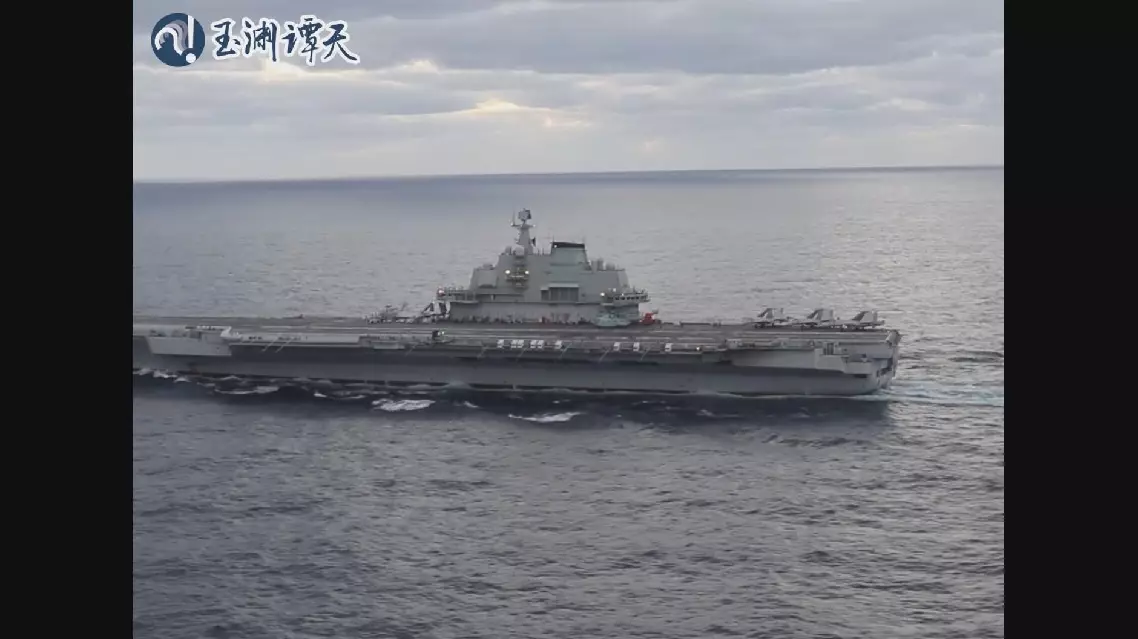
Audio evidence shows Japan intentionally harassing Liaoning aircraft carrier formation