SEOUL, South Korea (AP) — South Korea will require advertisers to label their ads made with artificial intelligence technologies from next year as it seeks to curb a surge of deceptive promotions featuring fabricated experts or deep-faked celebrities endorsing food or pharmaceutical products on social media.
Following a policy meeting chaired by Prime Minister Kim Min-seok on Wednesday, officials said they will ramp up screening and removal of problematic AI-generated ads and impose punitive fines, citing growing risks to consumers — especially older people who struggle to tell whether content is AI-made.
Lee Dong-hoon, director of economic and financial policy at the Office for Government Policy Coordination, said in a briefing that such ads are “disrupting the market order,” and that “swift action is now essential.”
“Anyone who creates, edits, and posts AI-generated photos or videos will be required to label them as AI-made, and the users of the platform will be prohibited from removing or tampering with those labels,” he said.
AI-generated ads using digitally fabricated experts or deepfake videos and audios of celebrities, promoting everything from weight-loss pills and cosmetics to illegal gambling sites, have become staples across the South Korean spaces of YouTube, Facebook and other social media platforms.
The government will seek to revise the telecommunications act and other related laws so the AI-labeling requirement, along with strengthened monitoring and punitive measures, can take effect in early 2026. Companies operating the platforms will also be responsible for ensuring that advertisers comply with the labeling rules, Lee said.
Officials say it’s becoming increasingly difficult to monitor and detect the growing number of false ads fueled by AI. South Korea’s Food and Drug Safety Ministry identified more than 97,600 illegal online ads of food and pharmaceutical products in 2024 and 68,950 through September this year, up from around 59,000 in 2023.
The problem is also spreading into areas such as private education, cosmetics and illegal gambling services, leaving the Korea Consumer Agency and other watchdogs struggling to keep pace, the Government Policy Coordination Office said.
Officials plan to raise fines and also introduce punitive penalties next year to discourage the creation of such AI content, saying those who knowingly distribute false or fabricated information online or through other telecommunications networks could be held liable for damages up to five times the losses incurred.
Officials will also strengthen monitoring and faster takedown procedures, including enabling reviews within 24 hours and introducing an emergency process to block harmful ads even before deliberation is complete. They also plan to bolster the monitoring capabilities of the Food and Drug Safety Ministry and the Korea Consumer Agency — using AI, of course.
Prime Minister Kim, Seoul’s No. 2 official behind President Lee Jae Myung, said during the policy meeting that it’s crucial to “minimize the side effects of new technologies” as the country embraces the “AI era.”
The plans to label AI-generated ads were announced as Lee, in a separate meeting with business leaders, reiterated his government’s ambitions for AI, pledging national efforts to strengthen South Korea’s capabilities in advanced computer chips that power the global AI race.
Government plans include more research and development spending on AI-specific chips and other advanced semiconductor products as well as expanding the country’s chip manufacturing hubs beyond metropolitan areas near the capital city of Seoul to the southern regions. South Korean chipmakers, including Samsung Electronics and SK Hynix, combined for more than 65% of the global memory chip market last year.
The science and telecommunications ministry also said Wednesday it will require the country’s wireless carriers to transition to 5G standalone networks, which are seen as optimal for advanced AI applications because of their higher bandwidth and lower latency, as a condition for renewing their 3G and LTE licenses.

South Korean Prime Minister Kim Min-seok speaks during a policy meeting at the government complex in Seoul, South Korea, Wednesday, Dec. 10, 2025. (Lee Jeong-hoon/Yonhap via AP)
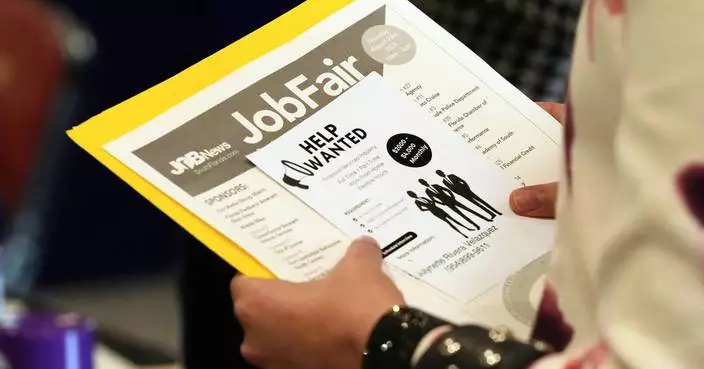
NEW YORK (AP) — U.S. stocks are rising toward records Friday following the latest sign that the nation’s job market is doing better than economists expected.
The S&P 500 climbed 0.5% toward an all-time high after a report said U.S. employers added 115,000 more jobs than they cut last month, even though the war with Iran is raising fuel costs and uncertainty for everyone. The Dow Jones Industrial Average was up 118 points, or 0.2%, as of 9:35 a.m. Eastern time, and the Nasdaq composite was 0.8% higher and heading for its own record.
While hiring slowed from March’s level, it was nevertheless nearly double what economists expected. And it kept the S&P 500 on track for a sixth straight winning week, which would be its longest such streak since 2024. The U.S. stock market has blasted higher since late March, in part on hopes that the war will not mean a worst-case scenario for the global economy and that the Strait of Hormuz will reopen to allow oil tankers to deliver crude from the Persian Gulf again.
It’s still to be determined if those hopes are warranted or just wishful. The United Arab Emirates said Friday that it responded to another Iranian missile barrage, hours after the United States said it traded fire with Iranian forces in the Strait of Hormuz, in the latest blows to a shaky month-old ceasefire.
But economists said the latest jobs data was encouraging, particularly given that it followed a stronger-than-expected report for March. Those two months saw the price for a barrel of Brent crude oil spike from roughly $70 in late February to as high as $119 at times as the fighting and closure of the Strait of Hormuz kept crude oil pent up in the Persian Gulf.
On Friday, Brent edged down 0.1% to $99.97 amid the uncertainty about the ceasefire with Iran.
Another big factor helping to support the U.S. stock market despite the war’s uncertainties is the strong profits that companies have been reporting for the start of 2026.
Monster Beverage jumped 12.7% after the energy drink maker joined the parade of companies topping analysts’ expectations for profit and revenue for the latest quarter. It benefited from strong growth outside the United States, and total net sales there made up about 45% of its total, the highest percentage ever for it.
Akamai Technologies leaped even more, 23.1%, after its results squeaked past expectations. It announced a $1.8 billion deal to provide cloud infrastructure services to an unnamed client over seven years. The cybersecurity and cloud computing company is benefiting from the surge in artificial-intelligence technology.
Such voracious demand for AI helped CoreWeave report revenue for the latest quarter that was more than double a year earlier, but its net loss was worse than analysts expected. It also gave a forecasted range for revenue in the current quarter whose midpoint fell below analysts’ expectations. The stock of the company, which offers AI computing power to customers over the cloud, fell 9.2%.
In stock markets abroad, indexes fell across much of Europe and Asia. France’s CAC 40 fell 0.9%, and Hong Kong’s Hang Seng dropped 0.9% for two of the bigger losses.
South Korea’s Kospi was an exception, and it inched up 0.1% to another all-time high.
In the bond market, Treasury yields eased. The yield on the 10-year Treasury fell to 4.35% from 4.41% late Thursday and from 4.45% early this week.
Lower yields can bring down rates for mortgages and other kinds of loans going to U.S. households and businesses, which in turn can give the economy a boost. Lower yields also tend to push upward on prices for stocks and other kinds of investments.
The 10-year Treasury yield, though, remains well above its 3.97% level from just before the war.
AP Business Writers Chan Ho-him and Matt Ott contributed to this report.
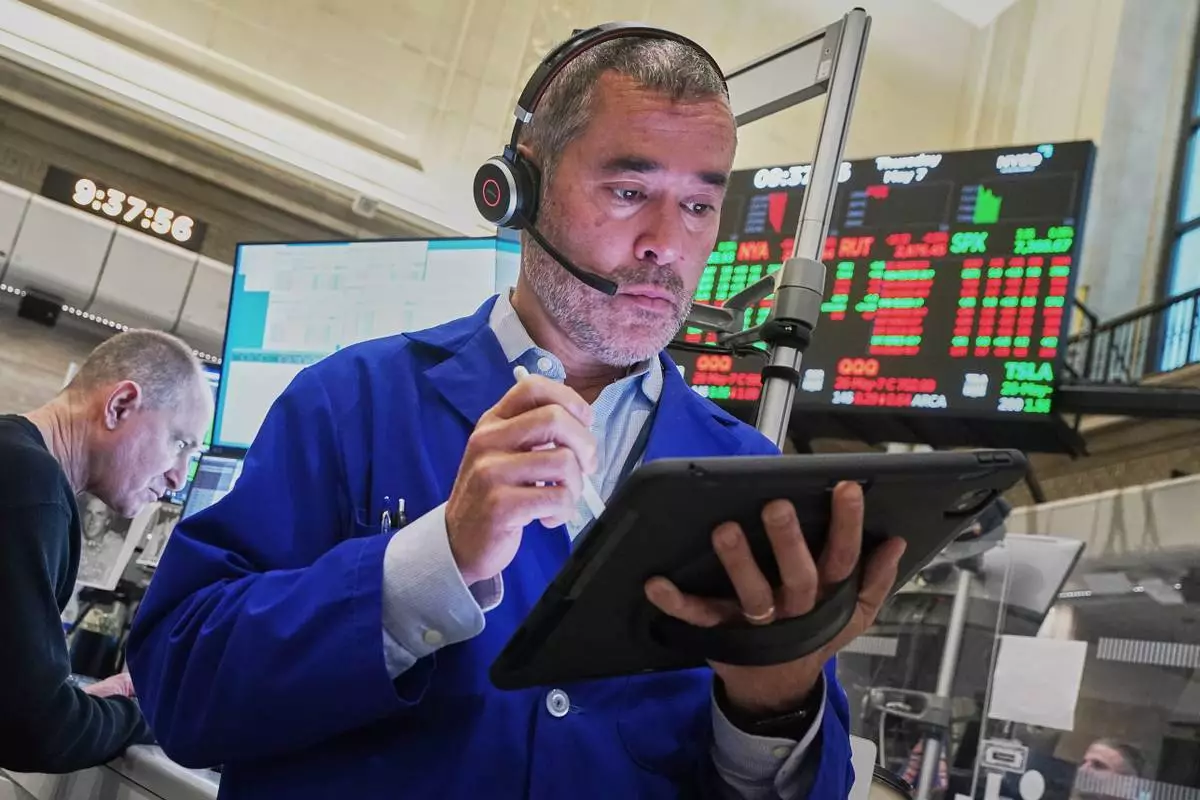
Options trader Justin Kanda works on the floor of the New York Stock Exchange, Thursday, May 7, 2026. (AP Photo/Richard Drew)
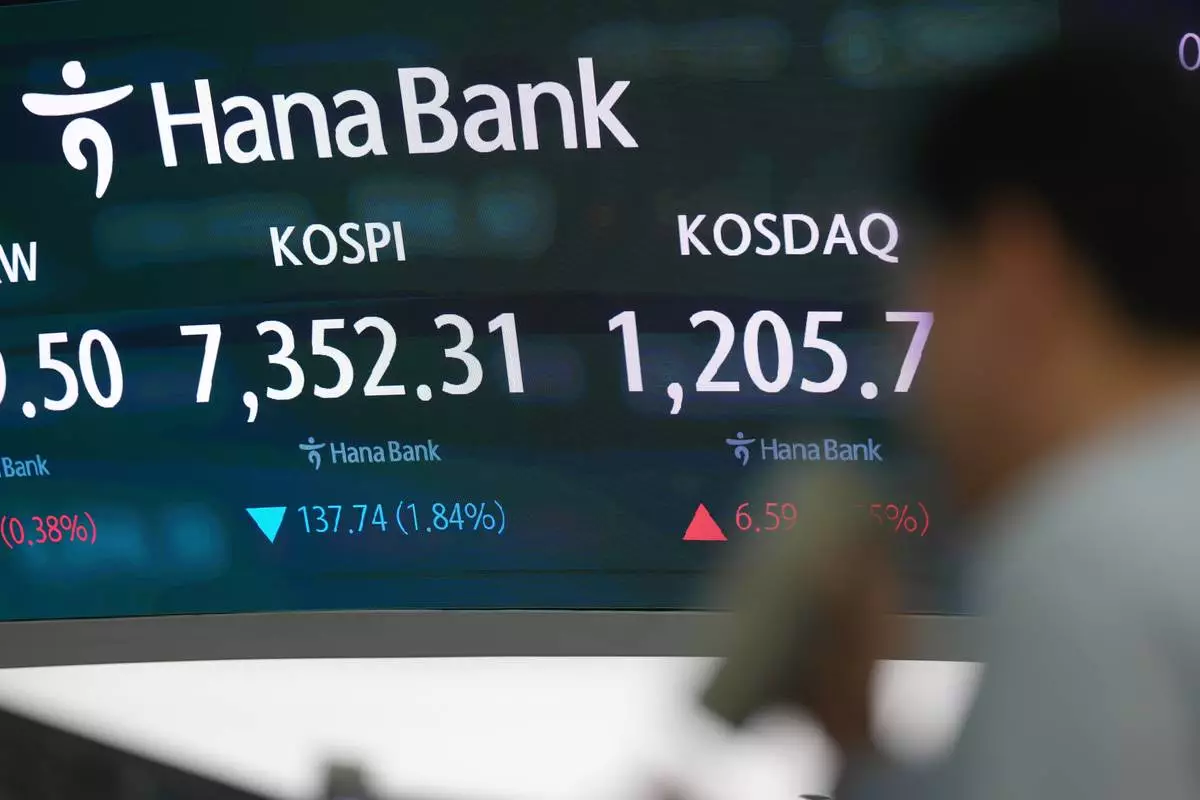
A dealer walks past near the screen showing the Korea Composite Stock Price Index (KOSPI) and the Korean Securities Dealers Automated Quotations (KOSDAQ) at a dealing room of Hana Bank in Seoul, South Korea, Friday, May 8, 2026. (AP Photo/Lee Jin-man)
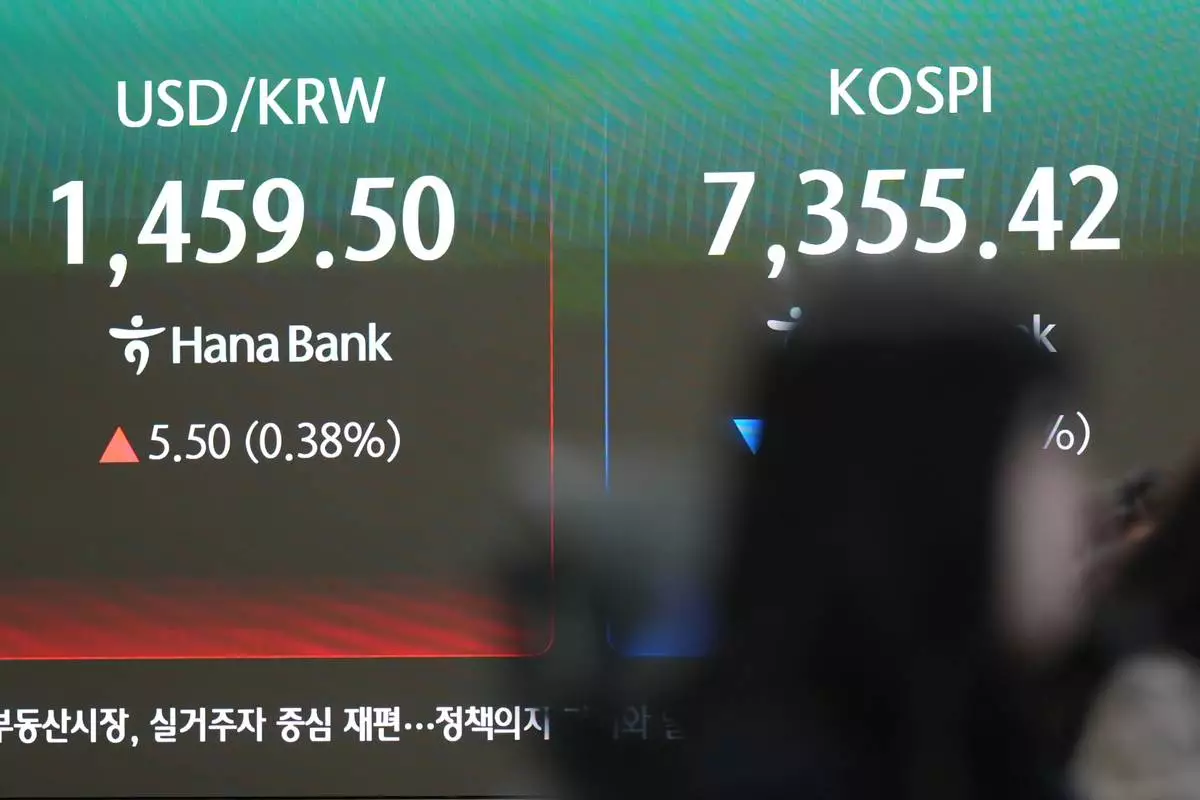
The screens showing the Korea Composite Stock Price Index (KOSPI) and the foreign exchange rate between U.S. dollar and South Korean won are displayed at a dealing room of Hana Bank in Seoul, South Korea, Friday, May 8, 2026. (AP Photo/Lee Jin-man)
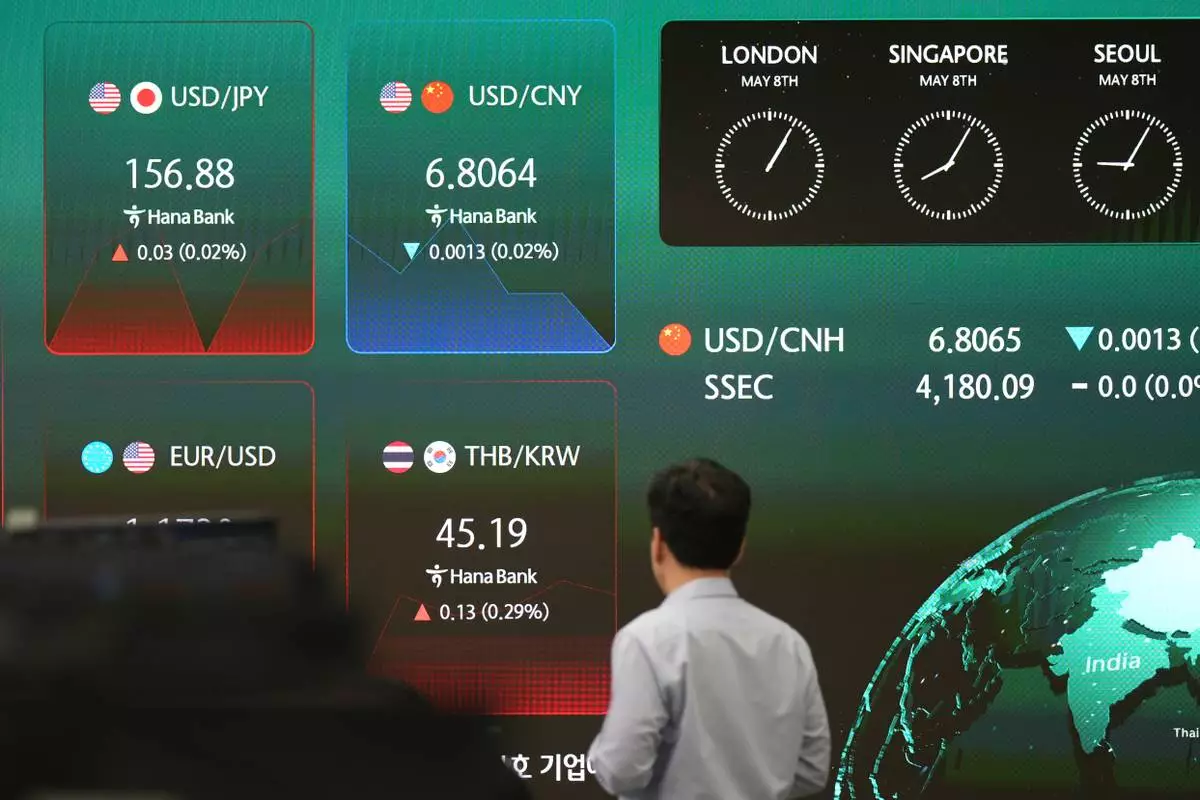
A dealer walks past near the screens showing the foreign exchange rates at a dealing room of Hana Bank in Seoul, South Korea, Friday, May 8, 2026. (AP Photo/Lee Jin-man)
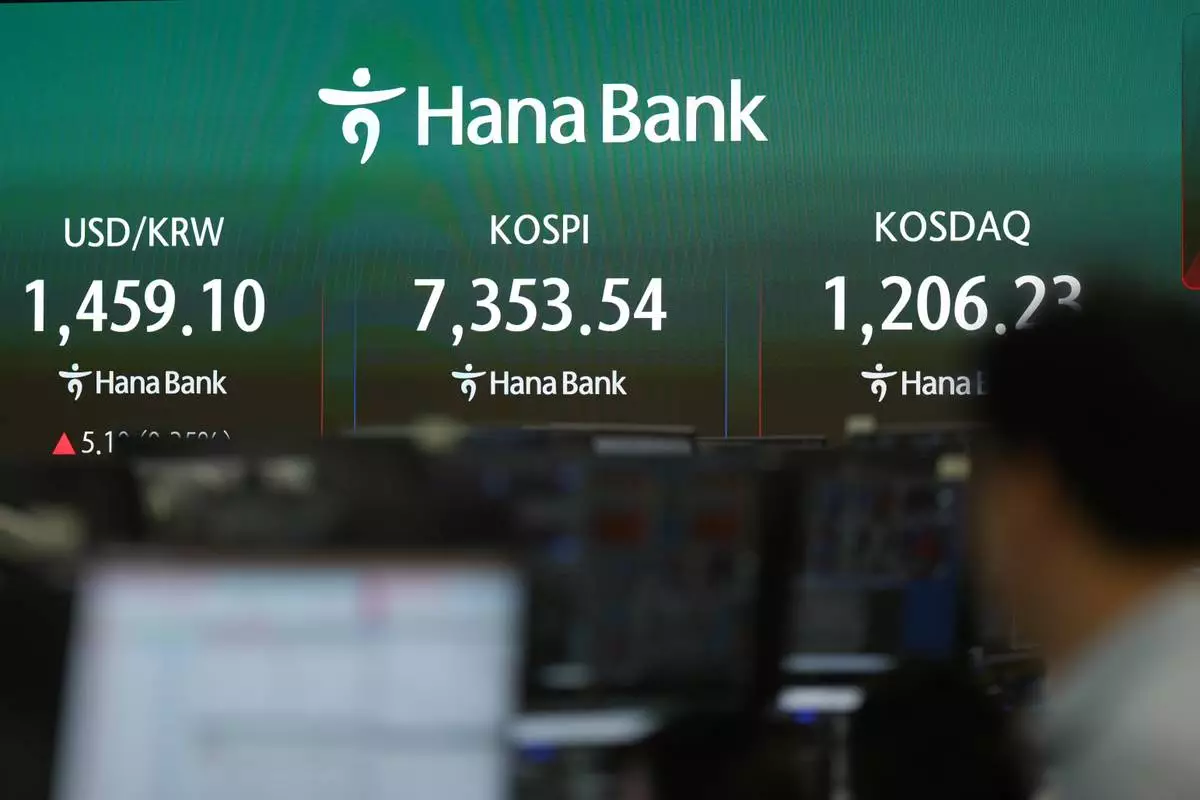
A dealer walks past near the screens showing the Korea Composite Stock Price Index (KOSPI), the foreign exchange rate between U.S. dollar and South Korean won and the Korean Securities Dealers Automated Quotations (KOSDAQ) at a dealing room of Hana Bank in Seoul, South Korea, Friday, May 8, 2026. (AP Photo/Lee Jin-man)
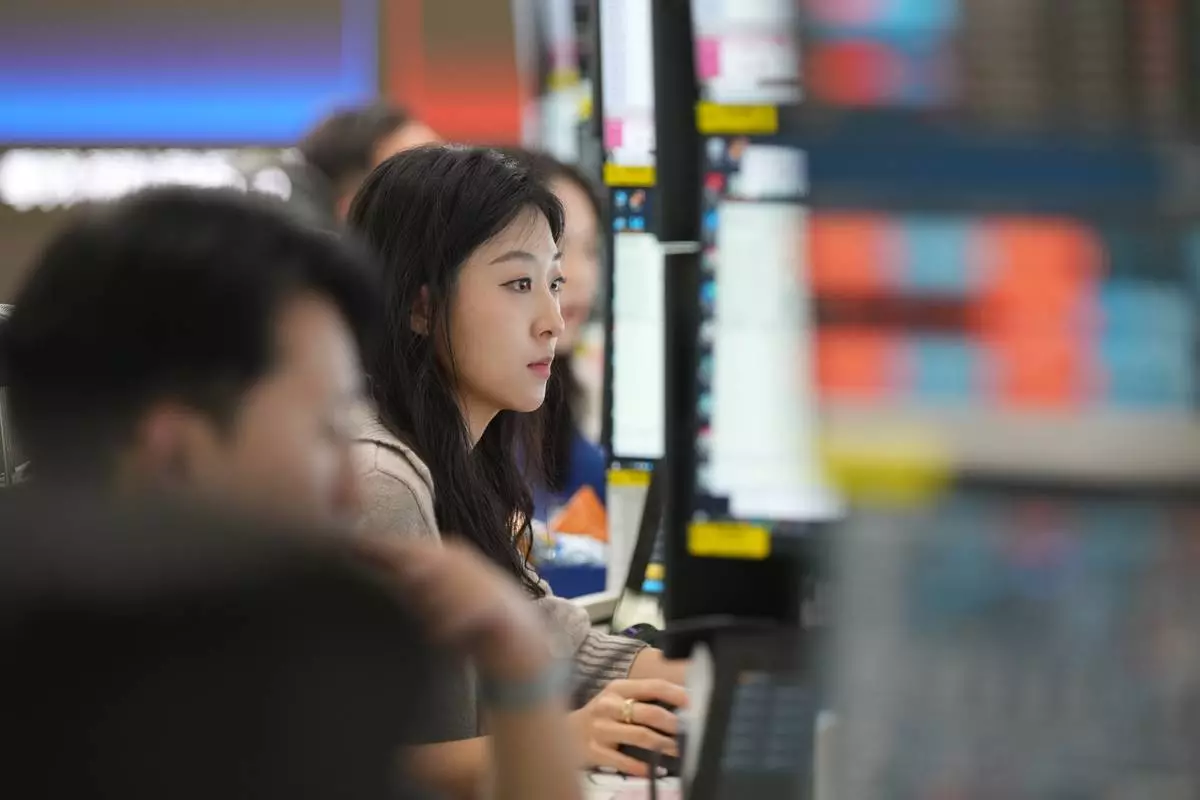
A dealer watches computer monitors at a dealing room of Hana Bank in Seoul, South Korea, Friday, May 8, 2026. (AP Photo/Lee Jin-man)