Japanese Prime Minister Sanae Takaichi's erroneous remarks on China's Taiwan region have taken toll on tourism and fishery industries in multiple regions of the country.
Takaichi claimed during a Diet meeting on Nov. 7 that the Chinese central authorities' "use of force on Taiwan" could constitute a "survival-threatening situation" for Japan, which immediately drew strong criticism at home and abroad.
Just weeks following Takaichi's provocative remarks, tourism-related industries such as hotels, restaurants and scenic spots in Japan have seen a considerable drop of in the number of customers.
Chinese tourists form a major source of visitors to Japan, with strong spending power. According to data released by the Japan Tourism Agency, tourists from the Chinese mainland and the Hong Kong Special Administrative Region contributed approximately 30 percent of total inbound tourism spending in Japan during the first three quarters of this year.
The popular destination of Osaka Prefecture welcomed around 4.26 million Chinese tourists in the January to September period, but now stores that rely heavily on Chinese tourists have reported a significant fall of in the number of customers.
"I feel that our store is experiencing an obvious reduction in the amount of group tourists, with that of individual tourists having dropped by over 50 percent. Our store is basically completely dependent on inbound tourists, so if this situation persists, the number of customers will further decrease. Now I'm very worried about the sales volume," said a tax-free shop manager in Osaka.
In Okinawa Prefecture, which has rich tourism and fishery resources, merchants said they are having difficulties in selling products.
"The customer flow has indeed declined, and my store is caught in sales difficulty, so it can be said that I've been affected. If the current situation continues, it will have a negative impact on the store. I hope the government could mull over some measures to deal with this," said a shop owner in Okinawa.
"I'm a little worried that the passenger flow may continue to fall. This is a real problem to me. Japanese visitors and Chinese tourists have respectively accounted for around 50 percent of the customer number here, but I think the seafood stores saw more Chinese customers, so it seems that the seafood stores are facing a more severe situation," said another shop owner in Okinawa.
"Takaichi's erroneous remarks do have impacts on us. The supplier we serve largely depends on Chinese tourists, so now it receives almost no orders. This has led to my orders being reduced by more than 50 percent of before. Business will be very difficult for us if the current situation goes on," said a fishery merchant in Okinawa.

Japan's tourism, fishery suffer losses after PM's erroneous remarks on China's Taiwan
Shanghai has opened up more roads to conduct autonomous driving tests as part of the city's latest efforts to accelerate the adoption of artificial intelligence (AI) across key industries and public services, officials said on Sunday.
With the latest additions, Shanghai now boasts more than 3,170 roads for unmanned driving tests to be conducted, with a total length exceeding 5,200 kilometers, covering about one-third of the city's urban areas, authorities announced at the "Artificial Intelligence + Transportation" Shanghai Release 2025 event held Sunday.
So far, over 900 vehicles developed by 40 companies in Shanghai have obtained licenses to complete road tests, application demonstrations, and autonomous driving operations, with the total combined test mileage exceeding 32 million kilometers and the overall test duration exceeding 1.78 million hours.
Sunday's event also saw the launch of the nation's first service platform for open access and application management of traffic signal data across a megacity. The platform provides real-time data collection from more than 7,600 intersections, helping strengthen research and development which will boost mass production of advanced autonomous driving technologies.
Several major initiatives were also unveiled at the gathering, including the first group of demonstration scenarios innovatively integrating AI with the transportation sector.
Among the pioneering projects is a brand new AI pilot base built by the Shentong Metro Group – the operator of trains on Shanghai's underground system.
This will see the development of China's first multimodal body of data collected across the urban rail transit system, which will independently train vertical large language models and conduct comprehensive and efficient checks for procedures such as signal systems and intelligent security checks before they are officially launched.
"The base will enable test, verification and optimization of systems prior to their formal operation. In the past, our approach was to conduct a review after the initial development was completed and then deploy it for operation. This made it impossible to anticipate problems that would arise," said Wang Shenghua, deputy director of the chief engineer's office under the Shentong Metro Group.
Industry insiders say that these efforts to deepen the application of AI in the transportation sector highlight how this emerging technology is being further integrated across more industries and playing a more prominent role in people's everyday lives.
"Today, [AI] has been specifically integrated with various scenarios, truly and closely connecting with the government's administration, the operation of companies, and the everyday experiences of people in their daily lives," said Zhong Junhao, secretary general of the Shanghai AI Industry Association.
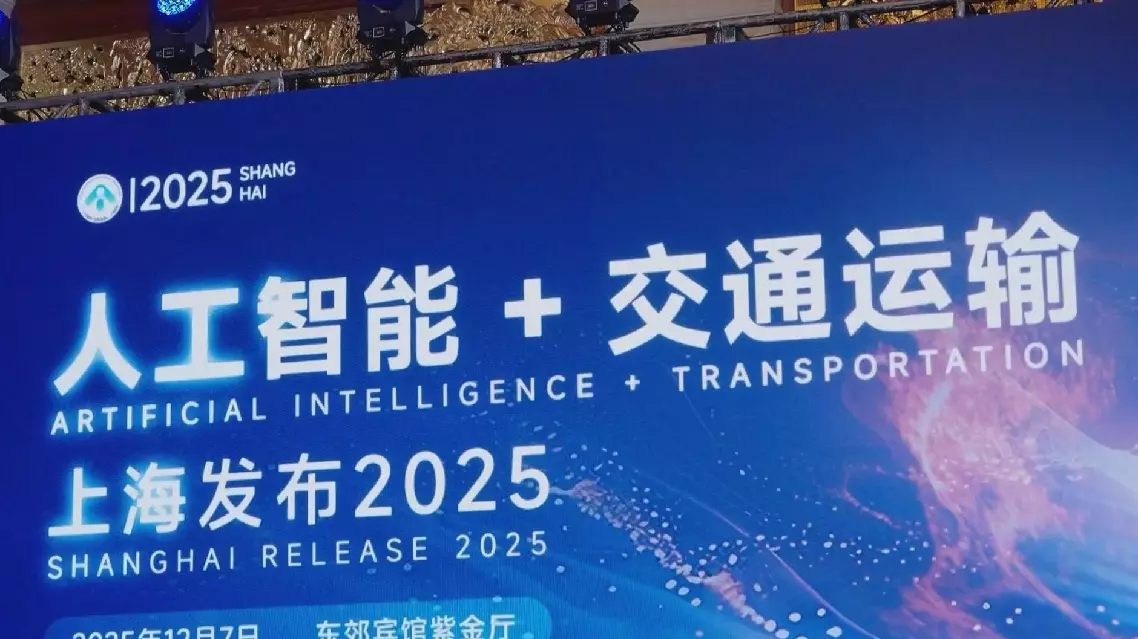
Shanghai promotes AI-powered transportation with more roads opened for autonomous driving tests