LONDON & NEW YORK & HOUSTON--(BUSINESS WIRE)--Dec 10, 2025--
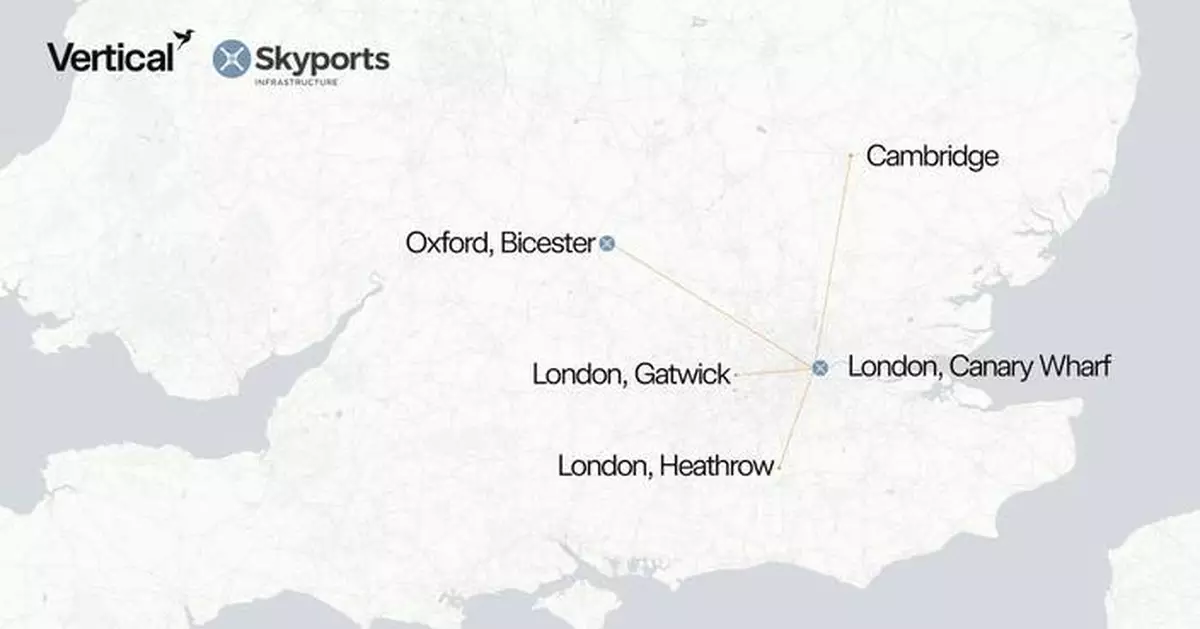
Vertical Aerospace (NYSE: EVTL), today announced plans with Skyports Infrastructure (Skyports) and Bristow Group (NYSE: VTOL), to launch the UK’s first electric air-taxi routes between Canary Wharf and major transport hubs. Proposed routes to and from Canary Wharf at launch would include Heathrow, Gatwick, Cambridge and Oxford.
This press release features multimedia. View the full release here: https://www.businesswire.com/news/home/20251209296219/en/
By combining Vertical’s category-leading aircraft, Skyports’ London Heliport, Bicester Vertiport and future UK skyport network, and Bristow’s global operational expertise and UK Air Operator Certificates (AOCs), this partnership brings together the full ecosystem needed for real, scalable eVTOL services.
The first phase, planned from Q1 2029, will focus on the UK’s highest-value mobility corridors. The proposed routes, operated by Bristow, would dramatically cut journey times compared with traditional ground travel – for example, cutting a typical Canary Wharf-to-Heathrow transfer from 60–90 minutes on the ground to 12 minutes in the air.
Stuart Simpson, CEO, Vertical Aerospace, said:
“Electric flight will transform how cities move, and London is one of the best places in the world to prove it. With Skyports and Bristow, we have the aircraft, infrastructure and operational strength to lead this market. These plans show the commercial potential of services we aim to see operating following regulatory approval in 2028 and we look forward to bringing them to life with our partners.”
Duncan Walker, CEO, Skyports Infrastructure, said:
“We’re excited to build on our long-standing relationship with Vertical. Our Skyports London Heliport and Bicester skyport, combined with our global infrastructure expertise, make us ideally positioned to support early eVTOL services in the UK. With Bristow’s operational strength, we can accelerate plans for electric air taxi routes across the region, with the plan to create a UK-wide network.”
Chris Bradshaw, President & CEO, Bristow, said:
“Bristow’s role in Advanced Air Mobility is to leverage our 75+ years of leading vertical flight operations to bring real-world operational discipline to promising new aircraft and infrastructure concepts. Working with Vertical and Skyports on early eVTOL services in the UK allows us to apply our proven expertise in safe, reliable, and complex aviation operations to an important emerging market. This collaboration is a meaningful step as we progress a portfolio of advanced aircraft and explore how they can be deployed responsibly at scale.
Building on proven partnerships
This collaboration builds on long-standing relationships:
A major step for UK advanced air mobility (AAM)
Today’s announcement, made as Vertical unveils its new aircraft, Valo, at The Pelligon in Canary Wharf, demonstrates how eVTOL aircraft, vertiport infrastructure and experienced operators can deliver a clean, fast, high-performance transport network for the UK.
Valo will fly up to 100 miles at up to 150 mph, produce zero operating emissions, and through certification with the UK Civil Aviation Authority (CAA) and the European Aviation Safety Authority (EASA) is targeting to achieve the same safety standards as modern commercial airliners. Vertical targets producing 175 aircraft by 2030, ramping to 225+ annually by Q4 2030.
About Vertical Aerospace
Vertical Aerospace is a global aerospace and technology company pioneering electric aviation. Vertical is creating a safer, cleaner, and quieter way to travel. Valo is a piloted, four-passenger, Electric Vertical Take-Off and Landing (eVTOL) aircraft, with zero operating emissions. Vertical is also developing a hybrid-electric variant, offering increased range and mission flexibility to meet the evolving needs of the advanced air mobility market.
Vertical combines partnerships with leading aerospace companies, including GKN, Honeywell, Syensqo and Aciturri, with its own proprietary battery and propeller technology to develop the world’s most advanced and safest eVTOL.
Vertical has c.1,500 pre-orders of Valo, with customers across four continents, including American Airlines, Avolon, Bristow, GOL and Japan Airlines. Certain customer obligations are expected to be fulfilled via third-party agreements. Headquartered in Bristol, UK, Vertical’s experienced leadership team comes from top-tier aerospace and automotive companies such as Rolls-Royce, Airbus, GM, and Leonardo. Together, they have previously certified and supported over 30 different civil and military aircraft and propulsion systems.
About Bristow Group
Bristow Group Inc. is the leading global provider of innovative and sustainable vertical flight solutions. Bristow primarily provides aviation services to a broad base of offshore energy companies and government entities. Our aviation services include personnel transportation, search and rescue ("SAR"), medevac, fixed wing transportation, unmanned systems and ad-hoc helicopter services. Our business is comprised of three operating segments: Offshore Energy Services, Government Services and Other Services. Our energy customers charter our helicopters primarily to transport personnel to, from and between onshore bases and offshore production platforms, drilling rigs and other installations. Our government customers primarily outsource SAR activities whereby we operate specialized helicopters and provide highly trained personnel. Our other services include fixed wing transportation services through a regional airline in Australia and dry-leasing aircraft to third-party operators in support of other industries and geographic markets.
Bristow currently has customers in Australia, Brazil, Canada, Chile, the Dutch Caribbean, the Falkland Islands, Ireland, the Netherlands, Nigeria, Norway, Spain, Suriname, Trinidad, the United Kingdom (UK) and the United States (U.S.).
About Skyports Infrastructure
Skyports Infrastructure is a global leader in the design, build, and operation of heliports and skyports for helicopters and eVTOLs. With live operational assets in the UK and US, and projects under construction across Europe, Asia, and the Middle East, Skyports delivers the ground infrastructure needed for safe, efficient, and scalable vertical lift operations. The company is driving the future of urban air mobility, bringing next-generation aviation to cities around the world.
Find out more at: www.skyports.net
Forward-Looking Statements
This press release contains forward-looking statements within the meaning of the U.S. Private Securities Litigation Reform Act of 1995 that relate to our current expectations and views of future events. We intend such forward-looking statements to be covered by the safe harbor provisions for forward-looking statements as contained in Section 27A of the Securities Act and Section 21E of the Exchange Act. Any express or implied statements contained in this press release that are not statements of historical fact may be deemed to be forward-looking statements, including, without limitation, statements regarding the partnership with Skyports and Bristow and ability to launch the UK’s first electric air-taxi networks, including the projected routes and expected journey times; the introduction of the Valo aircraft; the certification and the commercialization of the Valo aircraft and the timing thereof; the design and manufacture of the Valo aircraft; the features and capabilities of the Valo aircraft; the completion of the piloted test programme phases including transition flight on the intended timeline or at all; the business strategy and plans and objectives of management for future operations, including capital expenditure requirements, which may be higher than anticipated; our ability and plans to raise additional capital to fund our operations; the assumptions underlying the Company’s goals, including Flightpath 2030; the differential strategy compared to our peer group; expectations surrounding pre-orders and commitments; our plans for capital expenditures, as well as statements that include the words goals,” “targets,” “objectives,” “plan,” “expect,” “intend,” “plan,” “believe,” “project,” “forecast,” “estimate,” “may,” “should,” “anticipate,” “will,” “aim,” “potential,” “continue,” “are likely to” and similar statements of a future or forward-looking nature. These forward-looking statements reflect our current views with respect to future events and are not a guarantee of future performance. Forward-looking statements are neither promises nor guarantees, but involve known and unknown risks and uncertainties that could cause actual results to differ materially from those projected, including, among other things, risks and uncertainties relating to the Company’s business, industry performance, the regulatory environment, and general business and economic conditions, as discussed under the caption “Risk Factors” in the Company's Annual Report on Form 20-F filed with the U.S. Securities and Exchange Commission (“SEC”) on March 11, 2025, as such factors may be updated from time to time in the Company’s other filings with the SEC. Any forward-looking statements contained in this press release speak only as of the date hereof and accordingly undue reliance should not be placed on such statements. We disclaim any obligation or undertaking to update or revise any forward-looking statements contained in this press release, whether as a result of new information, future events or otherwise, other than to the extent required by applicable law.
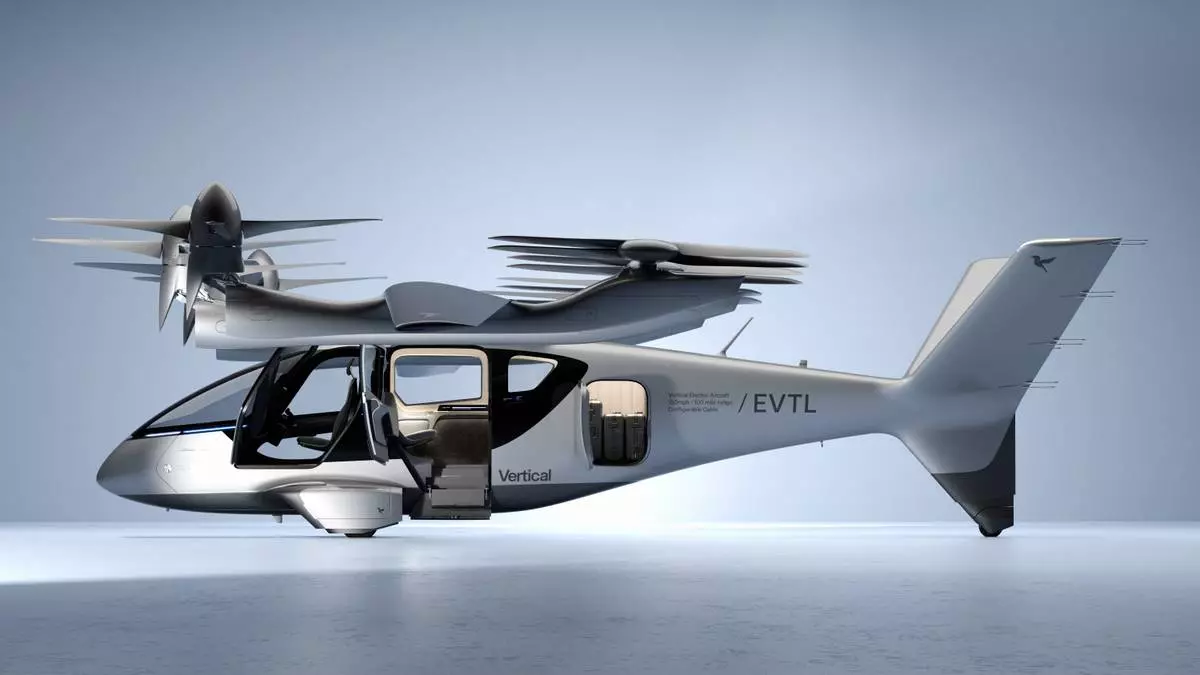
Vertical’s new Valo eVTOL aircraft, which will be flying passengers across the UK network

Vertical’s Valo aircraft and Skyports’ London Heliport
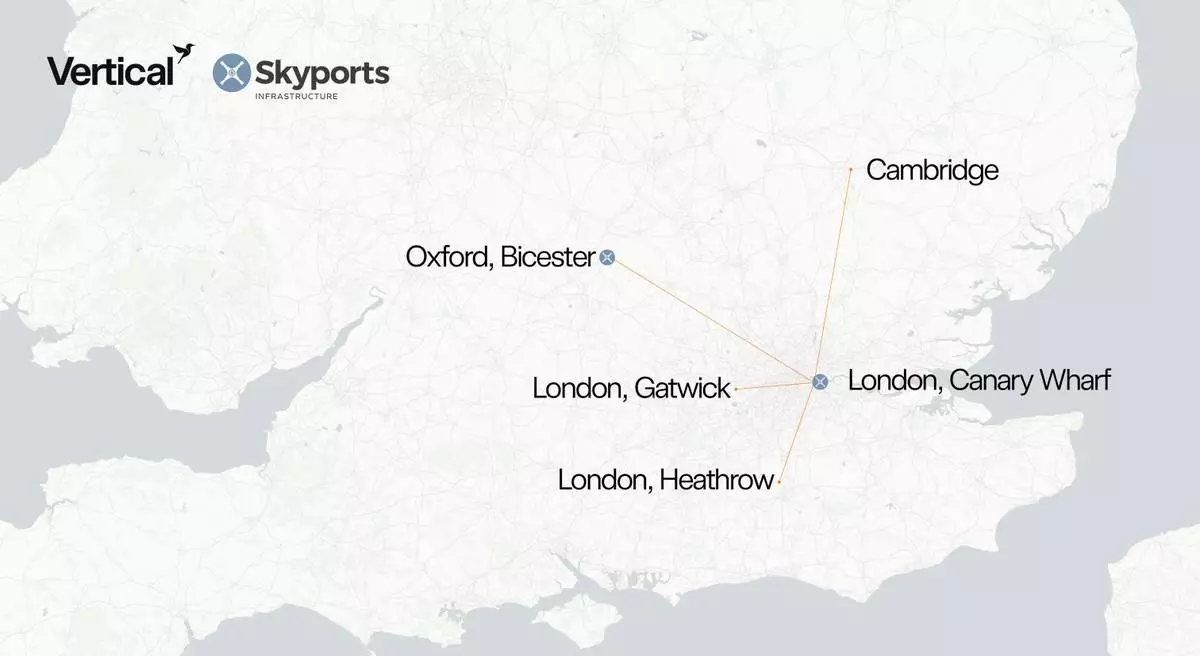
Vertical’s plans for an electric air-taxi network, launched with Skyports Infrastructure and Bristow