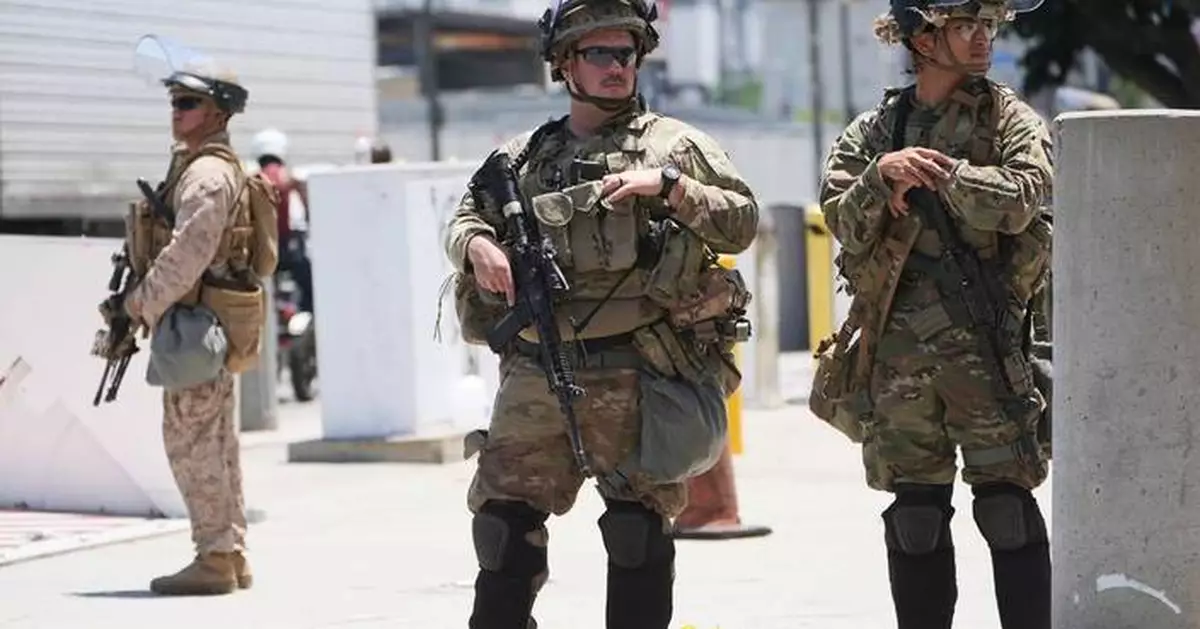
The Trump administration must stop deploying the California National Guard in Los Angeles and return control of the troops to the state, a federal judge ordered Wednesday in an emphatic ruling.
U.S. District Judge Charles Breyer in San Francisco granted a preliminary injunction sought by California officials, but also put the decision on hold until Monday, presumably to give the administration a chance to appeal.
In an extraordinary move, President Donald Trump called up more than 4,000 California National Guard troops in June without Gov. Gavin Newsom’s approval to further the Trump administration's immigration enforcement efforts. The number had dropped to several hundred by late October, but California remained steadfast in its opposition to Trump's command of the troops.
White House spokeswoman Abigail Jackson suggested in a statement that the administration would appeal Breyer's ruling, saying it looked forward to "ultimate victory on the issue.”
“President Trump exercised his lawful authority to deploy National Guard troops to support federal officers and assets following violent riots that local leaders like Newscum refused to stop,” she said, using a pejorative moniker Trump has used to refer to the Democratic governor.
California Attorney General Rob Bonta said the ruling was a victory for democracy and the rule of law, and he accused the administration of playing “political games” with the troops.
“But the President is not king,” he said in a statement. “And he cannot federalize the National Guard whenever, wherever, and for however long he wants, without justification.”
Breyer rejected the administration's arguments that he could not review extensions of a Guard deployment and that it still needed Guard troops in Los Angeles to protect federal personnel and property, saying the first claim was “shocking” and the second one bordered on “misrepresentation.”
“The Founders designed our government to be a system of checks and balances,” added Breyer, a nominee of President Bill Clinton, a Democrat. “Defendants, however, make clear that the only check they want is a blank one.”
The 100 or so California troops that remain in Los Angeles are guarding federal buildings or staying at a nearby base and are not on the streets with immigration enforcement officers, according to U.S. Northern Command.
California argued that conditions in Los Angeles had changed since Trump first deployed the troops following clashes between federal immigration officers and people protesting his stepped-up enforcement of immigration laws. During one demonstration, protesters threw rocks at Border Patrol vehicles. One man later pleaded guilty to throwing a Molotov cocktail.
The Republican administration has extended the deployment until February while also trying to use California Guard members in Portland, Oregon as part of its effort to send the military into Democratic-run cities over the objections of mayors and governors. It also sent some California National Guard troops to Illinois.
In his ruling, Breyer accused the Trump administration of “effectively creating a national police force made up of state troops.”
The idea that risks from demonstrations in the Los Angeles area could not be managed today without the National Guard defied “common sense,” the judge wrote.
“After all, local law enforcement like the LAPD, the LASD, and the California Highway Patrol (“CHP”) have not only been willing to manage the protests, but have capably done so since June,” he wrote.
The June call-up was the first time in decades that a state’s national guard was activated without a request from its governor and marked a significant escalation in the administration’s efforts to carry out its mass deportation policy. The troops were stationed outside a federal detention center in downtown Los Angeles where protesters gathered and later sent on the streets to protect immigration officers as they made arrests.
California sued, arguing that the president was using Guard members as his personal police force in violation of a law limiting the use of the military in domestic affairs. The administration said courts could not second-guess the president’s decision that violence during the protests made it impossible for him to execute U.S. laws with regular forces and reflected a rebellion, or danger of rebellion.
Breyer said in Wednesday's decision the suggestion there was danger of rebellion was even more “farfetched” when the administration extended the deployment than it was in June.
Breyer initally issued a temporary restraining order that required the administration to return control of the Guard members to California, but an appeals court panel put that decision on hold.
After a trial, Breyer ruled in September that the deployment violated the law.
Other judges have blocked the administration from deploying National Guard troops to Portland, Oregon, and Chicago.
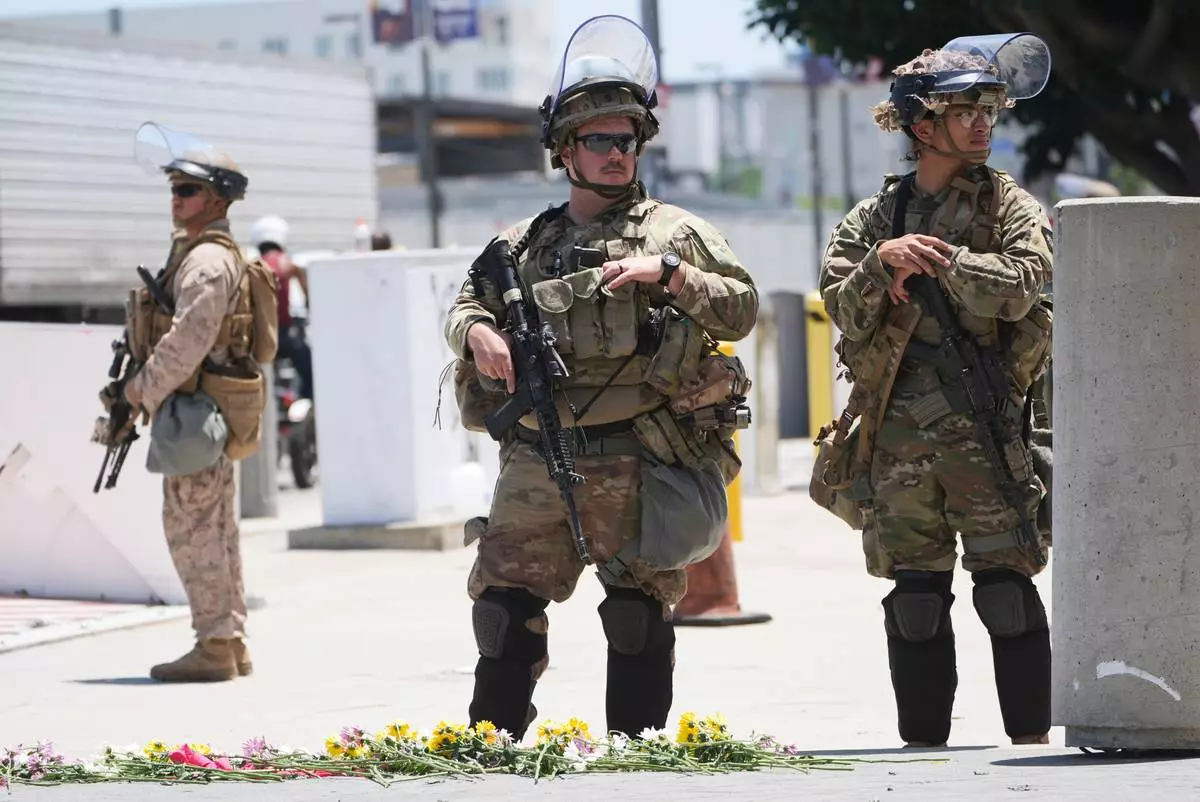
FILE - Members of the California National Guard and U.S. Marines guard a federal building on Tuesday, June 17, 2025, in Los Angeles. (AP Photo/Damian Dovarganes, File)
WASHINGTON (AP) — The Federal Reserve reduced its key interest rate for the third time in a row Wednesday but signaled that it may leave rates unchanged in the coming months, a move that could attract ire from President Donald Trump, who has demanded steep reductions to borrowing costs.
In a statement released after a two-day meeting, the Fed’s rate-setting committee signaled that it may keep its rate unchanged in the coming months. And in a set of quarterly economic projections, Fed officials signaled they expect to lower rates just once next year.
Wednesday's cut reduced the rate to about 3.6%, the lowest it has been in nearly three years. Lower rates from the Fed can bring down borrowing costs for mortgages, auto loans, and credit cards over time, though market forces can also affect those rates.
Three Fed officials dissented from the move, the most dissents in six years and a sign of deep divisions on a committee that traditionally works by consensus. Two officials voted to keep the Fed's rate unchanged, while Stephen Miran, whom Trump appointed in September, voted for a half point cut.
December’s meeting could usher in a more contentious period for the Fed. Officials are split between those who support reducing rates to bolster hiring and those who’d prefer to keep rates unchanged because inflation remains above the central bank’s 2% target. Unless inflation shows clear signs of coming fully under control, or unemployment worsens, those divisions will likely remain.
THIS IS A BREAKING NEWS UPDATE. AP’s earlier story follows below.
WASHINGTON (AP) — The Federal Reserve will almost certainly reduce its key interest rate Wednesday, but the bigger question for financial markets and the economy is what signals Chair Jerome Powell may send regarding the central bank's next steps.
It would be the third cut in a row and bring the Fed's key rate to about 3.6%, the lowest in nearly three years. For Americans struggling with high borrowing costs for homes, cars, and other large purchases, this year's rate cuts could reduce those costs over time — though it's not guaranteed. Mortgage rates in particular are also influenced by financial markets.
This week’s meeting could presage a much cloudier path for the Fed in 2026. The government shutdown has delayed two months of jobs and inflation data, leaving the Fed with much less information on hiring and inflation than it is used to. Powell’s term as chair ends in May and President Donald Trump will nominate a replacement, possibly as soon as this month, who will almost certainly push for lower borrowing costs. Yet the new chair could face resistance from other Fed officials.
In addition to a likely rate cut, the Fed could signal that the bar for another reduction when they next meet in late January will be higher than it has been this fall. A year ago, after implementing a third rate cut at its December meeting, the Fed indicated it would likely keep rates unchanged in the coming months. It didn't cut again until September.
“They would love to take a pass (in January), push it off to March, and just wait for a couple of more inflation reports to come in,” Tom Porcelli, chief economist at Wells Fargo, said.
The Fed's 19-member rate-setting committee is deeply divided between those who support reducing rates to bolster hiring and those who'd prefer to keep rates unchanged because inflation remains above the central bank's 2% target. Higher borrowing costs can slow spending and the economy and reduce price increases.
The government said last week in a delayed report that the Fed's preferred inflation gauge remained elevated in September, with both overall and core prices rising 2.8% from a year earlier.
The lack of economic data has contributed to the divisions. But by their January meeting, they'll have up to three months of backlogged reports to consider. If those figures show that hiring has remained weak, or that layoffs have spiked, the Fed could reduce rates again in January.
By contrast, if they show hiring has stabilized while inflation remains elevated, they may hold off on additional cuts for several months.
On Wednesday, the Fed will also issue their quarterly set of economic projections, which include forecasts for where they will set rates at the end of this year and next. Economists expect just one rate reduction next year, as they did in September.
Yet the projections will likely carry much less weight this year, since a new chair will probably push for more reductions. And if the economy weakens, more officials will support reductions.
In an interview with Politico published Tuesday, Trump said “yes” when asked if reducing rates “immediately” was a litmus test for his new Fed chair. Trump has hinted that he will likely pick Kevin Hassett, his top economic adviser.
Hassett has often called for lower borrowing costs, but this week has been more circumspect. In an interview Tuesday on CNBC, when asked how many more rate cuts he would support, Hassett did not give a specific answer and said, “What you need to do is watch the data.”
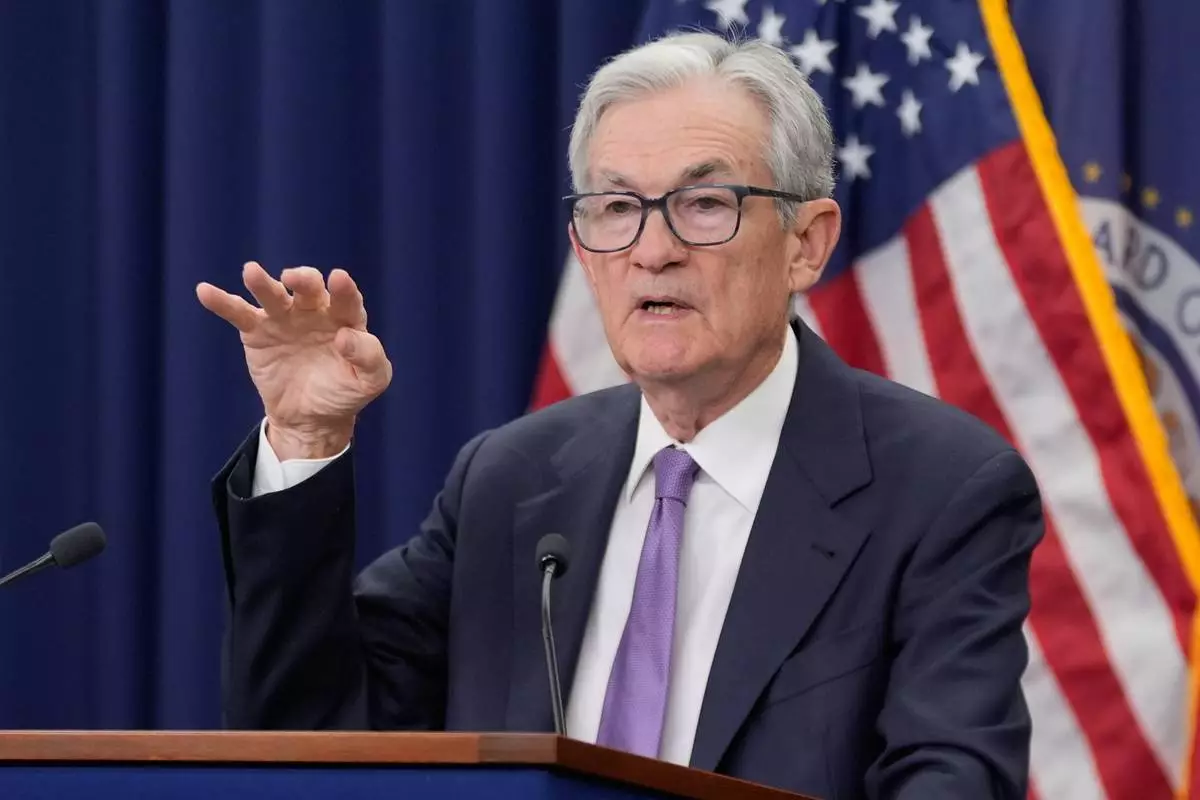
FILE _ Federal Reserve Chairman Jerome Powell speaks at a news conference after the Federal Open Market Committee meeting Oct. 29, 2025, at the Federal Reserve Board Building in Washington. (AP Photo/Manuel Balce Ceneta, File)