Skip to Content Facebook Feature Image

Hainan FTP completes third-party evaluation of stress tests

China

China

China

Hainan FTP completes third-party evaluation of stress tests

2025-12-11 15:31 Last Updated At:16:07

China's Hainan Free Trade Port (FTP) completed the final round of third-party evaluation of its stress test effectiveness on Wednesday, ahead of its island-wide special customs operations next week.

The Hainan FTP will officially launch island-wide special customs operations on Dec 18 this year.

Following the rollout, Hainan will adopt a two-tier customs supervision model: freer access at the first line, regulated access at the second line, and free flow within the island. This system is designed to facilitate trade between Hainan and regions outside China's customs border, while maintaining standard controls for goods entering the mainland.

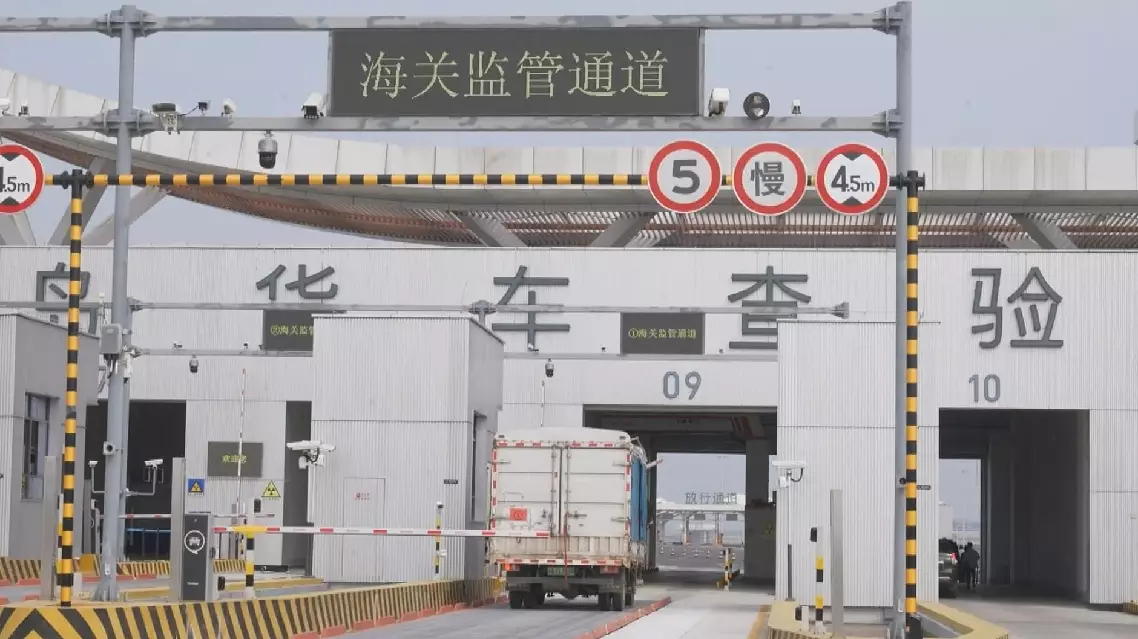
The evaluation team conducted on-site assessments on Wednesday at the centralized inspection yard for freight at Xinhai Port and South Port in Haikou, the capital of south China's Hainan Province. These are among Hainan's 10 second-line ports set up between the FTP and the mainland.

The tests covered multiple scenarios at second-line ports, including normal customs clearance, security anomalies, and targeted customs checks.

The evaluation, which ran from Dec 2 to 10, focused primarily on the integrated drills and 7×24-hour hot-running operations at second-line ports and non-customs sites, as well as the rectification of problems identified in the previous two rounds of testing.

The evaluation team concluded that previously identified problems had been largely resolved, clearance procedures were smoother and more orderly, and the system could meet the needs of most market entities.

"Integrated drills are comprehensive stress tests carried out based on previous stress testing. They examine coordination among various departments, including customs, public security, and on-site venue staff. Through the evaluation, we found that coordination between departments is smooth, the relevant software and hardware facilities are all in place, and we are fully prepared for the special customs operations," said Jin Lu, staff member of the Stress Testing and Risk Prevention Division of the Office of Deepening Overall Reform at the Hainan Provincial Committee of the Communist Party of China.
Hainan FTP completes third-party evaluation of stress tests
Hainan FTP completes third-party evaluation of stress tests
The European Commission's proposal to use frozen Russian assets as collateral to finance Ukraine "cannot deprive Russia of ownership of these assets", European Central Bank (ECB) President Christine Lagarde said on Wednesday.

Lagarde stated that this proposal is the closest one so far to complying with international law. She added that to address investor concerns, the European Union (EU) needs to explain that it is not "trying to seize Russian sovereign assets for its own benefit".

Lagarde has long expressed concerns about using frozen Russian assets. She said the ECB is keen to ensure that any outcome respects international law, otherwise the global reputation of the euro could be damaged.

In response, Russian Foreign Minister Sergey Lavrov said on Wednesday local time that Russia has no plans or intention to go to war with Europe, but Russia will respond to any deployment of European military forces in Ukraine as well as to attempts to seize Russian assets in Europe.

Following the outbreak of the Russia-Ukraine conflict in February 2022, Western countries froze approximately 300 billion U.S. dollars in Russian overseas assets. Among these, the EU froze about 200 billion euros (about 232 billion U.S. dollars) worth of assets belonging to the Russian central bank.

Approximately 90 percent of the frozen Russian assets within the EU are held by Euroclear Bank, based in Brussels, Belgium. Russia has repeatedly emphasized that, under international law, any seizure of its assets by Western governments constitutes "theft".

In September, European Commission President Ursula von der Leyen proposed establishing a "reparation loan" mechanism, intending to use frozen Russian assets as collateral to provide Ukraine with a total loan of about 140 billion euros (163 billion U.S. dollars).

However, Belgium and the ECB believe this plan carries significant risks in terms of international law and the financial stability of the eurozone.

ECB chief urges caution in using frozen Russian assets for Ukraine

ECB chief urges caution in using frozen Russian assets for Ukraine

Recommended Articles