Portugal's two main labor confederations staged a nationwide strike on Thursday, affecting sectors such as transport, healthcare, education, and public services.
According to local media reports, the strike, backed by the General Confederation of Portuguese Workers (CGTP) and the Portuguese General Workers' Union (UGT), marks the first joint action by the rival unions since 2013. It also reflects mounting opposition to the government's proposed overhaul of labor rules.
The move has already prompted airlines, hospitals, and schools to prepare contingency plans, with the authorities expecting widespread disruption despite minimum service requirements.
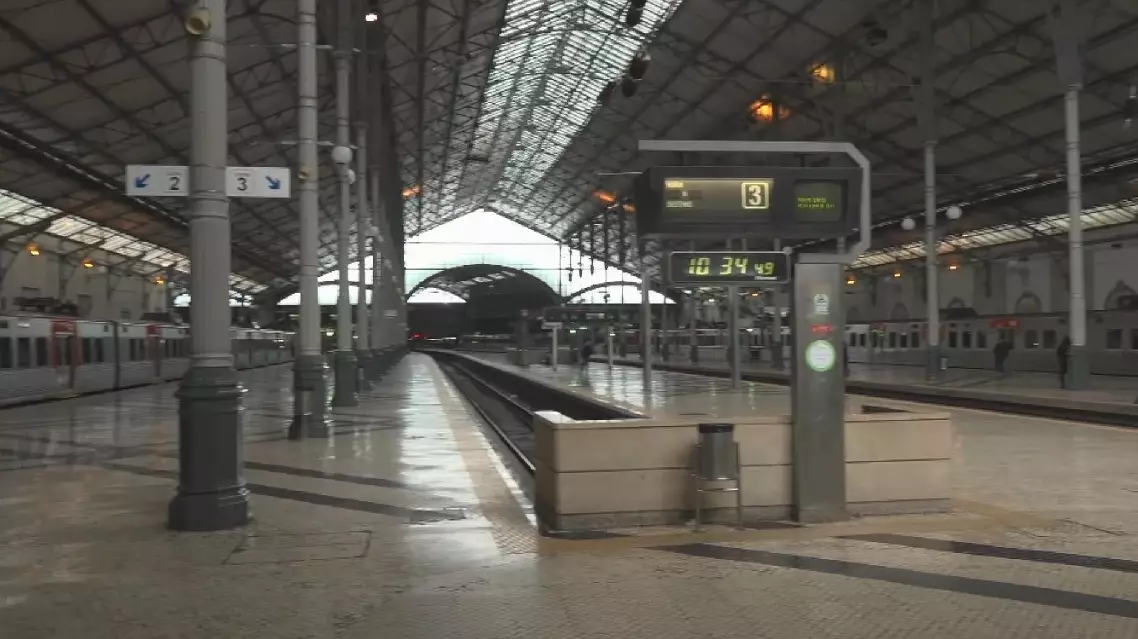
Affected by the nationwide strike, the Lisbon metro suspended its service all day on Thursday. Bus and train services significantly reduced and most flights were canceled, forcing many passengers to halt or adjust their travel plans.
"We were planning to go to Sintra, and we also uses out tickets. But 10 minutes before the time, they just canceled the train. So now we either wait here for the next one or come back tomorrow. But we are traveling back home in two day," said Hungarian tourist named Elizabeth.
At Santa Marta Hospital, all regular outpatient appointments and non-emergency surgeries scheduled for Thursday were canceled or postponed.
The strike has significantly reduced the hospital's operational efficiency, with only critical life-support services such as emergency care and dialysis continuing to function.
In addition, public services at tax authorities, social security offices, civil registry offices, courts, and municipal service centers are either closed or operating with restrictions. Relevant departments have warned that certain public administrative services may continue to be affected from Thursday to Friday.
"The entire country has been affected by the strike. Many people cannot commute normally. For people like me who rely on public transportation every day, getting around has become extremely inconvenient. Some businesses haven't been able to operate normally today, and a large number of flights at the airport have also been canceled," said Andre, a restaurant worker in Lisbon.
At Rossio Square in central Lisbon, starting from 10:00 on Thursday, demonstrators from different industries and unions began gathering here.
The Portuguese government has said that the labor law reform aims to enhance economic competitiveness and market flexibility while strengthening protections for workers in certain provisions.
However, the two major unions organizing the general strike argued that the government's proposal involves changes to more than 100 labor law articles, which could weaken labor rights protections and increase instability in the job market.
Nationwide strike hits key sectors in Portugal