Skip to Content Facebook Feature Image

Efforts to require Asian American history in schools after anti-Asian hate starting to pay off

News

Efforts to require Asian American history in schools after anti-Asian hate starting to pay off
News

News

Efforts to require Asian American history in schools after anti-Asian hate starting to pay off

2025-12-13 05:00 Last Updated At:05:10

When high school students in the West Hartford Public Schools district study World War II in the coming year, they will learn about more than just the typical hallmarks like Japanese American detention camps. They will also hear about Sadao Munemori, a soldier who died protecting comrades from a grenade. The 22-year-old posthumously became the first Japanese American awarded the Medal of Honor.

Lessons like this that delve beyond the expected have left teachers humbled, said Jessica Blitzer, the district’s social studies department supervisor who helped design curriculum for secondary grade levels.

More Images
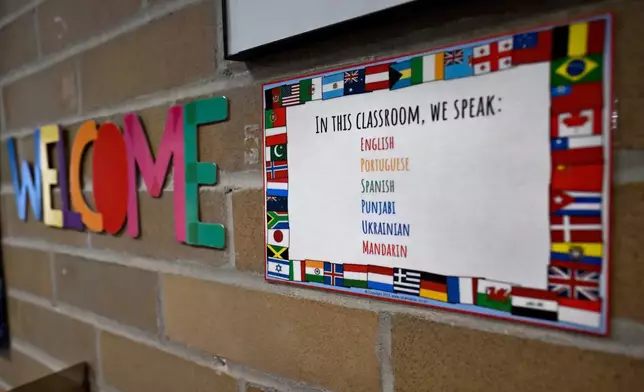
A sign posted outside Kindergarten teacher Christin Labriola's classroom shows the diverse population of her students at Webster Hill Elementary School in West Hartford, Conn., on Dec. 2, 2025. (AP Photo/Jessica Hill)

A sign posted outside Kindergarten teacher Christin Labriola's classroom shows the diverse population of her students at Webster Hill Elementary School in West Hartford, Conn., on Dec. 2, 2025. (AP Photo/Jessica Hill)

Kindergarten teacher Christin Labriola reads the book "Dumpling Soup" to her class, incorporating Asian American and Pacific Islander subjects in her class at Webster Hill Elementary School in West Hartford, Conn., on Dec. 2, 2025. (AP Photo/Jessica Hill)
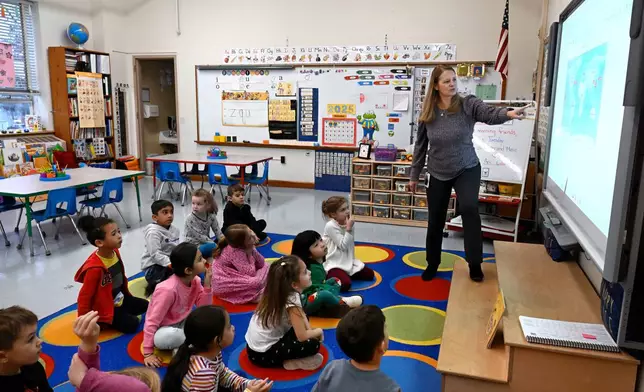

Kindergarten teacher Christin Labriola reads the book "Dumpling Soup" to her class, incorporating Asian American and Pacific Islander subjects in her class at Webster Hill Elementary School in West Hartford, Conn., on Dec. 2, 2025. (AP Photo/Jessica Hill)

Kindergarten teacher Christin Labriola reads the book

Kindergarten teacher Christin Labriola reads the book

Kindergarten teacher Christin Labriola points out Hawaii on a map, incorporating Asian American and Pacific Islander subjects in her class at Webster Hill Elementary School in West Hartford, Conn., on Dec. 2, 2025. (AP Photo/Jessica Hill)

Kindergarten teacher Christin Labriola points out Hawaii on a map, incorporating Asian American and Pacific Islander subjects in her class at Webster Hill Elementary School in West Hartford, Conn., on Dec. 2, 2025. (AP Photo/Jessica Hill)

Students, including Isaac De Oliviera Matielo, center, listen as kindergarten teacher Christin Labriola, left, reads the book "Dumpling Soup" to her class, incorporating Asian American and Pacific Islander subjects in her class at Webster Hill Elementary School in West Hartford, Conn., on Dec. 2, 2025. (AP Photo/Jessica Hill)

Students, including Isaac De Oliviera Matielo, center, listen as kindergarten teacher Christin Labriola, left, reads the book "Dumpling Soup" to her class, incorporating Asian American and Pacific Islander subjects in her class at Webster Hill Elementary School in West Hartford, Conn., on Dec. 2, 2025. (AP Photo/Jessica Hill)

Students, including Isaac De Oliviera Matielo, center, listen as kindergarten teacher Christin Labriola, left, reads the book

Students, including Isaac De Oliviera Matielo, center, listen as kindergarten teacher Christin Labriola, left, reads the book

Kindergarten teacher Christin Labriola reads the book "Dumpling Soup" to her class, incorporating Asian American and Pacific Islander subjects in her class at Webster Hill Elementary School in West Hartford, Conn., on Dec. 2, 2025. (AP Photo/Jessica Hill)

Kindergarten teacher Christin Labriola reads the book "Dumpling Soup" to her class, incorporating Asian American and Pacific Islander subjects in her class at Webster Hill Elementary School in West Hartford, Conn., on Dec. 2, 2025. (AP Photo/Jessica Hill)

Kindergarten teacher Christin Labriola reads the book

Kindergarten teacher Christin Labriola reads the book

“It's one of those moments where you think ‘How have we not been doing that?' These are moments where you realize this is really important, particularly given the population that we have in West Hartford, which is incredibly diverse in many ways," Blitzer said.

Three years after Connecticut became the third state to require Asian American and Pacific Islander history in K-12 education, a developed curriculum is being put into motion. For now, instruction is being rolled out in every grade except fourth and fifth. Most of the district's 9,300 students will have lessons integrated year-round. It will not be "the heritage month approach,” Blitzer said.

Since pandemic-fueled anti-Asian hate surged in 2020, Asian American, Native Hawaiian and Pacific Islander advocates have mobilized to make AAPI history mandatory learning through legislation or state education boards. Today, most AAPI adults want educators to teach history through the lens of racism, slavery and segregation, according to a 2024 survey. There have been some successes, with around a dozen states passing statutes requiring curriculum.

Beyond well-known events, classes are diving into topics like stereotypes of South Asians and Vietnamese refugees. But as efforts arise, so has disagreement among Asian Americans.

More progressive voices question the fairness and optics of seeking approval from lawmakers who have rejected history focused on other historically marginalized groups, such as expanded Black history curriculum that some critics more recently maligned as woke ideology or likened to critical race theory.

AAPI organizations devastated by reports of thousands of verbal and physical attacks, including the 2021 Atlanta spa shootings that left six Asian women dead, ramped up lobbying for more inclusive education. The hope was teaching about AAPI contributions would foster understanding. In July 2021, Illinois became the first state to mandate Asian American history. In 2022, New Jersey and Connecticut followed.

An expanded look at history includes reading accounts of new immigrants in San Francisco and Wong Kim Ark's Supreme Court fight for birthright citizenship. It also includes studying living figures like Chinese American architect Maya Lin.

Jason Oliver Chang, director of the University of Connecticut Asian and Asian American Studies Institute, helped develop legislation and train teachers. He remembers how lawmakers were moved by student testimonials.

“They were talking about their experiences sort of living two lives — one at school, one at home — feeling invisible and not feeling seen by their peers or respected by their peers,” Chang said. “Any time there’s a mention of someone that looks like them in a school curriculum, it's that they’re the bad guys.”

President Donald Trump has intensified scrutiny of how schools address race, threatening to withhold federal funds over diversity initiatives. The guidance has left some educators uncertain, despite some anti-DEI measures being blocked or put on hold by federal judges. Concerned teachers should stick to the framework and consult with colleagues, advises Kate Dias, president of the Connecticut’s largest teachers’ union.

“Almost every person who teaches content of this nature does not do it in a way to say, ‘Here’s all the injustices of the world,' ” Dias said. “The the call to action is ‘You need to now look at this information and you need to decide what it means.’ ”

Requiring AAPI history in schools has garnered bipartisan support. But in some conservative states, divisions have arisen over lawmakers who don't see systemic racism and social justice as essential to history.

When Florida adopted AAPI history legislation in 2023, critics saw it as hypocritical given the state denied Advanced Placement African American studies for being “critical race theory.”

In Arizona, failed legislation mandating AAPI and Native Hawaiian history lessons was initially endorsed by some past presidents of the Japanese American Citizens League. The Arizona chapter came out against it. Current JACL leaders also withheld their support.

Chapter leaders asserted the bill's co-sponsor, state Republican Sen. John Kavanagh, and other supporters were only interested in rubber-stamping a sanitized history and ignoring African American and LGBTQ+ history.

Kavanagh equates talk of systemic racism with indoctrination. He previously supported barring college groups based on racial or ethnic identity and high school ethnic studies classes that seemed politicized.

He says teaching the history must be done in a “neutral, thorough manner.”

“I certainly have no problem teaching the history of Blacks or Hispanics or anybody,” Kavanagh said. “I don’t think there should be a course in a high school teaching students that this country is systemically racist when it’s not.”

The Arizona chapter of Make Us Visible, a national organization trying to establish AAPI history in every state, has faced criticism for not calling out right-leaning legislators. Astria Wong, chapter director, dismissed it.

“It’s really a good thing that even a conservative senator will support it. That means there is some bones in it," Wong said. “It should be bipartisan anyway.”

Amber Reed, co-executive director of AAPI New Jersey, finds it upsetting.

“What teacher wants to suddenly start teaching Asian American history while sort of being discouraged from teaching African American history or Latinx history, the history of all of our communities," Reed said.

Before next summer, West Hartford Public Schools will assess how to improve curricula.

The goal is not to teach just “doom and gloom” to the student body — of which white children make up about 55%, Hispanics 21% and Asians and Black students more than 10% each — but a balanced look at history, said assistant superintendent Anne McKernan.

“There’s resistance, there’s perseverance, there’s greatness,” McKernan said. “As I look through the changes in elementary and the changes in secondary, it’s a richer look.”

Elementary grades are using books to learn culture, reading comprehension and vocabulary, said Erika Hanusch, district literacy and social studies curriculum specialist. For example, kindergartners are reading the picture book “Dumpling Soup” by Jama Kim Rattigan. Centered around a family in Hawaii, the characters come from different Asian backgrounds.

“It’s really more so embedded through story and lens," Hanusch said. “And it’s giving teachers and students that natural opportunity to learn a little bit more about the where and the who and the traditions that come from those stories.”

__

This story has been corrected to show that it was past presidents of the Japanese American Citizens League who supported Arizona AAPI history legislation, not the current JACL, which withheld support.

A sign posted outside Kindergarten teacher Christin Labriola's classroom shows the diverse population of her students at Webster Hill Elementary School in West Hartford, Conn., on Dec. 2, 2025. (AP Photo/Jessica Hill)

A sign posted outside Kindergarten teacher Christin Labriola's classroom shows the diverse population of her students at Webster Hill Elementary School in West Hartford, Conn., on Dec. 2, 2025. (AP Photo/Jessica Hill)

Kindergarten teacher Christin Labriola reads the book "Dumpling Soup" to her class, incorporating Asian American and Pacific Islander subjects in her class at Webster Hill Elementary School in West Hartford, Conn., on Dec. 2, 2025. (AP Photo/Jessica Hill)

Kindergarten teacher Christin Labriola reads the book "Dumpling Soup" to her class, incorporating Asian American and Pacific Islander subjects in her class at Webster Hill Elementary School in West Hartford, Conn., on Dec. 2, 2025. (AP Photo/Jessica Hill)

Kindergarten teacher Christin Labriola reads the book

Kindergarten teacher Christin Labriola reads the book

Kindergarten teacher Christin Labriola points out Hawaii on a map, incorporating Asian American and Pacific Islander subjects in her class at Webster Hill Elementary School in West Hartford, Conn., on Dec. 2, 2025. (AP Photo/Jessica Hill)

Kindergarten teacher Christin Labriola points out Hawaii on a map, incorporating Asian American and Pacific Islander subjects in her class at Webster Hill Elementary School in West Hartford, Conn., on Dec. 2, 2025. (AP Photo/Jessica Hill)

Students, including Isaac De Oliviera Matielo, center, listen as kindergarten teacher Christin Labriola, left, reads the book "Dumpling Soup" to her class, incorporating Asian American and Pacific Islander subjects in her class at Webster Hill Elementary School in West Hartford, Conn., on Dec. 2, 2025. (AP Photo/Jessica Hill)

Students, including Isaac De Oliviera Matielo, center, listen as kindergarten teacher Christin Labriola, left, reads the book "Dumpling Soup" to her class, incorporating Asian American and Pacific Islander subjects in her class at Webster Hill Elementary School in West Hartford, Conn., on Dec. 2, 2025. (AP Photo/Jessica Hill)

Students, including Isaac De Oliviera Matielo, center, listen as kindergarten teacher Christin Labriola, left, reads the book

Students, including Isaac De Oliviera Matielo, center, listen as kindergarten teacher Christin Labriola, left, reads the book

Kindergarten teacher Christin Labriola reads the book "Dumpling Soup" to her class, incorporating Asian American and Pacific Islander subjects in her class at Webster Hill Elementary School in West Hartford, Conn., on Dec. 2, 2025. (AP Photo/Jessica Hill)

Kindergarten teacher Christin Labriola reads the book "Dumpling Soup" to her class, incorporating Asian American and Pacific Islander subjects in her class at Webster Hill Elementary School in West Hartford, Conn., on Dec. 2, 2025. (AP Photo/Jessica Hill)

Kindergarten teacher Christin Labriola reads the book
Kindergarten teacher Christin Labriola reads the book
NEW YORK (AP) — More drops for superstars caught up in Wall Street’s artificial-intelligence frenzy knocked the U.S. stock market off its record highs. The S&P 500 fell 1.1% Friday from its all-time high and had its worst day in three weeks. The weakness for tech stocks yanked the Nasdaq composite down a market-leading 1.7%, and the Dow Jones Industrial Average fell 0.5% from its own record set the day before. Broadcom dragged the market lower even though the chip company reported a stronger profit for the latest quarter than analysts expected. Treasury yields rose to crank up the pressure on stocks.

THIS IS A BREAKING NEWS UPDATE. AP’s earlier story follows below.

NEW YORK (AP) — More drops for superstars caught up in Wall Street's artificial-intelligence frenzy are knocking the U.S. stock market off its record highs on Friday.

The S&P 500 fell 1% from its all-time high set the day before and was heading toward its worst day in three weeks. The weakness for tech stocks yanked the Nasdaq composite down by a market-leading 1.5%, as of 3:11 p.m. Eastern time, and the Dow Jones Industrial Average gave back 190 points, or 0.4%, after setting its own record the day before.

Broadcom dragged the market lower and tumbled 12% even though the chip company reported a stronger profit for the latest quarter than analysts expected. Analysts called the performance solid, and CEO Hock Tan said strong 74% growth in AI semiconductor revenue helped lead the way.

But investors may have been concerned with some of Broadcom’s financial forecasts, including how much profit it can squeeze out of each $1 of revenue. The AI heavyweight may also have simply run out of momentum after its stock came into the day with a surge of 75.3% for the year so far, more than quadruple the S&P 500’s gain.

Broadcom’s stumble came a day after Oracle plunged nearly 11% despite likewise reporting a bigger profit for the latest quarter than analysts expected.

Doubts remain about whether all the spending that Oracle is doing on AI technology will end up being worth it, along with how it will pay for it. Such questions are dogging the AI industry broadly, even as many billions of dollars continue to flow in.

Broadcom was the heaviest weight on the S&P 500 Friday, followed by Nvidia. The chip company that's become the poster child of the AI boom fell 2.5%. Oracle fell another 4.4%.

The stock market also felt some pressure from the bond market, where the yield on the 10-year Treasury climbed to 4.19% from 4.14% late Thursday. Higher yields can discourage investors from paying high prices for stocks and other investments, particularly when critics say they already look too expensive.

Friday's drops for AI superstars continue a jagged return toward Earth after they earlier had been the main engine propelling Wall Street higher. Other stocks that used to struggle with uncertainty about the U.S. economy’s strength and what the Federal Reserve will do with interest rates, meanwhile, have been doing better.

The stocks in the Dow Jones Industrial Average, which has much less of an emphasis on tech, are still up 1.2% for the week so far. That's much better than the Nasdaq composite's drop of 1.5%.

Even with Friday's rise in yields, investors are feeling more optimistic about interest rates. The Fed earlier this week cut its main interest rate for the third time this year and indicated another cut may be ahead in 2026. Wall Street loves lower rates because they can boost the economy and send prices for investments higher, even if they potentially make inflation worse.

The Fed’s chair, Jerome Powell, did hint on Wednesday that interest rates may be on hold for a while. But he helped soothe nerves when his comments appeared less harsh than some investors expected in shutting off the possibility of more cuts in 2026.

Stocks of travel-related companies were relatively strong on Friday, and 41% of the stocks within the S&P 500 rose. Oil prices have eased this week, which should help trim their bills, and hopes are rising that easier interest rates will support the economy and encourage more people to take trips.

Southwest Airlines climbed 1.6%, while Norwegian Cruise Line rose 1.6%.

The biggest gain in the S&P 500 came from Lululemon Athletica, which jumped 12.2% after reporting better profit and revenue for the three months through Nov. 2 than analysts expected. It also said its CEO, Calvin McDonald, plans to step down at the end of January following pressure to boost revenue.

In stock markets abroad, indexes fell in Europe following a stronger finish in Asia.

Stocks jumped 1.7% in Hong Kong and rose 1.4% in Tokyo for two of the world’s bigger gains.

AP Writers Teresa Cerojano and Matt Ott contributed.

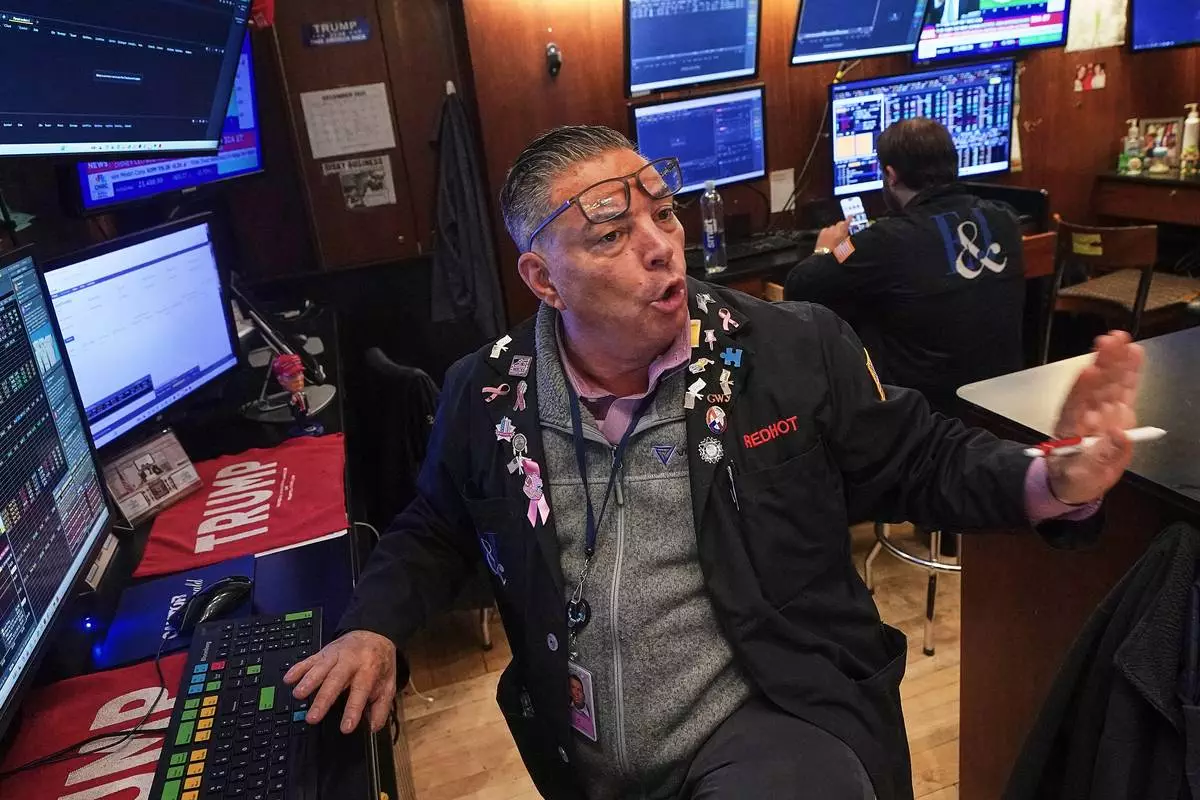
Trader William Lawrence works on the floor of the New York Stock Exchange, Thursday, Dec. 11, 2025. (AP Photo/Richard Drew)

Trader William Lawrence works on the floor of the New York Stock Exchange, Thursday, Dec. 11, 2025. (AP Photo/Richard Drew)

Trader Jonathan Mueller works on the floor of the New York Stock Exchange, Thursday, Dec. 11, 2025. (AP Photo/Richard Drew)

Trader Jonathan Mueller works on the floor of the New York Stock Exchange, Thursday, Dec. 11, 2025. (AP Photo/Richard Drew)

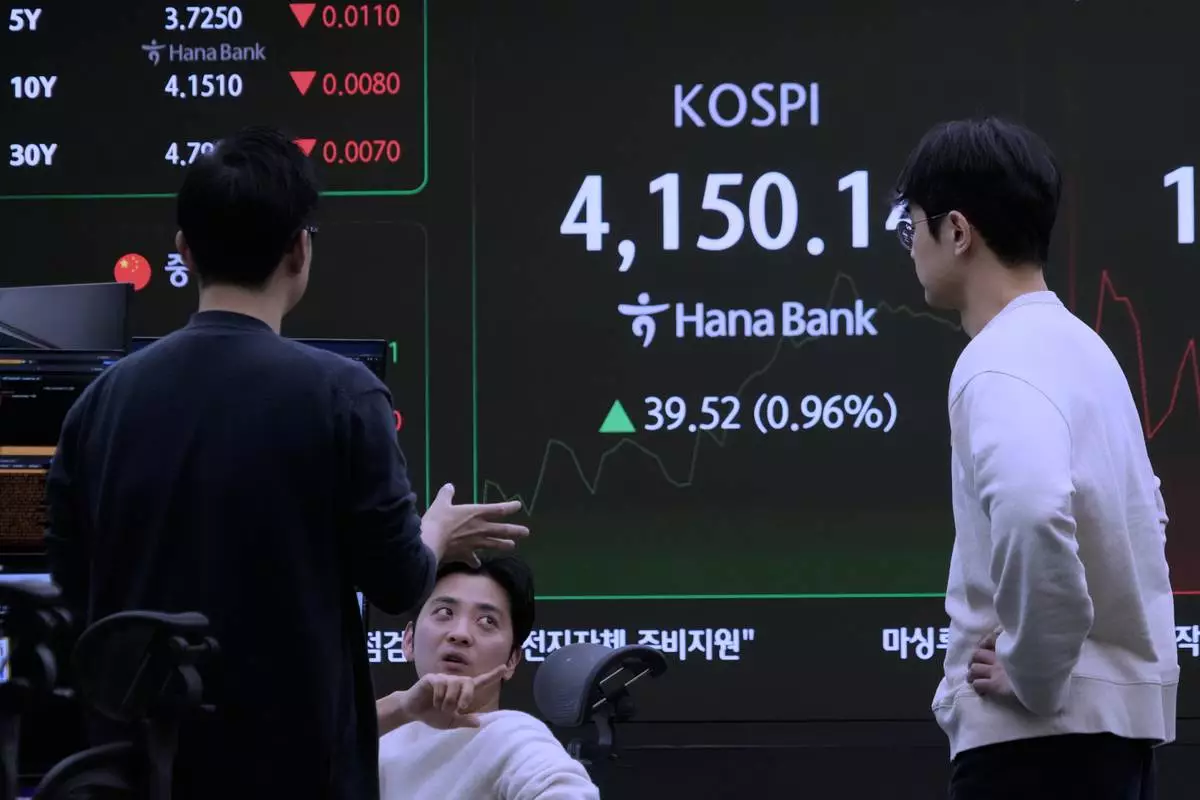
Currency traders work near a screen showing the Korea Composite Stock Price Index (KOSPI) at the foreign exchange dealing room of the Hana Bank headquarters in Seoul, South Korea, Friday, Dec. 12, 2025. (AP Photo/Ahn Young-joon)

Currency traders work near a screen showing the Korea Composite Stock Price Index (KOSPI) at the foreign exchange dealing room of the Hana Bank headquarters in Seoul, South Korea, Friday, Dec. 12, 2025. (AP Photo/Ahn Young-joon)

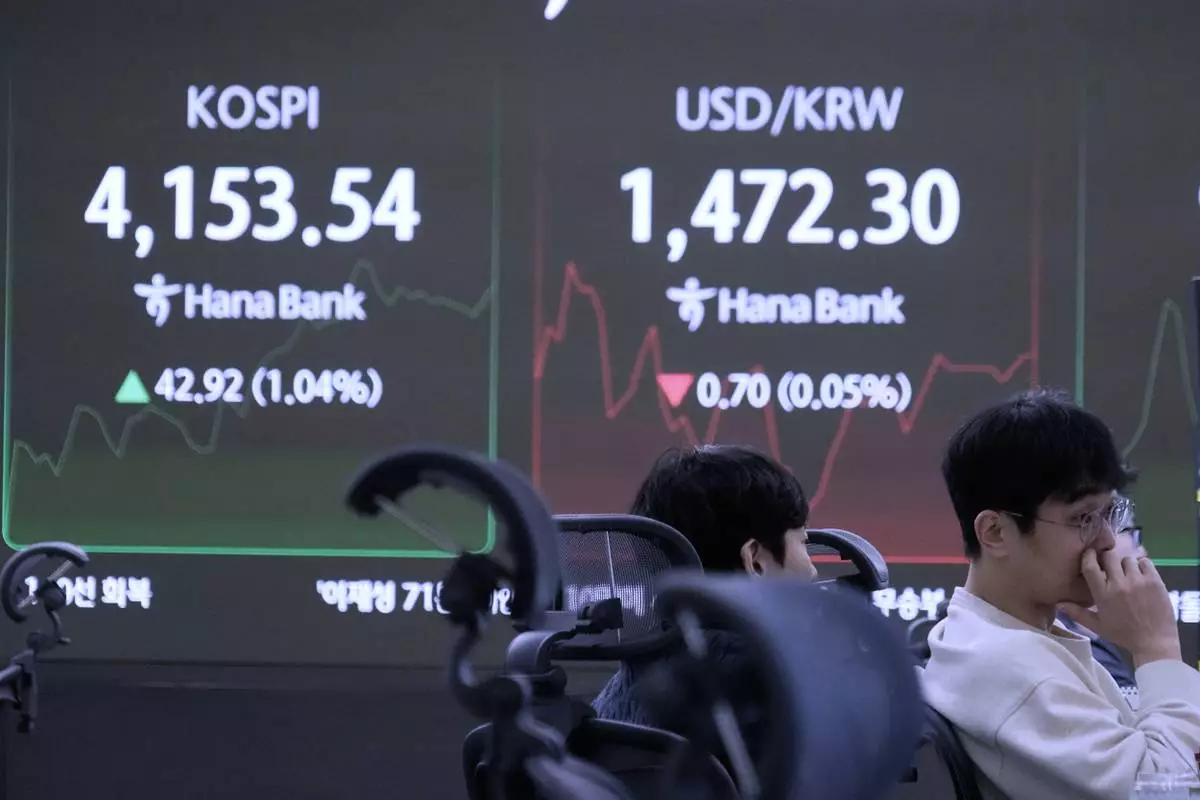
Currency traders work near a screen showing the Korea Composite Stock Price Index (KOSPI), left, and the foreign exchange rate between U.S. dollar and South Korean won at the foreign exchange dealing room of the Hana Bank headquarters in Seoul, South Korea, Friday, Dec. 12, 2025. (AP Photo/Ahn Young-joon)

Currency traders work near a screen showing the Korea Composite Stock Price Index (KOSPI), left, and the foreign exchange rate between U.S. dollar and South Korean won at the foreign exchange dealing room of the Hana Bank headquarters in Seoul, South Korea, Friday, Dec. 12, 2025. (AP Photo/Ahn Young-joon)

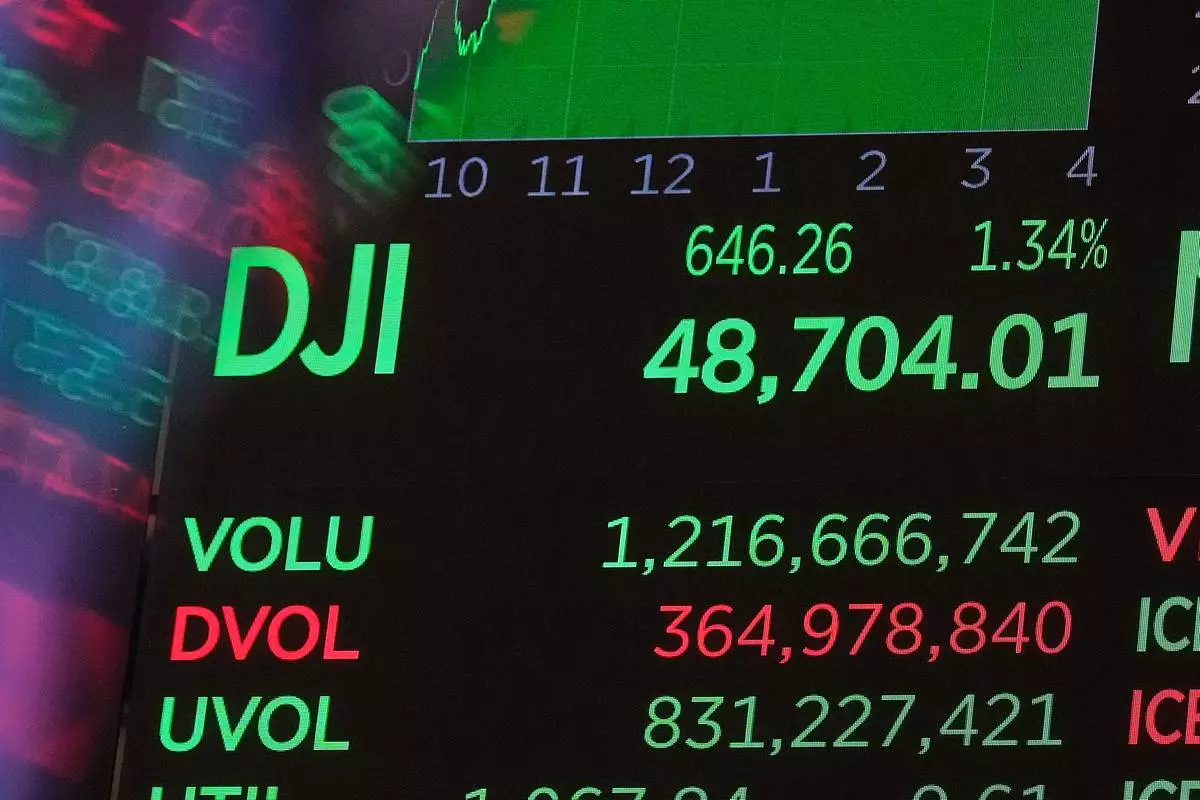
A board above the trading floor of the New York Stock Exchange displays the closing number for the Dow Jones industrial average, Thursday, Dec. 11, 2025. (AP Photo/Richard Drew)

A board above the trading floor of the New York Stock Exchange displays the closing number for the Dow Jones industrial average, Thursday, Dec. 11, 2025. (AP Photo/Richard Drew)

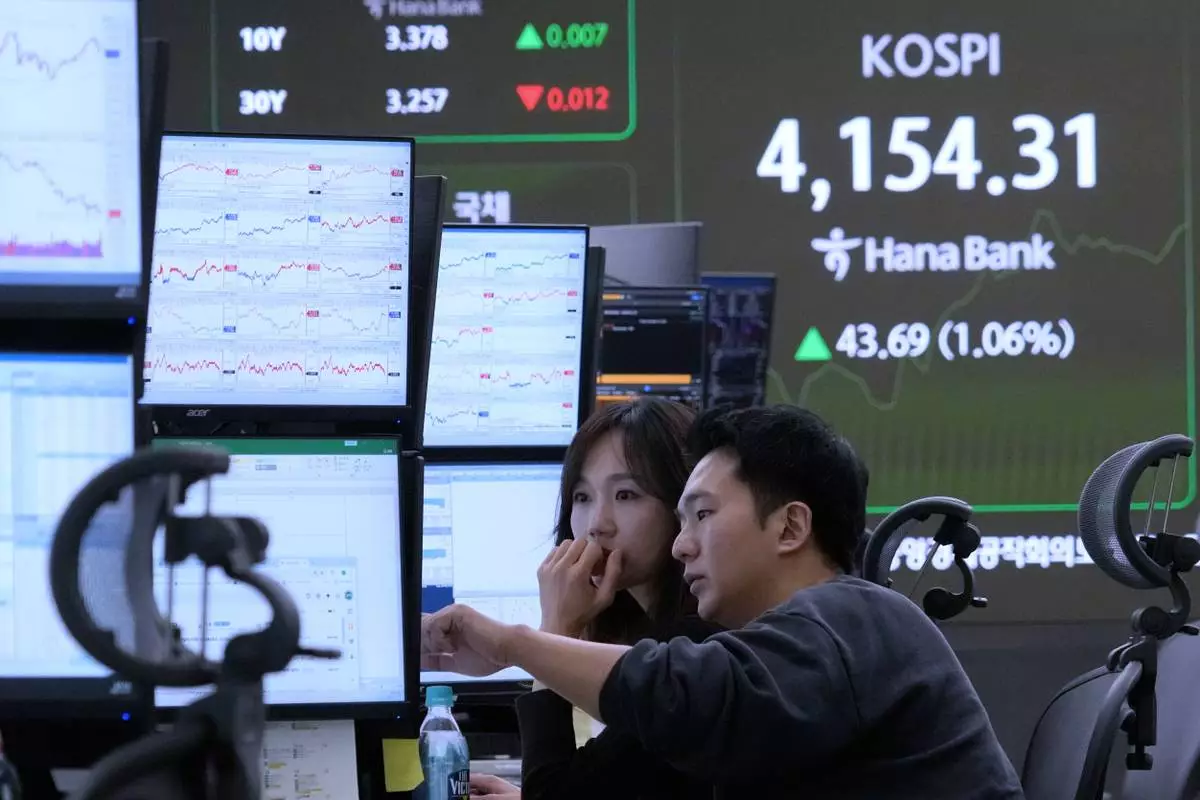
Currency traders watch monitors near a screen showing the Korea Composite Stock Price Index (KOSPI) at the foreign exchange dealing room of the Hana Bank headquarters in Seoul, South Korea, Friday, Dec. 12, 2025. (AP Photo/Ahn Young-joon)

Currency traders watch monitors near a screen showing the Korea Composite Stock Price Index (KOSPI) at the foreign exchange dealing room of the Hana Bank headquarters in Seoul, South Korea, Friday, Dec. 12, 2025. (AP Photo/Ahn Young-joon)

Recommended Articles