NEW YORK (AP) — It may feel like you are surrounded by sniffles and coughs, but flu season activity is still low in many parts of the U.S.
New government data posted Friday shows that as of last week, flu activity was high in four states — Colorado, Louisiana, New Jersey and New York — and minimal or low in most others. Severity indicators are increasing but are still within the boundaries of a “mild” season, said officials at the U.S. Centers for Disease Control and Prevention.
A number of diseases tend to peak in the winter, thanks to indoor gatherings that help germs spread. The list includes not only colds and flu but also norovirus — a highly infectious cause of vomiting and diarrhea. Norovirus cases have generally been trending up in the last month.
Here are three seasonal respiratory viruses that experts are keeping an eye on:
Last flu season was bad, with the overall flu hospitalization rate the highest since the H1N1 flu pandemic 15 years ago. With the addition of a late-reported case, child flu deaths reached 288, the worst recorded for regular U.S. flu season and the same number seen in the 2009-2010 flu pandemic.
This season's first pediatric flu death was reported this week.
There are reasons to fear this winter might be bad.
One type of flu virus — called A H3N2 — historically has caused the most hospitalizations and deaths in older people. So far this season, that's the type most frequently reported. Even more concerning, 89% of the H3N2 infections analyzed were a new version — known as the subclade K variant — that differs from the strain in this year’s flu shots.
Flu seasons often don't peak until around February, so it's too early to know how big a problem that mismatch will be.
The CDC recommends that everyone 6 months and older get an annual vaccination, and public health experts say it’s not too late. About 42% of U.S. adults and 41% of children have gotten flu shots this season, according to CDC data.
The shots may not prevent all symptoms but they can prevent many infections from becoming severe. That appears to be true for this year’s shot, according to a preliminary U.K. analysis.
Respiratory syncytial virus is a common cause of cold-like symptoms. But it can be dangerous for infants and the elderly, and is known for filling hospitals with wheezing babies every fall and winter.
RSV seasons typically peak by December or January, but the season seems to be starting later than usual reported cases so far have been relatively low, according to the CDC.
It’s likely more RSV is coming, said Dr. Cameron Wolfe, an infectious diseases expert at Duke University, in an email. And, indeed, Friday’s CDC update showed signs that infections are increasing in the South and in mid-Atlantic states.
But relatively new vaccines may be helping. In 2023, the government licensed new RSV vaccines for pregnant women and older people, and injections of laboratory-made versions of antibodies for infants.
“Perhaps, glass half full, we’re cumulatively getting more people slowly vaccinated against RSV,” Wolfe said. “And because the virus mutates far less quickly than flu or COVID, the one vaccine you might have had as an older adult two or three years ago is likely still quite effective.”
As of October, about 41% of Americans 75 and older have been vaccinated, and about 40% of infants were reported to be protected, CDC data says.
The Trump administration, which has appointed vaccine skeptics to public health leadership and advisory positions, this week opened a review of the two injectable drugs used to protect babies and toddlers despite no signs of safety issues.
COVID-19 activity right now is relatively low.
This week, the CDC published research showing the COVID-19 vaccine can keep kids from developing a severe illness. Among children nine months to 4 years, the shots were 76% effective against symptoms severe enough to send a child to a hospital ER or urgent care center, the agency found. Among kids five to 17 years, it was 56% effective.
Other studies also found the shots are safe and effective for children. But the report comes out after Trump administration officials stopped recommending COVID-19 vaccines for healthy children, and as anti-vaccine advocates are petitioning the government to revoke licenses for the Moderna and Pfizer-BioNTech vaccines.
Few people are getting the shot this year. About 7% of children and 15% of adults have gotten this season's version of COVID-19 vaccine, according to the CDC.
In October, the agency stopped recommending COVID-19 shots for anyone, leaving the choice up to patients. Several doctors groups and scientific organizations argued against watering down vaccination recommendations for a disease that has been a primary or contributing factor in more than 1.2 million U.S. deaths.
The Associated Press Health and Science Department receives support from the Howard Hughes Medical Institute’s Department of Science Education and the Robert Wood Johnson Foundation. The AP is solely responsible for all content.
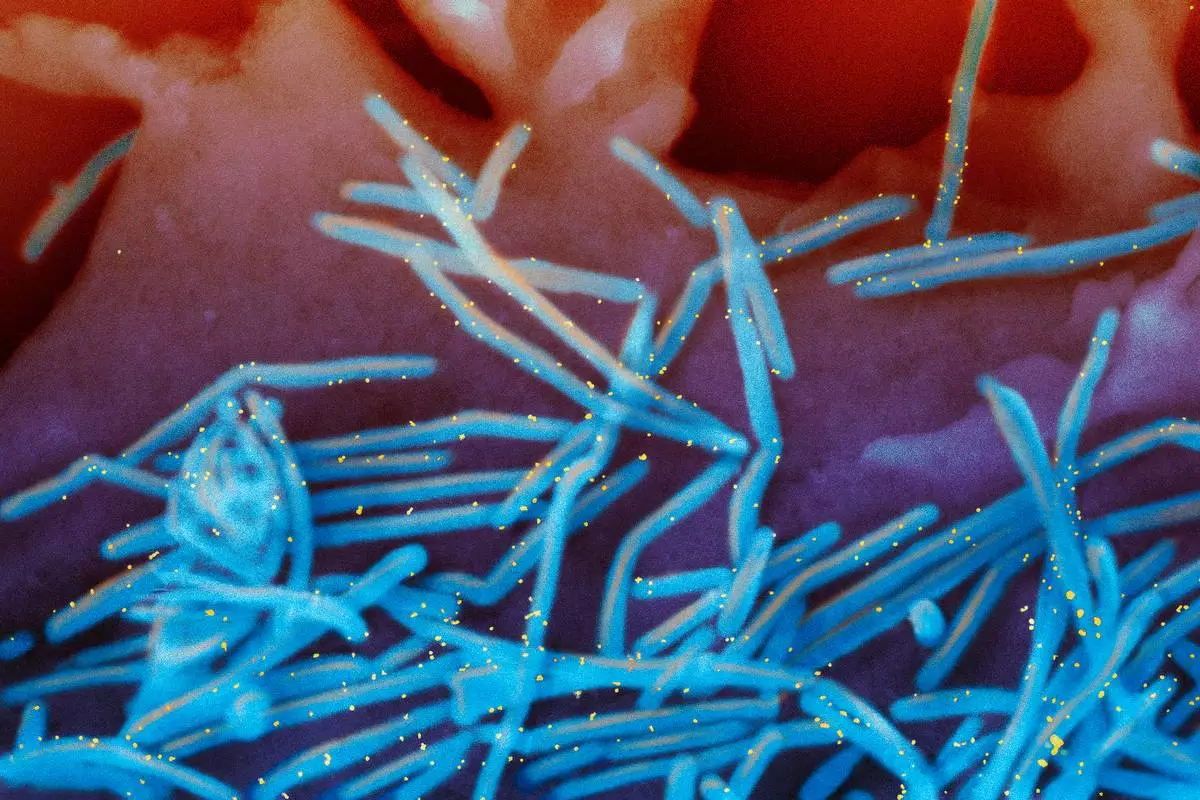
FILE - This electron microscope image provided by the National Institutes of Health shows human respiratory syncytial virus (RSV) virions, colorized blue, and anti-RSV F protein/gold antibodies, colorized yellow, shedding from the surface of human lung cells. (National Institute of Allergy and Infectious Diseases, NIH via AP, File)
GOLD COAST, Australia (AP) — Two more members of the Iranian women’s soccer team were granted asylum in Australia before their teammates departed the country, Australian Home Affairs Minister Tony Burke said Wednesday, but one of the woman later changed her mind and will return to Iran.
A total of six women from the Iranian squad will remain in Australia on humanitarian visas after accepting offers of asylum shortly before their scheduled return home, Burke said. The names of the seven team members initially granted asylum, and their photographs, have been widely published — including by Burke — and it was not immediately clear which of the women had reversed her decision.
The rest of the team’s departure from Sydney, Australia late Tuesday happened during fraught and outraged protests at the delegation's hotel and at the airport. Iranian Australians sought to prevent the women from leaving the country, citing fears for their safety in Iran.
Burke on Wednesday morning announced that one player and a team staffer had joined five athletes who had decided to stay in Australia. Hours later, however, he told Australia's federal parliament in Canberra that one of the women had spoken to her departed teammates and decided to return home too.
“She was advised by her teammates and coach to contact the Iranian embassy and to get collected,” Burke said. “As a result of that, it meant that the Iranian embassy now knew the location of where everybody was.”
The six women remaining in Australia were immediately moved to a different location, the minister said.
The fluid nature of the situation capped a fraught time in Australia for the Iranian players. The team arrived in Australia for the Women’s Asian Cup last month, before the Iran war began Feb. 28. The team was knocked out of the tournament over the weekend and faced the prospect of returning to a country under bombardment.
Australia's government Wednesday disclosed their final attempts to ensure each member of the team could consider an asylum offer. Burke said that as the women passed through border security, they were taken aside individually to speak to Australian officials and interpreters, without minders present.
“Australia made the offer because we are so impressed by these women as individuals,” he said. “The choice that Australia gave, the choice of government officials standing in front of you and saying it is up to you, is a choice that every individual should be entitled to.”
Some called their families in Iran to discuss the offer, Burke added, but no further members of the delegation decided to remain in Australia.
“Everything was about ensuring the dignity for those individuals to make a choice,” he said. “We couldn't take away the pressure of the context for these individuals, of what might have been said to them beforehand, what pressures they might have felt there were on other family members.”
Those who sought asylum received temporary humanitarian visas, which would lead to permanent residency in Australia, Burke said. He added that some of the delegation were not offered visas because they had connections to Iran's paramilitary Revolutionary Guard.
The Iranian team became popular figures in Australia during the tournament. Iranian groups in Australia had urged the government to halt the women's departure after the team drew widespread news coverage in Australia when players didn’t sing the Iranian anthem before their first match.
The players didn't explain publicly why they did not sing. They later saluted and sang the anthem before their other games. During the tournament, the women mostly declined to comment on the situation at home and made no political remarks.
“When those players were silent at the start of their first match in Australia, that silence was heard as a roar all around the world,” Burke said. “We responded by saying, the invitation is there. In Australia you can be safe.”
It was not clear exactly how many people were in the delegation, but an official squad list named 26 players, plus coaching and other staff. Burke rejected suggestions that Australian officials should have done more to stop the women’s departure.
“Australia’s objective here was not to force people to make a particular decision,” he said. “We’re not that sort of nation.”
The minister said he had viewed widely published footage that appeared to show a woman being led by the hand by her teammates from the team’s hotel on Queensland’s Gold Coast to their bus. Whether that constituted coercion was a matter for local Australian police, Burke said.
“Iran welcomes its children with open arms and the government guarantees their security," Iranian first Vice President Mohammad Reza Aref said Tuesday. “No one has the right to interfere in the family affairs of the Iranian nation and play the role of a nanny who is kinder than a mother,” he added.
The team's fate had attracted international attention, including from U.S. President Donald Trump, who decried the Australian government Monday for not offering the women asylum. It emerged Tuesday that discussions between Australian officials and some of the women had already been unfolding privately.
Iranian state TV said the country’s football federation had asked international soccer bodies to review what it called Trump’s “direct political interference in football,” warning such remarks could disrupt the 2026 World Cup.
Graham-McLay reported from Wellington, New Zealand.

Police talk to protesters as they lay down in front of a bus believed to be carrying the Iranian women's soccer team as it attempts to leave a hotel on the Gold Coast, Australia, Tuesday, March 10, 2026. (AP Photo/John Pye)

In this photo supplied by Australia's Minister for Home Affairs, Tony Burke's office, the Minister, Tony Burke, center, with two woman from the Iranian women soccer squad who have been granted humanitarian visas, in Brisbane, Australia, Tuesday, March 10, 2026. (Australia Minister of Home Affairs via AP)

In this photo supplied by Australia's Minister for Home Affairs Tony Burke's office, the Minister Tony Burke, center, poses in an undisclosed location with five Iranian women soccer players who have been granted asylum in Australia, Tuesday, March 10, 2026. (Australia Ministry of Home Affairs via AP)