HARTFORD, Conn. (AP) — Alex Karaban scored 18 points, including the 1,500th of his career, as fifth-ranked UConn overcame a poor shooting second half to hold off Texas 71-63 on Friday night.
Tarris Reed Jr. had 12 points, six rebounds and a career-high five assists for the Huskies (10-1), who concluded their rugged nonconference schedule with a sixth straight victory. Jaylin Stewart and Braylon Mullins added 10 points apiece.
UConn led by nine at halftime and despite some empty Huskies possessions in the second half, Texas was never able to get closer than five the rest of the way.
Texas trailed 61-56 when Solo Ball's desperation heave for UConn beat the shot clock with 3:39 to play. After a steal, Karaban hit an open 3-pointer to put the Huskies up by 11.
Texas answered with Tramon Mark's 3-pointer and a floater by Jordan Pope to pull within six. Baskets by Malachi Smith and Stewart helped the Huskies close it out.
Pope and Mark each had 15 points for Texas (7-4).
Mark scored six points in the first 2:48 to give the Longhorns the lead. He had just two more points in the first half.
Without the offense coming from Mark, the Huskies began to take control. Mullins and Karaban hit 3s in a 10-3 run. UConn took its first double-digit lead on a backdoor layup by Karaban.
The Huskies led by 12 in the first half. Simeon Wilcher had seven points during a 9-2 run by the Longhorns. It was a two-point game following Pope's basket, but Texas didn't make a field goal for the final 2:53 of the half. Back-to-back baskets by Reed and a layup by Karaban in the final seconds gave the Huskies a 43-34 lead at the break.
Mullins made his first career start and sank all three of his shots in the first half. He missed six of UConn's first 10 games with an ankle injury.
Texas is home against Le Moyne on Tuesday.
UConn hosts Butler next Tuesday in its Big East opener.
Get poll alerts and updates on the AP Top 25 throughout the season. Sign up here. AP college basketball: https://apnews.com/hub/ap-top-25-college-basketball-poll and https://apnews.com/hub/college-basketball

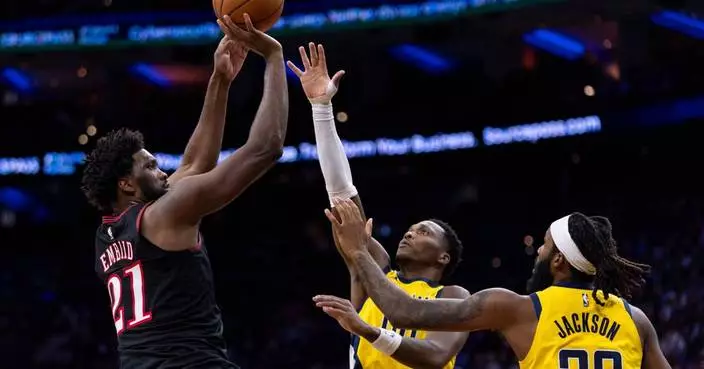
UConn forward Tarris Reed Jr., left, shoots as Texas center Matas Vokietaitis (8) defends in the first half of an NCAA college basketball game, Friday, Dec. 12, 2025, in Hartford, Conn. (AP Photo/Jessica Hill)
WASHINGTON (AP) — The Senate failed to get anywhere on the health care issue this week. Now it's the House's turn to show what it can do.
Speaker Mike Johnson unveiled a Republican alternative late Friday, a last-minute sprint as his party refuses to extend the enhanced tax subsidies for those who buy policies through the Affordable Care Act, also called Obamacare, which are expiring at the end of the year. Those subsidies help lower the cost of coverage.
Johnson, R-La., huddled behind closed doors in the morning — as he did days earlier this week — working to assemble the package for consideration as the House focuses the final days of its 2025 work on health care.
“House Republicans are tackling the real drivers of health care costs to provide affordable care,” Johnson said in a statement announcing the package. He said it would be voted on next week.
Later Friday, though, House Democratic Leader Hakeem Jeffries said: “House Republicans have introduced toxic legislation that is completely unserious, hurts hardworking America taxpayers and is not designed to secure bipartisan support. If the bill reaches the House floor, I will strongly oppose it.”
Time is running out for Congress to act. Democrats engineered the longest federal government shutdown ever this fall in a failed effort to force Republicans to the negotiating table on health care. But after promising votes, the Senate failed this week to advance both a Republican health care plan and the Democratic-offered bill to extend the tax credits for three years.
Now, with just days to go, Congress is about to wrap up its work with no consensus solution in sight.
The House Republicans offered a 100-plus-page package that focuses on long-sought GOP proposals to enhance access to employer-sponsored health insurance plans and clamp down on so-called pharmacy benefit managers.
Republicans propose expanding access to what's referred to as association health plans, which would allow more small businesses and self-employed individuals to band together and purchase health coverage.
Proponents say such plans increase the leverage businesses have to negotiate a lower rate. But critics say the plans provide skimpier coverage than what is required under the Affordable Care Act.
The Republicans’ proposal would also require more data from pharmacy benefit managers, or PBMs, as a way to help control drug costs. Critics say PBMs have padded their bottom line and made it more difficult for independent pharmacists to survive.
Additionally, the GOP plan includes mention of cost-sharing reductions for some lower-income people who rely on Obamacare, but those do not take effect until January 2027.
The emerging package from the House Republicans does not include an extension of an enhanced tax credit for millions of Americans who get insurance coverage through the Affordable Care Act. Put in place during the COVID-19 crisis, that enhanced subsidy expires Dec. 31, leaving most families in the program facing more than double their current out-of-pocket premiums, and in some cases, much more.
President Donald Trump has said he believes Republicans are going to figure out a better plan than Obamacare — something he has promised for years — but offered few details beyond his idea for providing Americans with stipends to help buy insurance.
“I want to see the billions of dollars go to people, not to the insurance companies," Trump said late Friday during an event at the White House. “And I want to see the people go out and buy themselves great healthcare.”
The president did not comment directly on the House's new plan. He has repeatedly touted his idea of sending money directly to Americans to help offset the costs of health care policies, rather than extending the tax credits for those buying policies through Obamacare. It’s unclear how much money Trump envisions. The Senate GOP proposal that failed to advance would have provided payments to new health savings accounts of $1,000 a year for adult enrollees, or $1,500 for those ages 50 to 64.
It appeared there were no such health savings accounts in the new House GOP plan.
Going Johnson's route has left vulnerable House Republicans representing key battleground districts in a tough spot.
Frustrated with the delays, a group of more centrist GOP lawmakers is aligning with Democrats to push their own proposals for continuing the tax credits, for now, so that Americans don't face rising health care costs.
They are pursuing several paths for passing a temporary ACA subsidy extension, co-sponsoring a handful of bills. They are also signing onto so-called discharge petitions that could force a floor vote if a majority of the House signs on.
Such petitions are designed to get around the majority's control and are rarely successful, but this year has proven to be an exception. Lawmakers, for example, were able to use a discharge petition to force a vote on the release of the Jeffrey Epstein files held by the Department of Justice.
One petition, filed by Rep. Brian Fitzpatrick, R-Pa., had signatures from 12 Republicans and 12 Democrats as of Friday afternoon. It would force a vote on a bill that includes a two-year subsidy extension and contains provisions designed to combat fraud in the ACA marketplace. There are also restrictions for PBMs, among other things.
Another petition from Rep. Josh Gottheimer, D-N.J., has 39 signatures and is broadly bipartisan. It's a simpler proposal that would force a vote on a one-year ACA enhanced subsidy extension and would include new income caps limiting who qualifies for the enhanced credit.
Both discharge petitions have enough Republicans’ support that they would likely succeed if Jeffries encouraged his caucus to jump on board. So far, he's not tipping his hand.
“We’re actively reviewing those two discharge petitions and we’ll have more to say about it early next week,” Jeffries said.
Meanwhile, Jeffries is pushing Democrats' own discharge petition, which has 214 signatures and would provide for a clean three-year subsidy extension. No Republicans have signed onto that one.
And as Republicans made clear in the Senate this week, a three-year extension without changes to the program has no chance of passing their chamber.
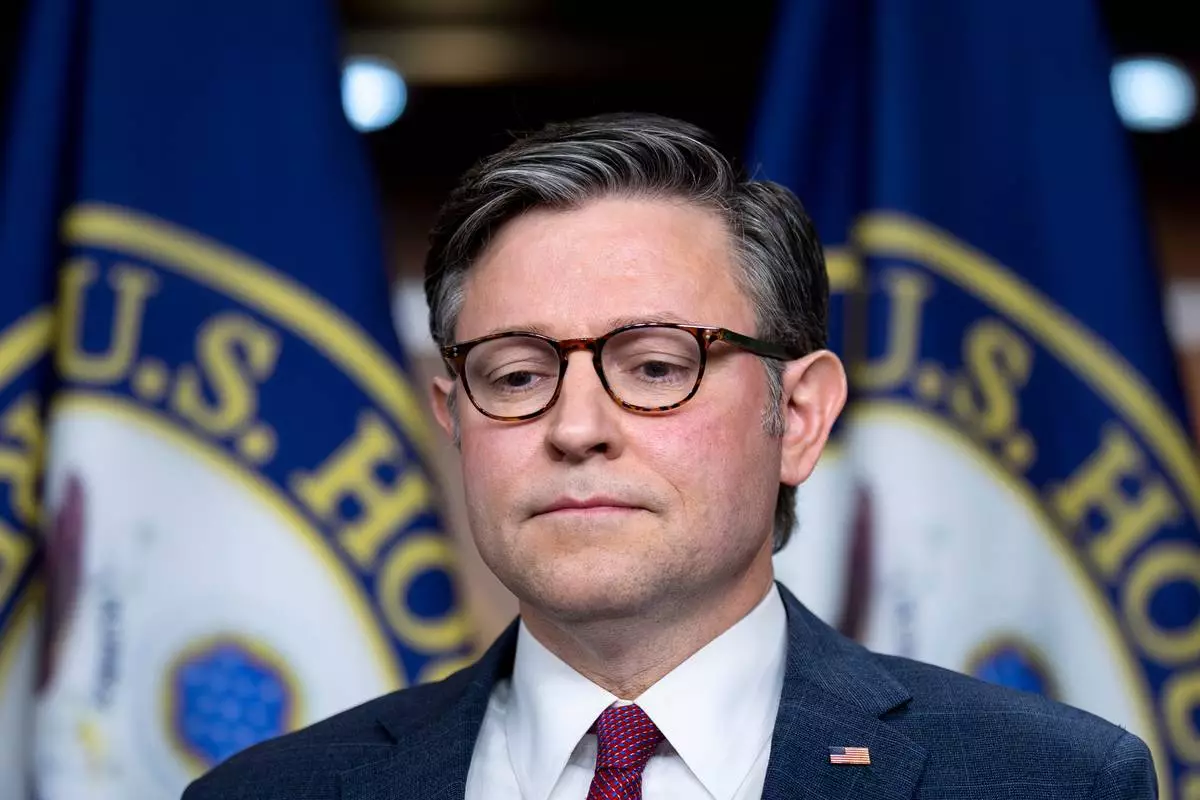
Speaker of the House Mike Johnson, R-La., prepares to speak to reporters following a strategy session with House Republicans, at the Capitol in Washington, Wednesday, Dec. 10, 2025. (AP Photo/J. Scott Applewhite)