The latest round of clashes between Thailand and Cambodia has left 15 Thai soldiers dead, and 270 others injured, Surasant Kongsiri, spokesman for Thailand's Ministry of Defense, announced at a Saturday press conference.
Thailand has set up 970 temporary shelters, where 263,105 people are residing, the spokesman said.
The death toll among Thai civilians has risen to seven, he added.
Meanwhile, the Royal Thai Army (RTA) said in a statement on Saturday that Cambodia had launched strikes targeting a civilian area in Thailand's Sisaket Province, leaving two people seriously injured.
The attack took place as local residents were rushing to bomb shelters immediately after hearing air raid warnings, said the statement released on social media.
The RTA strongly condemned the Cambodian military's actions.
The Cambodian side has not yet responded.
Cambodia's Ministry of Interior announced in a press release on Saturday that it would suspend all border crossings with Thailand until further notice. The press release said the move was made after the Thai side had committed acts of aggression against Cambodia's sovereignty through indiscriminate attacks, causing civilian casualties and damaging residential areas and infrastructure.
In this regard, Cambodian citizens currently residing and working in Thailand are advised to continue living and working there as normal. Likewise, Thai nationals currently residing and working in Cambodia are advised to remain in Cambodia as usual, until a ceasefire is in place, it said.
The Cambodia-Thailand border conflict broke out on Dec 7, with the two sides accusing each other of firing first.

15 Thai soldiers killed in Thailand-Cambodia border clashes
A leading Japanese economist has warned that the Bank of Japan's anticipated interest rate hike will not address the country's fundamental economic problems, calling instead for structural reforms and stronger support for small and medium-sized enterprises.
The economist's comments come as the yen exchange rate continues to hover near 160 yen per U.S. dollar, with Japanese media and financial markets widely expecting the Bank of Japan to announce a rate hike at its monetary policy meeting on June 15 and 16.
"Japanese political and economic scholar Hamada Kazuyuki said: "The future trend of the Japanese economy is also affected by factors such as rising crude oil prices and inflation, and there are no signs of these problems being resolved anytime soon. If left unchecked, they will develop into a serious inflationary trend. This will not only affect enterprises but also the daily lives of ordinary people. Therefore, in order to curb these impacts, the Bank of Japan is taking countermeasures and adjusting toward the direction of raising interest rates. However, whether these measures can truly be effective still remains highly uncertain," he said.
He also noted that the operations of small and medium-sized enterprises in Japan continue to face pressure, and the overall recovery of the Japanese economy is filled with uncertainty. The Japanese government's model of relying on debt to rescue the market only addresses symptoms rather than root causes and cannot solve the fundamental problems of the Japanese economy, he added.
"More than 80 percent, or even 90 percent, of Japanese enterprises are small and medium-sized enterprises. Only a small number of large enterprises have gained profits from exchange rate fluctuations. The vast majority of small and medium-sized enterprises are already on the edge of life and death. Therefore, without more adequate support policies for small and medium-sized enterprises, it will be very difficult for the Japanese economy to achieve recovery or restoration. The current government is in a rather difficult situation. Originally, it said no supplementary budget was needed, but as the economy deteriorates, it has no choice but to rely on supplementary budgets and deficit financing to barely cope. But this is not a fundamental solution. Continuing down this path will only make Japan's situation further deteriorate. Therefore, if the government truly wants to improve the economy, it must cut waste within the existing fiscal scope and concentrate resources into truly effective areas. This is the necessary direction," he said.
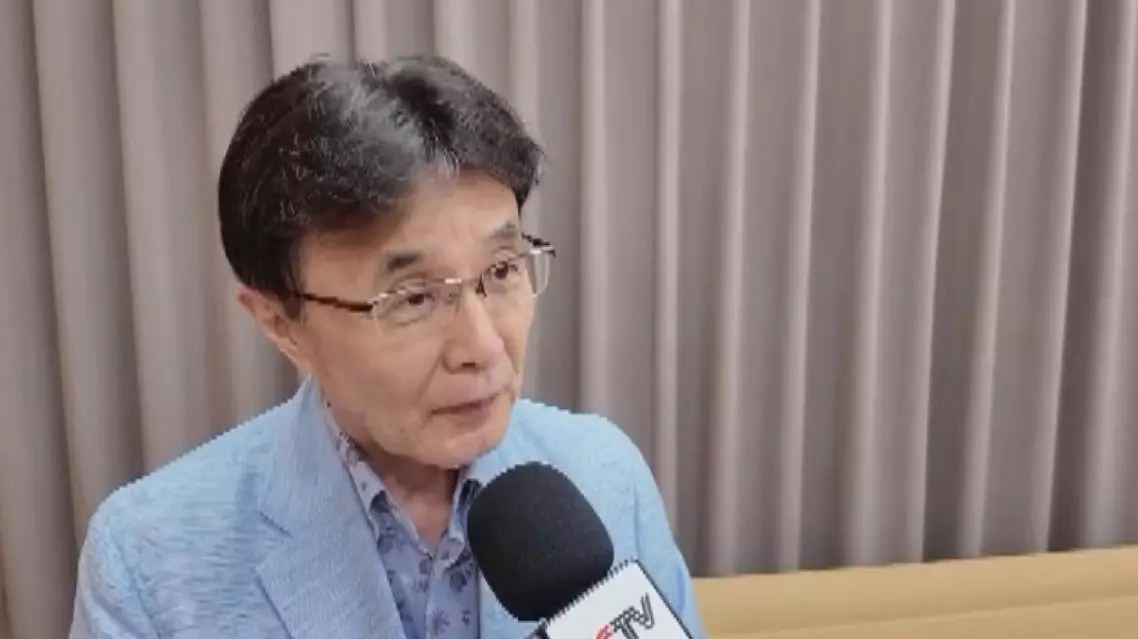
Japanese economist warns rate hike inadequate, urges structural reform