LUXOR, Egypt (AP) — Egypt on Sunday revealed the revamp of two colossal statues of a prominent pharaoh in the southern city of Luxor, the latest in the government’s archaeological events that aim at drawing more tourists to the country.
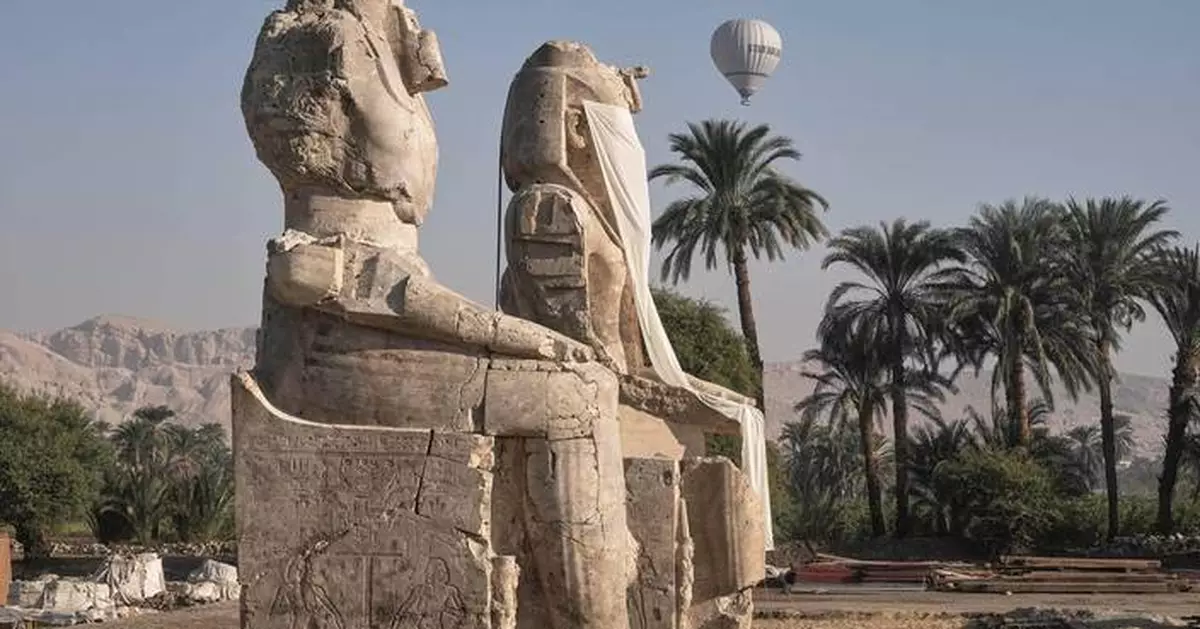
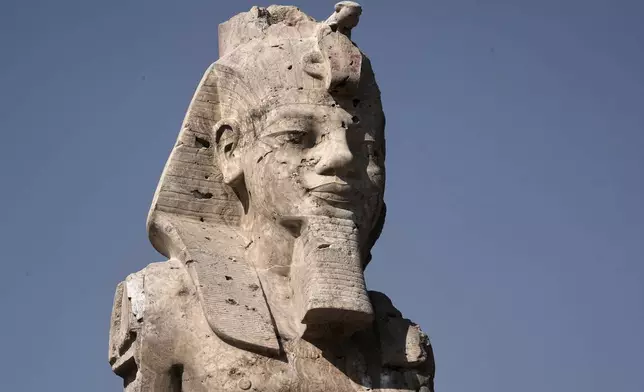
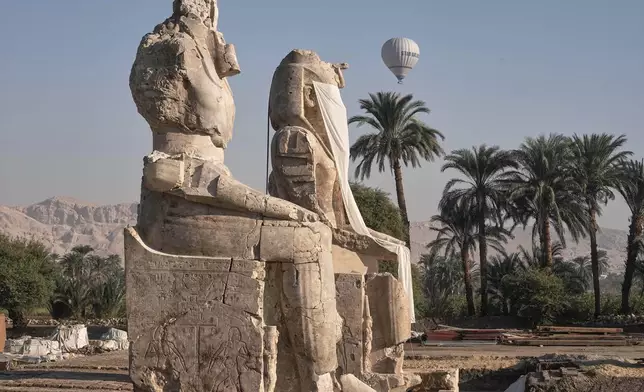
The giant alabaster statues, known as the Colossi of Memnon, were reassembled in a renovation project that lasted about two decades. They represent Amenhotep III, who ruled ancient Egypt about 3,400 years ago.
Click to Gallery
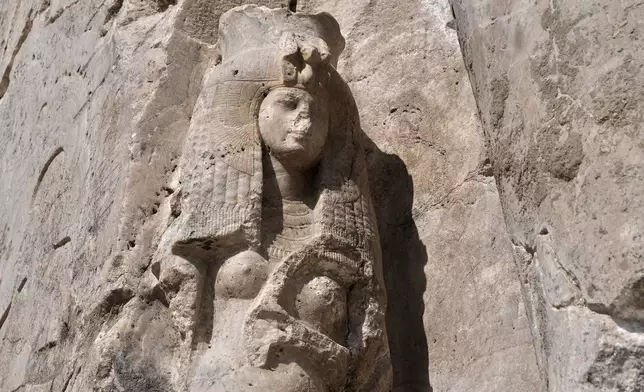
A view of the great royal Consort Tiye, near the right leg of the giant alabaster statue of Pharoah Amenhotep III, in the southern city of Luxor, Egypt, Sunday, Dec. 14, 2025. (AP Photo/Amr Nabil)
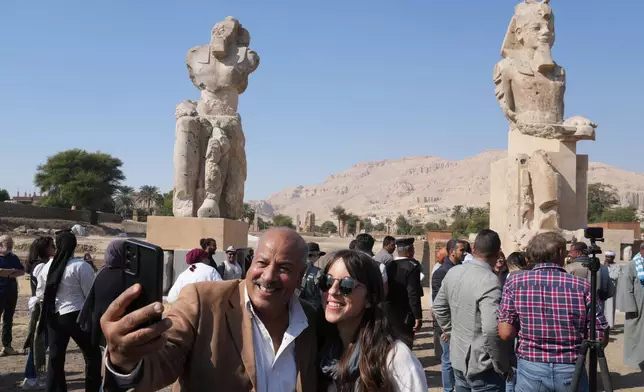
Visitors take photos with the two giant reassembled alabaster statues of Pharoah Amenhotep III, in the southern city of Luxor, Egypt, Sunday, Dec. 14, 2025. (AP Photo/Amr Nabil)
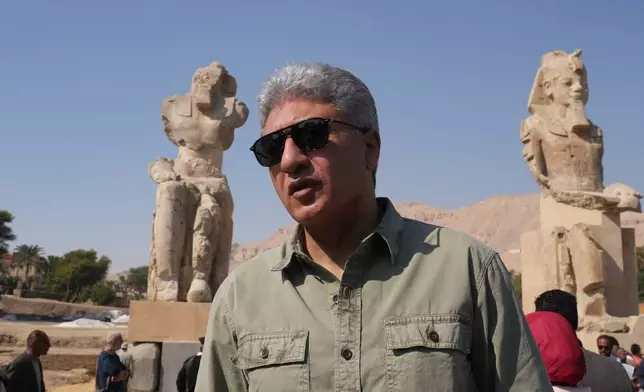
Minister of Tourism and Antiquities Sherif Fathy speaks in front of the two giant reassembled alabaster statues of Pharoah Amenhotep III, in the southern city of Luxor, Egypt, Sunday, Dec. 14, 2025. (AP Photo/Amr Nabil)
One of the two giant alabaster statues of Pharoah Amenhotep III, is photographed during the official opening, in the southern city of Luxor, Egypt, Sunday, Dec. 14, 2025. (AP Photo/Amr Nabil)
A hot air ballon flys over the assembly of two giant alabaster statues for Pharoah Amenhotep III, before the official opening, in the southern city of Luxor, Egypt, Sunday, Dec. 14, 2025. (AP Photo/Amr Nabil)
“Today we are celebrating, actually, the finishing and the erecting of these two colossal statues,” Mohamed Ismail, secretary-general of the Supreme Council of Antiquities, told The Associated Press ahead of the ceremony.
Ismail said the colossi are of great significance to Luxor, a city known for its ancient temples and other antiquities. They’re also an attempt to “revive how this funerary temple of king Amenhotep III looked like a long time ago,” Ismail said.
Amenhotep III, one of the most prominent pharaohs, ruled during the 500 years of the New Kingdom, which was the most prosperous time for ancient Egypt. The pharaoh, whose mummy is showcased at a Cairo museum, ruled between 1390–1353 BC, a peaceful period known for its prosperity and great construction, including his mortuary temple, where the Colossi of Memnon are located, and another temple, Soleb, in Nubia.
The colossi were toppled by a strong earthquake in about 1200 BC that also destroyed Amenhotep III’s funerary temple, said Mohamed Ismail, secretary-general of the Supreme Council of Antiquities.
They were fragmented and partly quarried away, with their pedestals dispersed. Some of their blocks were reused in the Karnak temple, but archaeologists brought them back to rebuild the colossi, according to the Antiquities Ministry.
In late 1990s, an Egyptian German mission, chaired by German Egyptologist Hourig Sourouzian, began working in the temple area, including the assembly and renovation of the colossi.
“This project has in mind … to save the last remains of a once-prestigious temple,” she said.
The statues show Amenhotep III seated with hands resting on his thighs, with their faces looking eastward toward the Nile and the rising sun. They wear the nemes headdress surmounted by the double crowns and the pleated royal kilt, which symbolizes the pharaoh’s divine rule.
Two other small statues on the pharaoh’s feet depict his wife, Tiye.
The colossi — 14.5 meters (48 feet) and 13.6 meters (45 feet) respectively — preside over the entrance of the king’s temple on the western bank of the Nile. The 35-hectare (86-acre) complex is believed to be the largest and richest temple in Egypt and is usually compared to the temple of Karnak, also in Luxor.
The colossi were hewn in Egyptian alabaster from the quarries of Hatnub, in Middle Egypt. They were fixed on large pedestals with inscriptions showing the name of the temple, as well as the quarry.
Unlike other monumental sculptures of ancient Egypt, the colossi were partly compiled with pieces sculpted separately, which were fixed into each statue’s main monolithic alabaster core, the ministry said.
Sunday’s unveiling in Luxor came just six weeks after the inauguration of the long-delayed Grand Egyptian Museum, the centerpiece of the government’s bid to boost the country’s tourism industry and bring cash into the troubled economy. The mega project is located near the famed Giza Pyramids and the Sphinx.
The tourism sector, which depends heavily on Egypt’s rich pharaonic artifacts, has suffered during years of political turmoil and violence following the 2011 uprising. In recent years, the sector has started to recover after the coronavirus pandemic and amid Russia’s war on Ukraine — both countries are major sources of tourists visiting Egypt.
“This site is going to be a point of interest for years to come,” said Tourism and Antiquities Minister Sherif Fathy, who attended the unveiling ceremony. “There are always new things happening in Luxor.”
A record number of about 15.7 million tourists visited Egypt in 2024, contributing about 8% of the country’s GDP, according to official figures.
Fathy, the minister,has said about 18 million tourists are expected to visit the country this year, with authorities hoping for 30 million visitors annually by 2032.
Magdy reported from Cairo.
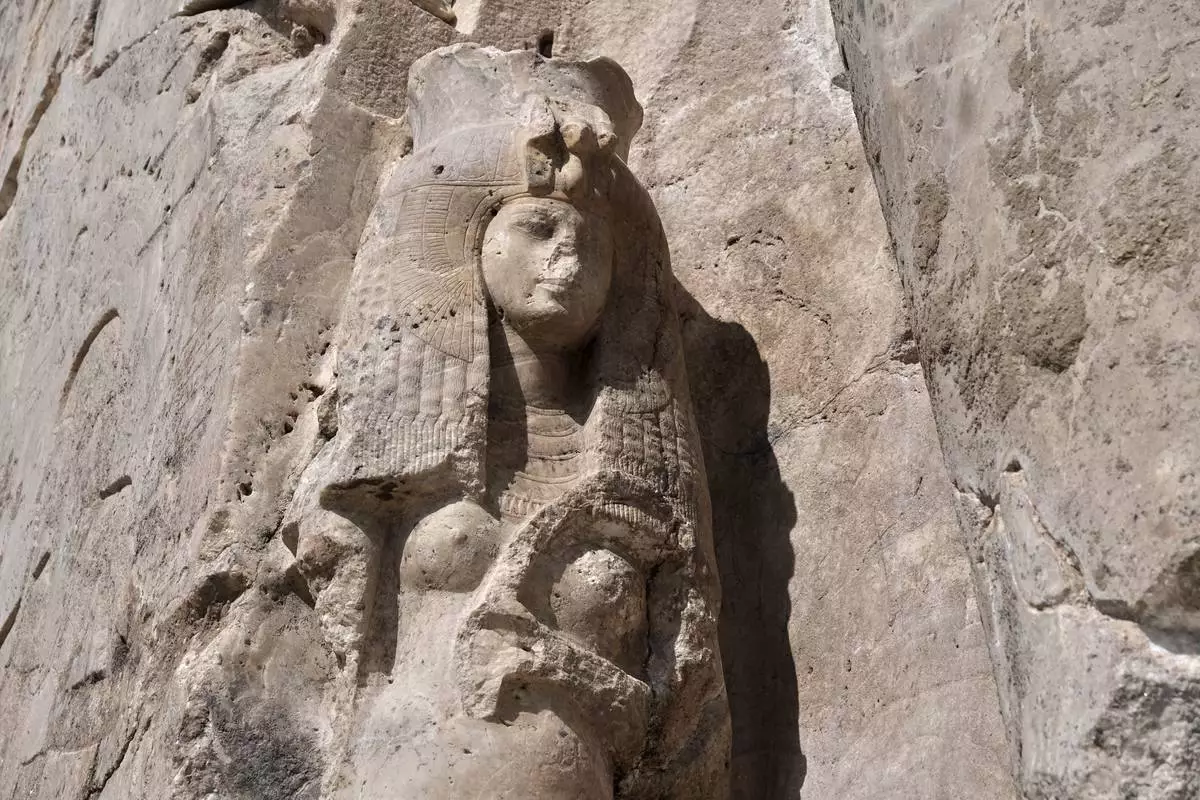
A view of the great royal Consort Tiye, near the right leg of the giant alabaster statue of Pharoah Amenhotep III, in the southern city of Luxor, Egypt, Sunday, Dec. 14, 2025. (AP Photo/Amr Nabil)
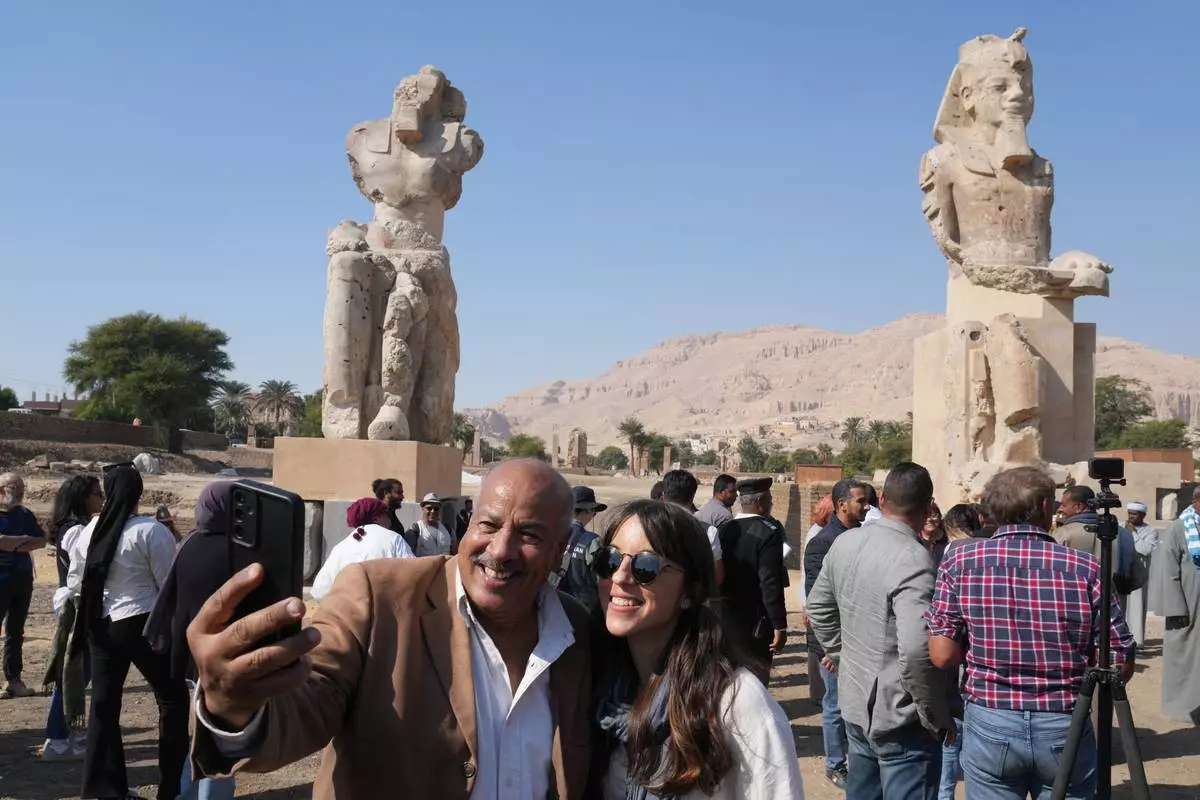
Visitors take photos with the two giant reassembled alabaster statues of Pharoah Amenhotep III, in the southern city of Luxor, Egypt, Sunday, Dec. 14, 2025. (AP Photo/Amr Nabil)
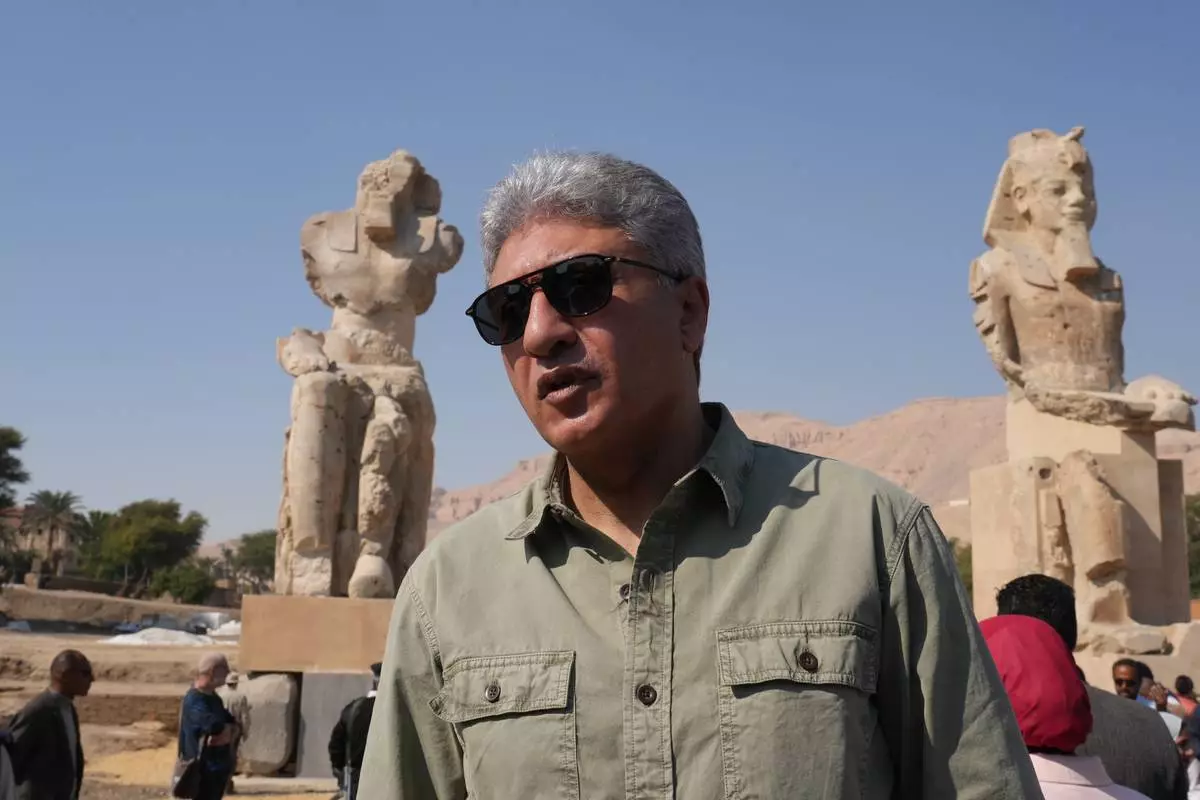
Minister of Tourism and Antiquities Sherif Fathy speaks in front of the two giant reassembled alabaster statues of Pharoah Amenhotep III, in the southern city of Luxor, Egypt, Sunday, Dec. 14, 2025. (AP Photo/Amr Nabil)

One of the two giant alabaster statues of Pharoah Amenhotep III, is photographed during the official opening, in the southern city of Luxor, Egypt, Sunday, Dec. 14, 2025. (AP Photo/Amr Nabil)
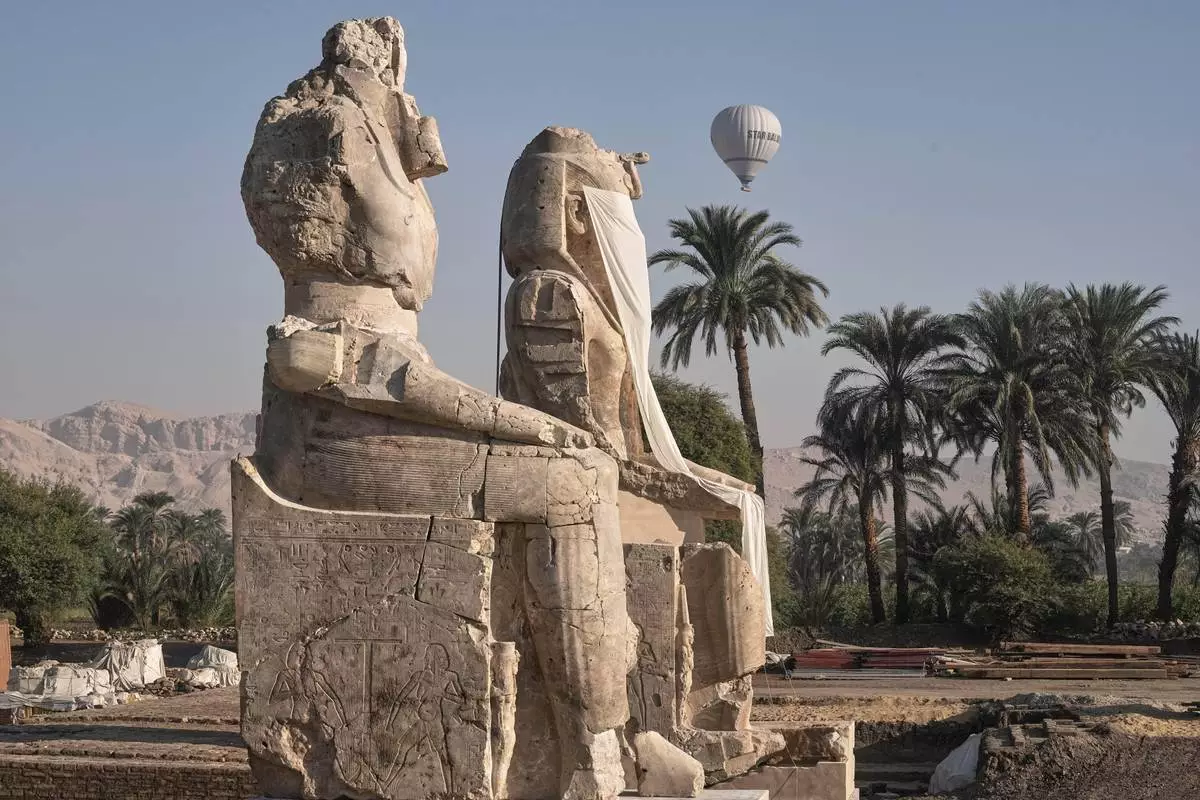
A hot air ballon flys over the assembly of two giant alabaster statues for Pharoah Amenhotep III, before the official opening, in the southern city of Luxor, Egypt, Sunday, Dec. 14, 2025. (AP Photo/Amr Nabil)
TENERIFE, Spain (AP) — The head of the World Health Organization sought Saturday to reassure residents of the Spanish island where passengers of a hantavirus-stricken cruise ship are expected to be evacuated, issuing them a direct message that the virus was “not another COVID.”
The Dutch-flagged MV Hondius, with more than 140 passengers and crew on board, is headed to Spain's Canary Islands, off the coast of West Africa, and is expected to arrive at the island of Tenerife early Sunday.
WHO Director-General Tedros Adhanom Ghebreyesus, along with Spain’s Health Minister Monica Garcia and Interior Minister Fernando Grande-Marlaska, were due on the island Saturday to coordinate the disembarkation of passengers and some crew.
“I know you are worried. I know that when you hear the word ‘outbreak’ and watch a ship sail toward your shores, memories surface that none of us have fully put to rest. The pain of 2020 is still real, and I do not dismiss it for a single moment,” Tedros said in a message to the people of Tenerife.
“But I need you to hear me clearly: This is not another COVID. The current public health risk from hantavirus remains low. My colleagues and I have said this unequivocally, and I will say it again to you now,” Tedros added.
The WHO, Spanish authorities and cruise company Oceanwide Expeditions said nobody on the Hondius is currently showing symptoms of the virus.
Hantavirus can cause life-threatening illness. It usually spreads when people inhale contaminated residue of rodent droppings and isn’t easily transmitted between people. But the Andes virus detected in the cruise ship outbreak may be able to spread between people in rare cases. Symptoms usually show between one and eight weeks after exposure.
Three people have died since the outbreak, and five passengers who left the ship are infected with hantavirus.
Some on Tenerife say they are worried. On board the cruise ship, some Spanish passengers have voiced concern about being stigmatized.
“I tell you, I don’t like this very much,” said 69-year-old resident Simon Vidal. “Anyone can say what they want. Why did they have to bring a boat from another country here? Why not anywhere else, why bring it to the Canary Islands?”
Others said they empathized with the boat's passengers, but were still concerned.
“The truth is that it is very worrying,” said 27-year-old Venezuelan immigrant Samantha Aguero. She added: “We feel a bit unsafe, we don’t feel as there are 100% security measures in place to welcome it. This is a virus after all and we have lived this during the pandemic. But we also need to have empathy.”
Spanish Health Minister Monica Garcia said passengers and some crew would disembark in Tenerife “under maximum safety conditions.”
The ship will not dock but will remain at anchor. Everyone disembarking will be checked for symptoms and won't be taken off the ship until a flight is already in Tenerife waiting to fly them off the island, Garcia said during a news conference in Madrid. There are currently people of more than 20 different nationalities on board.
Both the U.S. and the U.K. have agreed to send planes to evacuate their citizens. Americans are to be quarantined at a medical center in Nebraska.
All Spanish passengers will be transferred to a medical facility and quarantined, Garcia said. Oceanwide has listed 13 Spanish passengers and one Spanish crew member on board.
Those disembarking will leave behind their luggage, Garcia said, and will be allowed to take only a small bag with essential items, a cellphone, charger and documentation.
Some crew, as well as the body of a passenger who died on board, will remain on the ship, which will sail on to the Netherlands, where it will undergo disinfection, the minister added.
According to a letter sent by the Dutch foreign and health ministers to parliament late Friday, Spain has activated the EU civil protection mechanism for a medical evacuation plane equipped for infections diseases to be on standby in case anyone on the ship becomes ill. That person would then be transported by air to the European mainland.
The Dutch government will work with Spanish authorities and the ship company to arrange repatriation of Dutch passengers and crew as soon as possible after arrival in Tenerife, subject to medical conditions and advice from the European Centre for Disease Prevention and Control, the letter said. Those without symptoms will go into home quarantine for six weeks and be monitored by local health services.
As the ship is Dutch-flagged, the Netherlands may also temporarily accommodate people of other nationalities and monitor them in quarantine, it said.
Health authorities across four continents were tracking down and monitoring more than two dozen passengers who disembarked before the deadly outbreak was detected. They were also scrambling to trace others who may have come into contact with them.
On April 24, nearly two weeks after the first passenger had died on board, more than two dozen people from at least 12 different countries left the ship without contact tracing, Dutch officials and the ship’s operator have said.
It wasn’t until May 2 that health authorities first confirmed hantavirus in a passenger.
Dutch public health authorities have been monitoring people who were on a flight that was briefly boarded by a Dutch ship passenger who later died and was confirmed to have hantavirus. Three people who were on the flight and had symptoms have all tested negative for hantavirus, Dutch National Institute for Public Health spokesperson Harald Wychgel told The Associated Press on Saturday.
Becatoros reported from Sparta, Greece. Associated Press reporters Angela Charlton in Paris and Helena Alves in Tenerife contributed to this report.
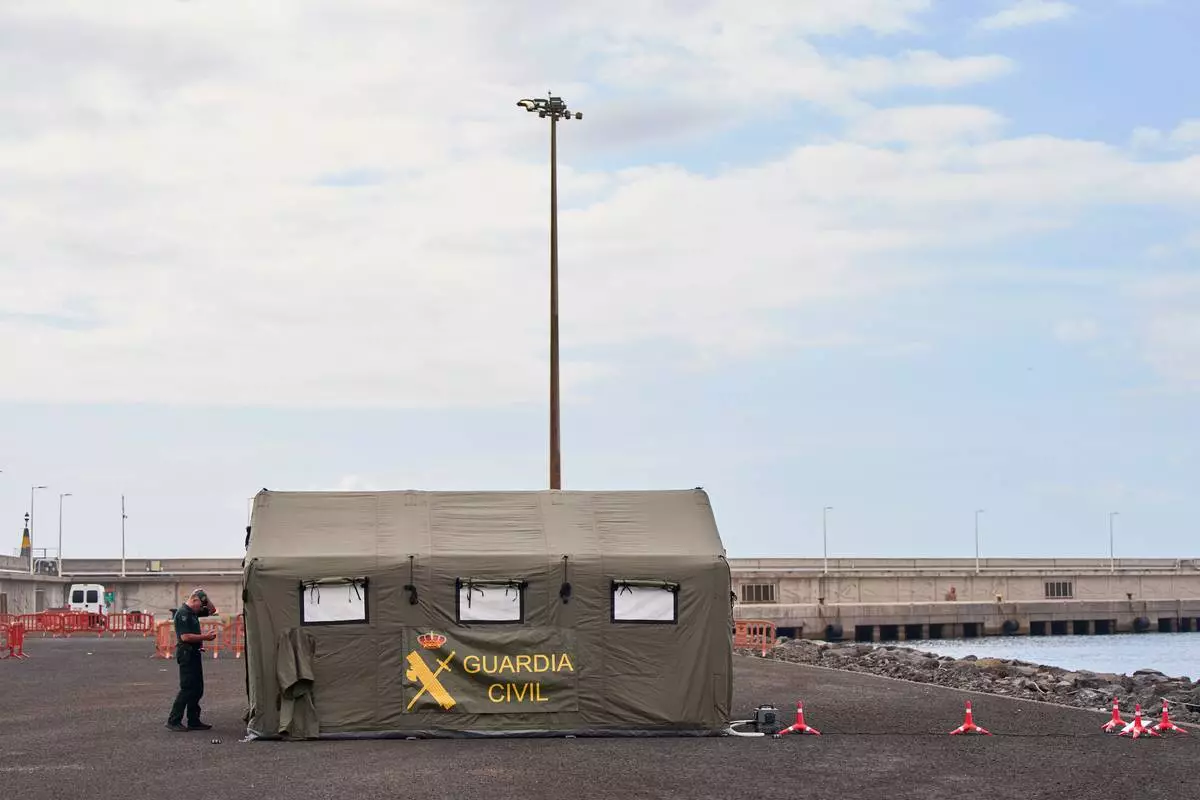
A Spanish Civil Guard officer inspects the area where passengers from the MV Hondius cruise ship are expected to arrive at the port of Granadilla in Tenerife, Canary Islands, Spain, Saturday, May 9, 2026. (AP Photo/Manu Fernandez)
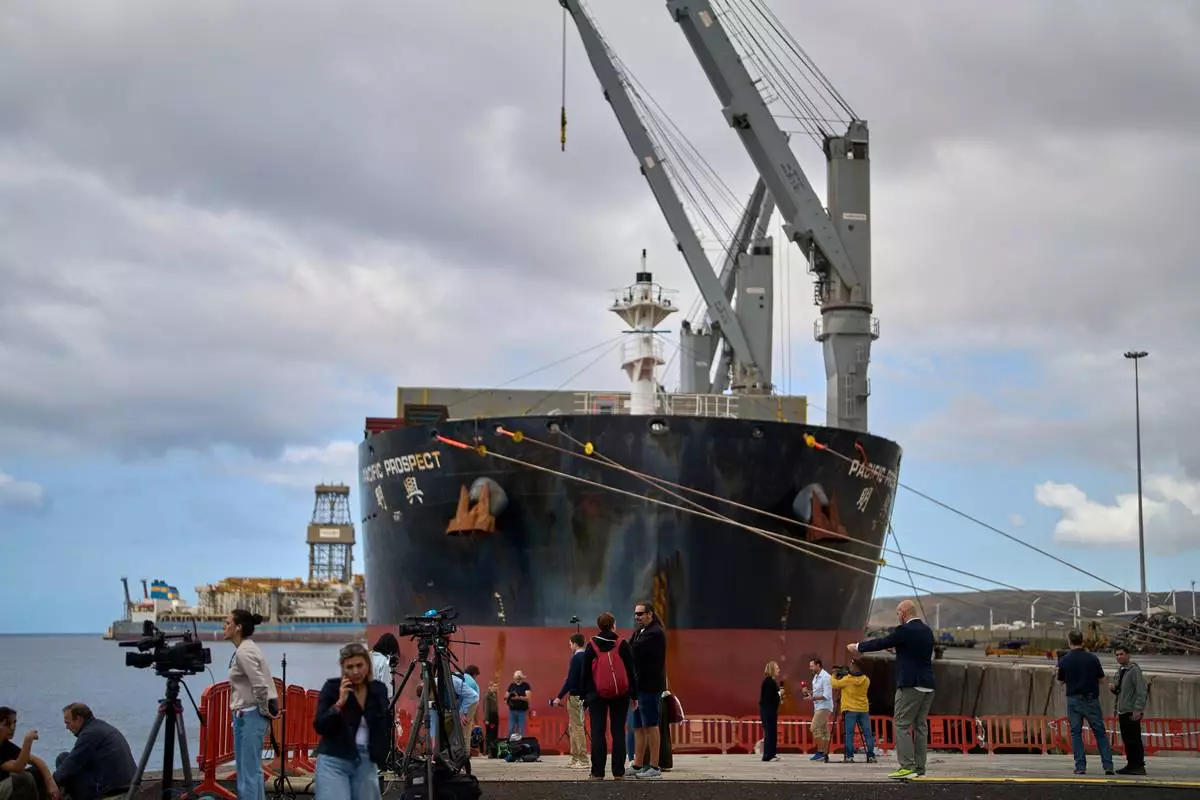
Media crew members stand in the area where passengers from the MV Hondius cruise ship are expected to arrive at the port of Granadilla in Tenerife, Canary Islands, Spain, Saturday, May 9, 2026. (AP Photo/Manu Fernandez)
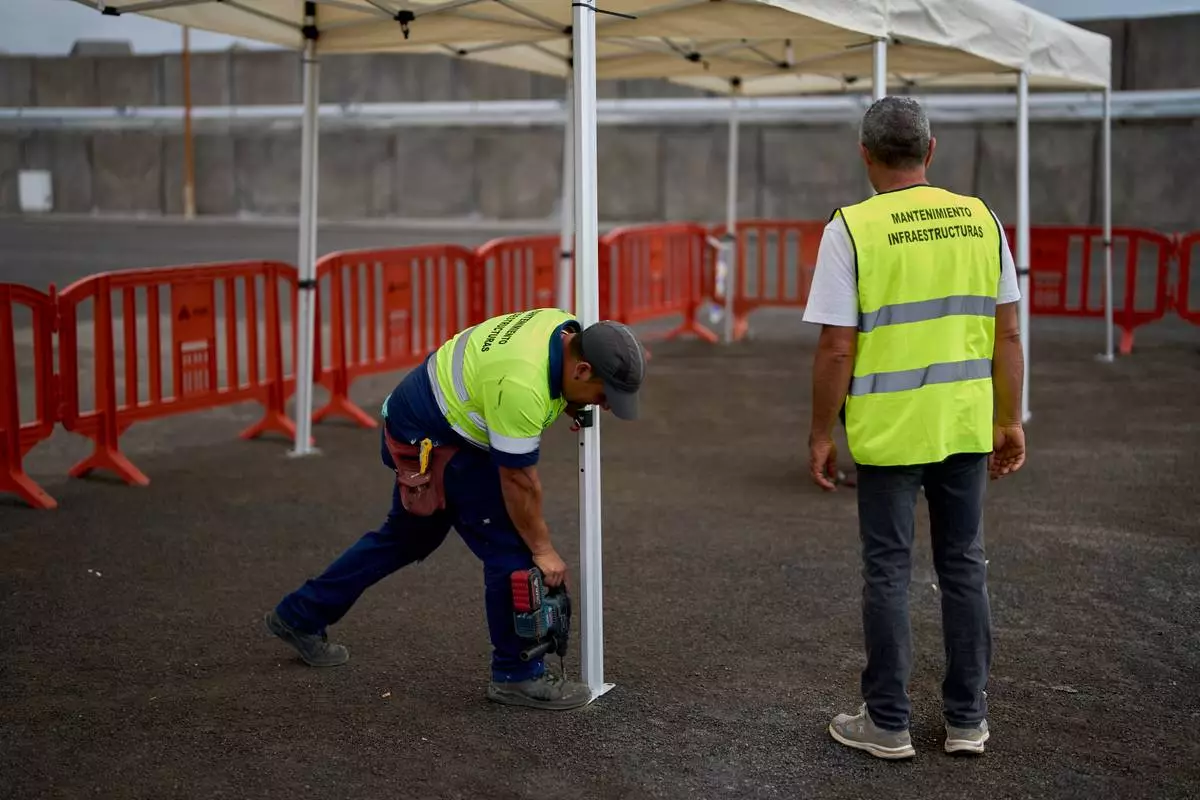
Workers set up temporary shelters in the area where passengers from the MV Hondius cruise ship are expected to arrive at the port of Granadilla in Tenerife, Canary Islands, Spain, Saturday, May 9, 2026. (AP Photo/Manu Fernandez)
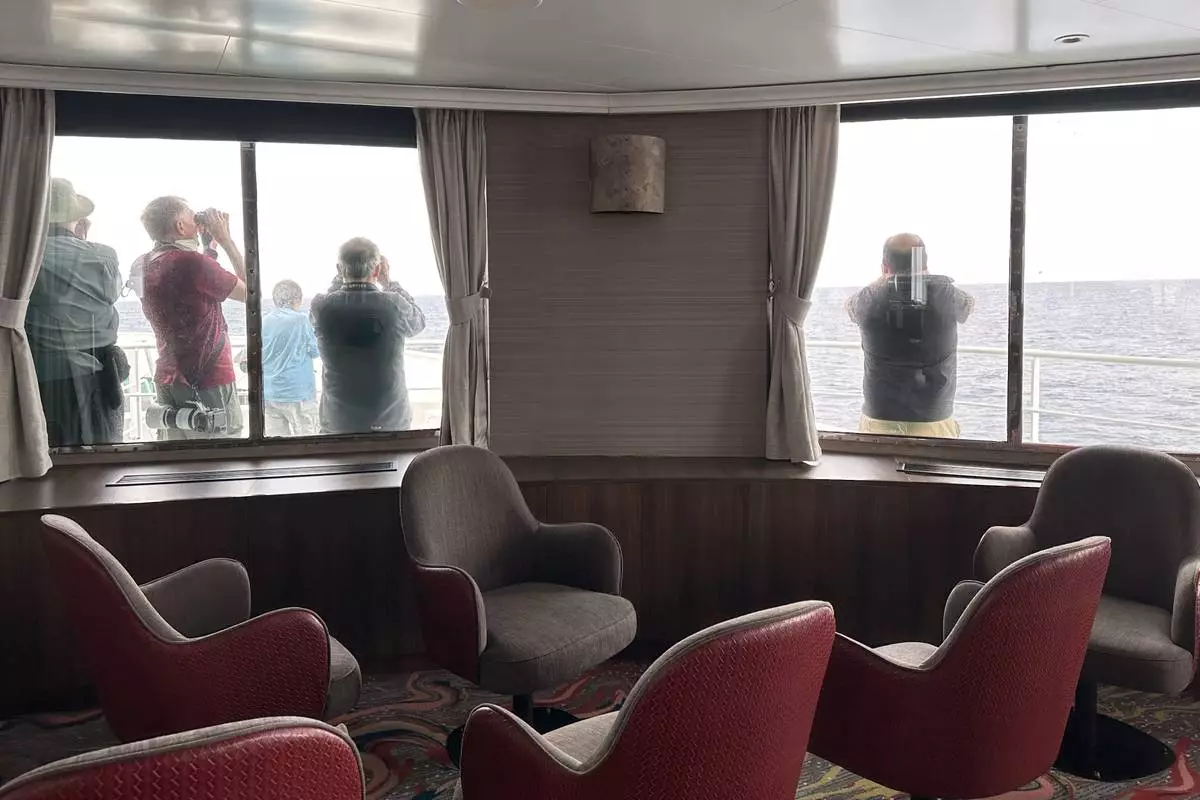
Passengers on the hantavirus-stricken cruise ship, MV Hondius, scan the horizon with binoculars during their voyage to Spain's port of Tenerife, May 6, 2026. (AP Photo)
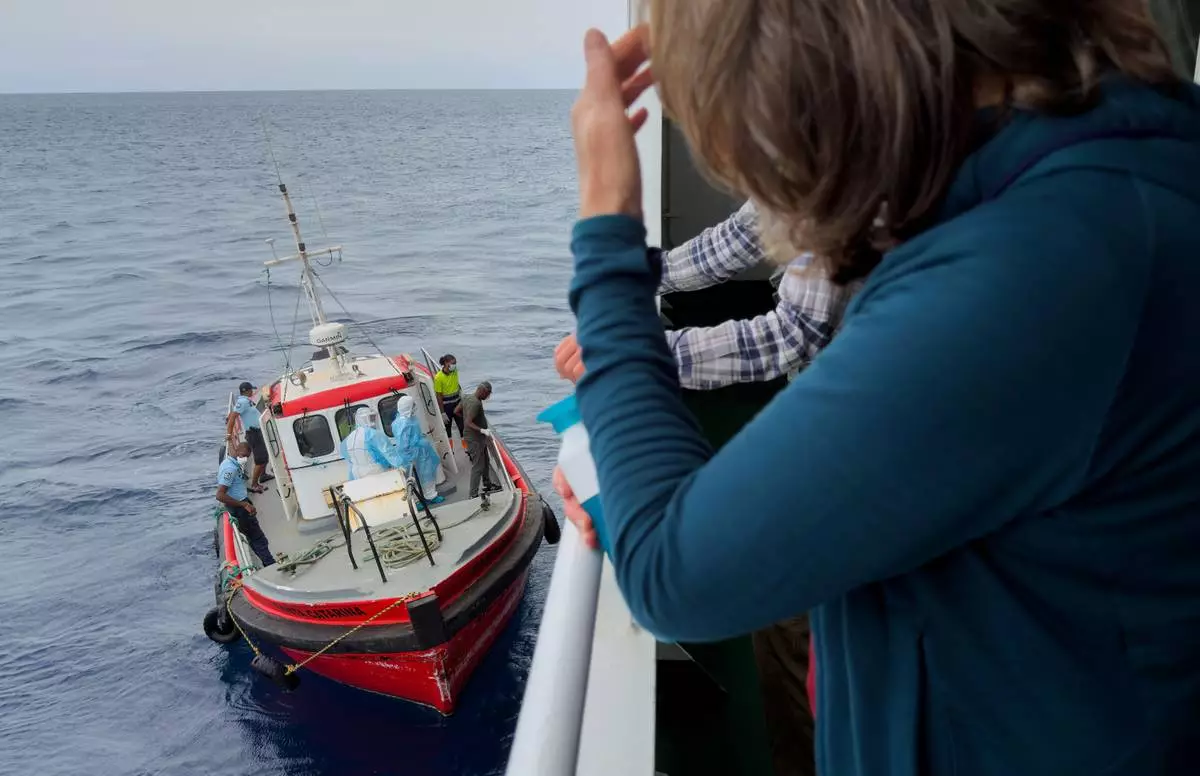
Passengers on the the hantavirus-stricken cruise ship, MV Hondius, watch epidemiologists board the boat in Praia, during their voyage to Spain's port of Tenerife, May 6, 2026. (AP Photo)
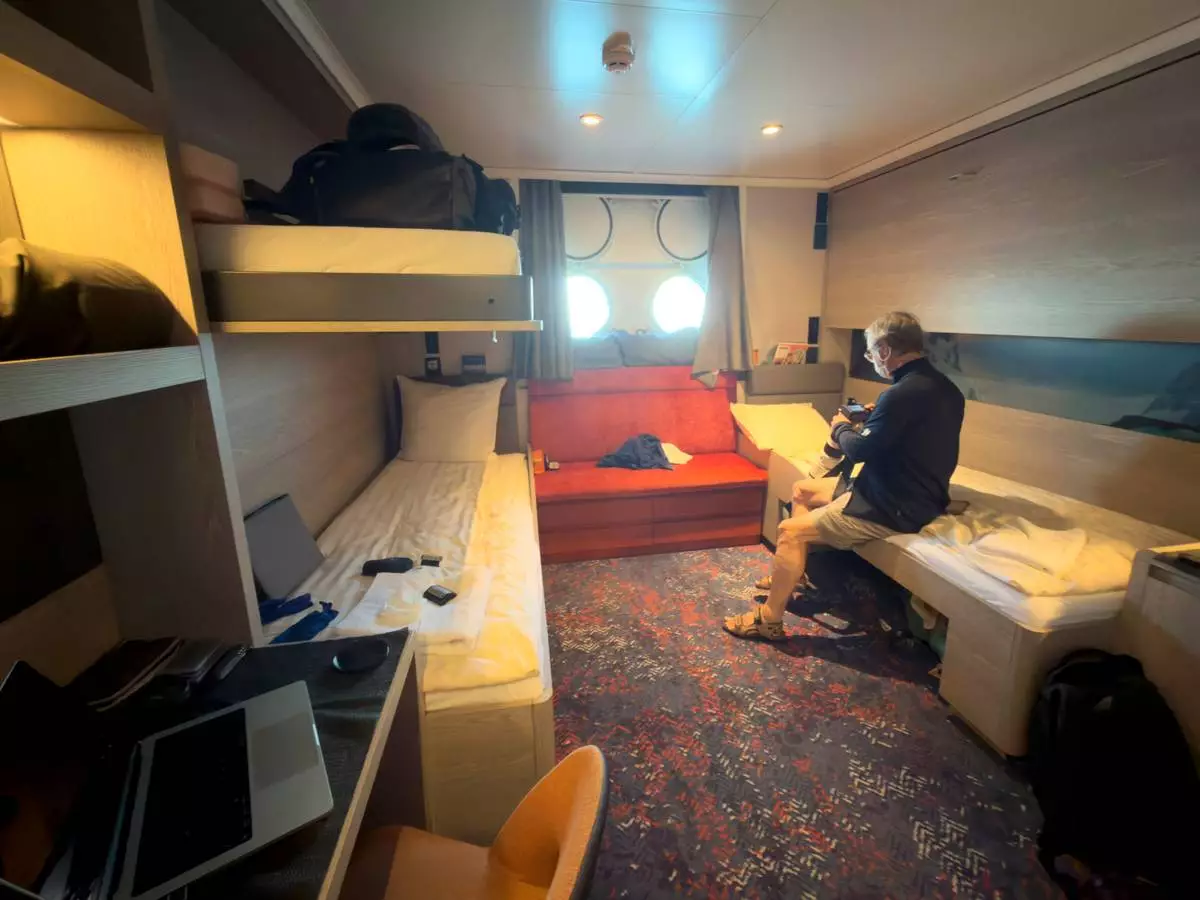
A passenger checks his camera inside his cabin on the hantavirus-stricken cruise ship, MV Hondius, during the voyage to Spain's port of Tenerife, May 6, 2026. (AP Photo)
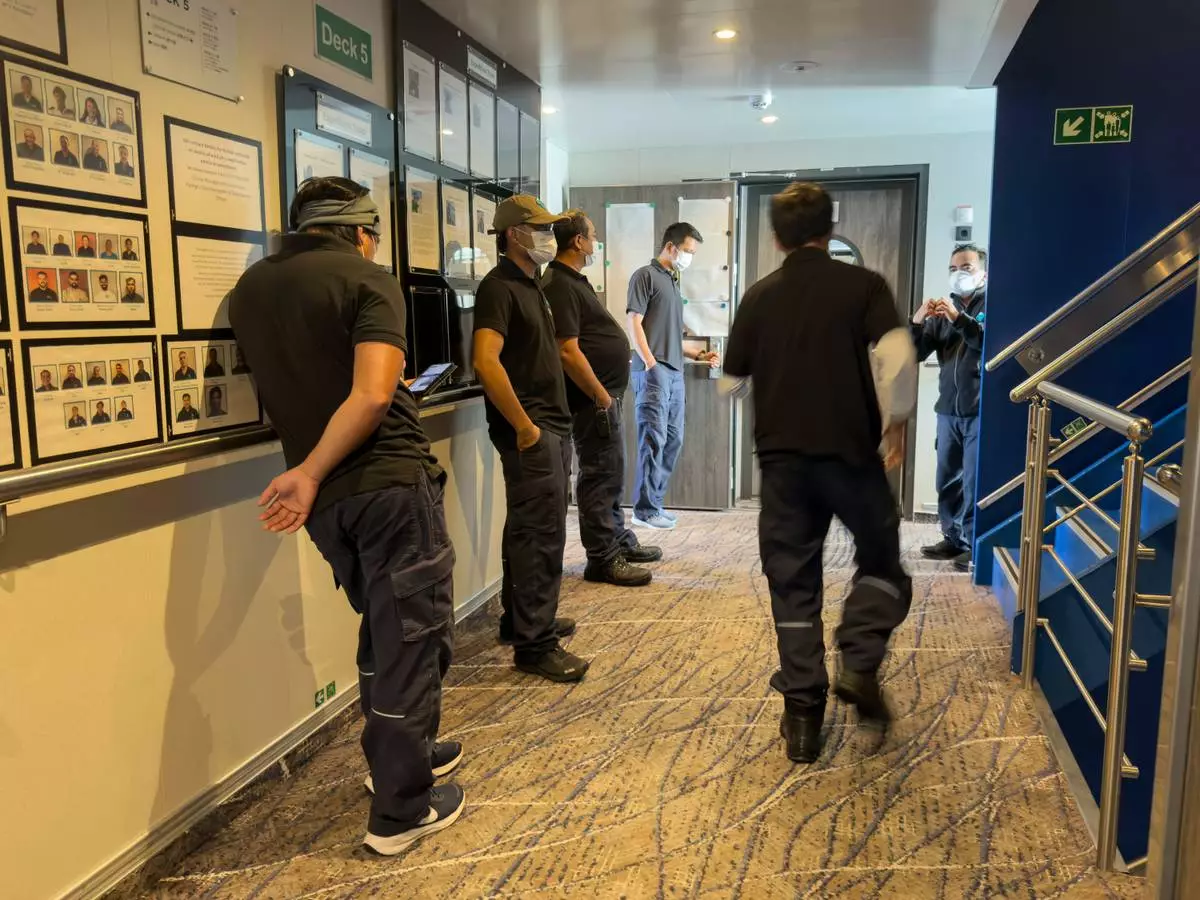
Crew members of the hantavirus-stricken cruise ship, MV Hondius, wait their turns for a first interview with epidemiologists, during the voyage to Spain's port of Tenerife, May 6, 2026. (AP Photo)
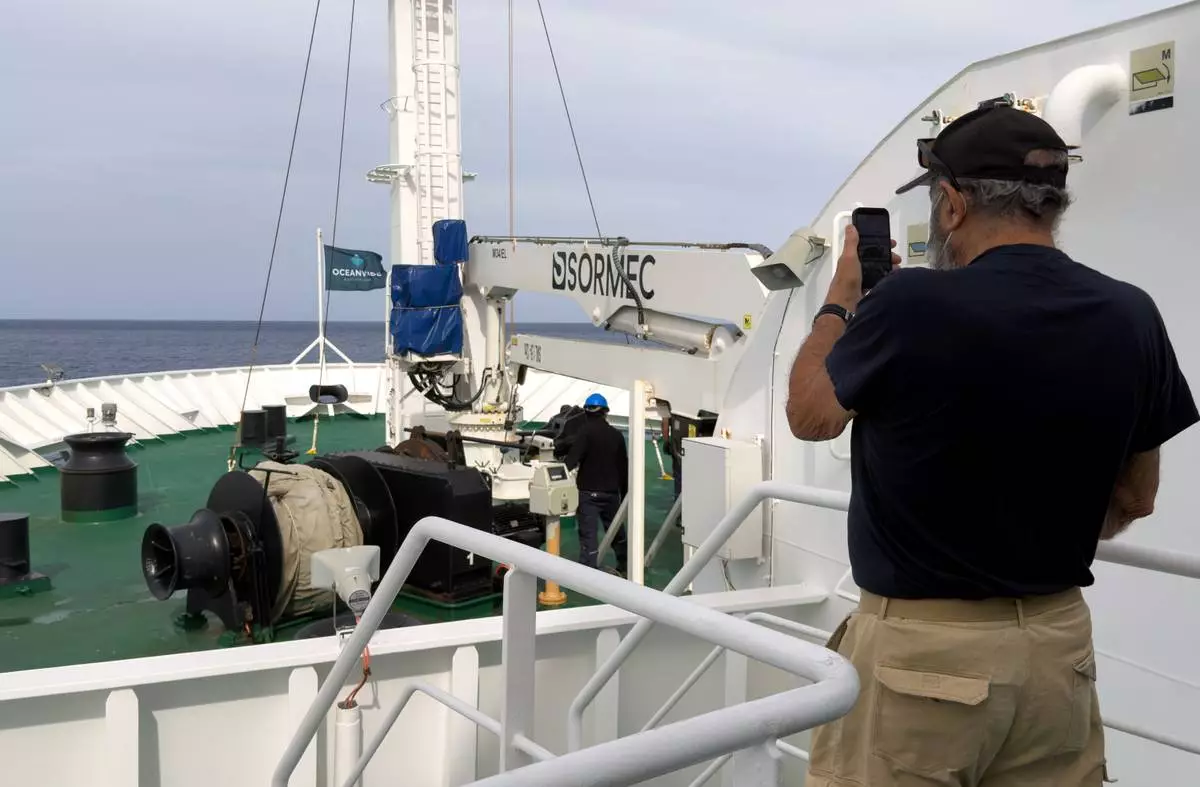
A passenger on the the hantavirus-stricken cruise ship, MV Hondius, takes a photo of the ship's weighing anchor in Praia, during the voyage to Spain's port of Tenerife, May 6, 2026. (AP Photo)