High-tech and intelligent machinery is empowering agricultural production in China, becoming a key driver in ensuring bumper harvests.
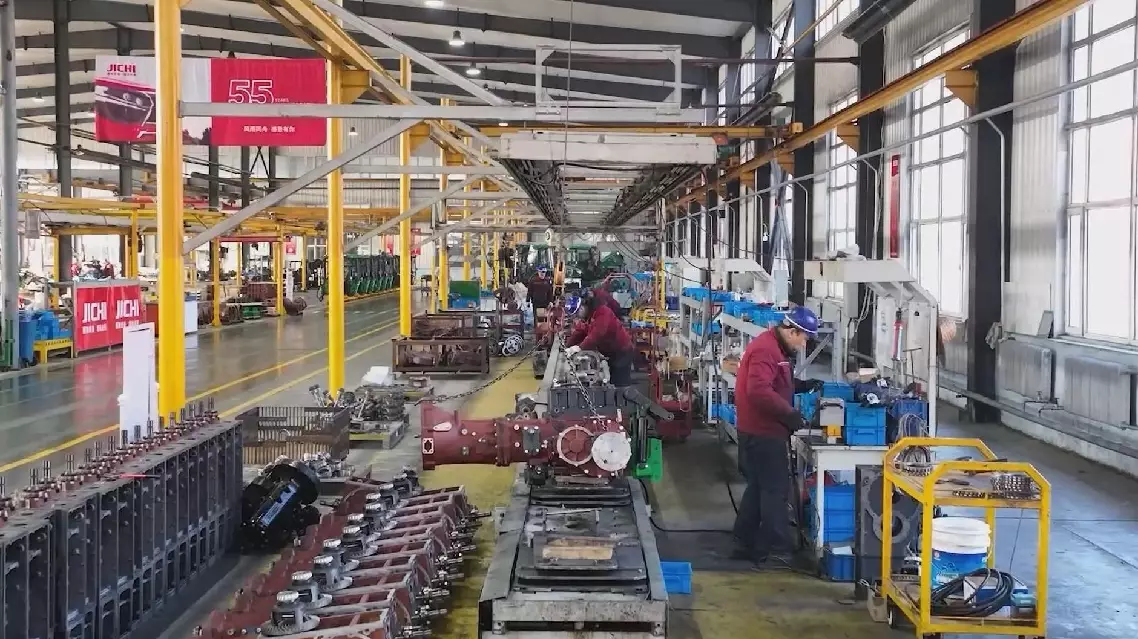
In northeast China's Heilongjiang Province, workers at Jiamusi Jichi Tractor Manufacturing Co.,Ltd. are busy on the production line for a batch of tractors scheduled for delivery before New Year's Day. Meanwhile, the research and development of the company's new high-end tractors is also underway.
"We are currently developing a 400-horsepower hybrid, stepless transmission tractor, which features high efficiency, environmental friendliness, and intelligence, making it a heavy-duty piece of equipment suitable for demanding agricultural tasks," said Yang Haiyan, the company's R and D project manager.
The company has also been collaborating with universities and research institutions within the province to ensure the reliability of the tractors.
"We've partnered with research and development groups from Harbin Engineering University and Harbin University of Science and Technology to focus on electronic control systems and energy management. Meanwhile, we've joined forces with more than a dozen leading component suppliers to ensure the performance and reliability of the critical parts," said Yang.
As the core region of high-end intelligent agricultural machinery in Heilongjiang, Jiamusi City hosts 53 agricultural machinery companies, including 23 enterprises above the designated size (those each with an annual main business turnover of at least 20 million yuan or 2.8 million U.S. dollars), forming a complete industrial cluster from key components to full machine manufacturing.
"Domestic agricultural machinery now accounts for over 90 percent of the market share in Jiamusi," said Shi Yufeng, section chief of the Agricultural Mechanization Management Section under Jiamusi Bureau of Agriculture and Rural Affairs.
"The improvement in mechanization has not only freed up manpower but also promoted the standardization of grain production. For example, in mechanized seeding, using machinery instead of manual methods has enhanced seed placement quality, thus increasing seedling emergence rates and ultimately boosting crop yields," said Ding Ran, deputy director of the Agricultural Mechanization Management Office under Heilongjiang Provincial Department of Agriculture and Rural Affairs.
In 2025, Heilongjiang Province deployed 187,000 high-performance seeders for spring plowing, an increase of 15,000 from the previous year. The area covered by these seeders reached about 9.13 million hectares, an increase of 513,000 hectares from the previous year, effectively boosting grain production.
China advances agricultural machinery innovation to boost grain production
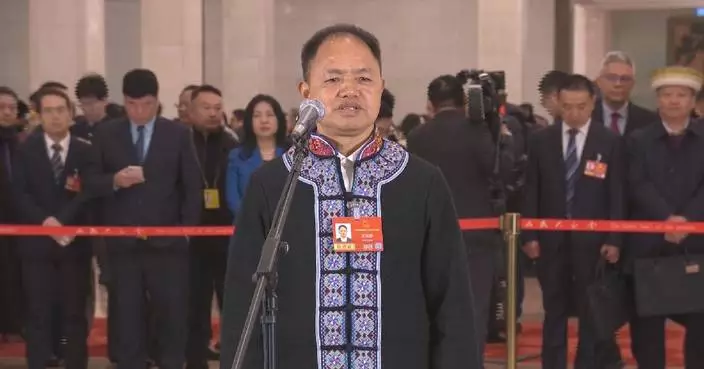
A veteran agricultural scientist and deputy to the National People's Congress (NPC), China's national legislature, shared his decades-long mission to reduce the country's reliance on food imports and safeguard its food security by developing high-yield, disease-resistant wheat varieties.
Gao Derong, a researcher from the Lixiahe Regional Institute of Agricultural Sciences in east China's Jiangsu Province, detailed his relentless pursuit of better wheat varieties while taking a question at a press conference on the sidelines of the ongoing "two sessions", a major event in China's political calendar.
He has dedicated more than 30 years to wheat breeding and succeeded in the fight against Fusarium head blight, a serious fungal disease of cereals, including wheat and other small-grain crops, by implanting "disease-resistant genes" inside seeds.
"After 30 years of countless and repeated trials, we finally developed our first Fusarium head blight resistant variety in 2021. It exhibits strong disease resistance and high yield, with a yield of up to 600 kg per mu (0.066 hectare) in a demonstration plot. This means farmers can use fewer pesticides, produce more wheats, and secure a more stable harvest," said Gao.
Addressing the tight rotation schedule in the rice-wheat rotation system in south China, his team developed time-smart varieties like "Yangmai 25," which can be sown as late as December and still achieve a yield of 6,00 kg per mu.
"We have also cultivated a high-quality weak-gluten wheat variety tailored for biscuits and pastries, reversing China's long-standing reliance on imports. These grain varieties, like elite guard teams, help us hold our rice bowl firmly and contribute to securing our food security," Gao said.
As an NPC deputy, Gao extends his research from the lab to the field, gathering farmers' concerns alongside experimental data.
"My duty as a deputy is also written in the fields. 'Can we construct high-standard farmland at an accelerated pace?' 'Can we have more targeted agricultural subsidies?' These are the voices I often heard in the fields, which I carefully recorded like experimental data and transformed into suggestions," he said. Gao said he will continue working to enable the land to yield more grain, help farmers increase their incomes, and contribute to ensuring national food security.
This year's "two sessions," the annual meetings of China's top political advisory body and national legislature, opened in Beijing Wednesday and Thursday, respectively. As the world's second-largest economy embarks on the inaugural year of its 15th Five-Year Plan (2026-2030) period, these gatherings will serve both as a review of past achievements, and as a strategic compass guiding the nation's future development.
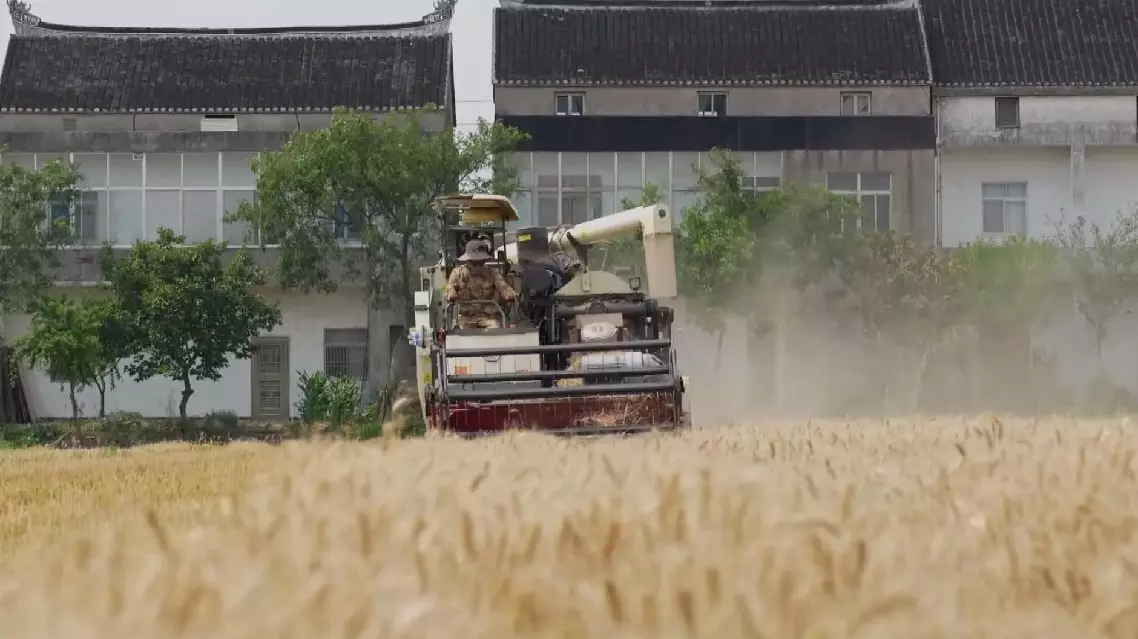
NPC deputy vows to fortify China's food security through seed innovation