A quarterly survey of major Japanese manufacturers released Monday shows business sentiment improving to its best level in four years, even after President Trump raised tariffs on goods from the U.S. ally to a baseline level of 15%.
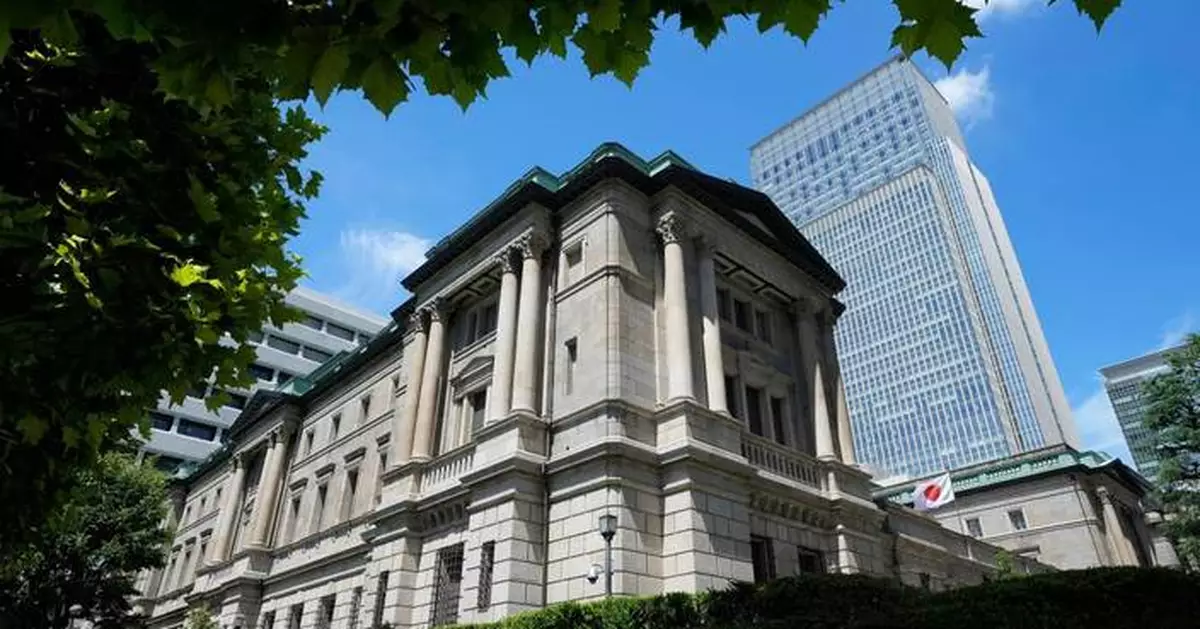
The Bank of Japan is bound to take the results of its quarterly “tankan” survey into account during a policy meeting this week, when it is expected to raise its benchmark interest rate. Analysts said the stronger results may sway the BOJ toward pressing ahead with a 0.25 percentage point rate hike that will take the key rate to 0.75%.
That expectation hit the price of bitcoin early Monday, as it dipped below $88,000 from about $92,000. Higher rates would likely lead Japanese investors to shift funds back home, sapping demand for cryptocurrencies.
While the U.S. Federal Reserve has been trimming rates to counter a weak jobs market, Japan’s central bank is moving in the other direction as it contends with inflation and a weak currency. The economy contracted at an annualized rate of 2.3% in July-September.
Still, the BOJ survey showed the measure of major manufacturers expressing optimism rose to 15 from 14 in the last quarter, the highest level in four years. The index shows the percentage of companies reporting positive conditions minus the percentage reporting unfavorable ones.
The measure of sentiment for all companies rose to 17 from 15, it said.
The survey “struck all the right notes from the Bank of Japan's perspective,” Abhijit Surya of Capital Economics said in a report. “It showed that business conditions are improving, profit margins remain elevated and firms are upbeat about their investment intentions.”
The latest deal between Japan and the Trump administration set tariffs on its exports to the U.S. at 15%, down from an earlier plan for a 25% tariff. To win the agreement, among other things Japan promised to invest $550 billion in the United States.
While the BOJ's overall survey showed improvement, forecasts for the next quarter were less positive, and businesses expected inflation to remain at 2.4%, above the central bank's target range.
The Bank of Japan has kept its key interest rate near or below zero for years, trying to spur faster economic growth by keeping borrowing costs very low.
Its policymaking has been complicated by the fact that Japan's population is shrinking and aging rapidly. That has caused labor shortages that have only slowly pushed wages higher. That should lead consumers to spend more, but increases in income have lagged behind inflation, denting their appetite for spending.
Prime Minister Sanae Takaichi has pledged, as have her predecessors, to revive the economy. Last month, her cabinet approved a 21.3 trillion yen ($135.4 billion) stimulus package to spur growth through expansionary government spending and relieve the impact of higher prices.
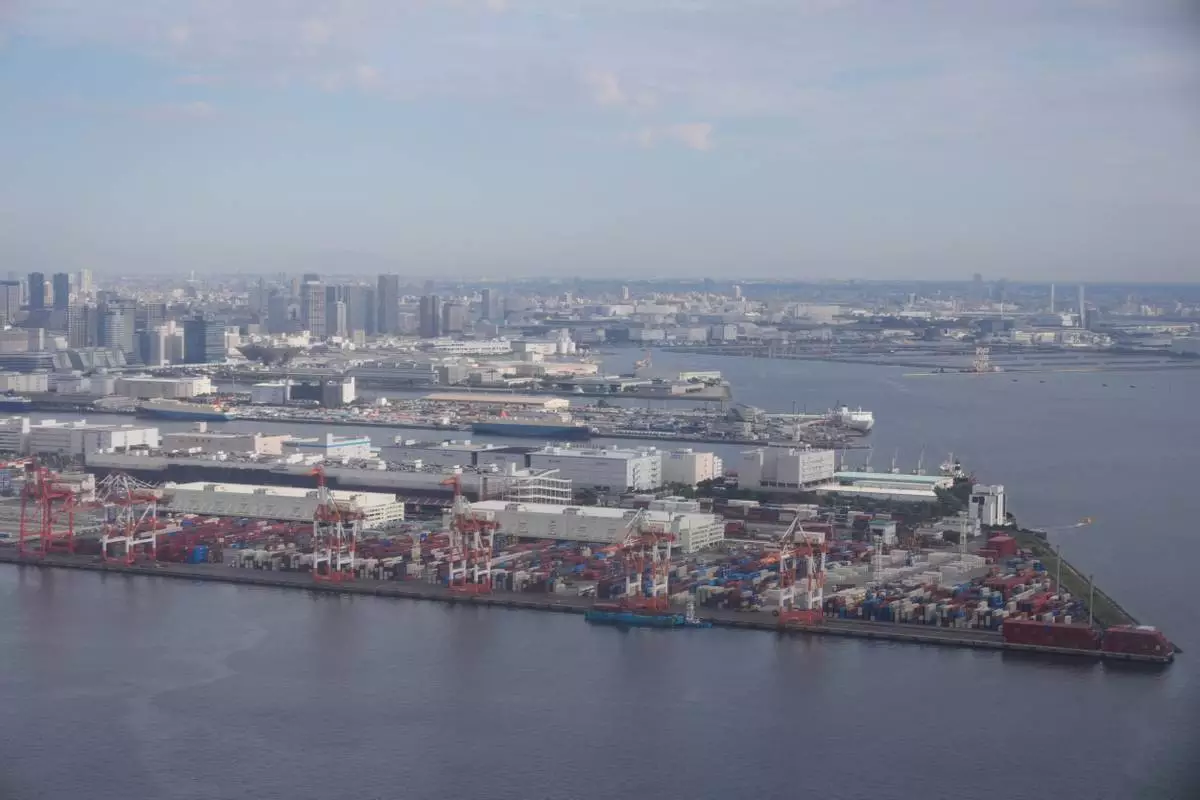
A general view of a container port seen from a helicopter in Tokyo, on Oct. 29, 2025. (AP Photo/Mark Schiefelbein)
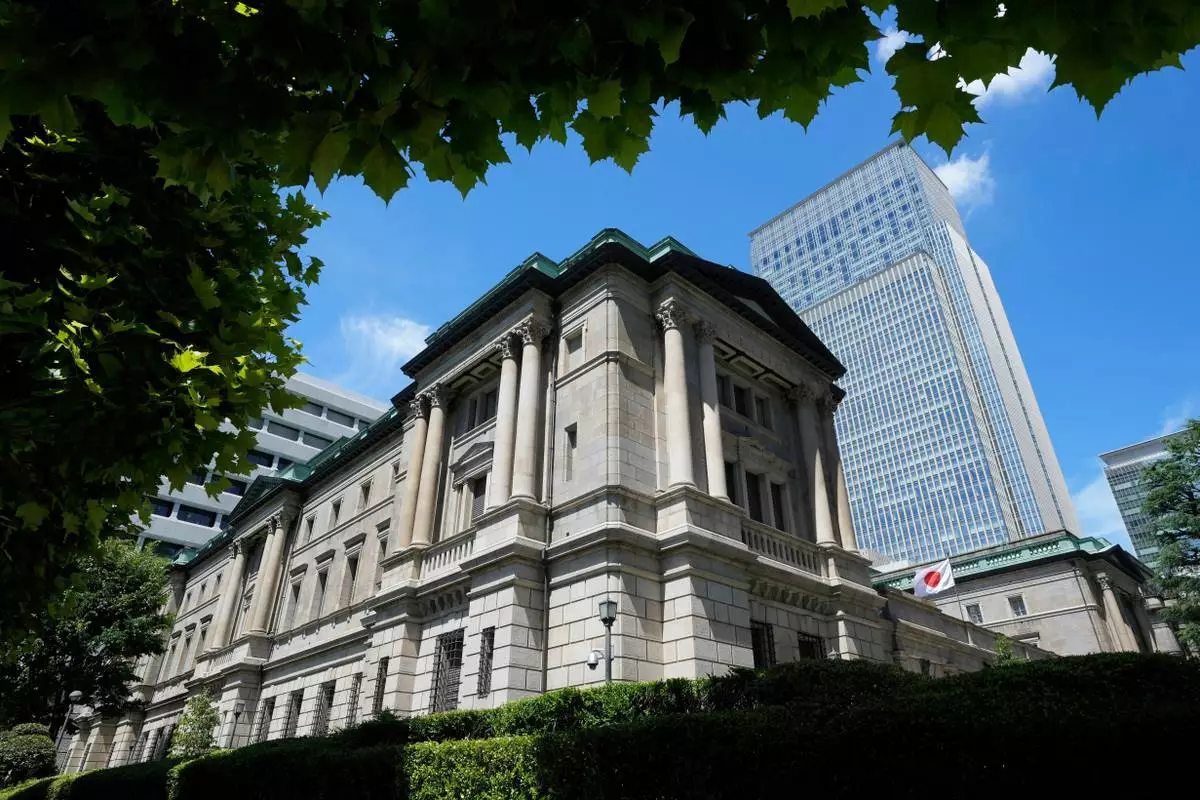
FILE - A Japanese flag flutters at the Bank of Japan headquarters in Tokyo on July 29, 2022. (AP Photo/Shuji Kajiyama, File)
The Raiders have the most salary-cap space in the NFL, and they are spending like it.
Las Vegas agreed to deals with multiple players Monday to give first-year coach Klint Kubiak a running start in turning around a franchise that went 3-14 last season and hasn't won a playoff game in more than two decades.
Several people familiar with the contractual details confirmed the agreements and their terms to The Associated Press. They spoke on condition of anonymity because the contracts weren't finalized.
Among the agreements:
— Three-time Pro Bowl center Tyler Linderbaum agreed to a three-year, $81 million contract with $60 million guaranteed. He spent his first four seasons in Baltimore.
— Linebacker Quay Walker, who exceeded 100 tackles in all four seasons in Green Bay, agreed to a three-year, $40.5 million contract with $28 million guaranteed.
— Linebacker Nakobe Dean, who had four sacks in 10 games last season in Philadelphia, reached terms on a three-year, $36 million contract with $20 million guaranteed.
— Wide receiver Jalen Nailor agreed to three-year, $35 million deal with $23 million guaranteed.
— Cornerback Eric Stokes re-signed with the Raiders for three years and $30 million, with $20 million guaranteed. The club announced the deal, but did not provide terms.
Second-year general manager John Spytek didn't waste time in using all his assets to spark a turnaround. The Raiders also enter next season with their third coach in three years and hope to end that trend.
The Raiders entered free agency with nearly $112 million in cap space, according to overthecap.com. They also have the No. 1 overall draft pick, and are widely expected to take Indiana quarterback Fernando Mendoza, as well as the 14th selection after agreeing to trade defensive end Maxx Crosby to Baltimore on Friday.
Las Vegas also is expected to cut veteran quarterback Geno Smith.
The deal for Linderbaum, at $27 million per year, makes him the highest-paid interior offensive lineman, according to overthecap.com.
Landing Linderbaum is a massive get for the Raiders, whose offensive line struggled through injuries and subpar play. Las Vegas allowed an NFL-high 64 sacks last season and was last in rushing yards per game (77.5) and per attempt (3.57).
It didn't help that the Raiders' best lineman, left tackle Kolton Miller, played just four games before going on season-ending injured reserve after hurting his ankle.
With Miller expected back to play alongside Linderbaum, the Raiders have two major pieces to build around. Pro Football Focus rated Linderbaum the fifth-best center among 40 at that position.
The Raiders also get back third-year interior lineman Jackson Powers-Johnson, who has dealt with injuries and inconsistency but could have a high ceiling. He lost the center job in training camp to Jordan Meredith last season and switched to guard. The Raiders released guard Alex Cappa on Friday, clearing the way for Powers-Johnson to take hold of the position.
“Can’t wait to get to work,” Powers-Johnson posted on social media in reaction to the Linderbaum agreement.
Walker and Dean are being brought in to help first-year defensive coordinator Rob Leonard's expected switch from a 4-3 to 3-4 defense. The Raiders' group of linebackers took a major hit last season when Robert Spillane and Divine Deablo left in free agency and weren't adequately replaced.
Signing with the Raiders represents a homecoming for Nailor, who played in high school at Las Vegas powerhouse Bishop Gorman. He spent all four seasons in Minnesota and comes off career highs of 29 catches for 444 yards. Nailor also caught four touchdown passes.
The Raiders likely remain in the hunt for a No. 1 wide receiver after trading Jakobi Meyers to Jacksonville in November. Their offense took a major hit without a receiver capable of taking pressure off tight end Brock Bowers. Nailor could be part of the equation of opening up the offense.
Stokes signed a one-year contract with the Raiders last season after spending his first four years in Green Bay. He started 16 games to give Las Vegas some stability at an otherwise shaky position, finishing with five pass breakups and 53 tackles. Both were his second-best career totals, behind his rookie-season numbers of 14 pass breakups and 55 tackles.
AP NFL: https://apnews.com/hub/nfl
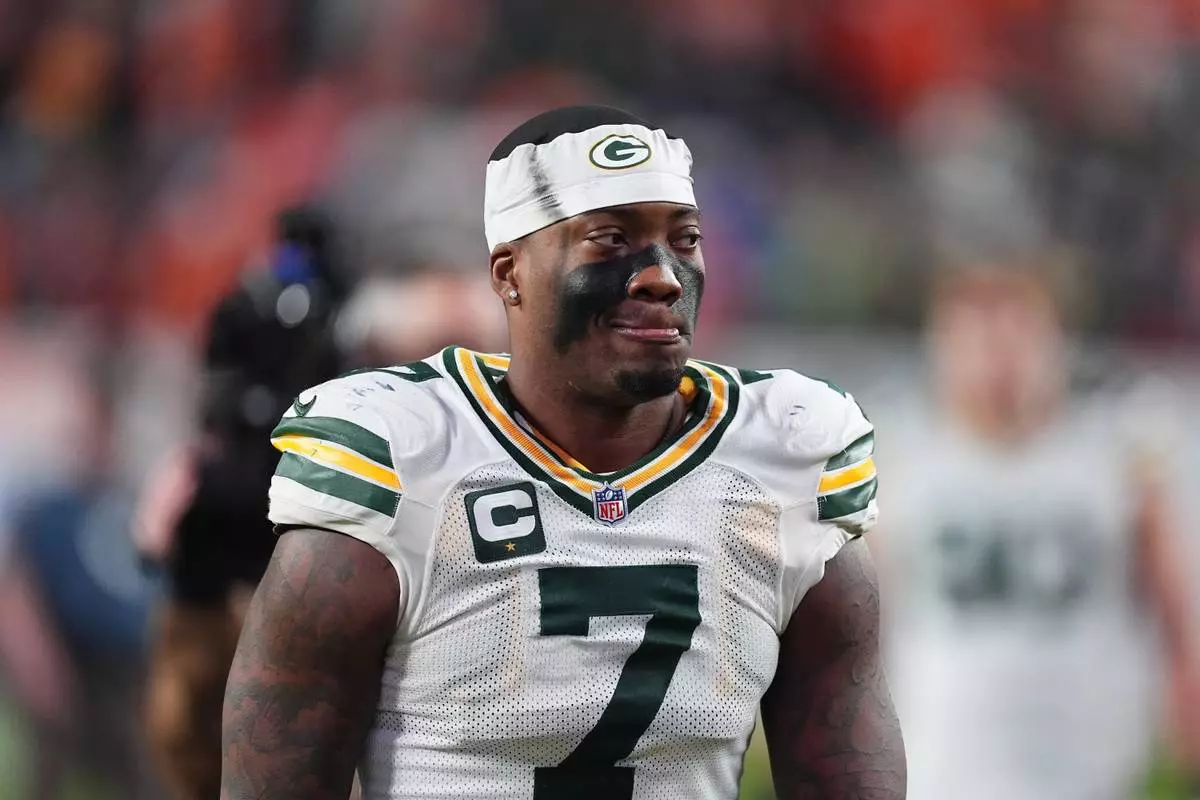
FILE - Green Bay Packers linebacker Quay Walker heads off the field after the second half of an NFL football game against the Denver Broncos, Sunday, Dec. 14, 2025, in Denver. (AP Photo/David Zalubowski,File)
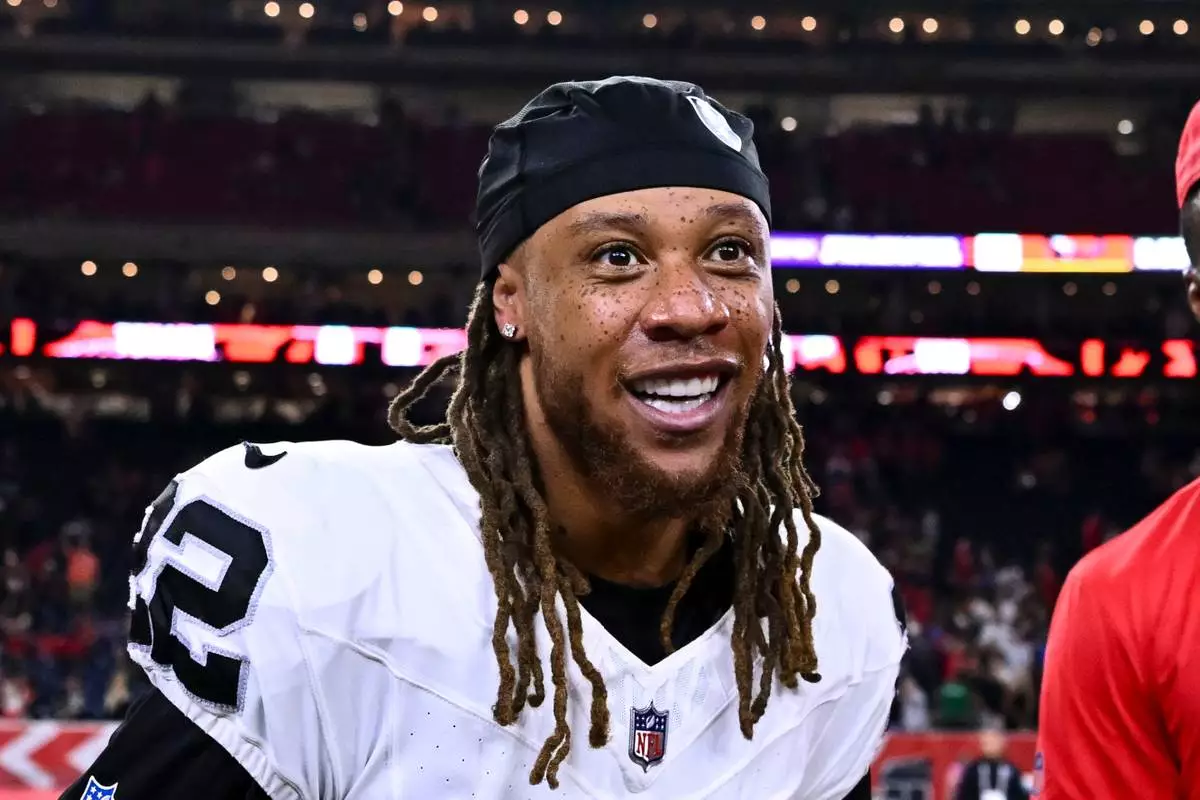
FILE - Las Vegas Raiders cornerback Eric Stokes smiles after an NFL football game against the Houston Texans, Dec. 21, 2025, in Houston. (AP Photo/Maria Lysaker, file)
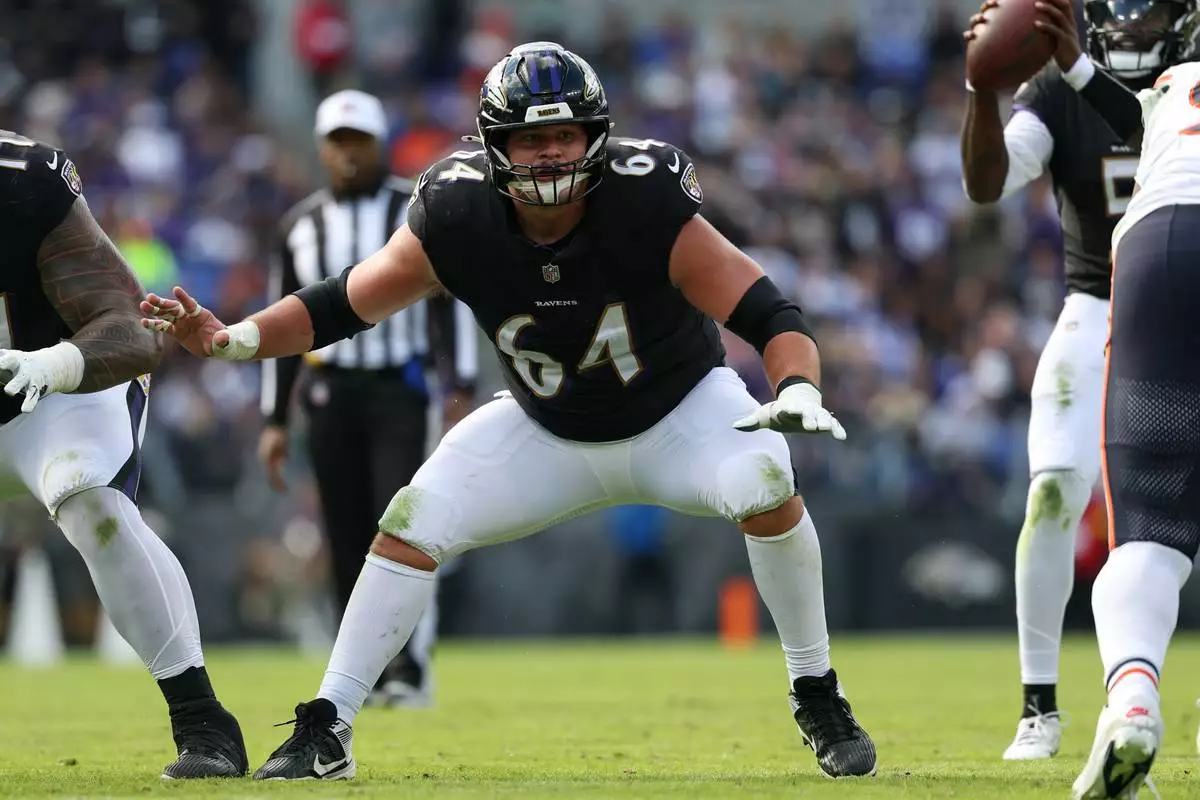
FILE - Baltimore Ravens center Tyler Linderbaum in action during the second half of an NFL football game against the Chicago Bears, Oct. 26, 2025, in Baltimore. (AP Photo/Terrance Williams, file)