Skip to Content Facebook Feature Image

Assent Launches AI-Native Solution to Address Severe Gaps in Compliance and Sustainability Response Management Processes

Business

Assent Launches AI-Native Solution to Address Severe Gaps in Compliance and Sustainability Response Management Processes
Business

Business

Assent Launches AI-Native Solution to Address Severe Gaps in Compliance and Sustainability Response Management Processes

2025-12-15 22:04 Last Updated At:12-16 15:00

OTTAWA, Ontario--(BUSINESS WIRE)--Dec 15, 2025--

Assent Inc. (Assent), the global leader in supply chain sustainability management, announces Request Manager, the industry’s first AI-native solution that addresses the critical pain point of how suppliers efficiently manage and respond to customer compliance and sustainability requests. Built on the market-leading Assent Sustainability Platform, Request Manager empowers suppliers to deliver accurate, high-quality regulatory data, declarations, and supporting documentation with greater speed and efficiency through a single, streamlined workflow to reduce management effort, lower compliance costs, and mitigate supply chain risk. The solution will launch for new Assent customers in January 2026.

This press release features multimedia. View the full release here: https://www.businesswire.com/news/home/20251215595090/en/

Request Manager enables suppliers to manage all customer requests in one centralized location through AI-powered parsing, matching and re-use of verified data, as well as a proactive declaration sharing function that allows suppliers to anticipate customer requests.

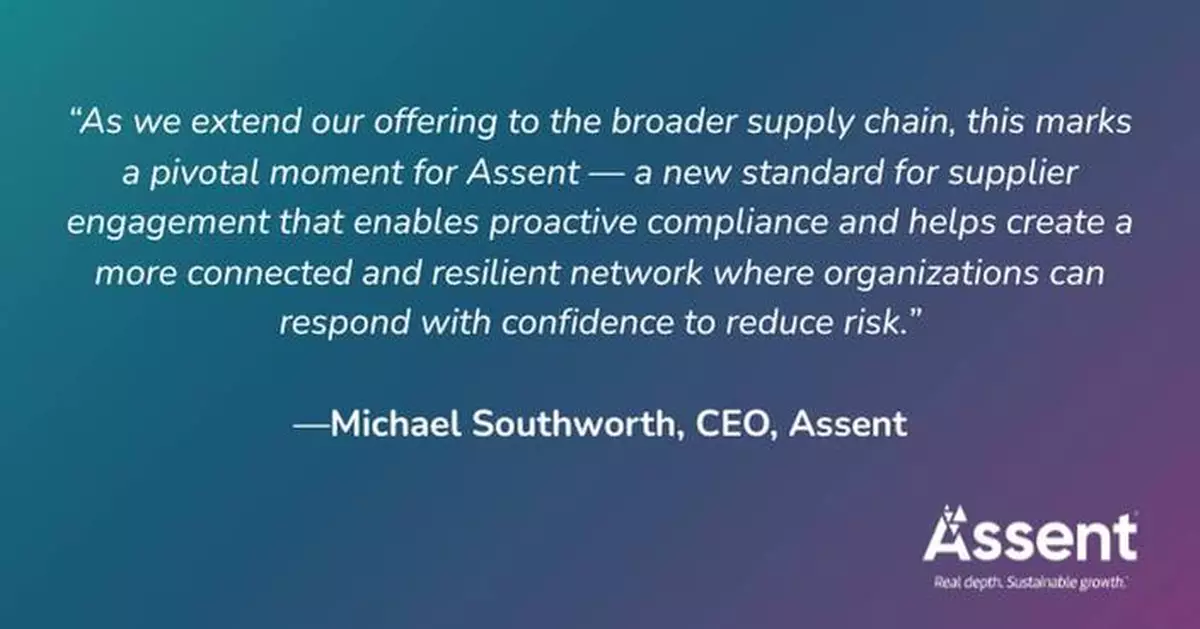
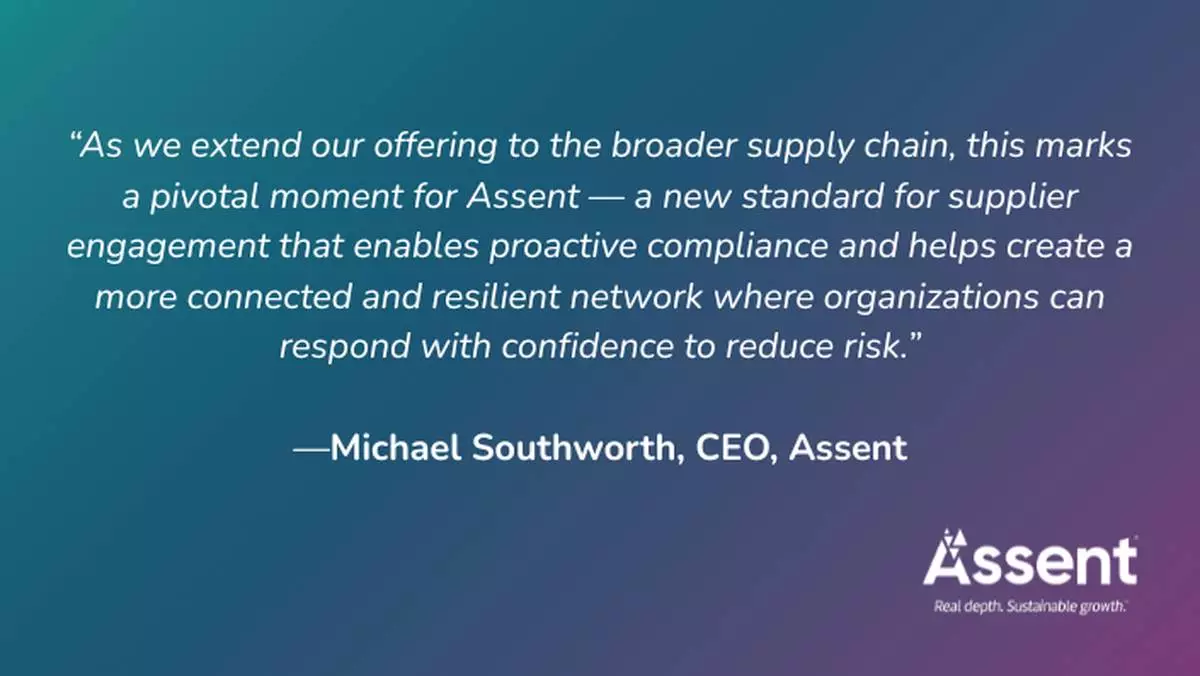
“Request Manager represents a breakthrough in how suppliers and distributors can stay ahead of escalating compliance expectations. It transforms a historically fragmented process by harnessing the data already embedded in the Assent Sustainability Platform to deliver speed, time savings, and scale,” said Michael Southworth, CEO of Assent. “As we extend our offering to the broader supply chain, this marks a pivotal moment for Assent — a new standard for supplier engagement that enables proactive compliance and helps create a more connected and resilient network where organizations can respond with confidence to reduce risk.”

Regulatory frameworks are in constant flux and are becoming increasingly complex. At the same time, manufacturers and distributors face an unsustainable volume of customer requests. Additionally, supplier contracts now include greater obligations that can disqualify those who fall short. Request Manager is Assent’s answer to this industry-wide breaking point: a secure, centralized hub that unifies all compliance and sustainability requests into one streamlined workflow.

Assent research shows that 80% of businesses still rely on email and fragmented spreadsheets to manage the growing volume of compliance requests. The data also revealed manufacturers receive an average of 350 requests per year, while distributors often face thousands, each of which may contain hundreds of part-and-regulation line items that must be interpreted and completed. With each request taking roughly three hours to complete, many manufacturers spend more than 1,000 hours a year on manual compliance and sustainability request management processes.

Elisa Morelo, Senior Analyst at Verdantix, highlighted the need for a solution dedicated to suppliers, “The surge in the volume and complexity of compliance requests is putting intense pressure on suppliers to deliver high-quality data in a timely manner. We believe AI can play an extremely important role in this category in terms of helping suppliers manage the scale of requests and reducing supplier fatigue, as well as streamlining manual processes and improving data quality.”

With Request Manager, suppliers will be able to:

“My team depends on me to never miss a deadline or customer request, but with our previous process, the volume of requests we received each day was overwhelming,” said Jessica Adams, Quality Technician at Durex Industries. “Quick and accurate responses are essential to maintaining our commercial relationships. Since implementing Assent’s Request Manager solution, all the information my team and I need is in one place. I can respond faster and with greater confidence, and I’m able to focus on other critical parts of my job.”

Learn more about Request Manager here.

Organizations interested in early access to Request Manager can register here.

About Assent

Assent provides the leadingsupply chain sustainability management solutionand is on a mission to become the global platform of record for supply chain sustainability and compliance for manufacturers. Founded in 2010, Assent is the only company that unifies platform, people, and supplier intelligence to future-proof supply chains amid global disruption. Powered by AI, we enable faster, smarter compliance — from risk analysis to automated document review — while delivering unmatched speed, cost efficiency, and confidence. With a proprietary supplier engagement engine and deep regulatory expertise built into our platform and services, Assent helps customers navigate complexity, reduce risk, and accelerate growth.
Assent Launches AI-Native Solution to Address Severe Gaps in Compliance and Sustainability Response Management Processes
Assent Launches AI-Native Solution to Address Severe Gaps in Compliance and Sustainability Response Management Processes

NEW YORK (AP) — Tomatoes, ubiquitous in everything from fast-food burgers to haute cuisine, are taking on a new role beyond the plate: A nagging reminder of rising costs.

Prices for those red orbs have soared more than any other food product over the past year to cement a spot as one of the consumer headaches du jour.

“The tomato has become a symbol of something much deeper,” says Isaac Bernal Carbajo, a New York City chef who lamented life's “simplest pleasures” falling victim to price increases. “Something as basic as buying fresh vegetables is starting to become a serious financial decision for many families.”

Tomato prices are up about 40% over a year ago, according to the latest Consumer Price Index, dwarfing increases for other groceries, including coffee (up 18.5%), beef roasts (up 17.8%) and frozen fish and seafood (up 12%), among other products that have become symbols of America’s affordability squeeze.

A separate inflation gauge released Thursday showed that overall prices increased 3.8% in April from a year earlier, the highest reading in nearly three years.

Alongside crop yields, experts blame price increases for tomatoes, in part, on two pillars of President Donald Trump’s second-term policies: the Iran war and tariffs. The war spiked gas prices and increased shipping costs. Meantime, the U.S. withdrew from a deal allowing duty-free imports of tomatoes from Mexico, which grows most of America's supply.

Usha Haley, a Wichita State University economist, says it's “a perfect storm of trade policy, extreme weather and Mideast policy.”

American tomato farmers cheered the withdrawal from the tomato deal last July, saying it would help rebuild their shrinking industry. But for consumers, it's been painful. Though the U.S. withdrew from the Mexico tomato deal in July, it took time to see the impact in the produce aisle, with more imports in late winter and early spring.

When the tomatoes arrived, they were slapped with a 17% tariff.

“Tariffs are undeniably a big driver of the price inflation,” says Brett Massimino, a Virginia Commonwealth University business professor. “Because the U.S. relies on Mexico for the majority of its tomato supply, any changes in trade policy can have a large impact.”

U.S. tariffs collected on tomatoes ballooned from just $16,424 in 2024 to nearly $4.6 million, according to federal data, a staggering 27,879% increase.

As the cost trickles down, outraged shoppers have pulled out their phones in the produce aisle, shooting videos lamenting costs they said quadrupled, with some vowing to plant a garden to avoid prices of up to $8 a pound. But the impact has been most pronounced for businesses that rely on tomatoes as a key ingredient in their kitchens.

MarginEdge, which tracks prices for restaurants, says grape tomatoes have increased most — 65% in just a month — but prices have gone up across all types of tomatoes.

Phillip Coles, a professor of supply chain management at Lehigh University, says prices should drop later in the year when domestically grown tomatoes are harvested. Higher prices, he says, will also “induce farmers to increase planting to meet the demand, but this takes longer because of the lead time.”

Meantime, it's translating to a big hit for businesses like Snarf’s Sandwiches, which puts a tomato in nearly every sandwich it makes.

Wayne Humphrey, chief operating officer of Snarf’s, which operates dozens of stores in Colorado, Missouri and Texas, said cases of tomatoes went from costing him $27 to $93 in the space of a year, piled on top of rising expenses for other ingredients including bread and beef, as well as increased labor costs.

“That single ingredient now costs us more than $1.7 million in additional spend annually,” says Humphrey. “The math is getting harder to ignore.”

Associated Press writer Dee-Ann Durbin contributed to this report. Matt Sedensky can be reached at msedensky@ap.org and https://x.com/sedensky

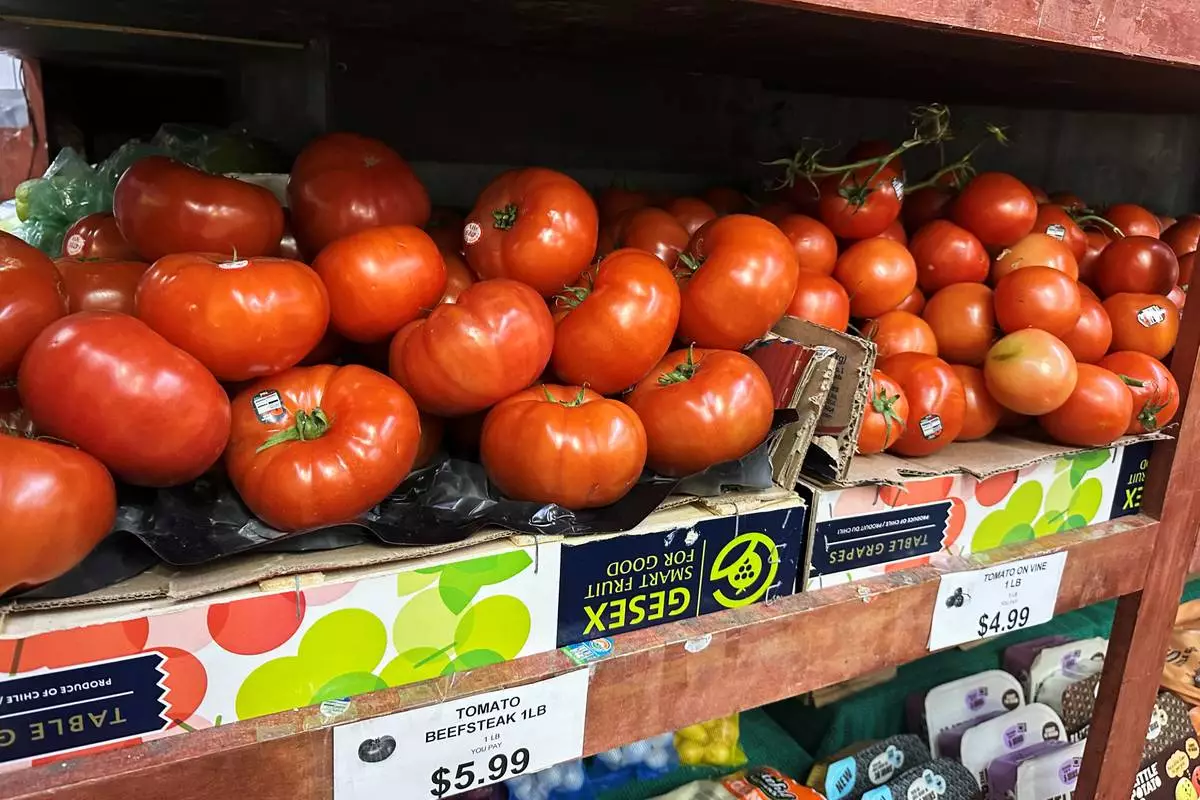
Tomatoes await customers on the shelves of a supermarket in New York on Tuesday, May 26, 2026. (AP Photo/Matt Sedensky)

Tomatoes await customers on the shelves of a supermarket in New York on Tuesday, May 26, 2026. (AP Photo/Matt Sedensky)

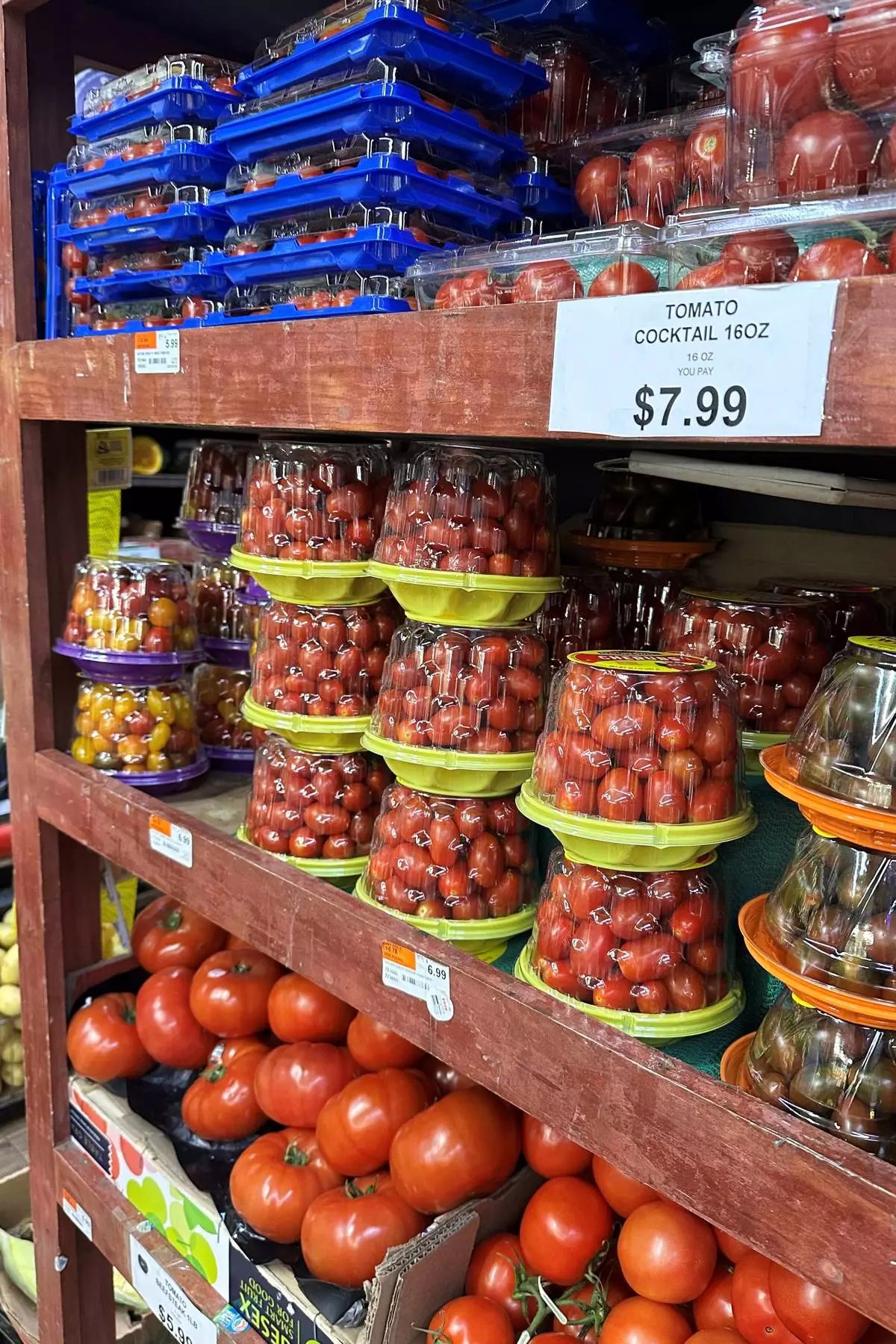
Tomatoes await customers on the shelves of a supermarket in New York on Tuesday, May 26, 2026. (AP Photo/Matt Sedensky)

Tomatoes await customers on the shelves of a supermarket in New York on Tuesday, May 26, 2026. (AP Photo/Matt Sedensky)

Recommended Articles