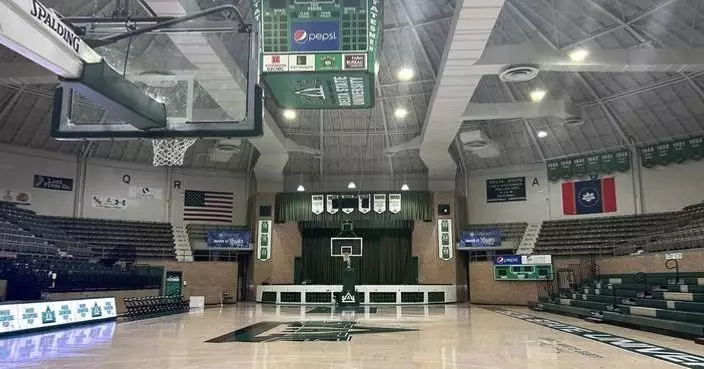
LOS ANGELES (AP) — The fight over California's new congressional map designed to help Democrats flip a string of U.S. House seats kicked off in court Monday, where a panel of federal judges is considering whether the rejiggered districts approved by voters last month can be used in elections.
The hearing in Los Angeles sets the stage for a high-stakes legal and political fight between the Trump administration and Democratic Gov. Gavin Newsom, who’s been eyeing a 2028 presidential run. The lawsuit asks a three-judge panel to grant a temporary restraining order blocking the new map by Dec. 19 — the date candidates can take the first official steps to run in the 2026 elections when GOP control of the House will be in play.
Voters approved California's new House map in November in so-called Proposition 50. It's designed to help Democrats flip as many as five seats in the midterm elections. It was Newsom's response to a Republican-led effort in Texas backed by President Donald Trump.
The showdown between the nation’s two most populous states has spread nationally, with efforts aiming to determine which party controls Congress for the second half of Trump’s term. Missouri, North Carolina and Ohio have adopted new district lines that could provide a partisan advantage.
Some plans are facing legal challenges, but the Supreme Court ruled earlier this month to allow Texas to use its new map for the 2026 election. The Justice Department has only sued California.
The Justice Department, joining a case brought by the California Republican Party, has accused California of gerrymandering its map in violation of the Constitution by using race as a factor to favor Hispanic voters. Republicans want the court to prohibit California from using the new map. Voters approved the map for the 2026, 2028 and 2030 elections. State Democrats said they’re confident the lawsuit will fail.
“In letting Texas use its gerrymandered maps, the Supreme Court noted that California’s maps, like Texas’, were drawn for lawful reasons,” Newsom’s spokesperson Brandon Richards said in a statement. “That should be the beginning and the end of this Republican effort to silence the voters of California.”
The lawsuit cites a news release from state Democrats that says the new map “retains and expands Voting Rights Act districts that empower Latino voters” while making no changes to Black majority districts in the Oakland and Los Angeles areas. The federal Voting Rights Act, passed in the 1960s, sets rules for drawing districts to ensure minority groups have adequate political power. The lawsuit also cites a Cal Poly Pomona and Caltech study that concludes the new map would increase Latino voting power.
“Race cannot be used as a proxy to advance political interests, but that is precisely what the California General Assembly did with Proposition 50 — the recent ballot initiative that junked California’s pre-existing electoral map in favor of a rush-job rejiggering of California’s congressional district lines,” the lawsuit said.
The Justice Department alleges that Paul Mitchell, a redistricting consultant who drew the map for Democrats, and state leaders admitted that they redrew some districts to have a Latino majority.
The hearing began with a dense, technical discussion spotlighting how one of the districts — the 13th, in the state's Central Valley — was designed, touching on issues like the Hispanic voting age population, census population blocks and different software used manage and massage the data.
“Race was the predominant interest in drawing the district,” elections analyst Sean Trende, called by the plaintiffs, told the judges. He pointed to a thumb-like appendage jutting out of the northern end of the new district, which he characterized as a precise knife cut to capture certain voters.
Defense attorneys picked away at his analysis, questioning in part whether political shifts in the region could have dictated how lines were drawn rather than racial considerations. At one point Trende acknowledged that the thumb-like bump in the district boundary was not as extreme as congressional maps seen in other states.
New U.S. House maps are drawn across the country after the Census every 10 years. Some states like California rely on an independent commission to draw maps, while others like Texas let politicians draw them. The effort to create new maps in the middle of the decade is highly unusual.
House Democrats need to gain just a handful of seats next year to take control of the chamber, which would imperil Trump’s agenda for the remainder of his term and open the way for congressional investigations into his administration. Republicans hold 220 seats and the Democrats hold 213.
Nguyễn reported from Sacramento.
This story has been corrected to show that the partisan split in the House is 220 Republicans and 213 Democrats, not 219 Republicans and 214 Democrats.

FILE -California Gov. Gavin Newsom speaks at a session at the We Mean Business Pavilion during the COP30 U.N. Climate Summit, Tuesday, Nov. 11, 2025, in Belem, Brazil. (AP Photo/Fernando Llano, File)
DUBAI, United Arab Emirates (AP) — Iran fired more missiles at Israel and Gulf Arab states Thursday, demonstrating Tehran’s continued ability to attack even as U.S. President Donald Trump claimed the threat from the country was nearly eliminated and predicted the war would end soon.
Iran’s strikes on its neighbors along with its chokehold on the Strait of Hormuz have disrupted the world’s energy supplies with effects far beyond the Middle East. That has proved to be Iran’s greatest strategic advantage in the war. Britain planned to hold a call with nearly three dozen countries about how to reopen the strait, through which 20% of all traded oil passes in peacetime, once the fighting is over.
Trump has insisted the strait, which was open to traffic before the U.S. and Israel launched their war on Iran, can be taken by force — but said it is not up to the U.S. to do that. In his address to the American people Wednesday night, he encouraged countries that depend on oil passing through Hormuz to “build some delayed courage” and go “take it.”
Iran responded defiantly to Trump’s speech, in which the American president claimed U.S. military action had been so decisive that “one of the most powerful countries” is “really no longer a threat.”
A spokesman for Iran’s military insisted Thursday that Tehran maintains hidden stockpiles of arms, munitions and production facilities. “The centers you think you have targeted are insignificant, and our strategic military productions take place in locations of which you have no knowledge and will never reach,” Lt. Col. Ebrahim Zolfaghari claimed.
Just before Trump began his address — in which he said U.S. “core strategic objectives are nearing completion” — explosions were heard in Dubai as air defenses worked to intercept an Iranian missile barrage.
Less than a half-hour after the president was done, Israel said its military was also working to intercept incoming missiles. Sirens sounded in Bahrain, home to the U.S. Navy’s 5th Fleet, immediately after the speech.
Attacks continued across Iran on Thursday, with strikes reported in multiple cities.
More than 1,900 people have been killed in Iran during the war, while 19 have been reported dead in Israel. More than two dozen people have died in Gulf states and the occupied West Bank, while 13 U.S. service members have been killed.
More than 1,200 people have been killed and more than 1 million displaced in Lebanon, home to Iran-backed Hezbollah militants who are fighting Israel, which has launched a ground invasion. Ten Israeli soldiers have also died there.
Iranian attacks on some two dozen commercial ships, and the threat of more, have halted nearly all traffic in the waterway that connects the Persian Gulf to the open ocean.
The 35 countries speaking Thursday, including all G7 industrialized democracies except the U.S., as well as the United Arab Emirates and Bahrain, signed a declaration last month demanding Iran stop blocking the strait. British Prime Minister Keir Starmer said the countries will discuss “viable diplomatic and political measures” to resume shipping.
But no country appears willing to try to open the strait by force while the war is raging. There is a concern that Iran might limit traffic through the strait even after U.S. and Israeli attacks on it cease.
The idea of an international effort has echoes of the “coalition of the willing,” led by the U.K. and France, that was assembled to underpin Ukraine’s security in the event of a ceasefire in that war. The coalition is, in part, an attempt to demonstrate to Washington that Europe is doing more for its own security in the face of frequent criticism from Trump.
The U.S. has presented Iran with a 15-point plan for a ceasefire, but Trump didn’t say anything in his speech about the diplomatic efforts or bring up his April 6 deadline for Iran to reopen the Strait of Hormuz or face severe retaliation.
The conflict is driving up prices for oil and natural gas, roiling stock markets, pushing up the cost of gasoline and threatening to make a range of goods, including food, more expensive.
On Thursday, Brent crude, the international standard, rose again and was at $108 in spot trading, up about 50% from Feb. 28 when Israel and the U.S. started the war.
Though the oil and gas that typically transits the strait is primarily sold to Asian nations, Japan and South Korea were the only two countries from the region joining Thursday's call about the strait. The supply of jet fuel has also been interrupted by the conflict, with consequences for travel worldwide.
Weissert reported from Washington and Rising from Bangkok.
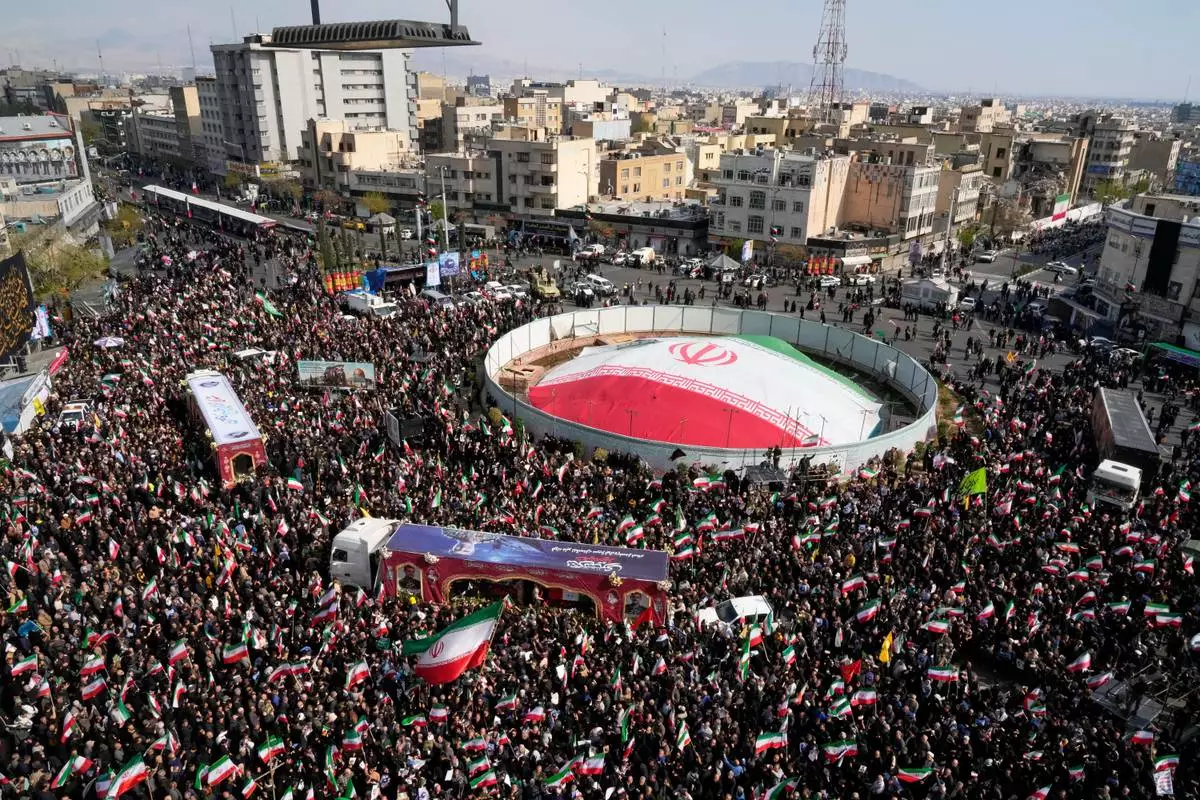
Mourners gather during a funeral procession for Alireza Tangsiri, head of Iran's Islamic Revolutionary Guard Corps Navy, and others killed in Israeli strikes in late March, in Tehran, Iran, Wednesday, April 1, 2026. (AP Photo/Vahid Salemi)
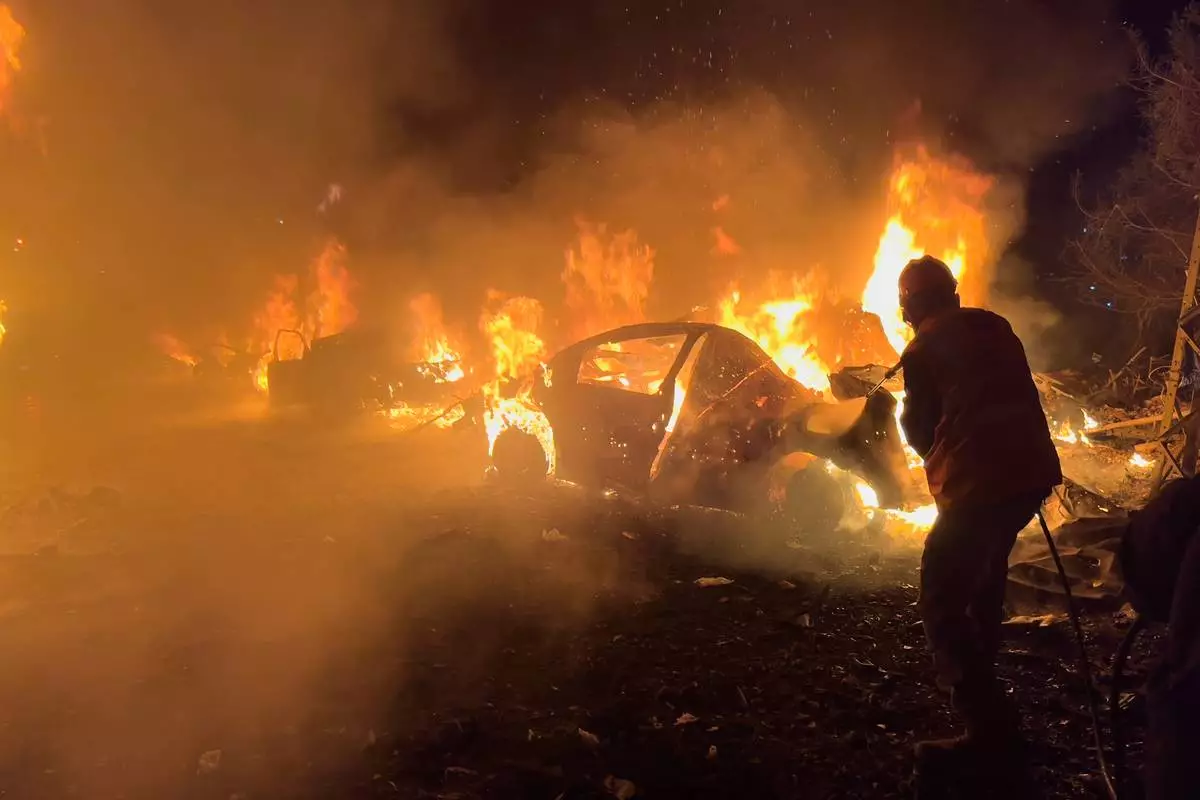
A firefighter extinguishes a car at the site of Israeli airstrikes, in Beirut, Lebanon, Wednesday, April 1, 2026. (AP Photo/Hussein Malla)
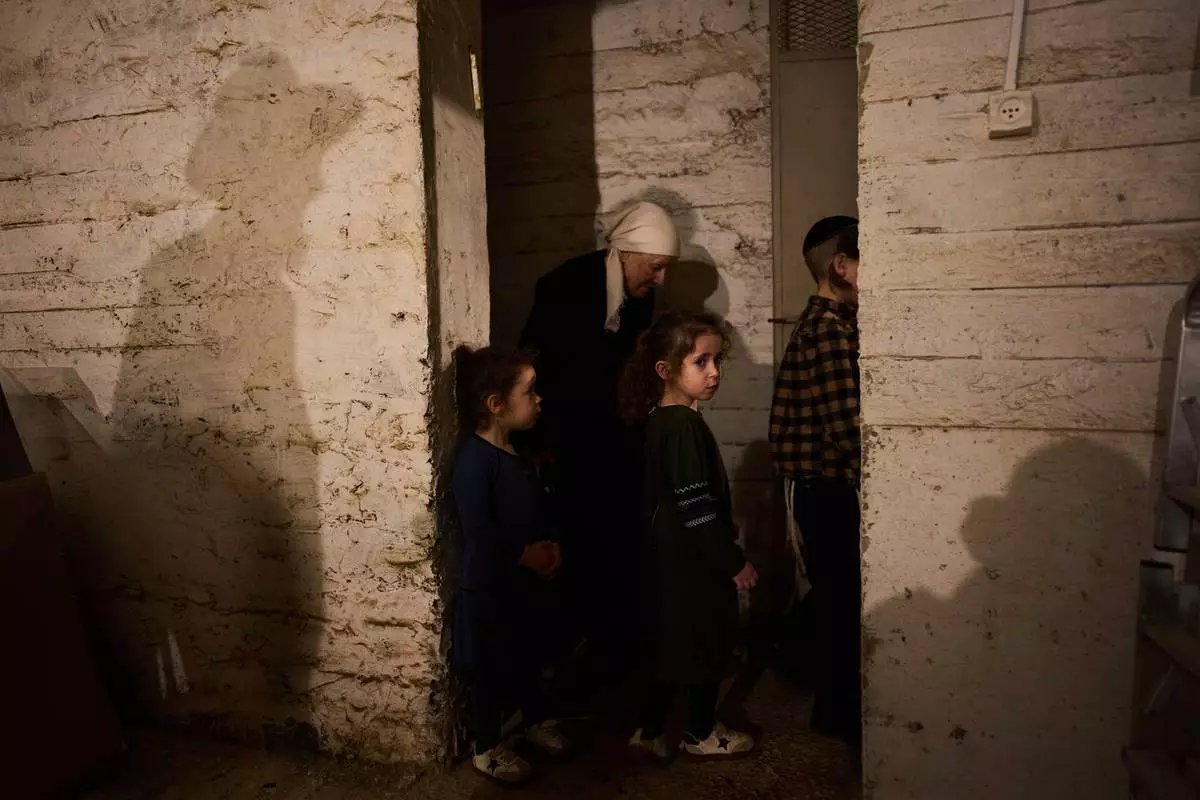
People take cover in a bomb shelter as air raid sirens warn of incoming Iranian missile strikes in Bnei Brak, Israel, Wednesday, April 1, 2026. (AP Photo/Oded Balilty)
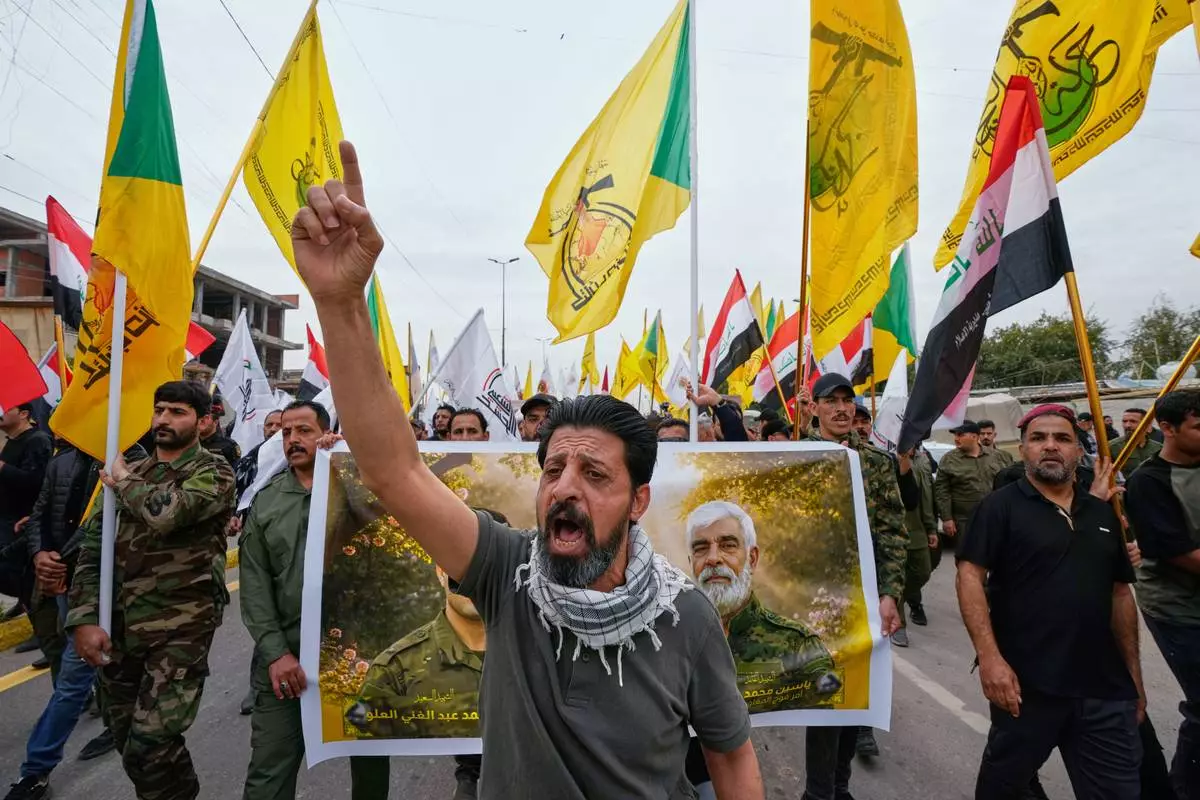
Members from the Popular Mobilization Forces attend a funeral of fighters who were killed in a U.S. airstrike, in Tal Afar, Nineveh province, north of Baghdad, Iraq, Thursday, April 2, 2026. (AP Photo/Hadi Mizban)
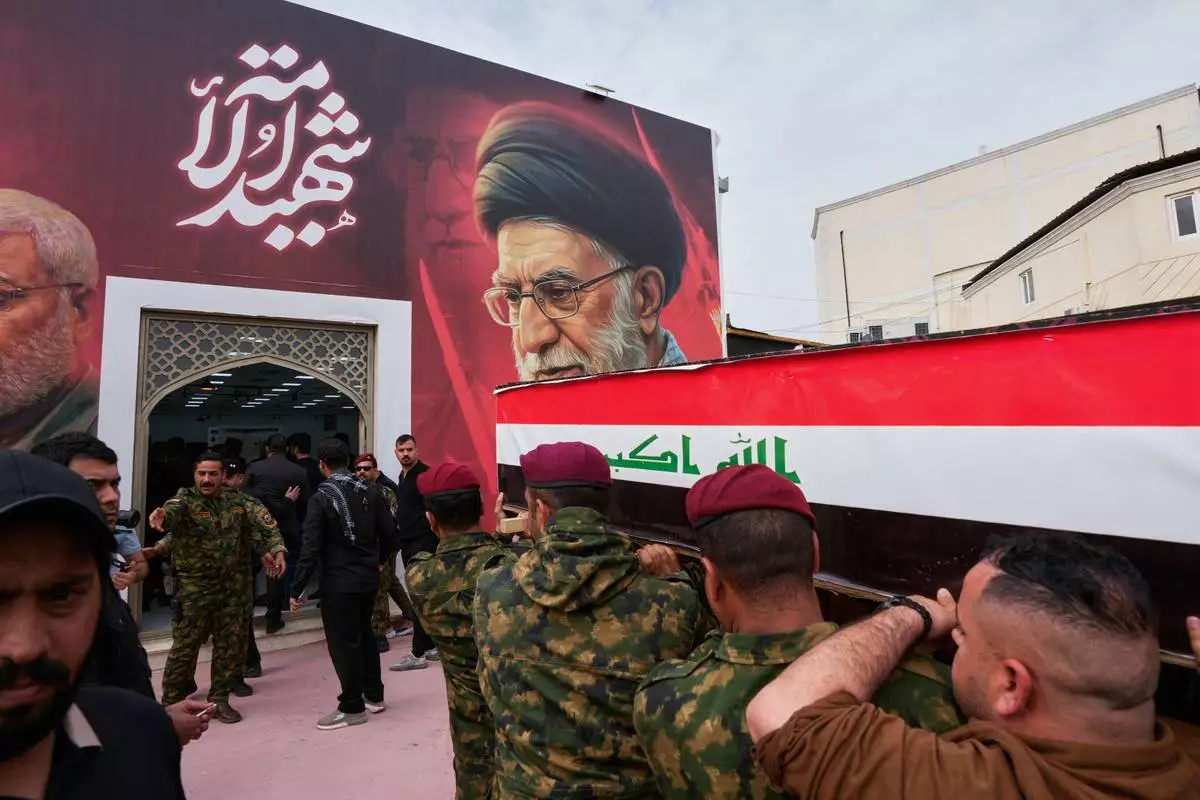
Members from the Popular Mobilization Forces attend a funeral of fighters who were killed in a U.S. airstrike, in Tal Afar, Nineveh province, north of Baghdad, Iraq, Thursday, April 2, 2026. (AP Photo/Hadi Mizban)
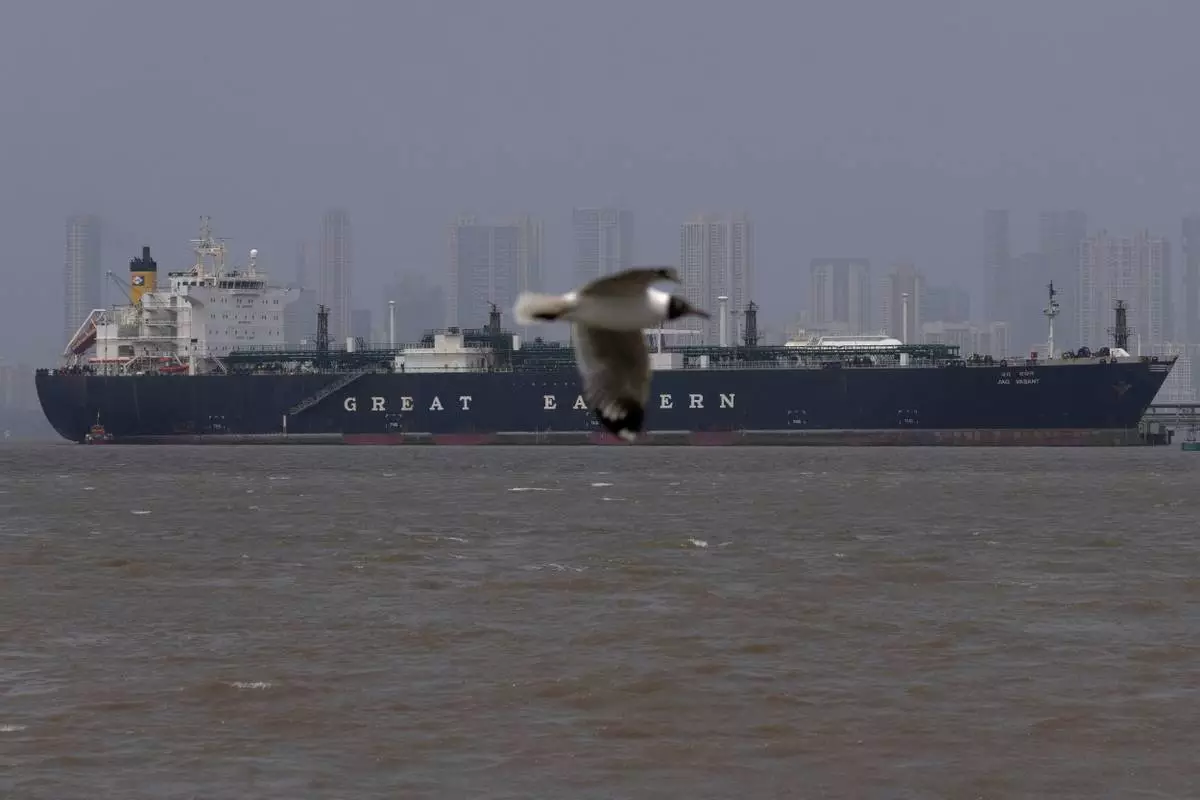
The Indian flagged LPG carrier Jag Vasant transporting liquefied petroleum gas, is seen at the Mumbai Port in Mumbai, India, after it arrived clearing the Strait of Hormuz, Wednesday, April 1, 2026. (AP Photo/Rafiq Maqbool)
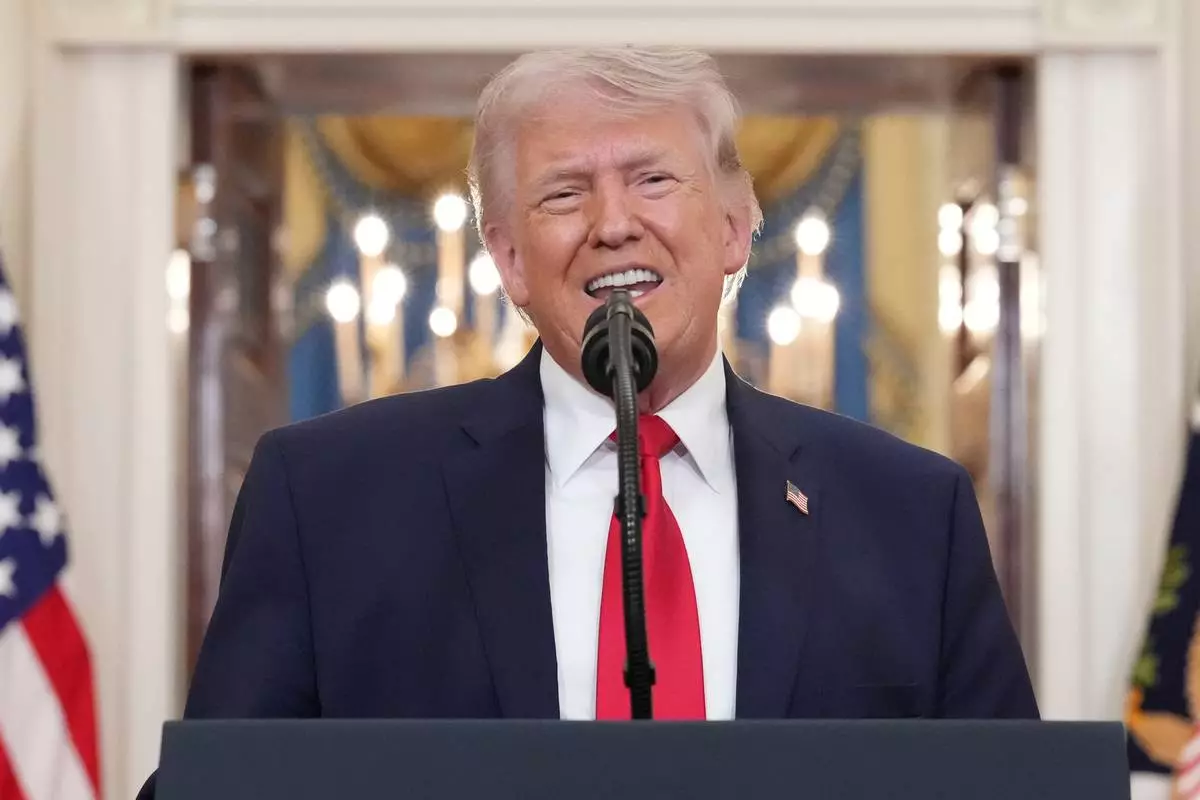
President Donald Trump speaks about the Iran war from the Cross Hall of the White House on Wednesday, April 1, 2026, in Washington. (AP Photo/Alex Brandon, Pool)
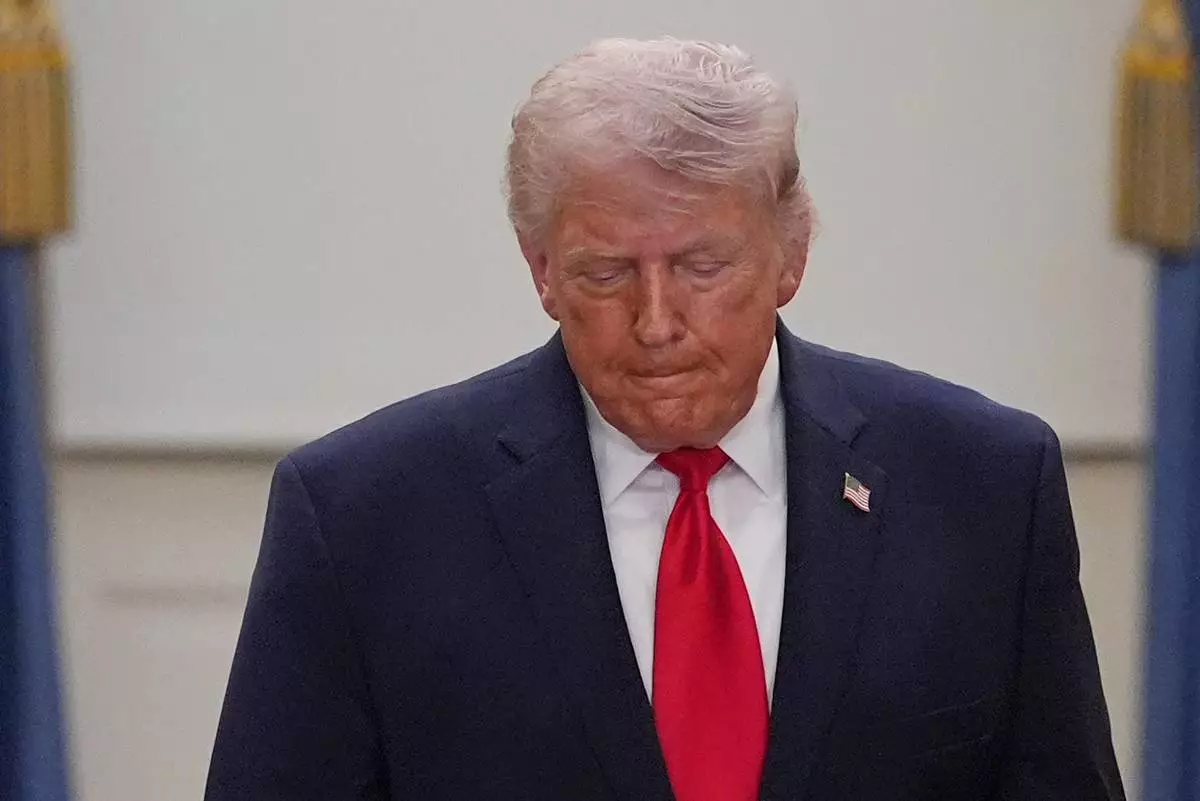
President Donald Trump walks from the Blue Room to speak about the Iran war from the Cross Hall of the White House on Wednesday, April 1, 2026, in Washington. (AP Photo/Alex Brandon, Pool)
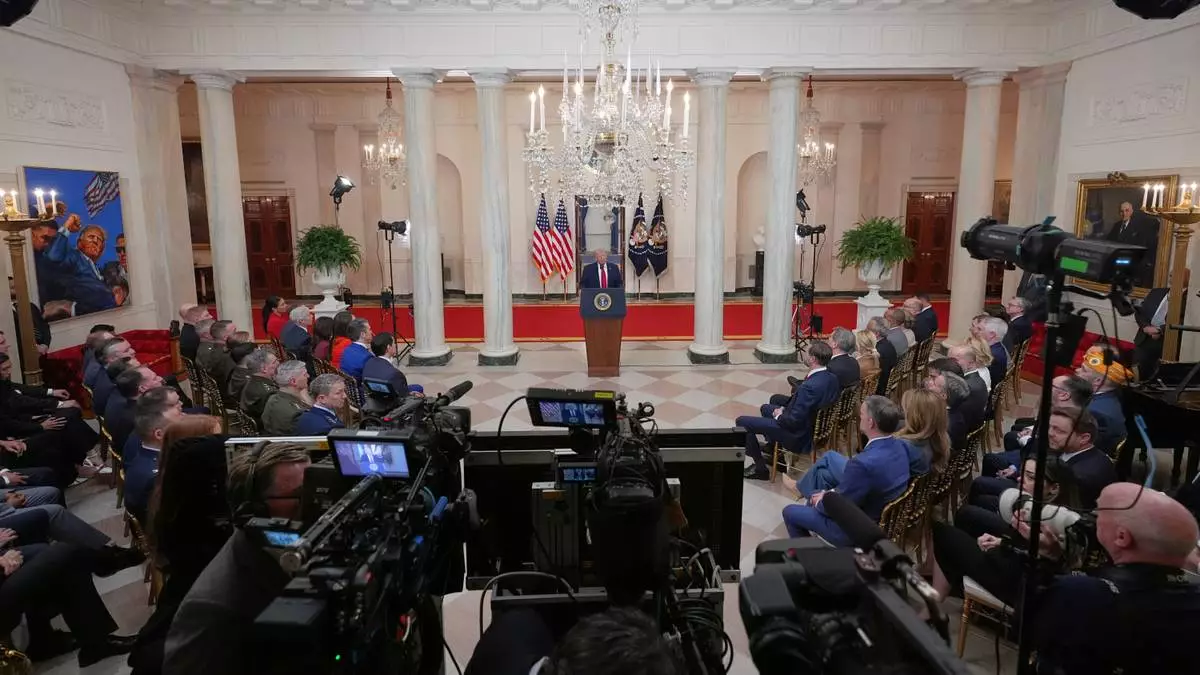
President Donald Trump speaks about the Iran war from the Cross Hall of the White House on Wednesday, April 1, 2026, in Washington. (AP Photo/Alex Brandon, Pool)
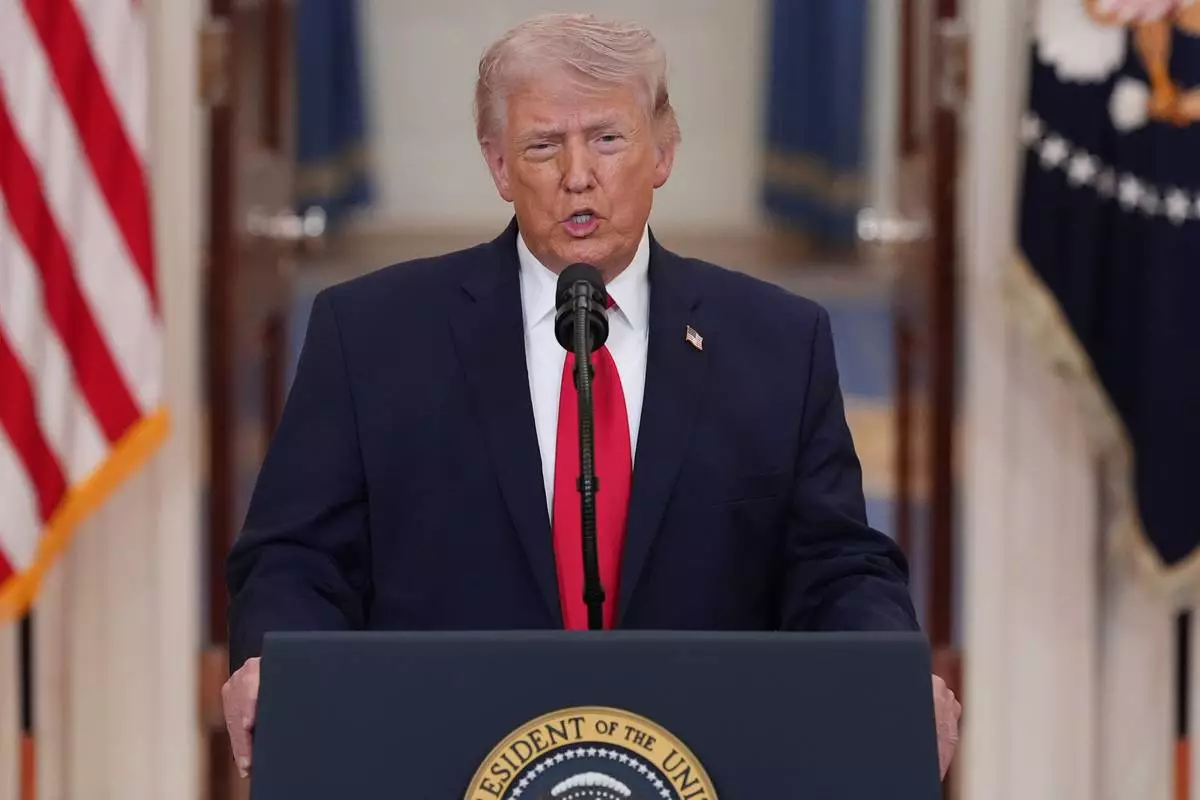
President Donald Trump speaks about the Iran war from the Cross Hall of the White House on Wednesday, April 1, 2026, in Washington. (AP Photo/Alex Brandon, Pool)