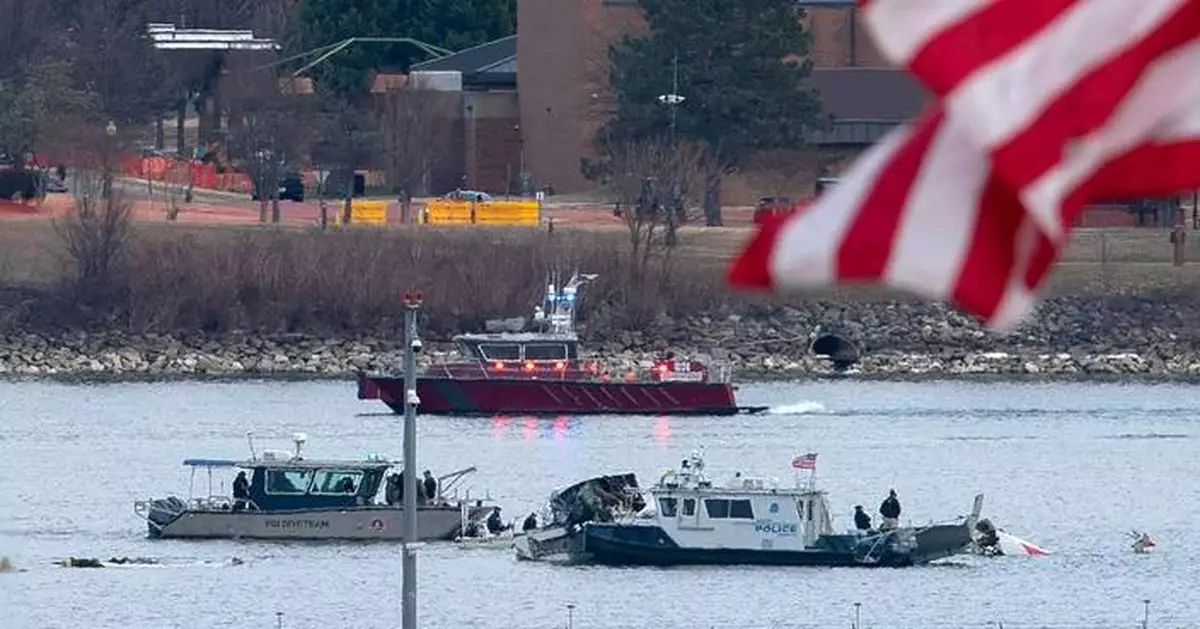
WASHINGTON D.C. (AP) — Republican Sen. Ted Cruz wants restrictions on military flights approved before government funding runs out at the end of next month to prevent another midair collision like the one over Washington, D.C., that killed 67 people in January.
Cruz and Democratic Sen. Maria Cantwell held a news conference Monday with some of the victims’ families to urge Congress to strip some provisions from a massive defense bill that’s expected to pass this week. The provisions would allow military aircraft to get a waiver to return to operating without broadcasting their precise location, just as they were before the Jan. 29 crash between an airliner and an Army helicopter.
But amending the defense bill would send it back to the House and could delay raises for soldiers and other key provisions.
When he was asked about the helicopter safety concerns Monday, Senate Majority Leader John Thune responded that he hoped to hold a vote to add the legislation Cruz and Cantwell introduced last summer, called the ROTOR act, to a government funding package this week.
“I think we’ll get there on that, but it would be really hard to undo the defense authorization bill now,” Thune, R-S.D., said.
Cruz said he will hold up government funding until the ROTOR act is passed to fix the problem.
Cruz said the defense bill provision “was airdropped in at at the last moment," noting it would unwind actions taken by President Donald Trump and Transportation Secretary Sean Duffy to make the airspace around D.C. safer.
“The special carve-out was exactly what caused the January 29th crash that claimed 67 lives,” Cruz said.
Before the crash, military helicopters routinely flew through the crowded airspace around the nation’s capital without using a key system called ADS-B to broadcast their locations. The Federal Aviation Administration began requiring all aircraft to do that in March.
National Transportation Safety Board Chairwoman Jennifer Homendy, senators, airlines and key transportation unions all sharply criticized the new helicopter safety provisions in the defense bill last week when they came to light.
Cruz and Cantwell said they only became aware that the sprawling military bill would have that language after it was finalized by congressional leaders last week. They began strenuously objecting as soon as they realized it contained the exemptions.
The families of the crash victims said that bill would weaken safeguards and send aviation safety backwards. Amy Hunter, who lost her cousin and his family in the crash, said Trump and his administration had worked to implement safety recommendations from the NTSB, but warned those reforms could be lost in the military policy bill.
Hunter said it “now threatens to undo everything, all the progress that was already made, and it will compromise the safety around Reagan National Airport.”
The NTSB won't release its final report on the cause of the crash until sometime next year, but investigators have already raised a number of key concerns about the 85 near misses around Ronald Reagan National Airport in the years before the crash and the helicopter route that allowed Black Hawks to fly dangerously close to planes landing at the airport's secondary runway.
The bill Cruz and Cantwell proposed to require all aircraft to broadcast their locations has broad support from the White House, the FAA, NTSB and the victims' families.
__
This story has been updated to delete erroneous reporting that Sen. Ted Cruz was threatening another federal government shutdown if new restrictions on military flights are not approved by the end of January.
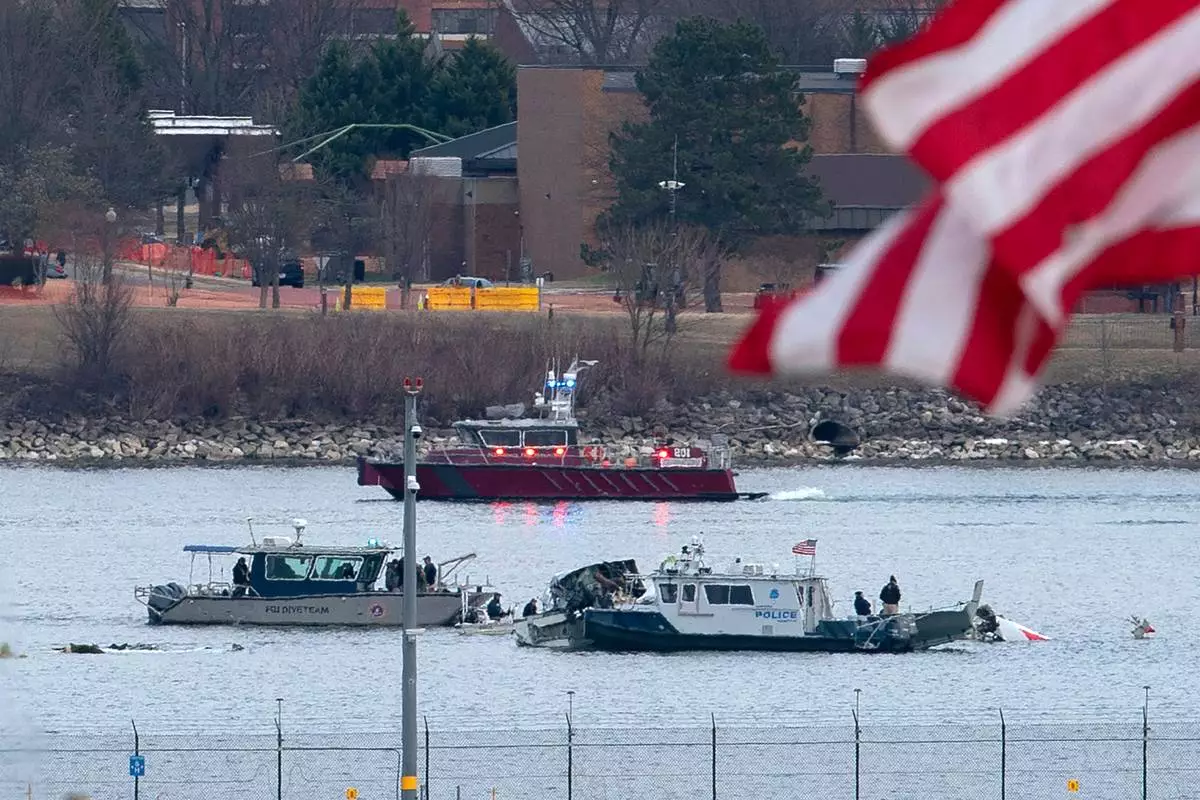
FILE - A diving team and police boat is seen near a wreckage site in the Potomac River, from Ronald Reagan Washington National Airport, Jan. 30, 2025, in Arlington, Va. (AP Photo/Jose Luis Magana, File)
DUBAI, United Arab Emirates (AP) — Iran fired more missiles at Israel and Gulf Arab states Thursday, demonstrating Tehran’s continued ability to attack even as U.S. President Donald Trump claimed the threat from the country was nearly eliminated and predicted the war would end soon.
Iran’s strikes on its neighbors along with its chokehold on the Strait of Hormuz have disrupted the world’s energy supplies with effects far beyond the Middle East. That has proved to be Iran’s greatest strategic advantage in the war. Britain planned to hold a call with nearly three dozen countries about how to reopen the strait, through which 20% of all traded oil passes in peacetime, once the fighting is over.
Trump has insisted the strait, which was open to traffic before the U.S. and Israel launched their war on Iran, can be taken by force — but said it is not up to the U.S. to do that. In his address to the American people Wednesday night, he encouraged countries that depend on oil passing through Hormuz to “build some delayed courage” and go “take it.”
Iran responded defiantly to Trump’s speech, in which the American president claimed U.S. military action had been so decisive that “one of the most powerful countries” is “really no longer a threat.”
A spokesman for Iran’s military insisted Thursday that Tehran maintains hidden stockpiles of arms, munitions and production facilities. “The centers you think you have targeted are insignificant, and our strategic military productions take place in locations of which you have no knowledge and will never reach,” Lt. Col. Ebrahim Zolfaghari claimed.
Just before Trump began his address — in which he said U.S. “core strategic objectives are nearing completion” — explosions were heard in Dubai as air defenses worked to intercept an Iranian missile barrage.
Less than a half-hour after the president was done, Israel said its military was also working to intercept incoming missiles. Sirens sounded in Bahrain, home to the U.S. Navy’s 5th Fleet, immediately after the speech.
Attacks continued across Iran on Thursday, with strikes reported in multiple cities.
More than 1,900 people have been killed in Iran during the war, while 19 have been reported dead in Israel. More than two dozen people have died in Gulf states and the occupied West Bank, while 13 U.S. service members have been killed.
More than 1,200 people have been killed and more than 1 million displaced in Lebanon, home to Iran-backed Hezbollah militants who are fighting Israel, which has launched a ground invasion. Ten Israeli soldiers have also died there.
Iranian attacks on some two dozen commercial ships, and the threat of more, have halted nearly all traffic in the waterway that connects the Persian Gulf to the open ocean.
The 35 countries speaking Thursday, including all G7 industrialized democracies except the U.S., as well as the United Arab Emirates and Bahrain, signed a declaration last month demanding Iran stop blocking the strait. British Prime Minister Keir Starmer said the countries will discuss “viable diplomatic and political measures” to resume shipping.
But no country appears willing to try to open the strait by force while the war is raging. There is a concern that Iran might limit traffic through the strait even after U.S. and Israeli attacks on it cease.
The idea of an international effort has echoes of the “coalition of the willing,” led by the U.K. and France, that was assembled to underpin Ukraine’s security in the event of a ceasefire in that war. The coalition is, in part, an attempt to demonstrate to Washington that Europe is doing more for its own security in the face of frequent criticism from Trump.
The U.S. has presented Iran with a 15-point plan for a ceasefire, but Trump didn’t say anything in his speech about the diplomatic efforts or bring up his April 6 deadline for Iran to reopen the Strait of Hormuz or face severe retaliation.
The conflict is driving up prices for oil and natural gas, roiling stock markets, pushing up the cost of gasoline and threatening to make a range of goods, including food, more expensive.
On Thursday, Brent crude, the international standard, rose again and was at $108 in spot trading, up about 50% from Feb. 28 when Israel and the U.S. started the war.
Though the oil and gas that typically transits the strait is primarily sold to Asian nations, Japan and South Korea were the only two countries from the region joining Thursday's call about the strait. The supply of jet fuel has also been interrupted by the conflict, with consequences for travel worldwide.
Weissert reported from Washington and Rising from Bangkok.
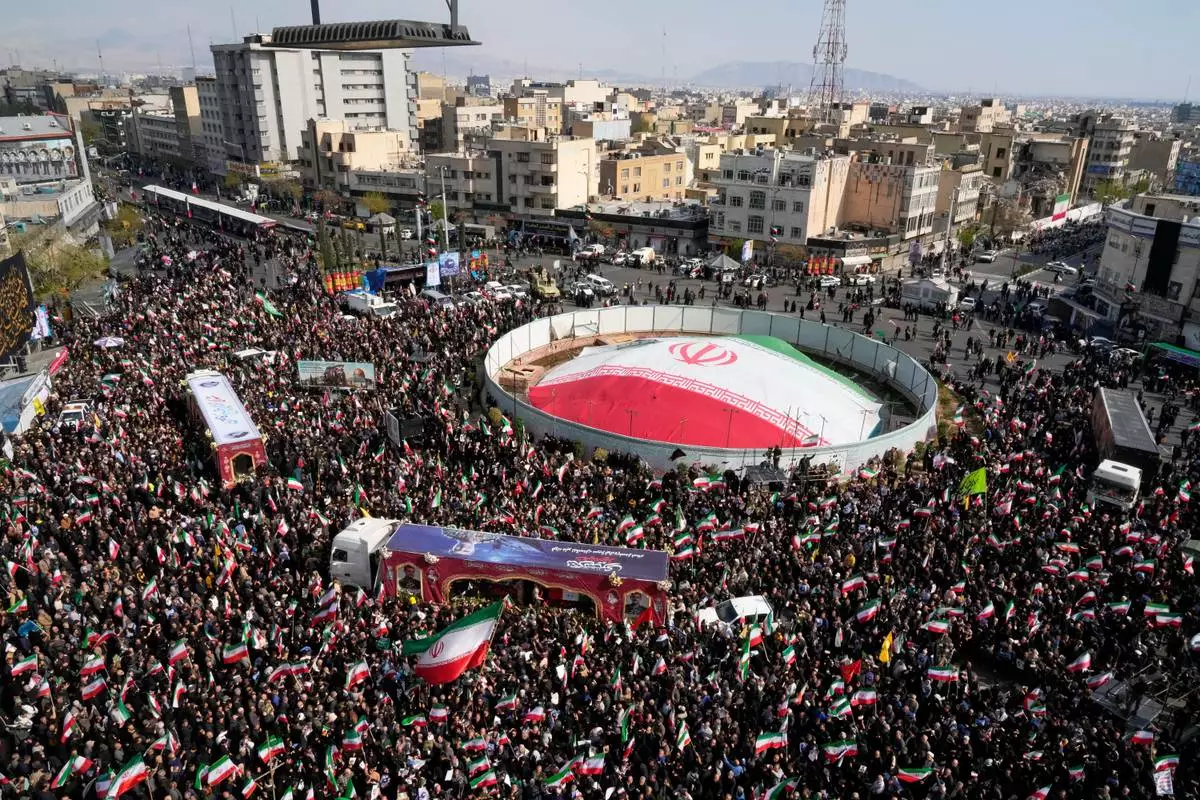
Mourners gather during a funeral procession for Alireza Tangsiri, head of Iran's Islamic Revolutionary Guard Corps Navy, and others killed in Israeli strikes in late March, in Tehran, Iran, Wednesday, April 1, 2026. (AP Photo/Vahid Salemi)
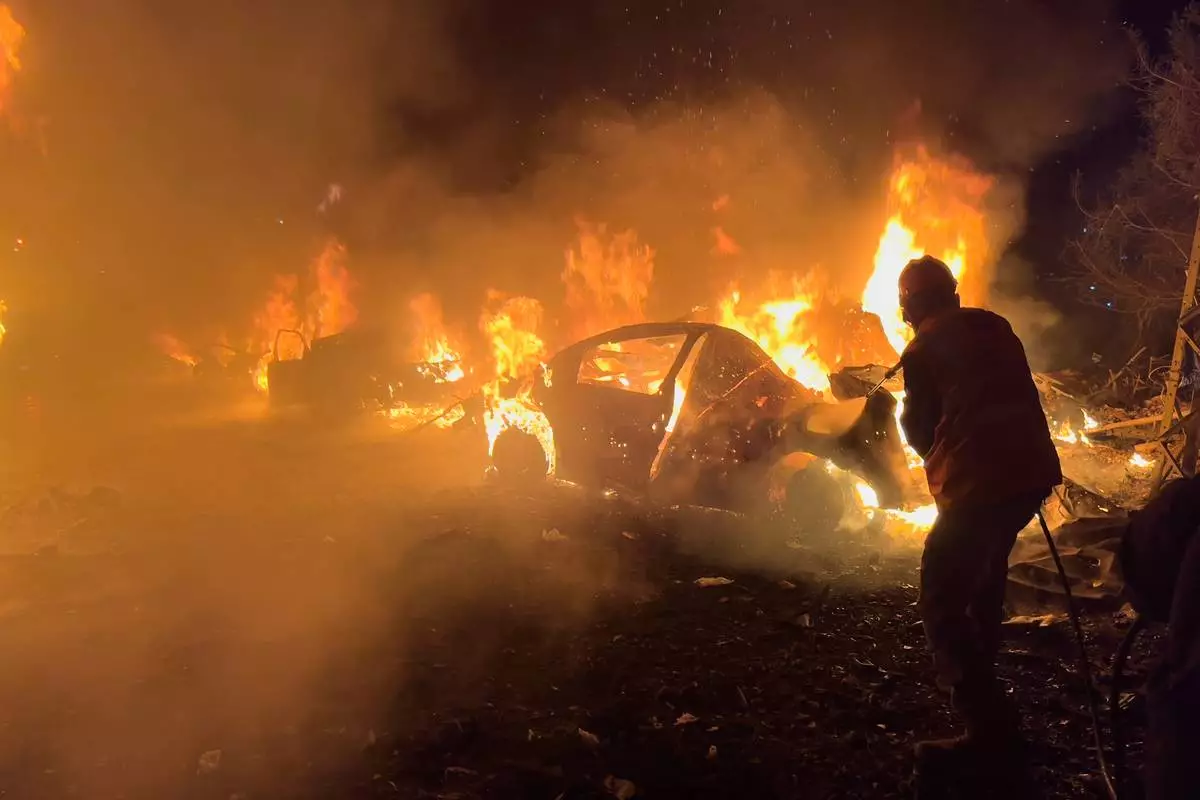
A firefighter extinguishes a car at the site of Israeli airstrikes, in Beirut, Lebanon, Wednesday, April 1, 2026. (AP Photo/Hussein Malla)
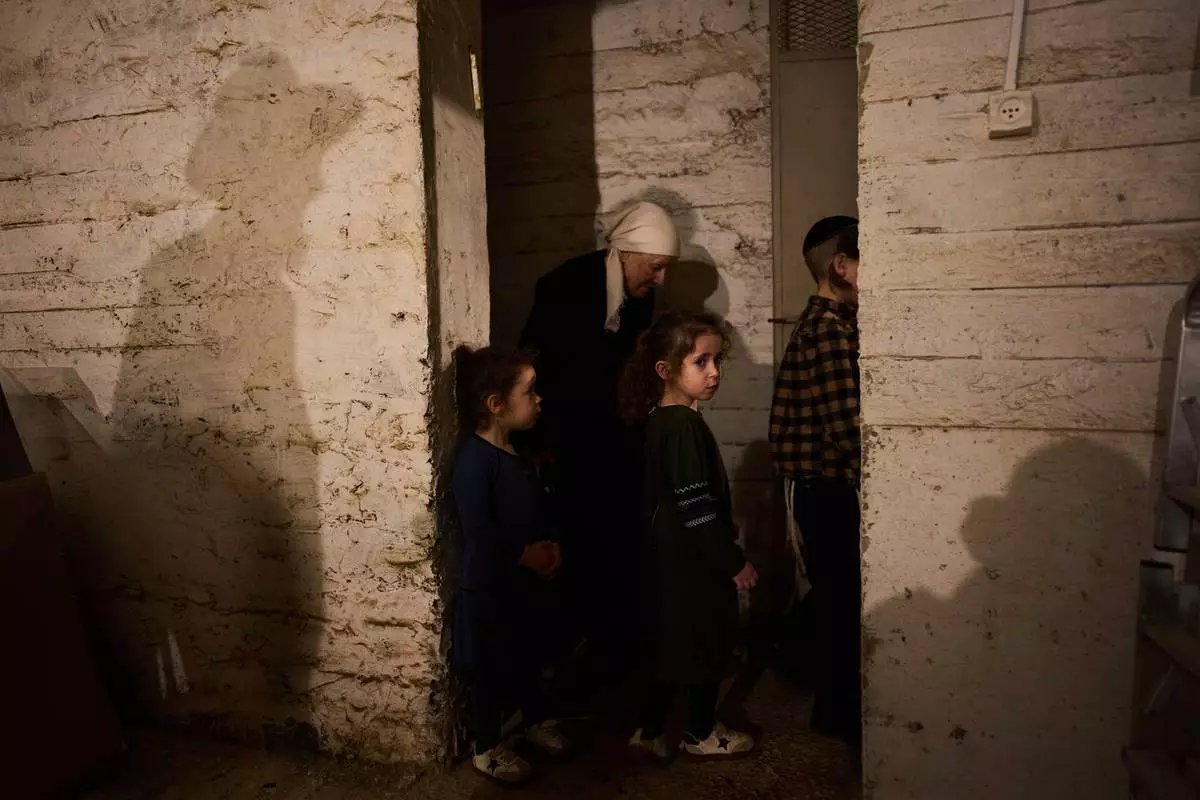
People take cover in a bomb shelter as air raid sirens warn of incoming Iranian missile strikes in Bnei Brak, Israel, Wednesday, April 1, 2026. (AP Photo/Oded Balilty)
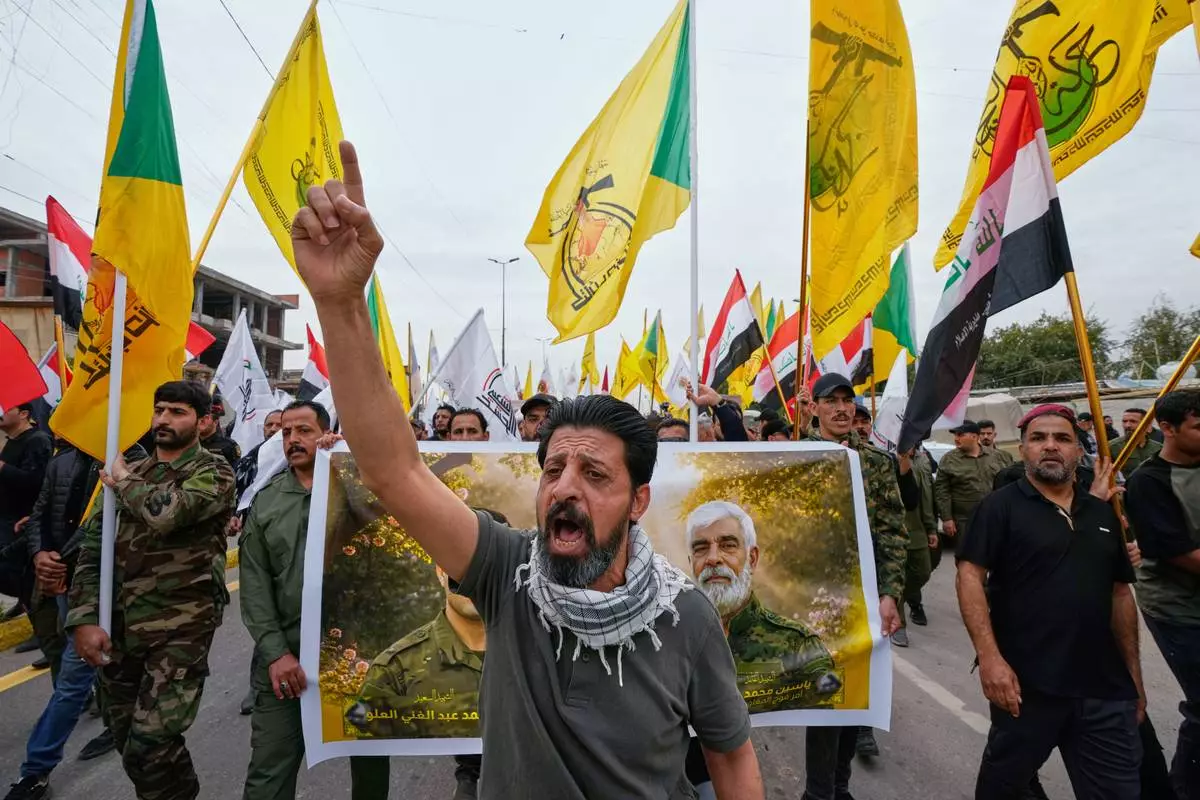
Members from the Popular Mobilization Forces attend a funeral of fighters who were killed in a U.S. airstrike, in Tal Afar, Nineveh province, north of Baghdad, Iraq, Thursday, April 2, 2026. (AP Photo/Hadi Mizban)
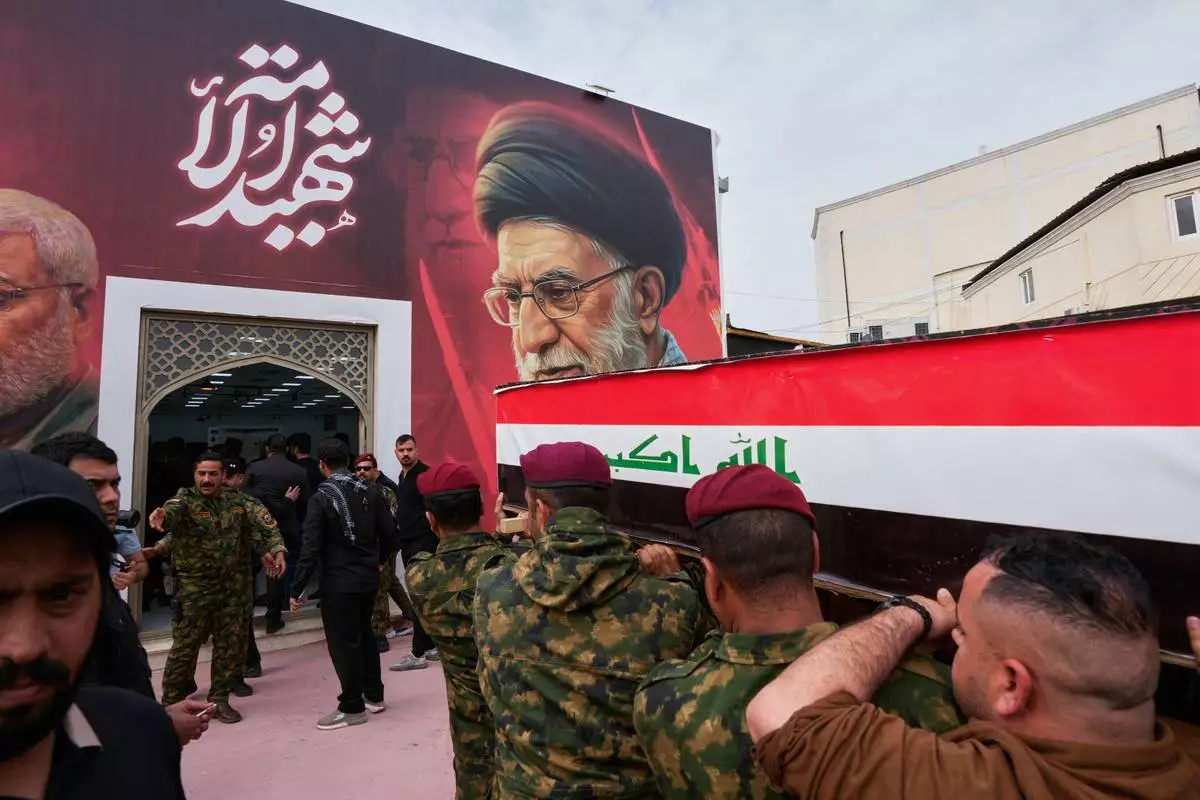
Members from the Popular Mobilization Forces attend a funeral of fighters who were killed in a U.S. airstrike, in Tal Afar, Nineveh province, north of Baghdad, Iraq, Thursday, April 2, 2026. (AP Photo/Hadi Mizban)
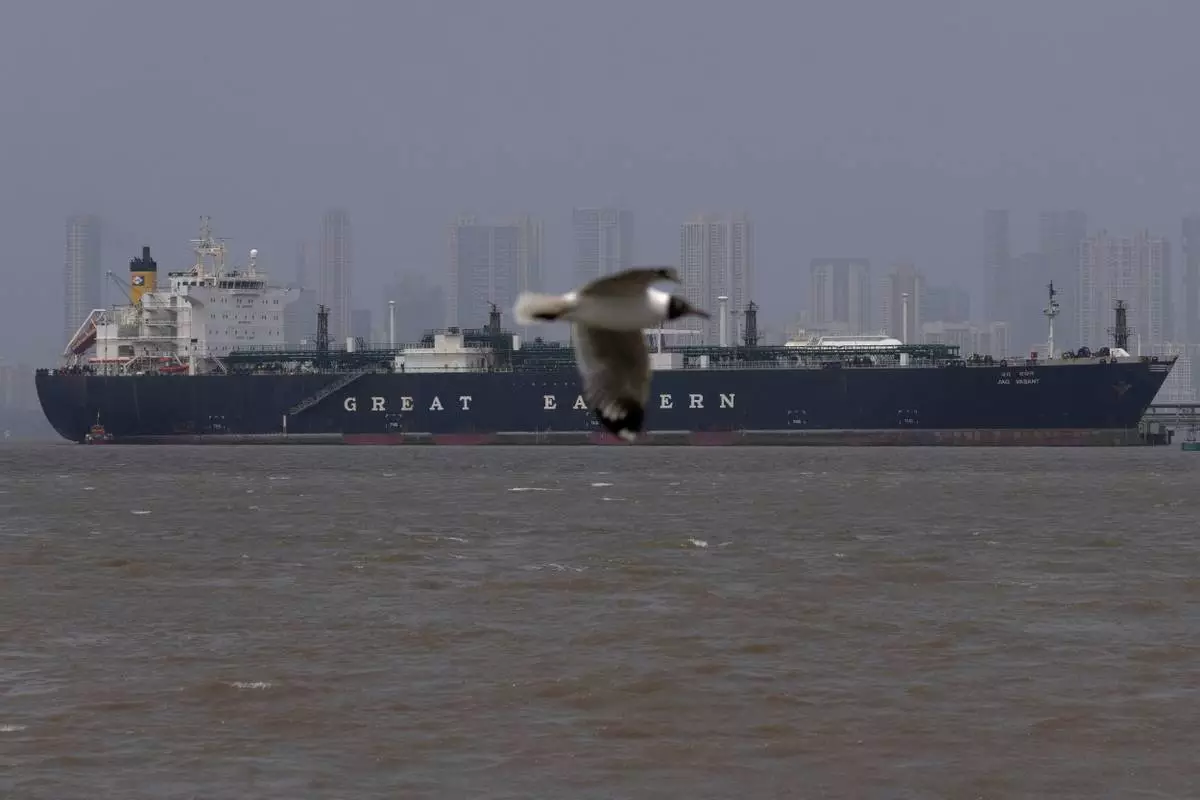
The Indian flagged LPG carrier Jag Vasant transporting liquefied petroleum gas, is seen at the Mumbai Port in Mumbai, India, after it arrived clearing the Strait of Hormuz, Wednesday, April 1, 2026. (AP Photo/Rafiq Maqbool)
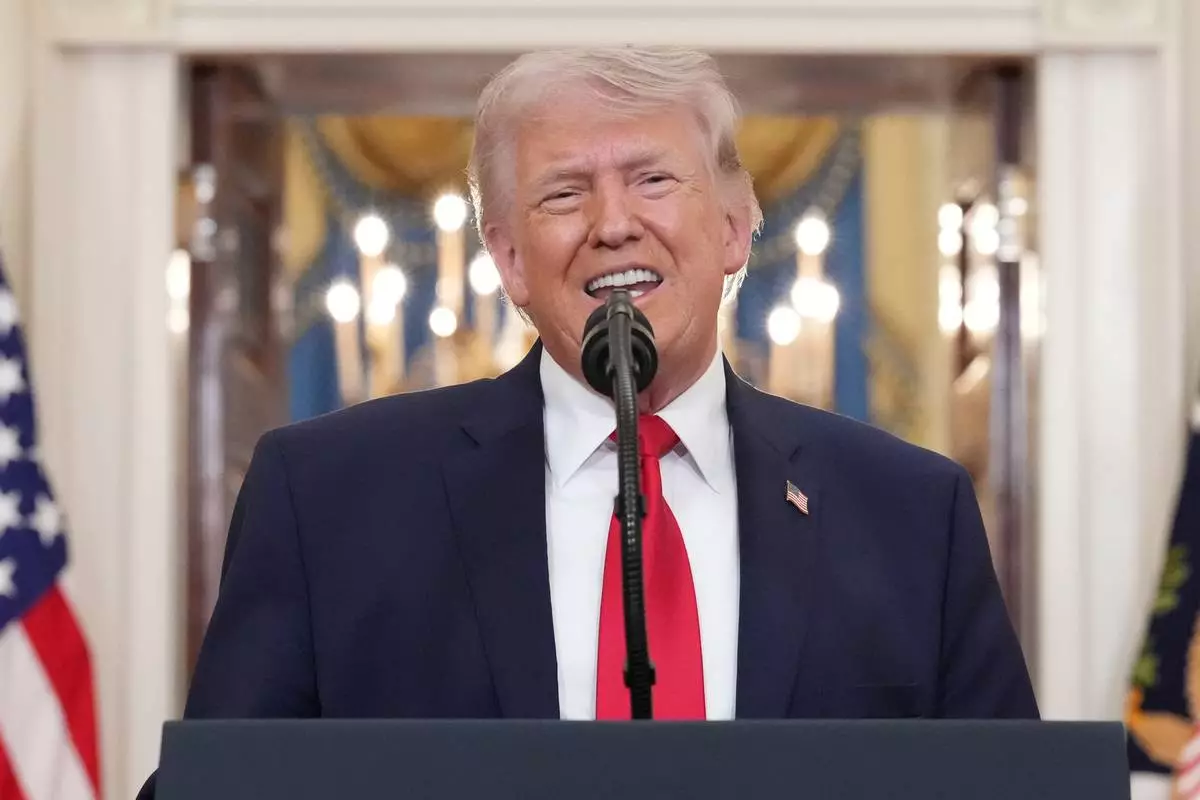
President Donald Trump speaks about the Iran war from the Cross Hall of the White House on Wednesday, April 1, 2026, in Washington. (AP Photo/Alex Brandon, Pool)
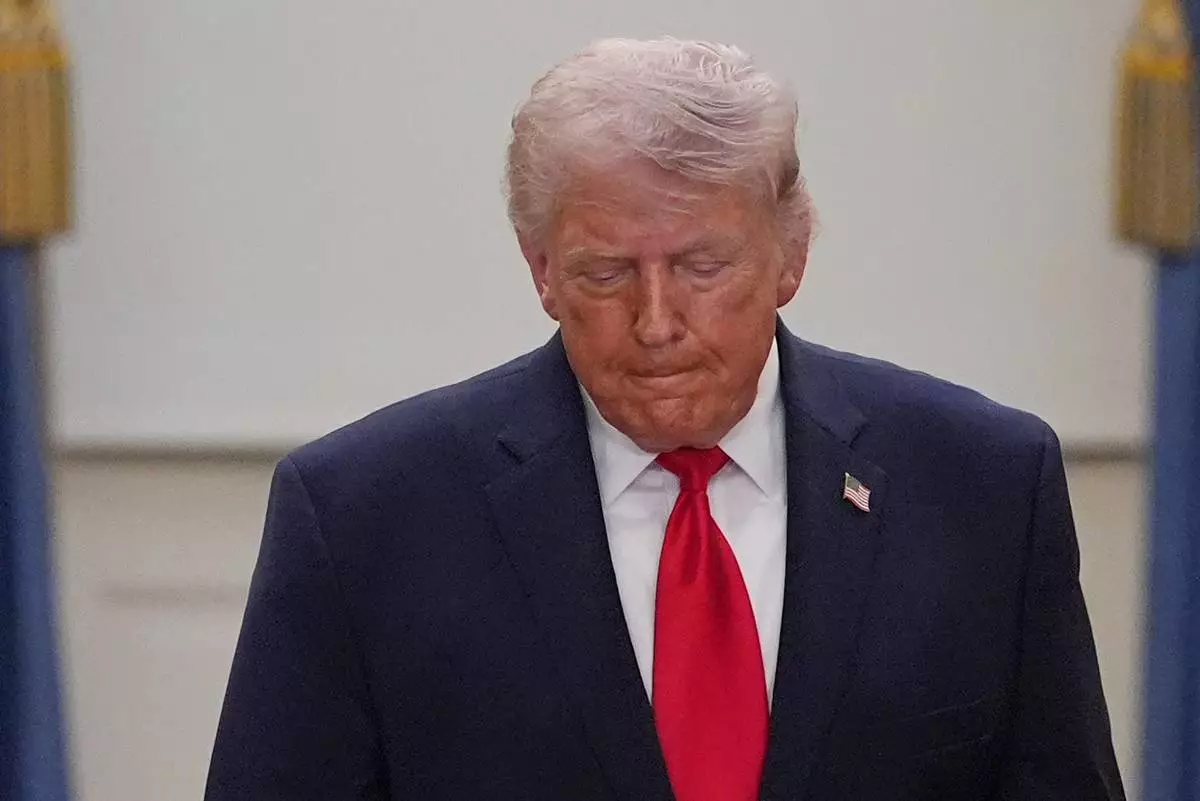
President Donald Trump walks from the Blue Room to speak about the Iran war from the Cross Hall of the White House on Wednesday, April 1, 2026, in Washington. (AP Photo/Alex Brandon, Pool)
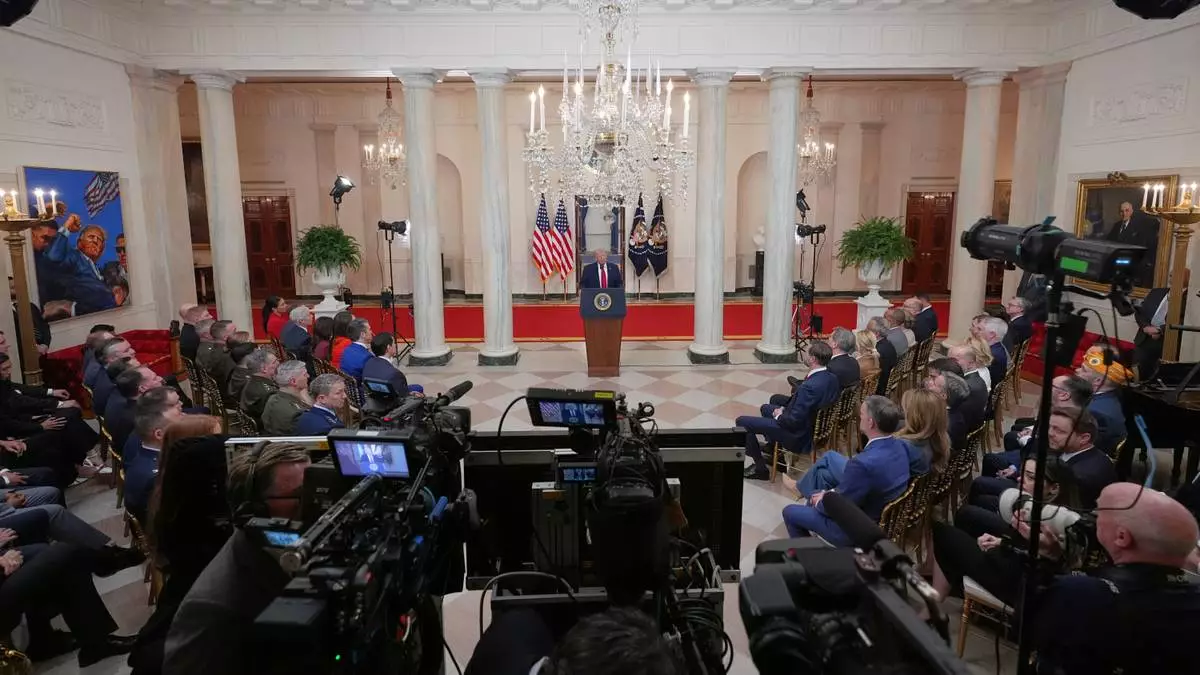
President Donald Trump speaks about the Iran war from the Cross Hall of the White House on Wednesday, April 1, 2026, in Washington. (AP Photo/Alex Brandon, Pool)
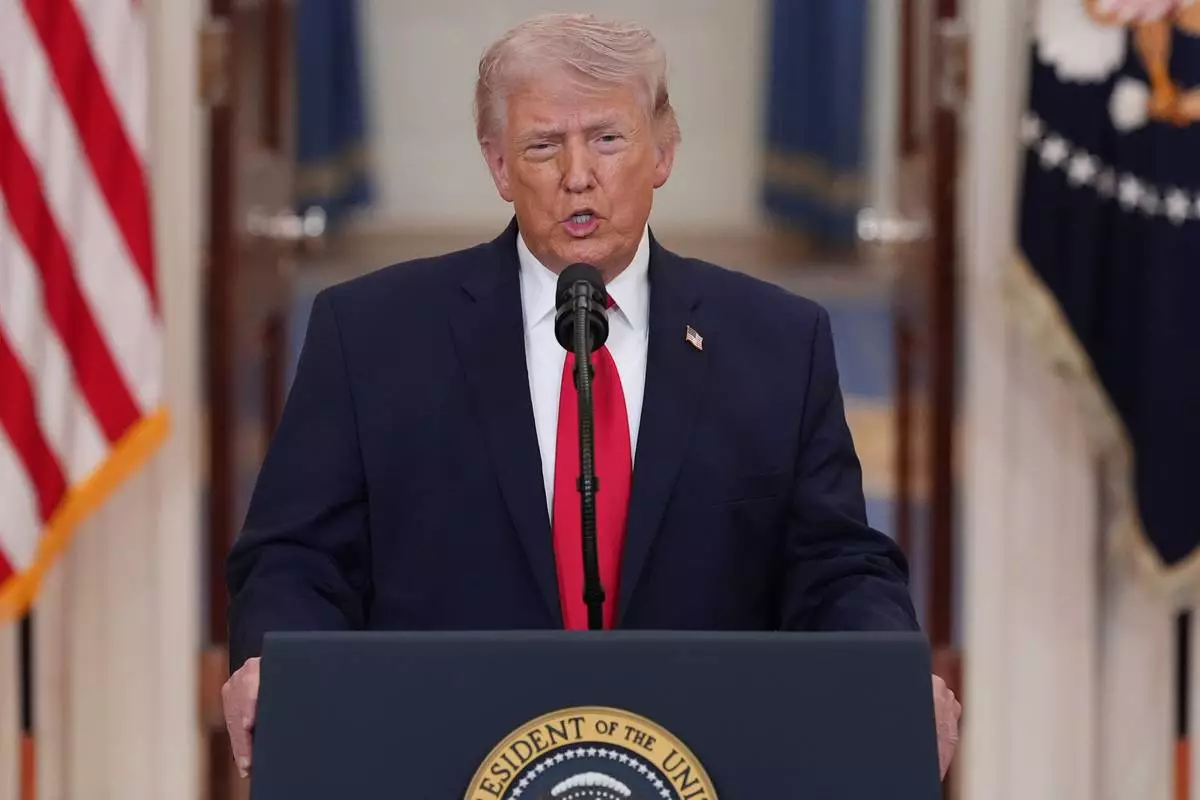
President Donald Trump speaks about the Iran war from the Cross Hall of the White House on Wednesday, April 1, 2026, in Washington. (AP Photo/Alex Brandon, Pool)