NASHVILLE, Tenn. (AP) — Five college football players at power-conference schools asked a federal judge on Monday for a preliminary injunction to play a fifth year next season.
All five have competed four seasons in four years without taking a redshirt. They are Vanderbilt linebacker Langston Patterson; kicker Nathanial Vakos, tight end Lance Mason and long snapper Nick Levy all of Wisconsin; and Nebraska long snapper Kevin Gallic.
U.S. District Judge William L. Campbell granted an injunction nearly a year ago that allowed Diego Pavia to play this season. Pavia finished as the Heisman Trophy runner-up leading Vanderbilt to a 10-2 record.
Patterson testified that he asked about taking a redshirt season as a freshman and was told he was too valuable. The team captain, who graduated with his bachelor's degree three days ago, said he knew during Vanderbilt's fifth game of the season on Sept. 27 that he wouldn't be able to take a redshirt season.
These players are part of a lawsuit seeking class action status alleging the NCAA violates U.S. antitrust laws with its redshirt rule for athletes during five seasons of eligibility. The lawsuit includes seven other named plaintiffs and potentially thousands of current and former NCAA football, baseball and tennis players.
Patterson, a lead plaintiff in that lawsuit, also testified that he was asked about the status of the lawsuit during an end of year meeting with Vanderbilt’s general manager and his position coach.
Without an injunction, Patterson said Vanderbilt will turn to the transfer portal opening Jan. 2 to replace him with a linebacker with two years’ experience at a similar level to the Southeastern Conference program. Levy also testified that Wisconsin would be looking for help if no decision comes before the portal opens.
Another season gives these five players more practice and playing time with the chance to attract more NFL scouts' attention along with pursuing graduate degrees. Mason monitored the hearing remotely.
The federal judge had pointed questions on the potential “ripple effect” if he grants this injunction. The NCAA has faced a series of lawsuits since that Pavia injunction over eligibility rules.
Attorney Ryan Downton told the judge that this injunction involves five specific players ahead of the upcoming transfer portal. Downton also said courts never rule in a vacuum.
“The Pavia ruling gave players something to point to just like the Alston ruling and the O’Bannon ruling and the House settlement, " Downton said after the hearing. “What I said in there is that the NCAA has been found to be a serial violator of antitrust law, and whether the court grants or denies a preliminary injunction doesn’t change that."
Attorney Taylor Askew, arguing for the NCAA, said this injunction request comes from players who knew they were playing their final season and that the lawsuit had been mentioned as early as July before being filed in September.
Askew also noted the Sherman Act only limits unreasonable restraint on competition and said the only thing that makes eligibility rules unreasonable is that it affects the players.
“If you have eligibility rules, someone won't be eligible,” Askew told the judge.
Commissioners of the Atlantic Coast Conference, the Big Ten, Big 12, Pac-12 and Southeastern Conference filed a declaration Saturday asking the judge to uphold the NCAA's eligibility rules, which they said are anchored in the principle that athletics are an integral part of the academic experience in college.
“Changes to these rules could impact that fundamental principle and hinder high school student-athletes from opportunities to obtain the benefits of athletic participation,” according to the commissioners' declaration.
A previous version of this story had the wrong school for Nathanial Vakos and Lance Mason, who both played for Wisconsin.
AP sports: https://apnews.com/sports
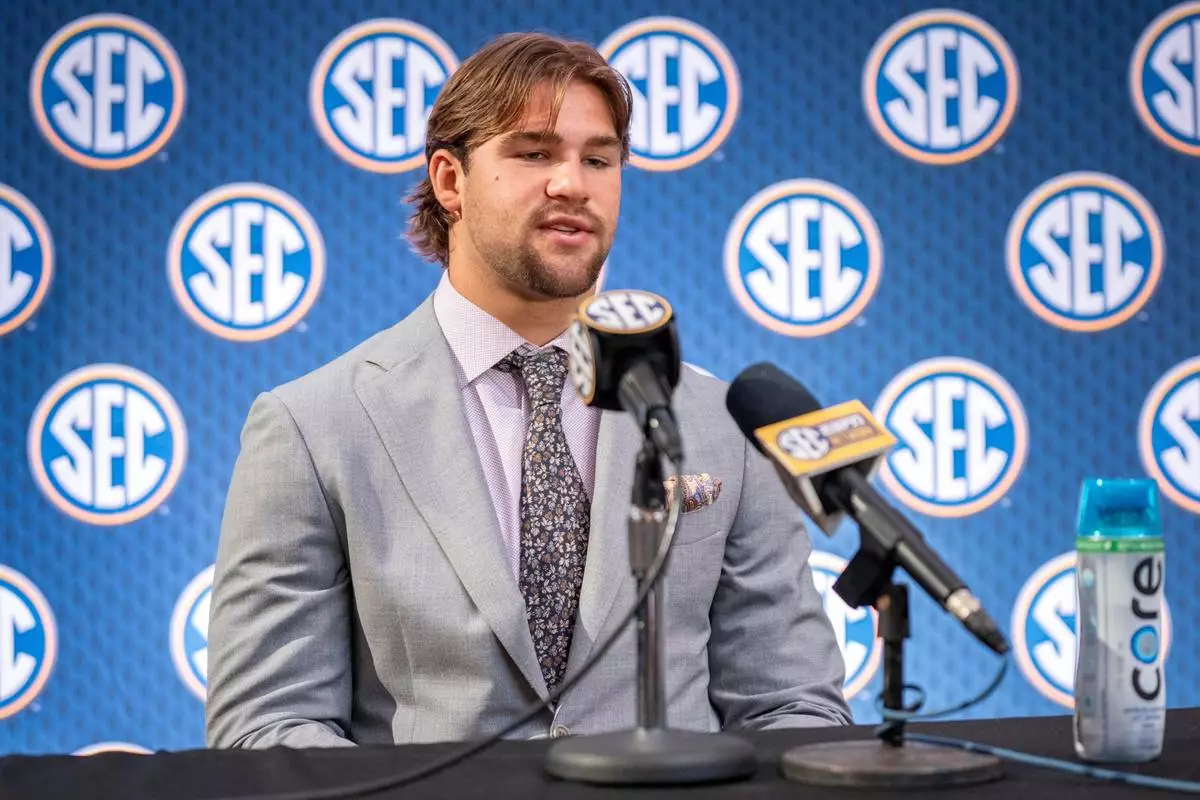
FILE - Vanderbilt linebacker Langston Patterson takes questions during the Southeastern Conference NCAA college football media days July 15, 2024, in Dallas. (AP Photo/Jeffrey McWhorter, File)
FAIRFAX, Virginia (AP) — Kilmar Abrego Garcia wasn't an activist and he didn't choose to become locked in to what has become one of the most contentious immigration issues of the Trump administration, his lawyer told The Associated Press on Monday.
But as he experiences some of the few days he's had with his family since being sent erroneously to an El Salvador prison in March, his lawyer said he's still hoping for a just resolution to his case.
“He’s been through a lot, and he’s still fighting,” said his lawyer Simon Sandoval-Moshenberg during an interview with AP following Abrego Garcia's court-ordered release from detention last week. “What it is he can fight for is circumscribed by the law and by the great power of the United States government, but he’s still fighting.”
Abrego Garcia's mistaken deportation to El Salvador helped galvanize opposition to President Donald Trump’s immigration policies. He was held in a notoriously brutal prison there despite having no criminal record.
U.S. officials claimed Abrego Garcia was an MS-13 gang member, an allegation he denies and which he wasn’t charged for. He was later charged with human smuggling, accusations his lawyers have called preposterous and vindictive.
The Trump administration fought efforts to return him to the U.S. but eventually complied. Since then, his case has been a twisted turn of legal filings and wranglings that has seen Abrego Garcia, a Salvadoran national, released from detention once since March — and that time just for a weekend — while the government has pursued smuggling charges against him and announced plans to deport him to a series of African countries.
Then last week, a federal district court judge in Maryland ordered him to be released and barred the government for now from detaining him again until a hearing can be held in his case, possibly as early as this week, said Sandoval-Moshenberg.
The Department of Homeland Security criticized the judge’s decision to release him last week and vowed to appeal, calling the ruling “naked judicial activism” by a judge appointed during the Obama administration. On Monday, Homeland Security declined to comment for this story, citing restrictions on public comments put in place by a judge in Tennessee.
Sandoval-Moshenberg said Abrego Garcia has a number of paths forward. He said he thought that his client had a strong case for asylum. His original asylum claim in 2019 was rejected because he applied after the one-year deadline. But Sandoval-Moshenberg argued the government essentially reset the clock by removing him to El Salvador and then bringing him back.
And after the alleged abuse Sandoval-Moshenberg said Abrego Garcia suffered in El Salvador this year, he thought he would have a “rock solid” asylum case. But, citing the twists and turns of his case and how he's become a symbol for the administration's pursuit of immigrants, he's concerned about his chances of getting a fair trial in immigration court.
“I think they’ve already shown that they’re willing to stack the deck," said Sandoval-Moshenberg.
Abrego Garcia could also apply for a green card since he's married to an American citizen. But that would require getting a waiver from the government, said Sandoval-Moshenberg, and the lawyer is doubtful one would be granted.
Or he could continue to seek removal to Costa Rica, said Sandoval-Moshenberg, a country that has offered to allow him to enter as a refugee and live and work legally. And he wouldn't be returned to El Salvador, the attorney said.
But he also believes the government would continue to fight that option.
“They’re focused on beating him. They’re focused on punishing him. They’re focusing on making him miserable. I guess Costa Rica isn’t miserable enough,” he said.
Sandoval-Moshenberg said he spent some time with Abrego Garcia and his family over the weekend talking through the government's next steps and what Abrego Garcia might want for his future.
“There’s so many different ways it could go. And so much of it depends on just how dirty the government’s willing to play,” he said.
Sandoval-Moshenberg said that he thought that if the government was willing to remove him to Costa Rica, his client would accept it although he stressed that the decision was up to him.
He said that Abrego Garcia and his legal team wouldn't consider that justice — that to him would mean staying with his family in the U.S. But Sandoval-Moshenberg said that given everything he's faced and the “fact that they’re apparently willing to use infinite prosecutorial resources against him, deportation to Costa Rica is an acceptable outcome for him.”
Sandoval-Moshenberg also stressed that there is one place that Abrego Garcia does not want to go.
“His number one priority is not to end up back in CECOT,” said Sandoval-Moshenberg, referring to the prison in El Salvador where his client was held. Sandoval-Moshenberg said Abrego Garcia had been tortured there, claims authorities in El Salvador have denied and that the AP could not independently verify.
“His number one priority is avoiding getting sent back to that prison.”
Sandoval-Moshenberg said he has no idea why the government seems to have chosen Abrego Garcia’s case to fight tooth and nail.
“This isn’t a case where he’s an activist, like an immigrants rights activist, or he’s been, you know, persecuted by the government for his pro-Palestinian speech or something like that,” the attorney said. “He’s a random guy.”
The whole process of deportation, imprisonment and return has "just been this really sort of bizarre, out of world experience for him,” Sandoval-Moshenberg said.
The judge temporarily barred the Trump administration from detaining Abrego Garcia last Friday until the next court hearing.
While no date has been set for that, it could happen as early as later this week, Sandoval-Moshenberg said, noting the whiplash of the case has been a struggle for Abrego Garcia and his family.
“The ground underneath his feet, it’s just earthquake after earthquake,” he said.
Loller reported from Nashville, Tennessee.
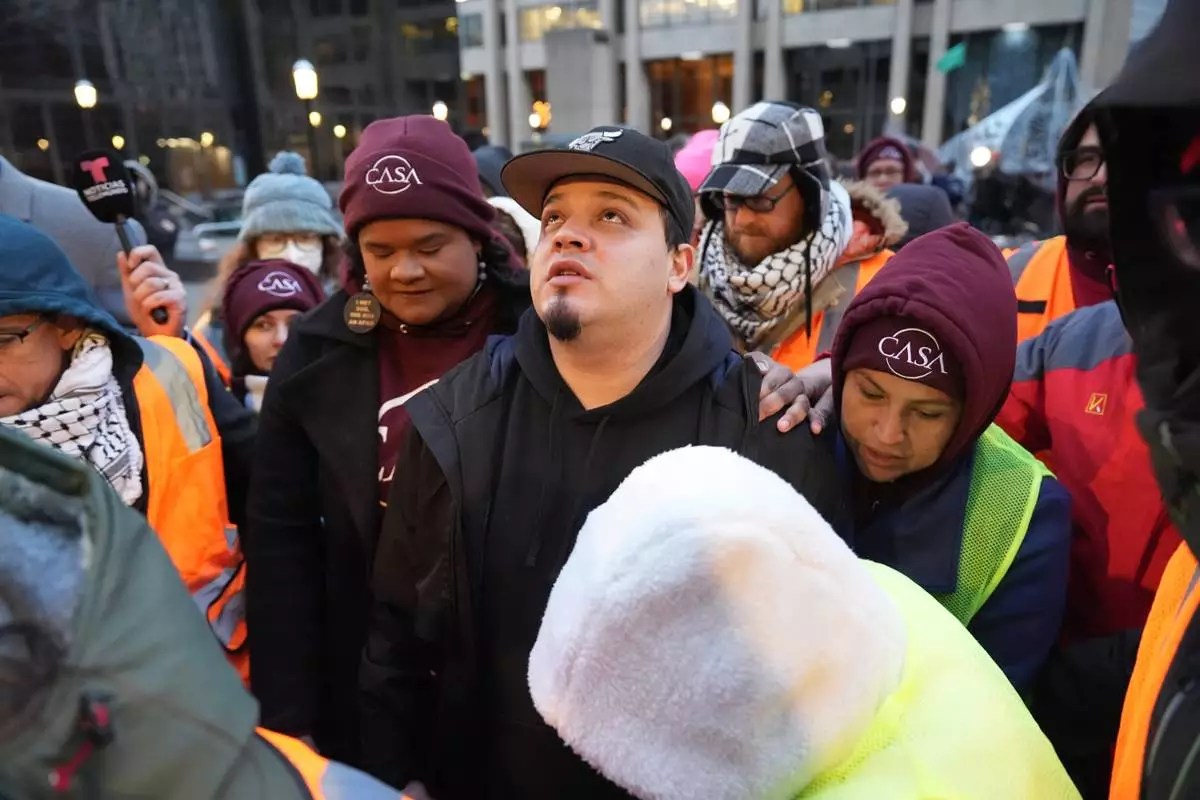
Kilmar Abrego Garcia waits to enter the building for a mandatory check at the Immigration and Customs Enforcement office in Baltimore, Friday, Dec. 12, 2025, after he was released from detention on Thursday under a judge's order. (AP Photo/Stephanie Scarbrough)
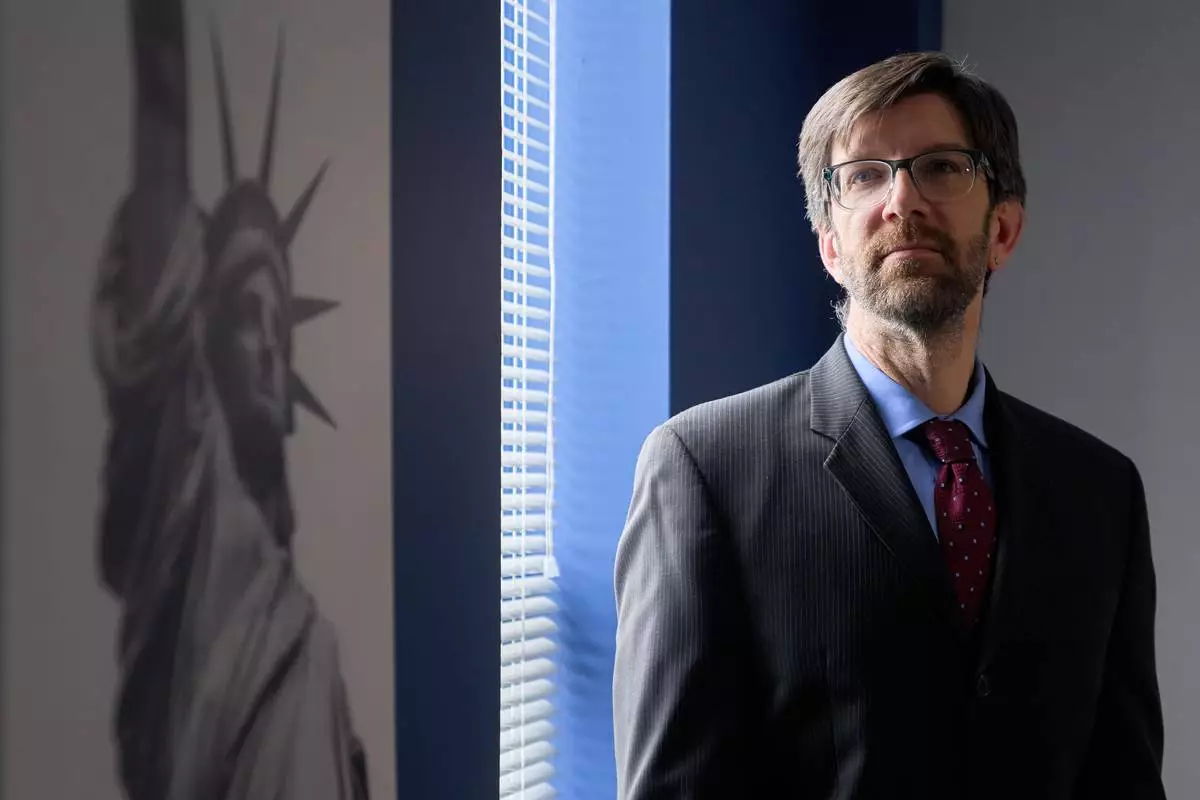
Simon Sandoval-Moshenberg, a lawyer on Kilmar Abrego Garcia's legal team who specializes in federal immigration cases, poses for a portrait in Fairfax, Va., Monday, Dec. 15, 2025. (AP Photo/Jacquelyn Martin)
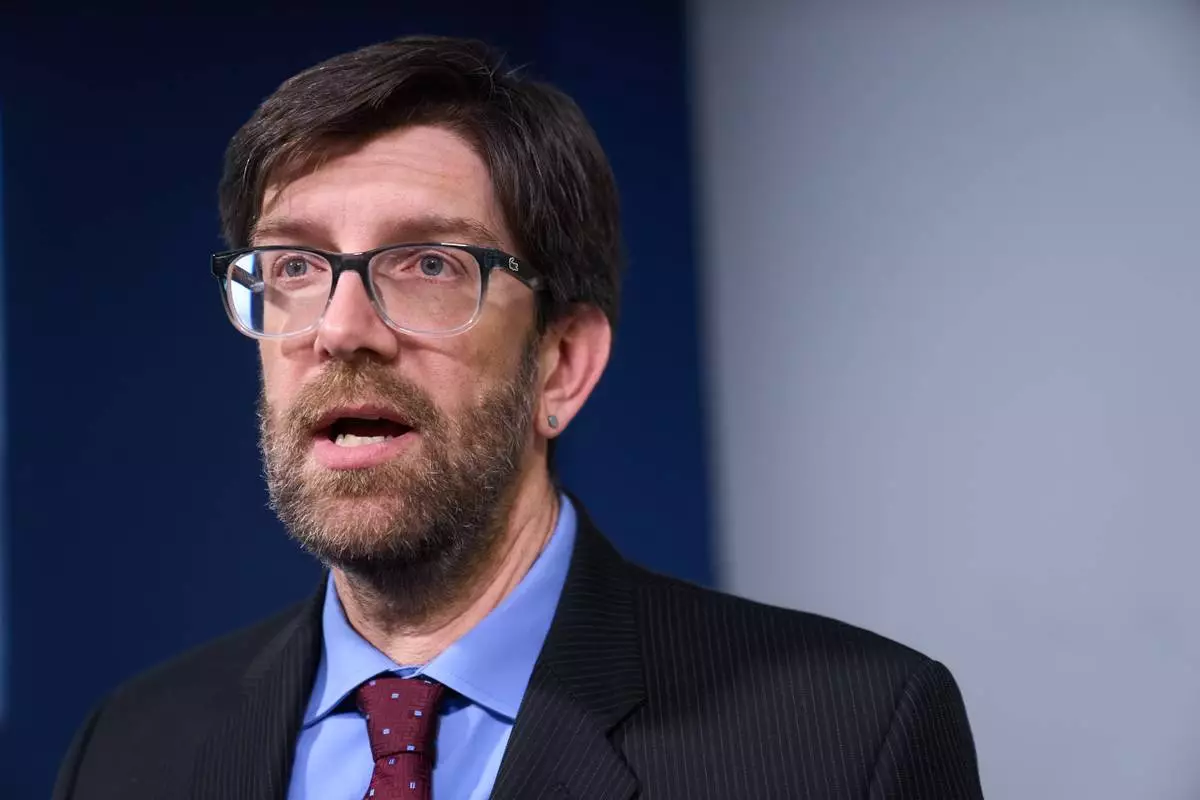
Simon Sandoval-Moshenberg, a lawyer on Kilmar Abrego Garcia's legal team who specializes in federal immigration cases, is interviewed in Fairfax, Va., Monday, Dec. 15, 2025. (AP Photo/Jacquelyn Martin)

Simon Sandoval-Moshenberg, a lawyer on Kilmar Abrego Garcia's legal team who specializes in federal immigration cases, is interviewed in Fairfax, Va., Monday, Dec. 15, 2025. (AP Photo/Jacquelyn Martin)
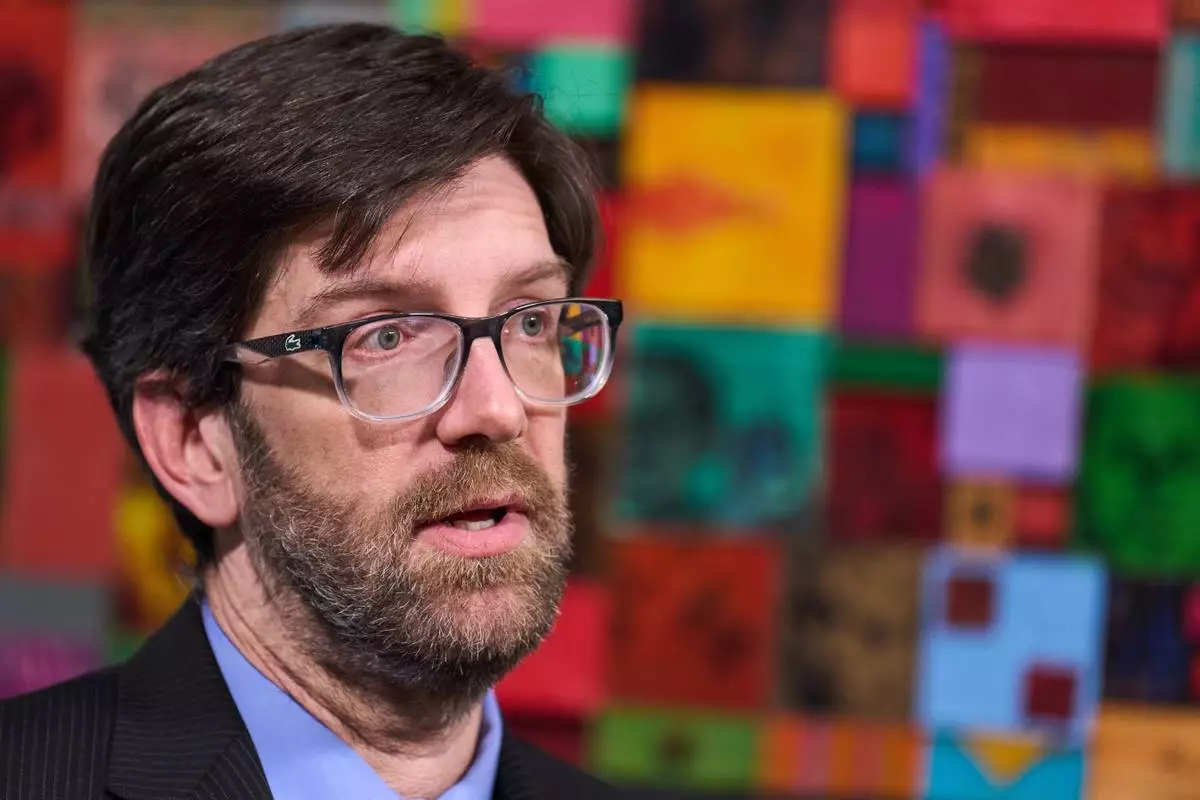
Simon Sandoval-Moshenberg, a lawyer on Kilmar Abrego Garcia's legal team who specializes in federal immigration cases, is interviewed in Fairfax, Va., Monday, Dec. 15, 2025. (AP Photo/Jacquelyn Martin)