SANTIAGO, Chile (AP) — Chile has become the latest country in Latin America to veer toward the right, electing a deeply conservative veteran politician who has long attracted comparisons to Donald Trump.
The president-elect, José Antonio Kast, has expressed nostalgia for the 17-year military dictatorship of the late Gen. Augusto Pinochet, opposed the legalization of same-sex marriage and advocated in recent years for a constitutional ban on abortion.
Click to Gallery
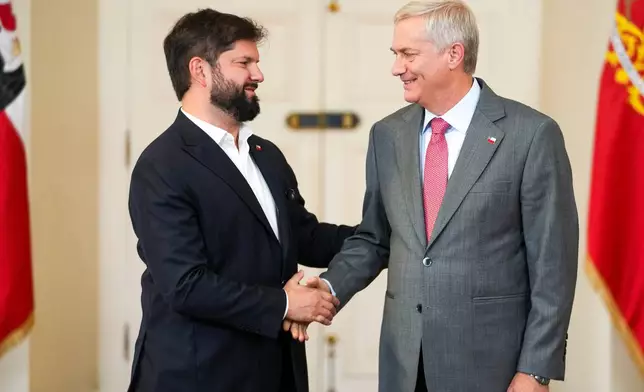
Chilean President Gabriel Boric, left, welcomes President-elect Jose Antonio Kast to La Moneda palace the day after Kast won the presidential election runoff in Santiago, Chile, Monday, Dec. 15, 2025. (AP Photo/Esteban Felix)
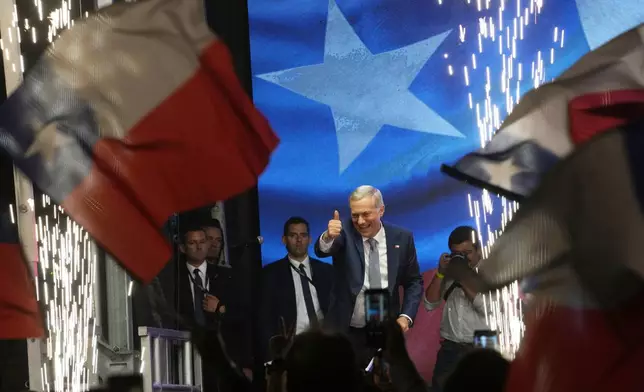
Presidential candidate Jose Antonio Kast, of the opposition Republican Party, celebrates winning the presidential runoff election in Santiago, Chile, Sunday, Dec. 14, 2025. (AP Photo/Esteban Felix)
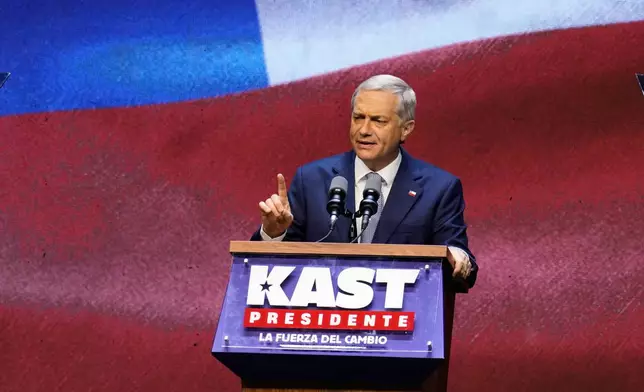
Presidential candidate Jose Antonio Kast, of the opposition Republican Party, delivers his victory speech after winning the presidential runoff election in Santiago, Chile, Sunday, Dec. 14, 2025. (AP Photo/Matias Delacroix)
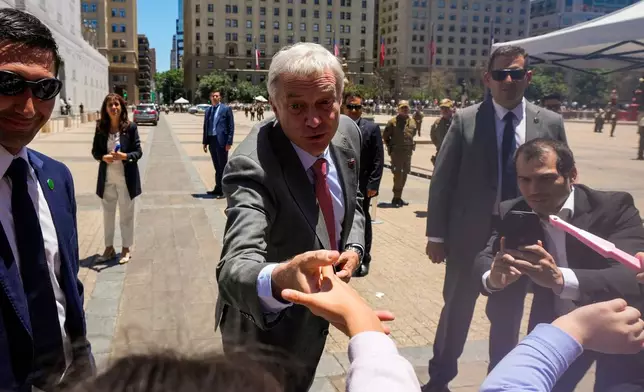
Chilean President-elect Jose Antonio Kast greets supporters at La Moneda palace after meeting with President Gabriel Boric the day after he won the presidential election runoff in Santiago, Chile, Monday, Dec. 15, 2025. (AP Photo/Esteban Felix)
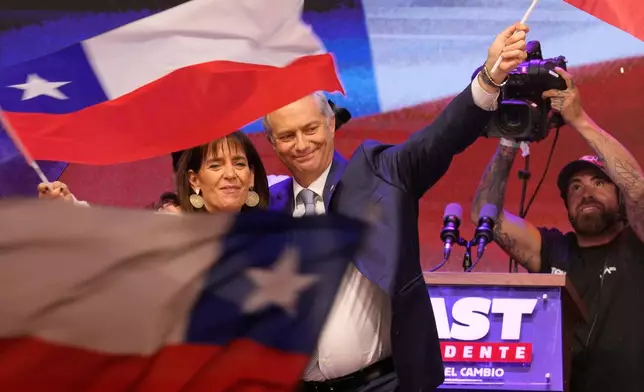
Presidential candidate Jose Antonio Kast, of the opposition Republican Party, and his wife, Maria Pia Adriasola, wave flags after winning the presidential runoff election in Santiago, Chile, Sunday, Dec. 14, 2025. (AP Photo/Matias Delacroix)
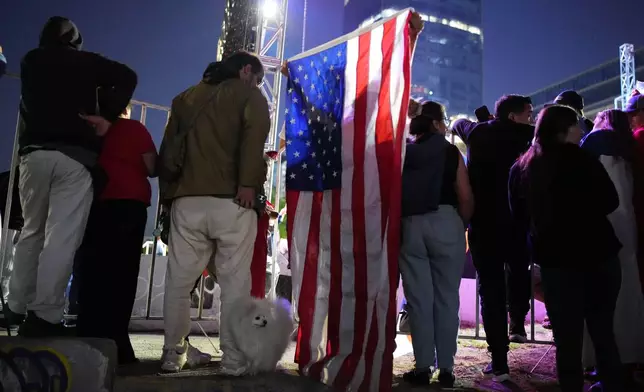
Supporters listen to Presidential candidate Jose Antonio Kast, of the opposition Republican Party, delivering his victory speech after winning the presidential runoff election in Santiago, Chile, Sunday, Dec. 14, 2025. (AP Photo/Natacha Pisarenko)
Those stances, which some say sabotaged Kast's previous presidential bids in the increasingly liberal country, didn't seem to matter in Sunday's election.
Instead, Kast, 59, won a landslide victory by tapping into a deep well of resentment at the status quo in a country whiplashed by an unprecedented rise in organized crime and disappointed by the great expectations that President Gabriel Boric raised but will leave unfulfilled.
Experts say this reflects the pervasive anti-incumbent mood that has gripped South America and, significantly, boosted the radical right at time when Trump is seeking to influence the region's political future.
It's a dramatic turn from only two decades ago, when the commodities boom brought to power the so-called “pink tide” of left-wing leaders, like the late socialist icon Hugo Chávez, who whipped up voters by railing against U.S. imperialism and vowing to redistribute their nations' wealth.
“The last decade, it’s been rough,” said Steven Levitsky, a Harvard political scientist. “And the people who get blamed for stagnant economies, rising crime — or, at least, rising perceptions of crime — and not insignificant corruption are those who've been in power, and that's the left.”
Across South America this year alone, voters strengthened the mandates given to anarcho-capitalist President Javier Milei in Argentina and iron-fisted President Daniel Noboa in Ecuador, rather than return their countries to the left-wing traditions that held sway previously.
In Bolivia, voters outraged over corruption and economic crisis elected right-wing President Rodrigo Paz in October and ended nearly two decades of socialist rule.
In Peru, demands for a ruthless approach to organized crime have caused political chaos and empowered the country's right-wing politicians ahead of a presidential election next year.
Last week, partial results in Honduras' paralyzed presidential vote showed a conservative former mayor endorsed by Trump and his right-wing sportscaster rival deadlocked in a stunning rebuke of the incumbent left-wing government.
Then, on Sunday, voters traumatized by insecurity, angry about uncontrolled migration and frustrated with a dispiriting economy chose Kast over Jeannette Jara, his communist rival from the center-left governing coalition who failed to persuade them that she was something other than the continuity candidate.
Experts say the new Latin American hard right underscores Trump’s influence.
Speaking to reporters in Washington, Trump praised Kast on Monday as “a very good person,” adding, “I look forward to pay(ing) my respects to him.”
U.S. Secretary of State Marco Rubio later said he held a phone call with Kast to discuss “expanding economic ties and ending illegal immigration.”
Like Milei and Brazil’s ex-President Jair Bolsonaro, Kast has been a fixture on the global speaking circuit of the Conservative Political Action Conference, decrying socialism, lambasting “gender ideology” and vowing the mass deportations of immigrants.
“The far right is not a majority anywhere, it’s usually 25-30% of electorates, but it’s punching above its weight because it has a real ideological project,” said Levitsky. “They’ve got political momentum right now, and that clearly helped in Chile.”
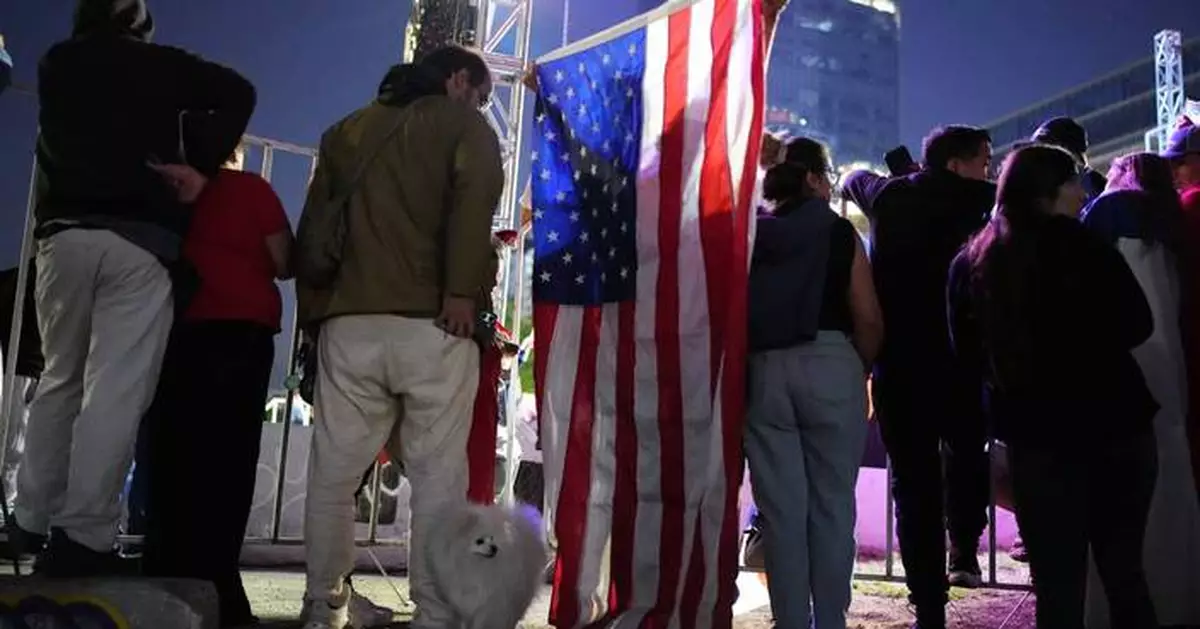
At Kast’s victory rally Sunday in Santiago, Chile’s capital, supporters waved American flags, sported red “Make Chile great again” caps and raised banners emblazoned with Milei’s 2023 campaign slogan, “The force of change.”
Kast's campaign said he would fly to Buenos Aires, Argentina, on Tuesday to meet with Milei about security and immigration.
Just four years ago, the region was in the grips of a different political shift as deep-rooted social discontent and popular mistrust of the establishment helped bring a new crop of left-wing leaders to office.
In Chile, President Boric, a firebrand former student protest leader, came to power on the back of social unrest over inequality that presented a rare opportunity for his government to pursue previously unthinkable left-wing demands, like a new constitution and the transformation of Chile's market-led economy.
But soon a series of legislative defeats, a corruption scandal and an unprecedented wave of organized crime derailed his ambitions. His approval ratings dropped from 50% to less than 30% in his first year — and never recovered.
In Colombia, progressive President Gustavo Petro was elected on plans to help the poor and achieve what he called “total peace” with the nation's many armed groups. Now, with just months to go until presidential elections that could swing the country back toward the right, Petro's most ambitious reforms are stuck in Congress. The militias haven't put down their guns.
Mexico stands out as an exception to the regional trend. President Claudia Sheinbaum, who was ushered into office last year by her hugely popular mentor, ex-President Andrés Manuel López Obrador, has enjoyed soaring approval thanks to her association with López Obrador and measured handling of a volatile relationship with Trump.
But while Milei and other regional conservative leaders hailed Kast's win as another milestone in their ideological movement's continental sweep, Sheinbaum on Monday urged fellow left-wing leaders to learn from defeat.
“This is a moment of reflection,” she said. “We have to analyze what happened in Chile.”
President Petro’s analysis was brusque.
“Fascism advances,” he wrote on social media about Kast's election. “They are coming for us and we must resist.”
Kast has praised the crime-fighting tactics of El Salvador’s Nayib Bukele, touring his 40,000-capacity mega prison last year. His vows to cut a staggering $6 billion from the budget in just 18 months have drawn comparisons to Milei’s chainsaw methods.
But in stark contrast to his ideological allies, Kast promoted himself as a moderate in this election runoff against Jara, whose lifelong membership in Chile’s hard-line Communist Party led many voters to view her as a radical despite her vows of fiscal restraint.
“He's not who I wanted, but at the end of the day, he's the least bad option,” said Carol Mesa, 54, who previously backed the right-wing establishment candidate, Evelyn Matthei, eliminated in the first round of voting last month. “I couldn't vote for a communist. We need change.”
Despite his budget-slashing ambitions, Kast promised not to touch social benefits. He defended the free-market institutions that have guided Chile’s economy over 35 years of democracy. And the devout Catholic and father of nine managed to avoid all talk of moral conservatism.
“The main issues are crime and immigration, and that's why the majority of the middle class geared up to vote against continuity and in favor of Kast,” said Kenneth Bunker, a Chilean political analyst. “They saw him as somebody that can deliver results that are much needed.”
In his first act as president-elect, Kast tried to narrow Chile’s divisions and calm the fears of his critics, promising to “be the president of all Chileans.”
“They say we are not good at agreements," he said. “We are going to surprise them.”
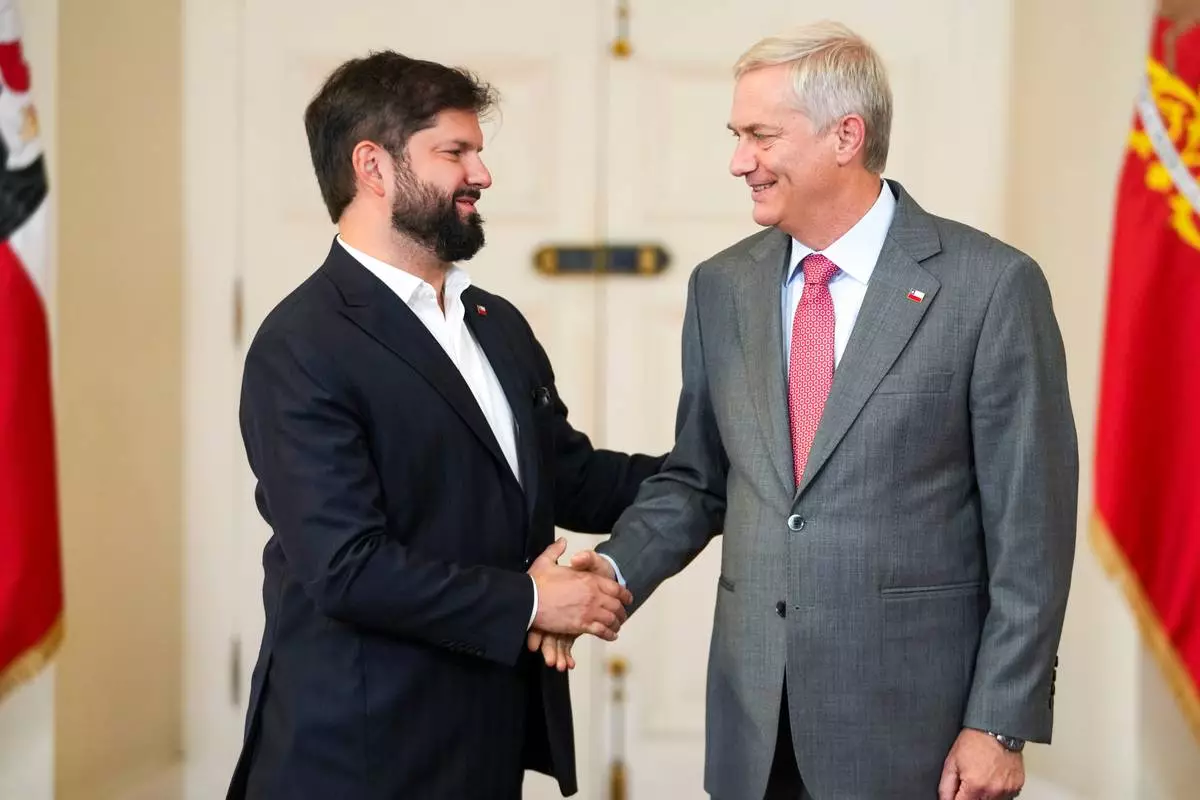
Chilean President Gabriel Boric, left, welcomes President-elect Jose Antonio Kast to La Moneda palace the day after Kast won the presidential election runoff in Santiago, Chile, Monday, Dec. 15, 2025. (AP Photo/Esteban Felix)
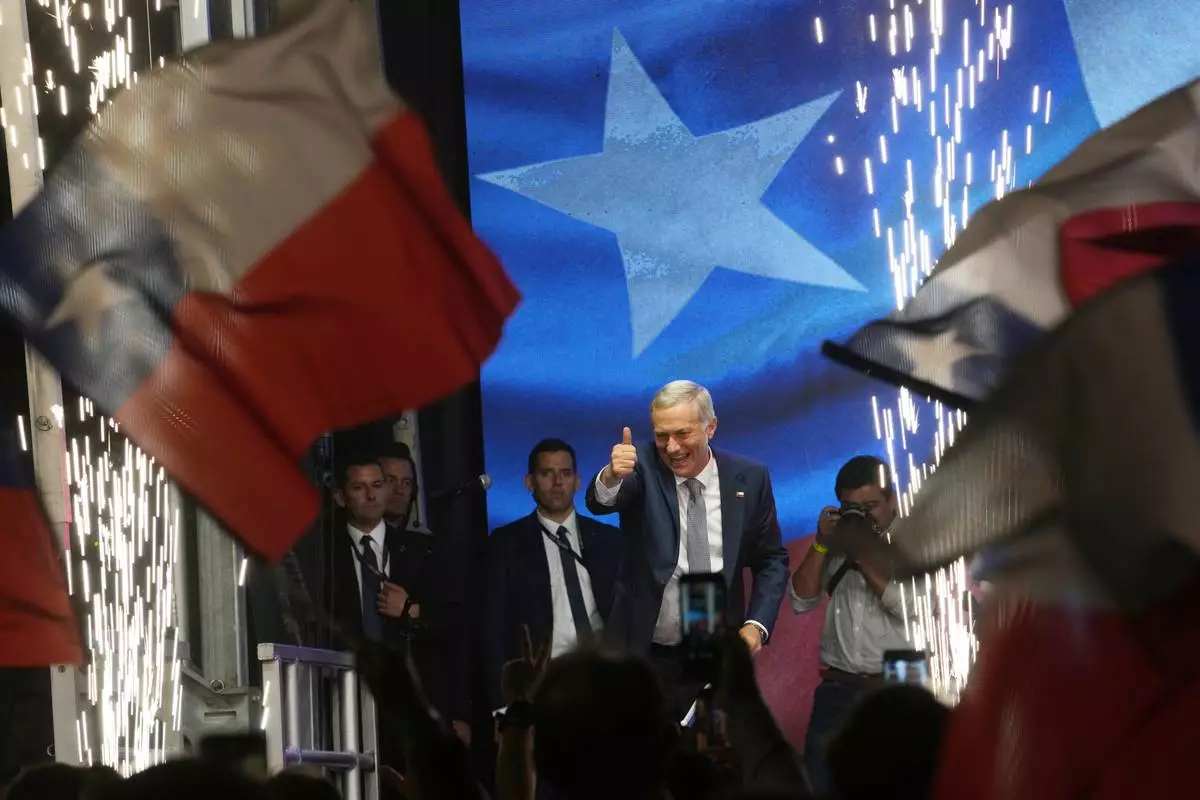
Presidential candidate Jose Antonio Kast, of the opposition Republican Party, celebrates winning the presidential runoff election in Santiago, Chile, Sunday, Dec. 14, 2025. (AP Photo/Esteban Felix)
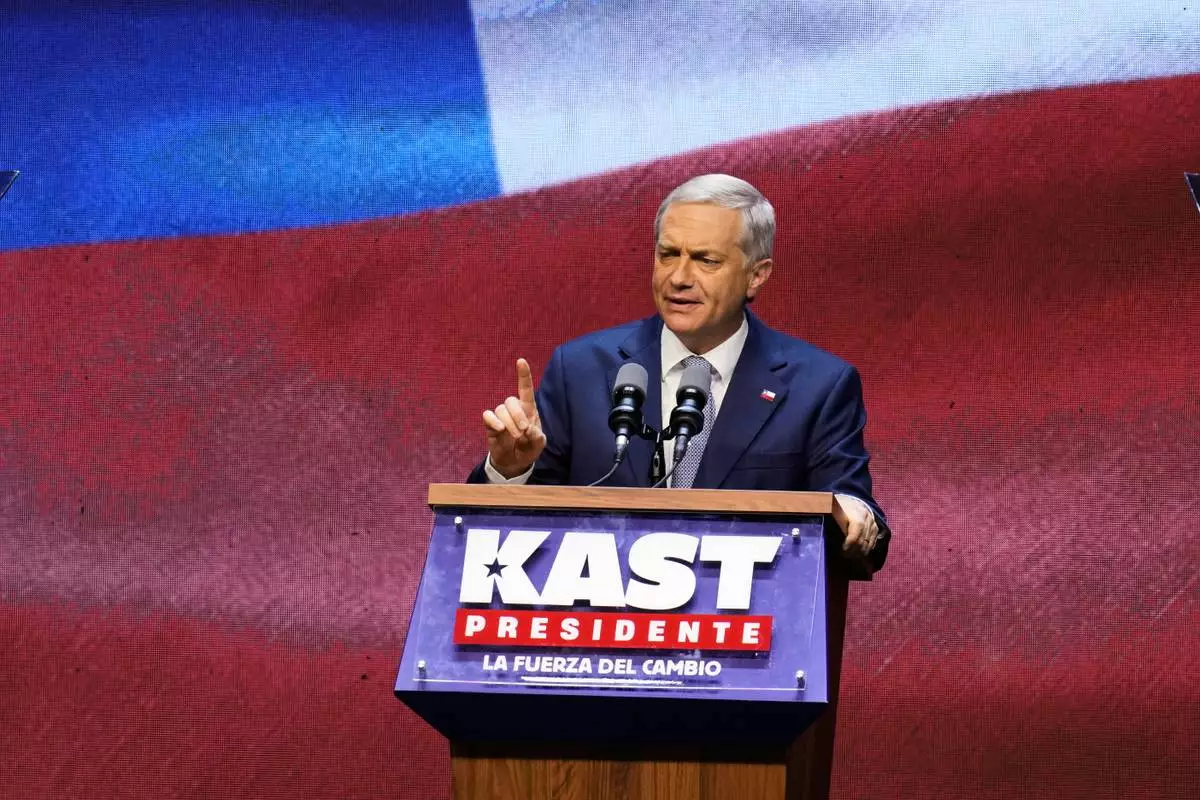
Presidential candidate Jose Antonio Kast, of the opposition Republican Party, delivers his victory speech after winning the presidential runoff election in Santiago, Chile, Sunday, Dec. 14, 2025. (AP Photo/Matias Delacroix)
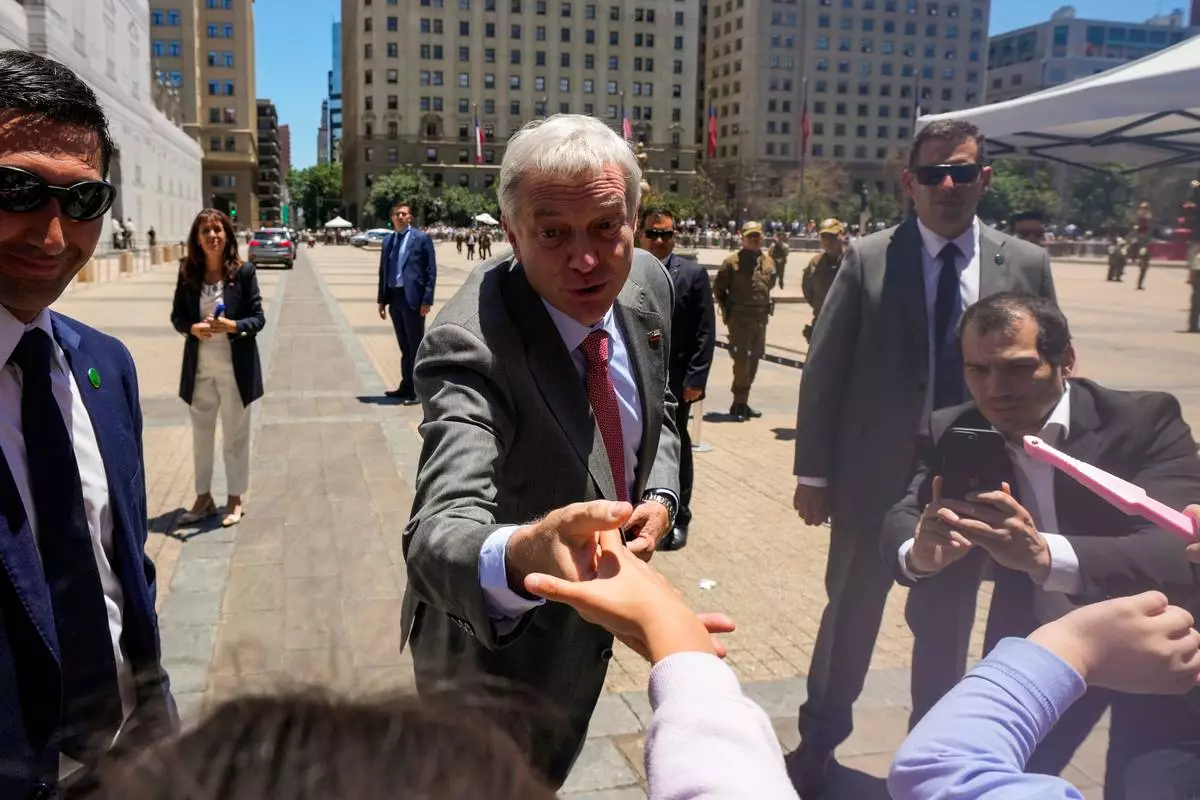
Chilean President-elect Jose Antonio Kast greets supporters at La Moneda palace after meeting with President Gabriel Boric the day after he won the presidential election runoff in Santiago, Chile, Monday, Dec. 15, 2025. (AP Photo/Esteban Felix)
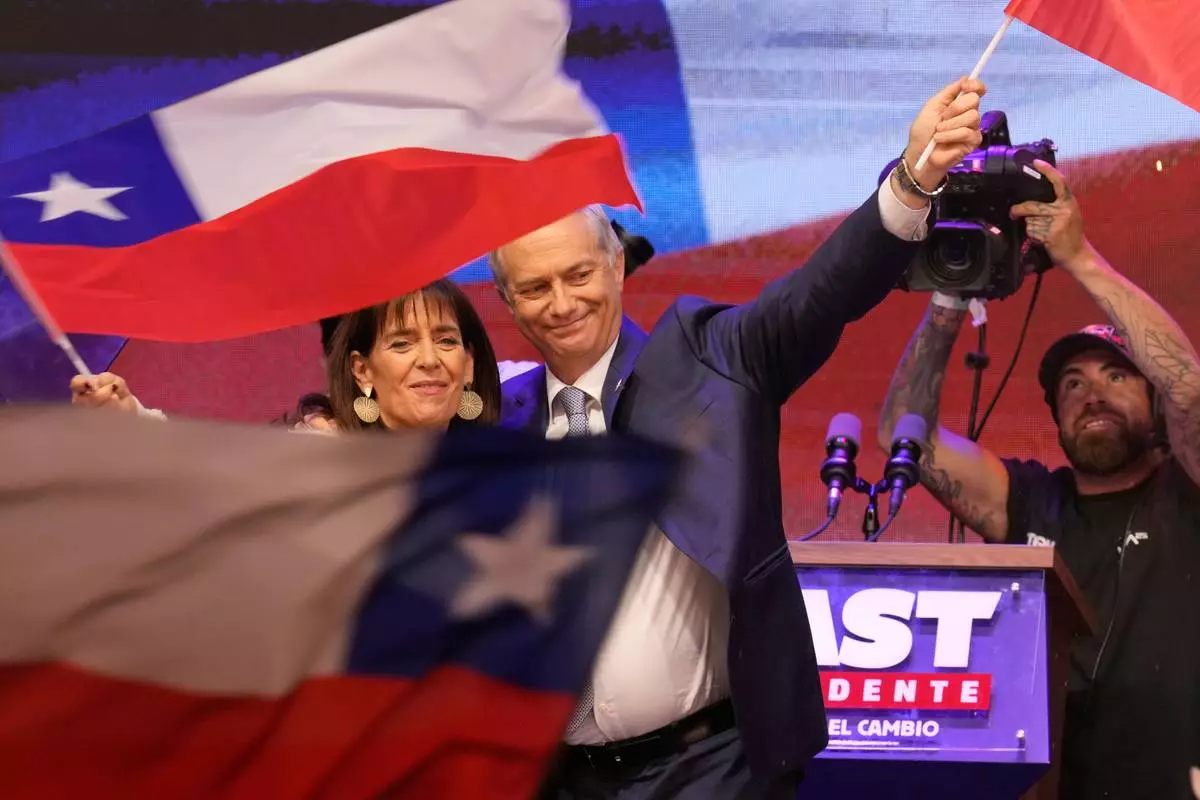
Presidential candidate Jose Antonio Kast, of the opposition Republican Party, and his wife, Maria Pia Adriasola, wave flags after winning the presidential runoff election in Santiago, Chile, Sunday, Dec. 14, 2025. (AP Photo/Matias Delacroix)
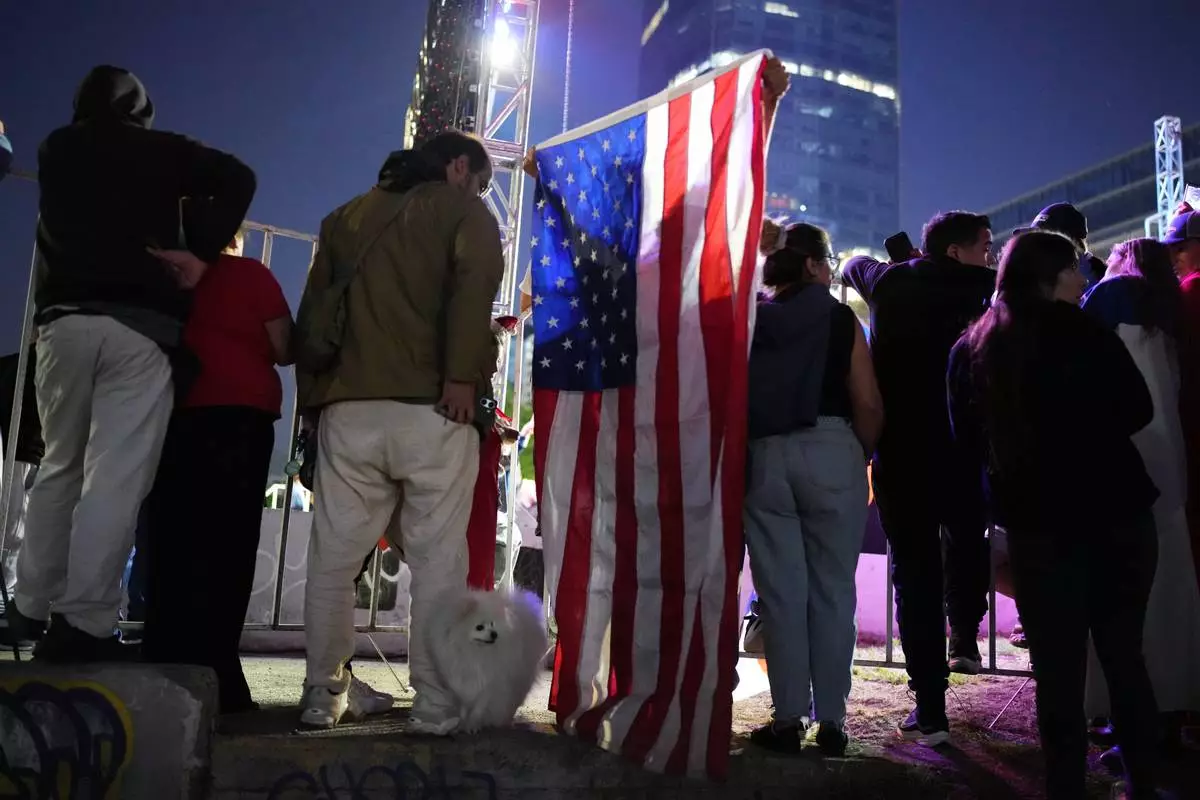
Supporters listen to Presidential candidate Jose Antonio Kast, of the opposition Republican Party, delivering his victory speech after winning the presidential runoff election in Santiago, Chile, Sunday, Dec. 14, 2025. (AP Photo/Natacha Pisarenko)