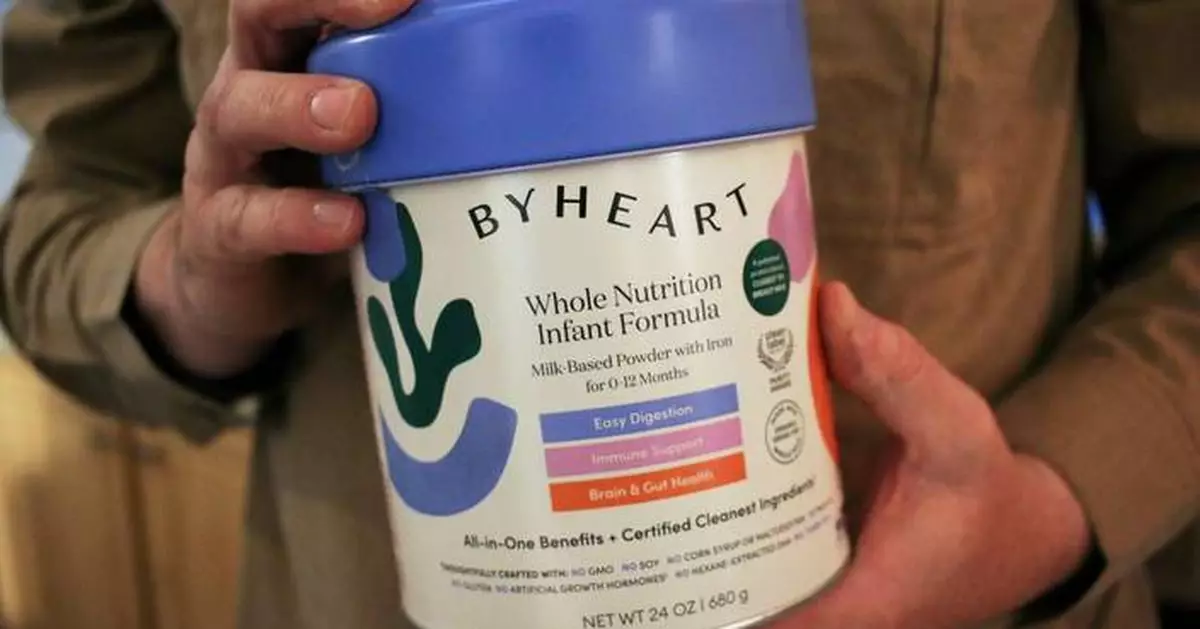
Four of the nation's top retail stores failed to promptly pull contaminated infant formula tied to a dangerous botulism outbreak from their shelves, federal health officials said in warning letters posted Monday.
The U.S. Food and Drug Administration sent letters to leaders at Walmart, Target, Kroger and Albertsons, saying the companies continued to sell ByHeart infant formula for days or weeks, despite a Nov. 11 recall of all products in the outbreak that has sickened more than 50 babies in 19 states.
“As a participant in the supply chain, your firm should take prompt and effective action when notified of a product recall,” FDA officials said in warning letters sent to the companies on Dec. 12 and posted online Monday.
The formula was found at Target stores in 20 states “well after the recall was initiated,” one letter said. In addition, it was sold at a Target store in New Hampshire on Nov. 16, despite an electronic block on the product's sales code, the FDA noted. And at a Target store in Arkansas, single-serve packs of ByHeart formula were promoted with a “Sale!” sign and a $2 discount from Nov. 16 to Nov. 22.
Information from state and local health officials said ByHeart formula was found at Walmart stores in 21 states from Nov. 12 to Nov. 26. The formula was found in Albertsons stores in 11 states from Nov. 12 to Nov. 19, and at Kroger stores in 10 states from Nov. 12 to Nov. 19.
In addition, the companies failed to provide FDA with evidence that corrective actions have been put in place, despite multiple requests, the agency said. The companies have 15 working days to respond to the letters.
Walmart officials said in a statement that no ByHeart formula was sold after cash registers were blocked from selling the formula following the recall.
“We moved swiftly to issue a sales restriction and removed this product from our impacted stores and clubs and online,” a company spokesperson said in an email. “We take all reports of inaction seriously and will respond to the letter.”
Albertsons officials said the company worked closely with suppliers and regulators to identify and remove the products and communicate to customers.
“ByHeart infant formula products have been removed from our store shelves,” the company said in a statement.
All of the babies in the outbreak have been hospitalized and treated with an IV medication to stop the progress of the disease. The U.S. Centers for Disease Control and Prevention expanded the outbreak to include all babies treated for botulism after consuming ByHeart formula since it was first produced in 2023.
Steven Mandernach, executive director at the Association of Food and Drug Officials, said the FDA itself was slow to distribute information about the recall with state and local food safety officials. The agency didn't fully share product lists until Nov. 14 — nearly a week after the initial recall of two lots of ByHeart formula on Nov. 8.
He said it was “disappointing” in an outbreak involving the sole source of nutrition for vulnerable infants.
“There probably wasn’t the sense of urgency to ensure the product was off the market that I would expect,” Mandernach said.
The Associated Press Health and Science Department receives support from the Howard Hughes Medical Institute’s Department of Science Education and the Robert Wood Johnson Foundation. The AP is solely responsible for all content.

FILE - A sign for ByHeart, a manufacturer of organic baby formula, is displayed outside a building that houses a plant for the company on Tuesday, Nov. 11, 2025, in Portland, Ore. (AP Photo/Jenny Kane, File)
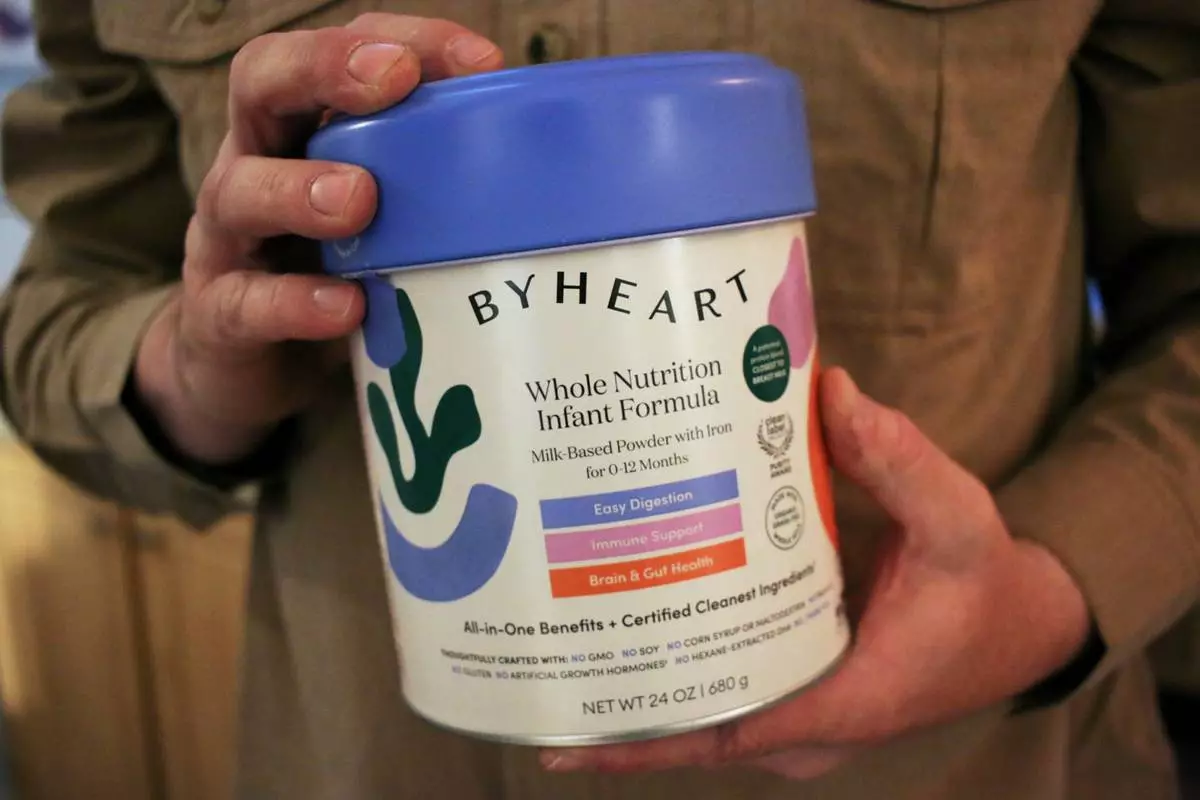
FILE - Stephen Dexter holds a container of ByHeart baby formula, which was recently recalled by ByHeart, in Flagstaff, Ariz., on Wednesday, Nov. 12, 2025. (AP Photo/Cheyanne Mumphrey, File)
SIOUX FALLS, S.D. (AP) — Easter is around the corner, and it's time to start thinking about how to decorate your eggs.
Whether you're dying eggs for your table spread or planning to hide them for an egg hunt, it's important to follow food safety guidelines to minimize germs and maximize your egg quality.
Eggs are remarkably long lasting, so there needn't be a giant rush to eat them.
“Stores usually do turn over eggs pretty quickly, so the recommendations is you should consume eggs three to five weeks after you purchase them,” said Kara Lynch, food safety educator with Michigan State University Extension.
There is also a benefit in letting eggs age just a bit, as older eggs can be easier to peel. That's because eggs shrink over time within the shell, creating an air pocket between the egg and the shell.
Egg processors clean eggs before they reach store shelves, but it also is important to thoroughly cook eggs to reduce the risk of foodborne illness, especially salmonella. That bacteria lives naturally in the gastrointestinal and reproductive tracts of chickens, said Kimberly Baker, associate extension specialist at Clemson University.
To cook your eggs, place them in a saucepan, fill it with water and bring it to a boil. After that, put the lid on, turn the heat off and let it sit for about 12 minutes. Some also favor turning down the heat and simmering eggs.
You can vary the time in the hot water depending on a desire for harder boiled or slightly creamier eggs, but the yolk should be pretty solid to be safe. Boiling them for too long can risk creating green sulfur development on the outside of the yolk.
After that, Don Schaffner, food science department chair at Rutgers University, said there are two options.
You can run your eggs under cold water to reduce the temperature. From there, you can color them right away or place them back in the fridge until you're ready. Or, after you've boiled them, you can let them air dry until they've cooled.
The boiling process sanitizes the eggs, and as long as they are kept out of water, Schaffner said, they will remain safe to eat.
“You’ve boiled the egg, you’ve gotten rid of any bacteria that might be in the egg. And now you’ve air-cooled it, right? So it’s going to cool more slowly, it’s probably going to cook more,” he said. “But most importantly, you don’t have to worry about any bacteria from the water getting internalized into the egg.”
Either artificial or natural food dye is OK as long as the dye label says it's food grade. For those keeping track, the U.S. Food and Drug Administration has been updating its guidance and regulations regarding certain dyes.
And no, it's not a problem if the dye seeps through the shell.
“Eggs kind of naturally have their own abilities to absorb only so much,” Baker said.
As you're decorating the eggs and have the eggs outside, she suggested keeping your eggs in an ice bath, so they can stay at a cooler temperature while you're decorating.
Eggs should generally be kept at or below 40 degrees (4.4 degrees Celsius) to minimize the risk of contaminants.
Cooked eggs that weren't air-cooled should spend no more than two hours at room temperature. And that's cumulative, including the time spent decorating and the time spent hiding during the Easter egg hunt.
But if it's particularly warm, then that two-hour rule may be shortened to one hour, Lynch said.
Hard boiled eggs are generally good for about a week in the fridge.
Be careful with your eggs as you handle them.
One of the biggest concerns is making sure your eggs haven't cracked during an Easter egg hunt, making them vulnerable to contaminants. And once the egg has been hard boiled, there's no way to kill bacteria that get inside, Baker said.
“We don’t want to be putting them in the soil or in lawns where pets have gone to the bathroom,” she said.
Whether the eggs are hidden outdoors or in a corner of your home, you should rinse them in cool water before you peel them. And wash your hands, too, just in case the eggs have picked up something.
If the Easter egg hunt means your eggs will be at room temperature for longer than two hours, experts recommended using plastic eggs for the hunt instead of real ones to minimize food safety risk.
“If it’s an outdoor Easter egg hunt at any time, I would say go with the plastic eggs and be safe,” Baker said. “And use your dyed Easter eggs as your centerpiece on your table or your buffet, and enjoy them that way.”

FILE - Painted Easter eggs hang from an Easter Tree in Saalfeld, central Germany, March 30, 2018. (AP Photo/Jens Meyer, File)