LOS ANGELES (AP) — The Los Angeles Rams have largely been a two-wide-receiver team all season, so Davante Adams' hamstring injury is likely to reveal whether Sean McVay and Matthew Stafford have another wideout they actually trust.
Or maybe the Rams (11-3) will just lean even further into the three-tight-end sets that have been McVay's preferred scheme recently on the way to the top of the NFC standings.
Click to Gallery
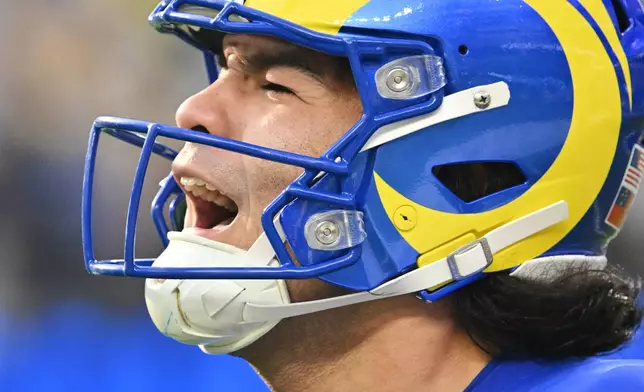
Los Angeles Rams wide receiver Puka Nacua (12) reacts after a first down during the first half of an NFL football game against the Detroit Lions, Sunday, Dec. 14, 2025, in Inglewood, Calif. (AP Photo/Katie Chin)
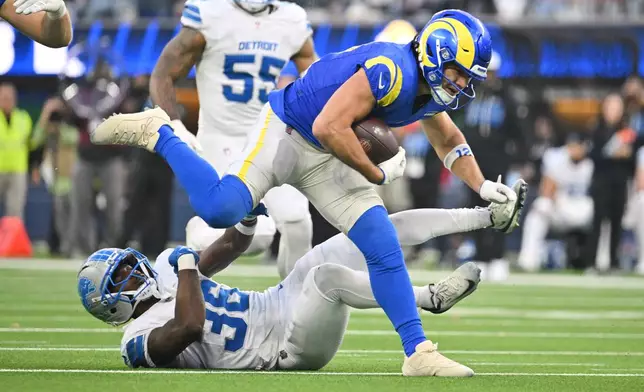
Los Angeles Rams wide receiver Puka Nacua (12) runs over Detroit Lions safety Erick Hallett (36) after a catch during the second half of an NFL football game against the Detroit Lions, Sunday, Dec. 14, 2025, in Inglewood, Calif. (AP Photo/Katie Chin)

Los Angeles Rams wide receiver Davante Adams (17) makes a catch over Detroit Lions cornerback D.J. Reed (4) during the first half of an NFL football game Sunday, Dec. 14, 2025, in Inglewood, Calif. (AP Photo/Katie Chin)
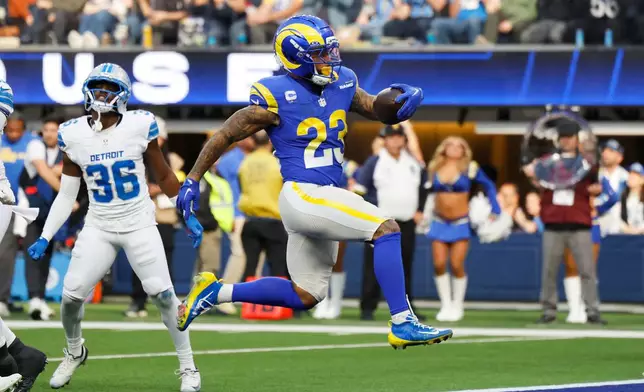
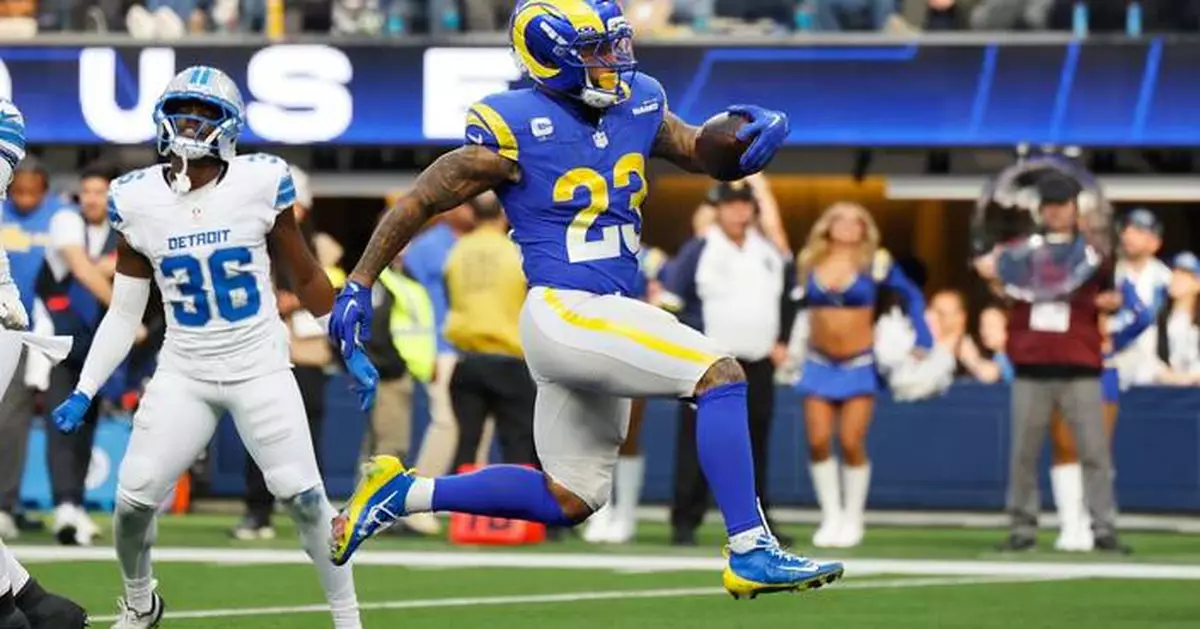
Los Angeles Rams running back Kyren Williams (23) scores a rushing touchdown during the first half of an NFL football game against the Detroit Lions, Sunday, Dec. 14, 2025, in Inglewood, Calif. (AP Photo/Caroline Brehman)
Either way, a difficult trip to Seattle on Thursday night likely got even tougher when Adams aggravated his hamstring injury in the fourth quarter of an impressive 41-34 comeback win over the Detroit Lions.
Although the playoff-bound Rams gave no update on Adams' condition Monday, the star receiver seems unlikely to play in Los Angeles’ showdown with the Seahawks (11-3) for the overall NFC lead.
“We’ll probably just go out there with 10 guys and just see what happens,” offensive coordinator Mike LaFleur said with a grin Monday. “No, I’m just kidding. You guys have seen how valuable he’s been for us in so many different ways. ... He’s still playing at that high clip, and we’re just hoping for the best.”
Adams' absence would leave McVay's offense without the NFL's leader in touchdown receptions and the vital counterpoint to No. 1 target Puka Nacua.
“(Adams) is an outstanding football player, a huge part of our offense and a guy that has put it in the end zone a bunch for us this year," MVP favorite Stafford said after passing for 368 yards and two TDs against the Lions. "That’ll be a tough one. ... I have a lot of faith and trust in the other guys that we have in our locker room and our coaching staff to put us in a great position.”
But that trust is questionable when looking at pure numbers: Stafford has targeted Nacua and Adams a combined 243 times in 14 games, while the four wideouts getting sporadic playing time behind Nacua and Adams have seen just 58 combined targets — only about four throws per game.
Three Rams tight ends and running back Kyren Williams have all caught more passes than wide receiver Jordan Whittington, who has 17 catches. Xavier Smith has 14 catches, while rookie Konata Mumpfield and $10 million veteran Tutu Atwell — who missed most of two months with injury — have just five receptions apiece.
These meager numbers are no coincidence, given McVay's wholehearted embrace of offensive sets with three tight ends over the past two months. Los Angeles is running that scheme at the highest rate in NFL history, which has even meant fewer snaps for Nacua and Adams, let alone their backups.
The only other team with double-digit victories relying so heavily on just two wide receivers this season? It's the Seahawks, whose tertiary wideouts have been targeted only 53 times this season — although that number is rising since Rashid Shaheed's arrival to join Jaxon Smith-Njigba and Super Bowl MVP Cooper Kupp, who was replaced in Los Angeles by Adams.
The running game is on a roll, topping 150 yards in three consecutive games after hitting that mark just twice in the first 11. Williams surpassed 1,000 yards for the third straight season, while Blake Corum has had the three most productive games of his career in the past three weeks.
The defense had an ugly first half against Detroit, allowing 8.5 yards per play while Jared Goff diced up the secondary for 221 yards on the way to a 10-point lead. Los Angeles' halftime adjustments have been excellent this season, but the Lions were a couple of plays away from a 31-point first half that would have been daunting.
Stafford’s confidence in his tight ends showed against the Lions when Colby Parkinson caught two more touchdown passes. After a quiet Rams debut in 2024, Parkinson has rounded into a receiving threat over the past six weeks, catching 22 passes for 230 yards and six TDs with Tyler Higbee sidelined by injury.
The Rams' cornerback play has receded to the level many expected this season. Emmanuel Forbes Jr. and Cobie Durant both struggled against Amon-Ra St. Brown, and Josh Wallace looked overmatched at times while playing instead of healthy scratch Ahkello Witherspoon. Quentin Lake's injury absence has been felt — but this time, the Rams were able to outscore their biggest weakness.
DL Braden Fiske left the locker room with a limp, but the Rams didn't provide injury updates Monday.
93.7 — Nacua's yards receiving per game during his career. That's the most in NFL history, surpassing the pace set by Minnesota's Justin Jefferson. Nacua also became the second receiver in Rams history with two 100-catch seasons Sunday, joining Torry Holt.
The Rams face their biggest game of the year on a short week, and a loss would badly damage their hopes of claiming McVay's first No. 1 playoff seed. It's a major test of will for a team that got outgained 414-249 in its 21-19 win over the Seahawks last month.
AP NFL: https://apnews.com/NFL
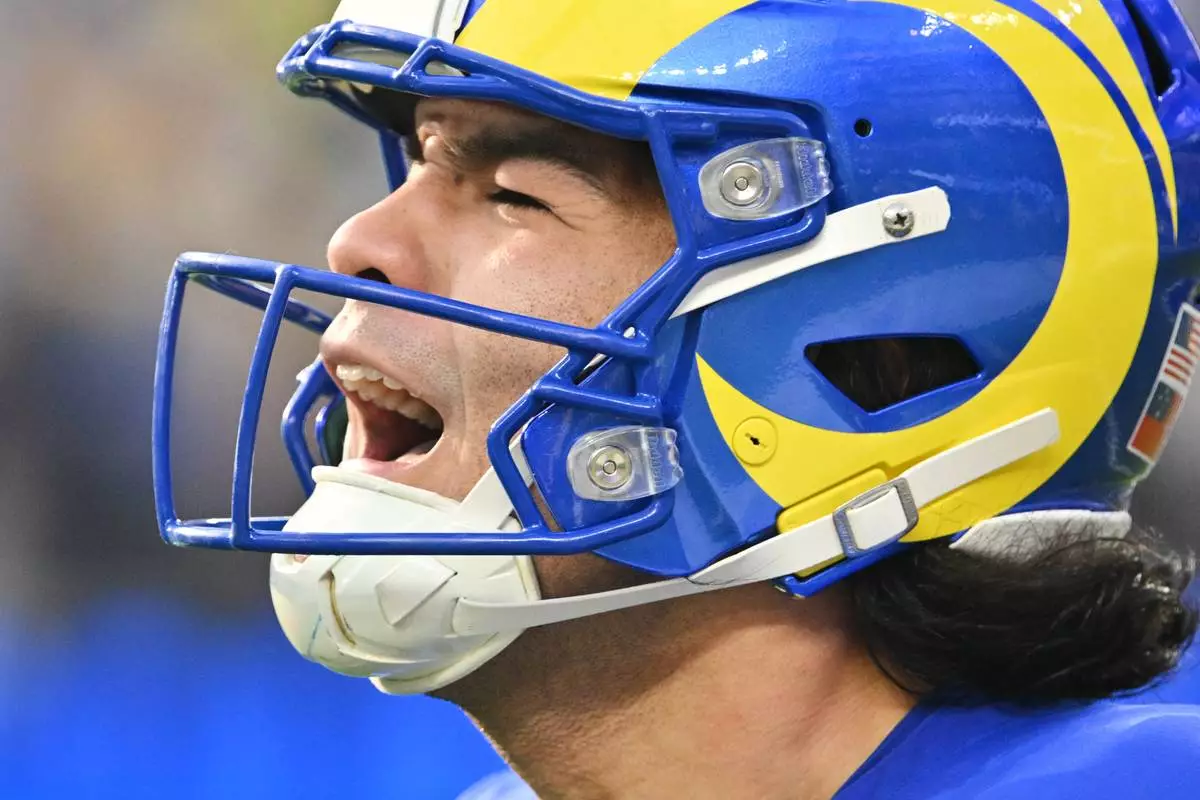
Los Angeles Rams wide receiver Puka Nacua (12) reacts after a first down during the first half of an NFL football game against the Detroit Lions, Sunday, Dec. 14, 2025, in Inglewood, Calif. (AP Photo/Katie Chin)
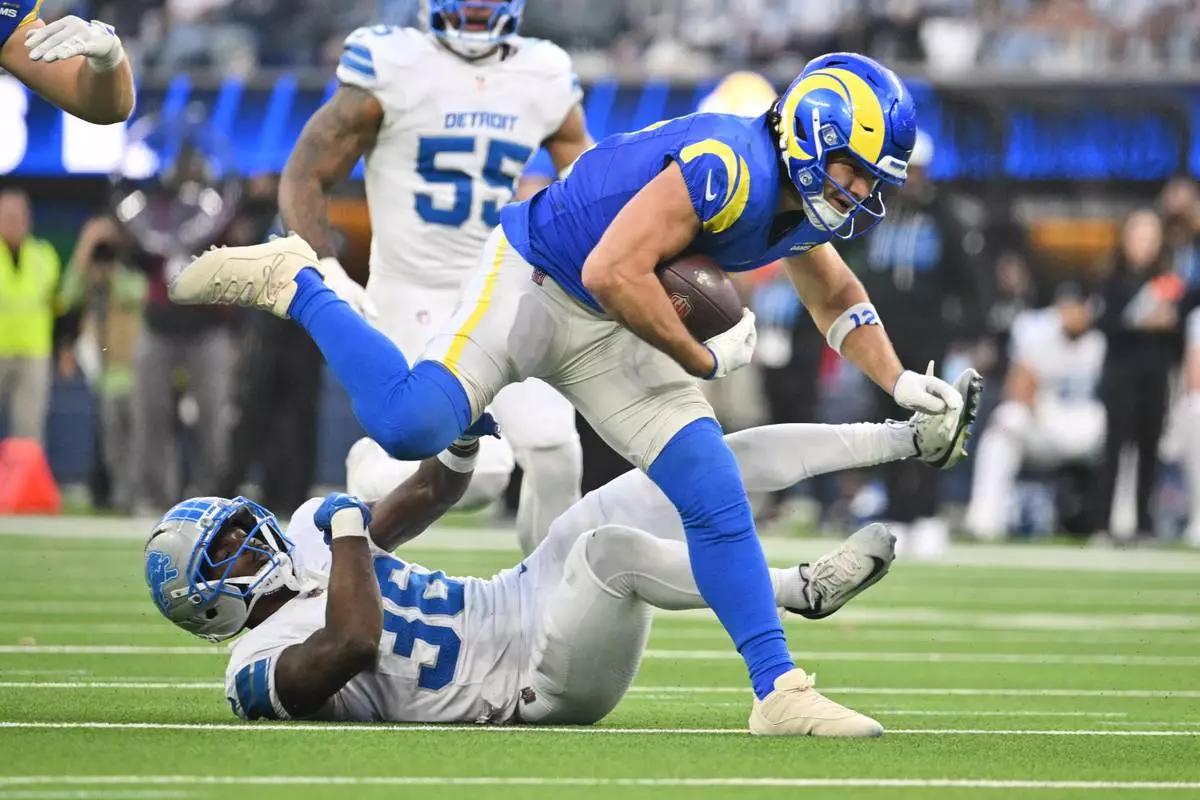
Los Angeles Rams wide receiver Puka Nacua (12) runs over Detroit Lions safety Erick Hallett (36) after a catch during the second half of an NFL football game against the Detroit Lions, Sunday, Dec. 14, 2025, in Inglewood, Calif. (AP Photo/Katie Chin)
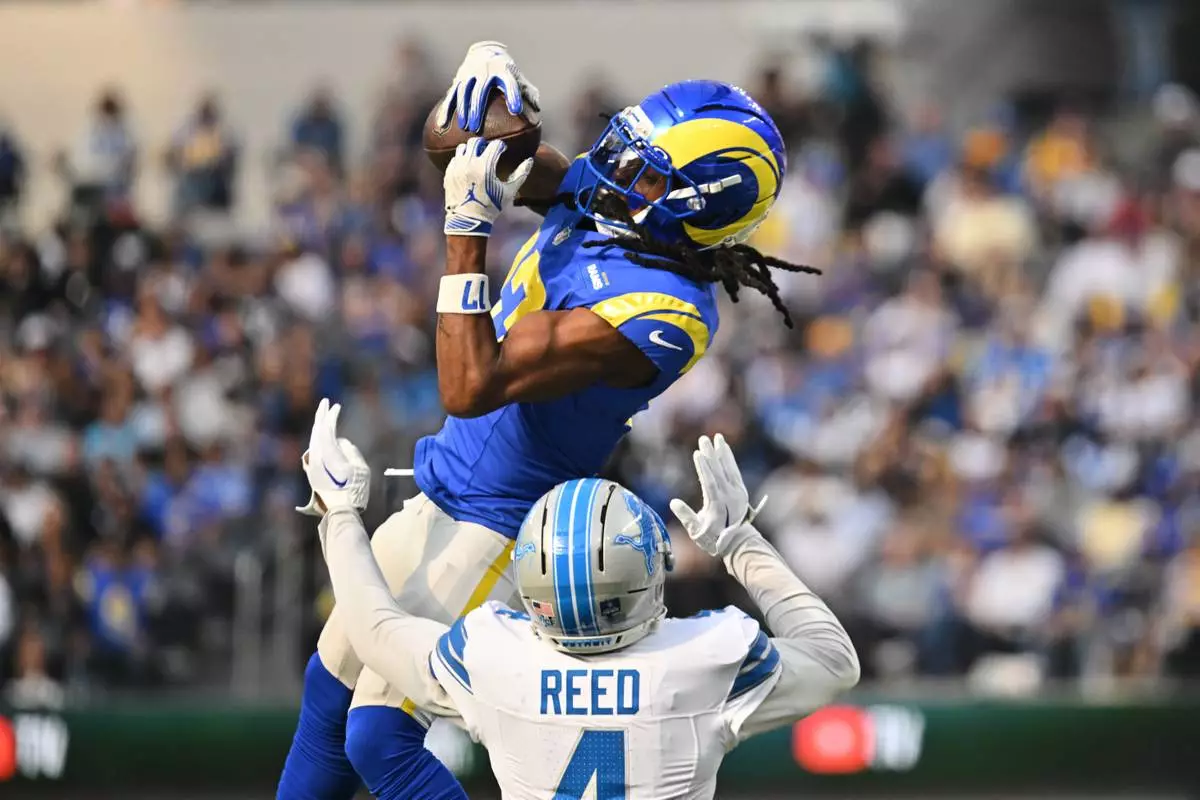
Los Angeles Rams wide receiver Davante Adams (17) makes a catch over Detroit Lions cornerback D.J. Reed (4) during the first half of an NFL football game Sunday, Dec. 14, 2025, in Inglewood, Calif. (AP Photo/Katie Chin)
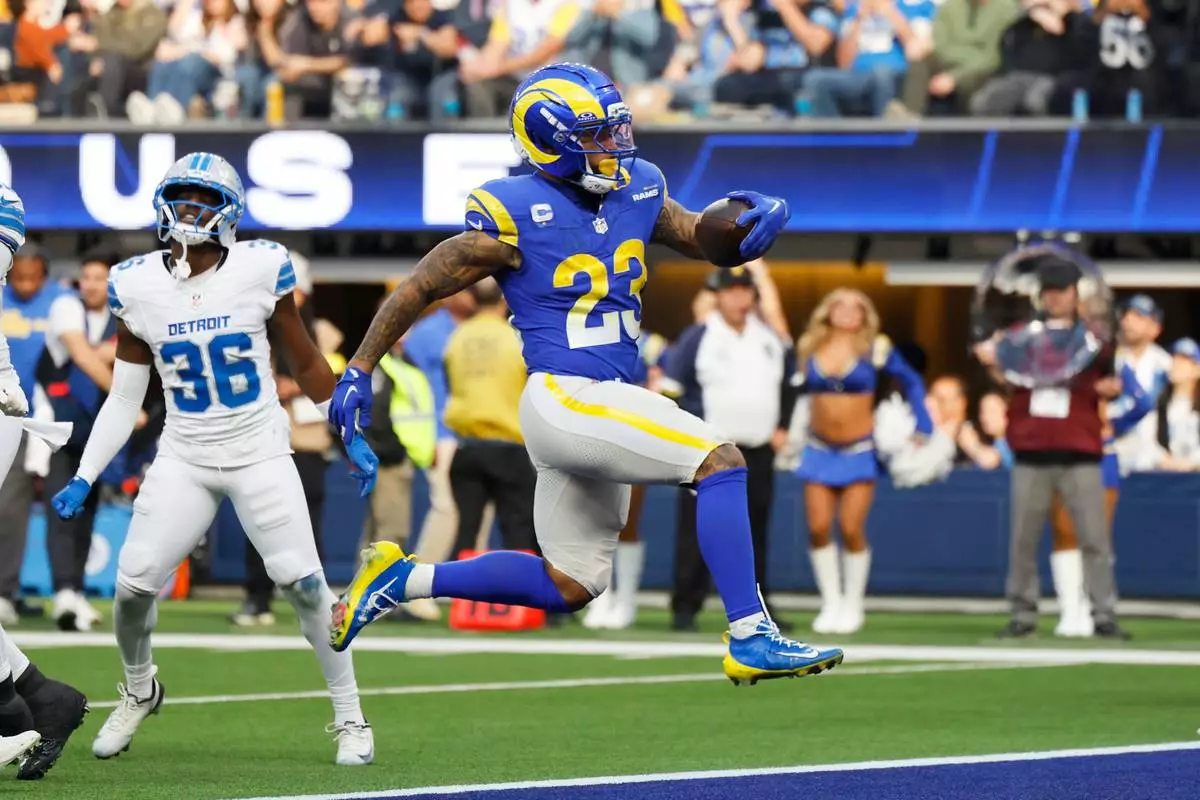
Los Angeles Rams running back Kyren Williams (23) scores a rushing touchdown during the first half of an NFL football game against the Detroit Lions, Sunday, Dec. 14, 2025, in Inglewood, Calif. (AP Photo/Caroline Brehman)