China's Hainan Free Trade Port (FTP) is set to launch full-scale special customs operations on Thursday, with all ports finalizing preparations for the upcoming island-wide special customs operations under the FTP's two-tiered supervision system.
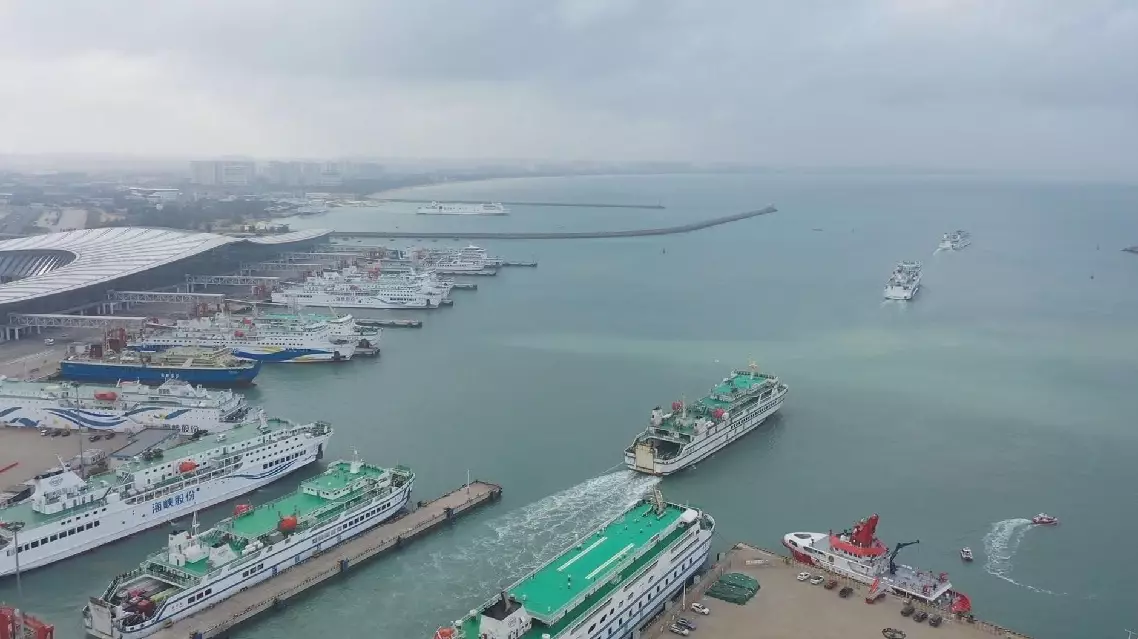
At Xinhai and Nangang ports in Haikou, capital of south China's Hainan Province, where some 80 percent of trucks carrying goods to the mainland will pass through, customs authorities have already completed full-capacity stress tests. Trucked goods that pass customs clearance will drive directly onto roll-on/roll-off ships via designated second-line inspection sites to cross the Qiongzhou Strait.
"So far, we have conducted 29 stress tests, mainly large-scale, full-process, and full-coverage pressure tests. These tests have verified the stability of our equipment, data transmission, mechanism design, interdepartmental coordination, and emergency response plans, all of which have performed smoothly," said Wong Yuzhong, director of Haikou Port Customs.
A new three-tier monitoring and command center at Xinhai Port is expected to further enhance risk control, such as intelligent image review.
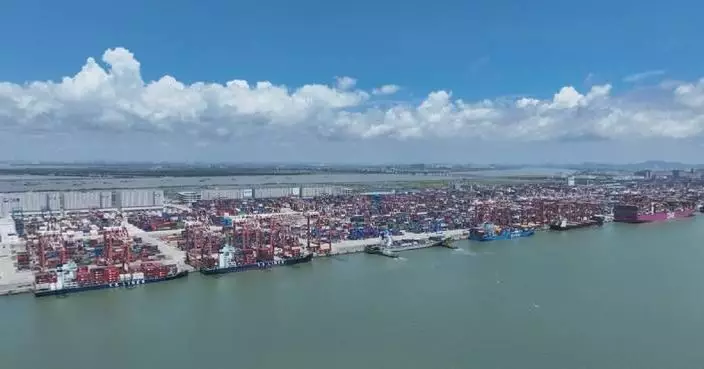
In Hainan's Danzhou City, Yangpu Port handles over 80 percent of containerized cargo shipped off the island via second-line seaports. The port's customs closure and supporting infrastructure projects have been completed, including 11 anti-smuggling enforcement stations and two maritime police outposts. The typhoon shelter anchorage in the Qiongzhou Strait has been fully completed and put into operation.
"Yangpu Port is the largest seaborne gateway for international trade in the Hainan FTP, currently operating 35 international shipping routes. It serves as the main channel for first-line opening under the FTP model. At present, the port's software and hardware systems, risk control mechanisms, and joint management coordination for customs closure operations are fully in place and ready," said Wang Yuanzhong, deputy director of Yangpu Customs.
The Yangpu Bonded Port Zone was first to pilot the FTP's model of "free flow through the first line and effective control at the second line." During China's ongoing 14th Five-Year Plan (2021-2025), imports and exports at the zone have grown at an average annual rate of 97.4 percent, driven by the early rollout of high-impact FTP policies.
"Yangpu Port handled 2 million TEUs last year and is on track to reach 3.5 million this year. From January to November, its average growth rate reached 53.5 percent, ranking first among all ports nationwide. We are building an integrated development model that combines port operations, industry, urban development, and science and technology. As the port's capacity continues to expand, it will greatly drive industrial growth, boost trade, and further enhance both productive and consumer service sectors," said Chen Yang, mayor of Danzhou.
As part of the Hainan FTP's customs reform, the first line refers to Hainan's links with overseas markets, where goods will enjoy zero tariffs, simplified procedures, and access through eight designated coastal ports. The second line manages flows between Hainan and the mainland through 10 designated ports under streamlined but effective supervision.
This system is designed to facilitate trade between Hainan and regions outside China's customs border, while maintaining standard controls for goods entering the mainland.
China's Hainan FTP fully ready for island-wide special customs operations