Skip to Content Facebook Feature Image

Gaza families struggle to recover from days of torrential rains that killed 12 people

News

Gaza families struggle to recover from days of torrential rains that killed 12 people
News

News

Gaza families struggle to recover from days of torrential rains that killed 12 people

2025-12-17 06:50 Last Updated At:07:00

DEIR AL-BALAH, Gaza Strip (AP) — Palestinians in Gaza struggled to recover Tuesday from torrential rains that battered the enclave for days, flooding camps for the displaced, collapsing buildings already badly damaged in the two-year war and leaving at least 12 dead, including a two-week-old baby.

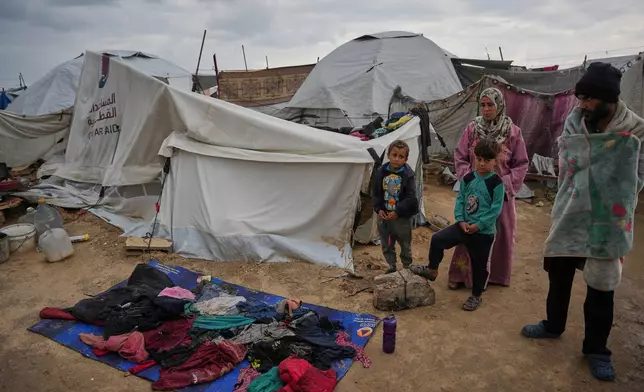
The downpour, which dumped more than 150 milliliters (9 inches) of rain on some parts of Gaza over the past week, turned dirt lanes to mud and flooded tents in camps for displaced people.

More Images
Raafat Alwan, 32, right, and his family stand outside their tent as their clothes lie over a tarp to dry in a makeshift camp for displaced Palestinians set up on the beach during a cold morning in Gaza City, Tuesday, Dec. 16, 2025. (AP Photo/Abdel Kareem Hana)
Raafat Alwan, 32, right, and his family stand outside their tent as their clothes lie over a tarp to dry in a makeshift camp for displaced Palestinians set up on the beach during a cold morning in Gaza City, Tuesday, Dec. 16, 2025. (AP Photo/Abdel Kareem Hana)

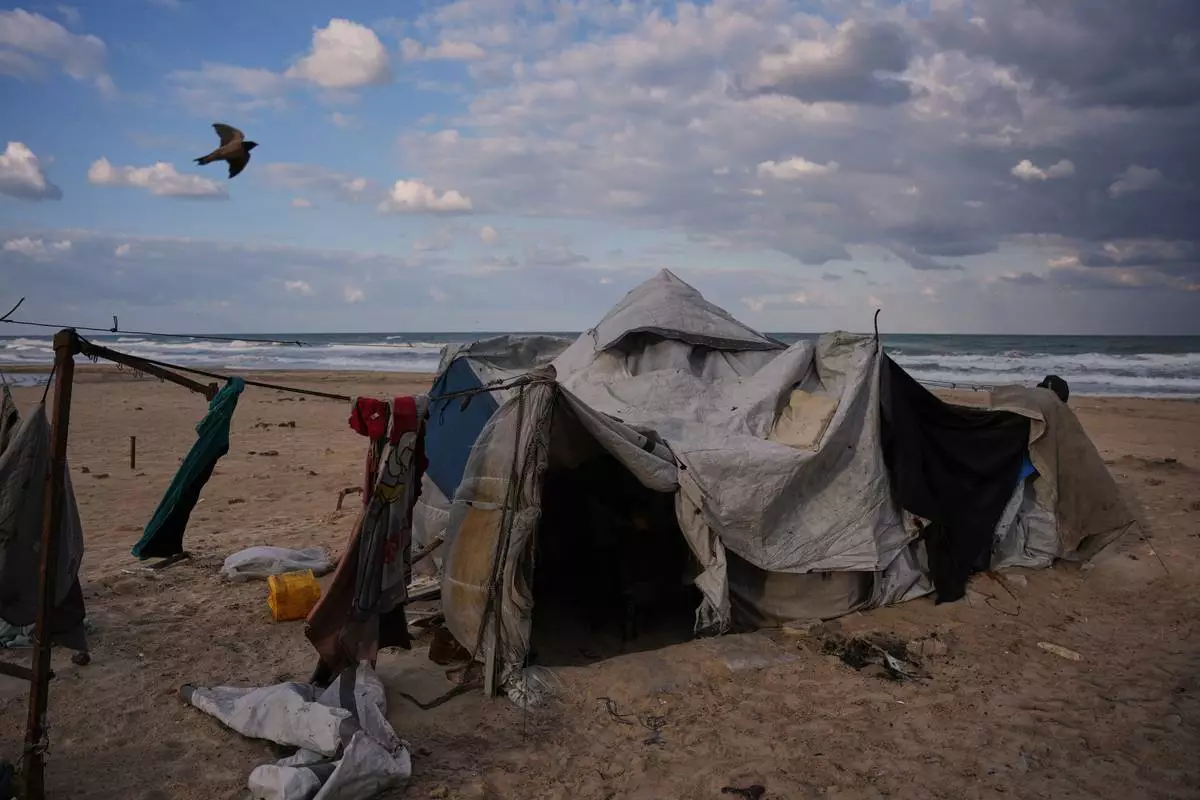
A bird flies over a damaged tent following recent days of rain in a makeshift camp for displaced Palestinians set up on the beach in Gaza City, Tuesday, Dec. 16, 2025. (AP Photo/Abdel Kareem Hana)
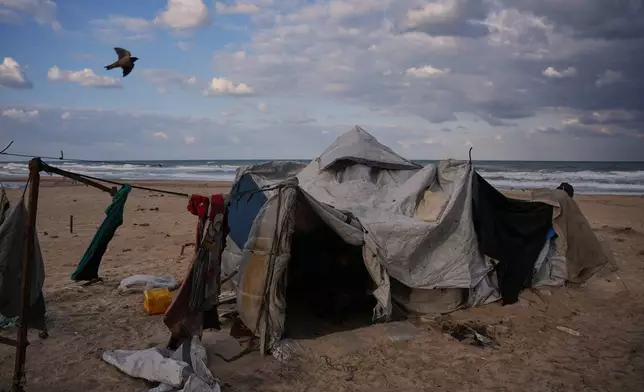
A bird flies over a damaged tent following recent days of rain in a makeshift camp for displaced Palestinians set up on the beach in Gaza City, Tuesday, Dec. 16, 2025. (AP Photo/Abdel Kareem Hana)

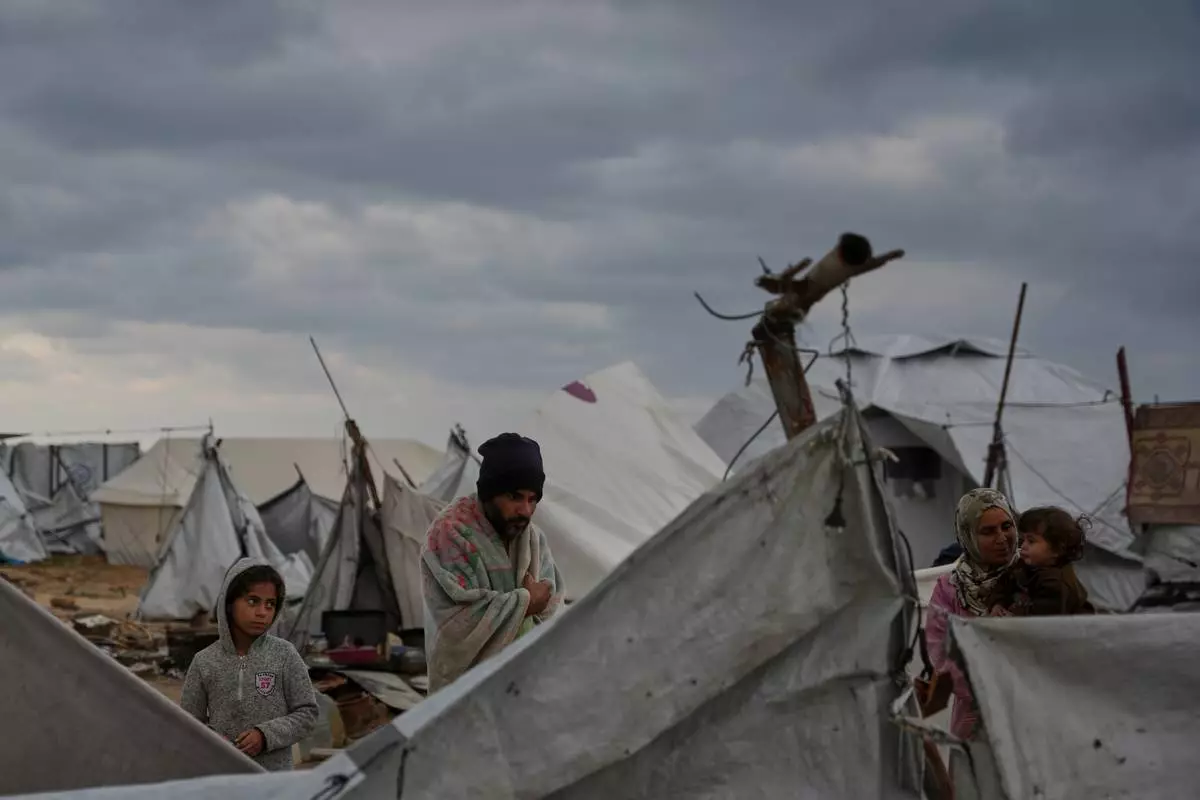
Wrapped in a blanket, Raafat Alwan, 32, stands outside his tent with his family in a makeshift camp for displaced Palestinians set up on the beach during a cold morning in Gaza City, Tuesday, Dec. 16, 2025. (AP Photo/Abdel Kareem Hana)
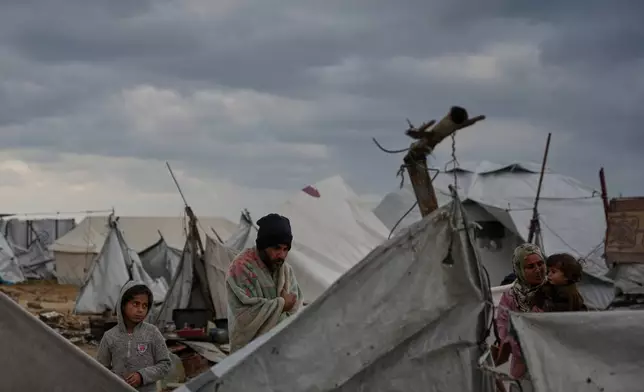
Wrapped in a blanket, Raafat Alwan, 32, stands outside his tent with his family in a makeshift camp for displaced Palestinians set up on the beach during a cold morning in Gaza City, Tuesday, Dec. 16, 2025. (AP Photo/Abdel Kareem Hana)

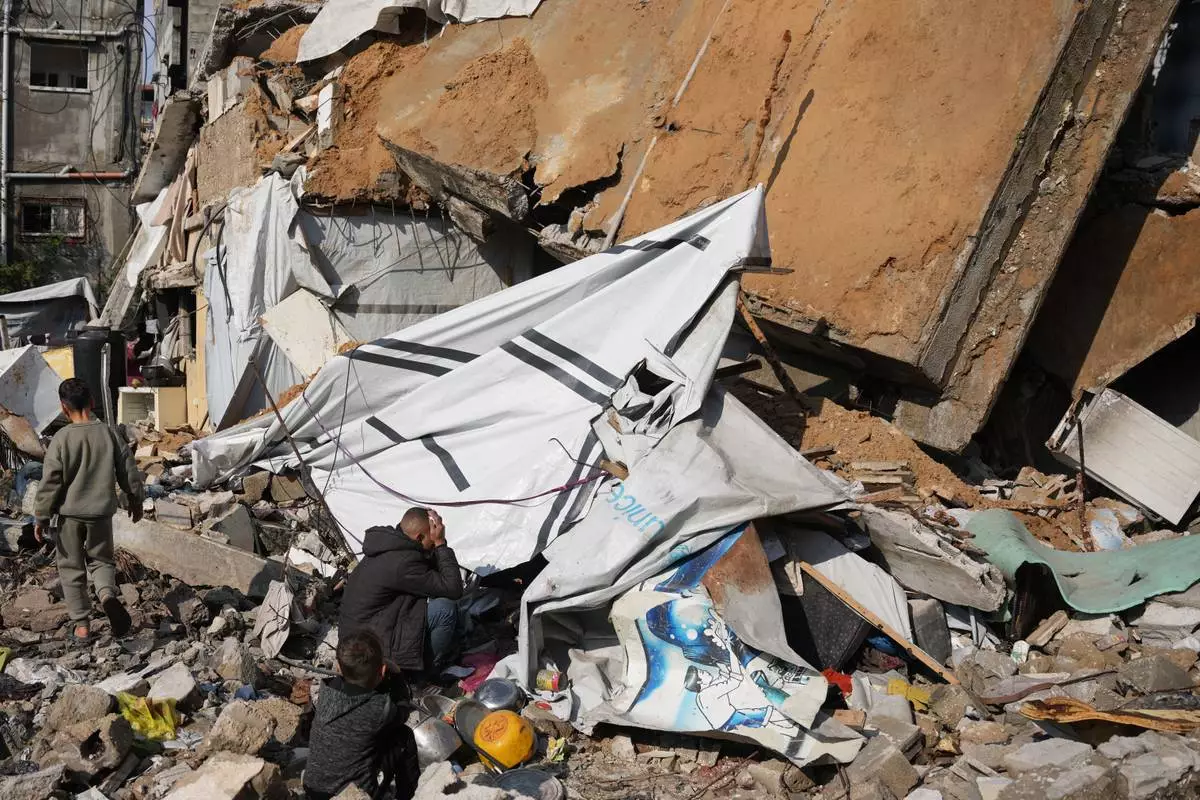
Alaa al-Hosari sits on the rubble of his house that collapsed, killing, according to Al-Shafa Hospital officials, at least one person and leaving several others injured in Gaza City, Tuesday, Dec. 16, 2025. (AP Photo/Abdel Kareem Hana)
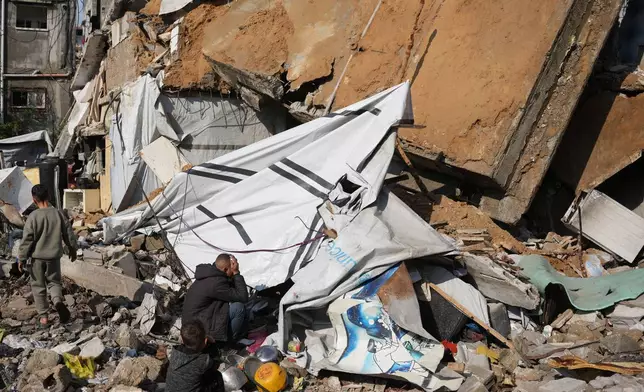
Alaa al-Hosari sits on the rubble of his house that collapsed, killing, according to Al-Shafa Hospital officials, at least one person and leaving several others injured in Gaza City, Tuesday, Dec. 16, 2025. (AP Photo/Abdel Kareem Hana)

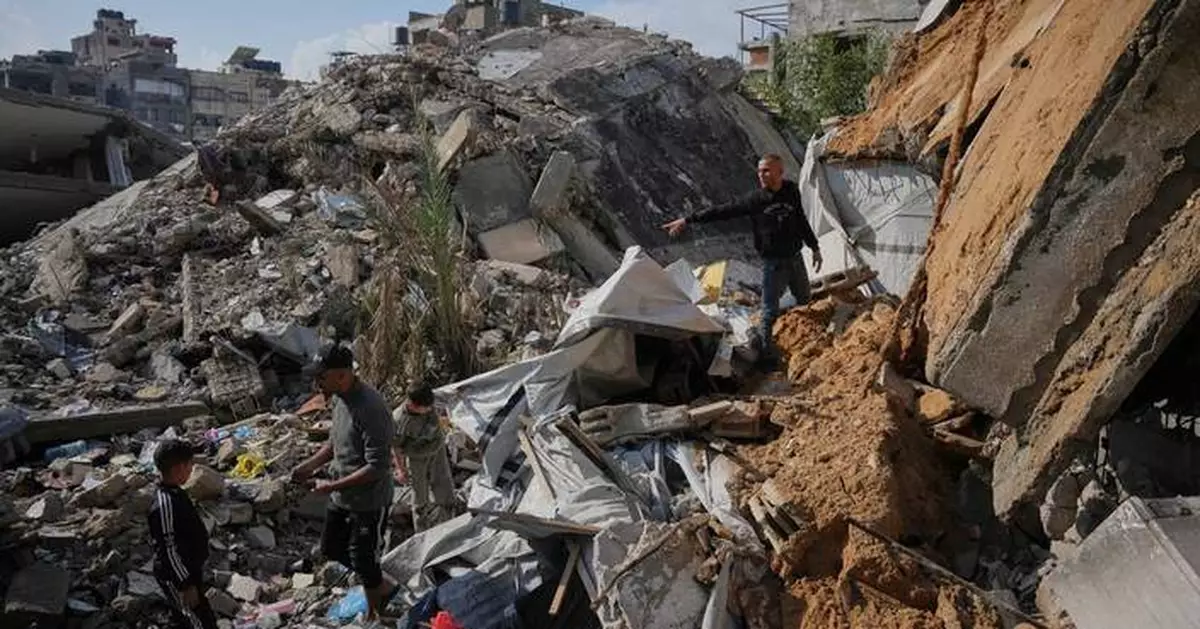
Members of the Al-Hosari family check the rubble looking for their belongings after their house collapsed, killing, according to Al-Shafa Hospital officials, at least one person and leaving several others injured in Gaza City, Tuesday, Dec. 16, 2025. (AP Photo/Abdel Kareem Hana)

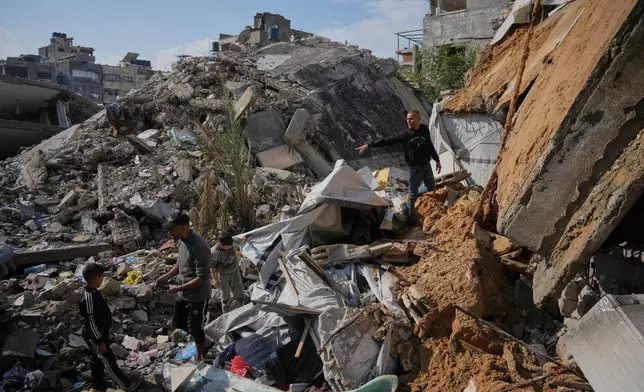
Members of the Al-Hosari family check the rubble looking for their belongings after their house collapsed, killing, according to Al-Shafa Hospital officials, at least one person and leaving several others injured in Gaza City, Tuesday, Dec. 16, 2025. (AP Photo/Abdel Kareem Hana)

The Gaza Health Ministry, part of the Hamas-run government, said Tuesday the two-week-old died of hypothermia as a result of the weather. The baby was brought to the hospital a few days ago and was transferred to intensive care but died on Monday.

In Gaza City, a man died Tuesday after a home already damaged during Israeli strikes, collapsed because of the heavy rainfall, according to Shifa Hospital.

Members of the al-Hosari family said 30 people lived in the building, but just nine were home when it collapsed. The man who was killed was a worker who had come to fix the walls, they said. Five people were injured.

The Health Ministry said the remaining 10 people were killed last week, also from buildings collapsing from the rain and heavy winds.

Emergency workers warned people not to stay in damaged buildings because they could collapse at any moment. But so much of the territory reduced to rubble, there are few places to escape the rain.

In July, the United Nations Satellite Center estimated that almost 80% of the buildings in Gaza have been destroyed or damaged.

“When we hear the news that there is a storm, our whole lives change, we start thinking about where to stay, to go, where to put our mattresses and blankets, and where to keep our children safe and warm,” said Mohammed Gharableh, a father displaced from the southern city of Rafah.

“During every storm like this, water penetrates our tents, and our mattresses and blankets get soaked,” he added.

In Israel, areas near Gaza received between 60 mm to 160 mm (2 to 6 inches) of rain in the past week, according to the Israel Meteorological Service, which in some cases is more than twice the average amount of rain for this time of year.

According to aid groups, despite two months of a ceasefire, not enough shelter material has been getting into Gaza to help Palestinians deal with the coming winter.

Recently released Israeli military figures suggest it hasn’t met the ceasefire stipulation of allowing 600 trucks of aid into Gaza a day, though Israel disputes that finding.

The vast majority of Gaza’s 2 million people have been displaced, and most people live in vast tent camps stretching along the coast, or set up among the shells of damaged buildings. The buildings lack adequate flooding infrastructure and people use cesspits dug near tents as toilets.

The Israeli military body in charge of coordinating aid to Gaza, called COGAT, said close to 270,000 tents and tarps have entered Gaza over the past few months as well as winter items, shelter equipment, and sanitation supplies.

But some aid groups disputed the figures and said more supplies, especially winter items, are desperately needed.

Shelter Cluster, an international coalition of aid providers led by the Norwegian Refugee Council, last week said it has tracked just 68,000 tents that have entered Gaza via the U.N., non-governmental organizations, and various countries. Many of the tents aren’t properly insulated for winter, it says.

During a U.N. Security Council meeting on Tuesday, officials said that the U.N. is distributing tents, blankets, and other winter supplies but that the risk of hypothermia is increasing with the onset of winter weather.

In a separate development, the Israeli military said Tuesday it closed an investigation into a soldier who allowed an Israeli archaeologist, a civilian, to accompany troops into southern Lebanon to a historic fortress in November last year.

The visit came before the U.S. and France-brokered ceasefire in the war between Israel and the Lebanese militant Hezbollah group came into effect and at a time when the Israeli military was operating in areas of southern Lebanon to destroy Hezbollah's military infrastructure.

Zeev Erlich, 70, a well-known archaeologist and settler leader in the Israeli-occupied West Bank, was killed in a Hezbollah ambush along with an Israeli soldier. Erlich was not on active or reserve duty, but had entered Lebanon with Israeli troops while armed and wearing a military uniform.

The Israeli military said it would investigate how a civilian was allowed to enter Lebanon, and initially recommended charging the infantry commander who brought Ehrlich, Yoav Yarom, with reckless homicide.

On Tuesday, the military attorney general announced that the military had instead decided to close the investigation without criminal charges but recommended internal action within the military.

Lidman reported from Jerusalem.
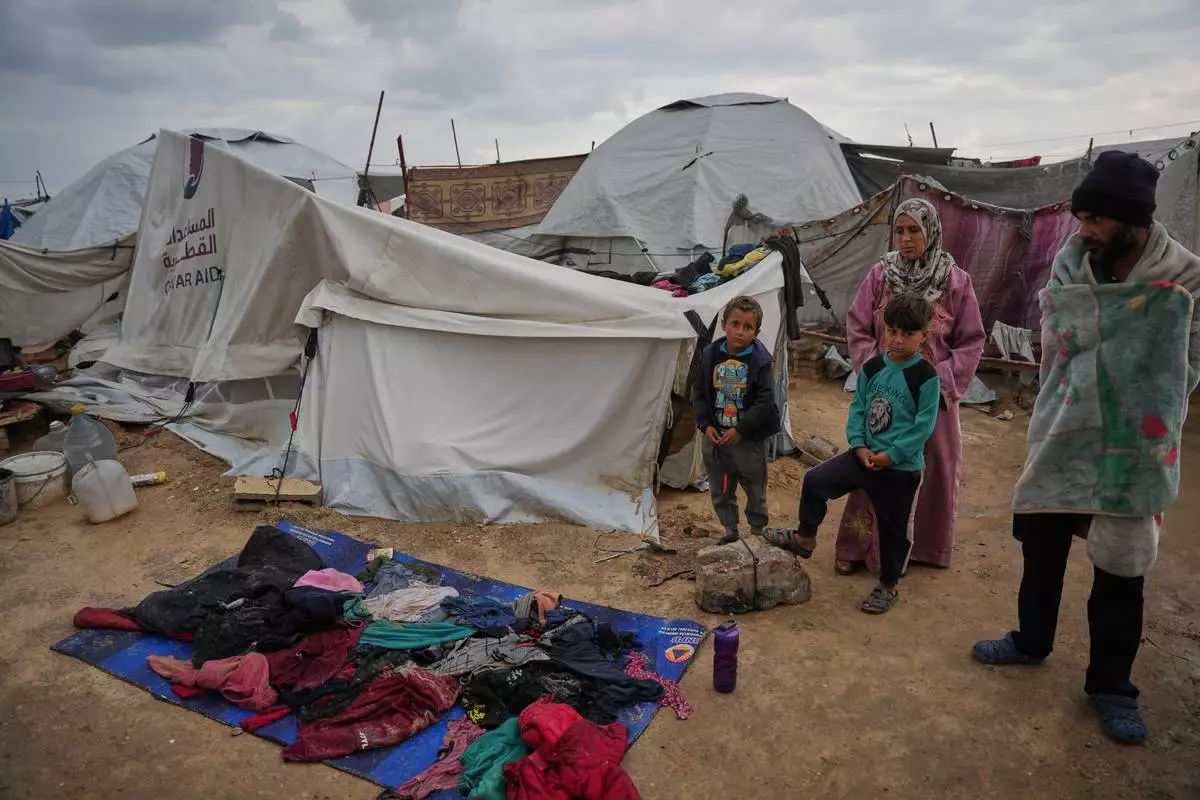
Raafat Alwan, 32, right, and his family stand outside their tent as their clothes lie over a tarp to dry in a makeshift camp for displaced Palestinians set up on the beach during a cold morning in Gaza City, Tuesday, Dec. 16, 2025. (AP Photo/Abdel Kareem Hana)
Raafat Alwan, 32, right, and his family stand outside their tent as their clothes lie over a tarp to dry in a makeshift camp for displaced Palestinians set up on the beach during a cold morning in Gaza City, Tuesday, Dec. 16, 2025. (AP Photo/Abdel Kareem Hana)

A bird flies over a damaged tent following recent days of rain in a makeshift camp for displaced Palestinians set up on the beach in Gaza City, Tuesday, Dec. 16, 2025. (AP Photo/Abdel Kareem Hana)
A bird flies over a damaged tent following recent days of rain in a makeshift camp for displaced Palestinians set up on the beach in Gaza City, Tuesday, Dec. 16, 2025. (AP Photo/Abdel Kareem Hana)

Wrapped in a blanket, Raafat Alwan, 32, stands outside his tent with his family in a makeshift camp for displaced Palestinians set up on the beach during a cold morning in Gaza City, Tuesday, Dec. 16, 2025. (AP Photo/Abdel Kareem Hana)
Wrapped in a blanket, Raafat Alwan, 32, stands outside his tent with his family in a makeshift camp for displaced Palestinians set up on the beach during a cold morning in Gaza City, Tuesday, Dec. 16, 2025. (AP Photo/Abdel Kareem Hana)

Alaa al-Hosari sits on the rubble of his house that collapsed, killing, according to Al-Shafa Hospital officials, at least one person and leaving several others injured in Gaza City, Tuesday, Dec. 16, 2025. (AP Photo/Abdel Kareem Hana)
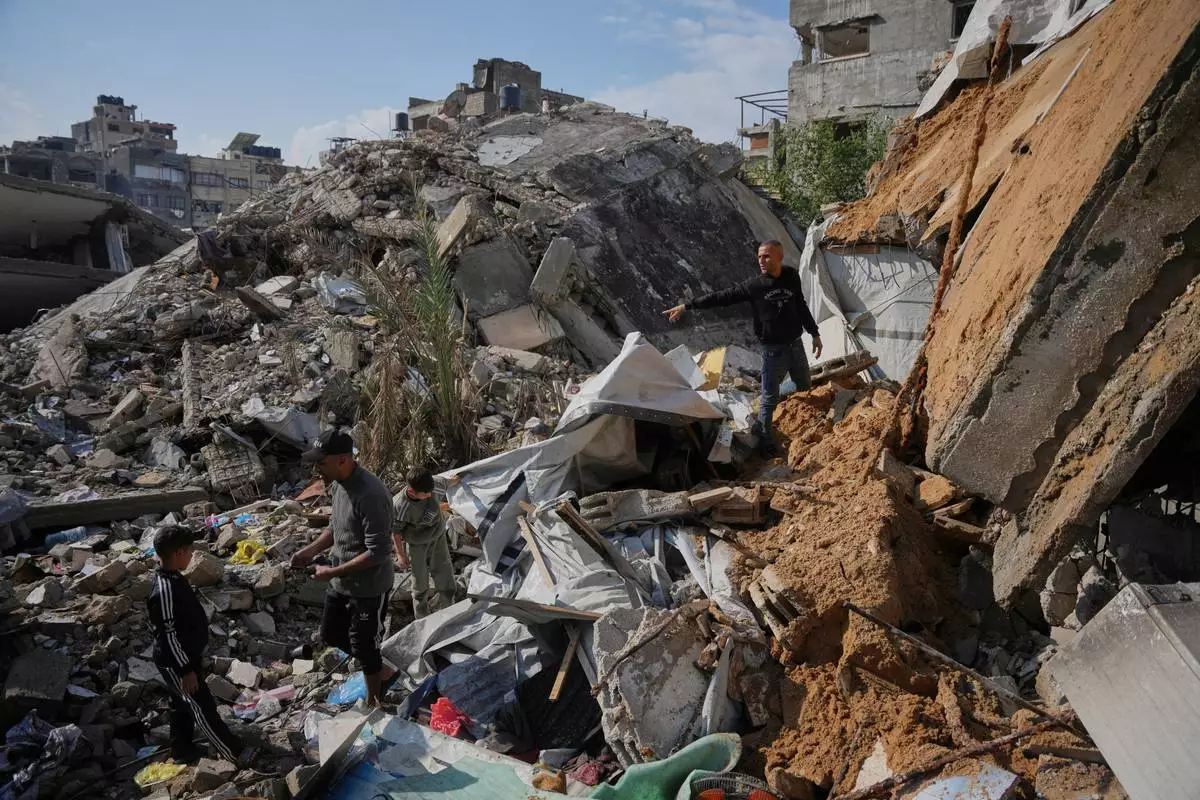
Alaa al-Hosari sits on the rubble of his house that collapsed, killing, according to Al-Shafa Hospital officials, at least one person and leaving several others injured in Gaza City, Tuesday, Dec. 16, 2025. (AP Photo/Abdel Kareem Hana)

Members of the Al-Hosari family check the rubble looking for their belongings after their house collapsed, killing, according to Al-Shafa Hospital officials, at least one person and leaving several others injured in Gaza City, Tuesday, Dec. 16, 2025. (AP Photo/Abdel Kareem Hana)
Members of the Al-Hosari family check the rubble looking for their belongings after their house collapsed, killing, according to Al-Shafa Hospital officials, at least one person and leaving several others injured in Gaza City, Tuesday, Dec. 16, 2025. (AP Photo/Abdel Kareem Hana)

CAIRO (AP) — Iranians began to regain internet access on Wednesday after authorities ended a monthslong shutdown. But users said service was slow and spotty in some areas, with apps like YouTube and Instagram heavily restricted, as they were before the cutoff began during nationwide protests in January.

Authorities justified the outage as a military imperative after the United States and Israel attacked Iran on Feb. 28. Their decision to lift some restrictions this week came as negotiators appeared to be closing in on a more permanent truce. But many Iranians feared access could be cut off again at a moment's notice.

Internet tracking company Netblocks said Iran’s connectivity, which measures the ability of devices to connect to the internet, is at around 86% of capacity from before the cutoff. Internet analysis firm Kentik said internet traffic, which measures the amount of data transferred and is a good illustration of usage, was at around 40%.

Amir Rashidi, an Iranian cybersecurity analyst, said there were still widespread disruptions. “It's too early to say the shutdown is over,” he wrote on X.

Iran’s roughly 90 million people have been cut off from the internet for most of 2026, one of the world’s longest and strictest national shutdowns. Young people with online careers saw their incomes evaporate. Job losses and the closure of online businesses added to the war's steep economic costs.

The cutoff made it difficult for Iranian families to communicate through months of unrest and war. At some points, phone lines were also cut off, though they were later restored.

A woman living in Tehran said that for months she was barely able to speak to her sons living abroad. She couldn't believe authorities had restored access, saying she had assumed they would find some justification to prolong the outage.

A taxi driver said service was restored but weak. He expressed hope it would improve so he could use messaging apps with family and friends. Both spoke on condition of anonymity for security reasons.

Prices spiked during the shutdown, with residents in Tehran at times paying around $7.50 per gigabyte. Prices are back down to around $2.25 for 30 gigabytes, roughly where they were before the protests.

Even then, Iran tightly controlled access to popular social media sites, leading many to rely on virtual private networks, or VPNs. The cost of those workarounds soared during the shutdown, making them unaffordable for many as the economy was battered.

Businesses have started reappearing online, announcing their return with posts on sites like Instagram and Telegram.

A gamer and tech influencer in the central city of Isfahan said the shutdown had caused him to lose a lot of his audience on YouTube and Instagram, where he had spent years building up a large following.

“All my views and interactions are way down. I’ve been erased from the algorithm,” he said in a voice note sent by WhatsApp, adding that his internet connection was still slower than before the shutdown.

“The situation is such that many content producers have had their income reduced to zero, have moved on to other jobs, or have been forced to sell their equipment to survive,” he said. He spoke on condition of anonymity for fear of reprisal.

Iranian authorities first shut down the internet in January during mass anti-government protests that were eventually stamped out in a violent crackdown. Thousands of people were killed and tens of thousands detained.

That cutoff was just starting to ease when the government imposed a complete internet blackout after the start of the war, when U.S. and Israeli strikes killed Iran's supreme leader and other top officials.

The government faced criticism for the prolonged shutdown, which caused even more harm to an economy devastated by inflation, strikes on key industries and a U.S. blockade on Iranian ports.

The internet cutoff cost an estimated $30-40 million daily, with indirect losses likely twice that much, a member of Iran’s Chamber of Commerce, Afshin Kolahi, told a local newspaper last month. About 10 million people have jobs that depend on internet connectivity, according to Communications Minister Sattar Hashemi.

Iranians still had access to a national net, but that has a far narrower reach, and users complained of poor service and heavy censorship. Senior government officials are given SIM cards granting them access to the global internet. Under pressure, the government expanded access to the SIM cards to some professions during the shutdown.

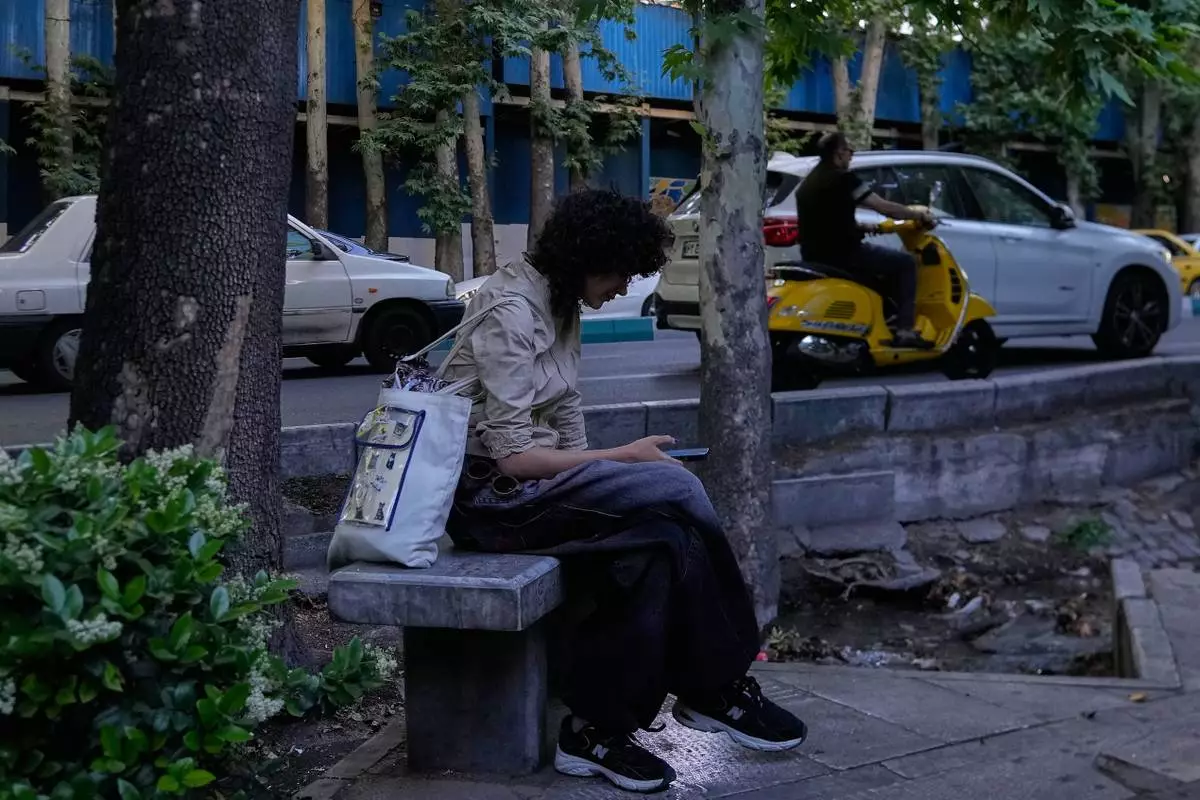
A woman checks her smartphone while sitting on a bench along a sidewalk in northern Tehran, Iran, Tuesday, May 26, 2026. (AP Photo/Vahid Salemi)

A woman checks her smartphone while sitting on a bench along a sidewalk in northern Tehran, Iran, Tuesday, May 26, 2026. (AP Photo/Vahid Salemi)

Recommended Articles