TUKWILA, Wash. (AP) — A man who drove past warning signs was found dead early Tuesday in a car submerged in floodwaters near Seattle, officials said, in the first reported death following a week of heavy rain and flooding in the region.
Rescue swimmers found the driver and his vehicle in about 6 feet (1.8 meter) of water in a ditch in the Snohomish area northeast of Seattle, the Snohomish County Sheriff’s Office said in a news release. The driver, believed to be a 33-year-old man, was pronounced dead at the scene after lifesaving measures failed, officials said. No one else was in the car and the death was under investigation.
During a briefing on flood damage from last week’s storm, Snohomish Regional Fire and Rescue Battalion Chief Jamal Beckham said the majority of calls his crews responded to were from people who tried to drive through water or were stranded atop vehicles.
“They did not understand how rapidly the water rises,” Beckham said Saturday. “We pulled people off the roof of their cars. And if we had not gotten there the car would have been completely covered.”
They also responded to people who didn’t expect their houses to be flooded and did not leave when they were told, he said
The National Weather Service's Weather Prediction Center expects wind, winter and flooding watches and warnings in much of the Northwest for the next couple of days as a series of storm systems bring heavy rain, heavy mountain snow and high winds. The first storm system was set to arrive in the Pacific Northwest on Tuesday night, bringing heavy rainfall from the northern California coast up to western Washington on Wednesday. Heavy snow was forecast for the northern Cascades on Tuesday evening was expected to spread to the southern Cascades Wednesday morning.
Residents near a breached levee in King County, in Washington, were told to leave their homes early Tuesday, just hours after an evacuation alert was lifted for residents near another broken levee in the same county. Police in the city of Pacific, about 20 miles (32 kilometers) south of Seattle, urged those in the evacuation area near the White River to “Go Now!” The National Weather Service office in Seattle issued a flash flood warning for the levee breach until later Tuesday morning.
Faced with the breach, Pacific’s police department put out a call on social media Tuesday morning for a tractor with a bucket capable of reaching 8 feet high, to fill a sandbagging machine. Once the tractor was acquired, the department called for members of the public to help fill sandbags.
A 911 caller who reported water entering an apartment in Pacific around 1:20 a.m. Tuesday was the first sign of the levee breach for the Valley Regional Fire Authority, spokesperson Kelly Hawks said. Crews evacuated about 100 people early Tuesday, pulling some people from the windows of their first-floor apartments, she said.
“That was how quickly the water was coming in," Hawks said, adding that eventually the residents of about 220 homes were told to evacuate. No injuries were reported.
Public works officials were working Tuesday to clear the water and repair the levee so people can return to their homes, she said.
The King County Sheriff’s Office used a helicopter equipped with a loudspeaker and knocked on doors to alert people to the evacuation order, evacuating about 1,200 people overnight, according to Brandyn Hull, communications manager for the sheriff’s office.
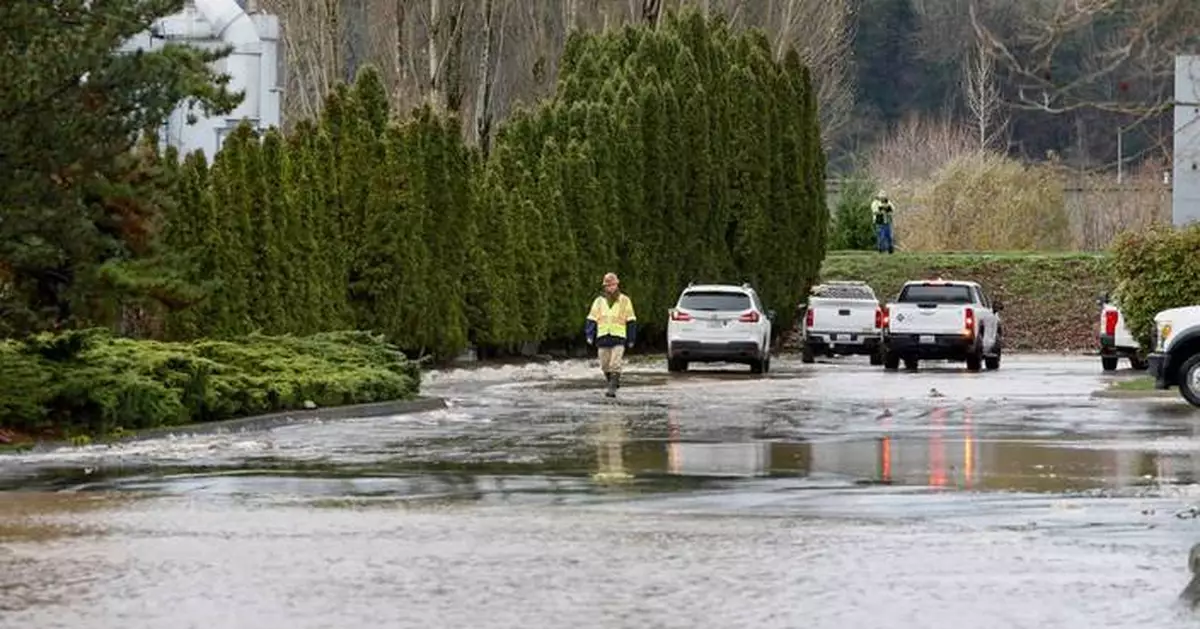
The levee breaches followed days of heavy rain and flooding that inundated communities, forced the evacuations of tens of thousands of people and prompted scores of rescues throughout western Washington state.
On Monday, crews used sandbags to shore up the Desimone levee beside the Green River after a small section of it failed, prompting an evacuation order covering parts of three suburbs, officials said.
The evacuation order from King County was sent to about 1,100 homes and businesses east of the Green River, said Brendan McCluskey, the county’s emergency management director. On Monday evening, King County officials announced that the evacuation alert was lifted east of the Green River and it was safe to return to the area.
Rush reported from Portland, Oregon. Associated Press writer Christopher L. Keller contributed from Albuquerque, New Mexico.
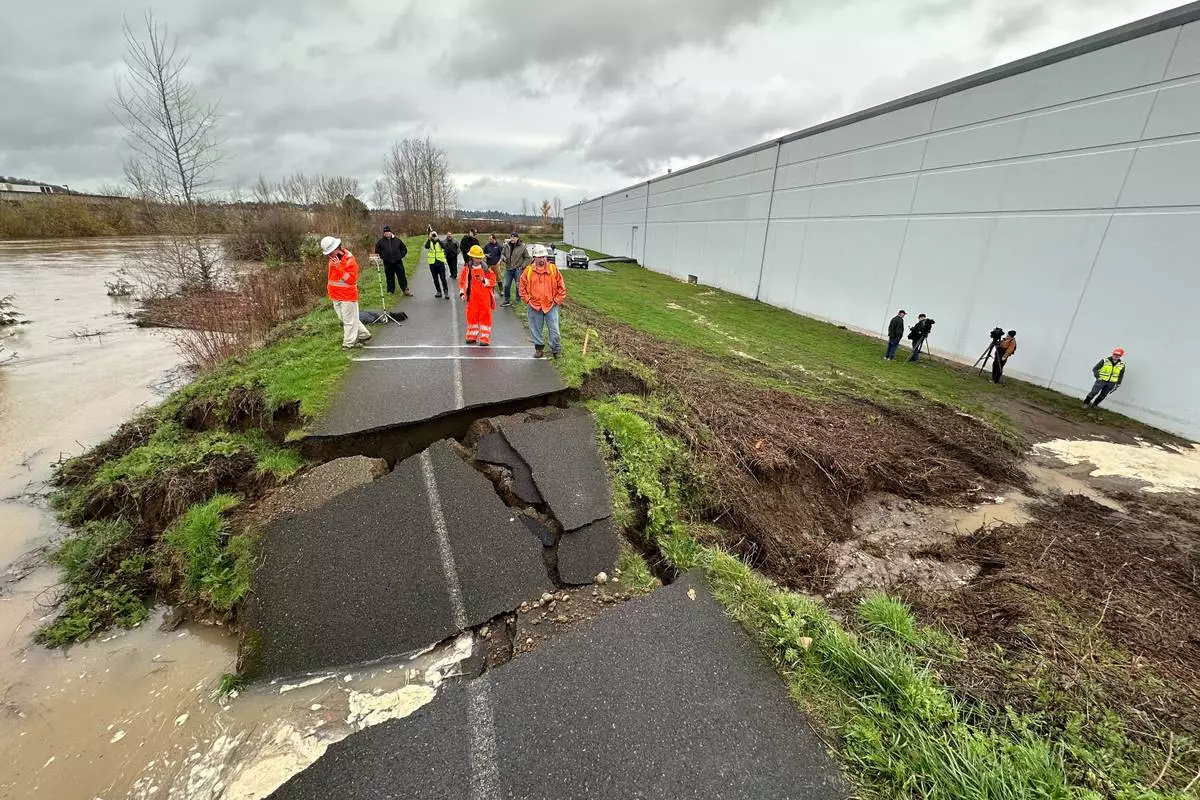
Crews inspect a crack in a levee along the Green River in Tukwila, Wash., Monday, Dec. 15, 2025. (AP Photo/Manuel Valdes)
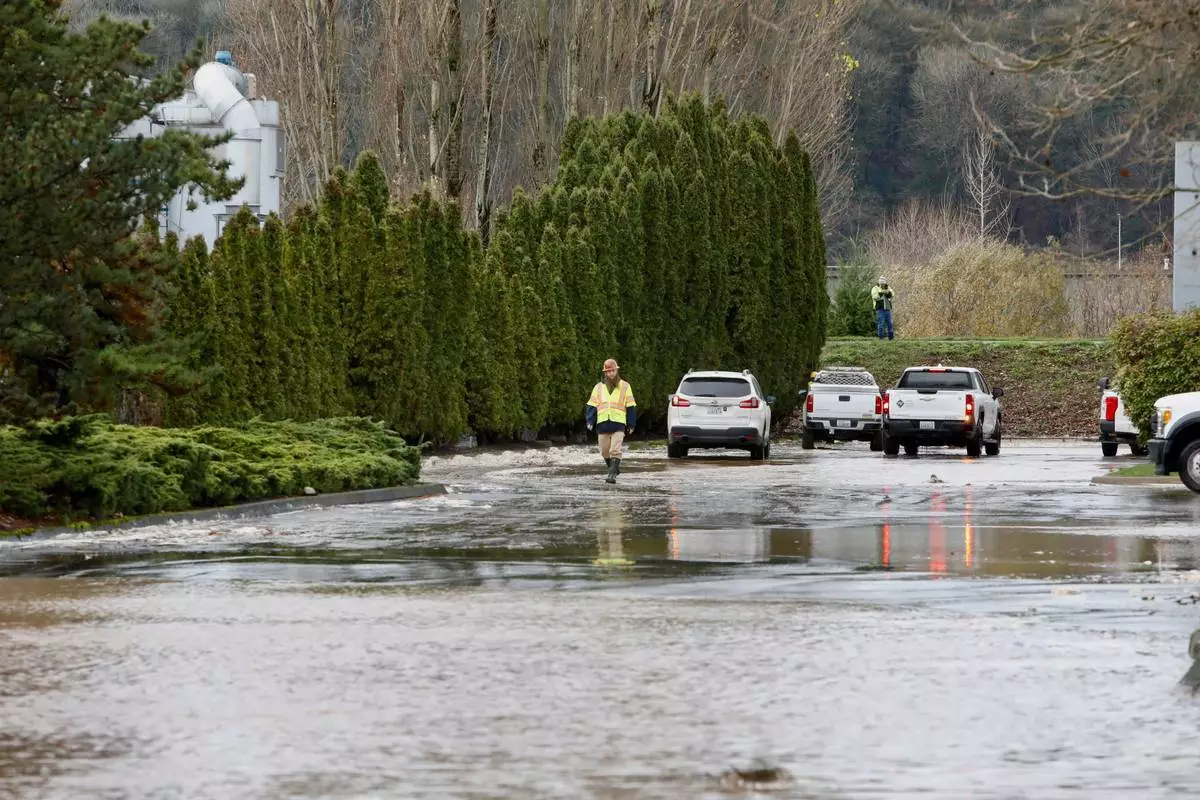
A response team crew member walks by standing water from a levee breach on the Green River in Tukwila, Wash., Monday, Dec. 15, 2025. (AP Photos/Manuel Valdes)
WASHINGTON (AP) — Defense Secretary Pete Hegseth said Tuesday that the Pentagon will not publicly release unedited video of a strike that killed two survivors of an initial attack on a boat allegedly carrying cocaine in the Caribbean.
Hegseth said that members of the House and Senate Armed Services Committees would have an opportunity this week to review the video, but did not say whether all members of Congress would be allowed to see it, even as a defense policy bill demands that it be released to Congress.
“Of course we're not going to release a top secret, full, unedited video of that to the general public,” Hegseth told reporters as he exited a closed-door briefing with senators.
President Donald Trump’s top Cabinet officials overseeing national security were on Capitol Hill Tuesday to defend the swift escalation of U.S. military force and deadly boat strikes in international waters near Venezuela, but it left lawmakers questioning the broader goals of the campaign.
Hegseth, along with Secretary of State Marco Rubio and others, briefed the House and the Senate amid congressional investigations into the military strike in September that killed two survivors. Overall, they defended the campaign as a success that had prevented drugs from reaching American shores.
Rubio told reporters the campaign is a “counter drug mission” that is “focused on dismantling the infrastructure of these terrorist organizations that are operating in our hemisphere , undermining the security of Americans, killing Americans, poisoning Americans.”
But, lawmakers have been focusing on the Sept. 2 attack on two survivors as they sift through the rationale for the broader U.S. military buildup in the region that increasingly appears pointed at Venezuela. On the eve of the briefings, the U.S. military said late Monday it attacked three more boats believed to have been smuggling drugs in the eastern Pacific Ocean, killing eight people.
Senators on both sides of the aisle said the officials left them in the dark about Trump's goals when it comes to Venezuelan President Nicolás Maduro or committing U.S. forces directly to the South American nation.
The closed-door sessions come as the U.S. is building up warships, flying fighter jets near Venezuelan airspace and seizing an oil tanker as part of its campaign against Venezuelan President Nicolás Maduro, who has insisted the real purpose of the U.S. military operations is to force him from office. Trump's Republican administration has not sought any authorization from Congress for action against Venezuela. But lawmakers objecting to the military incursions are pushing war powers resolutions toward potential voting this week.
It’s all raising sharp questions that Hegseth and the others will be pressed to answer. The administration’s go-it-alone approach without Congress, experts say, has led to problematic military actions, none more so than the strike that killed two people who had climbed on top of part of a boat that had been partially destroyed in an initial attack.
“If it’s not a war against Venezuela, then we’re using armed force against civilians who are just committing crimes,” said John Yoo, a Berkeley Law professor who helped craft the President George W. Bush administration's legal arguments and justification for aggressive interrogation after the Sept. 11, 2001, attacks. “Then this question, this worry, becomes really pronounced. You know, you’re shooting civilians. There’s no military purpose for it."
Yet for the first several months, Congress has received little more than a trickle of information about why or how the U.S. military was conducting a campaign that has destroyed more than 20 boats and killed at least 95 people. At times, lawmakers have learned of strikes from social media after the Pentagon posted videos of boats bursting into flames.
Congress is now demanding — including with language included in an annual military policy bill — that the Pentagon release video of that initial operation to lawmakers.
For some, the footage has become a case sample that demonstrates the flawed rationale behind the entire campaign.
“The American public ought to see it. I think shooting unarmed people floundering in the water, clinging to wreckage, is not who we are as a people," said Sen. Rand Paul, a Kentucky Republican who has been an outspoken critic of the campaign. He added that, ”You can’t say you’re at war and say, ‘We’re not going to give any kind of due process to anybody and blow up people without any kind of proof.’"
Hegseth told lawmakers last week that he was still deciding whether to release the footage.
Still, there are also many prominent Republicans who back the campaign. Sen. Jim Risch, the GOP chair of the Senate Foreign Relations Committee, last week called the attacks “absolutely, totally, and 100% legal under U.S. law and international law” and claimed that many American lives had been saved by making sure the drugs didn't reach the U.S.
But as lawmakers have dug into the details of the Sept. 2 strike, inconsistencies have emerged in the Trump administration's explanation of the attack, which the Pentagon initially tried to dismiss as a “completely false” narrative.
Trump has argued that the strike that killed survivors was justified because the people were trying to overturn the boat. Several GOP lawmakers have also put forward that argument, saying that it showed the two survivors were trying to stay in the fight, rather than surrender.
However, Adm. Frank “Mitch” Bradley, who ordered the second strike as he commanded the special forces soldiers conducting it, acknowledged in private briefings on Capitol Hill last week that although the two people had tried to overturn the boat, they were unlikely to succeed. That's according to several people who either were in the briefings or had knowledge of them and spoke on the condition of anonymity because they were not authorized to discuss them.
The two people had climbed on top of the overturned boat, had not made any radio or cellphone calls for backup and were waving, Bradley told the lawmakers. The Navy admiral consulted with a military attorney, then ordered the second strike because it was believed that drugs were in the hull of the boat and the mission was to make sure they were destroyed.
Experts say the strike seems to run counter to the Pentagon’s own manual on the laws of war, which states that “orders to fire upon the shipwrecked would be clearly illegal.”
“The boat was damaged, the boat was overturned, and the boat had no power,” said Michael Schmitt, a former Air Force lawyer and professor emeritus at the U.S. Naval War College. “I really don’t care if there was another boat coming to rescue them. They’re shipwrecked.”
The argument at the heart of Trump's campaign — that drugs bound for the U.S. are the equivalent of an attack on American lives — has resulted in lawmakers trying to parse whether laws were violated and, more broadly, what Trump's goals are with Venezuela.
Besides the briefings from Hegseth and Rubio on Tuesday, Bradley is also expected to appear for classified briefings with the Senate and House Armed Services Committees on Wednesday.
Sen. Thom Tillis, a North Carolina Republican, said he wants to “really understand what action, what intelligence they were acting on and whether or not they follow the laws of war, the laws of the sea."
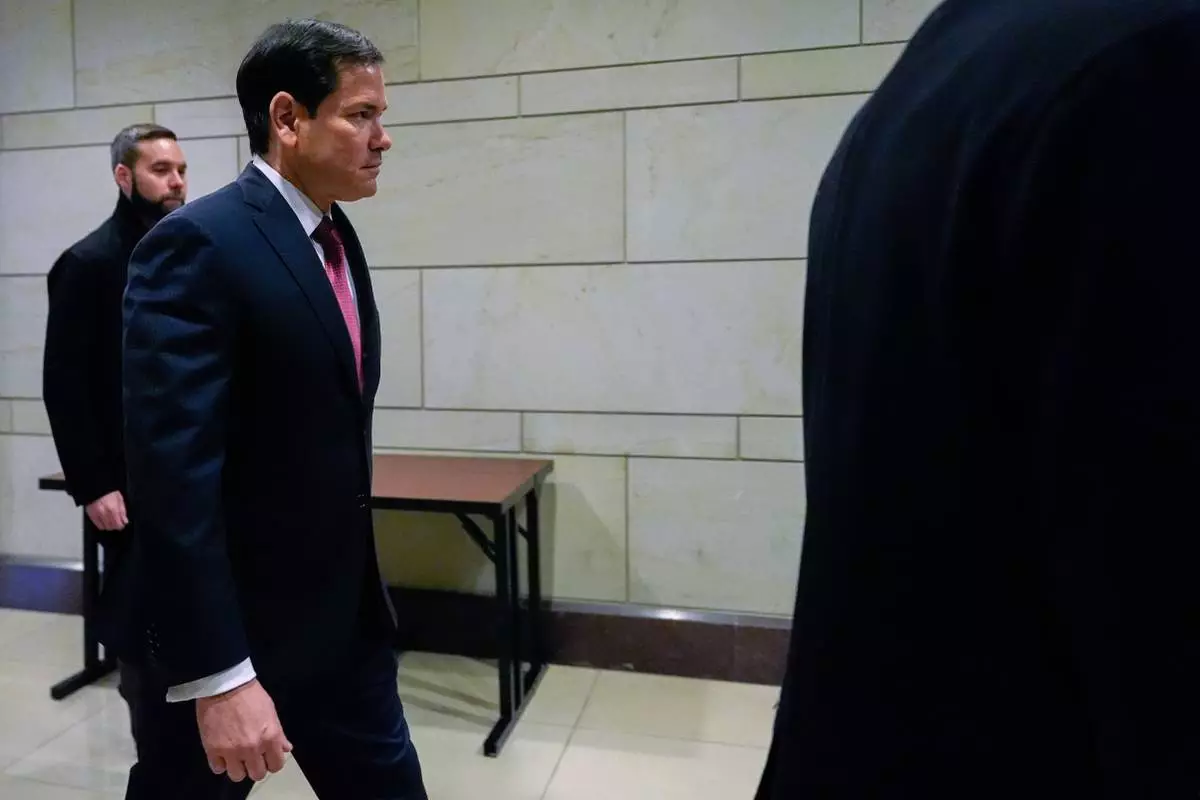
Secretary of State Marco Rubio arrives to brief members of Congress on military strikes near Venezuela, Tuesday, Dec. 16, 2025, at the Capitol in Washington. (AP Photo/Julia Demaree Nikhinson)
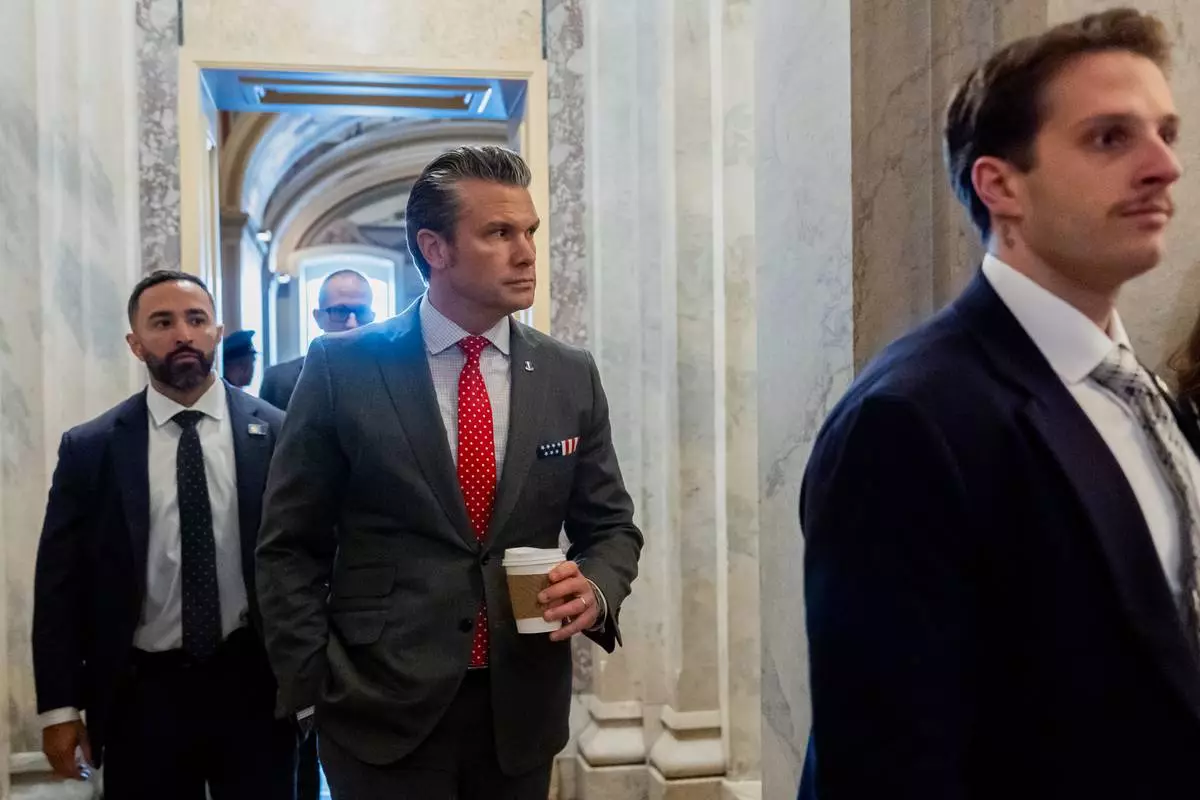
Defense Secretary Pete Hegseth departs the Capitol after briefing members of Congress on military strikes near Venezuela, Tuesday, Dec. 16, 2025, in Washington. (AP Photo/Julia Demaree Nikhinson)
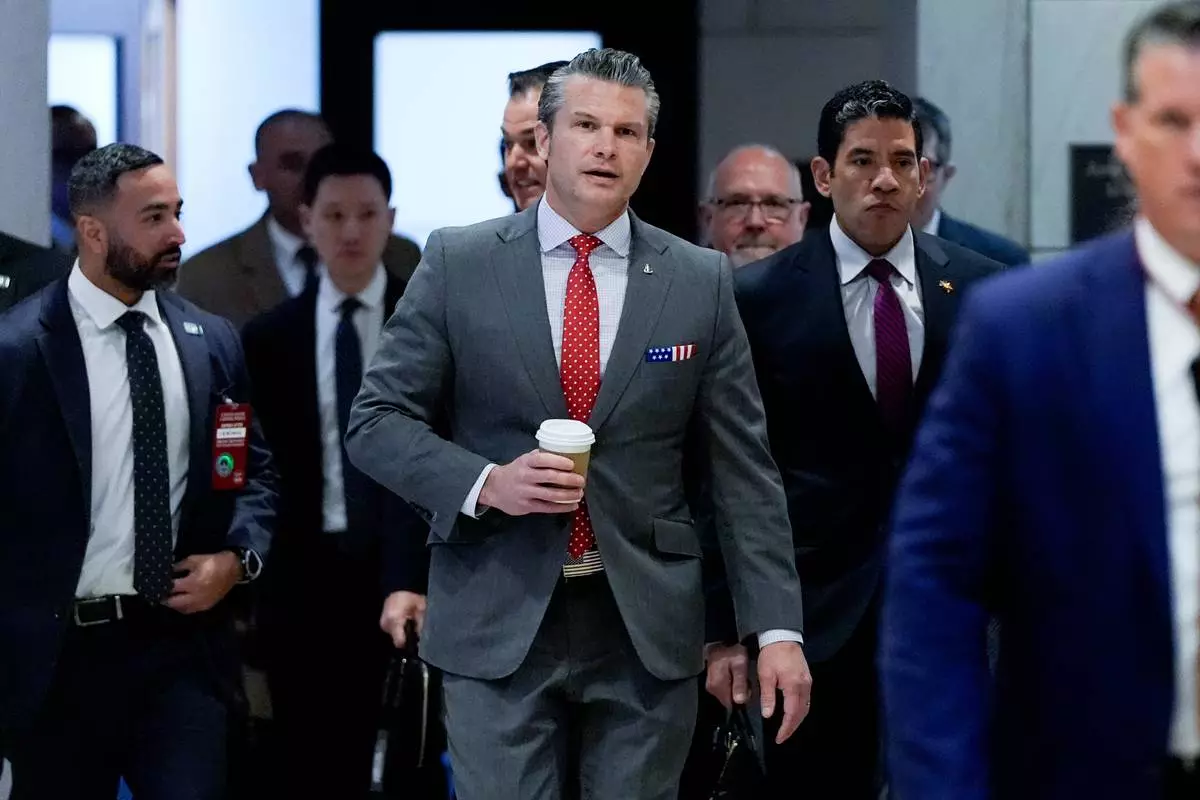
Defense Secretary Pete Hegseth arrives to brief members of Congress on military strikes near Venezuela, Tuesday, Dec. 16, 2025, at the Capitol in Washington. (AP Photo/Julia Demaree Nikhinson)
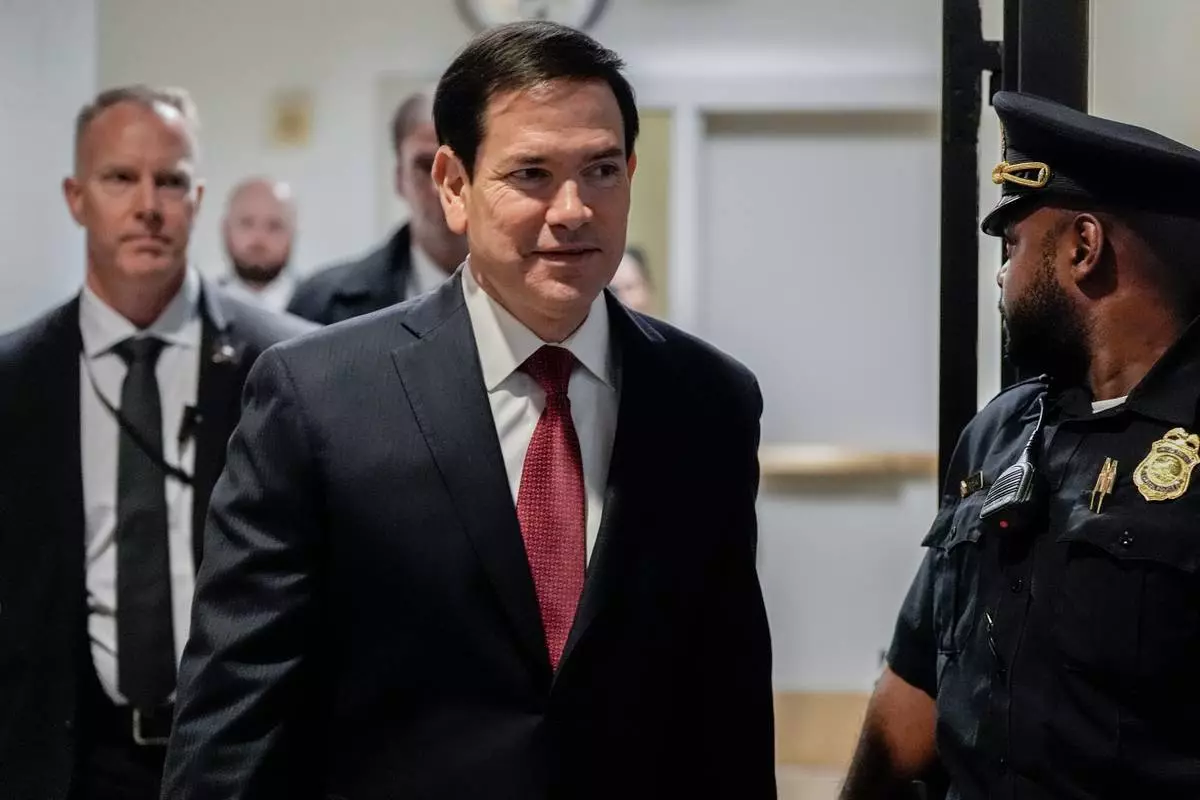
Secretary of State Marco Rubio walks to a secure room in the basement of the Capitol to brief senators on military strikes near Venezuela, Tuesday, Dec. 16, 2025, in Washington. (AP Photo/Julia Demaree Nikhinson)
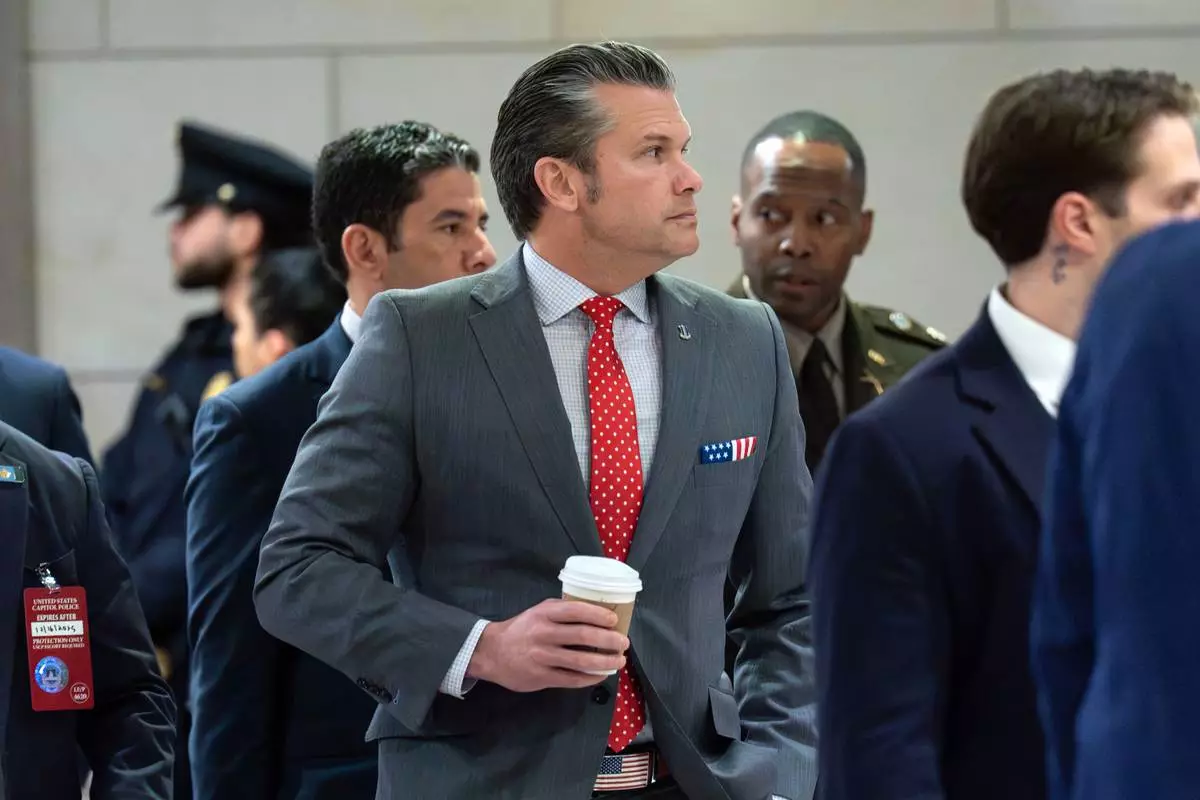
Defense Secretary Pete Hegseth walks to the auditorium to brief members of congress on military strikes near Venezuela at the Capitol, Tuesday, Dec. 16, 2025, in Washington. (AP Photo/Jose Luis Magana)
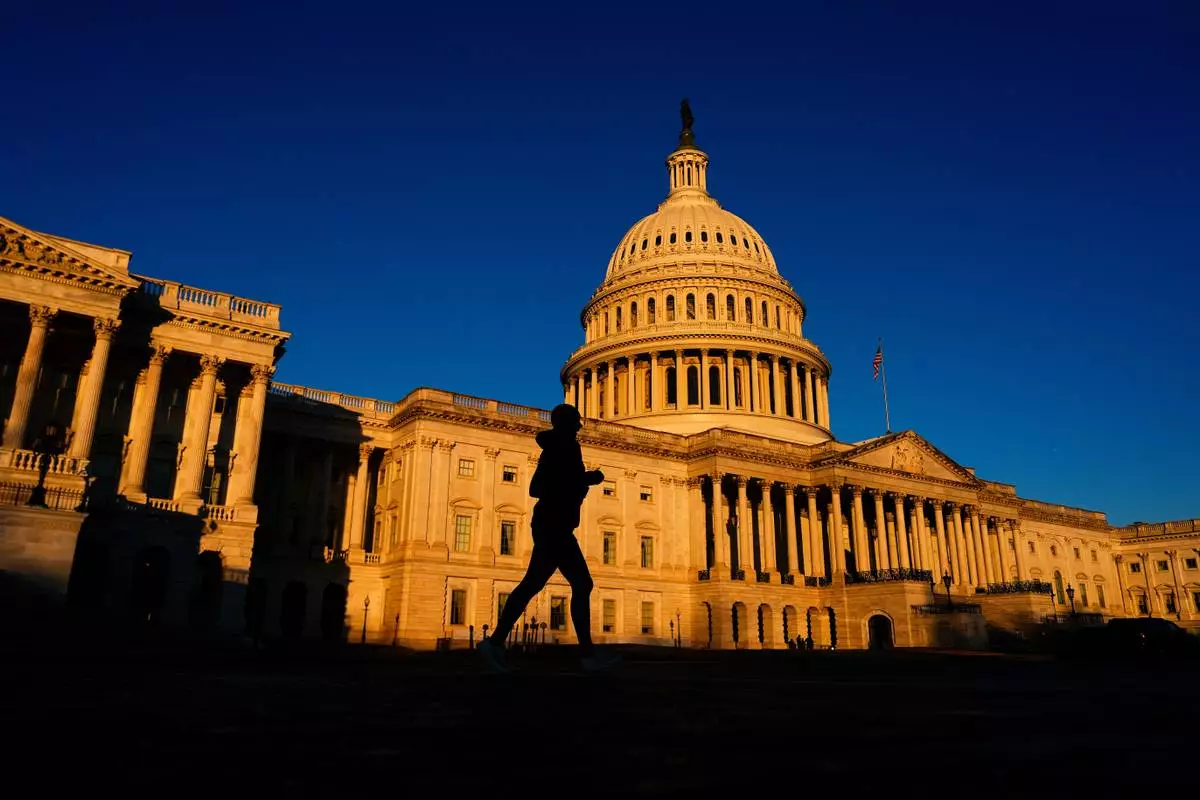
A runner jogs past the U.S. Capitol shortly after sunrise, Tuesday, Dec. 16, 2025, in Washington. (AP Photo/Julia Demaree Nikhinson)
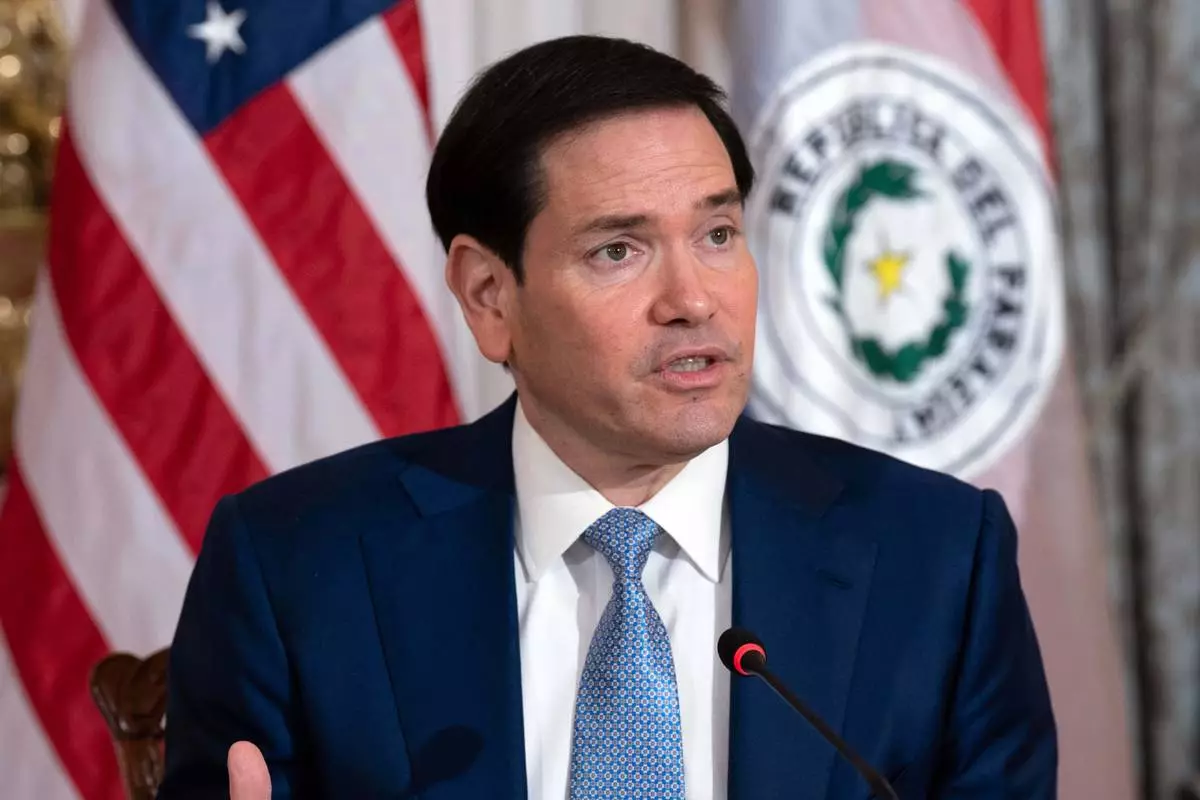
Secretary of State Marco Rubio, accompanied by Paraguay's Foreign Minister Rubén Ramírez Lezcano, speaks during the signing ceremony of the United States-Paraguay Status of Forces Agreement at the State Department in Washington, Monday, Dec. 15, 2025. (AP Photo/Jose Luis Magana)
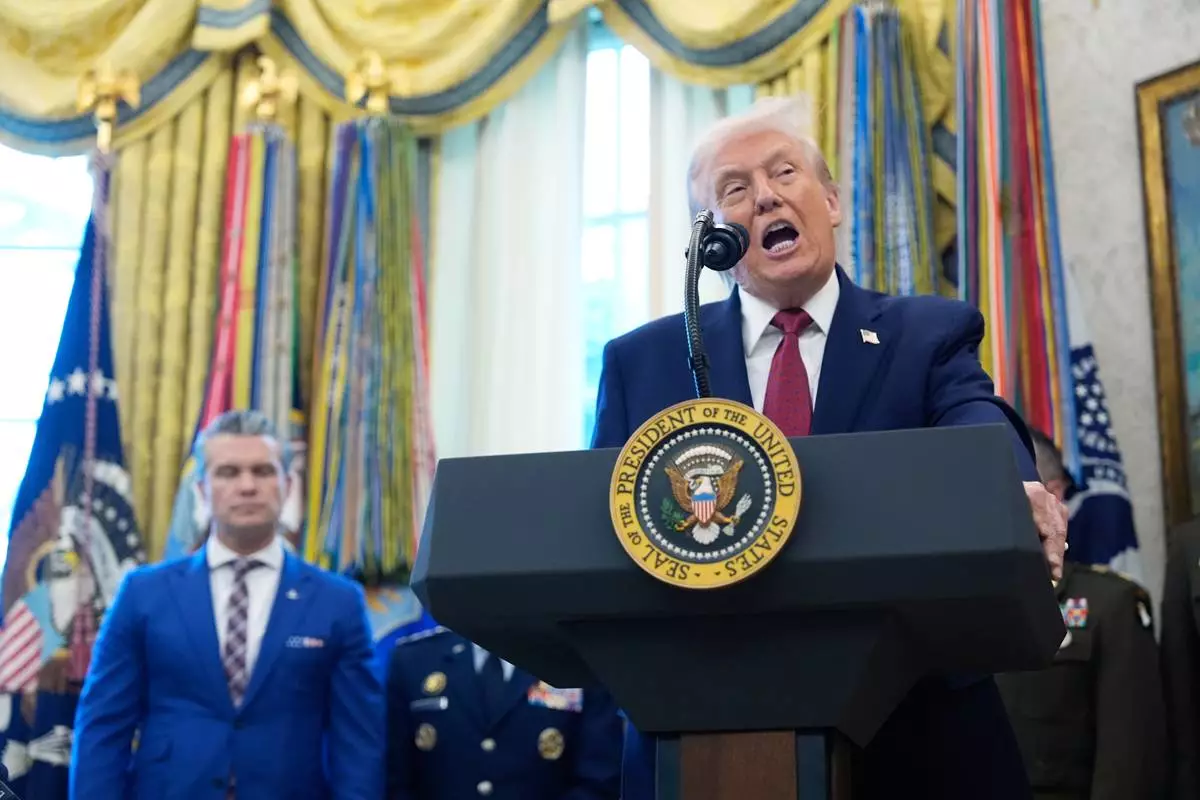
President Donald Trump speaks during a Mexican Border Defense Medal presentation in the Oval Office of the White House, Monday, Dec. 15, 2025, in Washington, as Defense Secretary Pete Hegseth, looks on. (AP Photo/Alex Brandon)
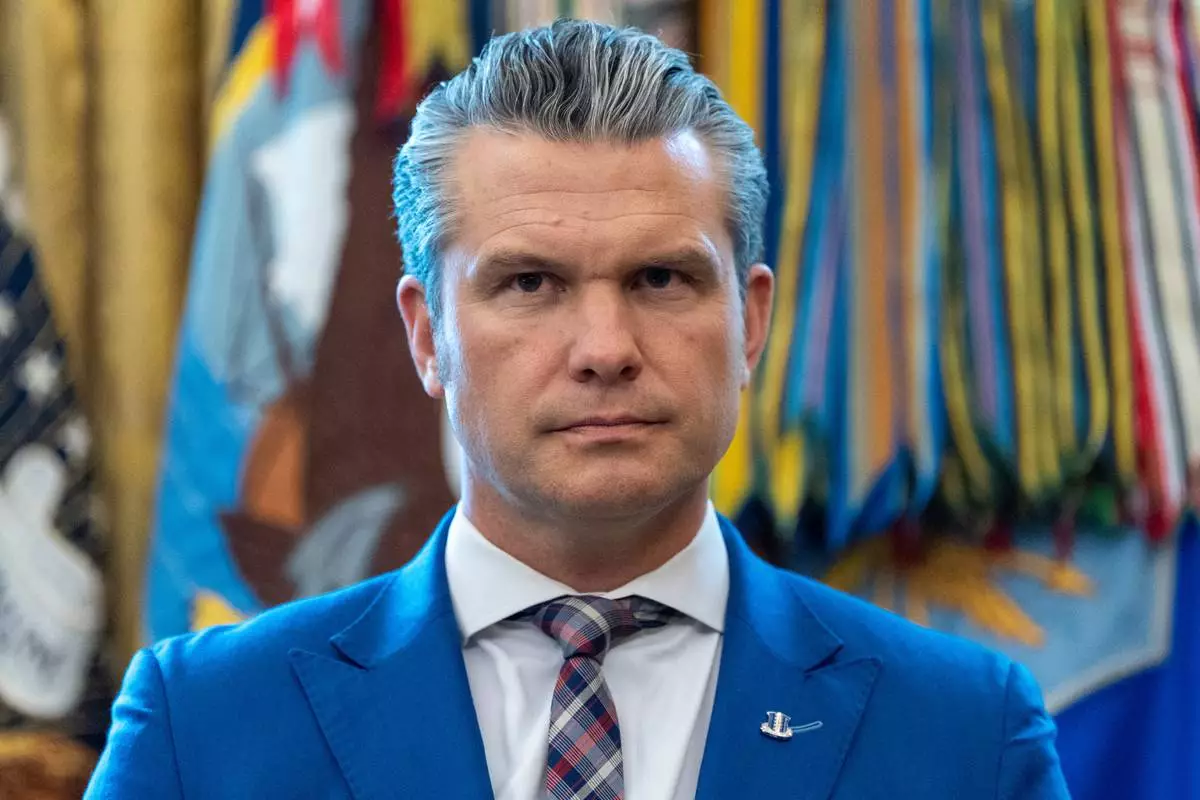
Defense Secretary Pete Hegseth listens as President Donald Trump speaks during a Mexican Border Defense Medal presentation in the Oval Office of the White House, Monday, Dec. 15, 2025, in Washington. (AP Photo/Alex Brandon)