WARRENVILLE, Ill.--(BUSINESS WIRE)--Dec 16, 2025--
The Nuclear Regulatory Commission (NRC) has approved a 20-year initial license renewal for Constellation’s Clinton Clean Energy Center and a 20-year subsequent license renewal for its Dresden Clean Energy Center, following a rigorous review of maintenance activities, plant equipment and safety systems at the two Illinois facilities. The approvals allow Clinton to operate through 2047 and the Dresden reactors to operate through 2049 and 2051. Constellation, the nation’s largest operator of clean, reliable nuclear power, is investing more than $370 million to relicense the plants, installing state-of-the-art upgrades to increase efficiency and ensure safety and reliability for decades to come.
This press release features multimedia. View the full release here: https://www.businesswire.com/news/home/20251215522353/en/
“In the last ten years, we’ve invested over $3 billion in our high-performing Illinois nuclear facilities to power the state’s economy with clean, reliable energy,” said Bryan Hanson, Constellation Executive Vice President and Chief Generation Officer. “These license extensions will allow Clinton and Dresden to stay online for another two decades, preserving more than 2,200 family-sustaining jobs and $8.1 billion in federal, state and local tax dollars."
“Today’s announcement is a win for workers, communities, and Illinois’ clean energy future,” said Sean McGarvey, President of North America’s Building Trades Union (NABTU). “By renewing the operating licenses for the Clinton and Dresden clean energy centers, Constellation is ensuring decades of good union jobs while delivering reliable, carbon-free power. Our highly skilled members are proud to operate and maintain these plants safely every day. NABTU, the IBEW and all our affiliates value this long-term commitment, which demonstrates the success of labor and industry working together effectively to deliver the energy solutions our nation needs.”
At Clinton, two new auxiliary transformers and two advanced equipment chillers are delivering higher system reliability, while upgrades to the plant’s condensate polisher system offer greater protection from component degradation. At Dresden, operators are now using next-generation feedwater level control technology to enhance reactor safety, while a new main power transformer purchased for the plant will deliver state-of-the art electrical system monitoring and control. With these and other upgrades in place, Clinton and Dresden continue to operate at higher levels of safety, reliability and efficiency than the day they came online.
“We are looking forward to many more years of collaboration with the Clinton Clean Energy Center,” said Clinton Mayor Helen Michelassi. “We are so proud to have Constellation in our community and look forward to decades of impactful support for volunteer events and non-profit work to benefit the region.”
While these license renewals give Constellation the regulatory approval needed to operate Clinton and Dresden for another two decades, actual operation is contingent on each plant’s financial viability. At Clinton, the facility’s carbon-free energy is secure as a result of the 20-year agreement with Meta announced in August. The deal supports the continued operation, expansion and relicensing of the 1,121-megawatt Clinton facility following the expiration of the state’s Zero Emission Credit (ZEC) program in May 2027.
“The renewal of Dresden’s operating license reinforces this region’s standing as a hub for business growth and industrial innovation,” said Nancy Norton, president and CEO of Grundy County Economic Development. “Reliable, emissions-free energy is the foundation of economic progress, and the Dresden Clean Energy Center plays a vital role in keeping our communities and the businesses that depend on them moving forward. As new industries look to invest and expand in Grundy County, Dresden’s continued operation ensures that our region remains competitive, resilient, and ready for the future. It’s a win for our community and a step toward a stronger future for everyone who calls this region home."
Constellation’s clean energy portfolio includes 26 nuclear reactors in six states, and the company is investing billions to keep America’s largest nuclear fleet running at world-class levels of safety, reliability and efficiency.
About Constellation
Constellation Energy Corporation (Nasdaq: CEG), a Fortune 200 company headquartered in Baltimore, is the nation’s largest producer of reliable, emissions-free energy and a leading energy supplier to businesses, homes and public sector customers nationwide, including three-fourths of Fortune 100 companies. With annual output that is nearly 90% carbon-free, our hydro, wind and solar facilities paired with the nation’s largest nuclear fleet have the generating capacity to power the equivalent of 16 million homes, providing about 10% of the nation’s clean energy. We are committed to investing in innovative technologies to drive the transition to a reliable, sustainable and secure energy future. Follow Constellation on LinkedIn and X.

Constellation's Clinton Clean Energy Center (left) and Dresden Clean Energy Center
WASHINGTON (AP) — Defense Secretary Pete Hegseth said Tuesday that the Pentagon will not publicly release unedited video of a strike that killed two survivors of an initial attack on a boat allegedly carrying cocaine in the Caribbean.
Hegseth said that members of the House and Senate Armed Services Committees would have an opportunity this week to review the video, but did not say whether all members of Congress would be allowed to see it, even as a defense policy bill demands that it be released to Congress.
“Of course we're not going to release a top secret, full, unedited video of that to the general public,” Hegseth told reporters as he exited a closed-door briefing with senators.
President Donald Trump’s top Cabinet officials overseeing national security were on Capitol Hill Tuesday to defend the swift escalation of U.S. military force and deadly boat strikes in international waters near Venezuela, but it left lawmakers questioning the broader goals of the campaign.
Hegseth, along with Secretary of State Marco Rubio and others, briefed the House and the Senate amid congressional investigations into the military strike in September that killed two survivors. Overall, they defended the campaign as a success that had prevented drugs from reaching American shores.
Rubio told reporters the campaign is a “counter drug mission” that is “focused on dismantling the infrastructure of these terrorist organizations that are operating in our hemisphere , undermining the security of Americans, killing Americans, poisoning Americans.”
But, lawmakers have been focusing on the Sept. 2 attack on two survivors as they sift through the rationale for the broader U.S. military buildup in the region that increasingly appears pointed at Venezuela. On the eve of the briefings, the U.S. military said late Monday it attacked three more boats believed to have been smuggling drugs in the eastern Pacific Ocean, killing eight people.
Senators on both sides of the aisle said the officials left them in the dark about Trump's goals when it comes to Venezuelan President Nicolás Maduro or committing U.S. forces directly to the South American nation.
The closed-door sessions come as the U.S. is building up warships, flying fighter jets near Venezuelan airspace and seizing an oil tanker as part of its campaign against Venezuelan President Nicolás Maduro, who has insisted the real purpose of the U.S. military operations is to force him from office. Trump's Republican administration has not sought any authorization from Congress for action against Venezuela. But lawmakers objecting to the military incursions are pushing war powers resolutions toward potential voting this week.
It’s all raising sharp questions that Hegseth and the others will be pressed to answer. The administration’s go-it-alone approach without Congress, experts say, has led to problematic military actions, none more so than the strike that killed two people who had climbed on top of part of a boat that had been partially destroyed in an initial attack.
“If it’s not a war against Venezuela, then we’re using armed force against civilians who are just committing crimes,” said John Yoo, a Berkeley Law professor who helped craft the President George W. Bush administration's legal arguments and justification for aggressive interrogation after the Sept. 11, 2001, attacks. “Then this question, this worry, becomes really pronounced. You know, you’re shooting civilians. There’s no military purpose for it."
Yet for the first several months, Congress has received little more than a trickle of information about why or how the U.S. military was conducting a campaign that has destroyed more than 20 boats and killed at least 95 people. At times, lawmakers have learned of strikes from social media after the Pentagon posted videos of boats bursting into flames.
Congress is now demanding — including with language included in an annual military policy bill — that the Pentagon release video of that initial operation to lawmakers.
For some, the footage has become a case sample that demonstrates the flawed rationale behind the entire campaign.
“The American public ought to see it. I think shooting unarmed people floundering in the water, clinging to wreckage, is not who we are as a people," said Sen. Rand Paul, a Kentucky Republican who has been an outspoken critic of the campaign. He added that, ”You can’t say you’re at war and say, ‘We’re not going to give any kind of due process to anybody and blow up people without any kind of proof.’"
Hegseth told lawmakers last week that he was still deciding whether to release the footage.
Still, there are also many prominent Republicans who back the campaign. Sen. Jim Risch, the GOP chair of the Senate Foreign Relations Committee, last week called the attacks “absolutely, totally, and 100% legal under U.S. law and international law” and claimed that many American lives had been saved by making sure the drugs didn't reach the U.S.
But as lawmakers have dug into the details of the Sept. 2 strike, inconsistencies have emerged in the Trump administration's explanation of the attack, which the Pentagon initially tried to dismiss as a “completely false” narrative.
Trump has argued that the strike that killed survivors was justified because the people were trying to overturn the boat. Several GOP lawmakers have also put forward that argument, saying that it showed the two survivors were trying to stay in the fight, rather than surrender.
However, Adm. Frank “Mitch” Bradley, who ordered the second strike as he commanded the special forces soldiers conducting it, acknowledged in private briefings on Capitol Hill last week that although the two people had tried to overturn the boat, they were unlikely to succeed. That's according to several people who either were in the briefings or had knowledge of them and spoke on the condition of anonymity because they were not authorized to discuss them.
The two people had climbed on top of the overturned boat, had not made any radio or cellphone calls for backup and were waving, Bradley told the lawmakers. The Navy admiral consulted with a military attorney, then ordered the second strike because it was believed that drugs were in the hull of the boat and the mission was to make sure they were destroyed.
Experts say the strike seems to run counter to the Pentagon’s own manual on the laws of war, which states that “orders to fire upon the shipwrecked would be clearly illegal.”
“The boat was damaged, the boat was overturned, and the boat had no power,” said Michael Schmitt, a former Air Force lawyer and professor emeritus at the U.S. Naval War College. “I really don’t care if there was another boat coming to rescue them. They’re shipwrecked.”
The argument at the heart of Trump's campaign — that drugs bound for the U.S. are the equivalent of an attack on American lives — has resulted in lawmakers trying to parse whether laws were violated and, more broadly, what Trump's goals are with Venezuela.
Besides the briefings from Hegseth and Rubio on Tuesday, Bradley is also expected to appear for classified briefings with the Senate and House Armed Services Committees on Wednesday.
Sen. Thom Tillis, a North Carolina Republican, said he wants to “really understand what action, what intelligence they were acting on and whether or not they follow the laws of war, the laws of the sea."
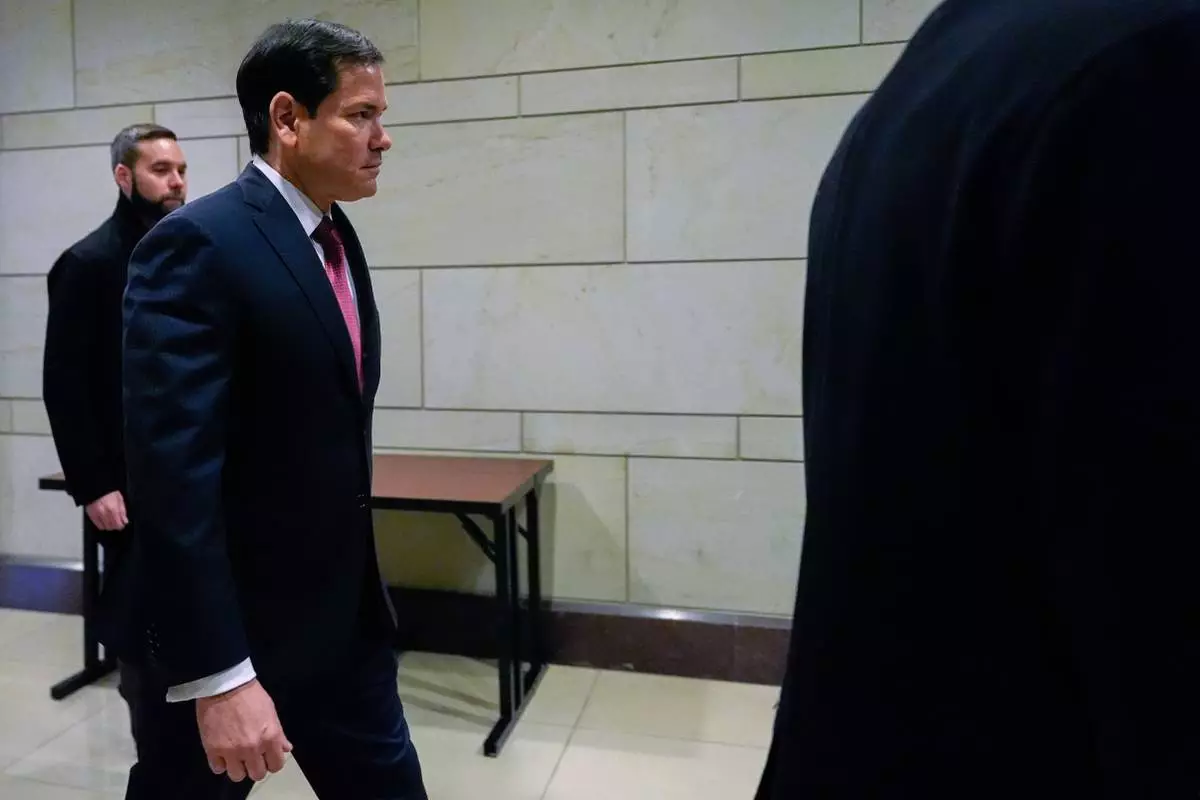
Secretary of State Marco Rubio arrives to brief members of Congress on military strikes near Venezuela, Tuesday, Dec. 16, 2025, at the Capitol in Washington. (AP Photo/Julia Demaree Nikhinson)
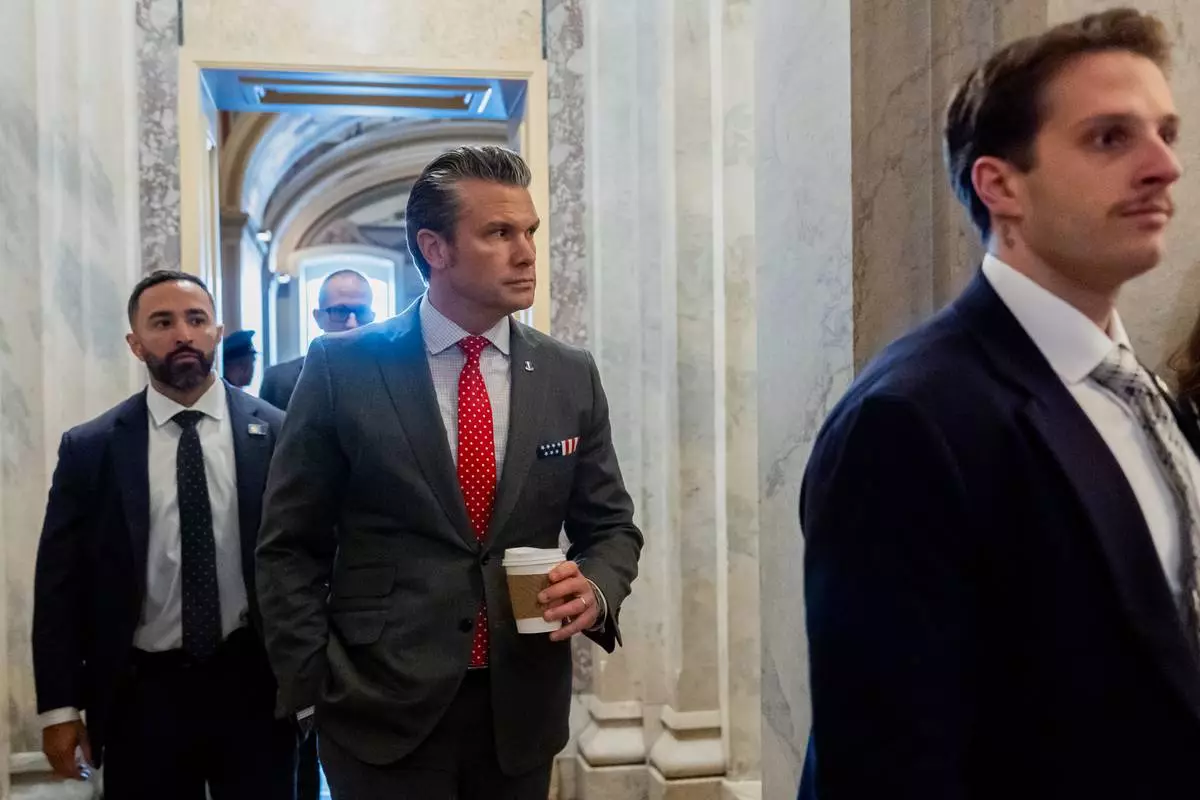
Defense Secretary Pete Hegseth departs the Capitol after briefing members of Congress on military strikes near Venezuela, Tuesday, Dec. 16, 2025, in Washington. (AP Photo/Julia Demaree Nikhinson)
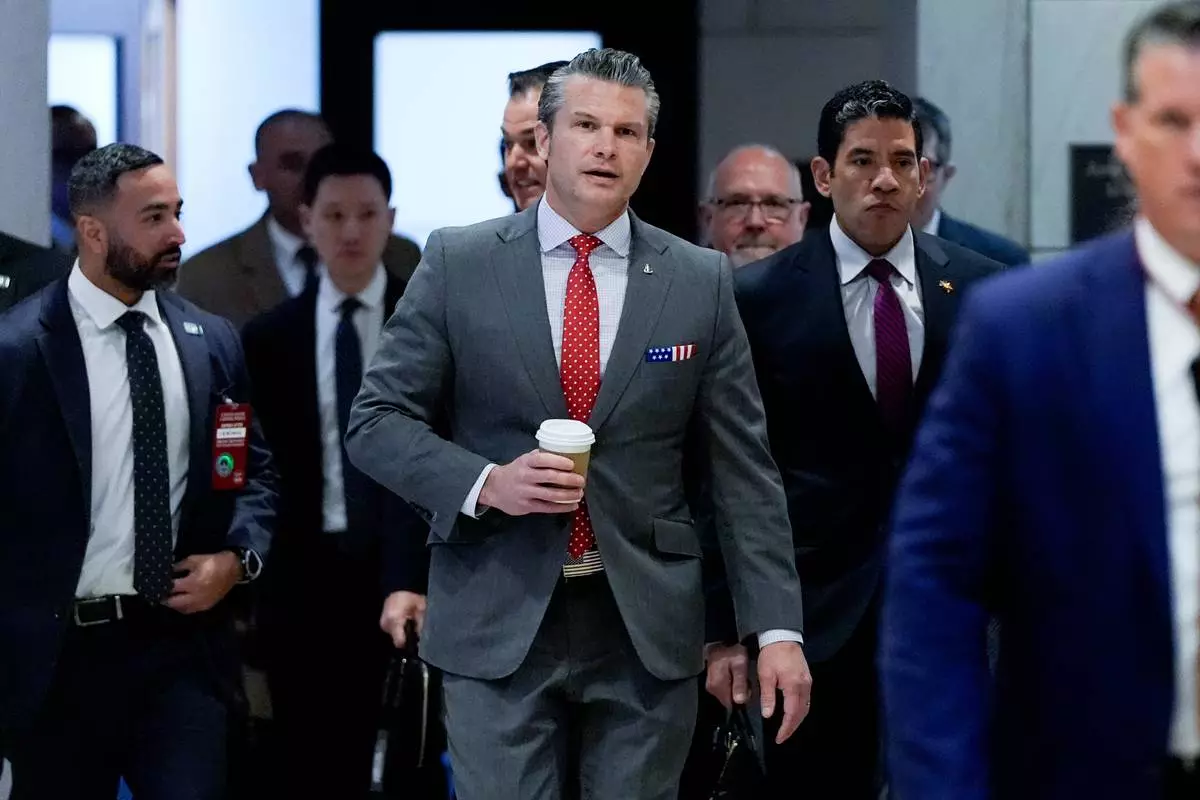
Defense Secretary Pete Hegseth arrives to brief members of Congress on military strikes near Venezuela, Tuesday, Dec. 16, 2025, at the Capitol in Washington. (AP Photo/Julia Demaree Nikhinson)
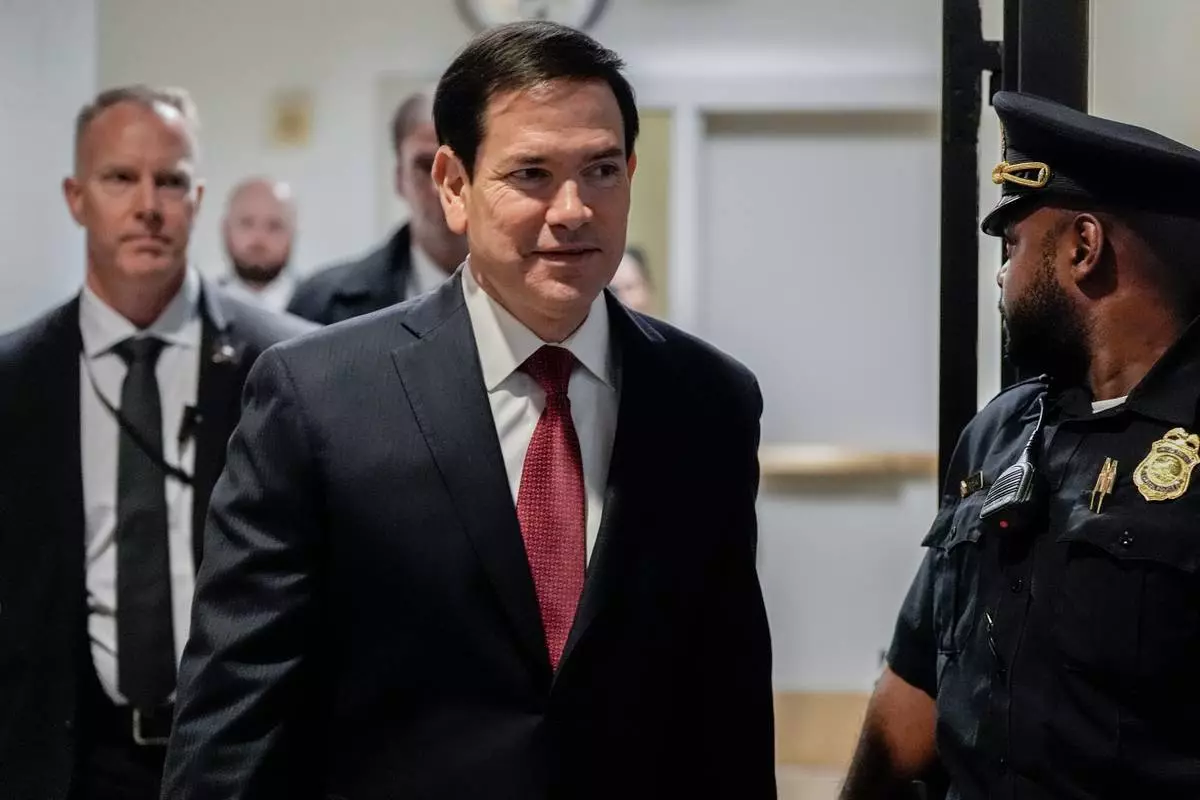
Secretary of State Marco Rubio walks to a secure room in the basement of the Capitol to brief senators on military strikes near Venezuela, Tuesday, Dec. 16, 2025, in Washington. (AP Photo/Julia Demaree Nikhinson)
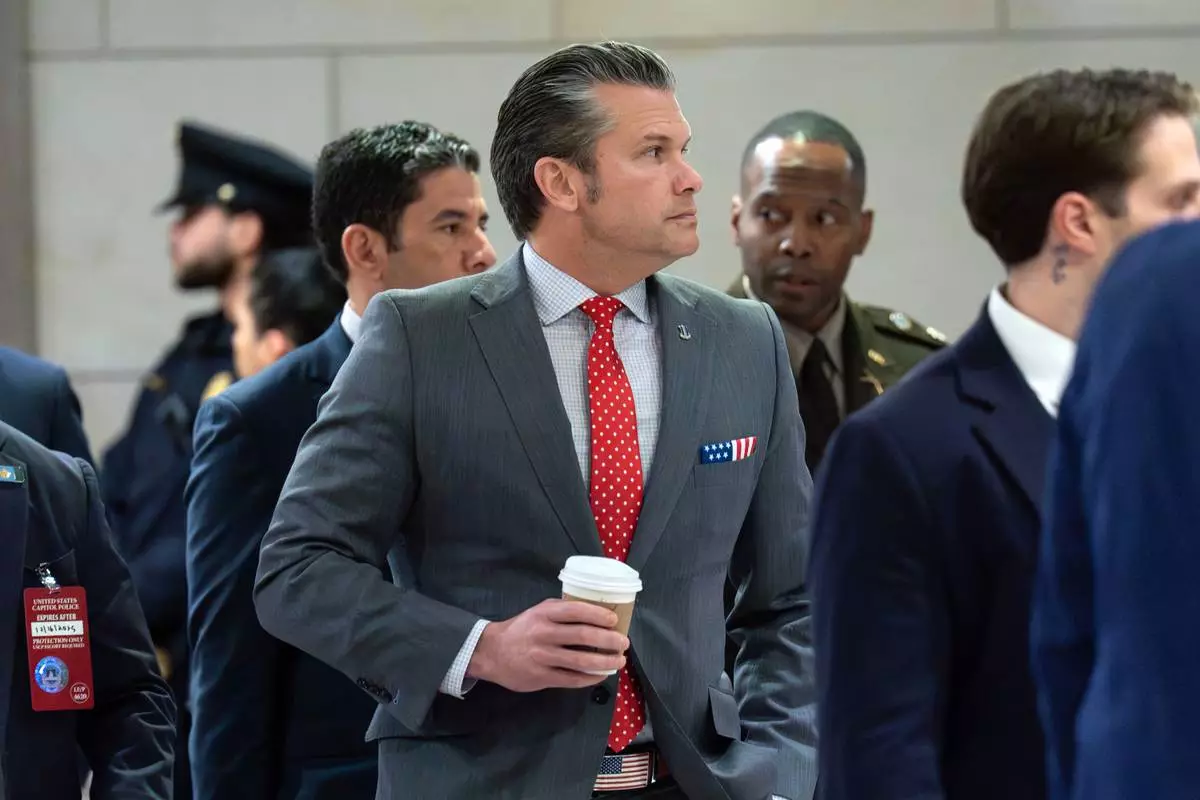
Defense Secretary Pete Hegseth walks to the auditorium to brief members of congress on military strikes near Venezuela at the Capitol, Tuesday, Dec. 16, 2025, in Washington. (AP Photo/Jose Luis Magana)
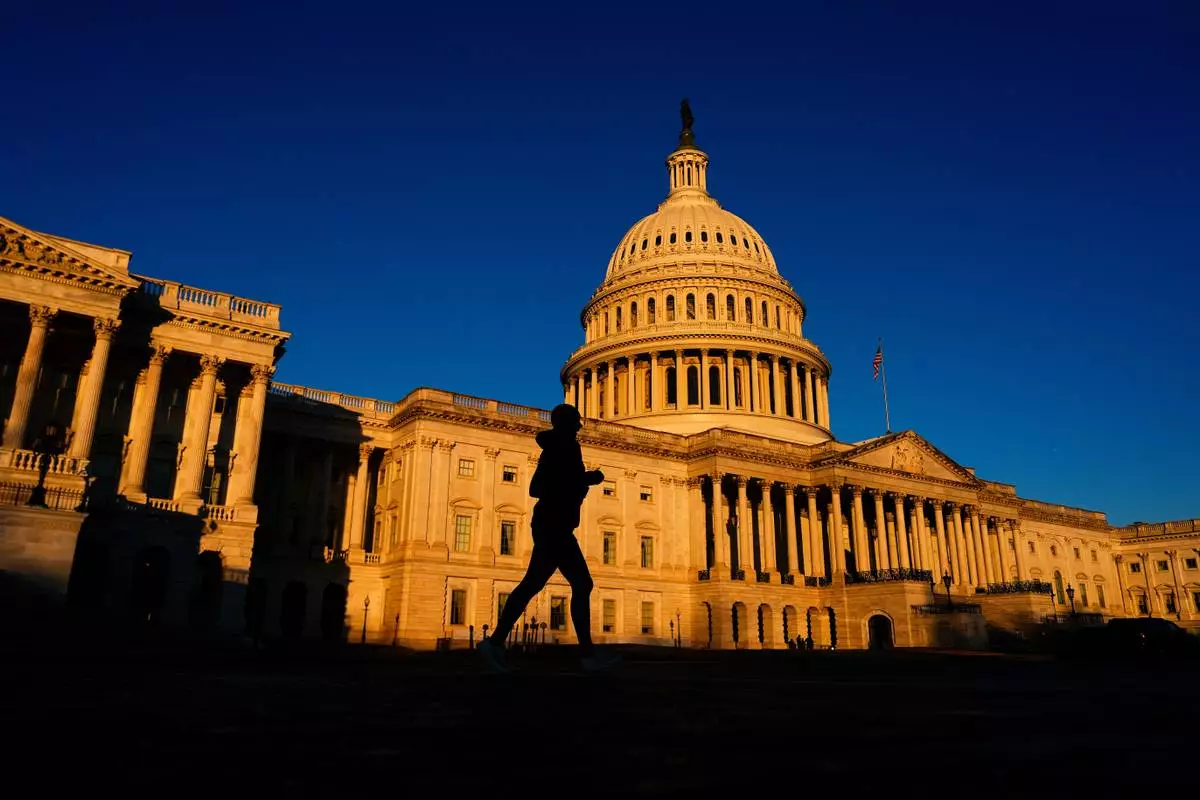
A runner jogs past the U.S. Capitol shortly after sunrise, Tuesday, Dec. 16, 2025, in Washington. (AP Photo/Julia Demaree Nikhinson)
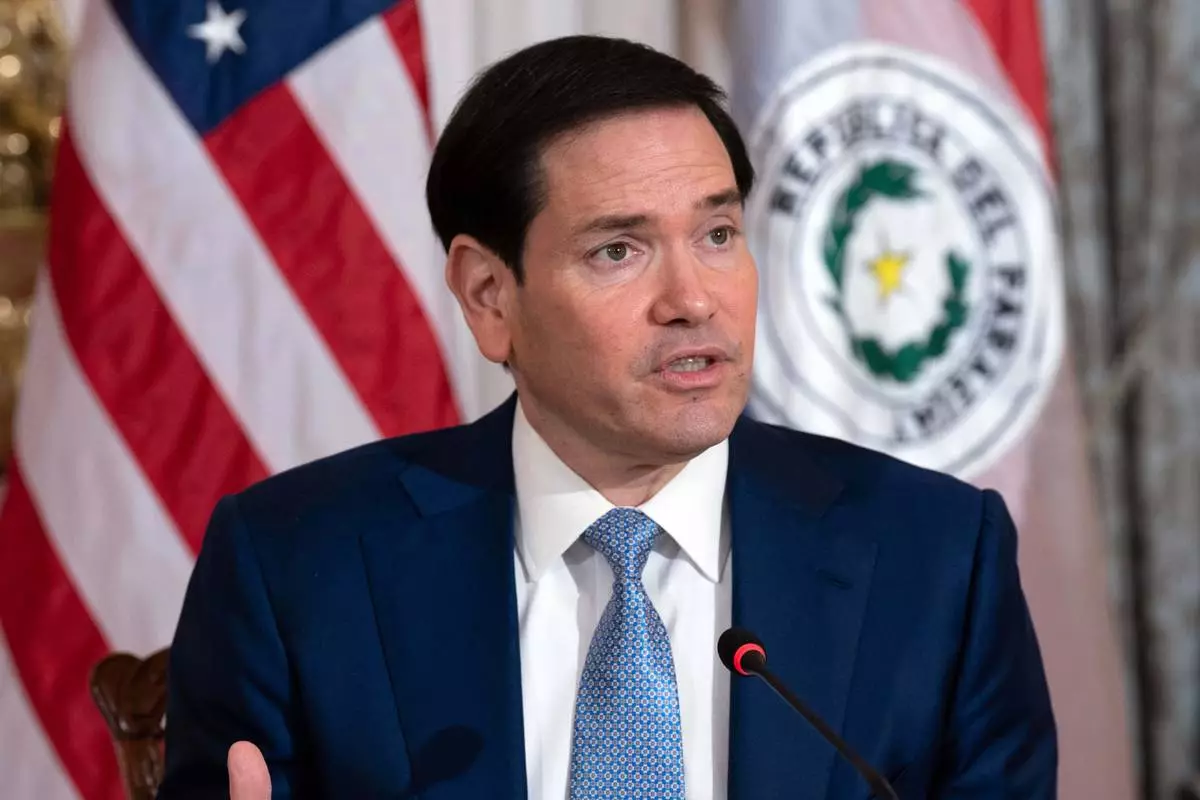
Secretary of State Marco Rubio, accompanied by Paraguay's Foreign Minister Rubén Ramírez Lezcano, speaks during the signing ceremony of the United States-Paraguay Status of Forces Agreement at the State Department in Washington, Monday, Dec. 15, 2025. (AP Photo/Jose Luis Magana)
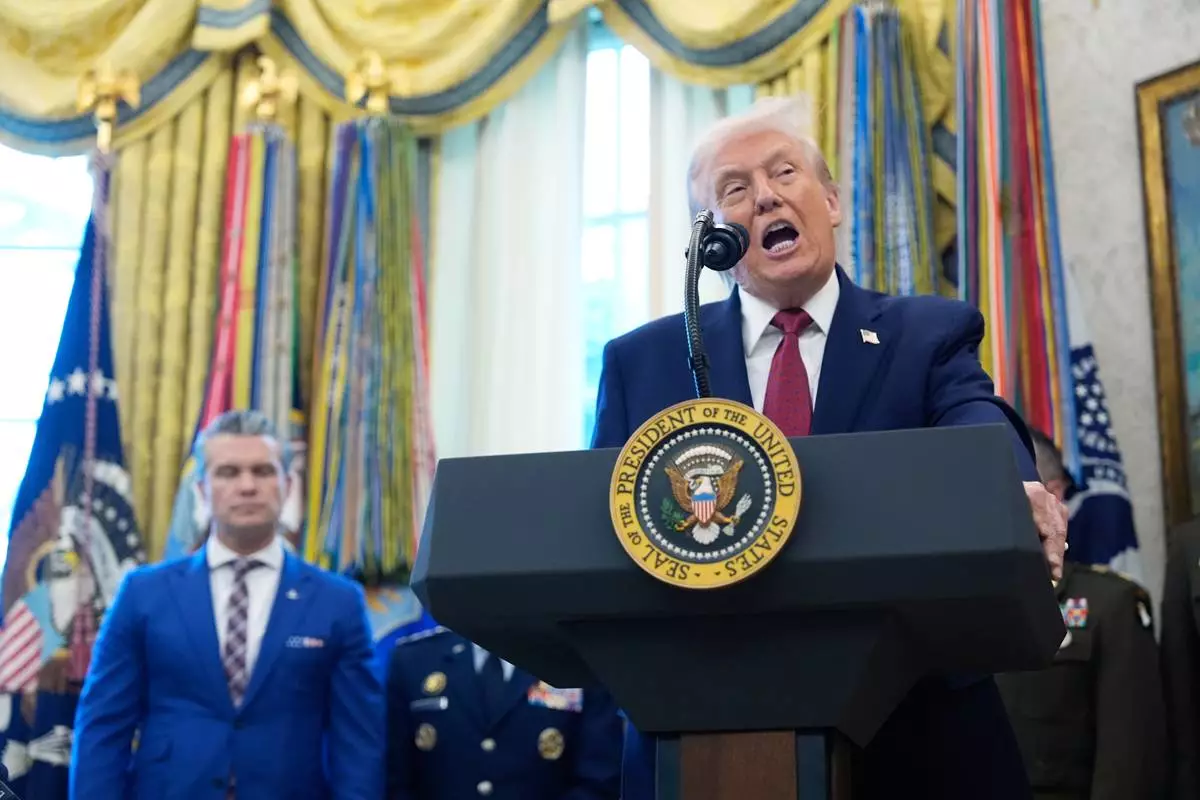
President Donald Trump speaks during a Mexican Border Defense Medal presentation in the Oval Office of the White House, Monday, Dec. 15, 2025, in Washington, as Defense Secretary Pete Hegseth, looks on. (AP Photo/Alex Brandon)
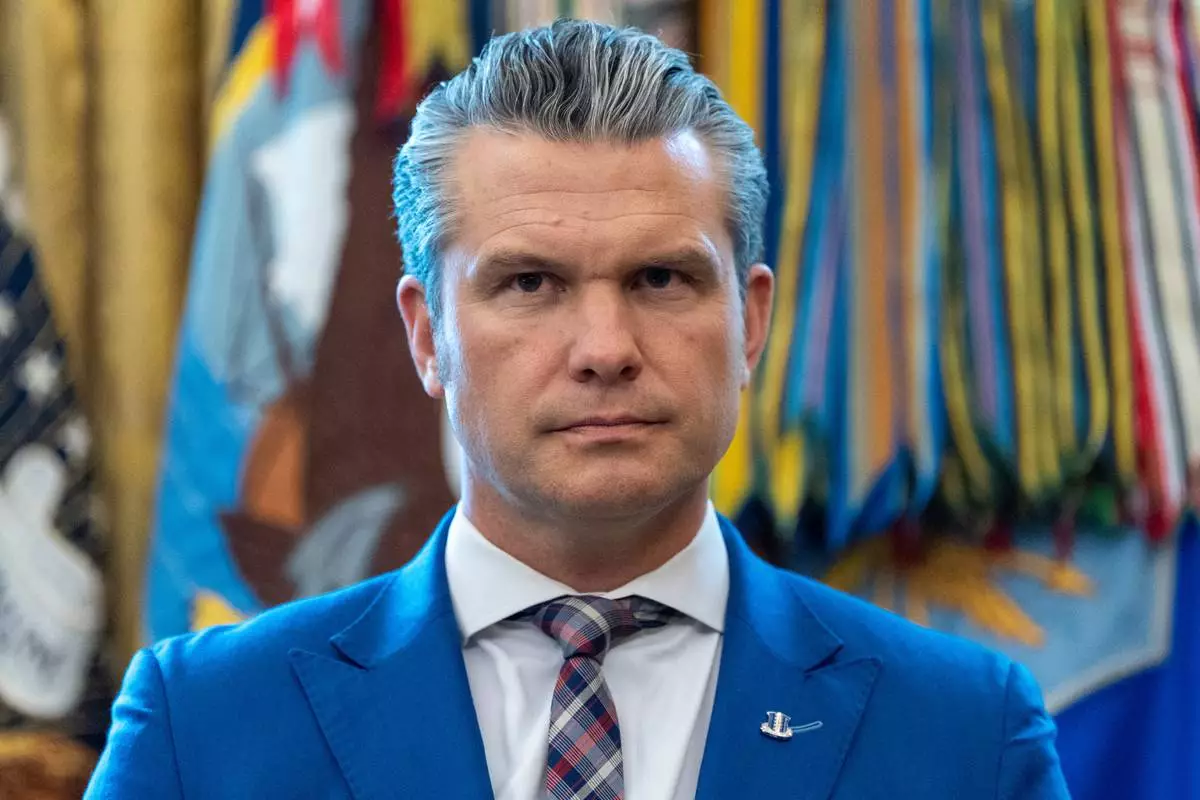
Defense Secretary Pete Hegseth listens as President Donald Trump speaks during a Mexican Border Defense Medal presentation in the Oval Office of the White House, Monday, Dec. 15, 2025, in Washington. (AP Photo/Alex Brandon)