Skip to Content Facebook Feature Image

The US labels another Latin American cartel a terrorist group as the anti-drug war escalates

News

The US labels another Latin American cartel a terrorist group as the anti-drug war escalates
News

News

The US labels another Latin American cartel a terrorist group as the anti-drug war escalates

2025-12-17 04:34 Last Updated At:04:40

BOGOTA, Colombia (AP) — The Trump administration on Tuesday designated another Latin American drug cartel as a foreign terrorist organization, increasing financial pressure on its members and opening the door to potential military action against them.

The U.S. State Department said Clan del Golfo, which is based in Colombia, has been listed both as a foreign and a global terrorist group, calling it a “violent and powerful criminal organization” that uses cocaine trafficking to fund violent activities.

“Clan del Golfo is responsible for terrorist attacks against public officials, law enforcement and military personnel, and civilians in Colombia,” the statement said.

The designation comes after the Trump administration in September added Colombia to a list of nations failing to cooperate in the drug war for the first time in almost 30 years. It was a stinging rebuke to a traditional U.S. ally that reflects a recent surge in cocaine production and fraying ties between the White House and the country’s leftist president, Gustavo Petro.

The United States also sanctioned Petro in October over accusations that he had allowed drug cartels in the South American nation to “flourish” and export cocaine to the U.S. — accusations that he vehemently denied, arguing that Colombia is intercepting record levels of cocaine shipments without killing suspected smugglers.

With an estimated 9,000 fighters, Clan del Golfo is one of Colombia’s most powerful armed groups. Also known by its Spanish acronym AGC, the group evolved from right-wing paramilitary squads that fought Marxist guerillas in Colombia in the 1990s and 2000s.

A report published last year by the Human Rights Defender's Office, a public agency, said that AGC is present in about a third of Colombia's 1,103 municipalities, where it extorts local businesses and has also been accused of recruiting children.

Clan del Golfo has been involved in peace talks with Colombia’s government since September, which could lead to the disarmament of its fighters in exchange for reduced sentences for its leadership.

Earlier this month, the Colombian government and the AGC signed an agreement in Qatar, under which the group’s fighters as of next March will be allowed to gather in specially designated zones in northern and western Colombia where they will be free from prosecution, as peace talks continue. The agreement also states that the Colombian government will suspend any extradition of AGC leaders to the U.S. during negotiations.

Elizabeth Dickinson, a Colombia analyst at the International Crisis Group, said Tuesday's designation could be a message to the Colombian government to take a tougher stance against the group.

“The tensions between Colombia and Washington are at historic levels,” Dickinson said.

She added that while terrorist designations are usually meant to stop third parties from doing business with targeted groups, the designation against AGC could be more “symbolic” — and it will "give pause to Colombian authorities ... going forward.”

Colombia has also recently held peace talks with the National Liberation Army, also an organization designated as a terrorist group by the U.S., and in the past it struck a peace deal with the Revolutionary Armed Forces of Colombia, or FARC, while it was still designated as a terrorist group.

The designation does not provide the U.S. government with the immediate authority to conduct military strikes, although it enhances the legal framework for attacks against targeted groups to be carried out.

Earlier this year, the Trump administration designated Venezuelan gangs Tren de Aragua and Cartel de los Soles as foreign terrorist organizations, before launching strikes against alleged drug smuggling boats off the coast of Venezuela, whose legality has been questioned by U.S. lawmakers.

The Trump administration has also accused Venezuelan President Nicolas Maduro of sending drug shipments to the U.S.

And last week, Trump said Petro has been “fairly hostile” to the U.S. and that he was “going to have himself some big problems if he doesn’t wise up.”
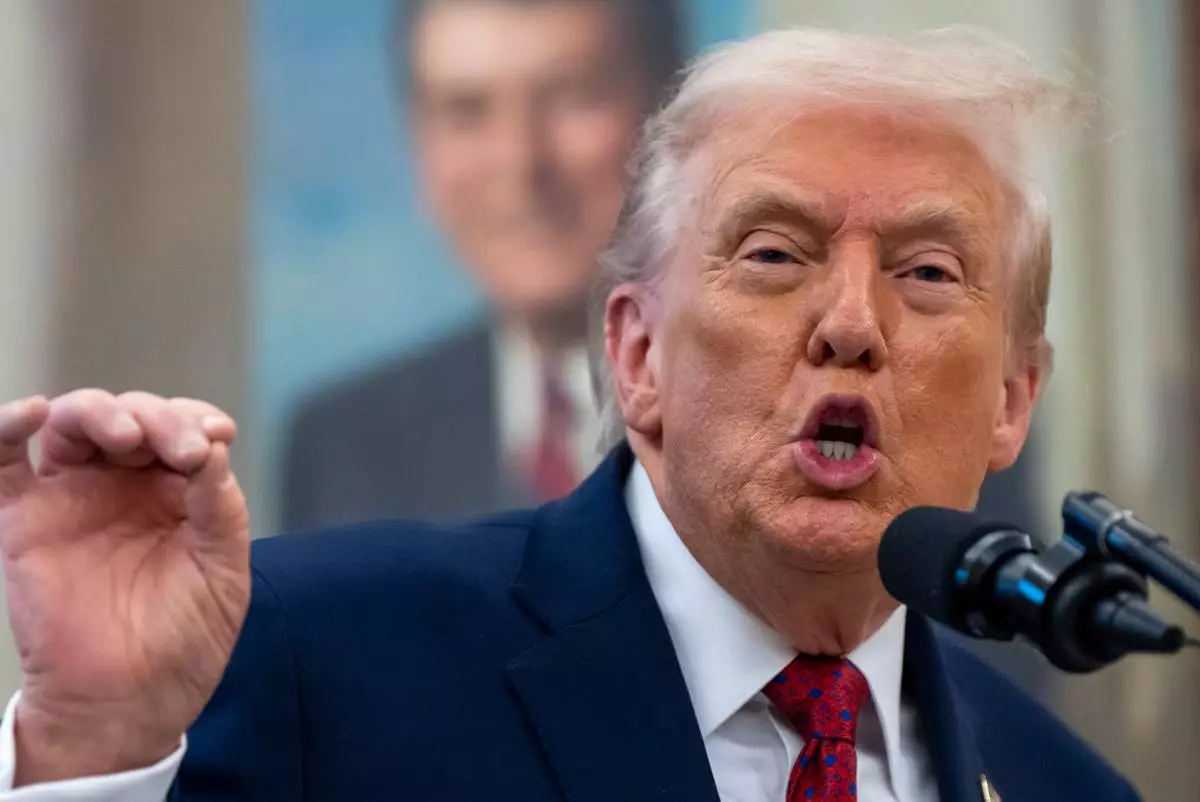
President Donald Trump speaks during a Mexican Border Defense Medal presentation in the Oval Office of the White House, Monday, Dec. 15, 2025, in Washington. (AP Photo/Alex Brandon)

President Donald Trump speaks during a Mexican Border Defense Medal presentation in the Oval Office of the White House, Monday, Dec. 15, 2025, in Washington. (AP Photo/Alex Brandon)

DAKAR, Senegal (AP) — Government forces in Burkina Faso killed over twice as many civilians as militant jihadist groups over a two-year period, according to a study by Human Rights Watch, which accused both sides of war crimes and crimes against humanity.

According to the report, of the 1,837 civilians killed in the country between January 2023 and August 2025, more than 1,200 were the result of government forces. Over 2 million people are estimated to have been displaced since the conflict began, according to the United Nations.

Ilaria Allegrozzi, the senior Sahel researcher at Human Rights Watch, told The Associated Press that the reported death toll was “most likely a gross undercount because most instances go unreported.”

The Burkina Faso authorities did not respond to requests for comment.

Human Rights Watch says that under President Ibrahim Traoré, the Burkina Faso junta has carried out “a broad crackdown” on political opposition, peaceful dissent and independent media, “fostering an atmosphere of terror and severely restricting the flow of information about the conflict and its toll.”

The landlocked nation of 23 million people has symbolized the security crisis in the Sahel region south of the Sahara Desert in recent years. It has been shaken by violence from extremist groups linked to Al-Qaeda and the Islamic State group, and the governments fighting them. The Sahel is the world's deadliest region for extremism, according to the Global Terrorism Index.

Abuses by government forces in Burkina Faso as well as militants from Jama’at Nusrat al-Islam wal-Muslimin (JNIM) — an Al-Qaeda aligned militant group operating in the region — amount to war crimes and crimes against humanity, Human Rights Watch said.

“These atrocities, including the government’s ethnic cleansing of Fulani civilians, amount to war crimes and crimes against humanity for which senior leaders on all sides may be liable,” the 316-page report said.

In one attack detailed in the report, government forces are alleged to have executed 223 civilians, including at least 56 children, accusing them of collaborating with JNIM in the northern Yatenga province in early 2024. In a separate attack the same year, JNIM are said to have killed at least 133 civilians, including dozens of children, in the center of the county.

The targeting of civilians, particularly those of the Fulani ethnic group, appears to be the de facto policy of the Burkina Faso government, according to the rights group, with reprisal attacks against villages accused of collaborating with JNIM being common due to the group's perceived loyalty to militant groups.

“The highest levels of government appear supportive of military action against Fulani people based on these attitudes,” said the report, adding that it is not possible to get an accurate picture of the situation in the country since the military leadership has installed a system of de facto censorship. Those who do speak out risk being abducted, imprisoned or drafted into the army.

The military junta, which took power in 2022, has failed to provide the stability it promised. According to conservative estimates, more than 60% of the country is now outside of government control, more than 2.1 million people have lost their homes and almost 6.5 million need humanitarian aid to survive.

Conflict monitoring group Armed Conflict Location & Event Data estimates that least 10,600 civilians have been killed since 2016.

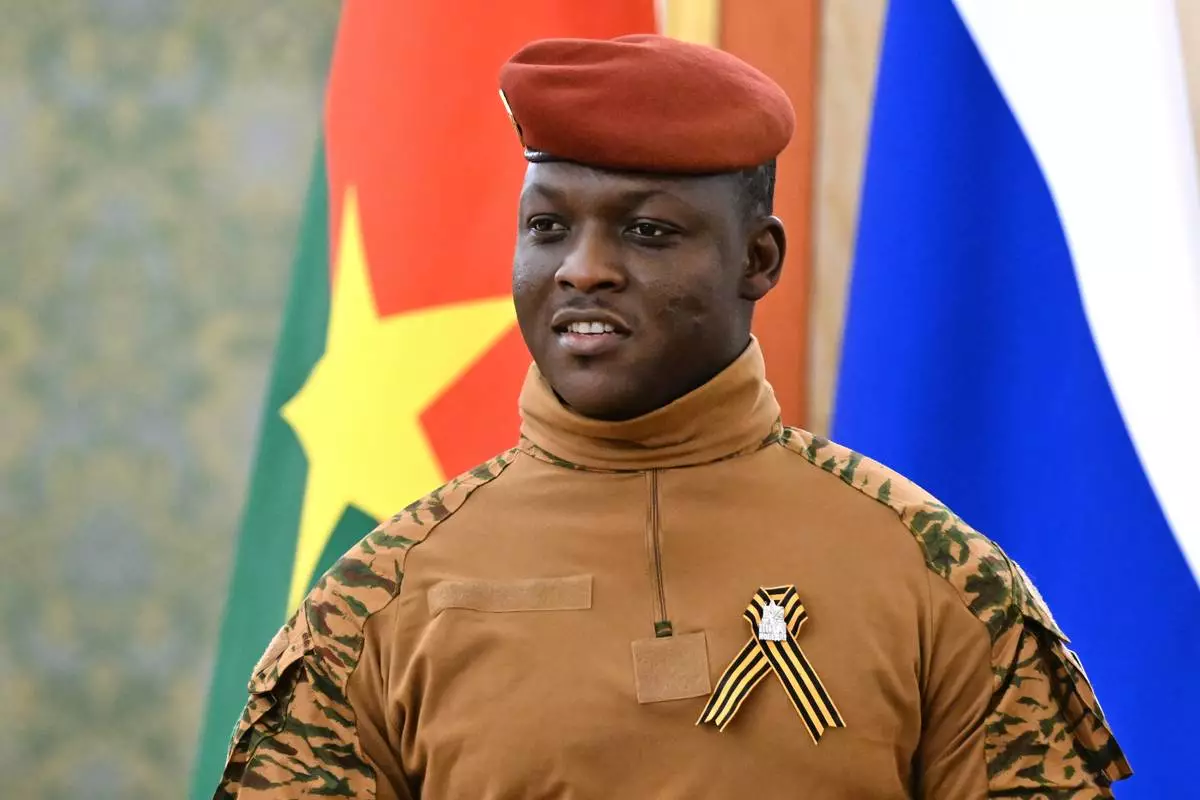
FILE - In this photo provided by RIA Novosti, Burkina Faso President Ibrahim Traore arrives at the Grand Palace at the Kremlin in Moscow, Russia, on May 10, 2025. (Stanislav Krasilnikov/RIA Novosti via AP, file)

FILE - In this photo provided by RIA Novosti, Burkina Faso President Ibrahim Traore arrives at the Grand Palace at the Kremlin in Moscow, Russia, on May 10, 2025. (Stanislav Krasilnikov/RIA Novosti via AP, file)

Recommended Articles