The head of the Federal Aviation Administration said Tuesday he won't forget the 67 people who died when an airliner collided with an Army helicopter over Washington, D.C., in January, insisting he won't allow operations in the airspace over the nation's capital to revert back to the way they were before the crash.
Administrator Bryan Bedford gave the House aviation subcommittee an update on a number of key concerns about his agency during Tuesday's hearing, including whether he believes the provisions of a major defense bill that have been widely criticized by safety experts will make flying riskier.
“It’s unfortunate, it’s beyond unfortunate, it’s tragic that the focus that we have today — the attention and our sort of unified, galvanized effort to modernize — was paid for with the lives of 67 Americans. It’s unfortunate, but that sacrifice can’t go to waste,” Bedford said. “We have to deliver for them and for the rest of the American people.”
Bedford promised he won't allow the airspace to become less safe, even though critics have said the defense bill would open the door to allowing military helicopters to resume flying through the crowded airspace around Washington without broadcasting their locations. The FAA required all aircraft to use ADS-B systems in the wake of the collision, and changed its practices to ensure that helicopters and planes no longer share the same airspace and that controllers no longer rely on pilots to ensure visual separation between aircraft.
“There's no rolling back of the safety procedures we put in place since that horrific evening,” Bedford said without taking a position on the defense bill. "Our vigilance isn't waning."
Sens. Ted Cruz, R-Texas, and Maria Cantwell, D-Wash., are urgently trying to amend the defense bill, but that may not happen because congressional leaders don't want to risk delaying that bill by sending it back to the House for another vote. If changing the defense bill is not possible, Cruz and Cantwell have promised to push for approval of a bill they introduced last summer that would require all aircraft to broadcast their locations.
Separately, Bedford responded in a letter to ethics concerns Cantwell raised last week about why he hadn't sold off his stake in Republic Airways, which he used to lead as CEO, as promised within 90 days after he was confirmed.
Bedford told government ethics officials that he hadn't initially sold off his investment because he got busy at work once he took over the FAA. He said he worked to get started on the planned overhaul of the air traffic control system and then dealt with controller shortages during the shutdown, and then he thought he had extra time because ethics officials might not decide on his request for an extension during the shutdown.
But in an email that Bedford included with his letter, an official with the ethics office said he should have known he wouldn't get an extension after an Oct. 7 call when officials “conveyed being busy with your position did not constitute an ‘unusual hardship.’”
Bedford said he will continue to recuse himself from any decisions involving Republic until his multimillion-dollar investment is sold, but he predicted that still might not happen right away. He said Republic has yet to send him his share certificates after completing its merger with Mesa Air Group last month.
Bedford told the committee that by the end of the year the FAA expects to have committed more than $6 billion of the $12.5 billion Congress approved to pay for an overhaul of the nation's air traffic control system. The agency has already replaced more than one-third of the outdated copper wires the system was relying on with modern connections like fiber optic lines.
But Rep. Hank Johnson Jr., D-Ga., said he doesn't “have a lot of confidence in this working out for the American people” after the FAA chose Peraton, a national security contractor with little FAA experience, to oversee the upgrades that are expected to cost more than $31 billion total. Johnson questioned whether this is a “pay-to-play situation.” Peraton is owned by a massive private equity firm called Veritas Capital.
“How is the FAA ensuring that outsourcing this massive modernization project to a largely untested contractor will not put safety at risk, create further delays or overburden your already overworked workforce?” Johnson said.
Bedford said Peraton was chosen because it has expertise in helping the Defense Department and NASA convert systems from analog to digital and moving those systems to the cloud online. The other contractor that applied for the job, Parsons, has worked with FAA extensively, but Bedford said it didn't have that cloud experience and the FAA wants to move its computing power out of individual towers to a national system that's based online.
“Peraton brought a competency that is relevant to what we need. It had nothing to do with who they knew. The president did not interfere, nor did the secretary in the selection process. It was transparent. It was diligent,” he said.
In a letter to lawmakers, Bedford also defended the FAA's decision during the government shutdown to order airlines to cut thousands of flights because of concerns about air controller staffing and safety data. But instead of offering additional details about what that decision was based on, Bedford essentially repeated the reasons Transportation Secretary Sean Duffy offered at the time.
Bedford said safety experts at the FAA noticed a dramatic increase in controller absences along with an uptick in near misses and runway incursions, but he didn't offer any data on those incidents.
“I am confident that decreasing operations during an uncertain and stressful time was the right decision on behalf of the flying public and the United States,” Bedford said.
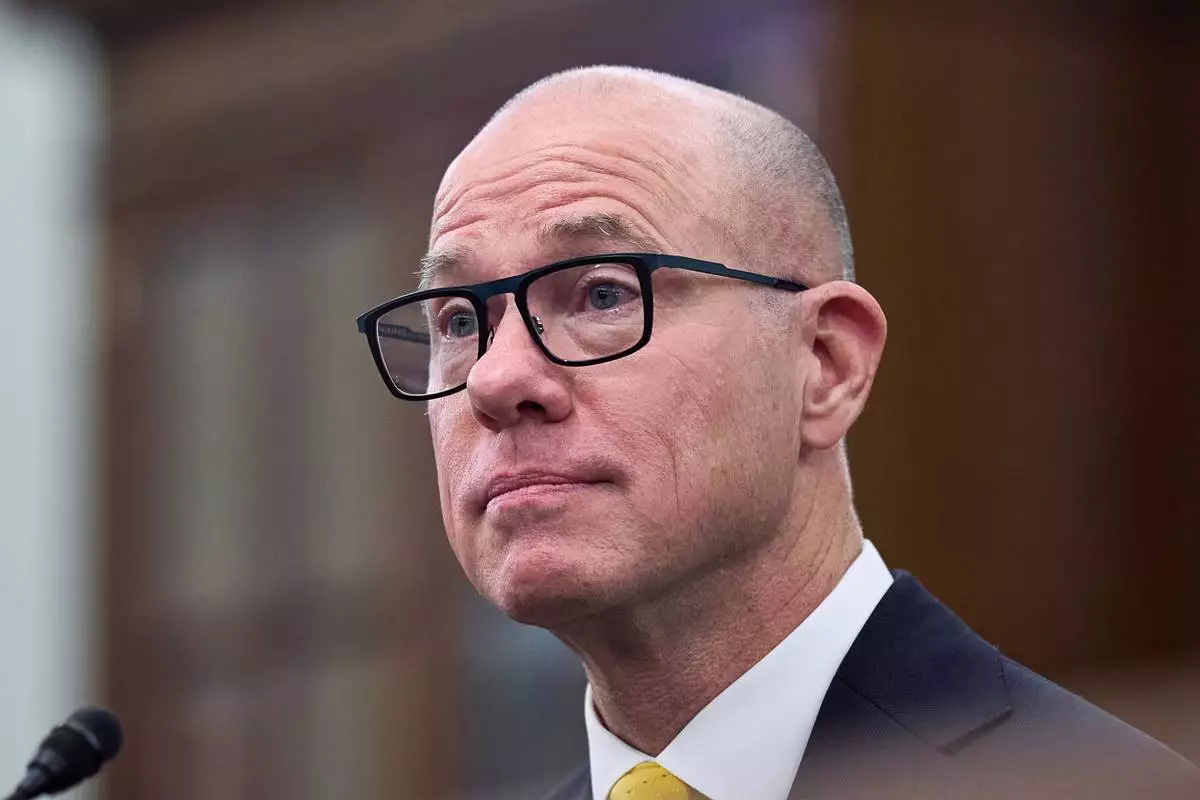
FILE - Bryan Bedford, President Donald Trump's nominee to run the Federal Aviation Administration, testifies at the Senate Commerce, Science, and Transportation Committee on Capitol Hill in Washington, Wednesday, June 11, 2025. (AP Photo/J. Scott Applewhite, File)
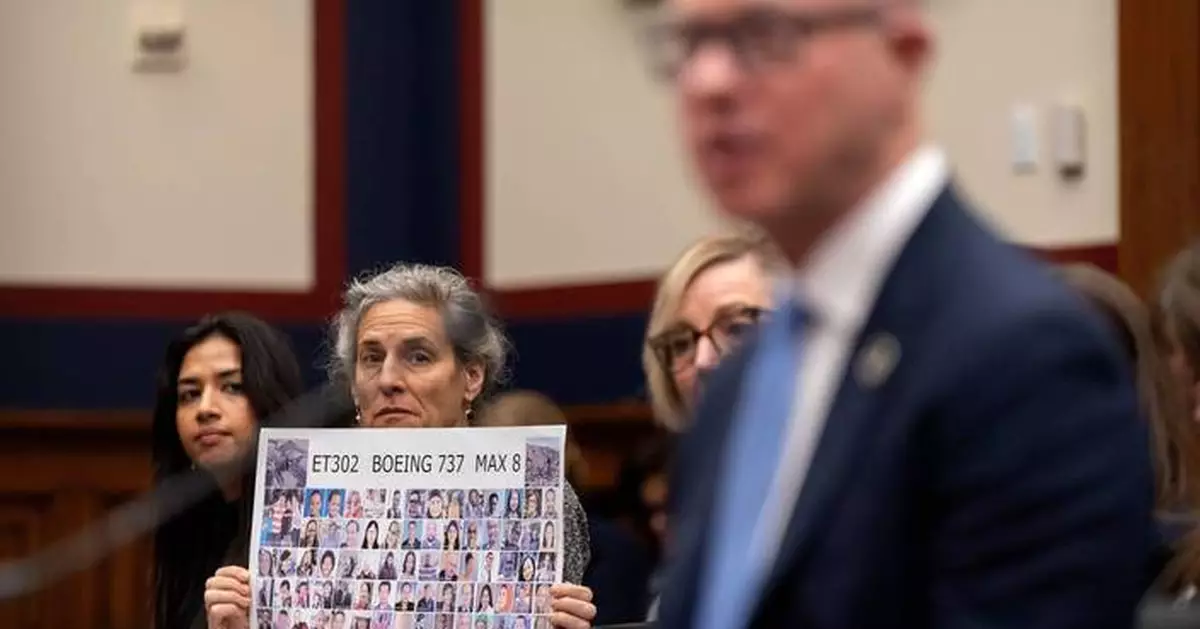
Nikita Joy of the Foundation for Aviation Safety, left, and Nadia Milleron of Sheffield, Mass., whose daughter Samya Stumo was killed in the crash of Ethiopian Airlines flight 302, listen as FAA Administrator Bryan Bedford speaks during a hearing of the Aviation Subcommittee of the House Transportation and Infrastructure Committee on Capitol Hill, Tuesday, Dec. 16, 2025, in Washington. (AP Photo/Mark Schiefelbein)

SYDNEY (AP) — An accused gunman in Sydney’s Bondi Beach massacre was charged with 59 offenses including 15 charges of murder on Wednesday, as hundreds of mourners gathered in Sydney to begin funerals for the victims.
Two shooters slaughtered 15 people on Sunday in an antisemitic mass shooting targeting Jews celebrating Hanukkah at Bondi Beach, and more than 20 other people are still being treated in hospitals. All of those killed by the gunmen who have been identified so far were Jewish.
A country reeling from its deadliest hate-fueled massacre of modern times turned to searching questions, growing in volume since the attack, about how it was able to happen. As investigations unfold, Australia faces a social and political reckoning about antisemitism, gun control and whether police protections for Jews at events such as Sunday’s were sufficient for the threats they faced.
Naveed Akram, the 24-year-old alleged shooter, was charged on Wednesday after waking from a coma in a Sydney hospital, where he has been since police shot him and his gunman father at Bondi. His 50-year-old father Sajid Akram died at the scene.
The charges include one count of murder for each fatality and one count of committing a terrorist act, police said.
Akram was also charged with 40 counts of causing harm with intent to murder in relation to the wounded and with placing an explosive near a building with intent to cause harm.
Police said the Akrams' car, which was found at the crime scene, contained improvised explosive devices.
Akram's lawyer did not enter pleas and did not request his client's release on bail during a video court appearance from his hospital bed, a court statement said.
Akram was represented by Legal Aid NSW which has a policy of refusing media comment on behalf of clients.
He is expected to remain under police guard in hospital until he is well enough to be transferred to a prison.
Families from Sydney's close-knit Jewish community gathered, one after another, to begin to bury their dead. The victims of the attack ranged in age from a 10-year-old girl to an 87-year-old Holocaust survivor.
The first farewelled was Eli Schlanger, 41, a husband and father of five who served as the assistant rabbi at Chabad-Lubavitch of Bondi and organized Sunday's Chanukah by the Sea event where the attack unfolded. The London-born Schlanger also served as chaplain in prisons across New South Wales state and in a Sydney hospital.
“After what happened, my biggest regret was — apart from, obviously, the obvious – I could have done more to tell Eli more often how much we love him, how much I love him, how much we appreciate everything that he does and how proud we are of him,” said Schlanger's father-in-law, Rabbi Yehoram Ulman, who sometimes spoke through tears.
“I hope he knew that. I’m sure he knew it,” Ulman said. "But I think it should've been said more often.”
Outside the funeral, not far from the site of the attack, the mood was hushed and grim, with a heavy police presence. Jews are usually buried within 24 hours from their deaths, but funerals have been delayed by coroner's investigations.
One mourner, Dmitry Chlafma, said as he left the service that Schlanger was his longtime rabbi.
“You can tell by the amount of people that are here how much he meant to the community,” Chlafma said. “He was warm, happy, generous, one of a kind.”
Among others killed were Boris and Sofia Gurman, a husband and wife aged in their 60s who were fatally shot as they tried to disarm one of the gunmen when he got out of his car to begin the attack. Another Jewish man in his 60s, Reuven Morrison, was gunned down by one shooter while he threw bricks at the other, his daughter said.
Many children attended the Hanukkah event, which featured face painting, treats and a petting zoo. The youngest killed was Matilda, 10, whose parents urged attendees at a vigil on Tuesday night to remember her name.
“It stays here,” said Matilda's mother, who identified herself only as Valentyna, pressing her hand over her heart. "It just stays here and here.”
Authorities believe that the shooting was “a terrorist attack inspired by Islamic State,” Australia's federal police commissioner Krissy Barrett said Wednesday.
The Islamic State group is a scattered and considerably weaker group since a 2019 U.S.-led military intervention drove it out of territory it had seized in Iraq and Syria, but its cells remain active and it has inspired a number of independent attacks including in western countries.
The authorities have said that Naveed Akram came to the attention of the security services in 2019 but have supplied little detail of their previous investigations. Now authorities will probe what was known about the men.
That includes examining a trip the suspects made to the Philippines in November. The Philippines Bureau of Immigration confirmed Tuesday that the two suspected shooters traveled to the country from Nov. 1 to Nov. 28, giving the city of Davao as their final destination.
Groups of Muslim separatist militants, including Abu Sayyaf in the southern Philippines, once expressed support for IS and have hosted small numbers of foreign militants from Asia, the Middle East and Europe in the past. Philippine military and police officials say there has been no recent indication of any foreign militants in the country’s south.
The younger suspect was Australian-born. Indian police on Tuesday said the older suspect was originally from the southern city of Hyderabad, migrated to Australia in 1998 and held an Indian passport.
The news that the suspects were apparently inspired by the Islamic State group provoked more questions about whether Australia's government had done enough to stem hate-fueled crimes, especially directed at Jews. In Sydney and Melbourne, where 85% of Australia's Jewish population lives, a wave of antisemitic attacks has been recorded in the past year.
After Jewish leaders and survivors of Sunday's attack lambasted the government for not heeding their warnings of violence, Prime Minister Anthony Albanese vowed Wednesday to take whatever government action was needed to stamp out antisemitism.
Albanese and the leaders of some Australian states have pledged to tighten the country’s already strict gun laws in what would be the most sweeping reforms since a shooter killed 35 people in Port Arthur, Tasmania, in 1996. Mass shootings in Australia have since been rare.
Albanese announced plans to further restrict access to guns, in part because it emerged the older suspect had amassed six weapons legally. Proposed measures include restricting gun ownership to Australian citizens and limiting the number of weapons a person can hold.
Meanwhile, Australians seeking ways to make sense of the horror settled on practical acts. Hours-long lines were reported at blood donation sites and at dawn on Wednesday, hundreds of swimmers formed a circle on the sand, where they held a minute's silence. Then they ran into the sea.
Not far away, part of the beach remained behind police tape as the investigation into the massacre continued, shoes and towels abandoned as people fled still strewn across the sand.
One event that would return to Bondi was the Hanukkah celebration the gunmen targeted, which has run for 31 years, Ulman said. It would be in defiance of the attackers' wish to make people feel like it was dangerous to live as Jews, he added.
“Eli lived and breathed this idea that we can never ever allow them not only to succeed, but anytime that they try something we become greater and stronger,” he said.
“We’re going to show the world that the Jewish people are unbeatable."
Graham-McLay reported from Wellington and McGuirk from Melbourne.
Family react at the coffin of Rabbi Eli Schlanger, a victim in the Bondi Beach mass shooting, during his funeral at a synagogue in Bondi on Wednesday, Dec. 17, 2025, in Sydney, Australia. (AP Photo/Mark Baker, Pool)
Rabbi Yehoram Ulman, father-in-law of Rabbi Eli Schlanger, a victim in the Bondi Beach mass shooting, speaks at his funeral at a synagogue in Bondi on Wednesday, Dec. 17, 2025, in Sydney, Australia. (AP Photo/Mark Baker, Pool)
Rabbi Yossi Friedman speaks to people gathering at a flower memorial by the Bondi Pavilion at Bondi Beach on Tuesday, Dec. 16, 2025, following Sunday's shooting in Sydney, Australia. (AP Photo/Mark Baker)
Family react at the coffin of Rabbi Eli Schlanger, a victim in the Bondi Beach mass shooting, during his funeral at a synagogue in Bondi on Wednesday, Dec. 17, 2025, in Sydney, Australia. (AP Photo/Mark Baker, Pool)