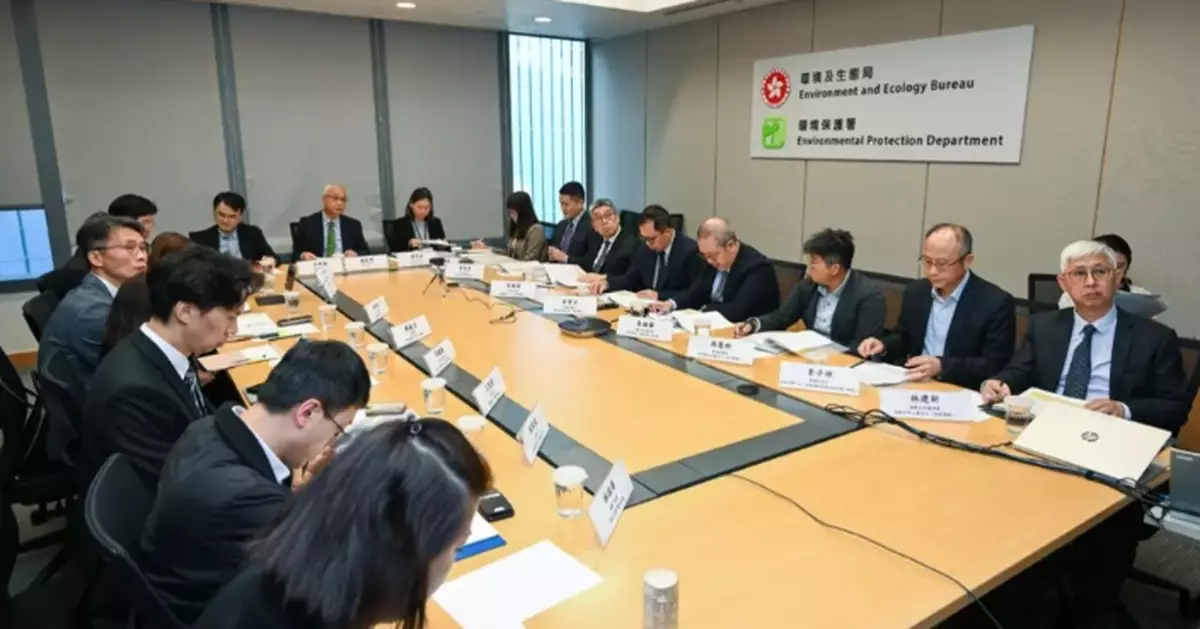
Hong Kong-Guangdong Joint Working Group on Environmental Protection and Combating Climate Change meeting held via video conferencing
The Secretary for Environment and Ecology of the Hong Kong Special Administrative Region (HKSAR), Mr Tse Chin-wan, and the Director-General of the Department of Ecology and Environment of Guangdong Province (GDDEE), Ms Xu Xiaoxia, today (December 17) co-chaired the seventh meeting of the Hong Kong-Guangdong Joint Working Group on Environmental Protection and Combating Climate Change via video conferencing. The meeting reviewed their work progress in 2025 and agreed on the collaboration work plan for 2026.
Governments of both Hong Kong and Guangdong agreed that the two places have continued to maintain close co-operation on various fronts in the past year, including improvement of air quality in the Pearl River Delta (PRD) region, protection of the water environment, strengthening forestry and marine resources conservation, and combating climate change, as well as the development of a "Zero Waste Bay Area". The two sides will continue to promote and deepen exchanges, co-operation and scientific research relating to climate change mitigation, adaptation and resilience.
On improving air quality, Hong Kong and Guangdong implemented the PRD Regional Air Quality Management Plan and monitored the progress and effectiveness of various improvement measures. The annual average concentrations of various air pollutants in 2024 have declined between 18 per cent and 86 per cent from their peak levels. Representatives of the Hong Kong side highlighted that promoting green transportation helps improve air quality. The number of electric private cars in Hong Kong has been growing rapidly. Currently, more than seven out of every 10 newly registered private cars are electric, with a growth rate among the top globally. The HKSAR Government will continue to actively promote the use of electric vehicles and expand the charging network in the future. In the coming years, Hong Kong and Guangdong will continue to work together on the demonstration projects of cross-boundary goods vehicles transitioning into new energy vehicles and the construction of the Greater Bay Area Air Quality Health Index.
On marine environment management, Governments of both Hong Kong and Guangdong agreed that the Notification and Alert System on Marine Refuse has been functioning well since its commencement in 2017. To further enhance the effectiveness of the system, the Environmental Protection Department (EPD) has used the latest wind forecast and relevant data, together with a new generation of regional hydrodynamic model, to more accurately predict areas that may potentially be affected by marine refuse. As of mid-November this year, the system has issued 65 notifications in response to heavy rainfall or major marine environmental incidents, which effectively enabled relevant government departments to take timely clean-up actions. Both sides will continue to explore technologies and measures to monitor marine refuse and tackle marine environmental incidents, as well as further extending co-operation in the management of the marine environment with cities in the region.
As regards ecological conservation, Hong Kong and Guangdong will continue to foster in-depth exchanges and enhance collaboration on the establishment, management, conservation, staff training, publicity and education, etc, in relation to forestry, ecological corridors across the boundary and wetland reserve projects, as well as to take forward the sustainable development of marine resources and the conservation of marine environment, including projects for the conservation of rare marine animals, ecological and environmental monitoring, restoration and enhancement of fisheries resources, sustainable development of mariculture, and joint enforcement operations between Hong Kong and Guangdong.
Hong Kong and Guangdong will also take forward the development of a "Zero Waste Bay Area", jointly promoting regional resources circulation in both places, exploring the feasibility of cross-regional co-operation in handling recyclable materials and co-ordinating collaborative initiatives of the two places.
Representatives of the Hong Kong side attended the meeting today were from the Environment and Ecology Bureau, the Development Bureau, the Buildings Department, the Agriculture, Fisheries and Conservation Department, the Civil Engineering and Development Department, the Drainage Services Department, the Electrical and Mechanical Services Department, the Department of Health, the EPD, the Hong Kong Observatory, and the Water Supplies Department. Representatives of the Guangdong side were from the GDDEE, the Hong Kong and Macao Work Office of the CPC Guangdong Provincial Committee, the Department of Agriculture and Rural Affairs of Guangdong Province, the Forestry Administration of Guangdong Province, the Guangdong Provincial Development and Reform Commission, the Guangdong Meteorological Service, the Department of Industry and Information Technology of Guangdong Province, and the Shenzhen Municipal Ecological Environment Bureau.
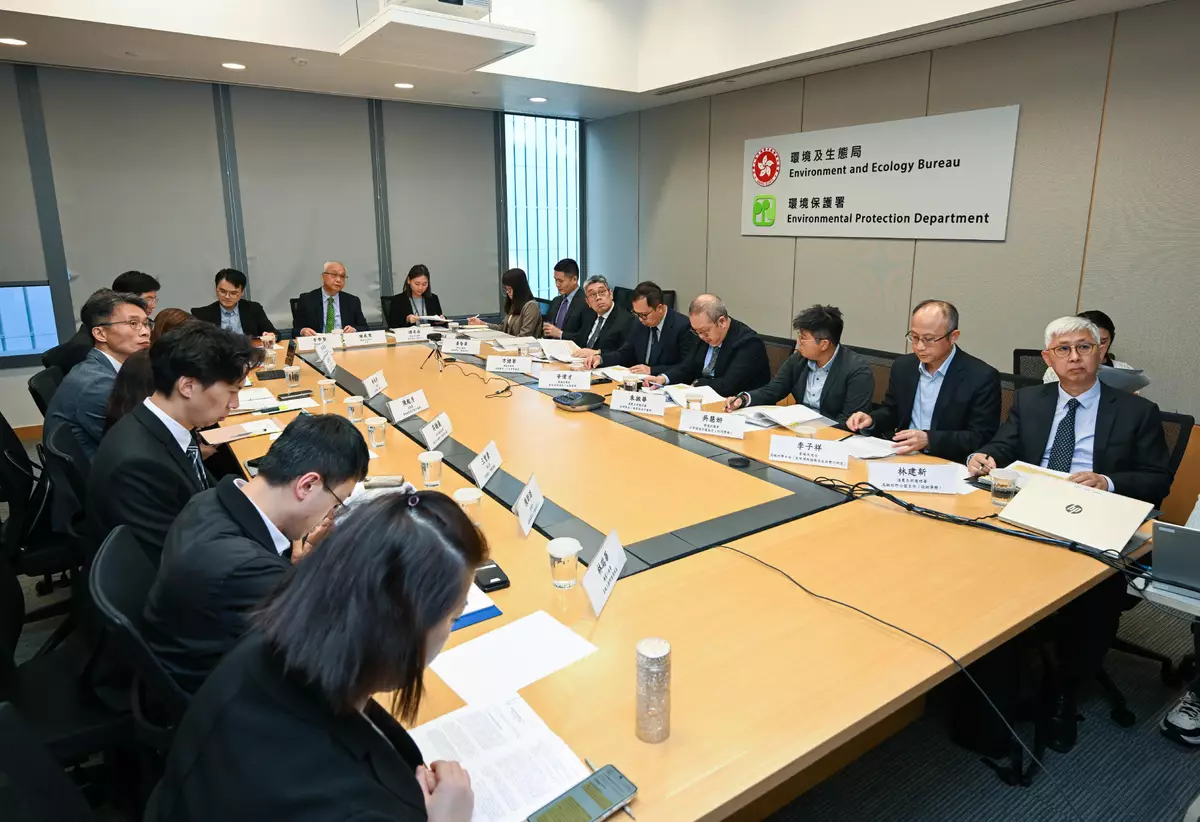
Hong Kong-Guangdong Joint Working Group on Environmental Protection and Combating Climate Change meeting held via video conferencing Source: HKSAR Government Press Releases

Update on chikungunya fever
The Centre for Health Protection (CHP) of the Department of Health announced that, as of 5pm today (December 17), no new cases of chikungunya fever (CF) had been recorded. Hong Kong has recorded a total of 81 confirmed CF cases this year. Among them, 11 were local cases, and the rest were imported cases.
Government's comprehensive follow-up actions
-----------------------------------------------------
Given that some local cases of CF have visited the Tsing Yi Nature Trails or the surrounding area, the trails are currently closed until further notice. As the CHP and the relevant government departments are conducting large-scale mosquito control and prevention efforts along the trails recently, the CHP continues to appeal to the public not to enter the area in order to reduce the risk of contracting CF and to avoid exposure to chemicals or interfering with the mosquito control operations.
The CHP continues to urge individuals who have recently hiked along the Tsing Yi Nature Trails to seek medical attention as soon as possible if they develop relevant symptoms and to call the enquiry hotline (Tel: 2125 2373), which operates from 9am to 6pm. All doctors and hospitals in Hong Kong should closely monitor whether their patients present with compatible symptoms and arrange blood tests for those concerned. The CHP's Public Health Laboratory Services Branch will provide free testing services.
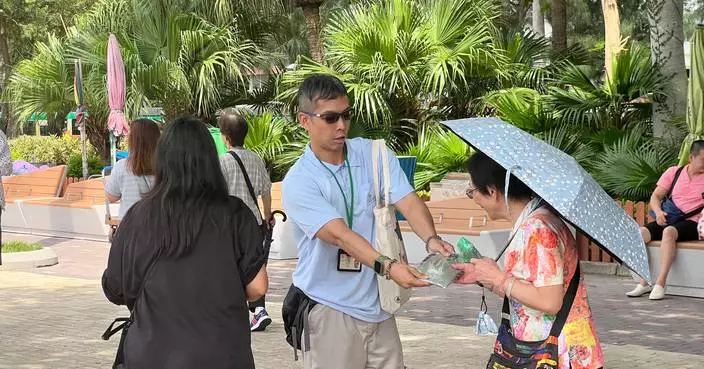
Specifically targeting confirmed cases who visited the Tsing Yi Nature Trails or the surrounding area, the Food and Environmental Hygiene Department (FEHD) has been continuously conducting intensive fogging operations to eliminate adult mosquitoes along the hiking trails. At suitable locations, large ultra-low volume foggers have been deployed, and a robot dog is being put on trial to enhance operational effectiveness. The FEHD has also set up new mosquito trapping devices, cleared discarded containers and garbage that could cause stagnant water, and applied larvicide oil or larvicides in areas with stagnant water that cannot be removed immediately. The FEHD has been collaborating with the Kwai Tsing District Office, the Lands Department and the Drainage Services Department to strengthen efforts in eliminating potential mosquito breeding sites along the Tsing Yi Nature Trails. Pamphlets have been distributed to hikers in the area, urging citizens to be vigilant against mosquito infestations and take personal protective measures. The FEHD also held meetings of the interdepartmental task forces on anti-mosquito work across districts, to discuss the latest developments regarding the situation and plan accordingly to co-ordinate relevant departments and stakeholders in strengthening mosquito prevention and control measures in areas under their purview.
Continuously strengthening prevention and control
---------------------------------------------------------
TheFEHDand relevant departments have comprehensively enhanced the mosquito control operations in Hong Kong since July this year, and this has continued. Among these, the FEHD has conducted vector investigations and targeted mosquito control operations against the imported and local cases. In light of the local case, the FEHD has immediately conducted follow-up actions, including:
carrying out intensive fogging in scrubby areas within a 250-metre radius of the relevant locations to kill adult mosquitoes;
carrying out inspections of the locations, removing stagnant water, applying insecticides and disposing of abandoned water containers every week with a view to preventing mosquito breeding; and
enhancing public education efforts through organising health talks, setting up mobile education stations, and distributing publicity leaflets.
The abovementioned measures will be continued. Furthermore, the Government will further enhance the mosquito control efforts in addition to the existing measures.
Preventive measures taken by the public
----------------------------------------------
Members of the public should use DEET-containing insect repellents or other effective active ingredients properly to prevent mosquito bites, but the following precautions should be taken when using them:
read the label instructions carefully first;
apply right before entering an area with a risk of mosquito bites;
apply on exposed skin and clothing;
use DEET of up to 30 per cent for pregnant women and up to 10 per cent for children (For children who travel to countries or areas where mosquito-borne diseases are endemic or epidemic and where exposure is likely, those aged 2 months or above can use DEET-containing insect repellents with a DEET concentration of up to 30 per cent);
apply sunscreen first, then insect repellent;
reapply only when needed and follow the instructions; and
in addition to DEET, there are other insect repellents available on the market containing different active ingredients, such as IR3535 and picaridin. When using any insect repellent, the public should follow the usage instructions and precautions on the product label.
The FEHD also appeals to members of the public to continue to stay alert and work together to carry out mosquito prevention and control measures early, including inspecting their homes and surroundings to remove potential breeding grounds, changing water in vases and scrubbing their inner surfaces, removing water in saucers under potted plants at least once a week, and properly disposing of containers such as empty cans and lunch boxes. The FEHD also advises members of the public and property management agencies to keep drains free of blockage and level all defective ground surfaces to prevent the accumulation of water. They should also scrub all drains and surface sewers with an alkaline detergent at least once a week to remove any mosquito eggs.
The public should call 1823 in case of mosquito problems, and may visit the following pages for more information: the CF page of theCHPand theTravel Health Service, the latestTravel Health News,tips for using insect repellents, and the CHPFacebook Page,Instagram AccountandYouTube Channel, and also theMosquito Prevention and Control dedicated pageof the FEHD.
Source: AI-found images