Government announces updates on follow-up work on Tai Po fire
The three task forces set up by the Government for the fire at Wang Fuk Court in Tai Po - the Task Force on Investigation and Regulation, the Task Force on Emergency Support and Fund-Raising, and the Task Force on Emergency Accommodation Arrangements - are making full efforts to follow up on the support, relief, and investigation work related to the incident. Details are as follows:
Financial and welfare support
---------------------------------
For the Support Fund for Wang Fuk Court in Tai Po, established by the Government, donations received are about $3.5 billion as of noon today (December 17). With the start-up capital of $300 million from the Government, the fund's total has now reached around $3.8 billion. The fund will be used to assist residents in rebuilding their homes and providing long-term and sustained support.
The Government earlier announced that a living allowance from the Support Fund will be provided to each affected household, and the amount has been increased from $50,000 to $100,000. As of today, 1 917 cases have been processed. In addition, the Government will provide families of each deceased victim with a token of solidarity of $200,000, as well as $50,000 to cover funeral costs. As of today, a total of 134 cases have been processed. The allowance will be disbursed in phases.
Social workers from the Social Welfare Department (SWD) have been in contact with more than 1 980 affected households, providing the "one social worker per household" follow-up service to more than 4 900 residents. The SWD will maintain liaison with the affected households to provide all necessary assistance while fully supporting the relief work of the Government.
Accommodation support
---------------------------
As of this morning, a total of 632 residents are staying in hotel rooms through the co-ordination of the Home and Youth Affairs Bureau, and 548 residents are staying in youth hostels/camps. Another 3 439 residents are currently living in transitional housing units provided by the Housing Bureau, units from the Hong Kong Housing Society (HKHS) or Po Tin Interim Housing in Tuen Mun.
Currently, there is still an abundant supply of more than 1 000 units that can provide affected residents with longer term accommodation. The transitional housing and HKHS projects in different districts can altogether provide around 400 units at the moment. Besides, Po Tin Interim Housing in Tuen Mun and Runway 1331 at Kai Tak can provide a supply of around 900 units.
Meanwhile, the Housing Bureau and the Transport Department have been working closely with the operating organisations and public transport service providers to deploy additional vehicles and manpower to support affected residents who have been admitted into transitional housing and HKHS projects in various districts and to cater for residents' commuting needs. Among the projects, an additional residents' service (RS) NR540 to and from Good House in Tai Po and Tai Po Market Station, as well as shuttle bus services connecting Good House, Tai Po Centre and Alice Ho Miu Ling Nethersole Hospital have been launched; the existing RS NR50 to and from Trackside Villas in Tai Po and Tai Po Market Station has been enhanced; a supplementary RS NR976 has been introduced connecting The STEP in Yuen Long and Tai Po Market Station.
Relief supplies and donations
---------------------------------
The supplies donation online platform, established by the Government and the information technology sector, continues to operate, facilitating the registration of supplies donations from organisations and the public. The Government has so far received over 1 900 registrations, of which approximately 30 per cent were submitted by organisations, whereas the others were contributed by the public. The various registered donation items include food and beverages, clothing, daily necessities, bedding, and electrical appliances. The Government is actively assessing residents' actual needs through the relevant policy bureau, government departments, and service organisations for the matching of donated supplies in order to distribute appropriate items in phases to places in need. So far, over 25 000 donation items covering various categories have been distributed to different places. The matching and distribution of supplies will continue.
Regulation and inspection work
----------------------------------
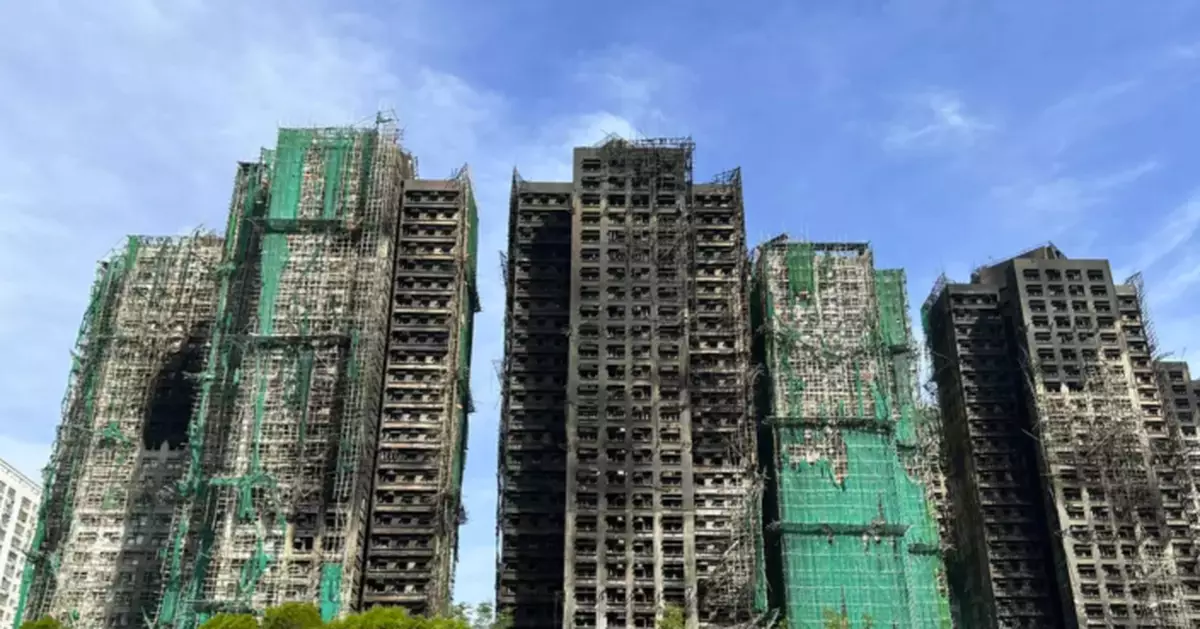
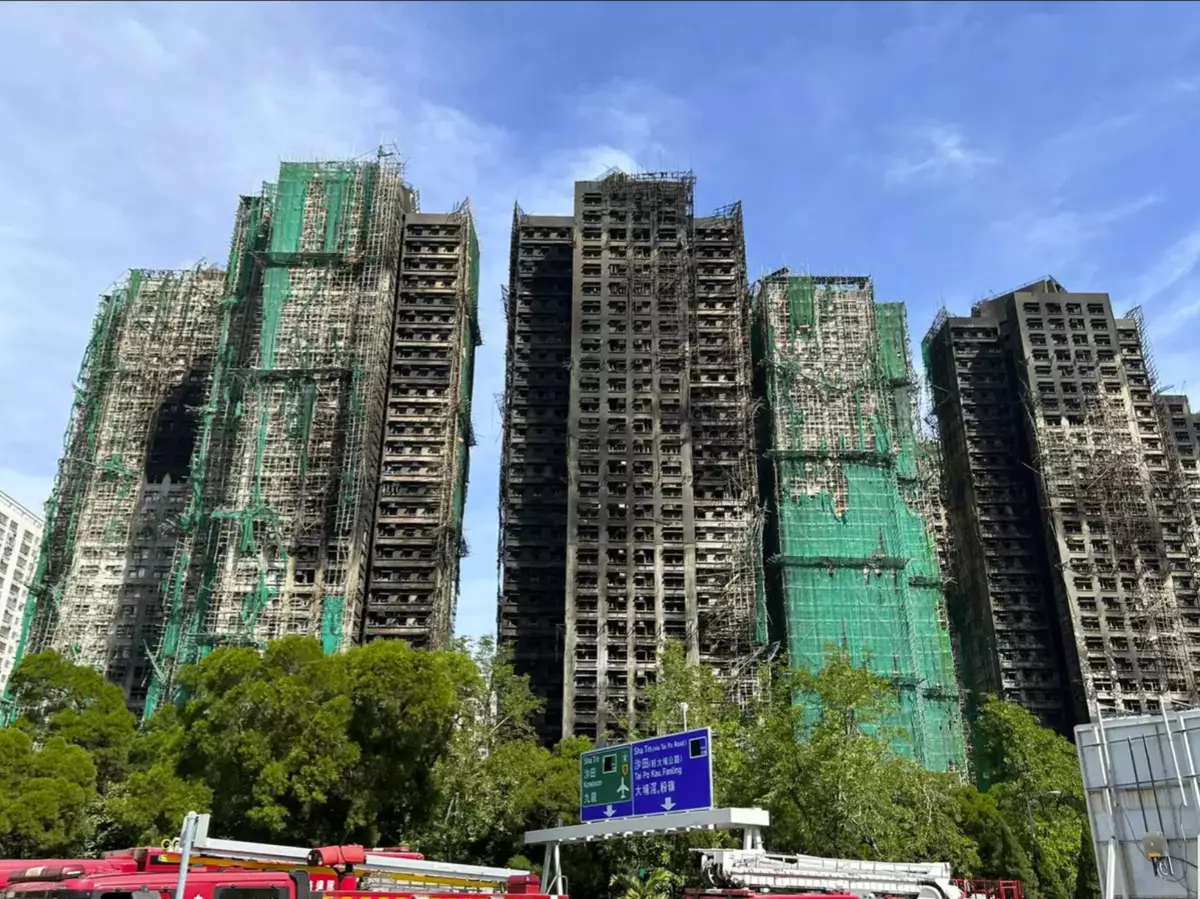
The Independent Checking Unit of the Housing Bureau and the Housing Department will continue to deploy manpower in Wang Fuk Court to assist the removal of items such as scaffolding and protective nets at some of the affected buildings so as to facilitate the evidence collection by the Police.
Wang Fuk Court in Tai Po, Photo by Bastille Post