NEW YORK (AP) — Teen use of alcohol, nicotine and marijuana remains at record lows, according to national survey results released Wednesday.
They consume a lot of energy drinks, though. And there are slight, but concerning, increases in heroin and cocaine use.
But overall, the findings indicate teens are drinking, smoking and using substances at much lower rates than in the past.
Two-thirds of 12th graders this year said they hadn’t used alcohol, marijuana, cigarettes or electronic cigarettes in the previous 30 days. Thirty years ago — before the advent of e-cigarettes — the figure was closer to about one-third.
Among 10th graders, 82% said they hadn’t used any of those substances recently. Among eighth graders, 91% didn’t use any of them. Both are records for those ages in the annual survey.
The findings also seem to echo other surveys that show continued declines in teen sexual activity, which experts say is at least partly due to teens connecting through smartphones and social media instead of in person.
“Online connections don’t create the same opportunities for experimenting with sex, alcohol or marijuana as unsupervised time face-to-face,” said Laura Lindberg, a Rutgers University professor who researches adolescent sexual behavior.
Douglas Smith, a University of Illinois researcher, noted earlier generations seemed more likely to “go to the woods and drink, or go to a party where there were no parents” to socialize.
“Now teenagers can be in constant communication with their friends and can live a life with their friends in virtual space — without using substances,” Smith added.
The new results come from the federally funded Monitoring the Future survey, run by the University of Michigan. The annual survey has been operating since 1975 and has long been considered a top source of national data on teen substance abuse.
This year’s findings are based on responses from about 24,000 students in grades 8, 10 and 12 in schools across the country. It was conducted from February to June this year.
Teen drug use has been gradually declining for decades, and fell dramatically at the beginning of the COVID-19 pandemic, when students across the country were told not to go to schools and to avoid parties or other gatherings.
Experts expected at least a bit of a rebound as pandemic restrictions eased, but that hasn't happened.
The 2025 results show no increases in teens' use of alcohol, marijuana, cigarettes or nicotine vapes in any of the three grade levels. In 2024, researchers had noted an uptick in the use of nicotine pouches, but that too held steady this year, the survey found.
Energy drinks are as popular as ever, with daily consumption reported by 23% of 12th graders, 20% of 10th graders and 18% of eighth graders.
The survey also found a striking increase in heroin use.
Use by 12th graders in the previous 12 months rose to 0.9% in 2025, from 0.2% the year before. Use by 10th graders hit 0.5%, up from 0.1%. And use by eighth graders also rose to 0.5%, up from 0.2%.
Cocaine use held steady for 10th graders, but rose for eighth graders — to 0.6% — and 12th graders — to 1.4%.
Teen heroin and cocaine use are "leagues below what they were decades ago,” but the increases warrant close monitoring, said Richard Miech, survey team lead at the University of Michigan.
There are other possible factors for the overall decline in teen substance use: efforts to curb youth vaping, taxes on some substances, and the fact that teenagers are less likely to drive than in the past.
“Adolescents’ lives are complicated, and these changes don’t have a single explanation,” Lindberg said in an email.
The Associated Press Health and Science Department receives support from the Howard Hughes Medical Institute’s Department of Science Education and the Robert Wood Johnson Foundation. The AP is solely responsible for all content.

FILE - Students walk the halls at a high school in Philadelphia on Aug. 29, 2013. (AP Photo/Matt Slocum, File)
WASHINGTON (AP) — The House is preparing to vote Thursday on a war powers resolution to halt President Donald Trump's attack on Iran, a sign of unease in Congress over the rapidly widening conflict that is reordering U.S. priorities at home and abroad.
It's the second vote in as many days, after the Senate defeated a similar measure along party lines. Lawmakers are confronting the sudden reality of representing the American people in wartime and all that entails — with lives lost, dollars spent and alliances tested by a president's unilateral decision to go to war with Iran.
The tally in the House is expected to be tight, but the outcome will provide an early snapshot of the political support, or opposition, to the U.S.-Israel military operation and Trump's rationale for bypassing Congress, which alone has the power to declare war.
“Donald Trump is not a king, and if he believes the war with Iran is in our national interest, then he must come to Congress and make the case," said Rep. Gregory Meeks, the top Democrat on the House Foreign Affairs Committee.
Meeks said in his nearly three decades in Congress, the hardest votes he has taken have been deciding whether to send U.S. troops to war.
The roll calls are a clarifying moment for the president and the parties just days into the overseas conflict that has quickly carried echoes of the long U.S. wars in Afghanistan and Iraq. Many veterans of those wars have since run for office and now serve in Congress.
Trump’s Republican Party, which narrowly controls the House and Senate, largely sees the conflict with Iran not as the start of a new war, but the end of a regime that for decades has long menaced the West. The operation has killed Iran’s Supreme Leader Ayatollah Ali Khamenei, which some view as an opportunity for regime change, though others warn of a chaotic power vacuum.
Rep. Brian Mast of Florida, the GOP chairman of the House Foreign Affairs Committee, publicly thanked Trump for taking action against Iran, saying the president is using his own constitutional authority to defend the U.S. against the “imminent threat” the country posed.
Mast, an Army veteran who worked as a bomb disposal expert in Afghanistan, said the war powers resolution was effectively asking “that the president do nothing.”
For Democrats, Trump's war with Iran, influenced by Israeli Prime Minister Benjamin Netanyahu, is a war of choice that is testing the balance of powers in the U.S. Constitution.
“The framers weren’t fooling around,” said Rep. Jamie Raskin, D-Md., arguing that the Constitution is clear that only Congress can decide matters of war.
He said whether lawmakers support or oppose the Trump administration's military action, they should have the debate. “It’s up to us, we’ve got to vote on it.”
While views in Congress are largely falling along party lines, there are crossover coalitions. Both the House and Senate resolutions were bipartisan, and are drawing bipartisan support and opposition. The House is also voting on a separate resolution affirming that Iran is the largest state sponsor of terrorism.
The war powers resolution, if signed into law, would immediately halt Trump's ability to conduct the war unless Congress approved the military action. The president would likely veto the measure.
As an alternative, a small group of Democrats has proposed a separate war powers resolution that would allow the president to continue the war for 30 days before he must seek congressional approval. It is not expected to come yet for a vote.
After launching a surprise attack against Iran on Saturday, Trump has scrambled to win support for a conflict that Americans of all political persuasions were already wary of entering. Trump administration officials spent hours behind closed doors on Capitol Hill this week trying to reassure lawmakers that they have the situation under control.
Six U.S. military members were killed over the weekend in a drone strike in Kuwait, and Trump has said more Americans could die. Thousands of Americans abroad have scrambled for flights, many lighting up the phone lines at congressional offices as they sought help trying to flee the Middle East.
Defense Secretary Pete Hegseth said that the war could extend eight weeks, twice as long as the president himself first estimated. Trump has left open the possibility of sending U.S. troops into what, so far, has largely been bombing campaign by air. Hundreds of people in the region have died.
The administration said the goal is to destroy Iran's ballistic missiles that it believes are shielding its nuclear program. It has also said Israel was ready to act against Iran, and American bases would face retaliation if the U.S. did not strike first. On Wednesday, the U.S. said it torpedoed an Iranian warship near Sri Lanka.
"This administration can't even give us a straight answer of as to why we launched this preemptive war," said Rep. Thomas Massie, the Republican from Kentucky who is often an outlier in his party.
Massie and Rep. Ro Khanna, D-Calif., who had teamed up to release the Jeffrey Epstein files, also forced the war powers resolution to the floor, pushing past objections from House Speaker Mike Johnson.
Johnson has warned that it would be “dangerous” to limit the president's authority while the U.S. military is already in conflict.
In the Senate, Republican leaders have successfully, though narrowly, defeated a series of war powers resolutions pertaining to several other conflicts during Trump's second term. This one, however, was different.
Underscoring the gravity of the moment Wednesday, Democratic senators filled the chamber and sat at their desks as the voting got underway.
“Today every senator — every single one — will pick a side," Senate Democratic leader Chuck Schumer said before the vote. “Do you stand with the American people who are exhausted with forever wars in the Middle East or stand with Donald Trump and Pete Hegseth as they bumble us headfirst into another war?”
Sen. John Barrasso, second in Senate Republican leadership, said “Democrats would rather obstruct Donald Trump than obliterate Iran’s national nuclear program."
The legislation failed on a 47-53 tally mostly along party lines, with Republican Sen. Rand Paul of Kentucky in favor and Democratic Sen. John Fetterman of Pennsylvania against.
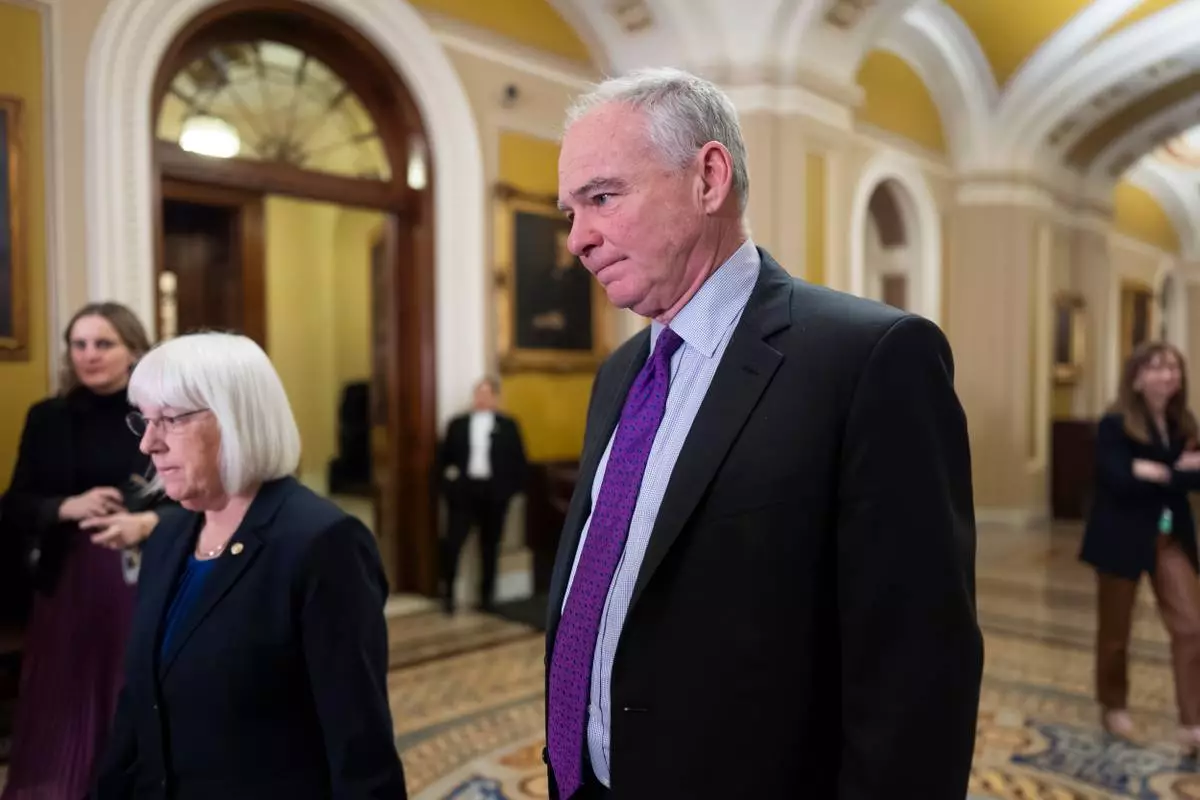
Sen. Tim Kaine, D-Va., center, and Sen. Patty Murray, D-Wash., left, arrive to speak with reporters at the Capitol in Washington, Tuesday, March 3, 2026. Kaine is leading an effort to advance a swift vote on a war powers resolution that would restrain President Donald Trump's military attack on Iran. (AP Photo/J. Scott Applewhite)
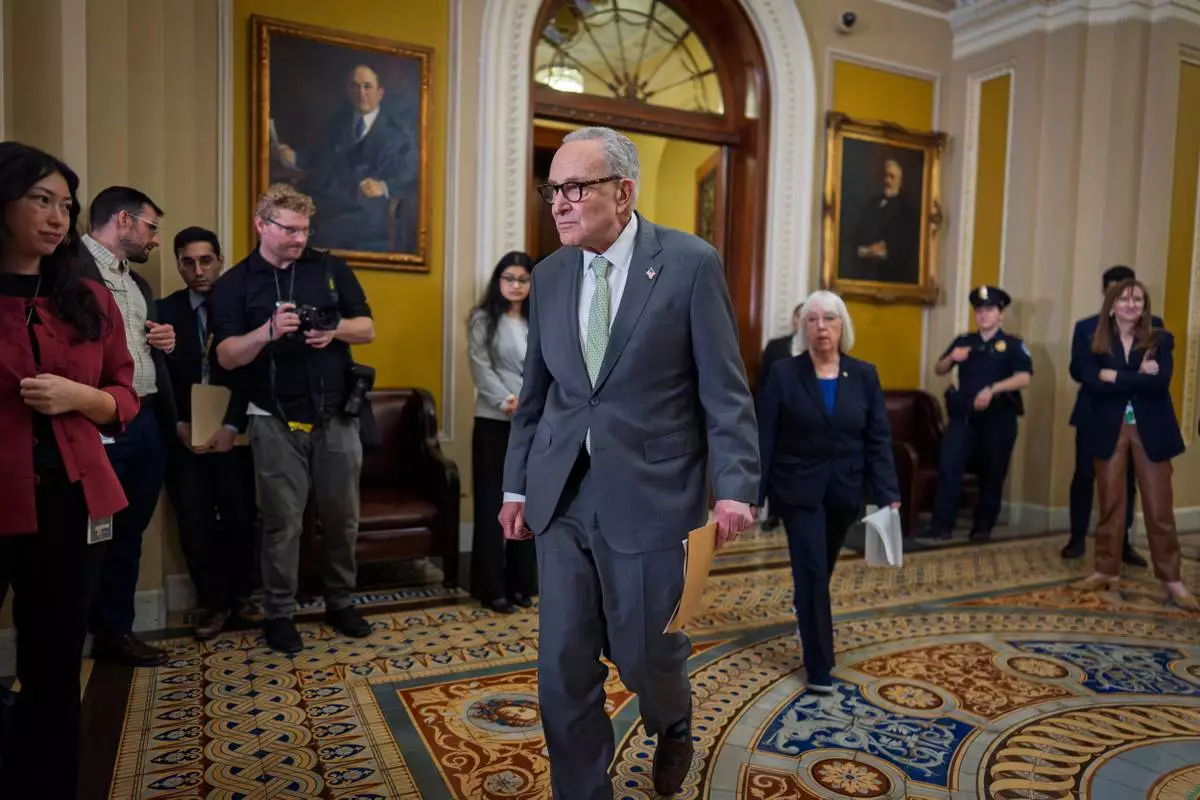
Senate Minority Leader Chuck Schumer, D-N.Y., arrives to speak with reporters at the Capitol in Washington, Tuesday, March 3, 2026. (AP Photo/J. Scott Applewhite)
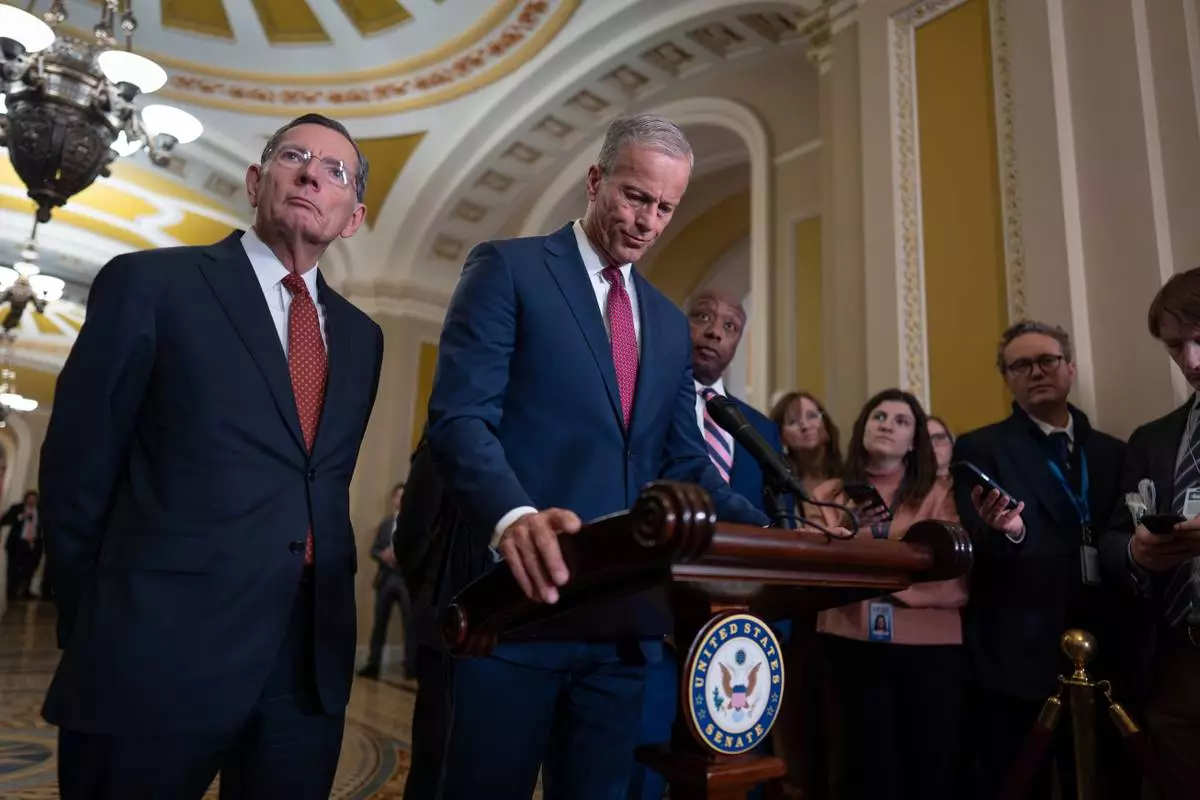
Senate Majority Leader John Thune, R-S.D., center, joined at left by Sen. John Barrasso, R-Wyo., the GOP whip, speaks to reporters at the Capitol in Washington, Tuesday, March 3, 2026. (AP Photo/J. Scott Applewhite)
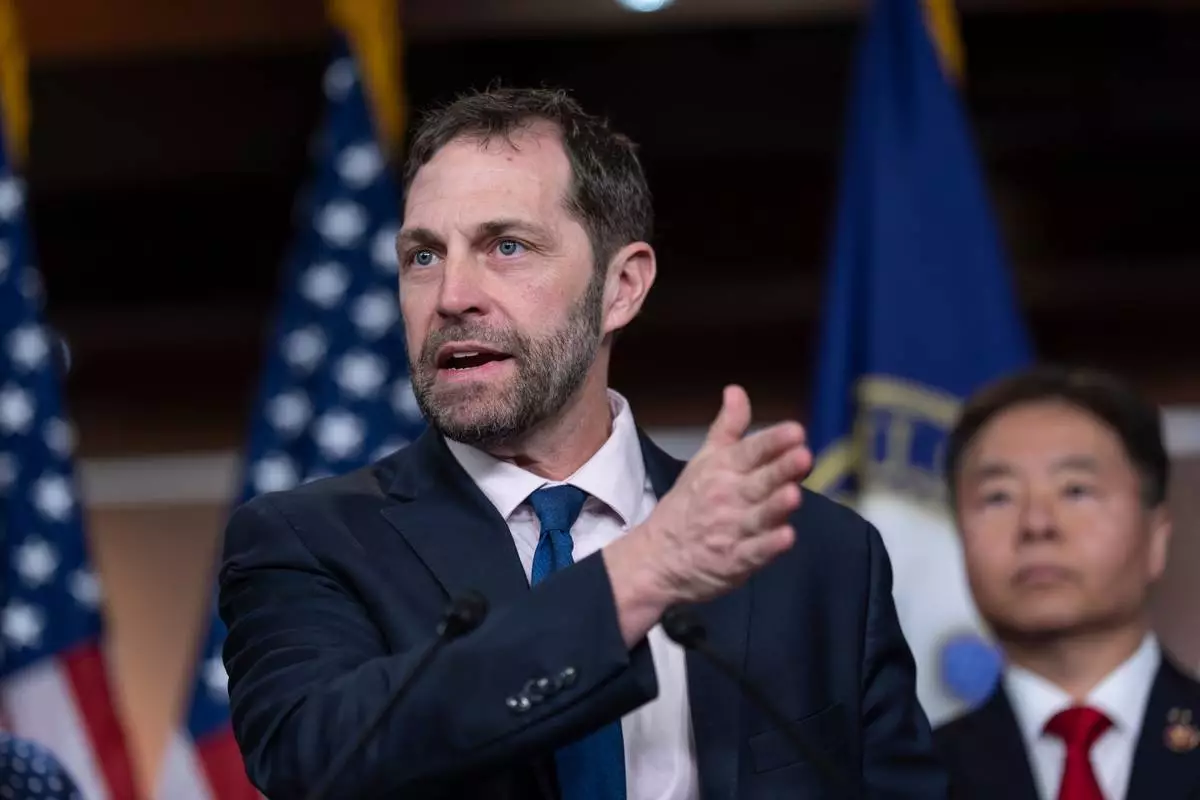
Rep. Jason Crow, D-Colo., a combat veteran, joins the House Democratic leadership in demanding a congressional approval for embarking on a war with Iran, during a news conference at the Capitol in Washington, Wednesday, March 4, 2026. (AP Photo/J. Scott Applewhite)
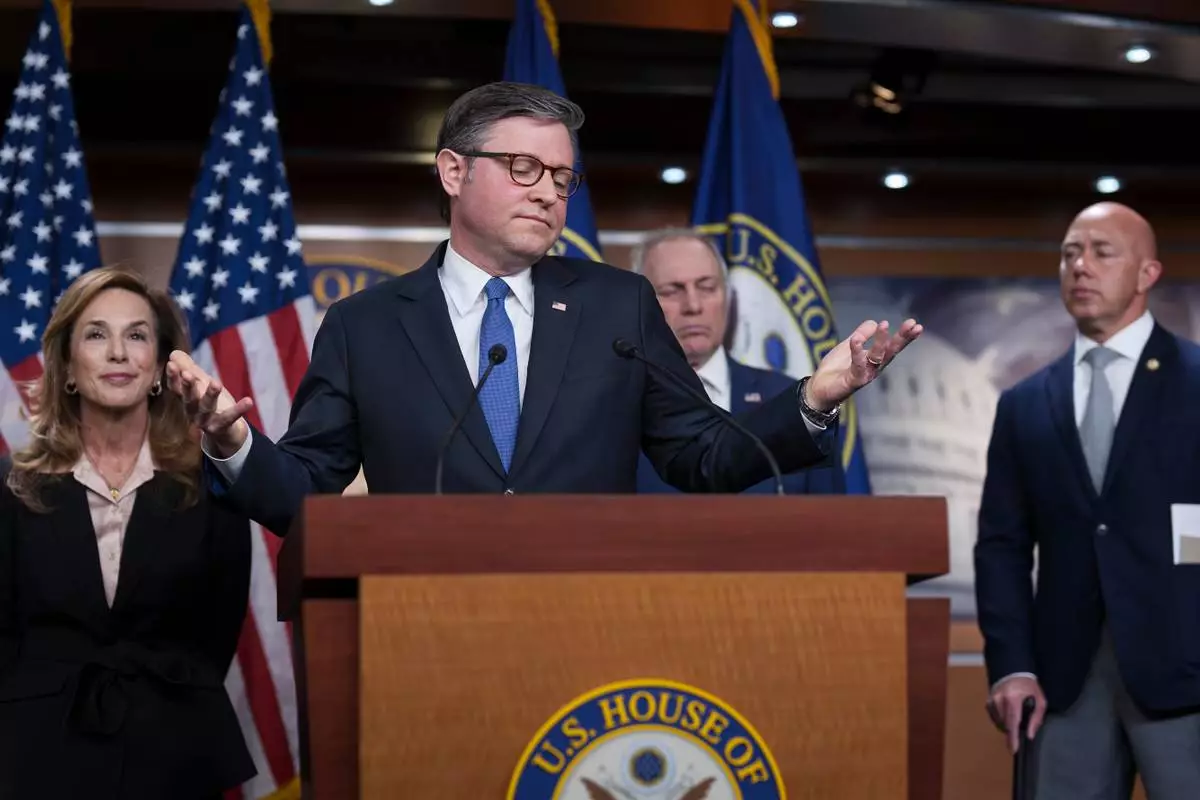
Speaker of the House Mike Johnson, R-La., gestures as he and the GOP leadership talk about the war against Iran, during a news conference at the Capitol in Washington, Wednesday, March 4, 2026. (AP Photo/J. Scott Applewhite)