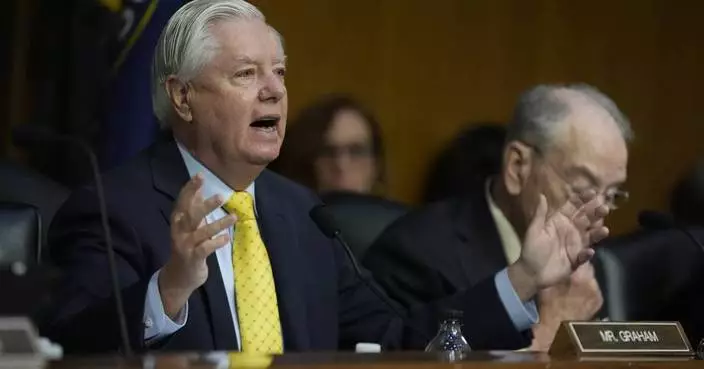
SANTA FE, N.M. (AP) — Jurors in a bellwether trial about the impacts of social media on children on Wednesday watched a deposition of Meta CEO Mark Zuckerberg that explored what the architects of Facebook and Instagram knew from internal research about the negative experiences of young users and how the company responded.
New Mexico’s attorney general alleges that Meta violated state consumer protection laws in failing to disclose what it knew about the dangers of addiction to social media as well as child sexual exploitation on the company's platforms. Attorneys for Meta say the company discloses risks and makes efforts to weed out harmful content and experiences — acknowledging that some bad material still gets through its safety net.
In the pretrial deposition recorded last year, prosecutors confronted Zuckerberg with internal company communications and emails from platform users spanning back to the infancy of Facebook in 2008 that discuss “problematic” and addictive use of social media.
“Over the past 15 years, users of your products have repeatedly told your company and you personally that they find the products to be addictive, that’s true isn’t it?” Previn Warren, a member of the prosecution team, asked Zuckerberg.
Zuckerberg took issue with the word “addictive.”
“I think people sometimes use that word colloquially,” he said “That’s not what we’re trying to do with the products, and it’s not how I think they work."
At the same time, Zuckerberg said he wants to "make sure that we can understand so we can improve the products and make them better for people in ways that they want.”
Zuckerberg went on to concede that he initially set goals for employees to increase the amount of time teenagers spent on its platform amid efforts to expand business revenue and the number of platform users.
“Yes, I think we focused on time spent as one of the major engagement goals,” Zuckerberg said. “Sometime during 2017 and beyond — for, at this point, most of the last 10 years — we've focused on other metrics.”
The deposition also delved into Zuckerberg's decision to lift a temporary Instagram ban on the use of cosmetic filters that changed people’s appearance in a way that seemed to promote plastic surgery.
“I care a lot about not cracking down on the ways that people can express themselves and there’s, like, always been a lot of pressure to do that and censor our services,” Zuckerberg said. “I didn’t find any of the anecdotal examples that people used to be convincing that it was actually clear evidence that this was going to be harmful.”
The deposition was recorded last year and shown during the fourth week of the civil trial against Meta, which also owns WhatsApp. Meta prohibits children under 13 from using its platforms, but some manage to sign up anyway.
On Tuesday, the New Mexico jury watched a video in which prosecutors peppered Instagram head Adam Mosseri with questions about Meta's approach to safety, corporate profits and social media features. They also asked him about policies for young users that might contribute to unwanted communications with adults.
The New Mexico case and a separate trial against Meta in Los Angeles could set the course for thousands of similar lawsuits against social media companies.
Zuckerberg testified last month in Los Angeles about young people’s use of Instagram and has answered questions from Congress about youth safety on Meta’s platforms.
During his 2024 congressional testimony, he apologized to families whose lives had been upended by tragedies they believed were caused by social media. But while he told parents he was “sorry for everything you have all been through,” he stopped short of taking direct responsibility for it.
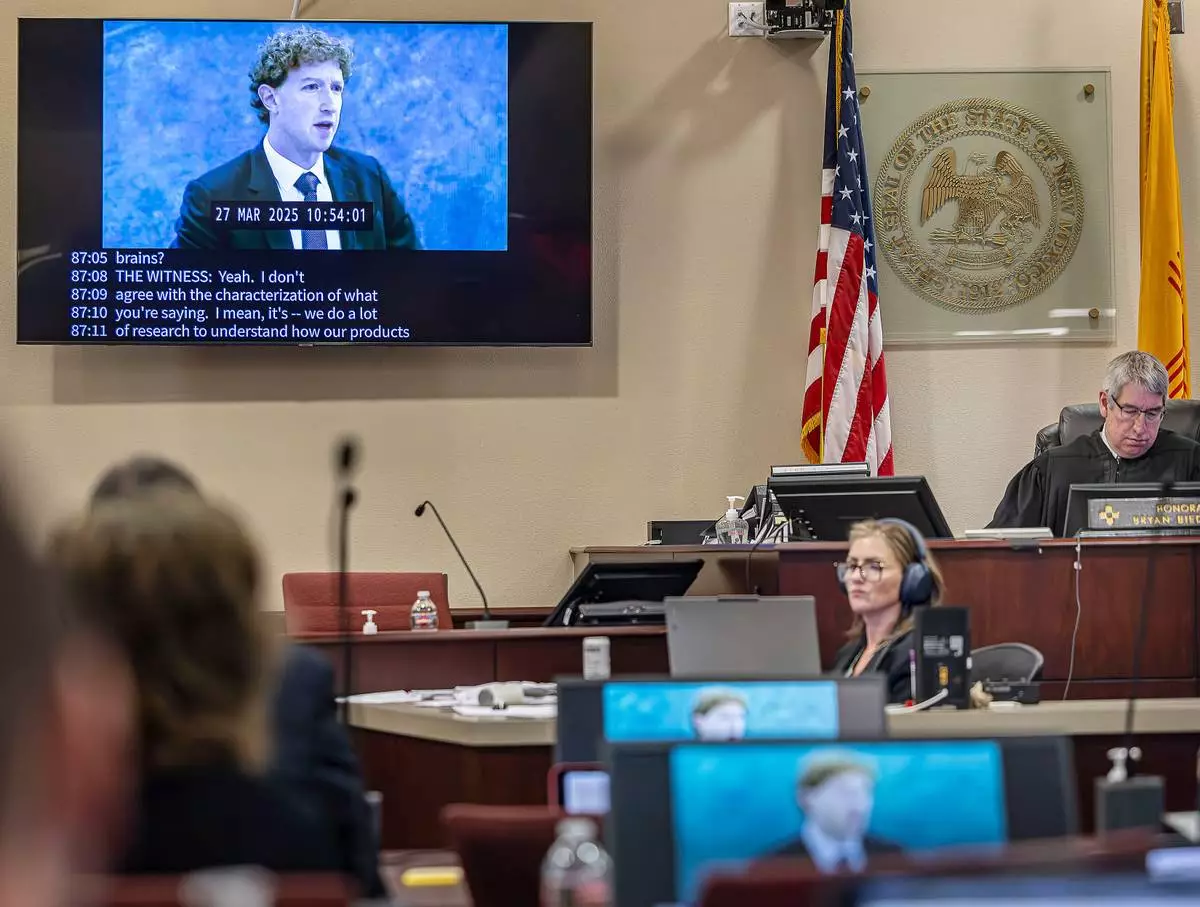
A recording of Meta Founder and CEO Mark Zuckerberg's deposition is played for the jurors on Wednesday, March 4, 2026, in Santa Fe, N.M. (Jim Weber/Santa Fe New Mexican via AP, Pool)

Lawyers for the plaintiff watch on a laptop as a recording of Meta Founder and CEO Mark Zuckerberg's deposition is played for the jurors on Wednesday, March 4, 2026, in Santa Fe, N.M. (Jim Weber/Santa Fe New Mexican via AP, Pool)

Meta CEO Mark Zuckerberg leaves after testifying in a landmark trial over whether social media platforms deliberately addict and harm children, Wednesday, Feb. 18, 2026, in Los Angeles. (AP Photo/Damian Dovarganes)
Iran launched more missiles at Israel and U.S. bases as war in the Middle East enters a sixth day. Israel announced multiple incoming attacks early Thursday and said it was intercepting the missiles.
Meanwhile, the Israeli military said it began new strikes against the Iranian-backed Hezbollah militant group in Lebanon. At least eight people were killed there late Wednesday into Thursday according to Lebanon’s Health Ministry and the state news agency.
Tehran has warned of the destruction of the Middle East’s military and economic infrastructure, and the war has rattled financial markets, with most taking their cues from what the price of oil is doing. Early Thursday, oil prices resumed their ascent.
Here is the latest:
Israel’s military said Thursday morning it had begun a “large-scale wave of strikes against infrastructure” in Iran’s capital, Tehran.
Oman’s top diplomat said Thursday that the sultanate was working with countries around the world to organize flights home for stranded foreigners.
Badr al-Busaidi wrote the message on X, just after Qatar Airways said it would start flights from Oman’s capital, Muscat.
“For everyone hoping to fly home from the Gulf, the Omani government is working with your governments and international airlines to organize flights to get you home,” he wrote. “We mean everyone, whatever passport you hold. The citizens of all countries have the human right to safety and security. People matter. Let’s stop the war now.”
Oman, on the eastern edge of the Arabian Peninsula, has come under attack off its coast and at its seaports, but has not seen a strike on Muscat International Airport in the war.
Qatar Airways said Thursday it will start operating a limited number of “relief flights” as the war in the Middle East goes on.
The airline said on X that the flights will include departures from Muscat, the Omani capital, to Amsterdam, Berlin, Copenhagen, London, Madrid and Rome. Another route will be from Riyadh to Frankfurt, Germany.
The flights will “support passengers who are stranded due to the current situation across the region.”
Airspace in Qatar remains closed over Iranian fire into the region.
Qatar Airways is a key East-West carrier.
Indonesian immigration authorities in Bali have granted emergency stay permits and waived overstay fines for foreign nationals stranded after air route closures in parts of the Middle East disrupted international flights from the resort island.
Nearly 6,000 of passengers traveling from Bali to Doha, Dubai and Abu Dhabi had their flights canceled over four days at Ngurah Rai International Airport, immigration officials said.
Ambassadors of Iran and Israel held separate news conferences Thursday in South Korea’s capital, trading sharp accusations as their countries continued an escalating war in the Middle East.
Speaking through an interpreter, Iran’s Ambassador to South Korea Saeed Koozechi demanded Seoul — a key U.S. ally — to be more vocal in demanding a halt to what he called an illegal aggression by U.S. and Israeli forces, which launched attacks despite active negotiations.
He said “many coffins would return to the United States” if it decides to deploy ground forces, and defended Iranian strikes on Gulf states hosting U.S. military bases as unavoidable.
The Israel ambassador in Seoul, Raphael Harpaz, said the joint U.S.-Israeli military operations aim both to destroy Iran’s nuclear development facilities and ballistic missile sites, and to help free Iranian people from oppression.
South Korea has supported U.S.-led diplomatic efforts to curb Iran’s nuclear ambitions but has not explicitly endorsed the U.S.-Israeli attacks, instead calling for a swift restoration of dialogue.
The Saudi Defense Ministry said it destroyed a drone in the kingdom’s al-Jawf province, which borders Jordan.
The Israeli military struck a building in the Beddawi Palestinian refugee camp in the coastal city of Tripoli, killing two people, Lebanon’s Health Ministry said.
The strike, which hit the area without prior warning and marked the northernmost strike so far, wounded another individual, the Health Ministry said.
The Israeli military did not immediately say who it targeted in the strike.
Located about 85 kilometers (53 miles) north of Beirut and more than 180 kilometers (112 miles) from the Lebanese-Israeli border, Beddawi was targeted during the 2024 war between Israel and Hezbollah.
Despite a ceasefire reached in November 2024, the Israeli military said in July it struck a Hamas figure in the camp.
An overnight Israeli drone strike targeted a vehicle on a coastal highway in southern Lebanon, killing three people, Lebanon’s state news agency said.
The highway connects the city of Tyre to Naqoura, a border town near Israel.
On Wednesday, the Israeli military warned residents to move north of the Litani River, which serves as a key buffer line with villages south of it lying closest to the Israeli border.
The number of people killed in Israeli strikes in Lebanon in the four days since the conflict between Israel and the Lebanese militant group Hezbollah reignited has risen to more than 70, with over 430 people wounded, Lebanon’s Health Ministry said Wednesday.
It is not clear how many of those killed in Lebanon were civilians, but the Health Ministry said Tuesday that they included seven children.
Officials with Hezbollah and the Palestinian Islamic Jihad militant group were also killed.
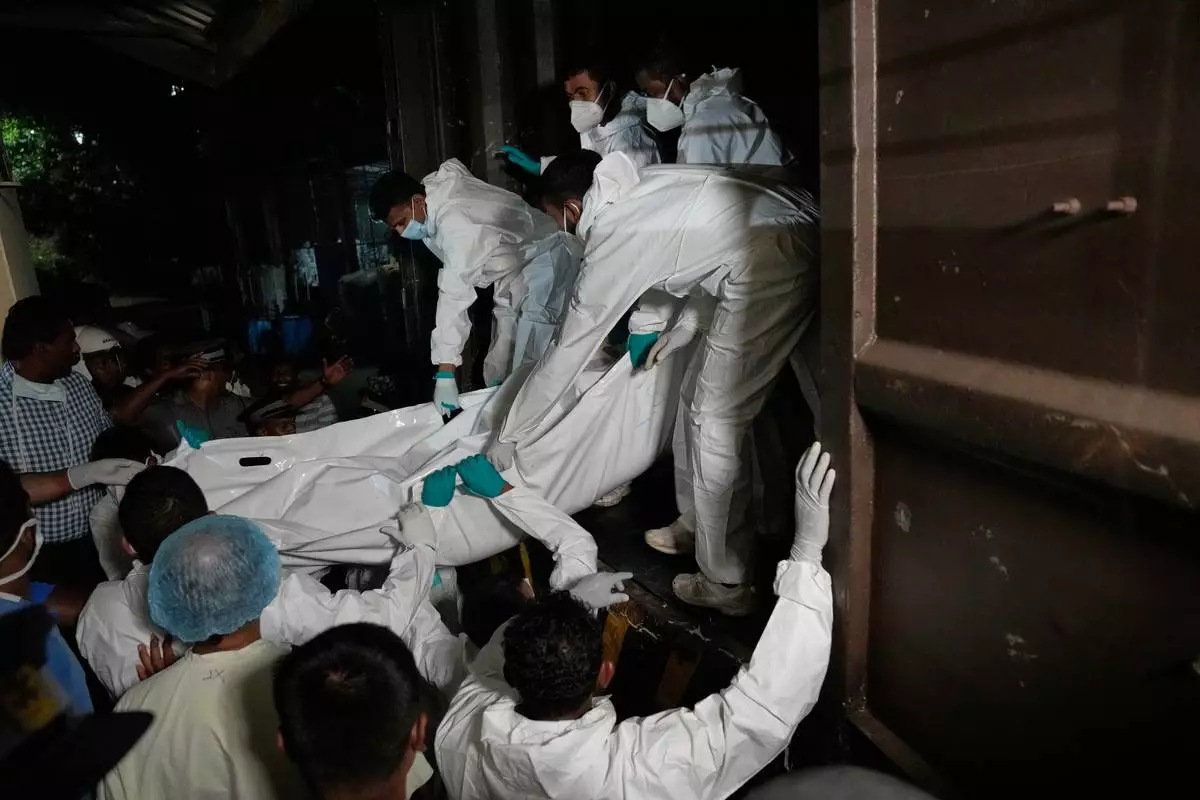
Healthcare workers unload from a vehicle the bodies of Iranian sailors who died when their IRIS Dena warship sank outside Sri Lanka's territorial waters, in Galle, Sri Lanka, Wednesday, March 4, 2026. (AP Photo/Eranga Jayawardena)
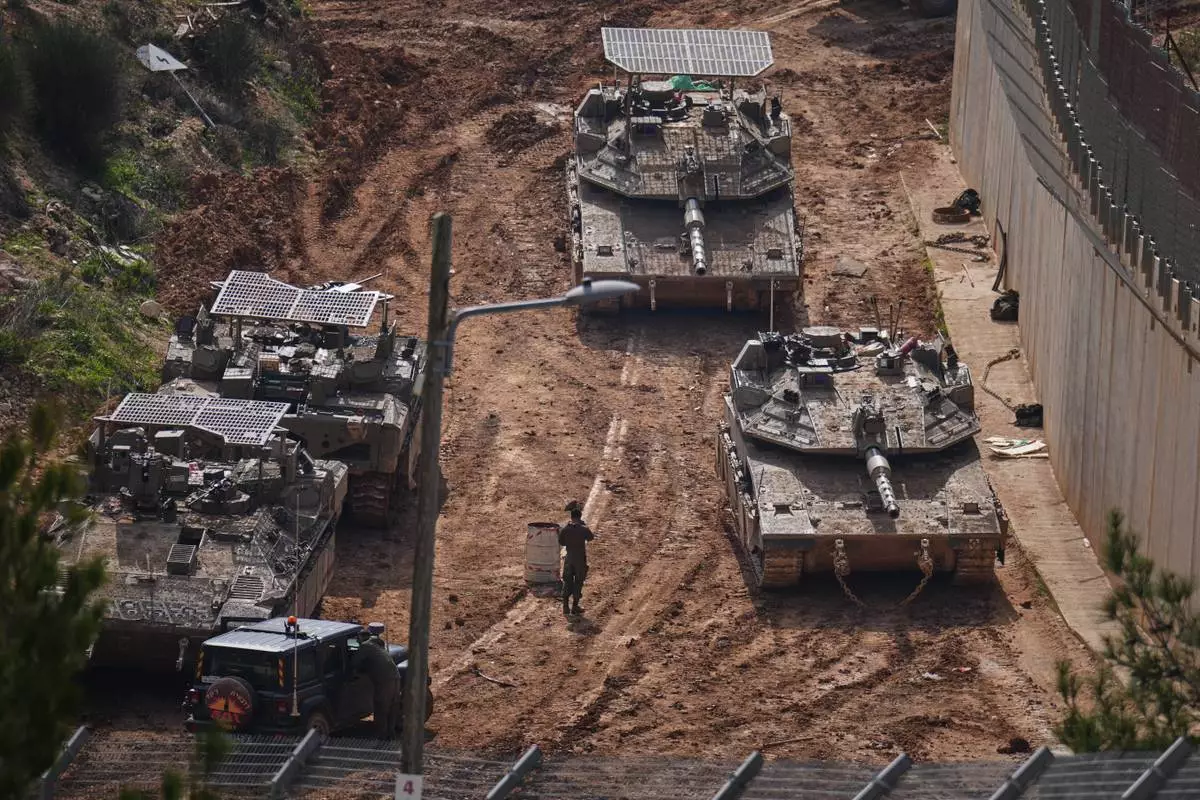
Israeli tanks maneuver near the Israel-Lebanon border, in northern Israel, Wednesday, March 4, 2026. (AP Photo/Ariel Schalit)
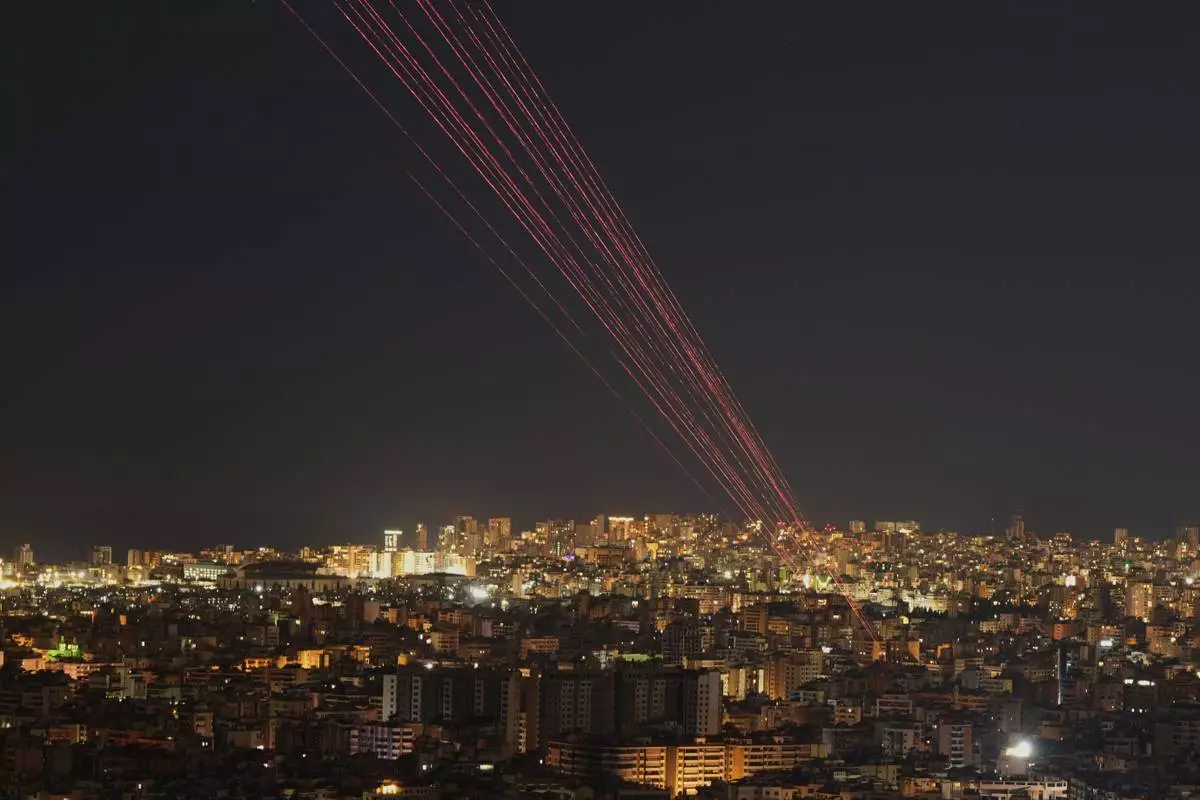
Tracer rounds light the sky as people fire live rounds into the air during a televised speech by Hezbollah leader Naim Kassem in Dahiyeh, Beirut's southern suburbs, Lebanon, Wednesday, March 4, 2026. (AP Photo/Hassan Ammar)