WASHINGTON (AP) — In their mostly white school district, Black students routinely heard racial slurs. White classmates hurled insults like “slave,” “monkey” or worse. It often went unpunished.
Parents made those claims in a 2024 complaint asking the U.S. Education Department to investigate racial bullying at the Pennridge School District in Pennsylvania. They thought their complaint had the power to make things better. Instead, it became one of thousands sitting in a federal office with little hope of gaining attention after layoffs by the Trump administration.
Families say they’ve had nowhere else to turn.
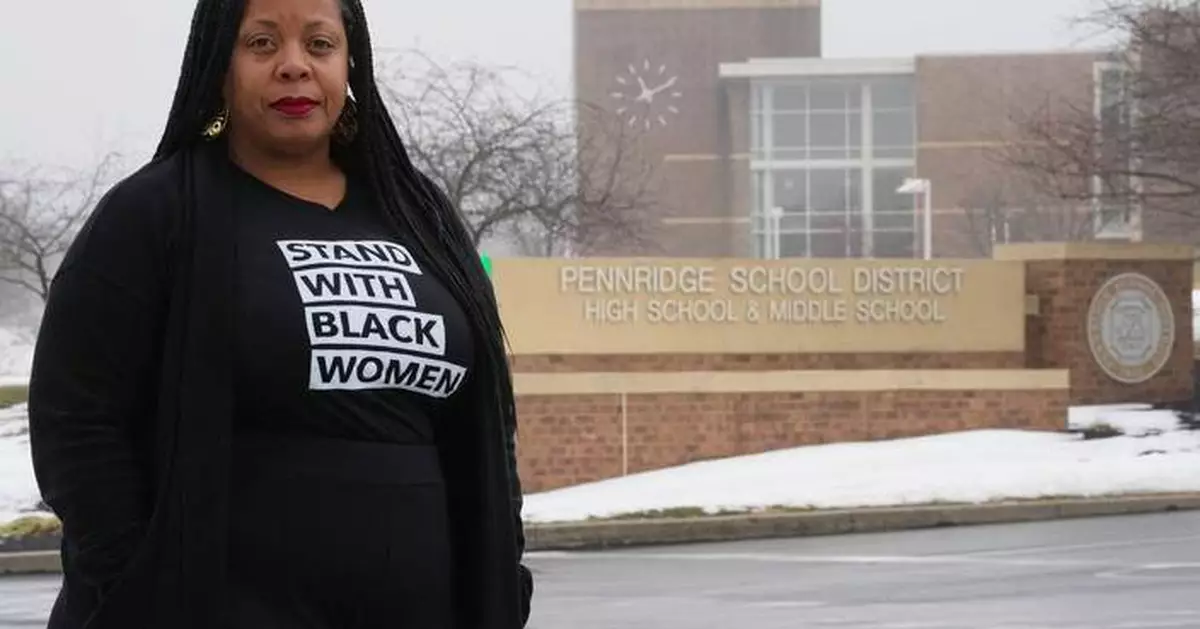
“There was an expectation that something was going to happen,” said Adrienne King, who has two daughters in the district and is president of the NAACP Bucks County chapter. When nothing did, "it’s a very hollow, empty feeling.”
One of the Education Department's biggest jobs is to police discrimination in America's schools. But amid mass firings and shifting priorities, that role has waned. In its place, there's an emerging push for states to step up.
In Pennsylvania, a lawmaker is proposing a new state agency that would investigate schools and uphold students’ civil rights — traditionally the role of the federal government. At the same time, advocates there and in other Democrat-led states are pressing existing state agencies to intervene when students face discrimination based on race, disability or sex.
The idea carries risk. Pushing the work to the states could create a patchwork of systems with uneven protections. Some worry it will embolden the Trump administration to retreat further on civil rights.
Pennsylvania Sen. Lindsey Williams offered a blunt message last fall when she proposed a new state civil rights office to be modeled after its federal counterpart. “If the federal government won’t stand up for our most vulnerable students, I will,” said Williams, a Democrat.
Her bill, to be introduced this spring, faces long odds in the state’s Republican-controlled Senate. Yet even if it fails there, Williams believes it has potential to become a national model. She's already heard interest from lawmakers in other states, and similar proposals have been put forward in Maryland and Illinois.
More immediately, advocates in Pennsylvania are calling for heavier investment in an existing but often overlooked agency. The Pennsylvania Human Relations Commission already has the power to investigate schools and enforce students’ rights, but it’s rarely used for that end. It’s better known for handling employment disputes, with just 5% of its recent cases involving education.
Kristina Moon, a lawyer at the Education Law Center in Pennsylvania, has started encouraging families to take discrimination complaints to the commission instead of the federal government. She sees it as the next best option for families left in limbo amid federal turmoil.
“It's incredibly important for students and families to be aware of any other option available to them," said Moon, who represents families in the Pennridge complaint.
The commission is welcoming complaints that have stalled at the federal level. Yet officials are also realistic about their limitations. The agency has about 100 staff — down from more than 200 in the past — and some question its ability to handle a sharp increase in complaints.
The federal Education Department had more than 300 open investigations in Pennsylvania as of January 2025, according to the most recent federal data. Each is a possible candidate to be shifted to the state.
“It would be tough, I’ll be totally honest,” said Desireé Chang, the commission’s education director. “A stark influx would definitely put some weight on our agency. But we would do it because that is what we are charged with doing.”
Before President Donald Trump took office last year, the Education Department's Office for Civil Rights was already struggling under a heavy caseload. Work has slowed further after sweeping layoffs, which closed entire offices in Philadelphia, Boston, Chicago and elsewhere. Some remaining staff say time-consuming investigations have become rare as they focus on the quickest complaints.
At the same time, Trump officials have used the office to go after schools that make accommodations for transgender students and athletes, arguing that it discriminates against girls and women.
Trump officials blame the previous administration for leaving a backlog of complaints. Trump officials have brought back some fired employees to help clear cases.
The fallout is being felt across the country. In Maryland, a recently proposed bill would give the state's Commission on Civil Rights new power to investigate discrimination in schools. The office has long handled discrimination cases in areas like housing and employment, but students don't have a comparable option to file complaints.
At a hearing last week, officials at the commission supported the bill and said they can no longer rely on the federal government to defend students' rights.
“Offices have been closed, people have been fired, cases are piling up or not even moving — that’s why we sought to step in that gap and provide Maryland students an option,” said Glendora Hughes, general counsel for the commission.
In Massachusetts, advocates are turning attention to an existing office in the state’s education department. State officials say anyone can file a complaint with the Problem Resolution System to address violations of the Individuals with Disabilities Education Act or other laws protecting students from discrimination.
“It is imperative that the Office for Civil Rights perform its congressionally mandated duties, rather than leaving states on their own to protect the rights of their students to learn in environments free from discrimination,” the Massachusetts Executive Office of Education said in a statement.
Some legal aid groups are also filling in gaps. The Southern Poverty Law Center is suing a Louisiana school district on behalf of a 10-year-old boy with autism. The suit says the St. Tammany Parish School District illegally cut the boy's classroom time to just two hours a day starting in 2024, down from a full day. The nonprofit said it’s the kind of case that would have been handled by the federal government in the past.
One of the U.S. Education Department's most powerful tools is the ability to pull federal funding from schools that violate civil rights laws. Facing that threat, schools usually have agreed to make changes when pressed by the agency.
Proposals at the state level have varying enforcement powers. Some would allow states to mediate disputes between families and schools, and to issue legal orders. By contrast, a newly created Office of Civil Rights in California primarily aims to provide anti-discrimination guidance and training to local schools.
In Pennridge, families are weighing their next steps. King said she has little hope in the federal complaint, and the bullying hasn't stopped. Her daughters still hear racial slurs at school, and students make insensitive comments about their hair. She wonders how it will all shape her daughters' lives.
“I feel as though my girls have normalized a lot of this, but for the sake of survival — middle school is hard," she said. “You just want to be like everybody else.”
The Associated Press’ education coverage receives financial support from multiple private foundations. AP is solely responsible for all content. Find AP’s standards for working with philanthropies, a list of supporters and funded coverage areas at AP.org.
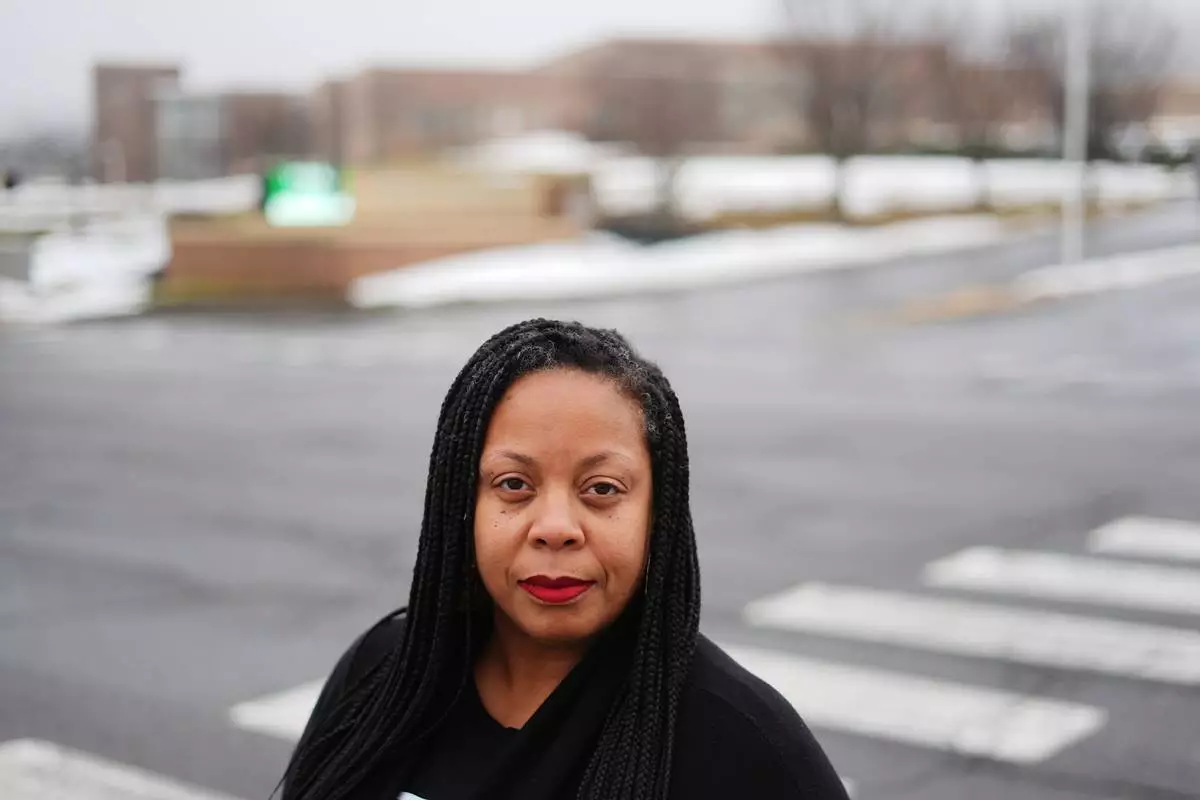
Adrienne King poses for a portrait in front of Pennridge School District's buildings in Perkasie, Pa., Friday, Feb. 20, 2026. (AP Photo/Matt Rourke)
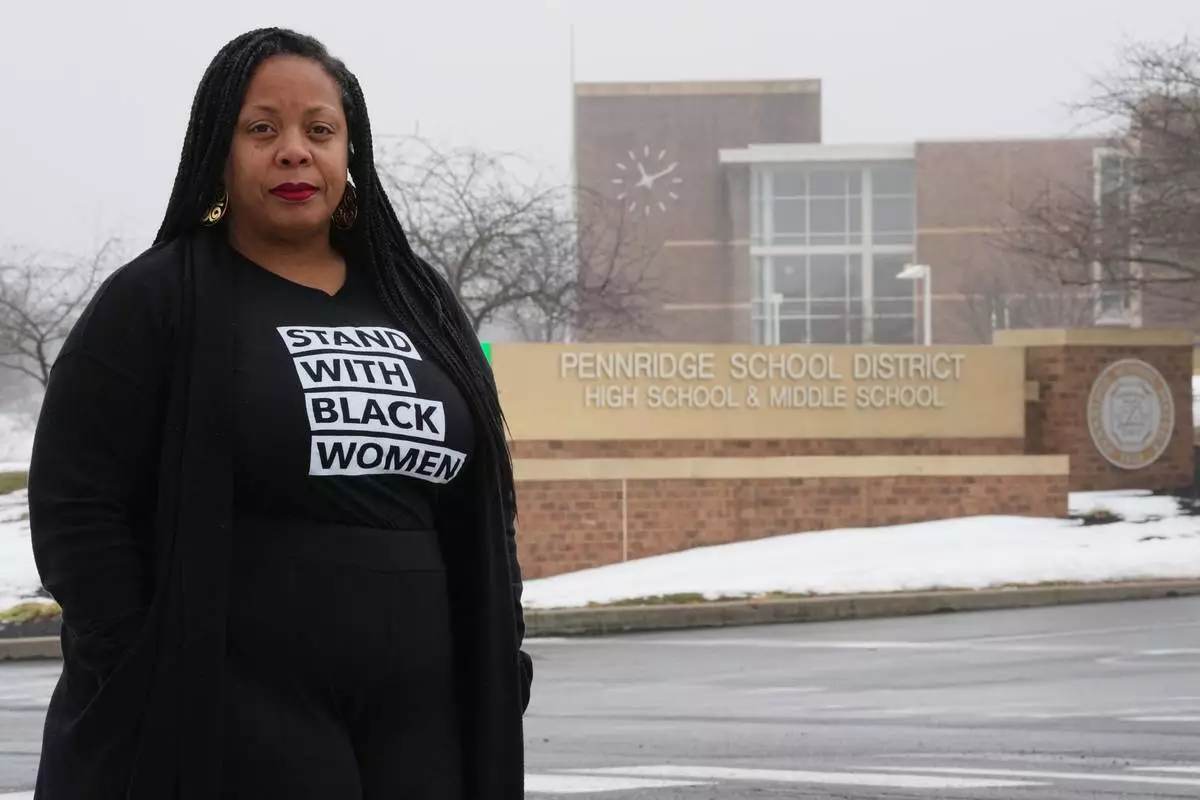
Adrienne King poses for a portrait in front of Pennridge School District's buildings in Perkasie, Pa., Friday, Feb. 20, 2026. (AP Photo/Matt Rourke)