NEW YORK (AP) — A man convicted in the 2024 shooting death of a New York City police officer during a traffic stop will spend the rest of his life behind bars after a judge sentenced him Monday to 115 years to life in prison.
During an emotional hearing in a Queens courtroom packed by uniformed police officers and Officer Jonathan Diller’s family, the judge said Guy Rivera “most certainly will” die in a prison cell.
“Your sentence to me was determined the second you pulled that trigger,” Judge Michael Aloise told Rivera. “It took me five minutes to calculate the numbers. It’s going to take you a lifetime to calculate the damage you caused.”
A jury found Rivera guilty earlier this month of aggravated manslaughter and other charges in Diller's killing, but acquitted the 36-year-old Queens resident of murder.
The shooting happened on March 25, 2024, when Diller and other officers were on patrol in the Far Rockaway section of Queens. Authorities say one of the officers spotted a suspicious object bulging from Rivera’s hoodie as he and another man walked to a parked car and got in.
Police say the officers were questioning the driver when Rivera, who was in the passenger’s seat, suddenly pulled out a gun and shot Diller. The bullet struck the officer below his bulletproof vest, mortally wounding him. Another officer then shot and wounded Rivera.
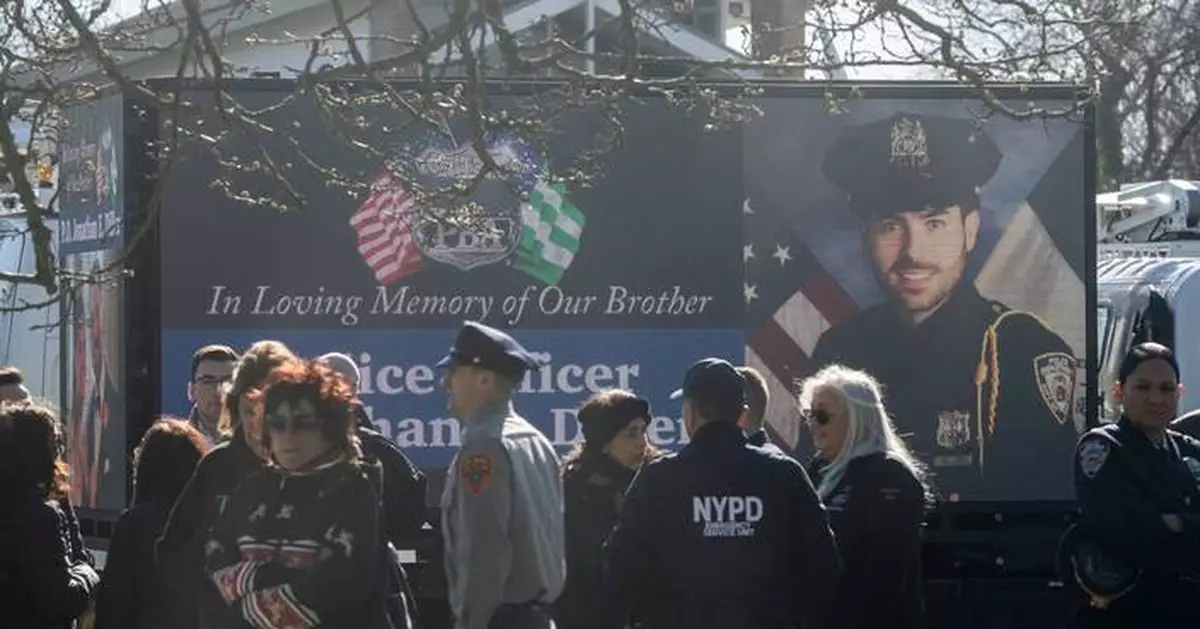
At the time, Diller was the first NYPD officer to be killed in the line of duty in two years. The 31-year-old’s wake and funeral in his hometown on Long Island drew thousands of people, including President Donald Trump, and the case briefly became a focal point during his 2024 campaign to reclaim the White House on a message of “law and order.”
The Republican president hailed Diller an “unbelievably wonderful person and a great officer” in a March 2025 speech to a joint session of Congress.
Prosecutors had argued that Rivera was deserving of life behind bars because he was a “persistent felon” with prior criminal convictions who had made a “calculated, deliberate and evil choice” to inflict violence.
“This was not an accident,” Assistant District Attorney Kenneth Zawistowski said. “We ask that you honor Jonathan’s life. We ask that you honor his sacrifice."
Rivera's lawyer, Jamal Johnson, argued, as he did during the three-week trial, that Rivera was “not a murderer” because he did not intend to kill Diller.
He maintained the gun accidentally discharged as officers pulled the firearm from Rivera’s pocket. He pleaded with the judge not to issue a “sensational” sentence and complained that Rivera did not receive a fair trial.
Johnson, in a statement after the court hearing, said he intended to appeal his client's conviction.
“The fact that the court stated it had already made up its mind about sentencing well before the trial was conducted reveals the bias and uphill battle the defense faced throughout this case,” he said.
The second suspect, Lindy Jones, is due back in court Tuesday as he awaits trial on weapons charges.
On Monday, Rivera declined to address the court but members of Diller's family delivered tearful remarks.
Stephanie Diller, the officer's wife, said she and the couple's young son had been given a life sentence without their husband and father, so Rivera should also be given one.
“You took my husband and the life we were building,” she said speaking directly to Rivera through tears. “In a single moment, everything that was my life was gone.”
Fran Diller, the officer's mother, said she is haunted by her son's death every day.
“He had a future so incredibly bright,” she said. “My world has been completely shattered. Everything feels empty without him. All I feel is unbearable ache."
Patrick Hendry, president of the police officers’ union, said after the hearing that the manslaughter verdict “did not send the right message” to police officers but that the sentence had.
“He should never ever walk the streets again, and he won't,” Hendry said of Rivera.
Follow Philip Marcelo at https://x.com/philmarcelo
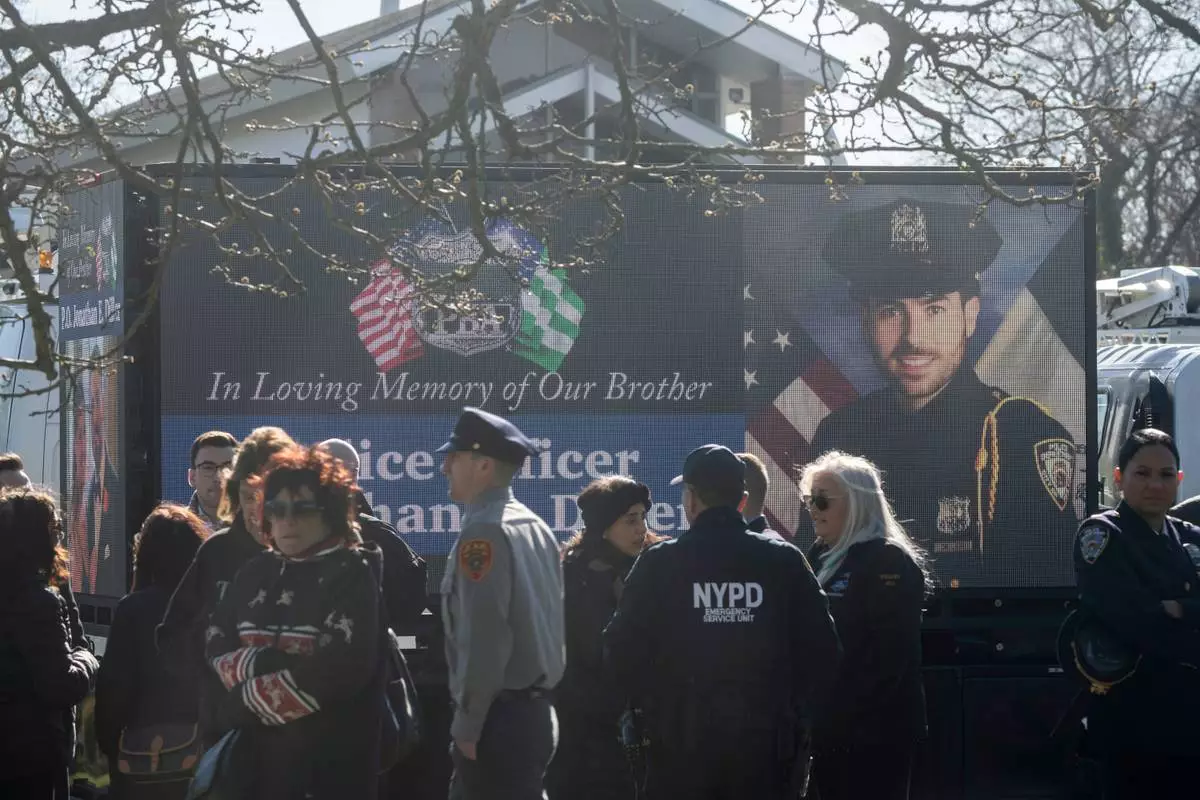
FILE - New York Police Department Officer Jonathan Diller is on a screen during his funeral service at Saint Rose of Lima R.C. Church in Massapequa Park, N.Y., March 30, 2024. (AP Photo/Jeenah Moon, File)
RICHMOND, Va. (AP) — Virginia Supreme Court justices on Monday questioned whether the state's Democratic-led legislature complied with constitutional requirements when it sent a congressional redistricting plan to voters, in a case that carries high stakes for the balance of power in the U.S. House.
The new districts, which could net Democrats four additional seats, won narrow voter approval last week. But a Republican legal challenge contends the General Assembly violated procedural rules by placing the constitutional amendment before voters to authorize the mid-decade redistricting. If the court agrees that lawmakers broke the rules, it could invalidate the amendment and render last week's statewide vote meaningless.
The Virginia court proceedings mark the latest twist in a national redistricting battle between Republicans and Democrats seeking an advantage in a November midterm election that will determine whether Republicans maintain their narrow majority in the U.S. House.
President Donald Trump kicked off a tit-for-tat round of gerrymandering last summer when he urged Texas Republicans to redraw districts to their favor in an attempt to win several additional House seats. That set off a chain reaction of similar moves in other states, leading to the voter approval last week of Virginia's new map.
Next up is Florida, where Republican Gov. Ron DeSantis has proposed a congressional redistricting plan that could essentially cancel out Virginia's changes by giving Republicans an improved chance of winning additional seats. The redistricting is on the agenda for a special session of the GOP-controlled Legislature beginning Tuesday.
During Monday's arguments, the Virginia Supreme Court focused on whether the new congressional districts should be invalidated because of the process used by lawmakers. The justices issued no immediate ruling.
Because the state’s redistricting commission was established by a voter-approved constitutional amendment, lawmakers had to propose an amendment to redraw the districts. That required approval of a resolution in two separate legislative sessions, with a state election sandwiched in between, to place the amendment on the ballot.
The legislature's first vote occurred last October — while early voting was underway but before it concluded on the day of the general election. Judicial questioning focused on whether that was too late, because early voting already had begun.
Attorney Matthew Seligman, who defended the legislature, argued that the “election” should be defined narrowly to mean the Tuesday of the general election. In that case, the legislature's first vote on the redistricting amendment occurred before the election and was constitutional, he told judges.
But an attorney arguing for the plaintiffs, Thomas McCarthy, said “election” means the entire period during which people can cast ballots, which lasts several weeks in Virginia. If that's the case, then the legislature's initial endorsement of the redistricting amendment came too late to comply with the state constitution, he said.
The purpose of Virginia's two-step amendment process, with an intervening election, is so voters can know whether legislative candidates support or oppose a proposed constitutional amendment, McCarthy said.
He pointed to the case of Democratic voter Camilla Simon, one of the plaintiffs in the lawsuit alongside Republican state lawmakers, who cast an early vote last fall for Democratic Del. Rodney Willett. After she voted, Willett sponsored the Democratic redistricting amendment, and Simon wished she could have undone her vote, McCarthy said.
“None of these voters had any idea this was coming, and that’s not how this process is supposed to work,” McCarthy told the justices.
Those defending the Democratic redistricting plan also contend that the voters' will should be respected.
The people voted to ratify the constitutional amendment, “and the challengers are asking to overturn that democratic result,” Seligman told reporters after the arguments.
So far, the two major parties have battled to a near draw in the states that have redrawn their congressional maps for this year's midterms.
Republicans think they could win up to nine more seats under revised districts in Texas, Missouri, North Carolina and Ohio. Democrats think they could win as many as 10 additional seats under new districts in California, Utah and Virginia. But legal challenges remain in both Virginia and Missouri.
Virginia currently is represented in the U.S. House by six Democrats and five Republicans who were elected from districts imposed by a court after a bipartisan redistricting commission failed to agree on a map after the 2020 census. The new districts, which won voter approval last Tuesday, could give Democrats an improved chance to win 10 districts.
Some candidates already have begun campaigning based on the new districts in advance of the state's Aug. 4 primary election.
In January, a judge in rural Tazewell County, in southwestern Virginia, ruled that lawmakers failed to follow their own rules for adding the redistricting amendment to a special session last fall. Circuit Judge Jack Hurley Jr. also ruled that lawmakers failed to initially approve the amendment before the public began voting in last year’s general election and that the state had failed to publish the amendment three months before the election, as required by law. As a result, he said, the amendment is invalid and void.
The Virginia Supreme Court placed Hurley's order on hold and allowed the redistricting vote to proceed before hearing arguments on the case.
During Monday's arguments, justices also raised questions about the ability of lawmakers to expand the agenda for their special session and whether the three-month public notice requirement was important enough to thwart a voter-approved amendment.
Republicans have filed at least two additional legal challenges, which also are winding their way through the courts.
Lieb reported from Jefferson City, Missouri. Associated Press writers Allen G. Breed in Richmond and Nicholas Riccardi in Denver contributed to this report.
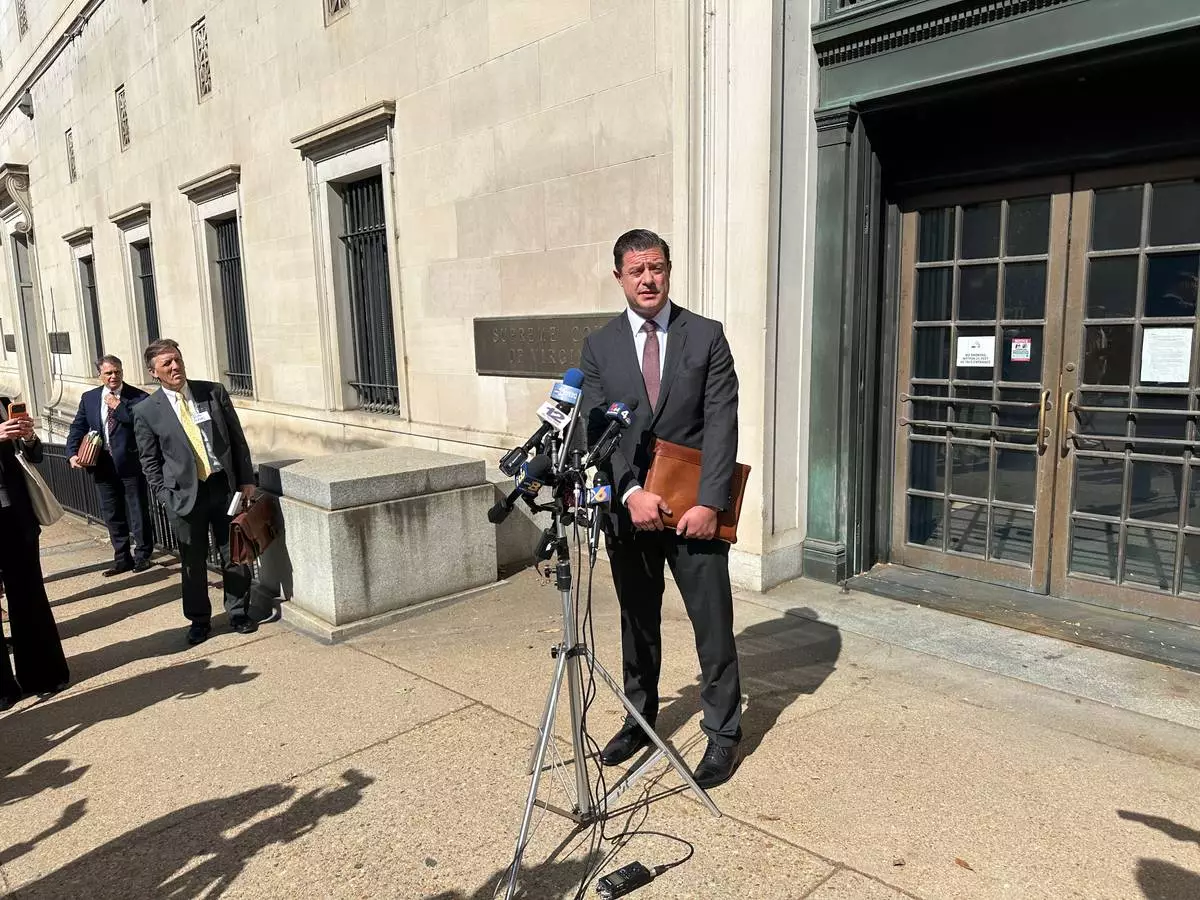
Attorney Matthew Seligman, representing Democratic state legislators, speaks with the media following a hearing on new congressional maps before the state Supreme Court in Richmond, Va., on Monday, April 27, 2026. (AP Photo/Allen G. Breed)
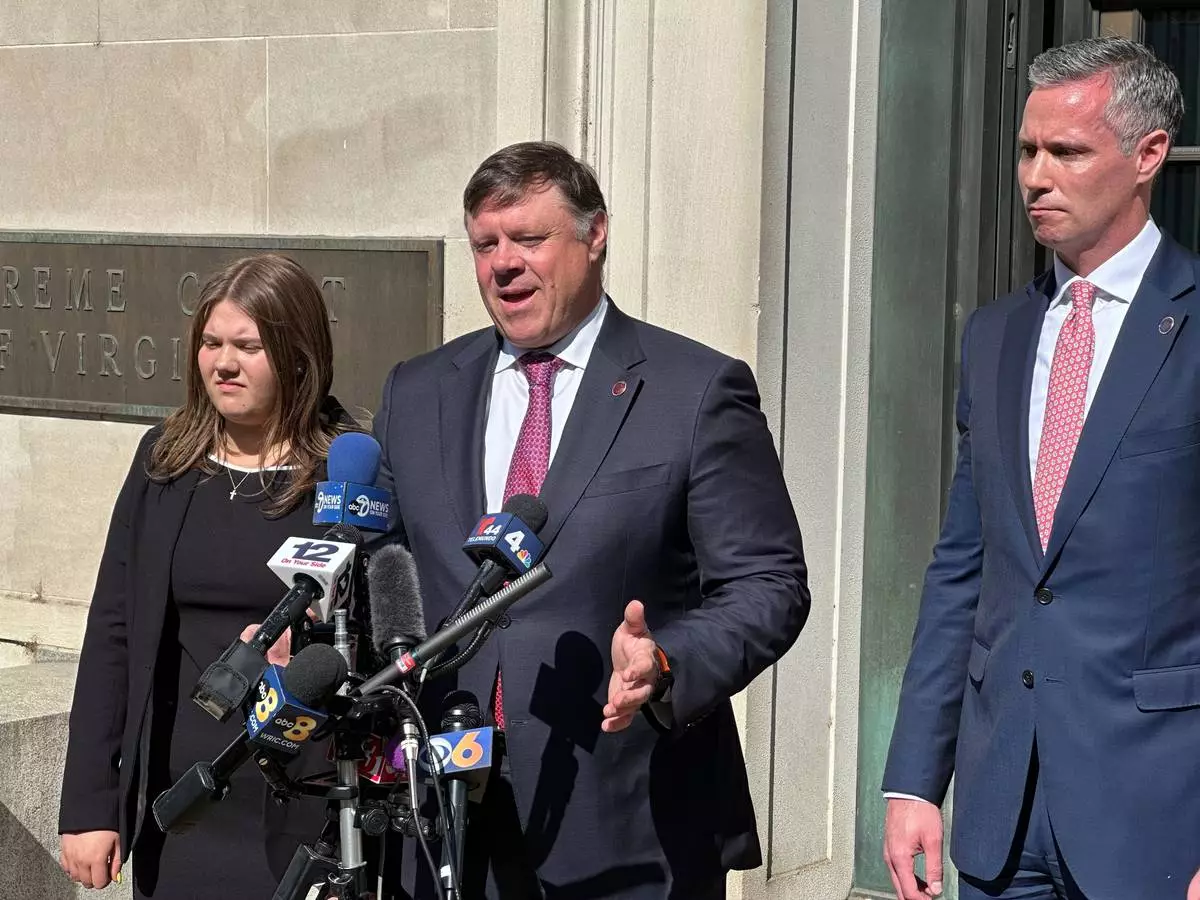
State Senate Minority Leader Ryan McDougle, center, speaks with the media following a hearing on new congressional maps before the state Supreme Court in Richmond, Va., on Monday, April 27, 2026. (AP Photo/Allen G. Breed)
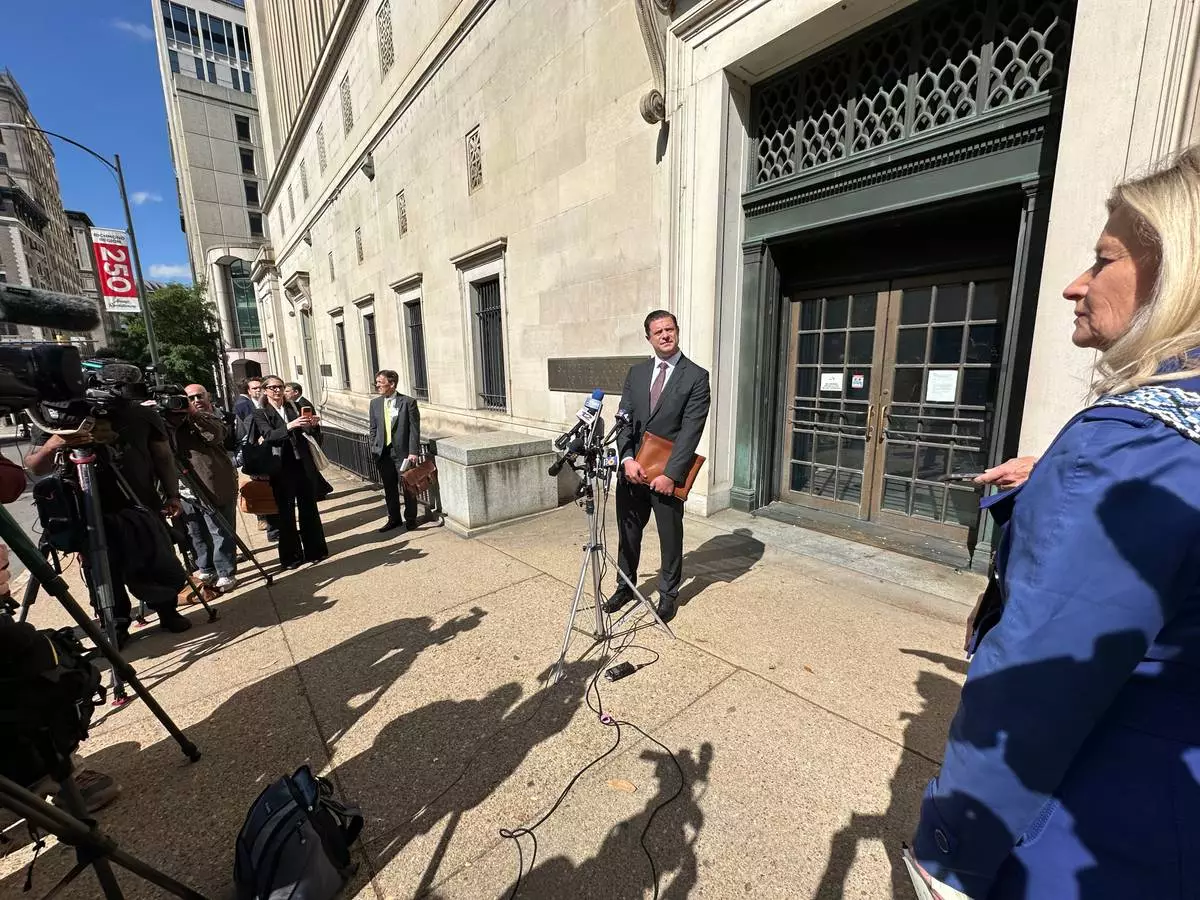
Attorney Matthew Seligman, representing Democratic state legislators, speaks with the media following a hearing on new congressional maps before the state Supreme Court in Richmond, Va., on Monday, April 27, 2026. (AP Photo/Allen G. Breed)
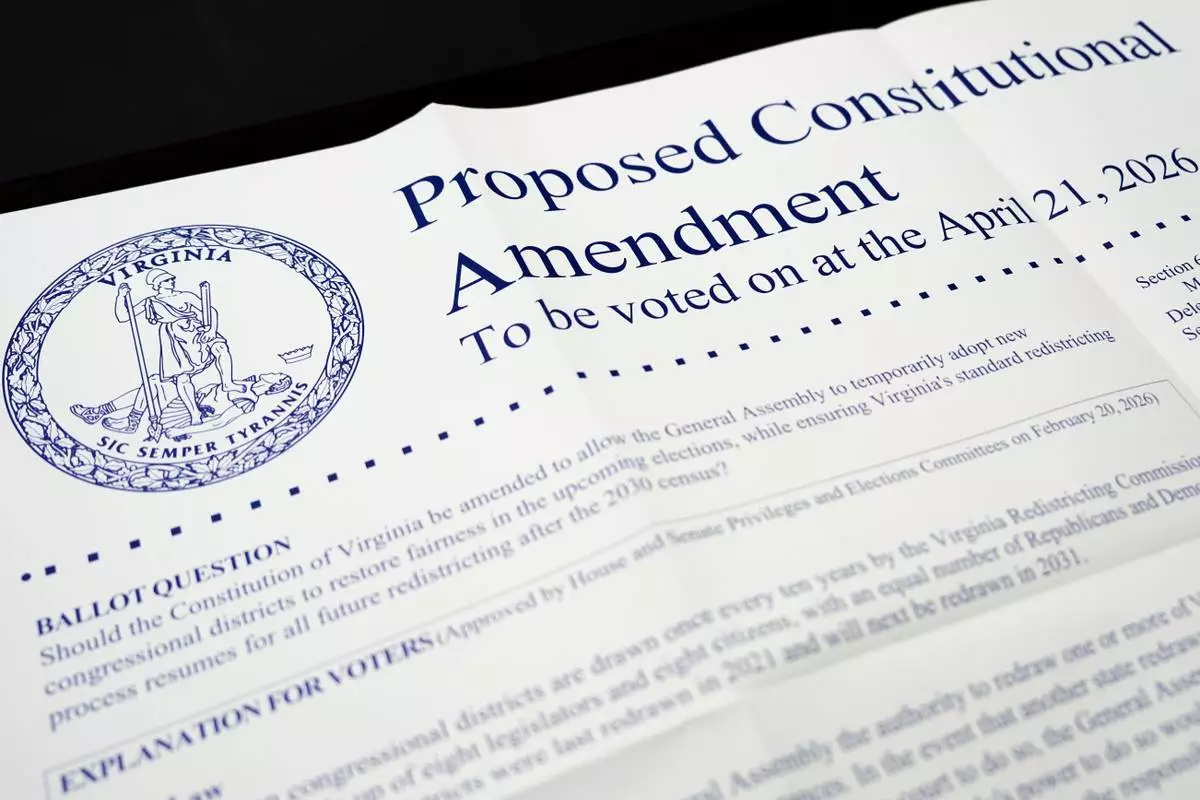
A poster on the Virginia redistricting referendum is seen during voting at Mason Square, Tuesday, April 21, 2026, in Alexandria, Va. (AP Photo/Julia Demaree Nikhinson)
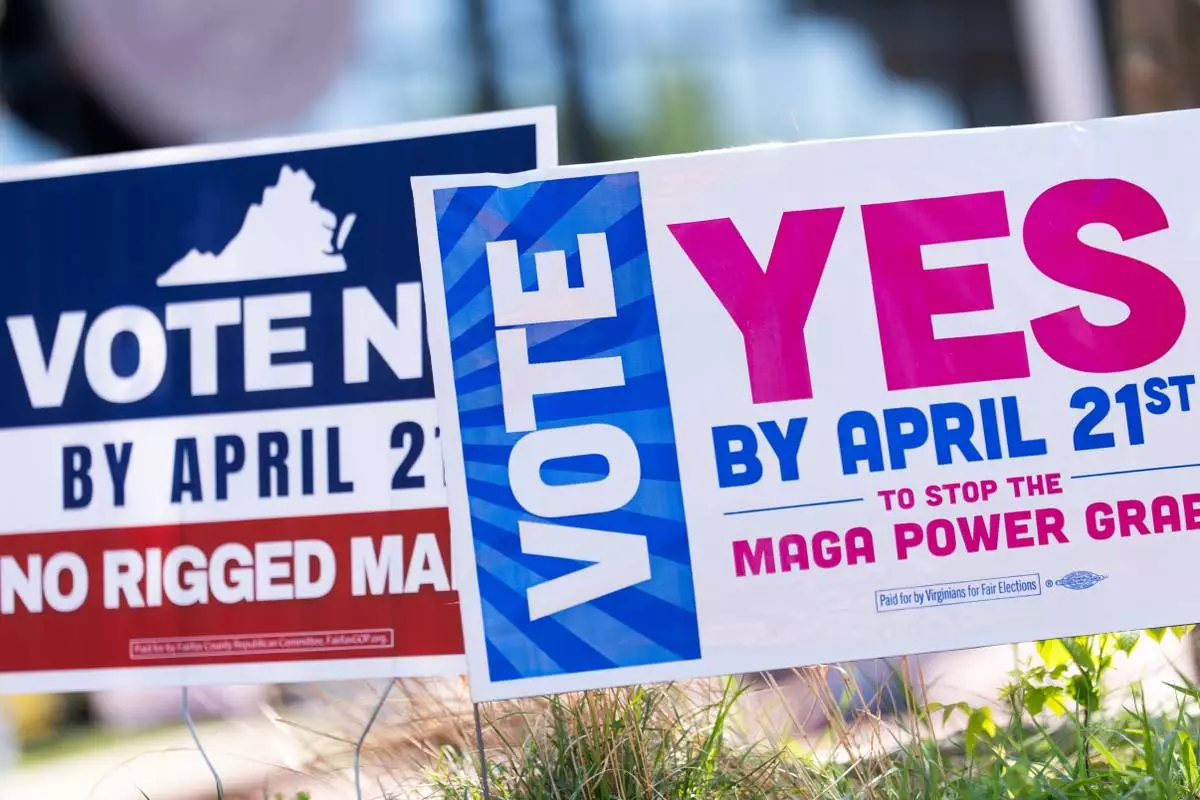
Signs are seen outside Fairfax Government Center during the Virginia redistricting referendum, Tuesday, April 21, 2026, in Fairfax, Va. (AP Photo/Julia Demaree Nikhinson)