WASHINGTON (AP) — Federal law enforcement officials are evaluating how to proceed with some high-profile public events featuring President Donald Trump after the attack at the White House Correspondents’ Dinner.
The third violent assault in the vicinity of Trump in less than two years is renewing the central tension confronting the Republican president’s defenders: how to accommodate the public-facing demands of the presidency while minimizing the risk of an attack.
Saturday’s episode, in which a man armed with guns and knives tried to storm the Washington hotel ballroom where the president was set to address the White House Correspondents’ Association, comes ahead of Trump’s expected participation in a stretch of large, high-profile events indoors and outdoors in the months ahead. Among them, he’s set to mark the nation’s 250th anniversary, oversee the U.S. co-hosting the World Cup and lead rallies meant to galvanize support for Republicans ahead of November’s midterm elections.
White House chief of staff Susie Wiles will hold a meeting this week with officials from the White House operations team, the Secret Service and the Department of Homeland Security to discuss security protocol at events with the president, according to a senior White House official. The meeting will examine security steps that were successful on Saturday while “exploring additional options” for future events, said the official, who insisted on anonymity to confirm private discussions.
Separately, a person familiar with the matter said the U.S. Secret Service was already reevaluating its security footing for the upcoming events. The agency’s posture was already elevated due the extraordinary number of threats facing Trump — including two back-to-back assassination attempts in 2024 — and the realities of recent events such as the U.S.-Iran war.
“I can’t imagine that there’s any profession that is more dangerous,” Trump said of the presidency Saturday night from the White House.
Inside the Secret Service, agents on protective intelligence and threat assessment teams are also reexamining threats made against Trump in recent months. Copycat violence can follow high-profile attacks, according to the person, who spoke on the condition of anonymity to discuss sensitive security planning.
The White House and Buckingham Palace said King Charles and Queen Camilla’s state visit Monday is going ahead as planned. Still, organizing around large-scale events deeper in the future — including the UFC bout on the White House lawn marking Trump’s 80th birthday in June, World Cup matches and the IndyCar race past the White House — could get more complicated.
Lawmakers, event attendees and some allies of the president saw fault in the correspondents’ dinner security planning, questioning why someone like the shooter could reserve a room at the hotel to sneak in weapons around the outermost layer of security.
Republican Texas Rep. Michael McCaul, chairman emeritus of the House Homeland Security Committee, said security protocols for Trump and Vice President JD Vance may need altering.
“I think the Secret Service needs to reconsider having both the president and vice president together at something like that,” McCaul told CNN’s “State of the Union.”
Kari Lake, a former unsuccessful Republican gubernatorial candidate in Arizona and Trump’s pick to lead the U.S. Agency for Global Media, complained about not having to show a photo ID to match her ticket to the event when entering the hotel for the correspondents’ dinner. “I can’t believe how lax the security was,” Lake wrote on X.
The Secret Service is charged only with the safety of its protectees, not of the event itself, and the agency immediately celebrated its response, drawing a high-profile endorsement from Trump himself.
“Our multilayered protection works,” director Sean Curran said Saturday.
“Those guys did a good job last night. They did a really good job,” echoed Trump on Sunday in an interview with CBS News’ “60 Minutes.”
Garrett Graff, author of “Raven Rock: The Story of the U.S. Government’s Secret Plan to Save Itself — While the Rest of Us Die,” wrote in an analysis of the multiple layers of security around Trump during the dinner, “Seems like the system basically working as designed, amid the always necessary trade-offs of security in a free society.”
Retired Secret Service Agent Thomas D. Quinn, who helped pioneer Secret Service counterassault teams, posted on X that “the Secret Service security plan for the WHCD worked and the assailant was stopped.” He continued, “As long as we are a free people in a freedom loving Nation, the Secret Service responsibilities will continue to be immense.”
Ronald Kessler, author of “In the President’s Secret Service: Behind the Scenes with Agents in the Line of Fire and the Presidents They Protect,” said authorities are likely to consider placing bulletproof glass around where Trump speaks outside and inside — not unlike after the Butler, Pennsylvania, assassination attempt during the heat of the 2024 presidential campaign.
Attendees, Kessler said, will likely be more thoroughly screened going forward — exacerbating lines at entrances that can already take hours to clear. An example of what might happen came last fall, when Trump attended the men’s final of the U.S. Open tennis tournament and triggered massive security lines.
Such events underscore the complicated security questions surrounding presidential protection in a country where citizens expect their leaders to move through public spaces, hold rallies, attend events and appear before crowds.
“Presidents don’t like to have too much protection,” Kessler said. “I think, by their nature, they’re very outgoing. They want to meet people. They don’t want to be accused of being prisoners of the White House. And so, they’ll try to get around some of these improvements.”
The Secret Service took over full-time responsibility for protecting the president during the administration of President Theodore Roosevelt, who came to office after an assassin killed William McKinley in 1901. Roosevelt found the constant security presence tiresome, however, and would sometimes slip away for unprotected hikes or horseback rides in Washington’s Rock Creek Park, according to the White House Historical Association.
Security personnel wanted President Ronald Reagan to exit the building where Saturday night’s shooting occurred, the Washington Hilton, through a covered garage in 1981, Kessler said. Reagan’s staff worried the optics would be bad, however, and the president was shot as he left an open-air exit, ultimately surviving.
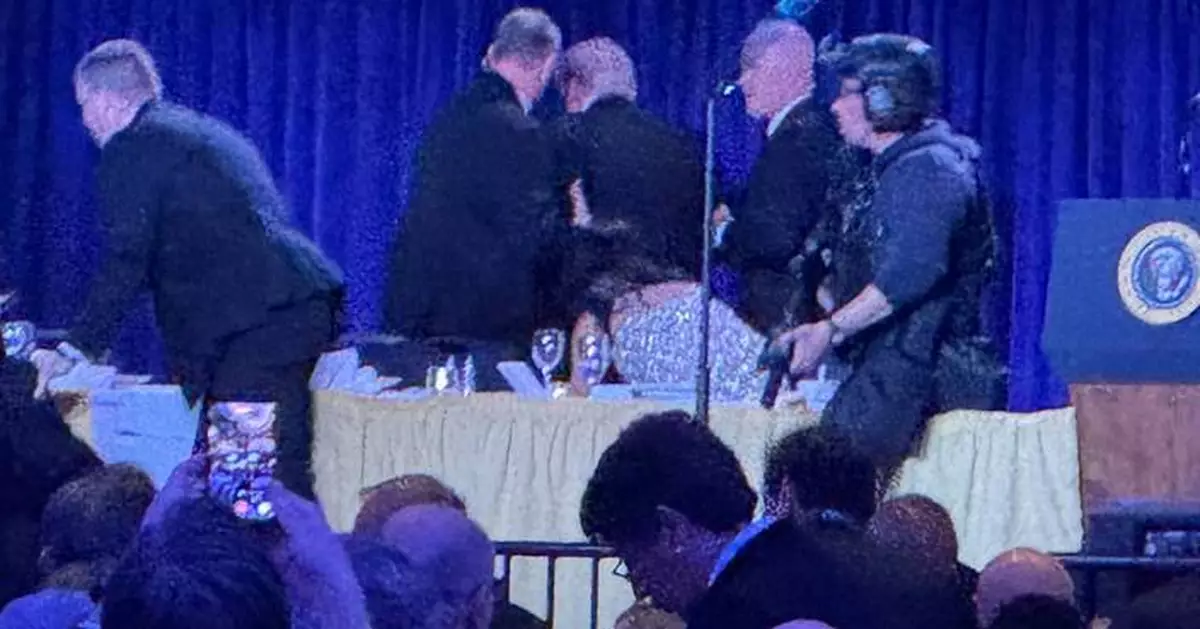
After shots were fired Saturday, Secret Service agents surrounded Trump, who appeared to slip slightly as he was whisked away. Another team moved Vance so quickly it seemed as if it might haul him out while still seated in a banquet chair.
Trump told “60 Minutes” on Sunday that he “wasn’t making it easy” for the Secret Service by being “a little bit me.”
“I wanted to see what was happening,” the president said Sunday. “And by that time we started to realize maybe it was a bad problem — different kind of a problem — bad one.”
“I probably made them act a little bit more slowly. I said: ‘Wait a minute, wait a minute. Lemme see. Wait a minute,’” Trump said. He said he started walking out but: “They said, 'Please go down. Please go down on the floor.′ So I went down, and the first lady went down also.”
Trump repeatedly praised the Secret Service and his detail, and he has pushed the correspondents’ association to reschedule the dinner. He said it would have “even more security.”
“And they’ll have bigger perimeter security,” he said. "It’ll be fine.”
Associated Press writers Seung Min Kim in Washington and Mike Balsamo in New York contributed.
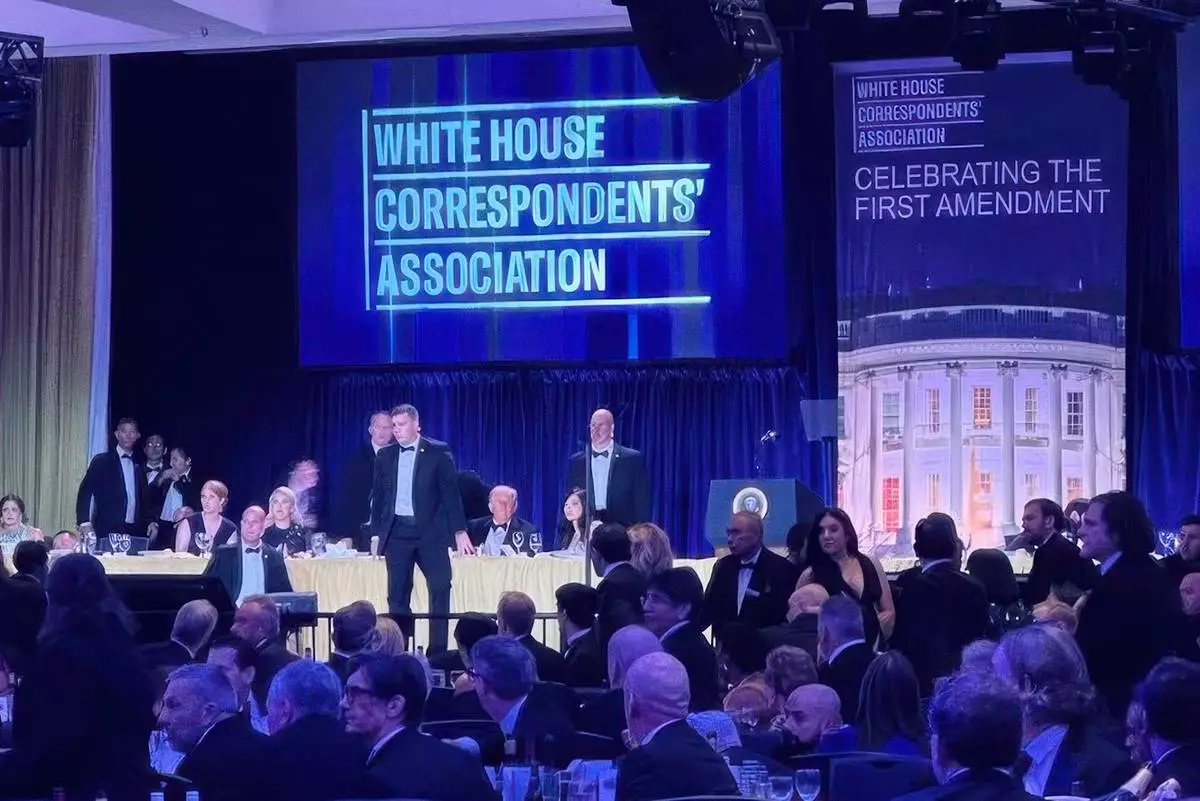
U.S. Secret Service agents surround President Donald Trump as he is taken from the stage after a shooting incident outside the ballroom during the White House Correspondents Dinner, Saturday, April 25, 2026, in Washington. (AP Photo/Alex Brandon)
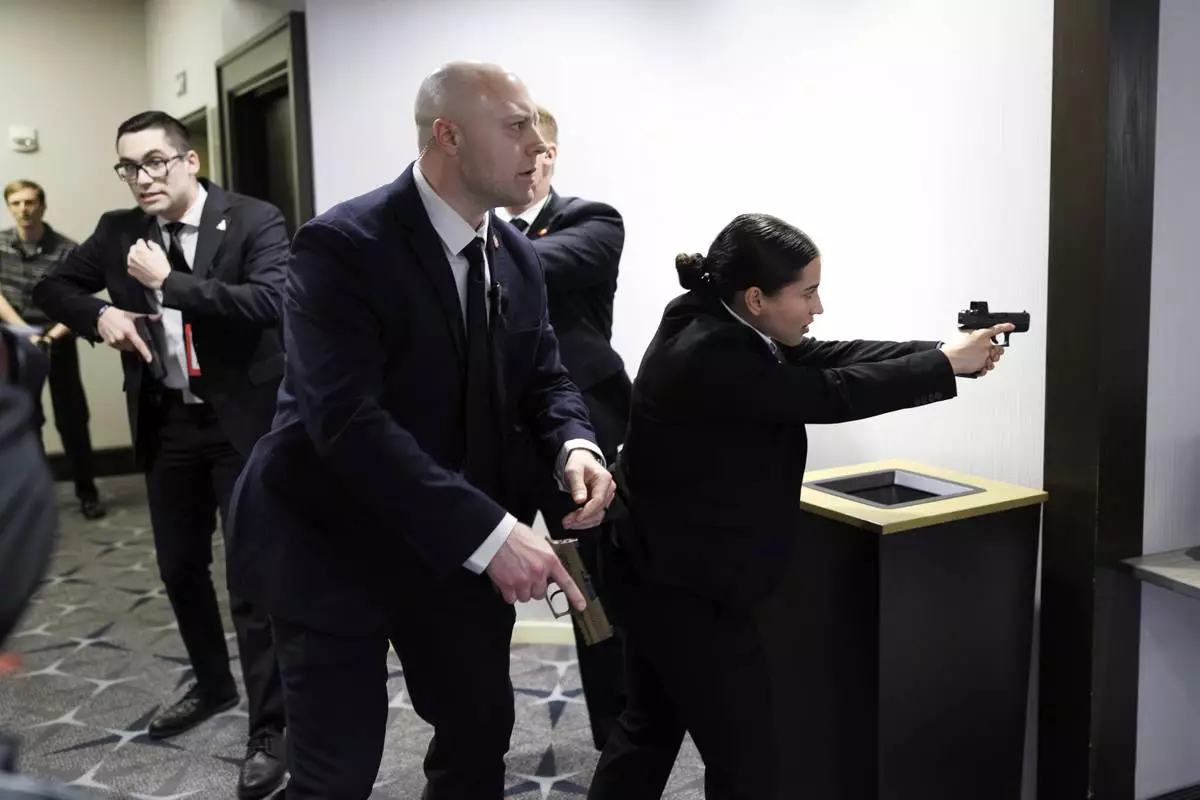
Members of law enforcement respond during the White House Correspondents Dinner, Saturday, April 25, 2026, in Washington. (AP Photo/Tom Brenner)
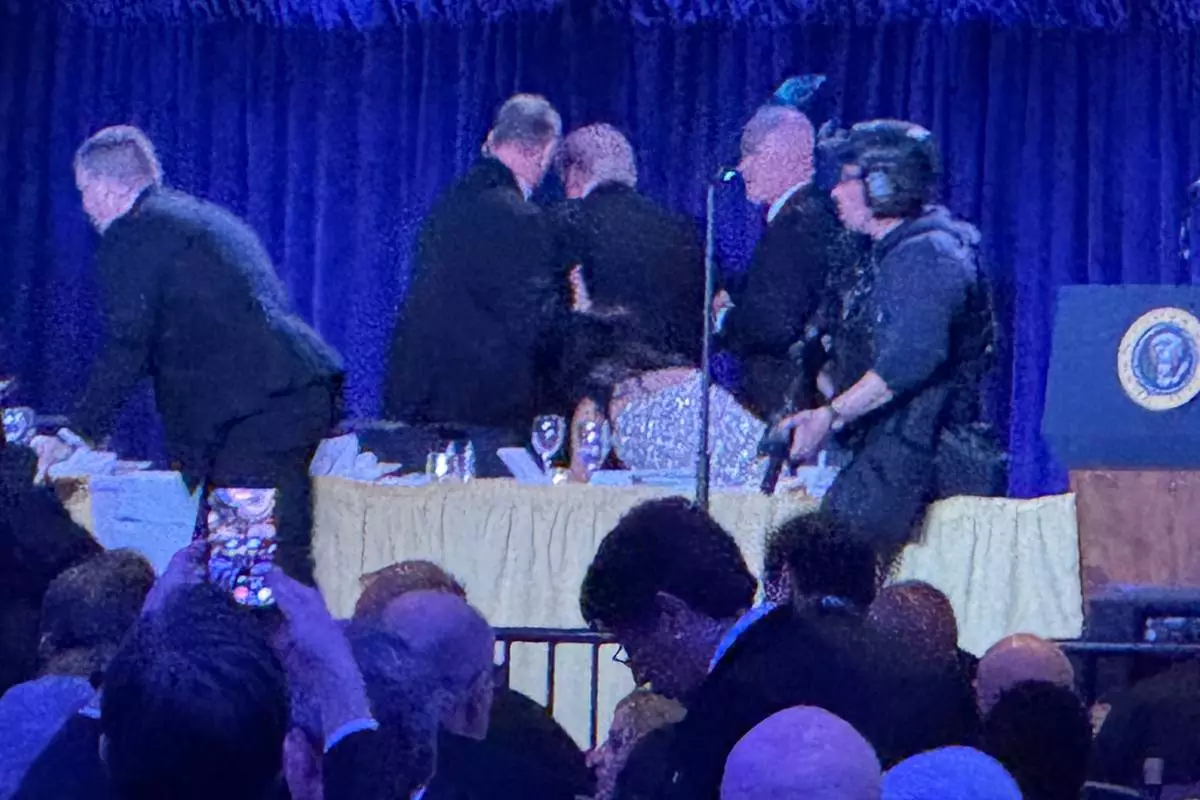
U.S. Secret Service agents surround President Donald Trump, third from left, as he is taken from the stage after a shooting incident outside the ballroom during the White House Correspondents Dinner, Saturday, April 25, 2026, in Washington. (AP Photo/Mark Schiefelbein)