Skip to Content Facebook Feature Image

College students wary of the job market are changing course in search of 'AI-proof' majors

News

College students wary of the job market are changing course in search of 'AI-proof' majors
News

News

College students wary of the job market are changing course in search of 'AI-proof' majors

2026-04-27 12:06 Last Updated At:12:51

Two years ago, Josephine Timperman arrived at college with a plan. She declared a major in business analytics, figuring she'd learn niche skills that would stand out on a resume and help land a good job after college.

But the rise of artificial intelligence has scrambled those calculations. The basic skills she was learning in things like statistical analysis and coding can now easily be automated. “Everyone has a fear that entry-level jobs will be taken by AI,” said the 20-year-old at Miami University in Ohio.

A few weeks ago, Timperman switched her major to marketing. Her new strategy is to use her undergraduate studies to build critical thinking and interpersonal skills — areas where humans still have an edge.

“You don’t just want to be able to code. You want to be able to have a conversation, form relationships and be able to think critically, because at the end of the day, that’s the thing that AI can’t replace,” said Timperman, who is keeping analytics as a minor and plans to dive deeper into the subject for a one-year master’s program.

Today’s college students say that picking a major that’s “AI-proof” feels like shooting at a moving target as they prepare for a job market that could be fundamentally different by the time they graduate.

As a result, many are reconsidering their career paths. About 70% of college students see AI as a threat to their job prospects, according to a 2025 poll by the Institute of Politics at the Harvard Kennedy School, while recent Gallup polling finds U.S. workers are increasingly concerned about being replaced by new technologies.

The uncertainty appears most concentrated among those pursuing degrees in technology and vocational areas of study, where students feel a need to develop expertise in AI but also fear being replaced by it. A recent Quinnipiac poll found the vast majority of Americans believe it’s “very” or “somewhat” important for college and university students to be taught how to use AI, as Gallup Workforce polling finds AI is getting adopted in technology-related fields at higher rates. Meanwhile, students studying health care and natural sciences may be less impacted by AI overhauls, Gallup found.

“We see students all the time change majors. That’s not new or different. But it’s usually for a ton of different reasons,” said Courtney Brown, a vice president at Lumina, an education nonprofit focused on increasing the number of students who seek education beyond high school. “The fact that so many students say it’s because of AI — that is startling."

A recent Gallup poll of Generation Z youth and adults, between the ages of 14 and 29, found increasing skepticism and concerns about AI. Although half of Gen Z adults use AI at least “weekly,” and teenagers report higher use, many in this generation see drawbacks to the technology and worry about AI's impact on their cognitive abilities and job prospects. About half — 48% — of Gen Z workers say the risks of AI in the workforce outweigh the possible benefits.

Part of the challenge for college students is that the experts they would typically turn to for advice, like advisers, professors and parents, don’t have any answers. “Students are having to navigate this on their own, without a GPS,” says Brown.

That uncertainty was evident last month at Stanford University, where the leaders of several prominent universities gathered for a wide-ranging panel discussion on the future of higher education. Topics of concern included the AI revolution that is transforming how students learn and forcing educators to rethink pedagogy.

“We need to think really hard about what students need to learn to be successful in the job market in 10, 20, 30 years,” said Brown University President Christina Paxson.

“And none of us know. We don’t know the answer to that,” Paxson said. “I think it’s communication, it’s critical thought. The fundamentals of a liberal education are probably more important than learning how to code in Java right now.”

Computer science major Ben Aybar, 22, graduated last spring from the University of Chicago and applied for about 50 jobs, mostly in software engineering, without getting a single interview. He pivoted to a master’s degree in computer science and meanwhile has found part-time work doing AI consulting for companies.

“People who know how to use AI will be very valuable,” said Aybar, who sees new jobs emerging that require AI skills, particularly for people who can explain the complexities in layman's terms. “Being able to talk to people and interact with people in a very human way I think is more valuable than ever.”

At the University of Virginia, data science major Ava Lawless is wondering if her major is worthwhile but can’t get concrete answers. Some advisers feel that data scientists will be safe because they’re the ones building AI models, but she keeps seeing gloomy job reports that indicate the contrary.

“It makes me feel a bit hopeless for the future,” Lawless said. “What if by the time I graduate there’s not even a job market for this anymore?”

She is considering switching to studio art, which is her minor.

“I’m at a point where I’m thinking if I can’t get a job being a data scientist, I might as well pursue art,” she said. “Because if I’m going to be unemployed, I might as well do something I love.”

The Associated Press’ education coverage receives financial support from multiple private foundations. AP is solely responsible for all content. Find AP’s standards for working with philanthropies, a list of supporters and funded coverage areas at AP.org.
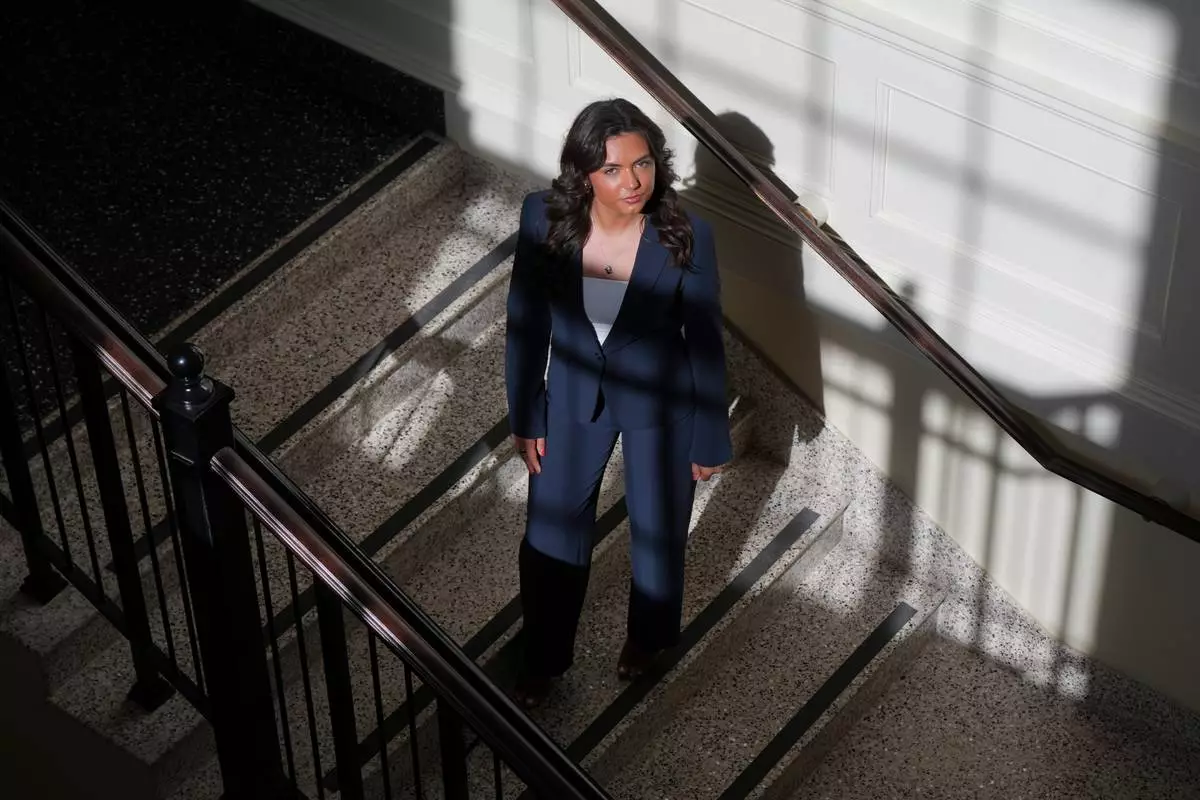
Josephine Timperman, a student at Miami University, poses for a portrait Friday, April 24, 2026, in Oxford, Ohio. (AP Photo/Jeff Dean)
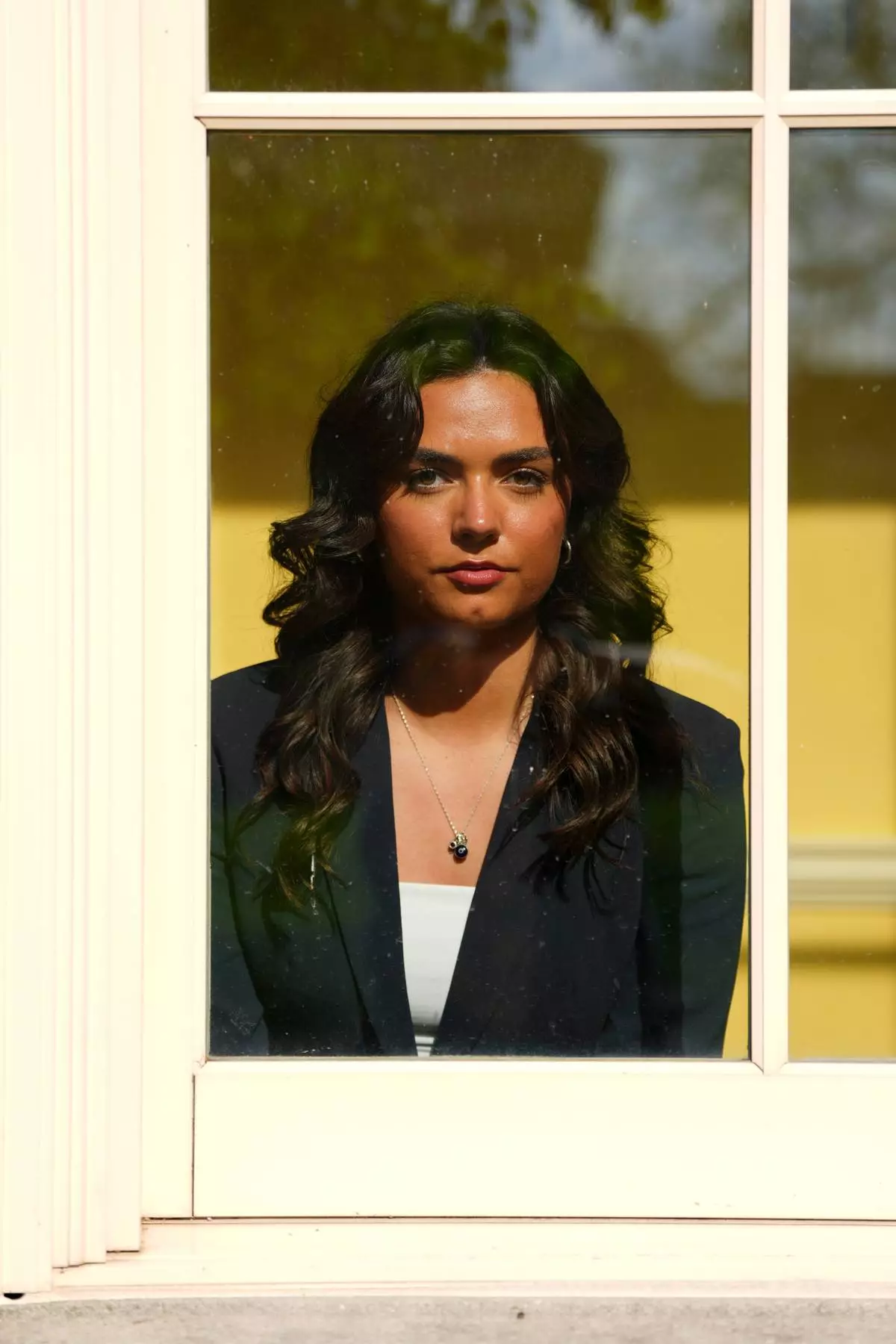
Josephine Timperman, a student at Miami University, poses for a portrait Friday, April 24, 2026, in Oxford, Ohio. (AP Photo/Jeff Dean)
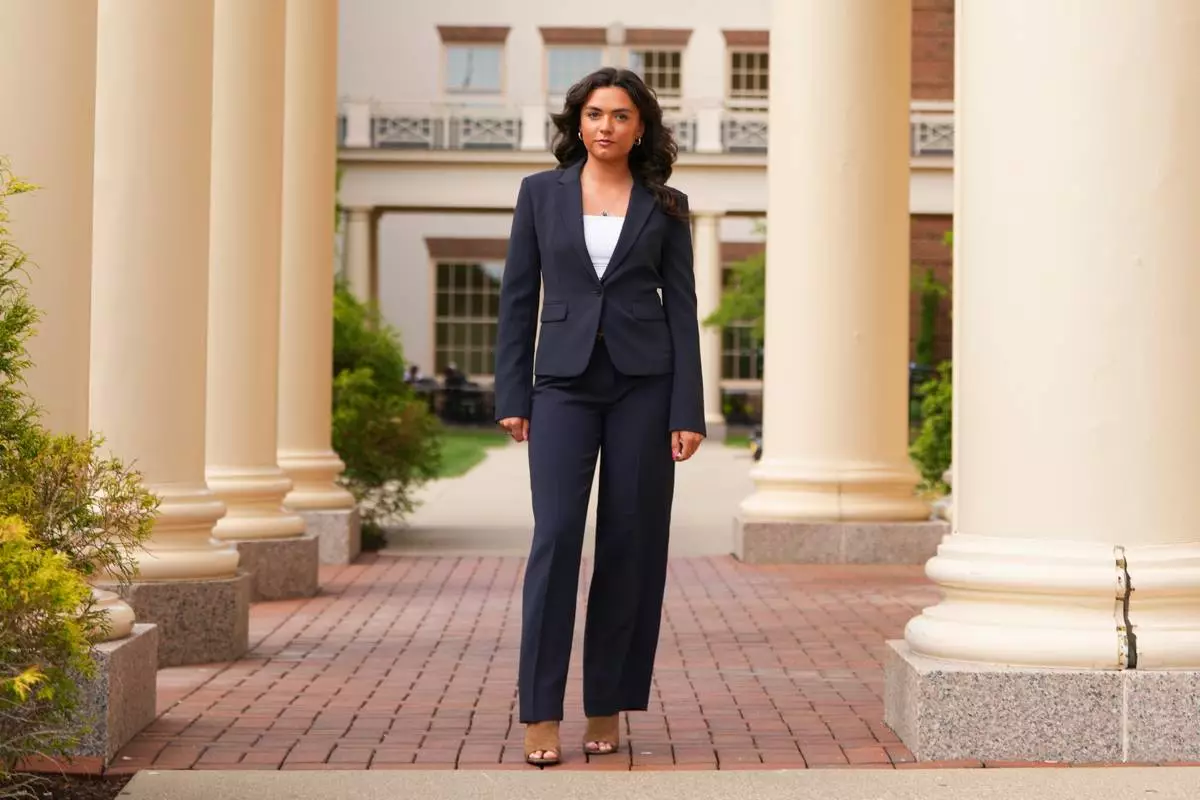
Josephine Timperman, a student at Miami University, poses for a portrait Friday, April 24, 2026, in Oxford, Ohio. (AP Photo/Jeff Dean)

Josephine Timperman, a student at Miami University, poses for a portrait Friday, April 24, 2026, in Oxford, Ohio. (AP Photo/Jeff Dean)

Josephine Timperman, a student at Miami University, poses for a portrait Friday, April 24, 2026, in Oxford, Ohio. (AP Photo/Jeff Dean)
Josephine Timperman, a student at Miami University, poses for a portrait Friday, April 24, 2026, in Oxford, Ohio. (AP Photo/Jeff Dean)

HAVANA (AP) — On a recent afternoon, a group of elderly residents slipped through the wooden doors of the Church of the Holy Spirit in Old Havana and gathered for a modest meal of ground meat, rice, red beans and crackers topped with mayonnaise — all finished with a cup of strong Cuban coffee.

“May the Lord bless from his height, the meal our belly will take with delight,” they chanted in unison before beginning their lunch, a ritual that takes place three times a week in the dining hall adjacent to the church.

Among the nearly 50 elderly people was Carmen Casado, an 84-year-old retired chemical engineer who attends without fail. Her monthly pension of 2,000 Cuban pesos is equivalent to $4 at the informal exchange rate that people use on a daily basis. She lives alone, has no children and does not receive remittances from relatives abroad.

She says the church meals are a needed supplement to the meager rations, such as bread, rice and beans, that she can obtain for free from state-run stores, or bodegas.

“This is a lifeline for us retirees with small pensions," said Casado, speaking in a rapid-fire tone. “What we get from the bodegas alone is not enough.”

The elderly are among the hardest hit by the severe economic crisis on the island, which has worsened dramatically since the beginning of the year following an oil embargo imposed by U.S. President Donald Trump.

Most are former government employees — teachers, doctors, nurses, technicians, custodians, lawyers — whose pensions are usually less than $10 a month and who must face cuts to the basket of goods that have been subsidized for decades, as well as the loneliness brought on by the growing emigration of young people.

They were young when Fidel Castro entered Havana and lived through all the major events on the island, from the Bay of Pigs invasion to U.S. President Barack Obama shaking the hand of Raúl Castro in 2016.

Now, their revolutionary spirit is being tested in the latest crisis, which is forcing them to sell cigarettes on the streets, line up for a loaf of bread and seek free meals offered by churches and some state institutions.

After lunch, Casado walked the four blocks home to tend to household chores she still performs without assistance. Her home is on the second and top floors of a 19th-century building that, like many in the capital, is falling apart.

Born in 1942, Casado was a teenager when the revolution led by Castro triumphed. Her life has spanned the island’s most defining moments, from the 1962 Missile Crisis to the so-called Special Period following the collapse of the Soviet Union. She also lived through the 1970s and 80s, when the island's economy was heavily subsidized by the Soviets and when the Cuban system seemed to promise a brighter future.

“This is our life; we were born and raised here,” she said.

Even before the economic crisis worsened and before the wave of emigration over the past five years, Cuba was already one of the countries with the oldest populations in Latin America, a trend nudged further by high life expectancy and low birth rates.

According to Cuba's National Bureau of Statistics, by the end of 2024, almost 26% of the population was aged 60 or older. That is almost twice the regional average of 14.2% in the same year, according to the Economic Commission for Latin America and the Caribbean, CEPAL.

The last five years have seen a population decline in Cuba of nearly 1.5 million, primarily due to migration. The number of Cubans residing on the island, which stood at 11.1 million, has fallen to just 9.7 million.

The impact of the crisis and the exodus of youth is visible at a glance. Elderly people walk the streets alone —some rummaging through trash, others standing in long lines for the bread and rice provided by the ration book, the basic subsidized foods the state guarantees to every Cuban.

The plight of the elderly is so critical that the government recently authorized private entrepreneurs to operate elder care services and residential facilities, a move marking a significant departure from the island’s traditional model of total state control.

Casado insists that she is still privileged. She is mentally sharp and has no physical impairments — she doesn’t even use a cane — and manages entirely on her own. Her only medication is half a tablet for blood pressure, which, “so far,” remains available at the state-run pharmacies.

Despite the poverty and loneliness, she continues to have faith in the government and blames the country’s woes on the United States.

“We’re doing everything we can here to move the country forward,” she said. “But the thing is, we have a very powerful enemy, and he’s right there, right on our doorstep."

Follow AP’s coverage of Latin America and the Caribbean at https://apnews.com/hub/latin-america

A photo of the late Cuban President Fidel Castro sits alongside photos of Mercedes Lopez Rey’s family on a bedside table at the 83-year-old’s home in Old Havana, Cuba, Wednesday, Feb. 19, 2025. (AP Photo/Ramon Espinosa)

A photo of the late Cuban President Fidel Castro sits alongside photos of Mercedes Lopez Rey’s family on a bedside table at the 83-year-old’s home in Old Havana, Cuba, Wednesday, Feb. 19, 2025. (AP Photo/Ramon Espinosa)

An elderly man makes his way in his wheelchair while a friend walks a bicycle beside him, in Havana, Cuba, Wednesday, April 15, 2026. (AP Photo/Ramon Espinosa)

An elderly man makes his way in his wheelchair while a friend walks a bicycle beside him, in Havana, Cuba, Wednesday, April 15, 2026. (AP Photo/Ramon Espinosa)

Mercedes Lopez Rey, 83, carries a meal from a church-sponsored program to a homebound friend, in Old Havana, Cuba, Wednesday, Feb. 19, 2025. (AP Photo/Ramon Espinosa)

Mercedes Lopez Rey, 83, carries a meal from a church-sponsored program to a homebound friend, in Old Havana, Cuba, Wednesday, Feb. 19, 2025. (AP Photo/Ramon Espinosa)

Elderly residents watch a tai chi class for seniors at the Belen Convent in Old Havana, Cuba, Thursday, Feb. 20, 2025. (AP Photo/Ramon Espinosa)

Elderly residents watch a tai chi class for seniors at the Belen Convent in Old Havana, Cuba, Thursday, Feb. 20, 2025. (AP Photo/Ramon Espinosa)

Mercedes Lopez Rey, 83, stands in her one-room apartment in Old Havana, Cuba, Friday, April 10, 2026. (AP Photo/Ramon Espinosa)

Mercedes Lopez Rey, 83, stands in her one-room apartment in Old Havana, Cuba, Friday, April 10, 2026. (AP Photo/Ramon Espinosa)

Recommended Articles