Skip to Content Facebook Feature Image

Elon Musk and OpenAI CEO Sam Altman head to court in high-stakes showdown over AI

TECH

Elon Musk and OpenAI CEO Sam Altman head to court in high-stakes showdown over AI
TECH

TECH

Elon Musk and OpenAI CEO Sam Altman head to court in high-stakes showdown over AI

2026-04-27 15:01 Last Updated At:15:55

OAKLAND, Calif. (AP) — Technology tycoons Elon Musk and Sam Altman are poised to face off in a high-stakes trial revolving around the alleged betrayal, deceit and unbridled ambition that blurred the bickering billionaires' once-shared vision for the development of artificial intelligence.

The trial, which is scheduled to begin Monday with jury selection, centers on the 2015 birth of ChatGPT maker OpenAI as a nonprofit startup primarily funded by Musk before evolving into a capitalistic venture now valued at $852 billion.

The trial's outcome could sway the balance of power in AI — breakthrough technology that is increasingly being feared as a potential job killer and an existential threat to humanity's survival.

Those perceived risks are among the reasons that Musk, the world's richest person, cites for filing an August 2024 lawsuit that will now be decided by a jury and U.S. District Judge Yvonne Gonzalez Rogers in Oakland, California.

The civil lawsuit accuses Altman, OpenAI's CEO, and his top lieutenant, Greg Brockman, of double-crossing Musk by straying from the San Francisco company's founding mission to be an altruistic steward of a revolutionary technology. The lawsuit alleges they shifted into a moneymaking mode behind his back.

OpenAI has brushed off Musk's allegations as an unfounded case of sour grapes that's aimed at undercutting its rapid growth and bolstering Musk's own xAI, which he launched in 2023 as a competitor.

Musk, who invested about $38 million in OpenAI from December 2015 through May 2017, initially was seeking more than $100 billion in damages.

But any damages now are likely to be much smaller after a series of pre-trial rulings that went against Musk. Musk has since abandoned a bid for damages for himself and instead is seeking an unspecified amount of money to be paid to fund the altruistic efforts of OpenAI's charitable arm. The money would be paid primarily by OpenAI's for-profit operations, and Microsoft, which became the company's biggest investor after Musk cut off his funding.

Musk's lawsuit also seeks Altman's ouster from OpenAI's board. Musk's decision to stop funding the company contributed to a bitter falling out between the former allies. Musk says he was responding to deceptive conduct that OpenAI's board picked up on when it fired Altman as CEO in 2023 before he got his job back days later.

But the trial also carries risks for Musk, who last month was held liable by another jury for defrauding investors during his $44 billion takeover of Twitter in 2022. Any damaging details about Musk and his business tactics could be particularly hurtful now because his rocket ship maker, SpaceX, plans to go public this summer in an initial public offering that could make him the world's first trillionaire.

However it turns out, the trial is expected to provide riveting theater, with contrasting testimony from two of technology's most influential and polarizing figures in the 54-year-old Musk and the 41-year-old Altman.

“Part of this is about whether a jury believes the people who will testify and whether they are credible,” Gonzalez Rogers said during a court hearing earlier this year while explaining why she believe the case merited a trial. The judge will make the final decision on the case, with the jury serving in an advisory role.

Musk, whose estimated fortune stands at about $780 billion, has long been hailed as a visionary for his roles creating digital payment pioneer PayPal, electric automaker Tesla and rocket ship maker SpaceX. But he has also provoked backlashes with his social media commentary, unfulfilled promises about Tesla's self-driving technology and his cost-cutting role last year in President Donald Trump's administration.

Some of Musk's erratic behavior has been tied to allegations of taking hallucinogenic drugs, but Gonzalez Rogers ruled that he can't be asked during the trial about his suspected use of ketamine. But the judge is allowing Musk to be questioned about his attendance at the 2017 Burning Man festival in Nevada, a free-wheeling celebration known for widespread drug use. The judge is also allowing Musk to be questioned about his relationship with former OpenAI board member Shivon Zilis, the mother of several of his children.

Altman, currently sitting on a roughly $3 billion fortune, didn't emerge in the public consciousness until the late 2022 release of ChatGPT. The tech boom triggered by that conversational chatbot has led some to liken Altman to a 21st-century version of the nuclear bomb inventor, J. Robert Oppenheimer.

Although Altman was initially hailed as trailblazer he is now facing blowback amid worries about AI's potential dangers. Earlier this month, the New Yorker magazine published a profile that painted him as an unscrupulous executive. Days later, a 20-year-old man worried about AI's effect on humanity was arrested on attempted murder charges after throwing a Molotov cocktail at Altman's San Francisco home.

The dueling testimonies of Altman and Musk are expected to open a window into some of the thinking that helped trigger the AI race, as well as the unraveling of their friendship. The kinship was forged in 2015 when they agreed to build AI in a more responsible and safer way than the profit-driven companies controlled by Google co-founders Larry Page and Sergey Brin and Facebook founder Mark Zuckerberg, according to evidence submitted ahead of the trial.

Details of the bitter break between the two men were captured in a February 2023 email exchange that surfaced as part of the evidence leading up to the trial.

After letting Musk know “you're my hero,” Altman tells him: “I am tremendously thankful for everything you’ve done to help —I don't think OpenAI would have happened without you — and it really (expletive) hurts when you publicly attack OpenAI.”

Musk's response: “I hear you and it is certainly not my intention to be hurtful, for which I apologize, but the fate of civilization is at stake.”
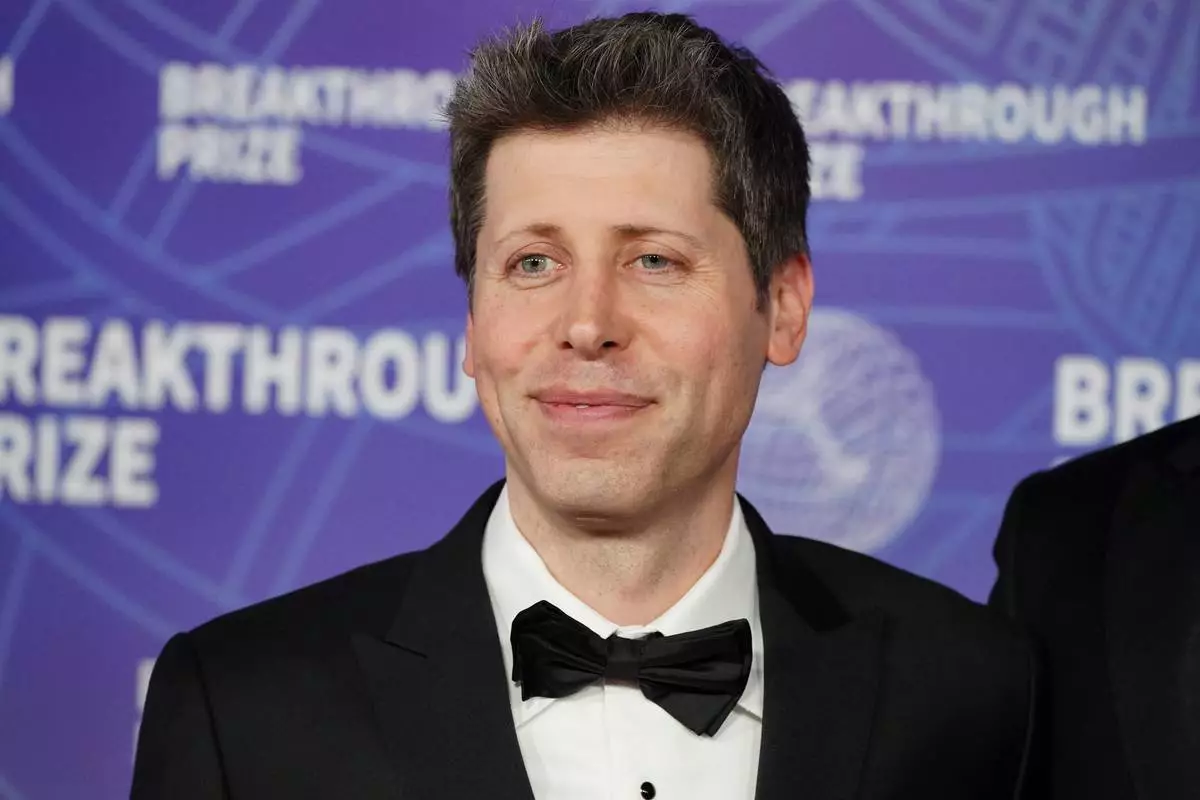
Sam Altman arrives at the 12th Breakthrough Prize Ceremony on Saturday, April 18, 2026, at Barker Hangar in Santa Monica, Calif. (Photo by Jordan Strauss/Invision/AP)

Sam Altman arrives at the 12th Breakthrough Prize Ceremony on Saturday, April 18, 2026, at Barker Hangar in Santa Monica, Calif. (Photo by Jordan Strauss/Invision/AP)
HAVANA (AP) — On a recent afternoon, a group of elderly residents slipped through the wooden doors of the Church of the Holy Spirit in Old Havana and gathered for a modest meal of ground meat, rice, red beans and crackers topped with mayonnaise — all finished with a cup of strong Cuban coffee.

“May the Lord bless from his height, the meal our belly will take with delight,” they chanted in unison before beginning their lunch, a ritual that takes place three times a week in the dining hall adjacent to the church.

Among the nearly 50 elderly people was Carmen Casado, an 84-year-old retired chemical engineer who attends without fail. Her monthly pension of 2,000 Cuban pesos is equivalent to $4 at the informal exchange rate that people use on a daily basis. She lives alone, has no children and does not receive remittances from relatives abroad.

She says the church meals are a needed supplement to the meager rations, such as bread, rice and beans, that she can obtain for free from state-run stores, or bodegas.

“This is a lifeline for us retirees with small pensions," said Casado, speaking in a rapid-fire tone. “What we get from the bodegas alone is not enough.”

The elderly are among the hardest hit by the severe economic crisis on the island, which has worsened dramatically since the beginning of the year following an oil embargo imposed by U.S. President Donald Trump.

Most are former government employees — teachers, doctors, nurses, technicians, custodians, lawyers — whose pensions are usually less than $10 a month and who must face cuts to the basket of goods that have been subsidized for decades, as well as the loneliness brought on by the growing emigration of young people.

They were young when Fidel Castro entered Havana and lived through all the major events on the island, from the Bay of Pigs invasion to U.S. President Barack Obama shaking the hand of Raúl Castro in 2016.

Now, their revolutionary spirit is being tested in the latest crisis, which is forcing them to sell cigarettes on the streets, line up for a loaf of bread and seek free meals offered by churches and some state institutions.

After lunch, Casado walked the four blocks home to tend to household chores she still performs without assistance. Her home is on the second and top floors of a 19th-century building that, like many in the capital, is falling apart.

Born in 1942, Casado was a teenager when the revolution led by Castro triumphed. Her life has spanned the island’s most defining moments, from the 1962 Missile Crisis to the so-called Special Period following the collapse of the Soviet Union. She also lived through the 1970s and 80s, when the island's economy was heavily subsidized by the Soviets and when the Cuban system seemed to promise a brighter future.

“This is our life; we were born and raised here,” she said.

Even before the economic crisis worsened and before the wave of emigration over the past five years, Cuba was already one of the countries with the oldest populations in Latin America, a trend nudged further by high life expectancy and low birth rates.

According to Cuba's National Bureau of Statistics, by the end of 2024, almost 26% of the population was aged 60 or older. That is almost twice the regional average of 14.2% in the same year, according to the Economic Commission for Latin America and the Caribbean, CEPAL.

The last five years have seen a population decline in Cuba of nearly 1.5 million, primarily due to migration. The number of Cubans residing on the island, which stood at 11.1 million, has fallen to just 9.7 million.

The impact of the crisis and the exodus of youth is visible at a glance. Elderly people walk the streets alone —some rummaging through trash, others standing in long lines for the bread and rice provided by the ration book, the basic subsidized foods the state guarantees to every Cuban.

The plight of the elderly is so critical that the government recently authorized private entrepreneurs to operate elder care services and residential facilities, a move marking a significant departure from the island’s traditional model of total state control.

Casado insists that she is still privileged. She is mentally sharp and has no physical impairments — she doesn’t even use a cane — and manages entirely on her own. Her only medication is half a tablet for blood pressure, which, “so far,” remains available at the state-run pharmacies.

Despite the poverty and loneliness, she continues to have faith in the government and blames the country’s woes on the United States.

“We’re doing everything we can here to move the country forward,” she said. “But the thing is, we have a very powerful enemy, and he’s right there, right on our doorstep."

Follow AP’s coverage of Latin America and the Caribbean at https://apnews.com/hub/latin-america

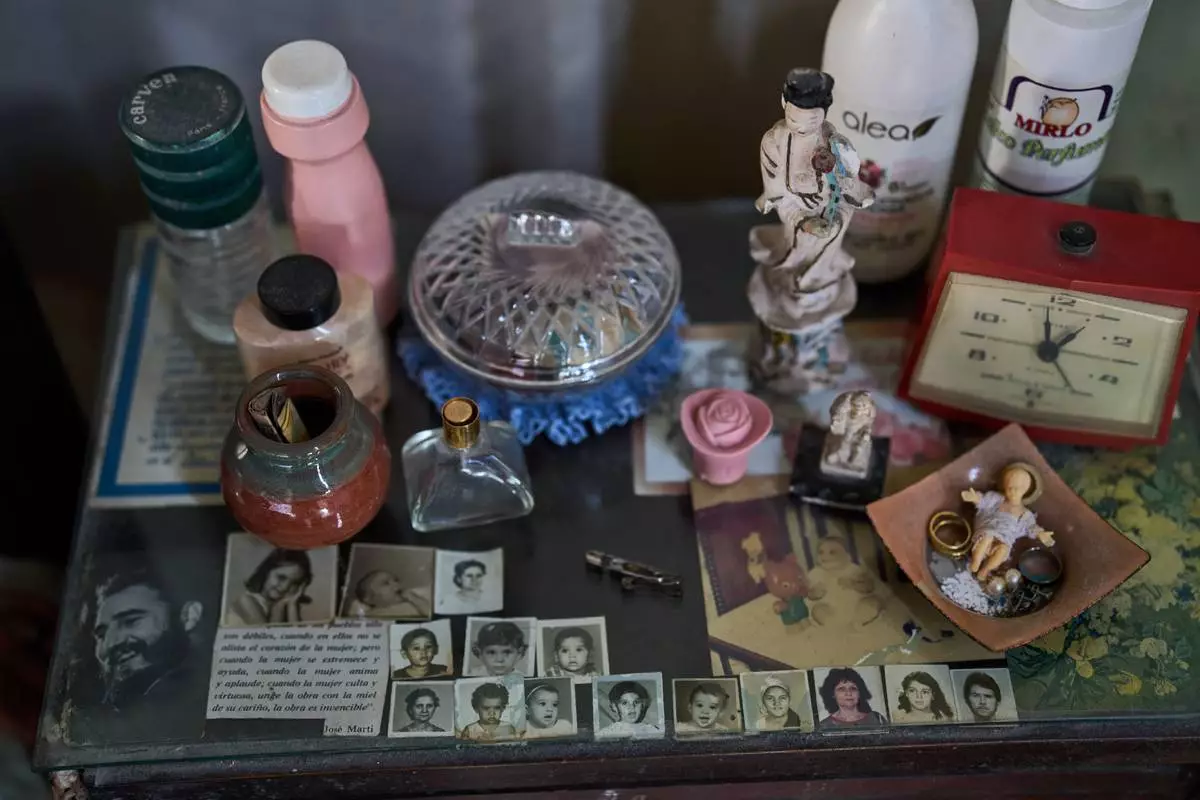
A photo of the late Cuban President Fidel Castro sits alongside photos of Mercedes Lopez Rey’s family on a bedside table at the 83-year-old’s home in Old Havana, Cuba, Wednesday, Feb. 19, 2025. (AP Photo/Ramon Espinosa)

A photo of the late Cuban President Fidel Castro sits alongside photos of Mercedes Lopez Rey’s family on a bedside table at the 83-year-old’s home in Old Havana, Cuba, Wednesday, Feb. 19, 2025. (AP Photo/Ramon Espinosa)

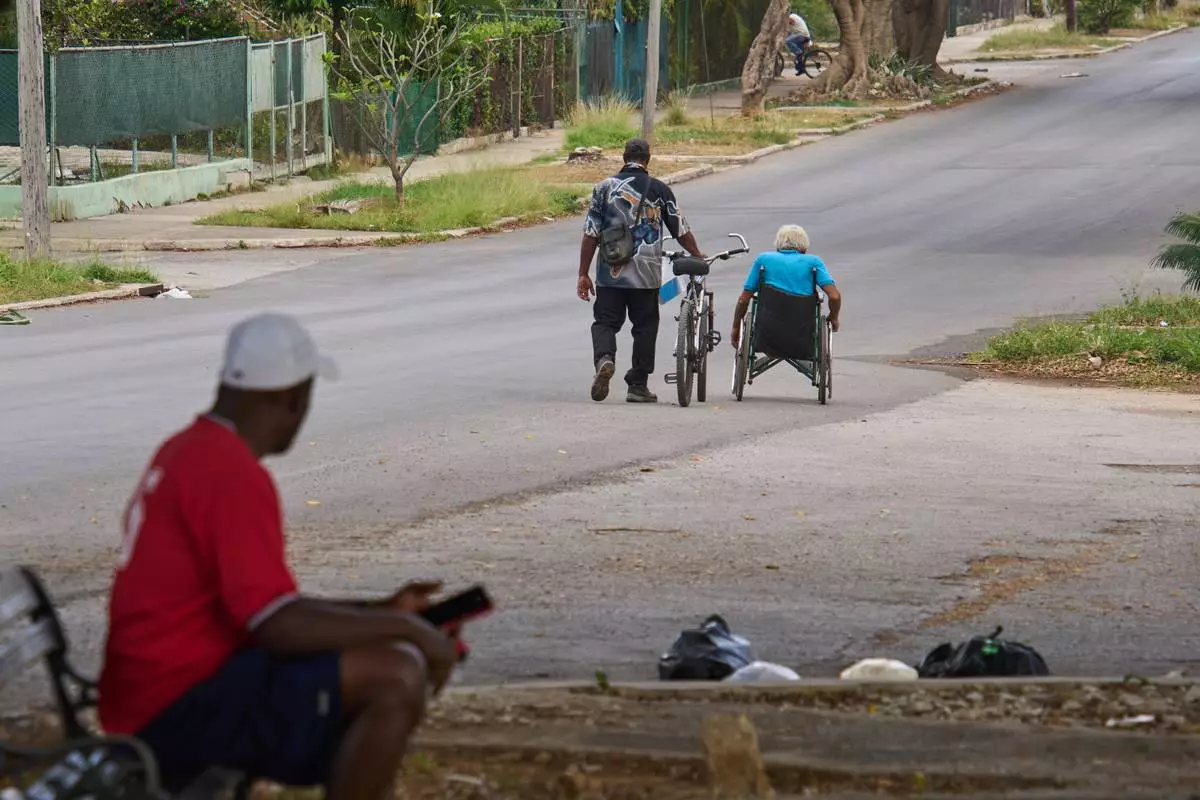
An elderly man makes his way in his wheelchair while a friend walks a bicycle beside him, in Havana, Cuba, Wednesday, April 15, 2026. (AP Photo/Ramon Espinosa)

An elderly man makes his way in his wheelchair while a friend walks a bicycle beside him, in Havana, Cuba, Wednesday, April 15, 2026. (AP Photo/Ramon Espinosa)

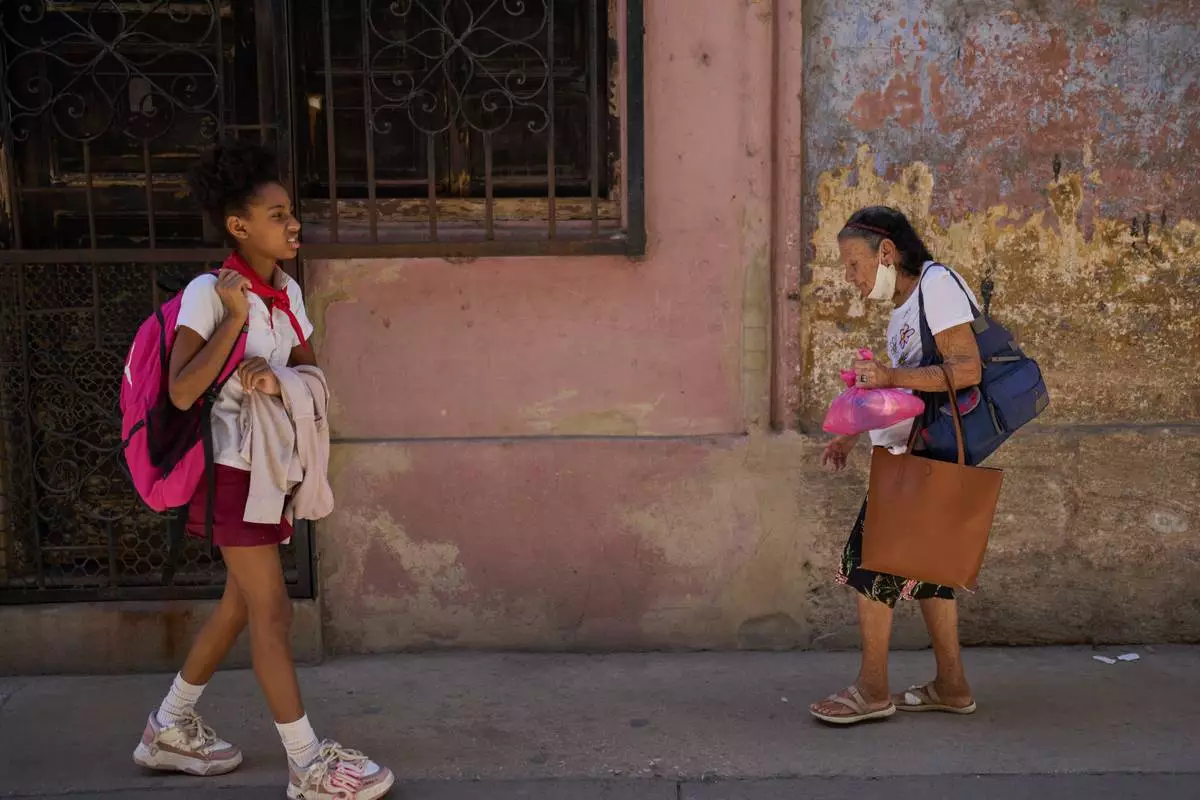
Mercedes Lopez Rey, 83, carries a meal from a church-sponsored program to a homebound friend, in Old Havana, Cuba, Wednesday, Feb. 19, 2025. (AP Photo/Ramon Espinosa)

Mercedes Lopez Rey, 83, carries a meal from a church-sponsored program to a homebound friend, in Old Havana, Cuba, Wednesday, Feb. 19, 2025. (AP Photo/Ramon Espinosa)

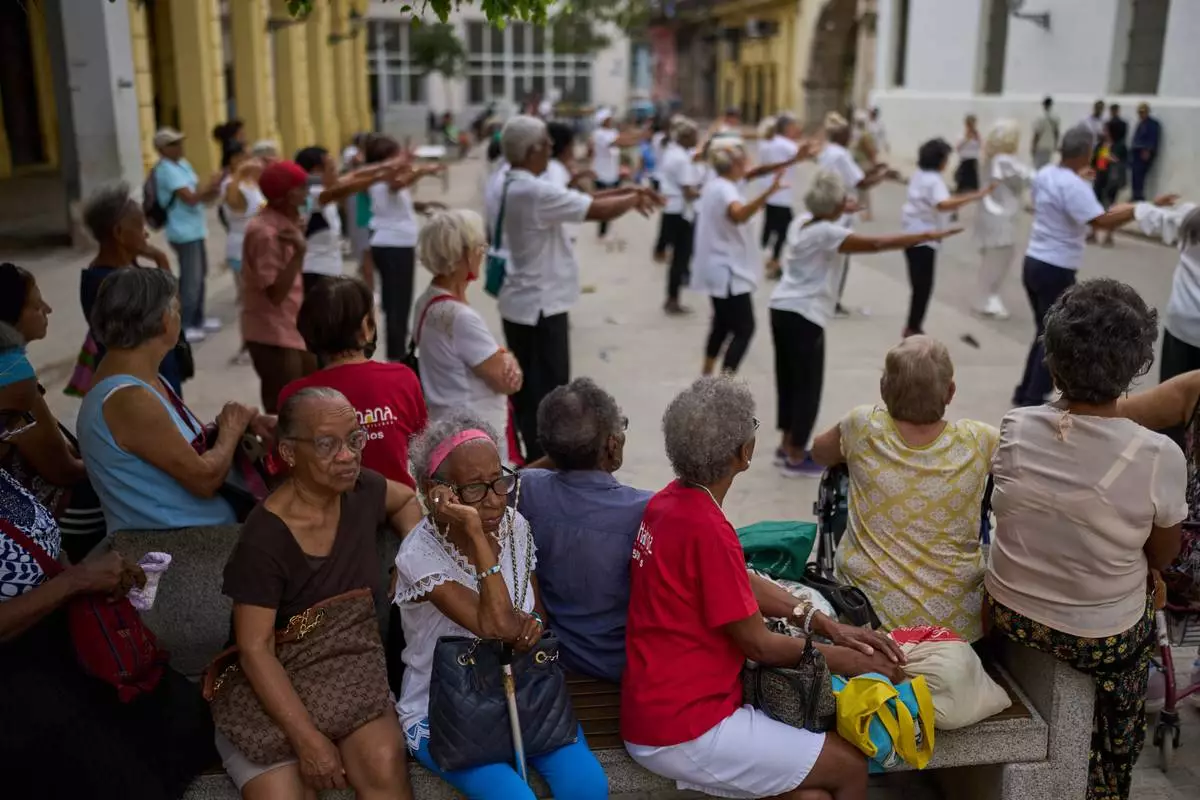
Elderly residents watch a tai chi class for seniors at the Belen Convent in Old Havana, Cuba, Thursday, Feb. 20, 2025. (AP Photo/Ramon Espinosa)

Elderly residents watch a tai chi class for seniors at the Belen Convent in Old Havana, Cuba, Thursday, Feb. 20, 2025. (AP Photo/Ramon Espinosa)

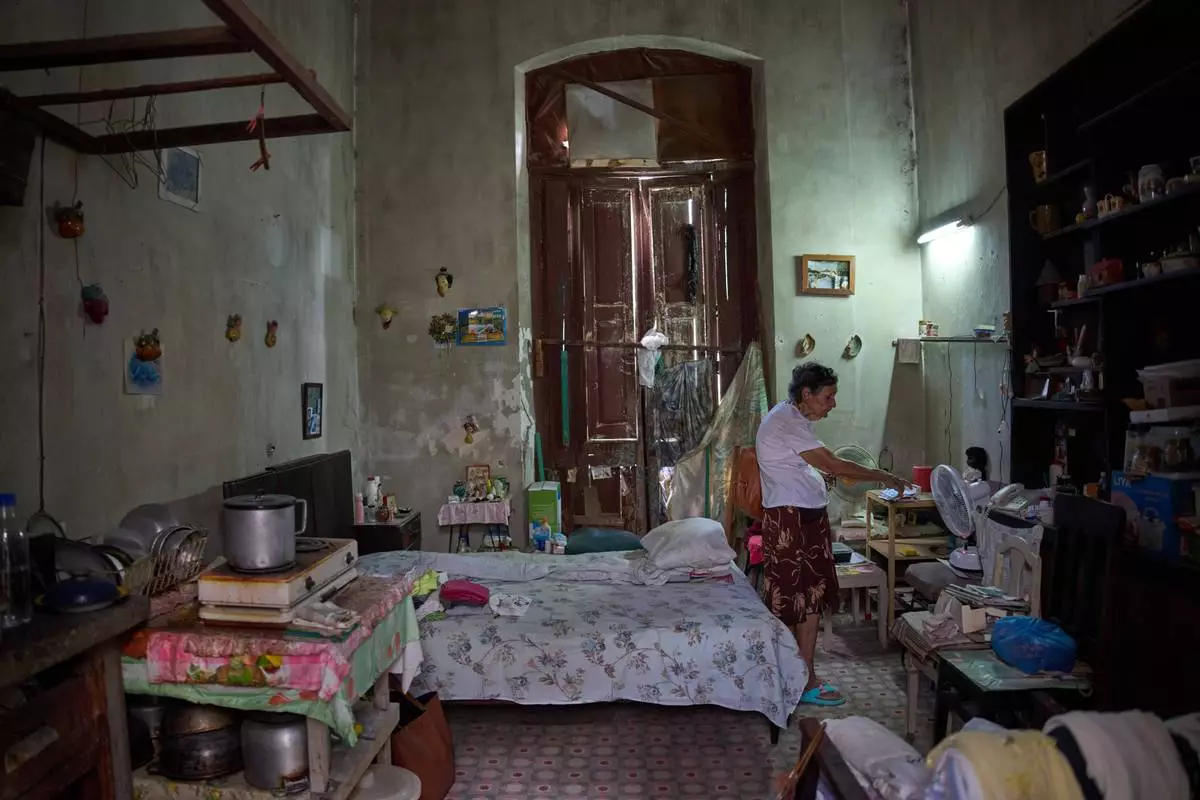
Mercedes Lopez Rey, 83, stands in her one-room apartment in Old Havana, Cuba, Friday, April 10, 2026. (AP Photo/Ramon Espinosa)

Mercedes Lopez Rey, 83, stands in her one-room apartment in Old Havana, Cuba, Friday, April 10, 2026. (AP Photo/Ramon Espinosa)

Recommended Articles