Skip to Content Facebook Feature Image

Iran offers to end chokehold on Strait of Hormuz and asks US to end blockade, officials say

News

Iran offers to end chokehold on Strait of Hormuz and asks US to end blockade, officials say
News

News

Iran offers to end chokehold on Strait of Hormuz and asks US to end blockade, officials say

2026-04-27 15:09 Last Updated At:15:55

CAIRO (AP) — Iran is offering to end its chokehold on the Strait of Hormuz without addressing its nuclear program, two regional officials with knowledge of the proposal said Monday, as the country's foreign minister made a visit to Russia he said was an opportunity to consult with Moscow regarding the war against Israel and the United States.

Iran also wants the U.S. to end its blockade of the country as part of its proposal, said the two officials, who spoke on condition of anonymity to discuss the closed-door negotiations.

The new proposal, passed to the United States by Pakistan, likely won't be supported by U.S. President Donald Trump, who wants to end Iran’s atomic program as part of an overall deal to reopen the Strait of Hormuz and make the ceasefire permanent.

“We have all the cards. If they want to talk, they can come to us, or they can call us,” Trump said Sunday to Fox News Channel.

The Axios news outlet first reported Iran’s proposal.

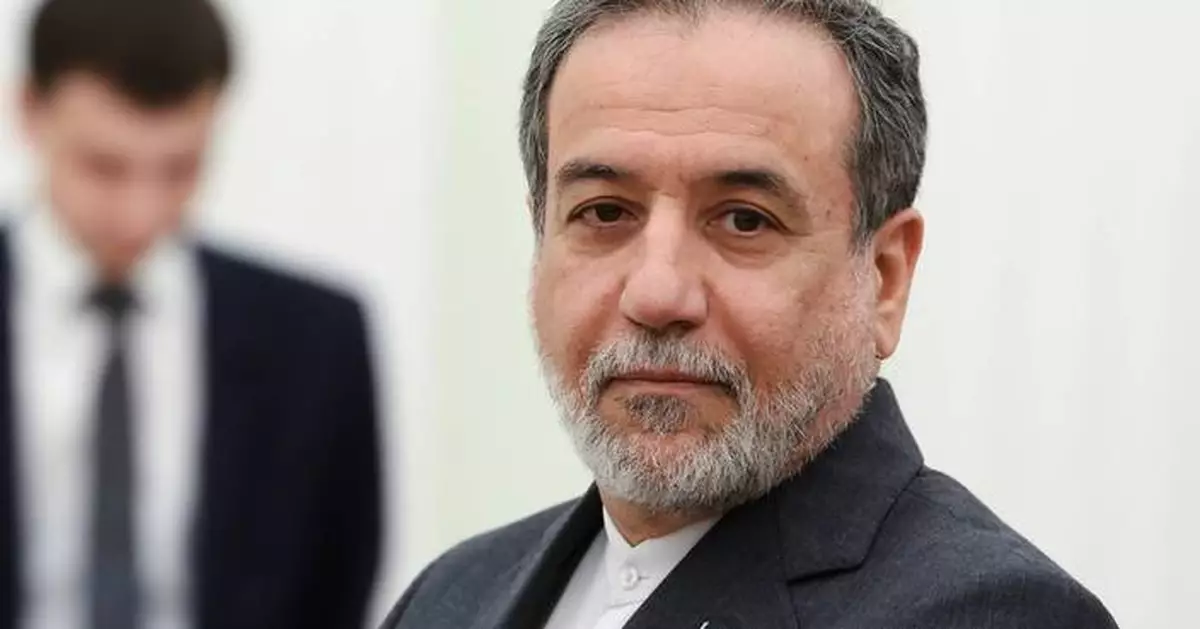
Iran's state-run IRNA news agency said Foreign Minister Abbas Araghchi landed in St. Petersburg on Monday morning ahead of a meeting with Russian President Vladimir Putin. His trip over the weekend has included two stops in Pakistan and a visit to Oman, which shares the strait with Iran.

Araghchi’s visit comes as a standoff between Iran and the U.S. in the crucial Strait of Hormuz persists despite a ceasefire, keeping oil prices high.

“It is a good opportunity for us to consult with our Russian friends about the developments that have occurred in relation to the war during this period and what is happening now,” Araghchi said in a video interview posted by IRNA.

Pakistan has been seeking to revive stalled talks between Iran and the U.S., and negotiations had been expected in Islamabad over the weekend. But U.S. President Donald Trump has suggested the talks could take place by phone instead.

Araghchi said it was America’s approach that “caused the negotiations to be delayed.”

“The previous one, despite the progress that had been made, could not achieve its goals,” he said, blaming what he called Washington’s “excessive demands.”

Trump has questioned who is in charge in Iran at the moment and said confusion within its theocracy made it difficult to reach a deal.

The White House last week said it would dispatch envoys Steve Witkoff and Jared Kushner to Islamabad to follow up on historic face-to-face talks earlier this month. But Araghchi left the Pakistani capital Saturday, and shortly afterward Trump said he had called off the mission because of a lack of progress with Iran.

“If they want, we can talk but we’re not sending people,” Trump told Fox News on Sunday. He said earlier on social media: “All they have to do is call!!!”

Araghchi later returned to Islamabad, and also visited Oman's capital of Muscat before heading to Russia. He also spoke by phone with counterparts in Qatar and Saudi Arabia on Sunday.

A standoff remains on the Strait of Hormuz, the narrow mouth of the Persian Gulf through which a fifth of all traded oil and natural gas normally passes, as Iran has restricted movement through it and the U.S. enforces a blockade of Iranian ports.

The June contract for Brent crude, the international standard, was trading at around $107 per barrel Monday, compared to $72 a barrel before the war began.

Oil prices have risen steadily since the war began and tankers full of crude became stranded in the Persian Gulf, unable to safely transit through the strait and reach global distribution points.

The economic fallout is growing two months into the war as global shipments of not only oil, but also liquefied natural gas, fertilizer and other supplies are disrupted by the near-closure of the strategic strait.

Iran wants to persuade Oman to support a mechanism to collect tolls from vessels passing through the strait, according to a regional official who spoke on condition of anonymity because he was not authorized to discuss the matter.

Oman’s response wasn’t immediately clear.

The official, who is involved in mediation efforts, also said Iran insisted on ending the U.S. blockade before new talks and that Pakistan-led mediators are trying to bridge significant gaps between the countries.

Trump last week indefinitely extended the ceasefire the U.S. and Iran agreed to on April 7 that has largely halted fighting that began with joint U.S.-Israeli strikes on Iran on Feb. 28. But a permanent settlement remains elusive in the war that has killed thousands of people and shaken the global economy.

Even before Saturday’s developments, Iran’s Foreign Ministry said any talks would be indirect and Pakistani officials would act as go-betweens, reflecting Tehran’s wariness after rounds of indirect talks last year and earlier this year ended with Iran being attacked by the U.S. and Israel.

Both sides have continued to make military threats. Iran’s joint military command Saturday warned that “if the U.S. continues its aggressive military actions, including naval blockades, banditry, and piracy” it will face a “strong response.”

Trump last week ordered the military to “shoot and kill” small boats that could be placing mines in the waterway.

Trump told journalists Saturday that within 10 minutes of him canceling Witkoff and Kushner’s trip to Islamabad, Iran sent a “much better” proposal.

He did not elaborate but stressed that one of his conditions is that Iran “will not have a nuclear weapon.” The status of Iran’s enriched uranium has long been at the center of tensions. Tehran has 440 kilograms (970 pounds) of uranium enriched to 60% purity, a short, technical step from weapons-grade levels, according to the U.N. nuclear watchdog agency.

Since the war began, at least 3,375 people have been killed in Iran and at least 2,509 people in Lebanon, where the Israel-Hezbollah fighting resumed two days after the Iran war started. Another 23 people have been killed in Israel and more than a dozen in Gulf Arab states. Fifteen Israeli soldiers in Lebanon, 13 U.S. service members in the region and six U.N. peacekeepers in southern Lebanon have been killed.

Another ceasefire — between Israel and the Iranian-backed Lebanese militant Hezbollah group — has been extended by three weeks. Hezbollah has not participated in the Washington-brokered diplomacy.

Gambrell reported from Dubai, United Arab Emirates, and Becatoros reported from Athens, Greece. AP journalist Munir Ahmed in Islamabad contributed to this report.
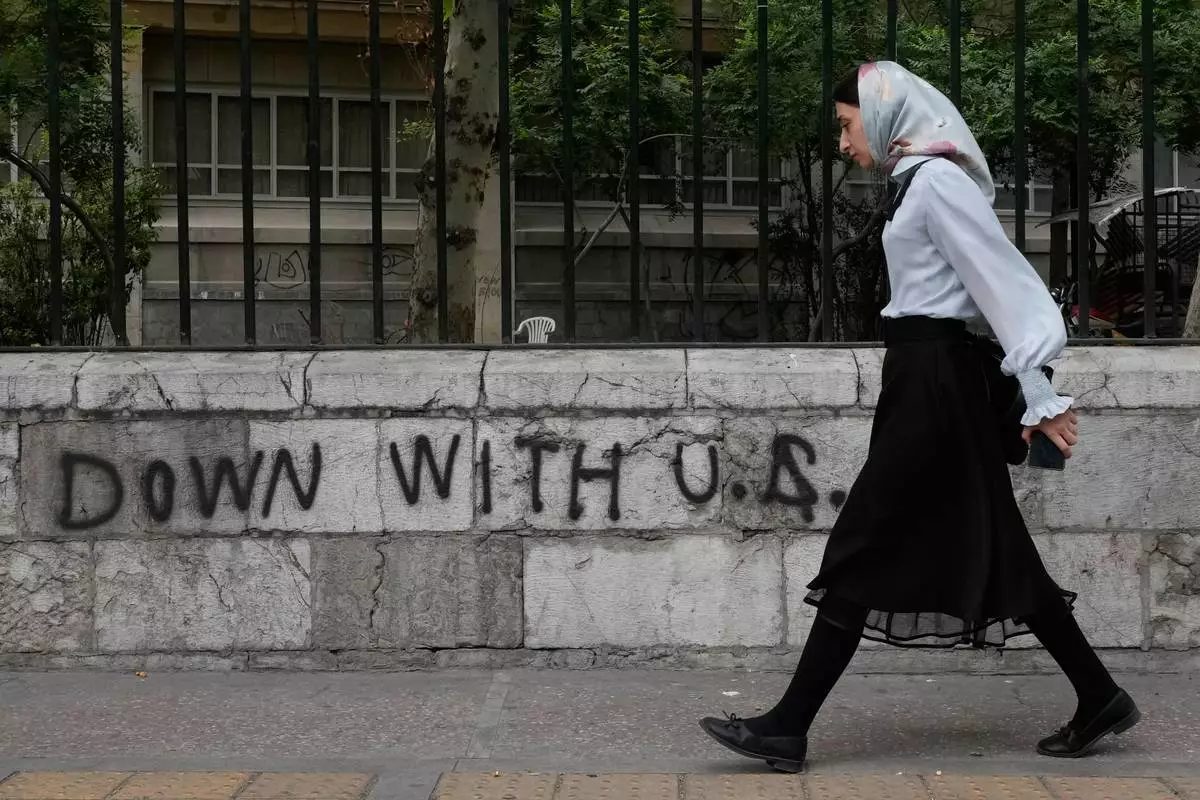
A woman walks past an anti-U.S. graffiti painted on the wall of the Tehran University on Enqelab-e-Eslami (Islamic Revolution) street in downtown Tehran, Iran, Saturday, April 25, 2026. (AP Photo/Vahid Salemi)
A woman walks past an anti-U.S. graffiti painted on the wall of the Tehran University on Enqelab-e-Eslami (Islamic Revolution) street in downtown Tehran, Iran, Saturday, April 25, 2026. (AP Photo/Vahid Salemi)

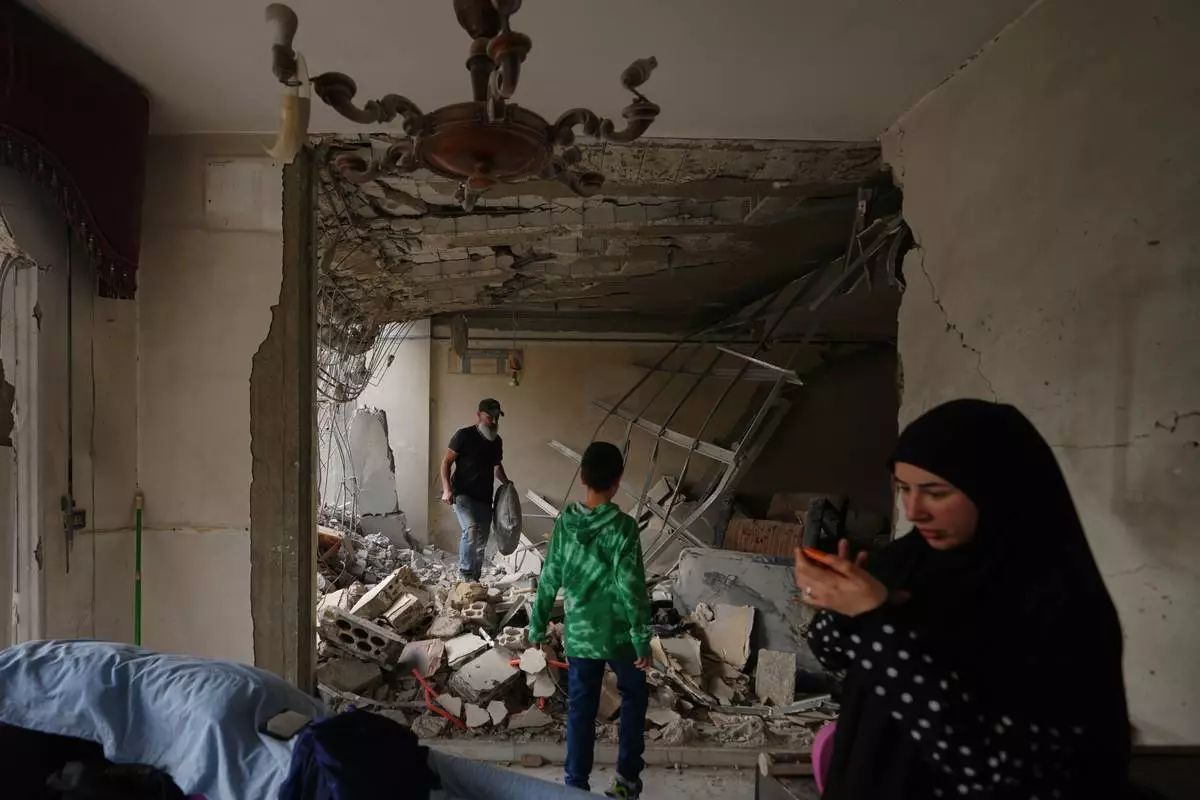
Fadi Al Zein, left, who lost both his homes in Israeli strikes in his village of Khiam and in Dahiyeh, searches through the rubble of his heavily damaged home as a child stands nearby, in Beirut's southern suburbs, Lebanon, Saturday, April 25, 2026. (AP Photo/Hassan Ammar)
Fadi Al Zein, left, who lost both his homes in Israeli strikes in his village of Khiam and in Dahiyeh, searches through the rubble of his heavily damaged home as a child stands nearby, in Beirut's southern suburbs, Lebanon, Saturday, April 25, 2026. (AP Photo/Hassan Ammar)

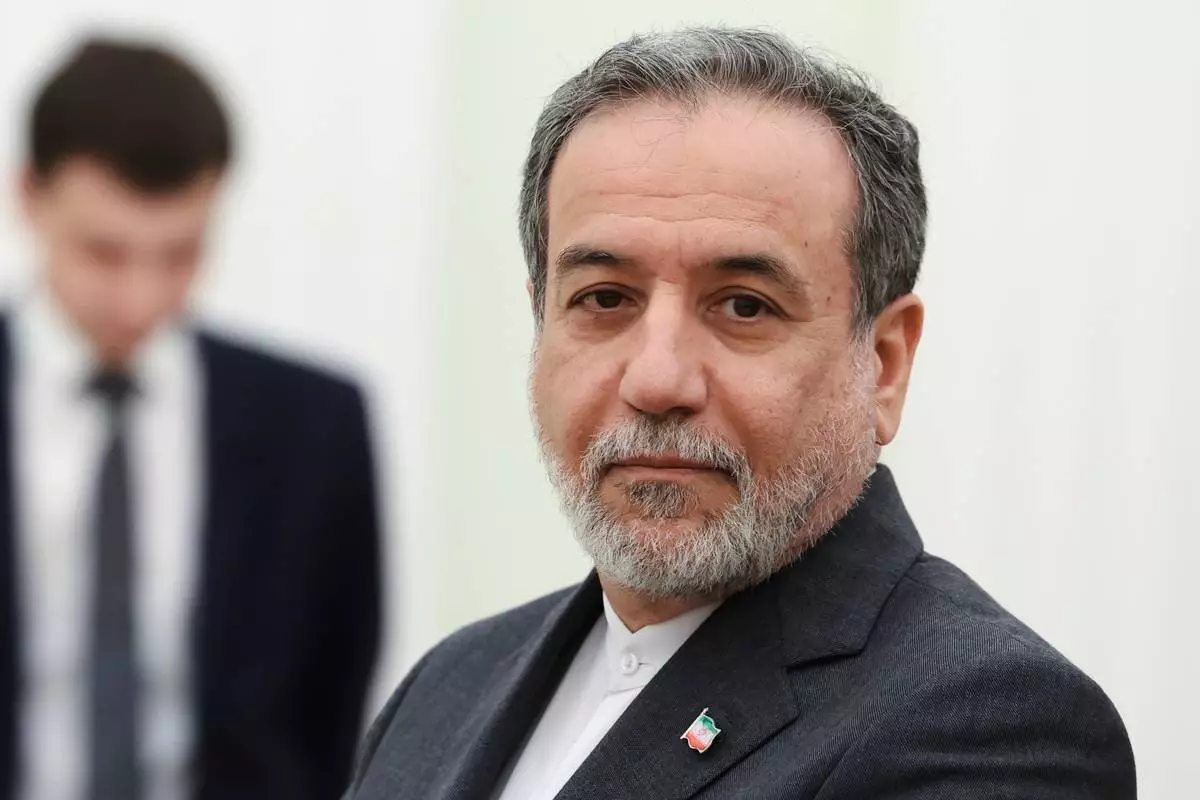
FILE - Iranian Foreign Minister Abbas Araghchi stands waiting to meet Russian President Vladimir Putin for the talks at the Kremlin in Moscow, Russia, June 23, 2025. (Alexander Kazakov/Sputnik, Kremlin Pool Photo via AP, File)

FILE - Iranian Foreign Minister Abbas Araghchi stands waiting to meet Russian President Vladimir Putin for the talks at the Kremlin in Moscow, Russia, June 23, 2025. (Alexander Kazakov/Sputnik, Kremlin Pool Photo via AP, File)
HAVANA (AP) — On a recent afternoon, a group of elderly residents slipped through the wooden doors of the Church of the Holy Spirit in Old Havana and gathered for a modest meal of ground meat, rice, red beans and crackers topped with mayonnaise — all finished with a cup of strong Cuban coffee.

“May the Lord bless from his height, the meal our belly will take with delight,” they chanted in unison before beginning their lunch, a ritual that takes place three times a week in the dining hall adjacent to the church.

Among the nearly 50 elderly people was Carmen Casado, an 84-year-old retired chemical engineer who attends without fail. Her monthly pension of 2,000 Cuban pesos is equivalent to $4 at the informal exchange rate that people use on a daily basis. She lives alone, has no children and does not receive remittances from relatives abroad.

She says the church meals are a needed supplement to the meager rations, such as bread, rice and beans, that she can obtain for free from state-run stores, or bodegas.

“This is a lifeline for us retirees with small pensions," said Casado, speaking in a rapid-fire tone. “What we get from the bodegas alone is not enough.”

The elderly are among the hardest hit by the severe economic crisis on the island, which has worsened dramatically since the beginning of the year following an oil embargo imposed by U.S. President Donald Trump.

Most are former government employees — teachers, doctors, nurses, technicians, custodians, lawyers — whose pensions are usually less than $10 a month and who must face cuts to the basket of goods that have been subsidized for decades, as well as the loneliness brought on by the growing emigration of young people.

They were young when Fidel Castro entered Havana and lived through all the major events on the island, from the Bay of Pigs invasion to U.S. President Barack Obama shaking the hand of Raúl Castro in 2016.

Now, their revolutionary spirit is being tested in the latest crisis, which is forcing them to sell cigarettes on the streets, line up for a loaf of bread and seek free meals offered by churches and some state institutions.

After lunch, Casado walked the four blocks home to tend to household chores she still performs without assistance. Her home is on the second and top floors of a 19th-century building that, like many in the capital, is falling apart.

Born in 1942, Casado was a teenager when the revolution led by Castro triumphed. Her life has spanned the island’s most defining moments, from the 1962 Missile Crisis to the so-called Special Period following the collapse of the Soviet Union. She also lived through the 1970s and 80s, when the island's economy was heavily subsidized by the Soviets and when the Cuban system seemed to promise a brighter future.

“This is our life; we were born and raised here,” she said.

Even before the economic crisis worsened and before the wave of emigration over the past five years, Cuba was already one of the countries with the oldest populations in Latin America, a trend nudged further by high life expectancy and low birth rates.

According to Cuba's National Bureau of Statistics, by the end of 2024, almost 26% of the population was aged 60 or older. That is almost twice the regional average of 14.2% in the same year, according to the Economic Commission for Latin America and the Caribbean, CEPAL.

The last five years have seen a population decline in Cuba of nearly 1.5 million, primarily due to migration. The number of Cubans residing on the island, which stood at 11.1 million, has fallen to just 9.7 million.

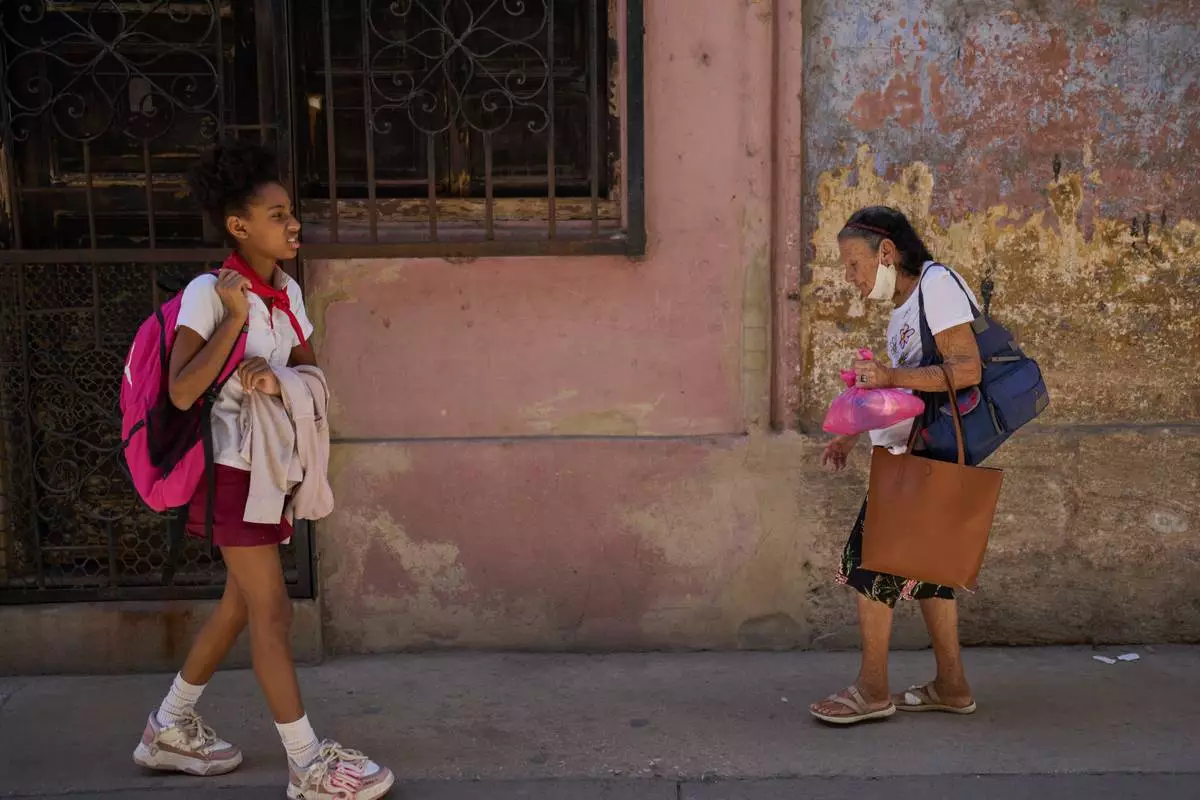
The impact of the crisis and the exodus of youth is visible at a glance. Elderly people walk the streets alone —some rummaging through trash, others standing in long lines for the bread and rice provided by the ration book, the basic subsidized foods the state guarantees to every Cuban.

The plight of the elderly is so critical that the government recently authorized private entrepreneurs to operate elder care services and residential facilities, a move marking a significant departure from the island’s traditional model of total state control.

Casado insists that she is still privileged. She is mentally sharp and has no physical impairments — she doesn’t even use a cane — and manages entirely on her own. Her only medication is half a tablet for blood pressure, which, “so far,” remains available at the state-run pharmacies.

Despite the poverty and loneliness, she continues to have faith in the government and blames the country’s woes on the United States.

“We’re doing everything we can here to move the country forward,” she said. “But the thing is, we have a very powerful enemy, and he’s right there, right on our doorstep."

Follow AP’s coverage of Latin America and the Caribbean at https://apnews.com/hub/latin-america

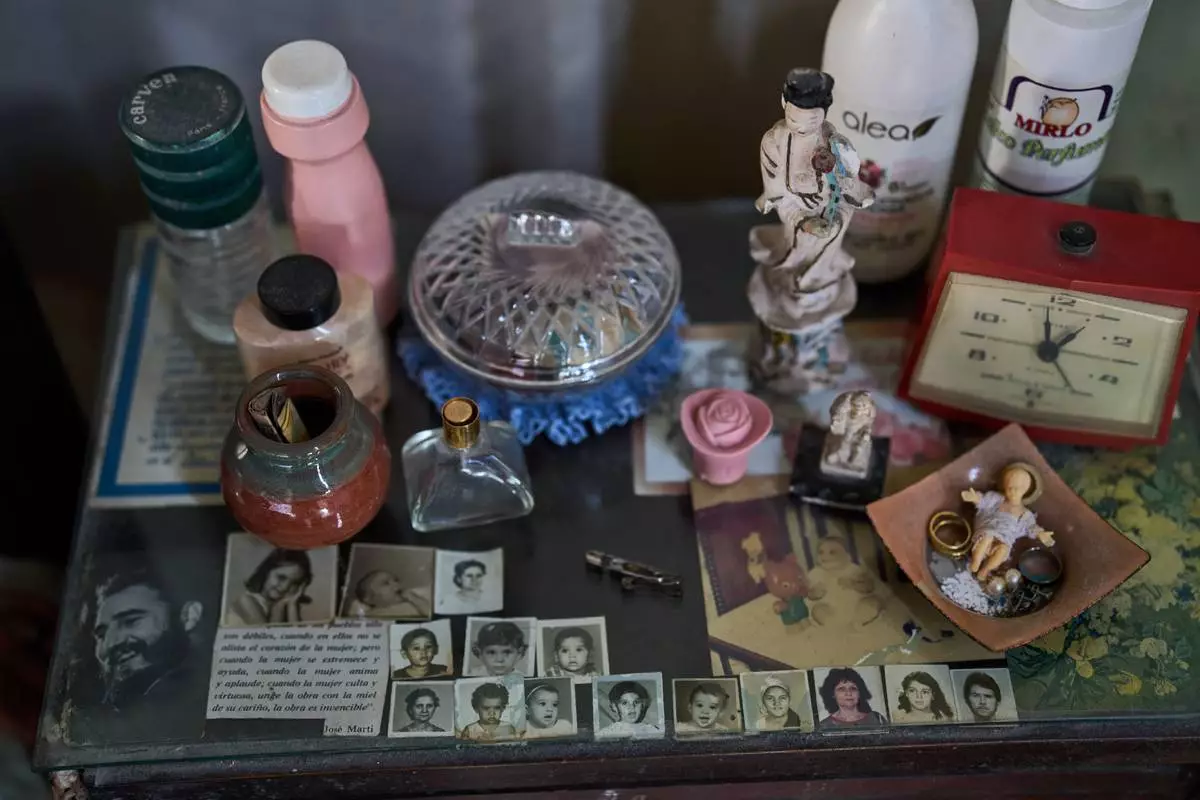
A photo of the late Cuban President Fidel Castro sits alongside photos of Mercedes Lopez Rey’s family on a bedside table at the 83-year-old’s home in Old Havana, Cuba, Wednesday, Feb. 19, 2025. (AP Photo/Ramon Espinosa)

A photo of the late Cuban President Fidel Castro sits alongside photos of Mercedes Lopez Rey’s family on a bedside table at the 83-year-old’s home in Old Havana, Cuba, Wednesday, Feb. 19, 2025. (AP Photo/Ramon Espinosa)

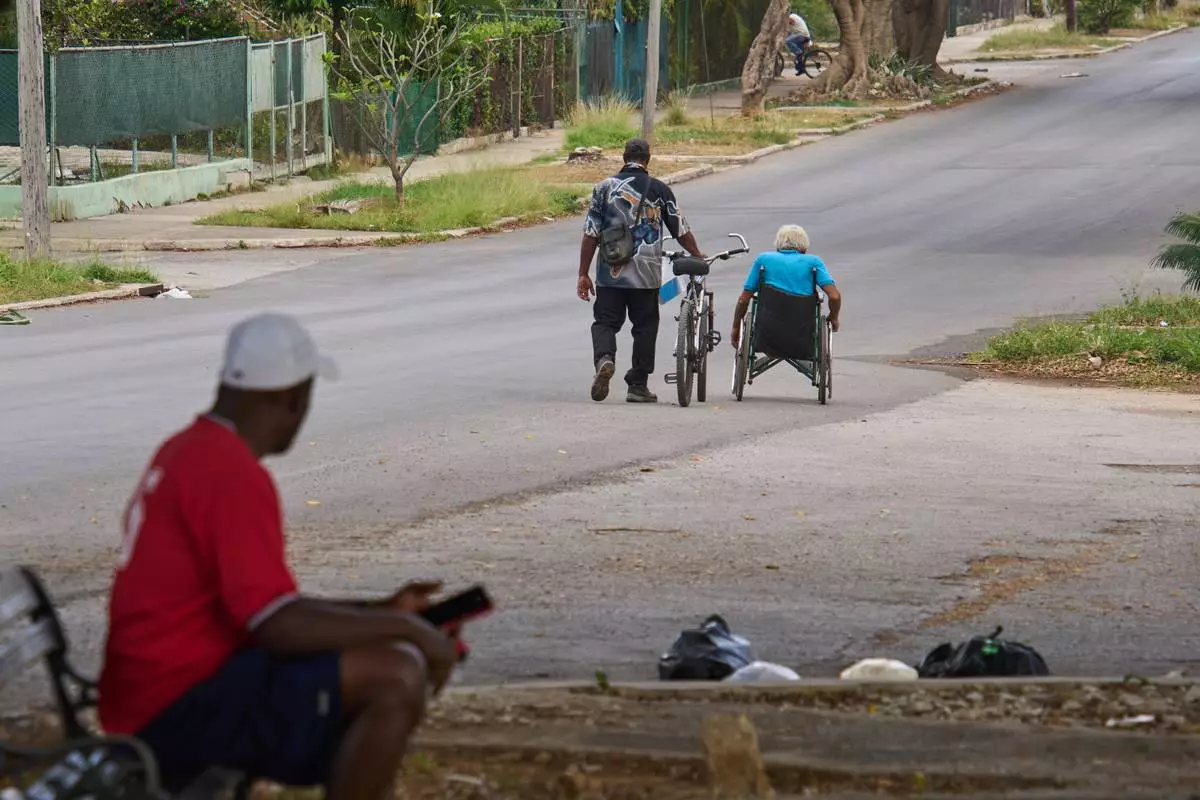
An elderly man makes his way in his wheelchair while a friend walks a bicycle beside him, in Havana, Cuba, Wednesday, April 15, 2026. (AP Photo/Ramon Espinosa)

An elderly man makes his way in his wheelchair while a friend walks a bicycle beside him, in Havana, Cuba, Wednesday, April 15, 2026. (AP Photo/Ramon Espinosa)

Mercedes Lopez Rey, 83, carries a meal from a church-sponsored program to a homebound friend, in Old Havana, Cuba, Wednesday, Feb. 19, 2025. (AP Photo/Ramon Espinosa)

Mercedes Lopez Rey, 83, carries a meal from a church-sponsored program to a homebound friend, in Old Havana, Cuba, Wednesday, Feb. 19, 2025. (AP Photo/Ramon Espinosa)

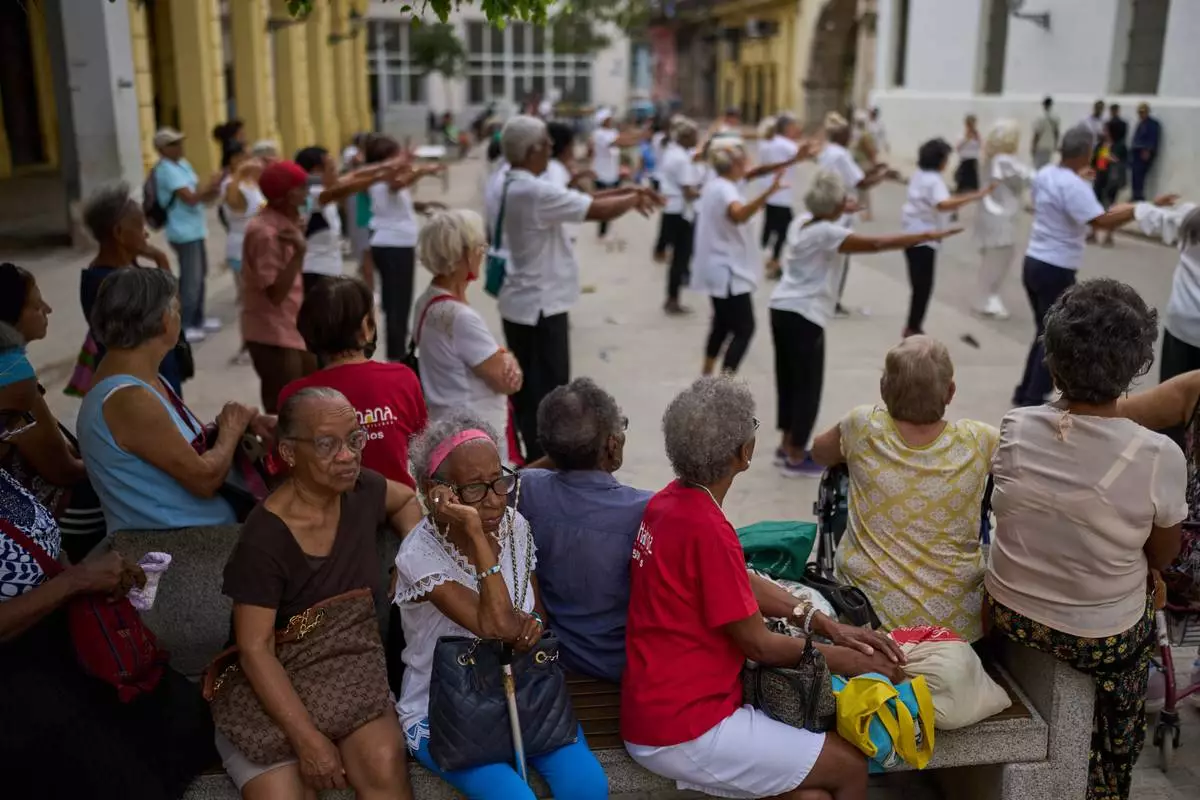
Elderly residents watch a tai chi class for seniors at the Belen Convent in Old Havana, Cuba, Thursday, Feb. 20, 2025. (AP Photo/Ramon Espinosa)

Elderly residents watch a tai chi class for seniors at the Belen Convent in Old Havana, Cuba, Thursday, Feb. 20, 2025. (AP Photo/Ramon Espinosa)

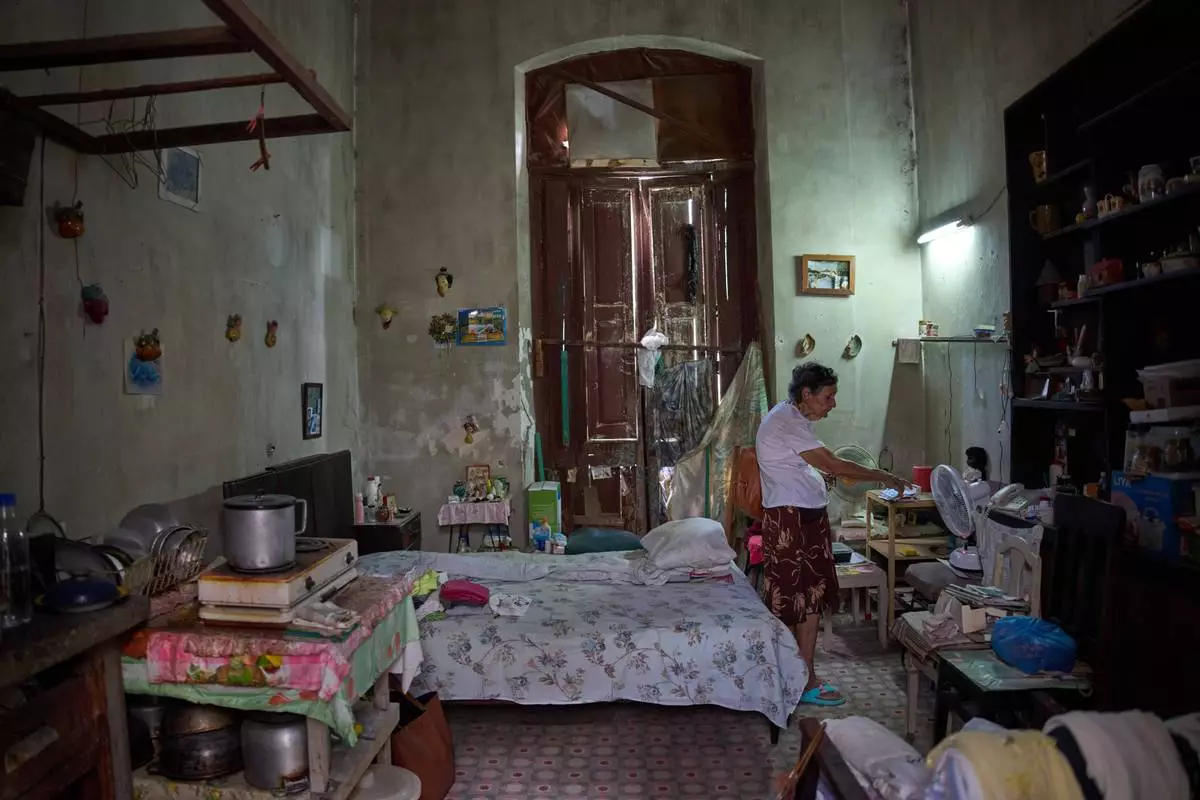
Mercedes Lopez Rey, 83, stands in her one-room apartment in Old Havana, Cuba, Friday, April 10, 2026. (AP Photo/Ramon Espinosa)

Mercedes Lopez Rey, 83, stands in her one-room apartment in Old Havana, Cuba, Friday, April 10, 2026. (AP Photo/Ramon Espinosa)

Recommended Articles