BUENOS AIRES, Argentina (AP) — The president blocked accredited reporters from entering the government's headquarters. He took to social media, in all caps, to insult the country’s news media as “filthy scum that claims to be journalists." He posted an AI-generated image that showed a local TV journalist in an orange prison jumpsuit.
The president in question was not the one you might think. It was Argentina’s radical libertarian Javier Milei.
Click to Gallery
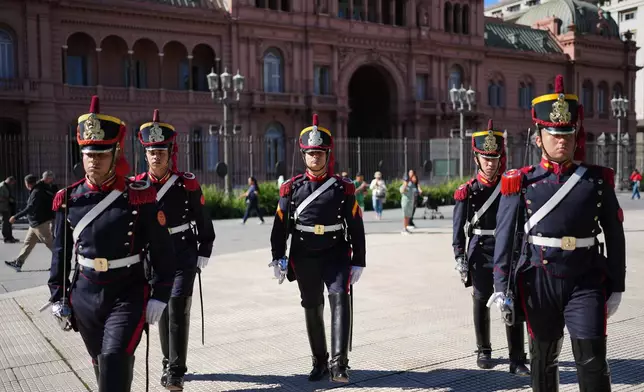
Honor guards march outside government house in Buenos Aires, Argentina, Thursday, April 23, 2026. (AP Photo/Rodrigo Abd)
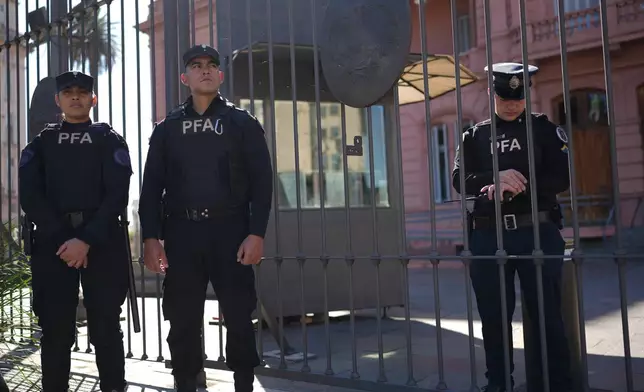
Police stand outside government house in Buenos Aires, Argentina, Thursday, April 23, 2026. (AP Photo/Rodrigo Abd)
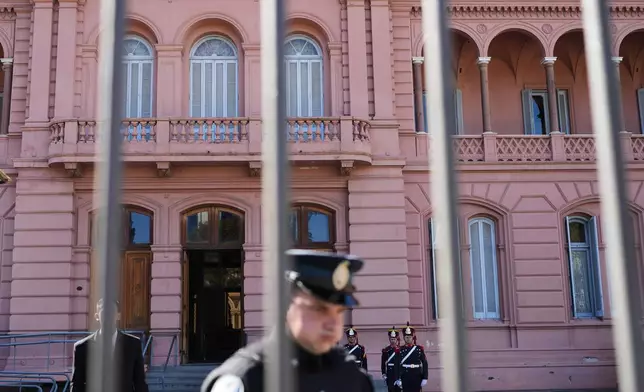
Honor guards stand at attention outside the government house in Buenos Aires, Argentina, Thursday, April 23, 2026. (AP Photo/Rodrigo Abd)
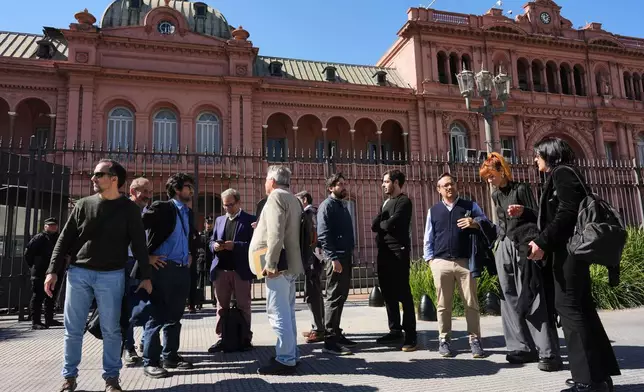
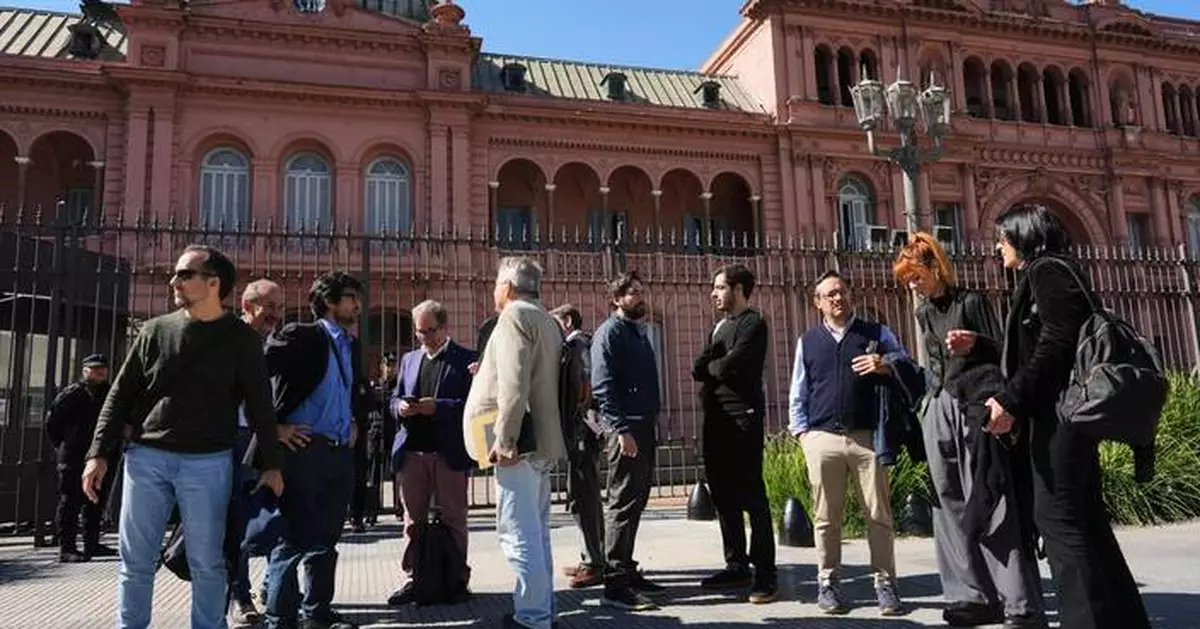
Journalists stand outside of the Casa Rosada government headquarters after President Javier Milei blocked their access, in Buenos Aires, Argentina, Thursday, April 23, 2026. (AP Photo/Rodrigo Abd)
Milei’s decision last week to expel the entire press corp from the Casa Rosada — or the Pink House, the Argentine equivalent of the White House — marked the latest escalation in a wide-ranging anti-media campaign that has become a hallmark of his tenure, much as it has for his ideological ally and fellow adversary of the media, U.S. President Donald Trump.
“It’s the culmination of the government’s contempt for journalism and its value in a democracy,” said Fernando Stanich, president of the Argentine Journalism Forum, a professional group.
In a nation that has long prided itself on a free and vibrant news media, rights watchdogs and lawmakers from across the political spectrum denounced the move as an attack on the press without precedent since the end of Argentina’s military dictatorship in 1983.
“Argentina is still a democracy, but these are the actions of an autocrat,” said Cristina Zahar, Latin America coordinator for the Committee to Protect Journalists, a watchdog group. “An autocrat who tries to curtail press freedoms, who tries to prevent journalists from reporting and keeping society informed about public interest matters.”
Milei’s spokesperson, Javier Lanari, said Thursday that the government had blocked press access “as a preventative measure” after a local TV channel aired footage filmed with smart glasses from inside the Casa Rosada, allegedly without authorization.
Authorities in charge of security at the Casa Rosada are suing the Todo Noticias network, Lanari said, accusing it of “illegal espionage.” He did not respond to a request for further comment.
On her program Sunday, Luciana Geuna, one of the journalists from Todo Noticias, said they had notified press officers of their filming plans in advance. Geuna said the footage showed easily accessible parts of the Casa Rosada that had been shown on TV before.
On the campaign trail in 2023, Milei's brash style and propensity for provocative language solidified his outsider status, prompting comparisons to Trump and former Brazilian President Jair Bolsonaro and helping propel the former television commentator to the nation's top job on a pledge to slash state spending.
Far from moderating his rhetoric two years into his tenure, Milei has escalated his attacks on the media.
Over just four days this month, Milei, an avid user of X, wrote 86 posts taunting and insulting journalists, according to an analysis of his feed between April 2 and 5 by prominent Argentine daily La Nación. He re-shared 874 such attacks in that time, including one post asking that he designate the press a terrorist organization and many laced with sexual innuendo.
Most of his posts about the media include his signature slogan, “We don’t hate journalists enough” and repeat the claim that 95% of journalists are criminals. He often singles out specific reporters critical of his administration with epithets ranging from “dirty operative” to “human garbage.”
Trump, in his first term, referred to journalists as the “ enemy of the people.”
As his government pulled press credentials from the roughly 60 reporters covering the Casa Rosada on Thursday, Milei fired off posts: “Disgusting scum, how about you try stopping the lies?" he wrote. "Oh I forgot, you lot are corrupt junkies hooked on advertising bucks and bribes.”
His jag continued Monday. Milei re-shared more than two dozen posts on X before noon saying that journalists had “lost all credibility” and insisting there was no need for reporters in the Casa Rosada when all they did was “ask stupid questions” and the government could communicate everything on social media.
Milei hasn't held a single press conference as president. He prefers to push his message through slogans and AI-generated memes — a proclivity he shares with his American counterpart. He rarely gives interviews to established outlets but frequently appears on radio shows of right-wing influencers.
He has promoted social media provocateurs to government positions and mobilized a new generation of digital activists to rail against the traditional news media that he accuses of leaning left.
“When he hires influencers to work at the presidency, it's like saying, 'You journalists don't matter anymore,'” Zahar said. “Everyone suddenly feels empowered to use stigmatizing discourse against the press.”
Taking a cue from Trump, who has waged legal battles with The Associated Press, The New York Times, Wall Street Journal, ABC and CBS News, Milei has turned to the courts, filing defamation lawsuits against at least eight journalists in the last year and encouraging his allies to do the same.
“Milei’s followers are extremely fanatical. They’ve harassed me, doxxed me, dragged me into mediation,” said Alejandro Alfie, a media reporter for Clarin, Argentina’s largest newspaper, who has investigated the armies of anonymous troll accounts boosting Milei. Alfie now faces four defamation lawsuits filed by Milei's close allies seeking millions in damages.
“People say, ‘Oh, it’s not real. It’s just social media.’ But when you have someone telling you on Instagram every day that they will kill your children, it is something else entirely.”
Milei also modified an open-records law to limit the scope of publicly available information and, in 2024, shut down Argentina's state news agency Telam, accusing it of being a propaganda mouthpiece for the left-leaning populist opposition. It has since been transformed into an advertising agency.
Trump led a cutoff in funding to PBS and NPR last year because he didn’t like the way they reported on conservatives.
Journalists banned from the Casa Rosada said they saw it coming.
Last year, the government constrained the movements of media within the building, designating certain wings of the Casa Rosada off limits and capping attendance at news briefings.
This month, authorities barred six accredited media outlets from accessing the Casa Rosada and the lower house of Congress, accusing the journalists of involvement in Kremlin-backed disinformation. The reporters denied any connection to the Russian government.
Then came last week's lawsuit against the two journalists who captured footage using Meta smart glasses.
“It was the perfect excuse to extend the punishment to the entire press corps," said Jaime Rosemberg, a political correspondent for La Nación who is among the 60 accredited journalists still blocked from the Casa Rosada.
The backlash has been swift, with an opposition lawmaker suing the government and a dozen other legislators requesting an urgent meeting with officials over what they described as an “institutional undermining of freedom of expression.” Even the Argentine Catholic Church weighed in Monday, stressing the need to reject divisive rhetoric and noting the press “had operated virtually uninterrupted in the Casa Rosada since 1940."
The ban comes at a fraught time for Milei, whose popularity is now at the lowest of his presidency, according to the AtlasIntel pollster.
His drive to eliminate Argentina’s chronic inflation has stalled, unemployment has climbed and the economy has contracted. Corruption cases reminiscent of the scandals that plagued the political elite that Milei vowed to overthrow have added to his challenges, with his close ally and chief of staff, Manuel Adorni, now under investigation for the misuse of public funds.
Some journalists draw a line between the government's mounting headaches and its escalating attacks on the messengers of that news.
“It's a very bad moment for the president,” Rosemberg said. “And often the easiest thing to do in that moment, what you have closest at hand, is to blame the press for everything."
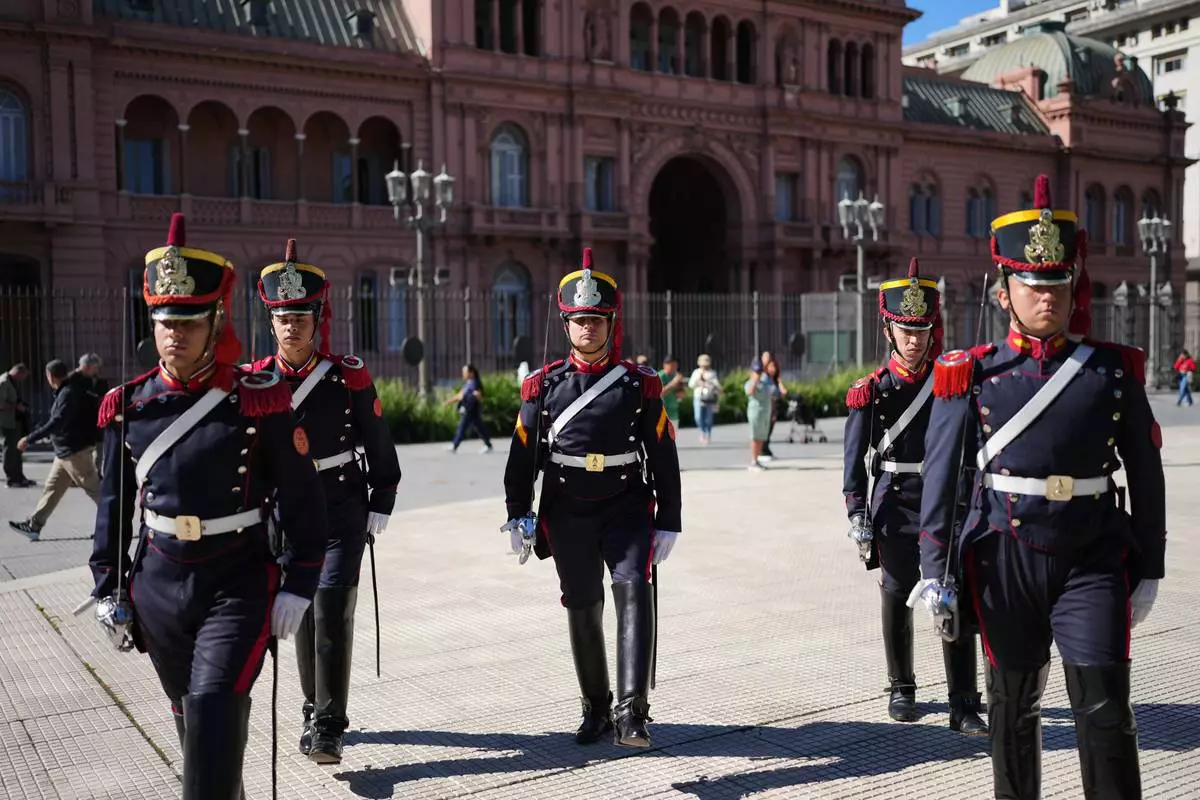
Honor guards march outside government house in Buenos Aires, Argentina, Thursday, April 23, 2026. (AP Photo/Rodrigo Abd)
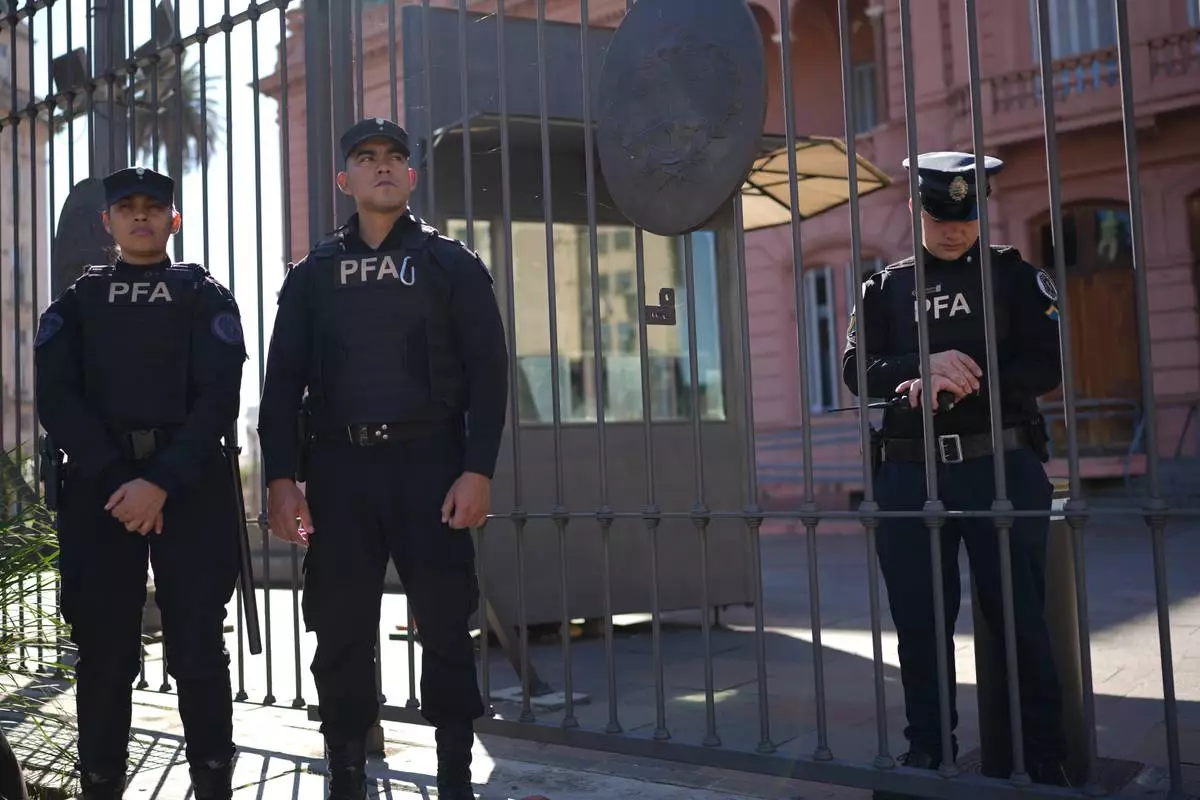
Police stand outside government house in Buenos Aires, Argentina, Thursday, April 23, 2026. (AP Photo/Rodrigo Abd)
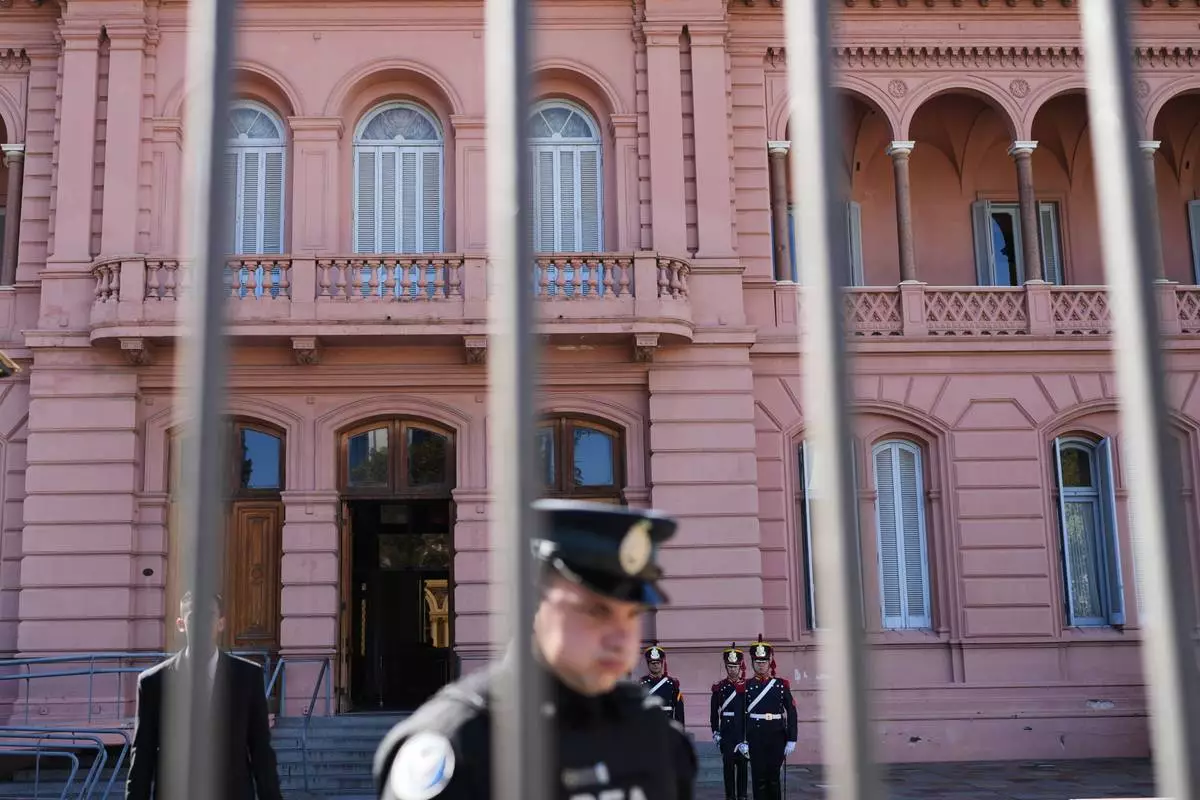
Honor guards stand at attention outside the government house in Buenos Aires, Argentina, Thursday, April 23, 2026. (AP Photo/Rodrigo Abd)
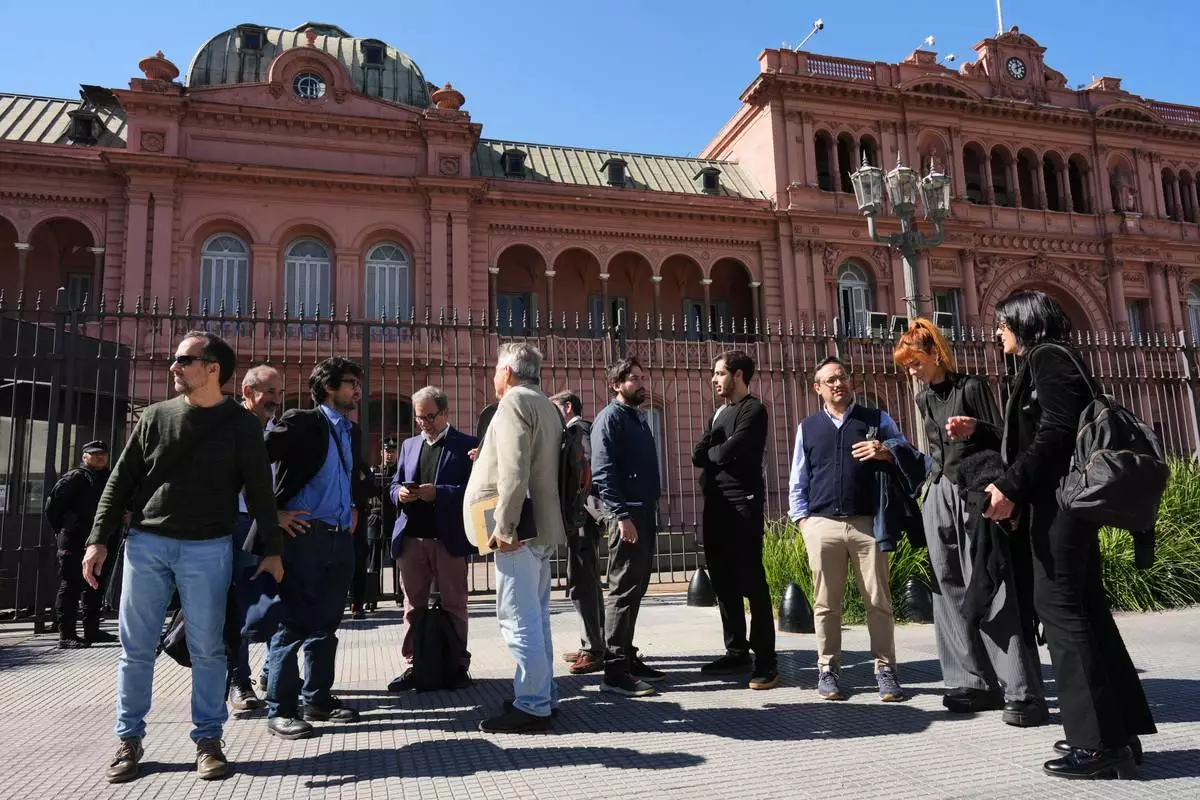
Journalists stand outside of the Casa Rosada government headquarters after President Javier Milei blocked their access, in Buenos Aires, Argentina, Thursday, April 23, 2026. (AP Photo/Rodrigo Abd)