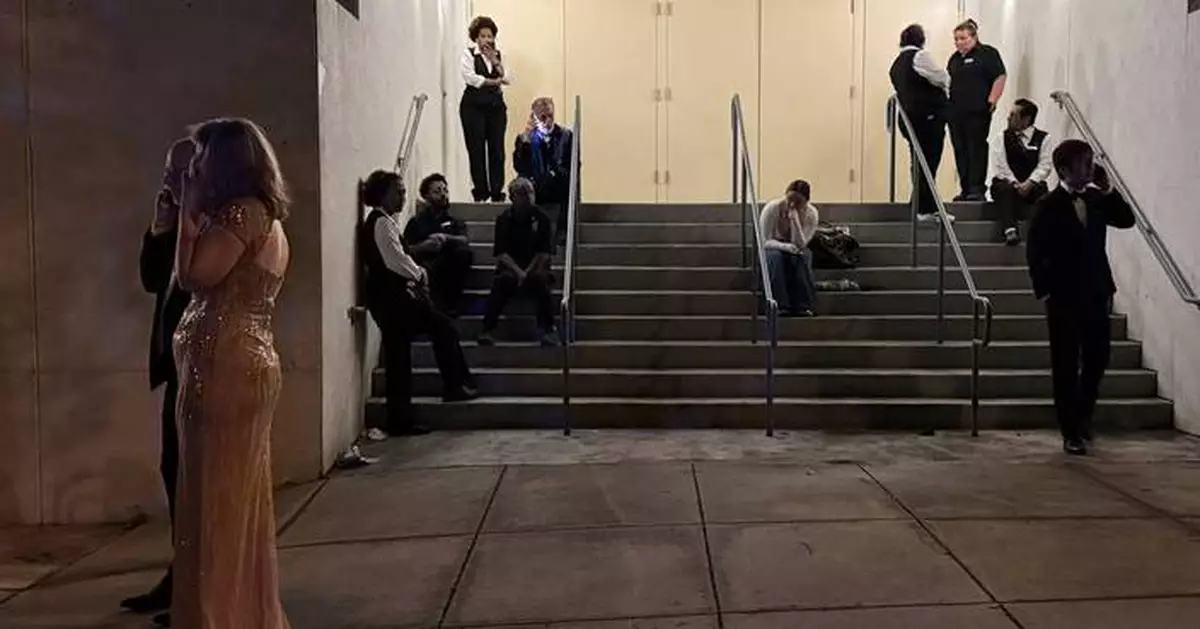
WASHINGTON (AP) — The man who authorities say tried to storm the White House Correspondents’ Association dinner with guns and knives was charged Monday with the attempted assassination of President Donald Trump and will remain at least temporarily behind bars as the case moves forward.
Cole Tomas Allen appeared in court Monday to face federal charges in a chaotic encounter that resulted in shots being fired, Trump being rushed off the stage and guests ducking for cover underneath their tables. He was taken into custody after the shooting on Saturday night and sat beside his lawyers in a brief appearance Monday in Washington's federal court.
Click to Gallery
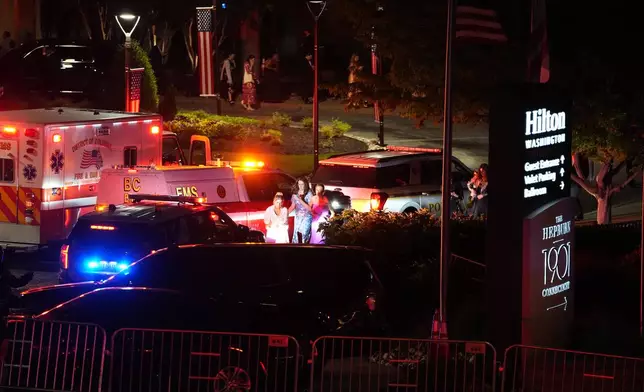
Law enforcement respond to an incident at the Washington Hilton during the White House Correspondents Dinner, Saturday, April 25, 2026, in Washington. (AP Photo/Allison Robbert)
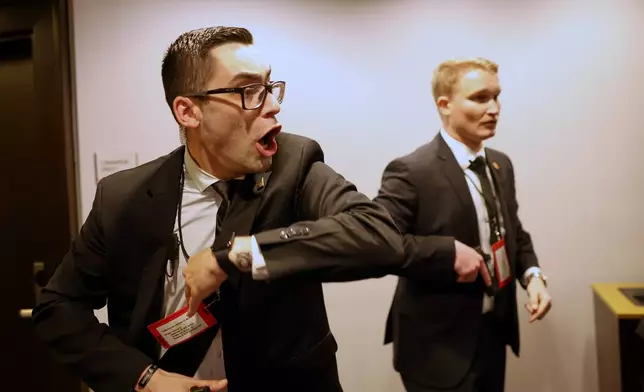
Secret service agents respond during the White House Correspondents Dinner, Saturday, April 25, 2026, in Washington. (AP Photo/Tom Brenner)
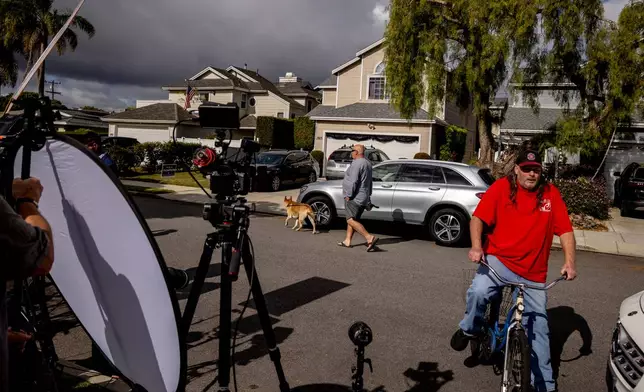
Pedestrians walk past the home, middle back, connected to Cole Tomas Allen, who was identified as the suspect at the White House Correspondents Dinner shooting, as members of the media stage, in Torrance, Calif., Sunday, April 26, 2026. (Stephen Lam/San Francisco Chronicle via AP)
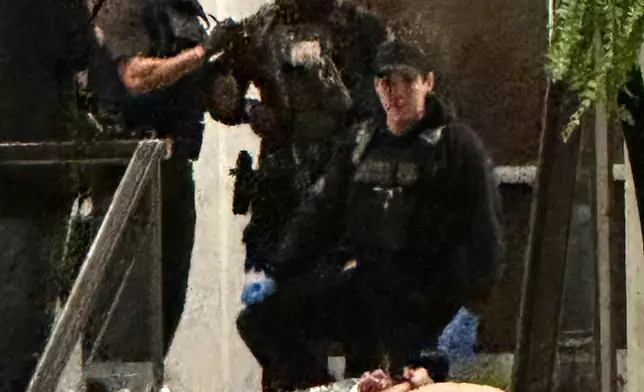
Members of law enforcement control shooting suspect Cole Tomas Allen during the White House Correspondents Dinner, Saturday, April 25, 2026, in Washington. (AP Photo/Alex Brandon) ADDITION: Adds name of shooting suspect after name shared by law enforcement officials
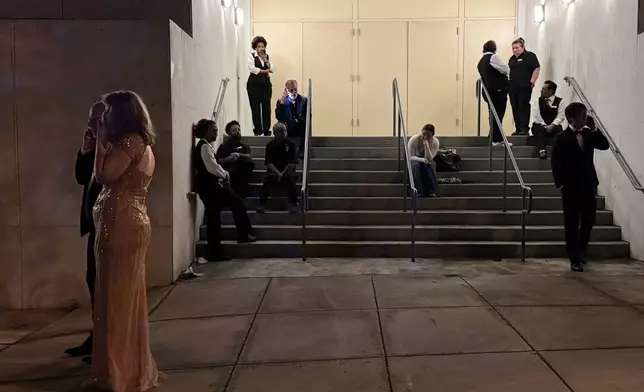
Attendees and hotel workers evacuate after an incident at the Washington Hilton during the White House Correspondents Dinner, Saturday, April 25, 2026, in Washington. (AP Photo/Mark Schiefelbein)
Besides being charged with attempting to assassinate the Republican president, Allen also faces two firearms charges. He did not enter a plea.
A judge granted a prosecutor's request Monday to keep Allen, 31, of Torrance, California, detained pending additional hearings. One of Allen's lawyers, Tezira Abe, asked for a detention hearing and noted Allen has no criminal record.
“He also is presumed innocent at this time," she said.
The Associated Press called multiple phone numbers listed for Allen and relatives in public records, and there was no answer when a reporter knocked on the door of his home.
Prosecutors have not revealed a motive, but in a message reviewed by the AP that authorities say was sent by Allen to family members minutes before the attack, Allen referred to himself as a “Friendly Federal Assassin,” made repeated references to the Republican president without naming him and alluded to grievances over a range of Trump administration actions.
Investigators are treating the writings, along with a trail of social media posts and interviews with family members, as some of the clearest evidence of the suspect’s mindset and possible motives.
Allen is believed to have traveled by train from California to Chicago and then onto Washington, where he checked himself in as a guest at the hotel where the gala dinner was held with its typically tight security, acting Attorney General Todd Blanche said.
“It does appear that he did in fact set out to target folks who work in the administration, likely including the president,” Blanche told NBC’s “Meet the Press” on Sunday.
Video posted by Trump shows a man, who authorities say was armed with guns and knives, running past a security barricade as Secret Service agents run toward him. Authorities say an officer wearing a bullet-resistant vest was shot in the vest but is expected to recover.
Records show Allen is a highly educated tutor and amateur video game developer. A social media profile for a man with the same name and a photo that appears to match that of the suspect show he worked part-time for the last six years at a company that offers admissions counseling and test preparation services to aspiring college students.
Associated Press writer Gary Fields contributed to this report.
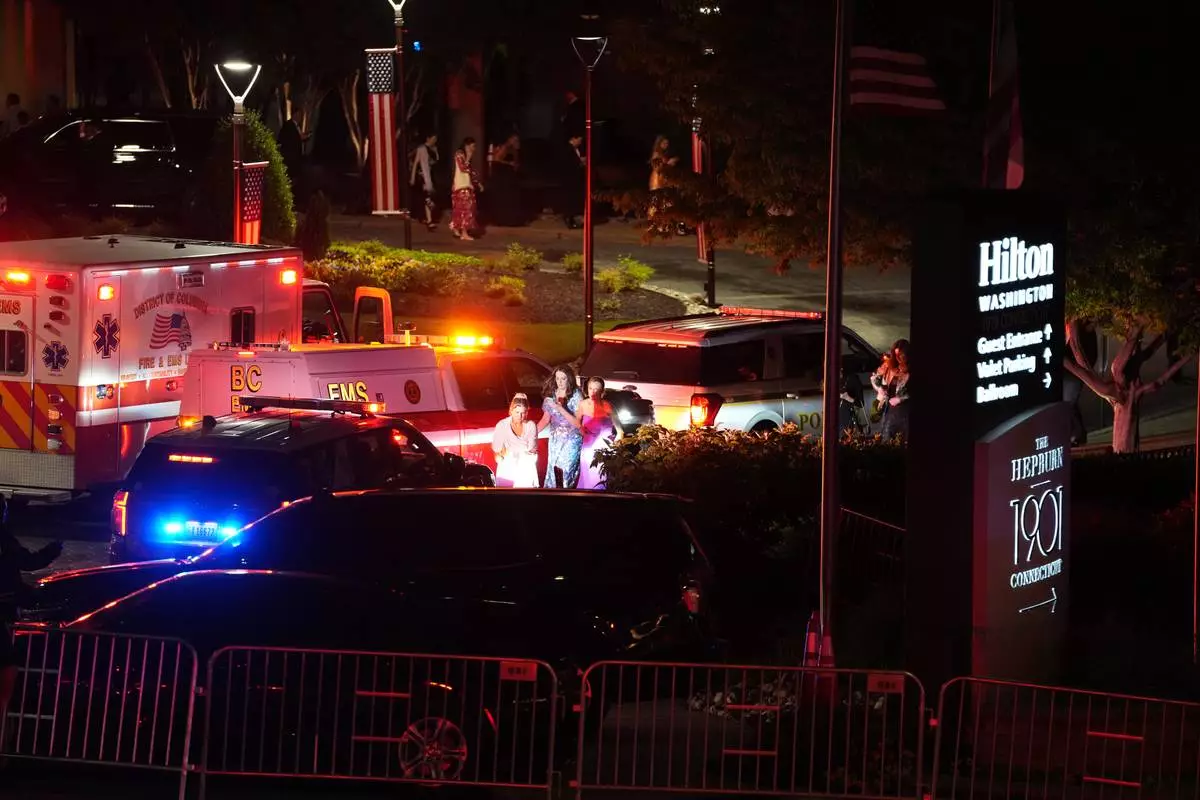
Law enforcement respond to an incident at the Washington Hilton during the White House Correspondents Dinner, Saturday, April 25, 2026, in Washington. (AP Photo/Allison Robbert)
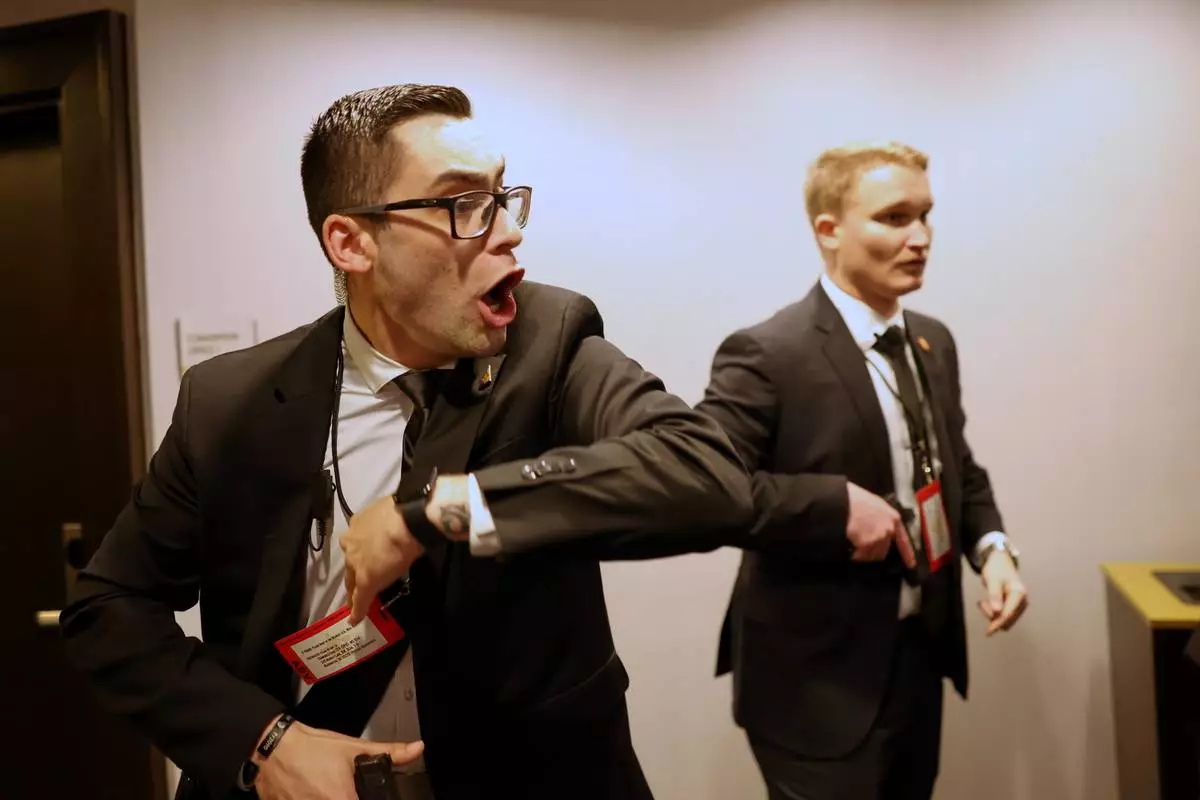
Secret service agents respond during the White House Correspondents Dinner, Saturday, April 25, 2026, in Washington. (AP Photo/Tom Brenner)
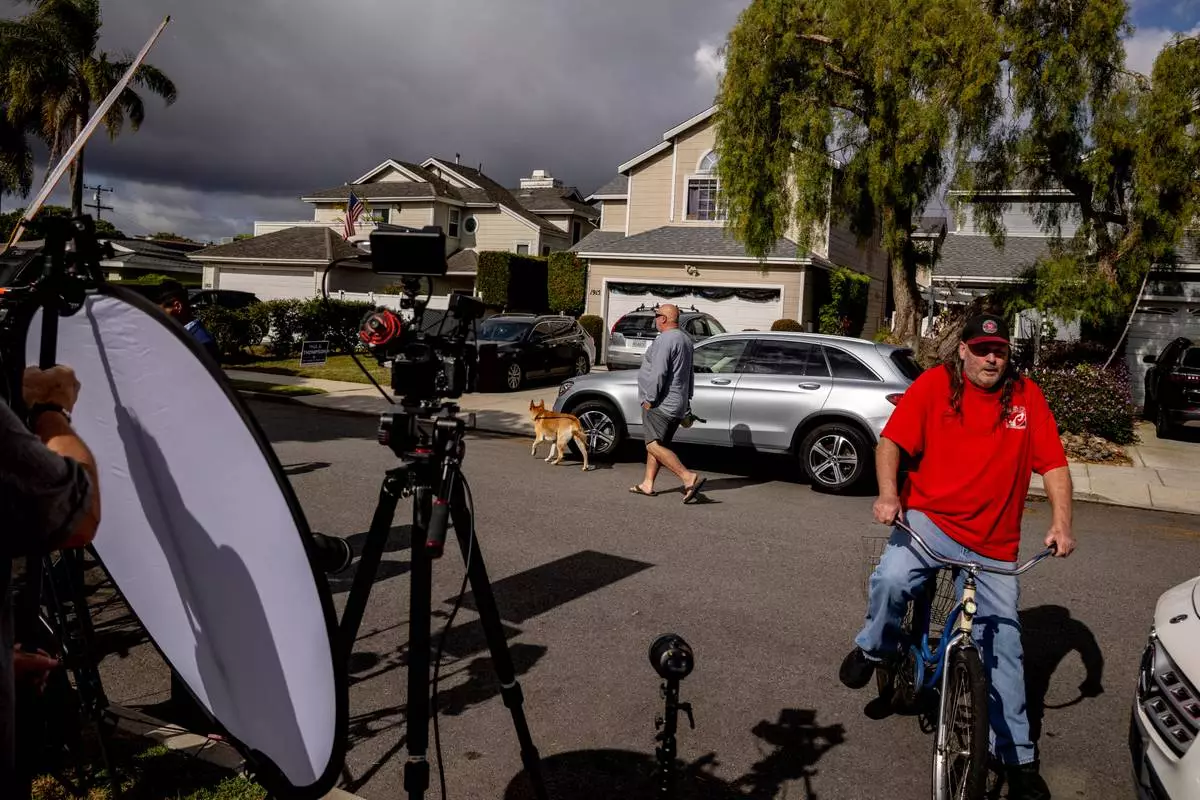
Pedestrians walk past the home, middle back, connected to Cole Tomas Allen, who was identified as the suspect at the White House Correspondents Dinner shooting, as members of the media stage, in Torrance, Calif., Sunday, April 26, 2026. (Stephen Lam/San Francisco Chronicle via AP)
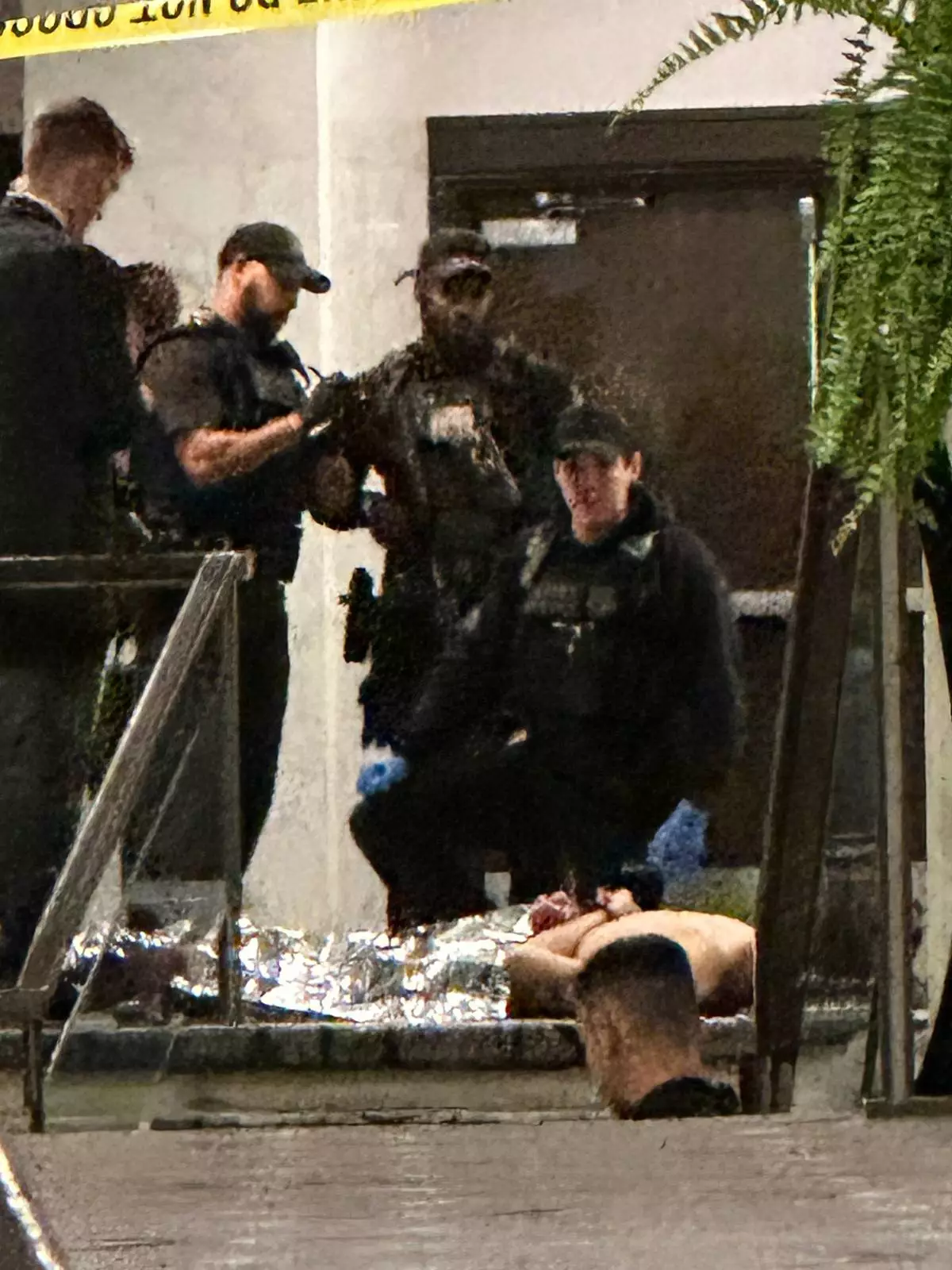
Members of law enforcement control shooting suspect Cole Tomas Allen during the White House Correspondents Dinner, Saturday, April 25, 2026, in Washington. (AP Photo/Alex Brandon) ADDITION: Adds name of shooting suspect after name shared by law enforcement officials
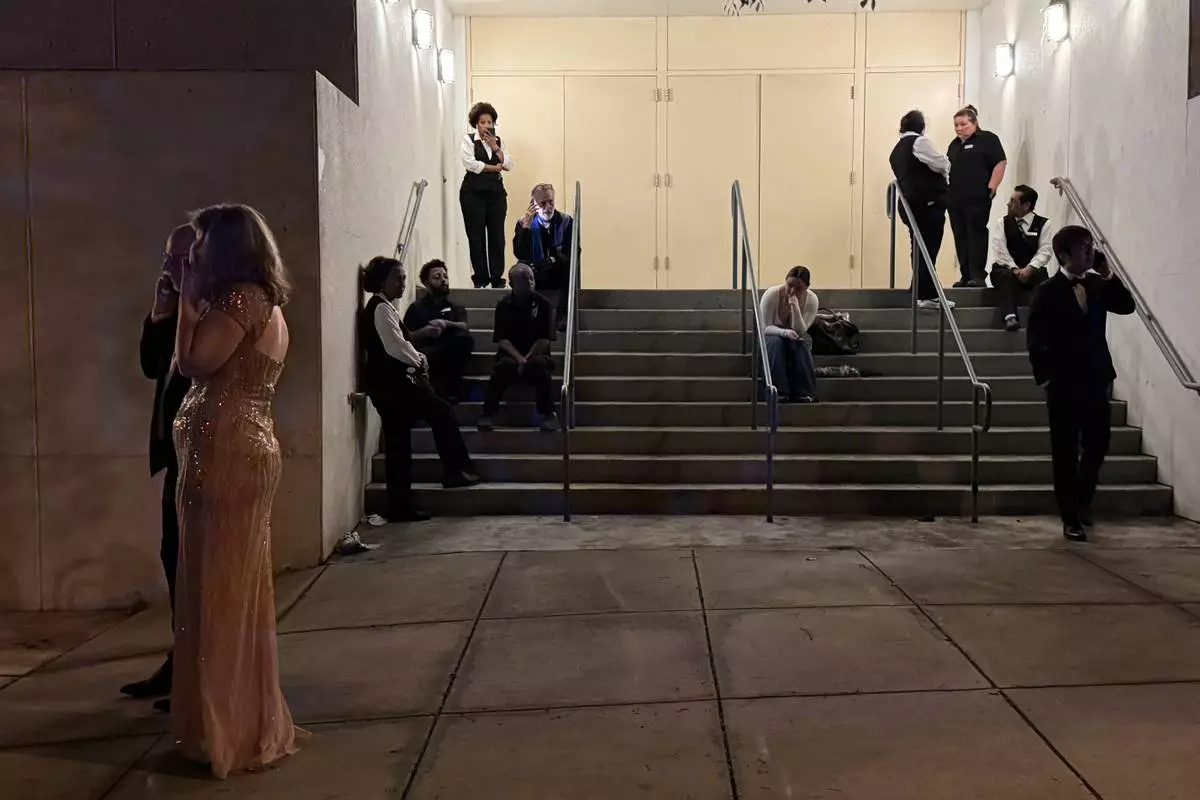
Attendees and hotel workers evacuate after an incident at the Washington Hilton during the White House Correspondents Dinner, Saturday, April 25, 2026, in Washington. (AP Photo/Mark Schiefelbein)