WASHINGTON (AP) — The Supreme Court on Monday seemed inclined to rule that police could use geofence warrants that collect the location history of cellphone users to find people near crime scenes.
The justices heard nearly two hours of arguments in an appeal from Okello Chatrie, who pleaded guilty to robbing a bank in a suburb of Richmond, Virginia.
Chatrie eluded the police until they turned to the geofence warrant, a powerful technological tool that erected a virtual fence and allowed them to locate cellphones that were near the bank around the time it was robbed in May 2019.
The justices did not appear to embrace arguments offered by Adam Unikowsky, Chatrie's lawyer, that geofence warrants are too general to comply with the Fourth Amendment, which prohibits unreasonable searches.
Justice Sonia Sotomayor said the warrant that led to Chatrie's identification as a suspect did not seem to be general. “This isn't that. It identifies a place, a crime, a timeframe,” Sotomayor said.
The federal appeals court in Richmond upheld Chatrie's conviction in a fractured ruling. In a separate case, the federal appeals court in New Orleans ruled that geofence warrants “are general warrants categorically prohibited by the Fourth Amendment.”
The case is the court's latest contemplation of how a constitutional provision ratified in 1791 applies to technology the nation’s founders count not have envisioned.
The justices seemed eager to avoid a broad ruling. They could limit the time and geographic area covered by such warrants, and they might even decline to say whether what police did in Chatrie's case even amounted to a search that requires a warrant.
Instead the court might rule that, assuming a warrant is required, police can constitutionally conduct geofence searches.
A ruling for Chatrie, who is serving a prison term of nearly 12 years, might not ultimately help him. Even the federal judge who ruled that the search violated Chatrie’s rights allowed the evidence to be used because the officer who applied for the warrant reasonably believed he was acting properly.
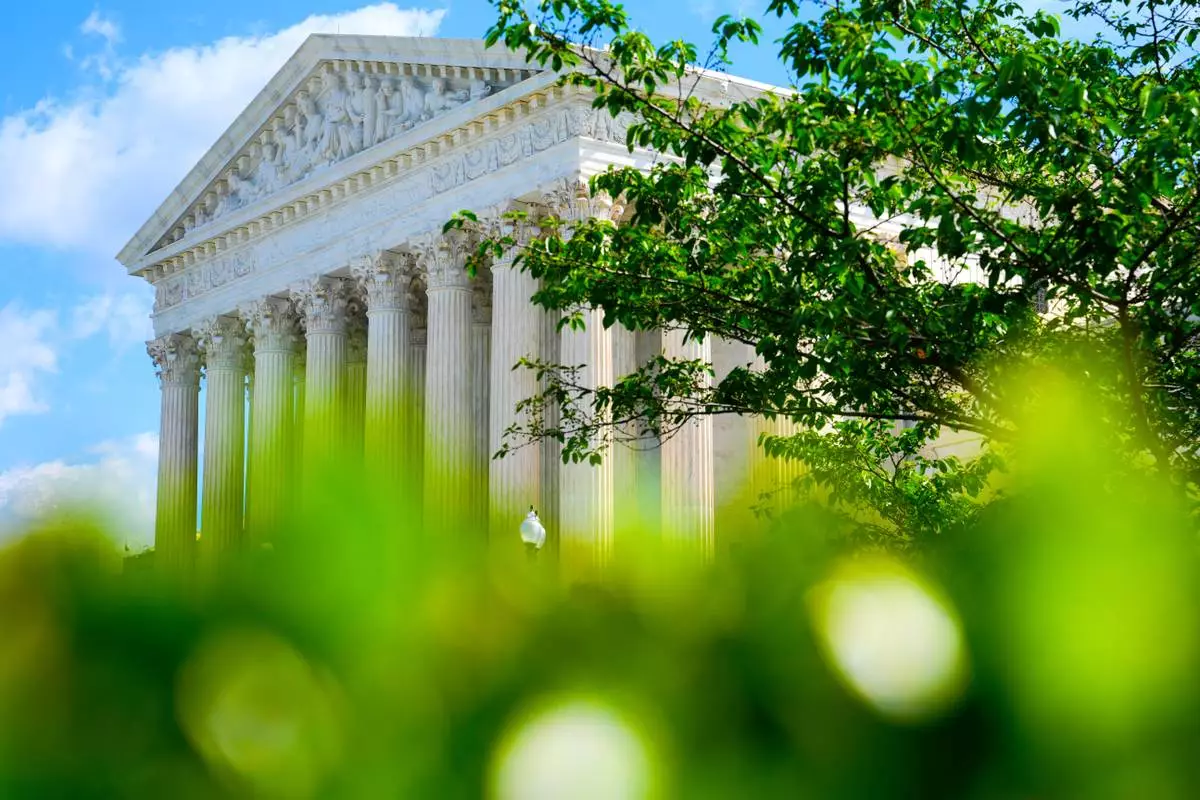
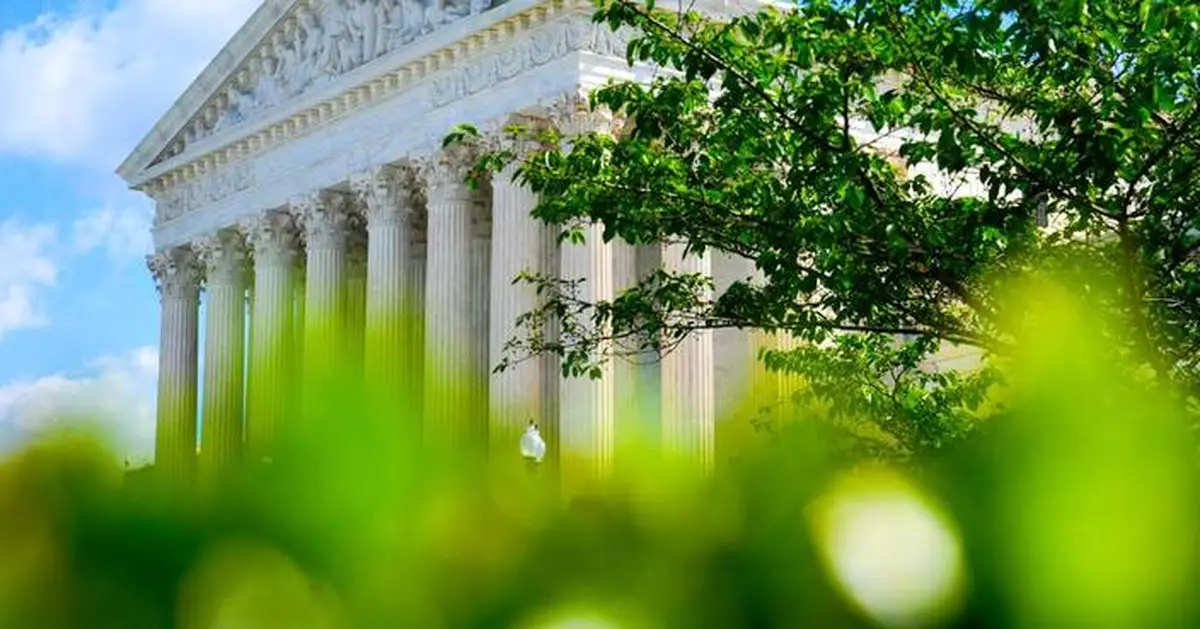
The U.S. Supreme Court is seen Friday, April 17, 2026, in Washington. (AP Photo/Mariam Zuhaib)
WASHINGTON (AP) — The man who authorities say tried to storm the White House Correspondents’ Association dinner with guns and knives was charged Monday with the attempted assassination of President Donald Trump as federal authorities suggested an attack that disrupted one of Washington's glitziest events had been planned for at least several weeks.
Cole Tomas Allen appeared in court Monday to face federal charges after the chaotic encounter Saturday that resulted in shots being fired, Trump being hurried off the stage unharmed and guests ducking for cover underneath their tables. He was ordered to remain jailed pending additional court hearings, and faces up to life in prison if convicted of the assassination count alone.
An FBI affidavit filed in the case reveals additional details about the planning behind the assault, with authorities alleging that Allen on April 6 reserved a room for himself at the Washington hotel where the event would be held weeks later under its typical tight security. He traveled by train cross-country from California last week, checking himself into the Washington Hilton one day before the dinner with a room reserved through the weekend.
The event had barely begun when officials say the 31-year-old Torrance, California, man, armed with a shotgun and pistol, tried to race past a security barricade near the cavernous ballroom holding hundreds of journalists and their guests, prompting an exchange of gunfire with Secret Service agents tasked with safeguarding the event.
“Violence has no place in civic life,” acting Attorney General Todd Blanche said at a news conference. “We will ensure accountability is swift and certain.”
Allen was injured but was not shot. A Secret Service officer was shot but was wearing a bullet-resistant vest and survived, officials say.
Questions remain about how many shots Allen fired and how many officers discharged their weapons.
Blanche said investigators believe that a Secret Service agent fired five shots and that Allen discharged his shotgun at least once. But Blanche didn’t say whether authorities have confirmed it was Allen’s bullet that struck the agent in the vest, or whether any other officers used their weapons. Blanche said ballistics experts are still examining evidence to provide more clarity on those questions.
The Justice Department charged Allen with two additional firearms counts, including discharging a weapon during a crime of violence, but the affidavit does not directly say that Allen was responsible for shooting the officer.
The shooting resulted in the cancellation of the dinner, the first Trump had attended as president.
White House press secretary Karoline Leavitt on Monday said the night was supposed to be one of joy but instead was “hijacked by a crazed anti-Trump individual who traveled across the country to assassinate the president and as many administration officials as possible.”
Allen invoked his constitutional right to remain silent after his arrest, but authorities say an email he sent to family members and a former employer helps shed light on a motive.
In the message, a copy of which was included in the affidavit, Allen referred to himself as a “Friendly Federal Assassin,” alluded obliquely to grievances over a range of Trump administration actions. The rambling text moves between confession, grievance and farewell, with Allen apologizing to family members, co-workers and even strangers he feared could be caught in the violence while at the same time seeking to explain the attack.
A magistrate judge granted a prosecutor's request to keep Allen locked up pending additional hearings, including a detention hearing set for Thursday.
Allen did not speak at length during the quick appearance, as is customary, though one of his lawyers, Texira Abe, noted that he has no criminal record.
“He also is presumed innocent at this time," she said.
The Associated Press called multiple phone numbers listed for Allen and relatives in public records, and there was no answer when a reporter knocked on the door of his home.
Records reveal that Allen is a highly educated tutor and amateur video game developer. A social media profile for a man with the same name and a photo that appears to match that of the suspect show he worked part-time for the last six years at a company that offers admissions counseling and test preparation services to aspiring college students.
Voter registration records from California lists Allen’s home address as his parent’s house on a tree-lined street in one of the most historic neighborhoods in Torrance, a city within the Los Angeles metro area. No one answered the door Sunday when an Associated Press reporter knocked. By the afternoon, several people who appeared to be law enforcement agents were canvassing the neighborhood, with one wearing an FBI sweatshirt.
A yard sign displayed at the family home supported a local candidate for judge who was endorsed by the Los Angeles County Democratic Party. Federal campaign finance records show Cole Allen contributed $25 to a Democratic Party political action committee in support of Kamala Harris for president in 2024 and listed his employer as C2 Education.
He earned a bachelor’s degree in 2017 in mechanical engineering from the California Institute of Technology in Pasadena, according to his profile on the social networking site LinkedIn. The small university is academically prestigious with a very low acceptance rate. He also listed his involvement there in a campus group that battled with Nerf guns and a Christian student fellowship.
Allen’s profile photo on LinkedIn shows him wearing a cap and gown when graduating with a master’s degree in computer science from California State University, Dominguez Hills. The photo appears to have been taken May 2025.
Associated Press writers Gary Fields and Collin Binkley contributed to this report.
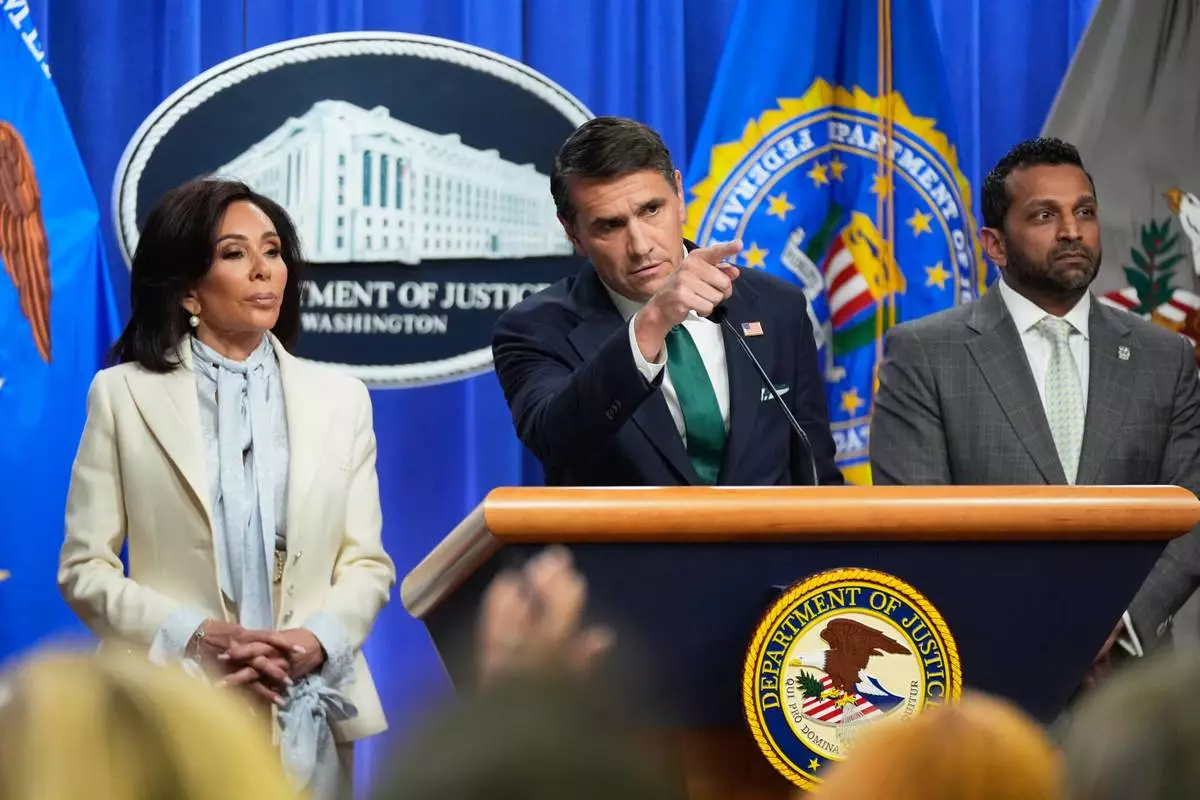
Acting Attorney General Todd Blanche, with U.S. Attorney Jeanine Pirro, left, and FBI Director Kash Patel, right, speaks during a news conference at the Department of Justice, on Monday April 27, 2026, in Washington, following the initial appearance in federal court of the suspected White House Correspondents Dinner gunman, Cole Tomas Allen of Torrance, California. (AP Photo/Manuel Balce Ceneta)
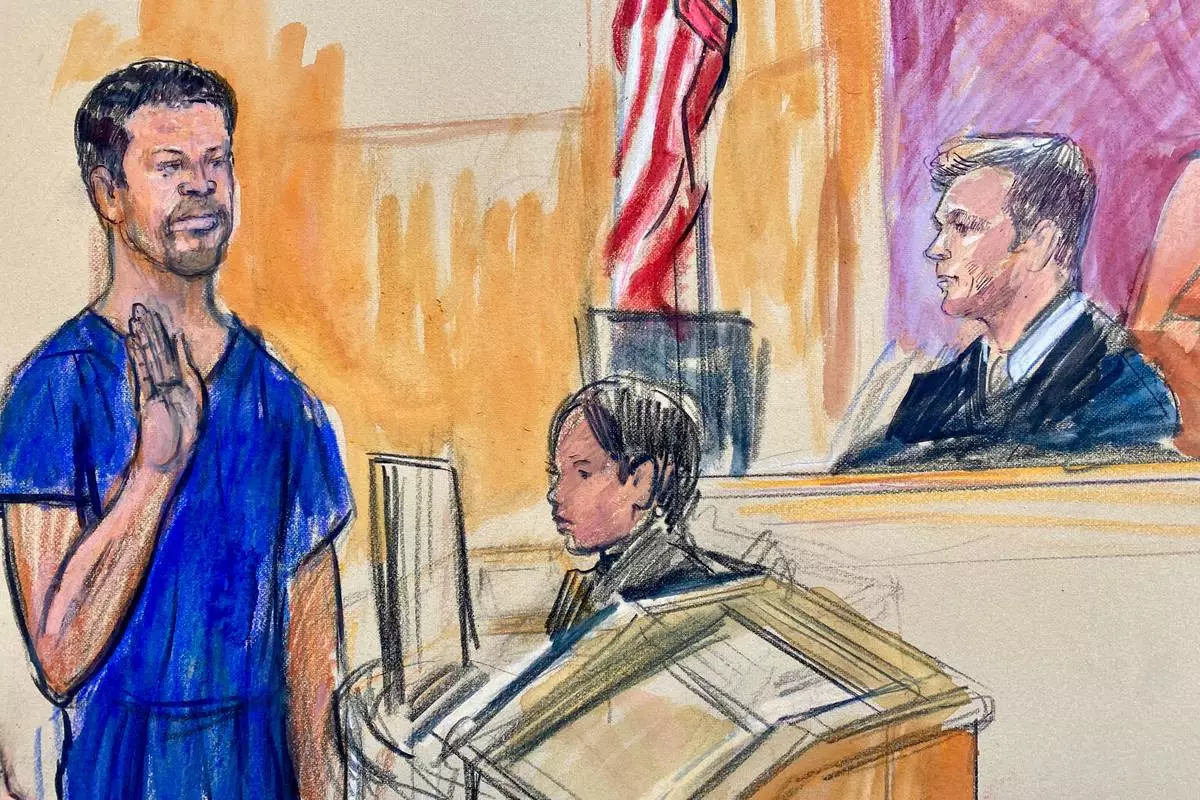
This courtroom sketch depicts Cole Tomas Allen, left, the California man arrested in the shooting incident at the correspondents dinner in Washington, seen appearing before Magistrate Judge Matthew J. Sharbaugh, in federal court, Monday, April 27, 2026 in Washington. (Dana Verkouteren via AP)
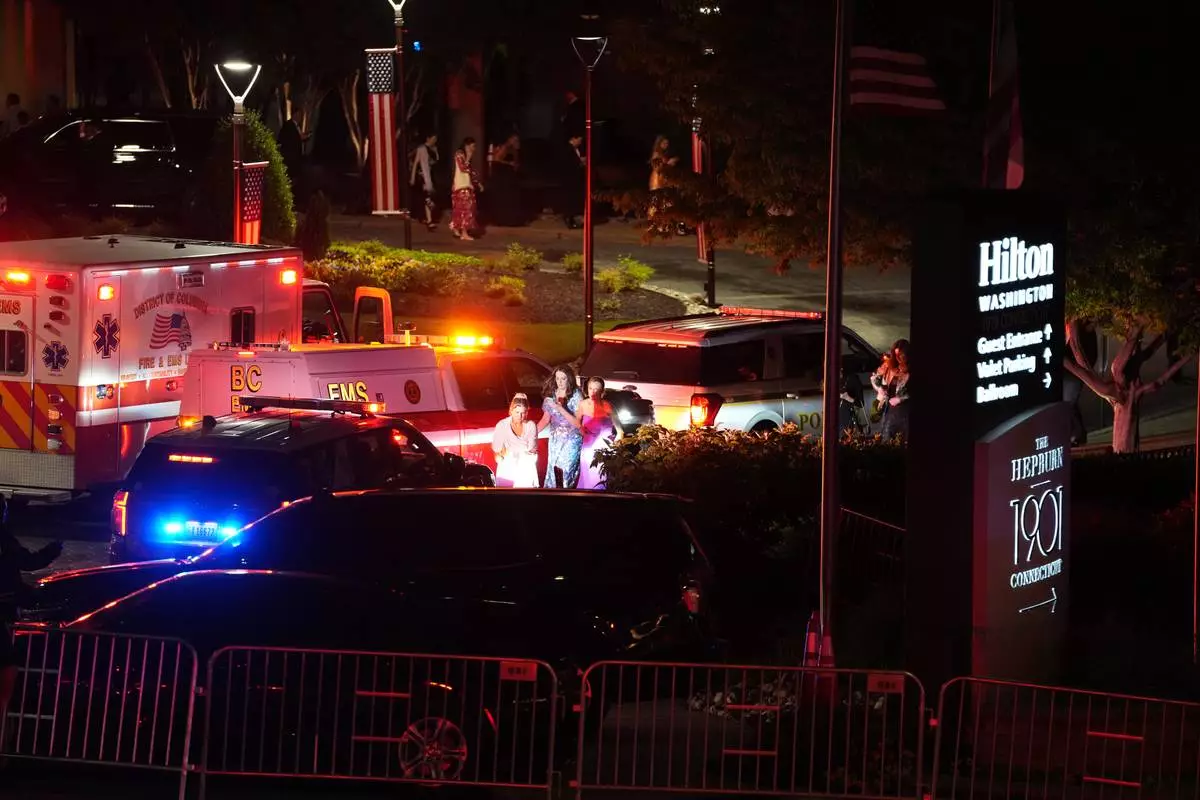
Law enforcement respond to an incident at the Washington Hilton during the White House Correspondents Dinner, Saturday, April 25, 2026, in Washington. (AP Photo/Allison Robbert)
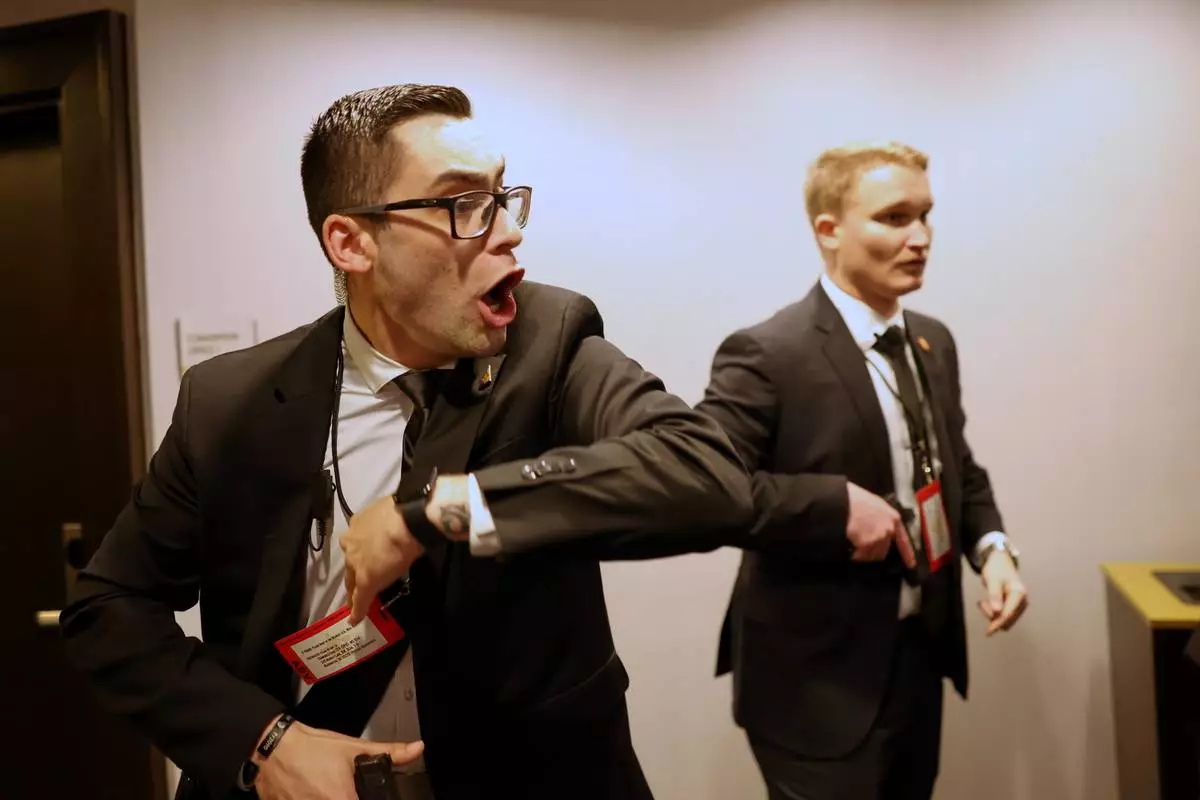
Secret service agents respond during the White House Correspondents Dinner, Saturday, April 25, 2026, in Washington. (AP Photo/Tom Brenner)
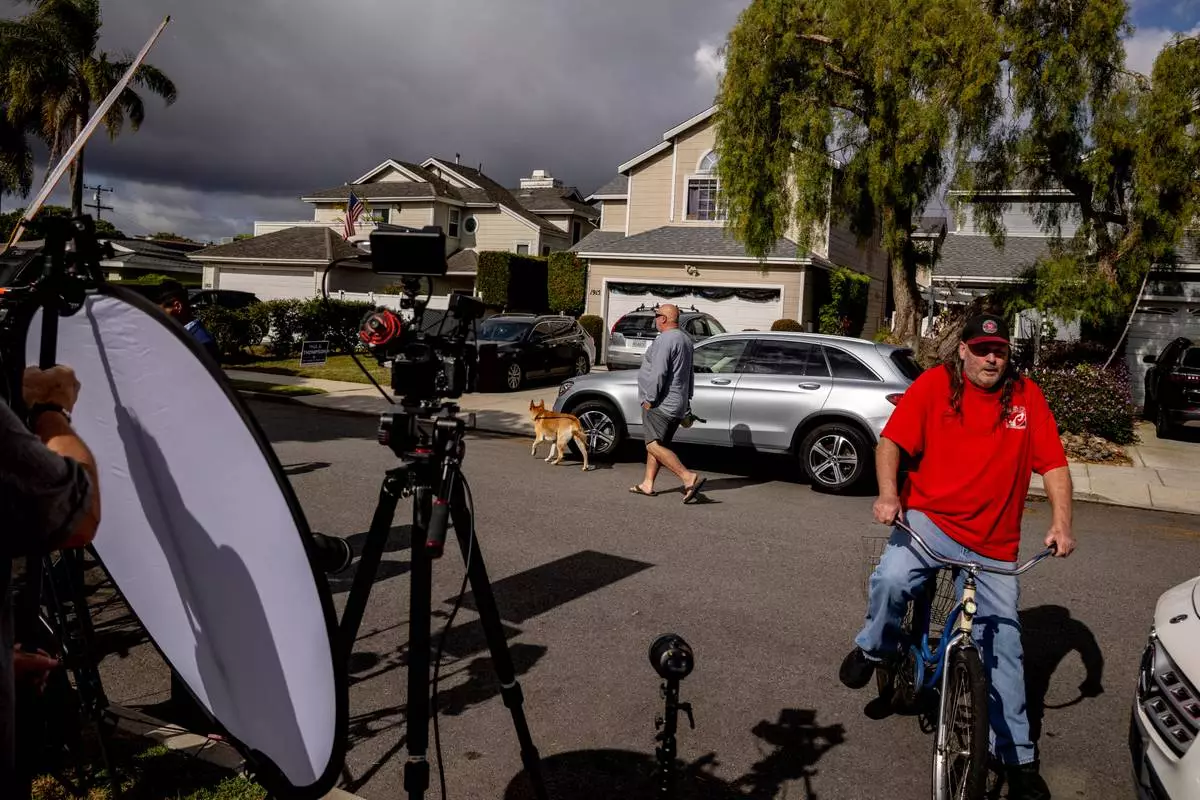
Pedestrians walk past the home, middle back, connected to Cole Tomas Allen, who was identified as the suspect at the White House Correspondents Dinner shooting, as members of the media stage, in Torrance, Calif., Sunday, April 26, 2026. (Stephen Lam/San Francisco Chronicle via AP)
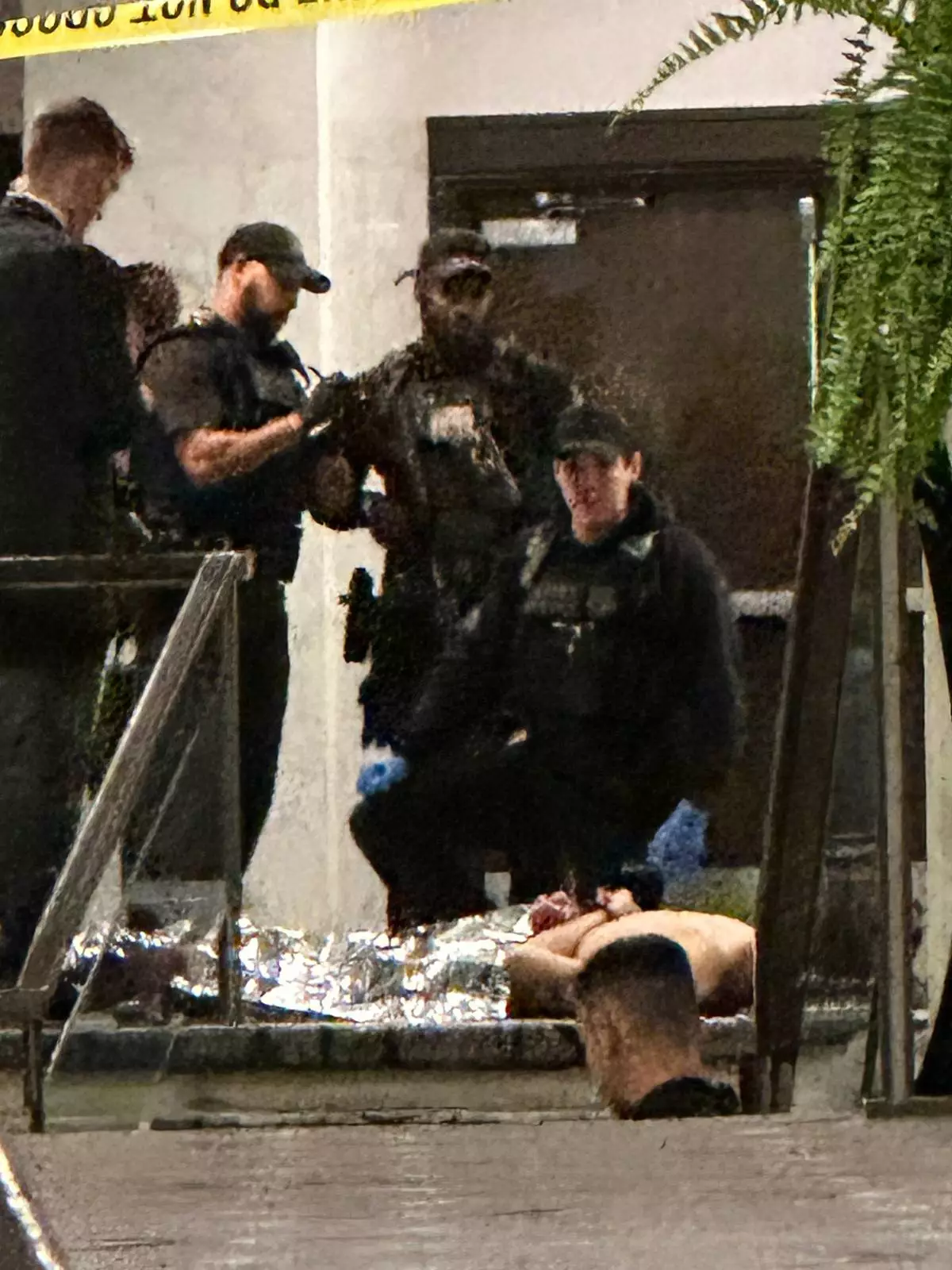
Members of law enforcement control shooting suspect Cole Tomas Allen during the White House Correspondents Dinner, Saturday, April 25, 2026, in Washington. (AP Photo/Alex Brandon) ADDITION: Adds name of shooting suspect after name shared by law enforcement officials
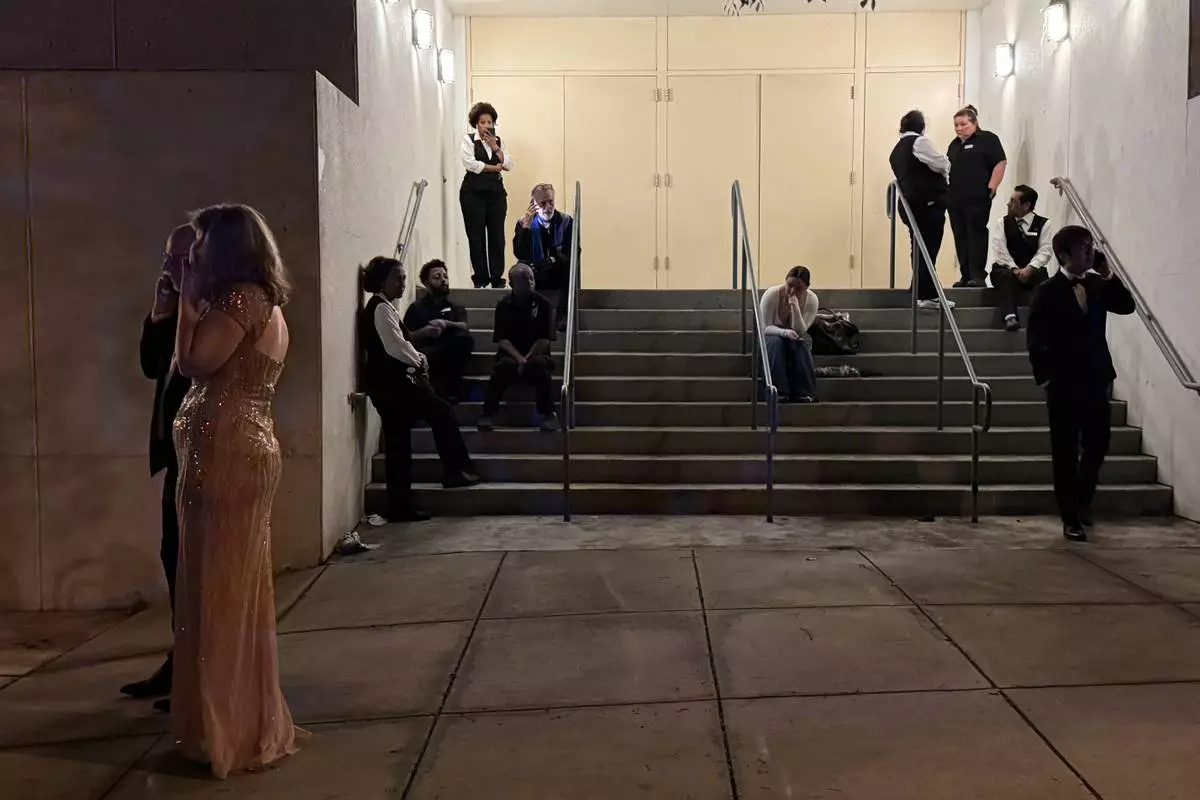
Attendees and hotel workers evacuate after an incident at the Washington Hilton during the White House Correspondents Dinner, Saturday, April 25, 2026, in Washington. (AP Photo/Mark Schiefelbein)