The U.S. Treasury asked major philanthropic donors to contribute to new investment accounts for children Wednesday as part of what Secretary Scott Bessent called a “50 State Challenge” to raise funds for the Trump Accounts program.
“The president is calling on our nation’s business leaders and philanthropic organizations to help us make America great again by securing the financial future of America’s children,” Bessent said in an address.
The billionaire hedge fund founder Ray Dalio, along with his wife Barbara, announced they would commit $250 to 300,000 children under 10 in Connecticut who live in ZIP codes where the median income is less than $150,000. Dalio founded the investment firm Bridgewater Associates and lives in Connecticut.
“I have been fortunate to live the American Dream. At an early age I was exposed to the stock market, and it changed my life,” Ray Dalio said in a statement, adding that he sees the accounts as putting children on a path toward financial independence.
The Dalios commitment, which will total at least $75 million, follows the $6.25 billion pledge from billionaires Michael and Susan Dell earlier in December. The Dells promised to invest $250 in the accounts of 25 million children 10 and under who live in ZIP codes across the country that also have that median income.
The new investment accounts were created as part of President Donald Trump’s tax and spending legislation, passed over the summer. Under the new law, the U.S. Department of the Treasury will deposit $1,000 into the investment accounts of children born during Trump's second term.
The Treasury has not yet launched the new accounts.
“Starting on July 4th, our nation’s 250th anniversary, parents, family members, employers and friends will be able to contribute up to $5,000 to each Trump Account each year,” Bessent said Wednesday.
Brad Gerstner, a venture capitalist, who championed the accounts, said the Treasury will create an account for every child in the U.S. who has a Social Security number but private companies will eventually administer the accounts. Parents or guardians will have to claim the accounts on behalf of their children. For children born before Trump came to office and who don't qualify for the funds from the Dells and the Dalios, their families can open and fund their own Trump Account if they choose.
Money in the accounts must be invested in an index fund that tracks the overall stock market. When the children turn 18, they can withdraw the funds to put toward their education, to buy a home or to start a business.
Bessent said employers, family members and philanthropists can put funds into the accounts and that the administration hopes states will also eventually set up programs to invest in the accounts. Companies including Visa and BlackRock have also pledged to contribute in some way to the accounts of their employees' children.
Jane Waldfogel, a professor at the Columbia University School of Social Work, said ideally, governments would provide benefits that help families with children afford immediate expenses and programs like the Trump Accounts that help families save for a child's future.
“The problem that many scholars have tried to address and many politicians have tried to address with these child savings accounts is that low-income families and even middle-income families struggle to put aside money and save money for their children’s future,” said Waldfogel, who recently published a book about child benefits.
Without regular government contributions targeted toward poorer families, Waldfogel does not expect the accounts to decrease economic inequality as affluent families will take advantage of them but other families will not.
Steven Durlauf, a professor at the University of Chicago’s Harris School of Public Policy, said he expects the accounts to make a very modest contribution toward the resources of young adults. His research has examined what factors impact the success of children and he said improving early childhood education and rectifying racial and economic segregation at schools and in neighborhoods would do more to give children the skills and opportunities they need to be productive.
Durlauf also said as much as the philanthropy of the affluent is admirable, he thinks it should remain out of politics and controversies.
“This is integrating the wealthy into the support of particular government programs that are associated with particular political figures," he said. "And that strikes me as extraordinarily dangerous.”
The Dalios have granted tens of millions to Connecticut public schools over the years, though a $100 million initiative launched in 2019 that would have involved matching public funds fell apart after state lawmakers raised questions over transparency. Altogether, the Dalios say they've given $7 billion through their philanthropy, which has focused on education, support for economic advancement and ocean research and education.
Associated Press coverage of philanthropy and nonprofits receives support through the AP’s collaboration with The Conversation US, with funding from Lilly Endowment Inc. The AP is solely responsible for this content. For all of AP’s philanthropy coverage, visit https://apnews.com/hub/philanthropy.

U.S. Department of the Treasury Scott Bessent speaks before President Donald Trump arrives at the Mount Airy Casino Resort in Mount Pocono, Pa., Tuesday, Dec. 9, 2025. (AP Photo/Matt Rourke)

FILE - Bridgewater Associates Chairman Ray Dalio speaks during the Economic Summit held for the China Development Forum in Beijing on March 23, 2019. (AP Photo/Ng Han Guan, File)
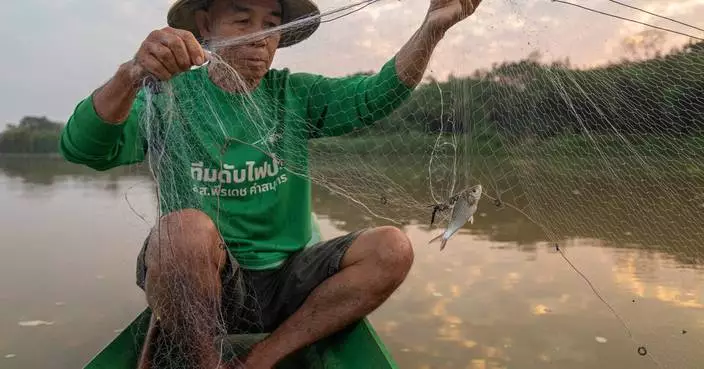
CHIANG SAEN, Thailand (AP) — Perched on the bow of his long-tail fishing boat, 75-year-old Sukjai Yana untangled a handful of small fish from his net, disappointed by his catch and fretting over whether he can sell them.
Some days Yana earns nothing: demand for fish is falling due to worries over contamination of the Mekong River and its tributaries by toxic runoff from rare earth mines upstream that is threatening millions who rely on those waters for farms and fisheries.
Chiang Saen, a fishing hub in northern Thailand, has been Yana's family's home for decades. “I don’t know where else I’d go,” he said.
Yana is one of 70 million people in mainland Southeast Asia who depend on the nearly 5,000-kilometer (3,100-mile) Mekong River. Rising demand for rare earth materials is driving an unregulated mining boom centered in war-torn Myanmar, to the west, that is spreading to Laos, in the east.
The Mekong has long faced mounting pressures, from plastic pollution to hydropower dams hemming it upstream and sand mining devouring its banks. But experts warn that the toxic runoff from the mines could pose an existential threat.
Exposure to heavy metals such as arsenic, mercury, lead and cadmium raises risks of cancer, organ failure and developmental harm, especially for children and pregnant women.
Thailand is bearing the brunt of the mining boom as such toxins imperil its global food exports — from bags of rice in U.S. supermarkets to edamame snacks served in Japan and garlic used in Malaysian kitchens. Responses remain local and limited, while smuggling and Myanmar’s civil war complicate regional fixes, raising concerns for downstream Cambodia and Vietnam.
Agriculture is the backbone of Southeast Asia’s economies, said Suebsakun Kidnukorn of Mae Fah Luang University in northern Thailand's Chiang Rai, warning that rare earth mines are destroying “the world’s kitchen.”
While cutting banana bunches on a farm in the hilly Thai village of Tha Ton, 63-year-old Lah Boonruang taps his fingers to count the toxin-exposed crops he harvests — rice, garlic, corn, onion, mangoes and bananas.
He irrigates his fields with water from the Kok River, a Mekong tributary that flows into Thailand from Myanmar and is laden with toxins.
“Everyone is afraid of the toxins," he said. “If we can't export, a farmer is the first to die.”
Thailand is one of the world's top rice exporters along with India and Vietnam. It exported over $10 billion worth of rice and fruits in 2024, according to trade figures that rank the U.S. as the top rice importer.
“Our worry is that toxins accumulate in the rice we export. This would make our rice farming industry, which is our culture, collapse,” said Niwat Roykaew, founder of the environmental institute The Mekong School in northern Thailand's Chiang Khong.
Thai scientists have found elevated heavy metal pollution in other Mekong tributaries, like the Sai and Ruak rivers.
The Mekong starts in China and flows through five Southeast Asian nations before emptying into the sea. Millions rely on fish from the Mekong Basin for protein.
Warnings to ethnic minorities in the hills of northern Thailand to avoid using river water are painful for the Lahu, who are famed as fisher people, said Sela Lipo, 56, a Lahu elder.
“The Lahu’s way of life is always with a river," he said. "The contaminated river has cut off our lifeline.”
Thailand's government says it has little leverage against mining operations across the border in strife-torn Myanmar and Laos. The Thai response has also been constrained by limited expertise, information and funds, said Aweera Pakkamart of Thailand's Pollution Control Department.
Instead, public universities, local governments and regional organizations like the Mekong River Commission, have mainly focused on monitoring levels of heavy metals and educating communities about risks.
Recent water, fish and sediment samples from Mekong tributaries had high levels of dangerous heavy metals, such as arsenic, mercury, lead and cadmium, from rare earth mining, said Warakorn Maneechuket, a researcher at Thailand’s Naresuan University.
In a lab, she uses a scalpel to point out tell-tale signs of contamination — tumor-like growths, discolored scales, and unusual eye coloration — before dissecting a catfish caught from the Kok River.
The accumulation of heavy metals is insidious. Arsenic can cause organ failure. Mercury damages the nervous system. Lead impairs cognition and cadmium harms the kidneys.
To raise awareness of health risks, Tanapon Phenrat of Naresuan University helped develop a smartphone fish safety app, training fishers in Chiang Saen to use it to identify and upload images of suspicious fish. Building a citizen-science database for northern Thailand can help quantify the scale and spread of contamination, he said.
“Each and every sample is very important,” he said.
The ubiquity of rare earth elements means demand keeps rising.
Rare earths are vital to modern technology, from smartphones and electric vehicles to missiles and jets. Despite the name, they are common. It is the costly mining and complex refining process, concentrated in China, that makes them scarce.
The U.S.-based Stimson Center has used satellite photo analysis to identify nearly 800 suspected unregulated rare earth and other mining sites along Mekong tributaries in Laos, Myanmar and Cambodia.
Many in Myanmar are in areas of active fighting. The war has driven a "diversification of mines” geographically, according to Regan Kwan of The Stimson Center, who has tracked expansion of mining to 26 sites along rivers in Laos.
Rare earths are mined by digging up rock or washing chemicals through soil to extract the minerals, creating toxic waste. The physical footprint of this process is recognizable in satellite data, Kwan said.
Myanmar is China’s leading supplier of heavy rare earths, exporting more than $4.2 billion worth of such materials to China between 2017 and 2024, mostly after a miliary takeover in 2021.
U.S. President Donald Trump made securing America's supply of critical minerals and rare earths a key foreign policy objective. Used in fighter jets like the F-35, submarines, Tomahawk missiles, radar systems and smart bombs, according to the U.S. government, the need for more supplies is growing as the U.S. replenishes and expands military stockpiles drawn down by the wars in Iran and Ukraine.
This is bad news for the river that sustains mainland Southeast Asia.
Conflicts in last century — which include the Vietnam War and the Khmer Rouge genocide — were the most devastating for the Mekong region, but toxic runoff ranks a close second, said Brian Eyler of the Stimson Center, who called it an "atomic bomb” for river basin.
It's far more damaging than other threats like large dams and "it is not stopping.”
Ghosal reported from Hanoi, Vietnam. Freelance reporter Ladawan Sondak contributed to this report.
The Associated Press’ climate and environmental coverage receives financial support from multiple private foundations. The AP is solely responsible for all content. Find AP’s standards for working with philanthropies, a list of supporters and funded coverage areas at AP.org.
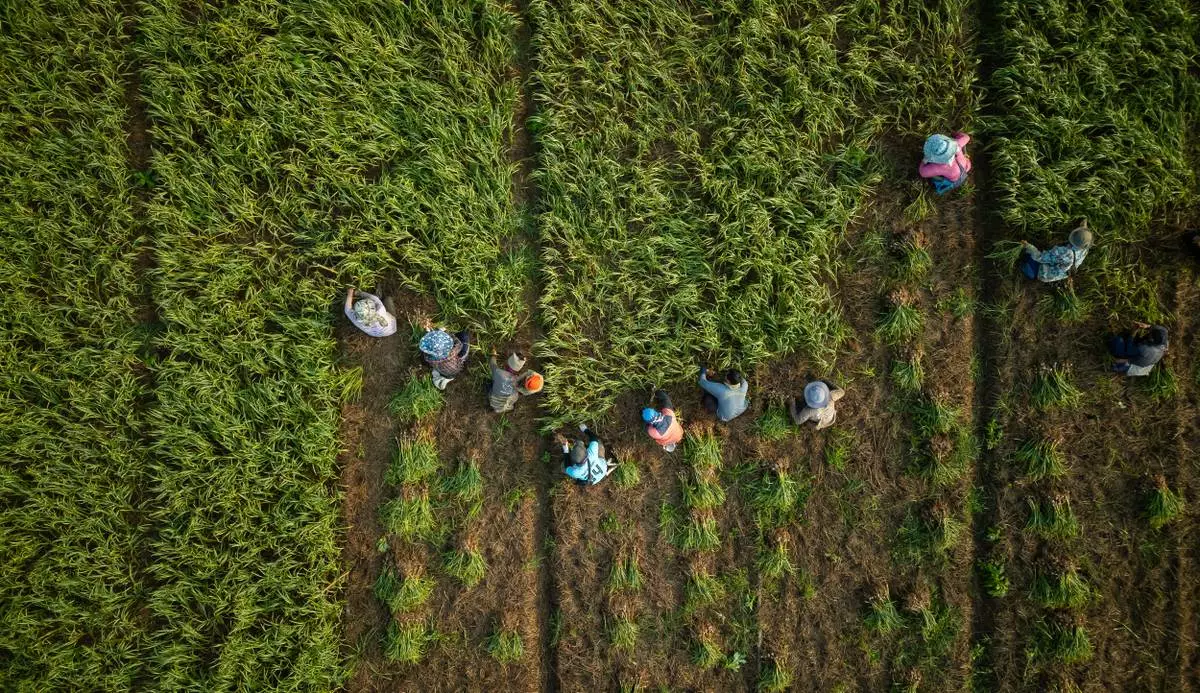
Field workers harvest garlic from a farm on the banks of the Kok River in Tha Ton, Thailand, on Feb. 21. (AP Photo/Anton L. Delgado)
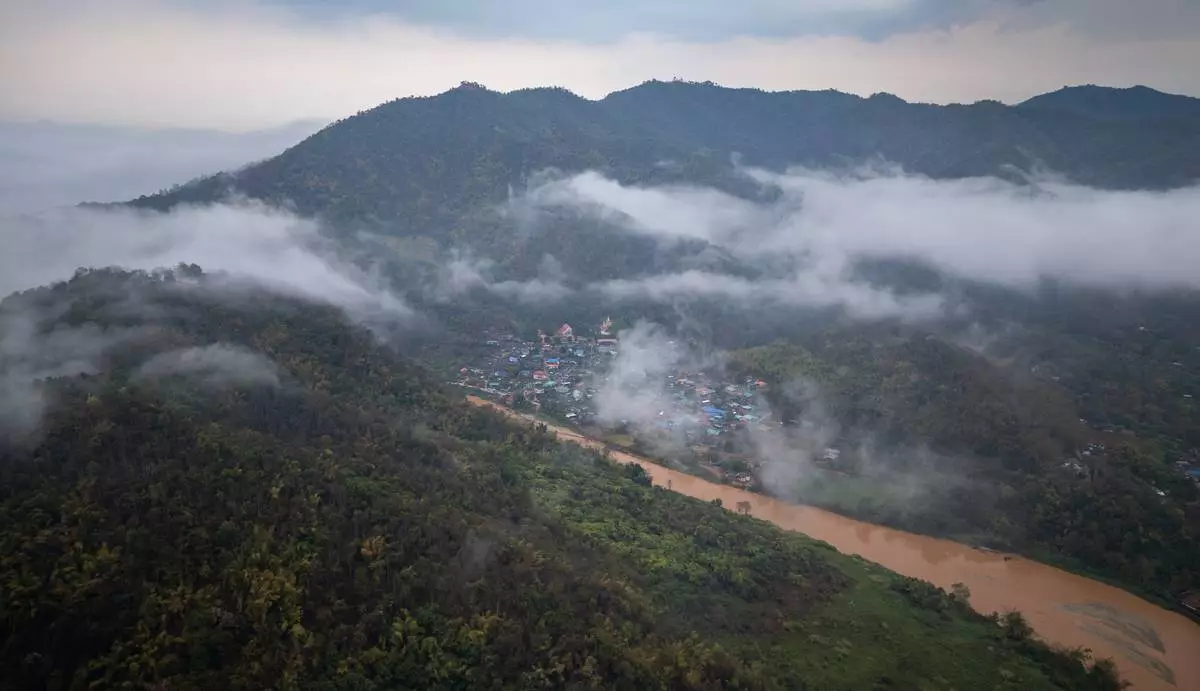
Morning mist blankets the Thai village of Tha Ton, where the Kok River enters Thailand from Myanmar, Feb. 20, 2026. (AP Photo/Anton L. Delgado)
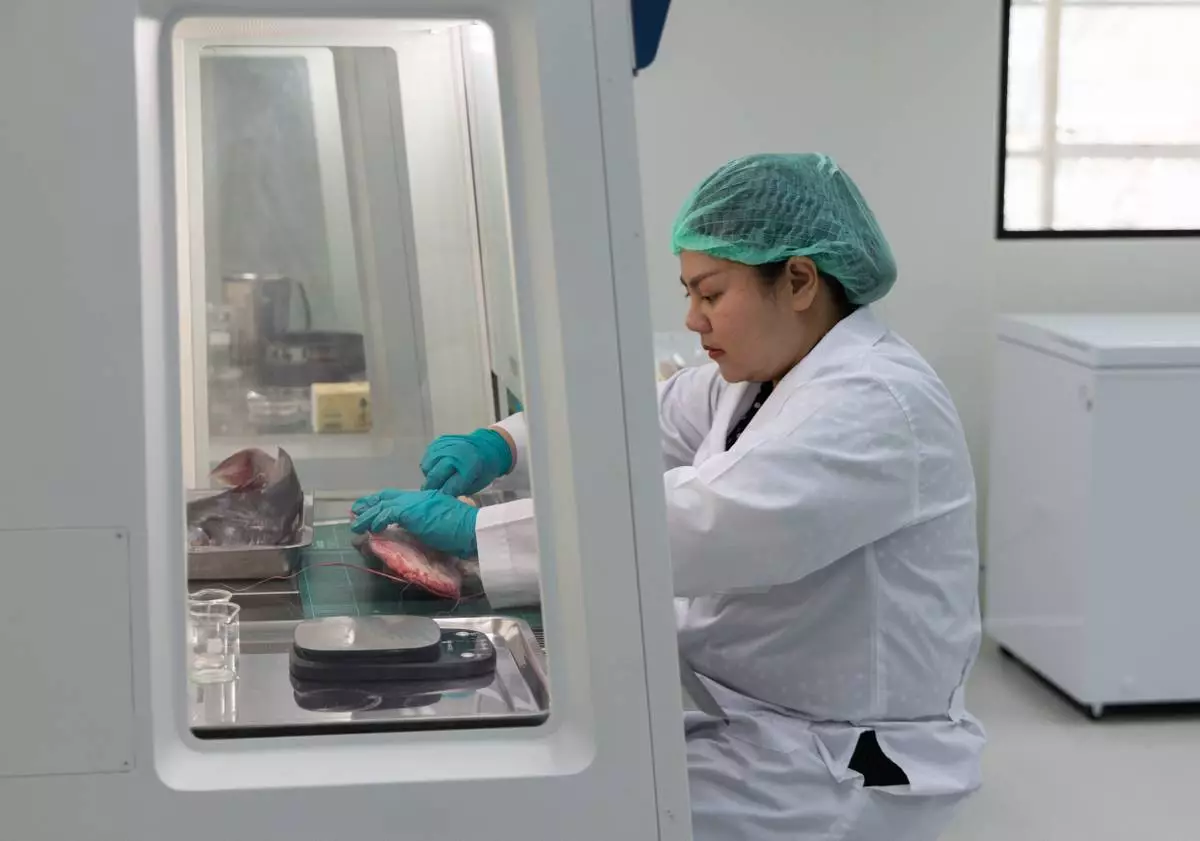
Researcher Warakorn Maneechuket dissects a fish at a Naresuan University laboratory in Phitsanulok, Thailand, on Feb. 19, 2026. (AP Photo/Anton L. Delgado)
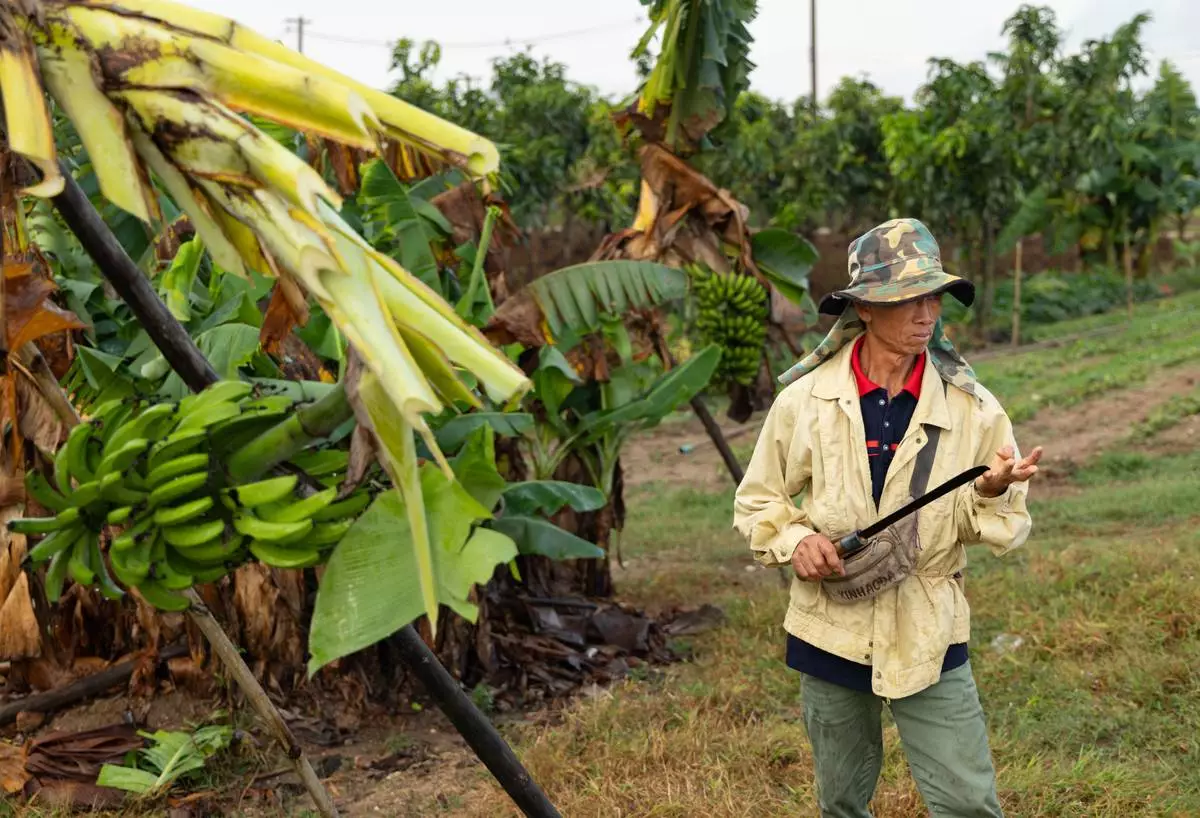
Farmer Lah Boonruang takes a break from harvesting banana bushels on a farm in Tha Ton, Thailand, on Feb. 20, 2026. (AP Photo/Anton L. Delgado)
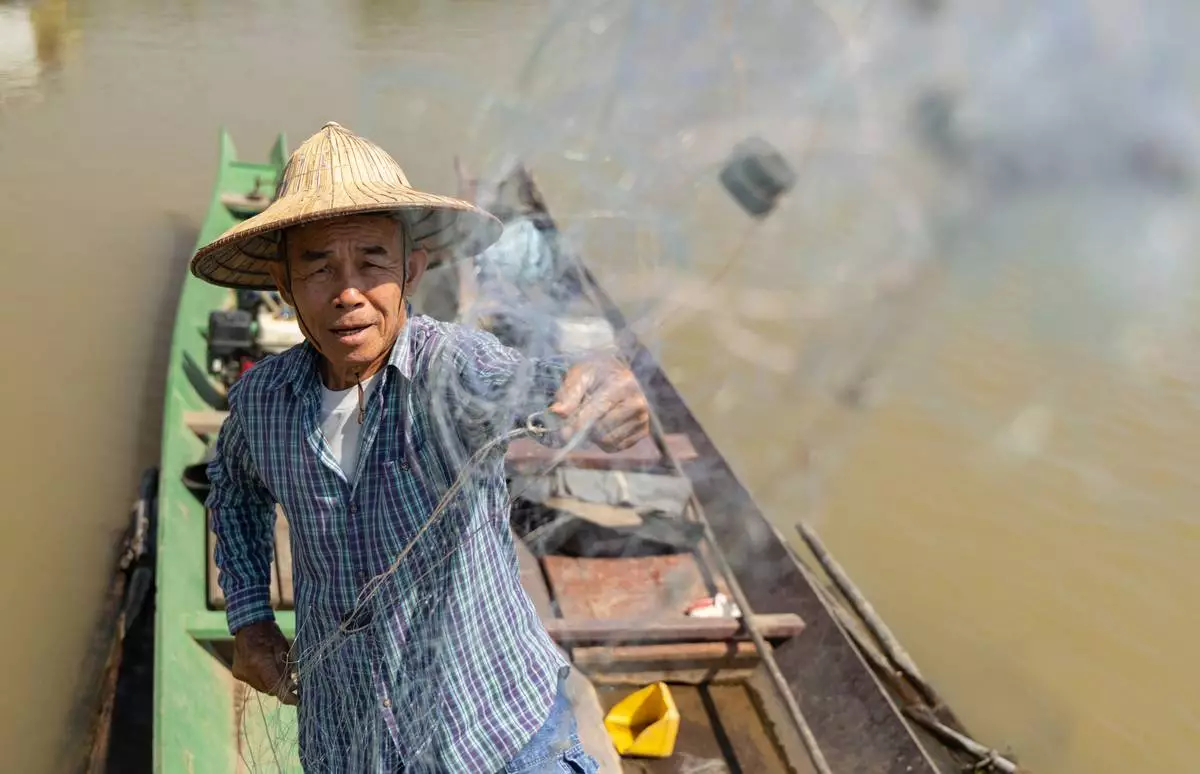
Fisherman Sukjai Yana untangles his net while docked on the Kok River in Chiang Saen, Thailand, on Feb. 17, 2026. (AP Photo/Anton L. Delgado)