NEW DELHI (AP) — India has accelerated a push to finalize several free trade agreements over the next few months to offset the impact of steep U.S. import tariffs and widen export destinations during growing global trade uncertainties.
New Delhi is in advanced talks with the European Union, New Zealand and Chile and this week is set to sign its first agreement under the renewed push with Oman, according to Indian officials who spoke on condition of anonymity as the details are not yet public.
Prime Minister Narendra Modi is expected to be in Oman's capital Muscat when the India-Oman free trade agreement, or FTA, is signed Thursday, officials said.
The deal aims to boost bilateral trade and push India’s exports of engineering goods, textiles, pharmaceuticals and agricultural products, officials said.
FTAs are a central pillar of India’s economic strategy as it seeks deeper integration into global supply chains, stronger export growth and sustained job creation. By lowering tariffs and setting predictable trade rules, the pacts would help Indian businesses remain competitive and expand access to newer markets.
With global trade increasingly shaped by tariff disputes and geopolitical tensions, India is betting that a wider network of trade agreements will help cushion external shocks and anchor its export ambitions.
The stepped-up negotiations come as Indian exporters face pressure from higher U.S. import tariffs of 50%, which went into effect in August. While the two countries have been negotiating a bilateral trade agreement, the tariffs have weighed on sectors such as textiles, auto components, metals and labor-intensive manufacturing.
“India is clearly using FTAs as a strategic tool to diversify export markets and soften the impact of steep and uncertain U.S. tariffs,” trade analyst Ajay Srivastava said.
In all, India has 15 FTAs covering 26 countries and six preferential trade agreements with another 26 nations while negotiating with more than 50 other partners, Srivastava said.
Once the ongoing talks conclude, India will have trade agreements with virtually all major global economies except China, he added.
India signed comprehensive economic cooperation and trade agreements with the UAE and Australia in recent years, lifting bilateral trade with both countries. In May, Britain and India announced they agreed on a hard-wrought FTA that will slash tariffs on products including Scotch whisky and English gin shipped to India and Indian food and spices sent to the U.K.
The recent agreements have reinforced the case for faster negotiations and clearer frameworks for business, officials said.
“India is negotiating several FTAs” at a time of challenges in global trade, Trade Secretary Rajesh Agarwal told reporters this week. “I see positive progress on several of these, next year.”
Despite renewed momentum, challenges remain as Indian negotiators face pressure to protect small farmers and domestic industries even as trading partners push for greater market access.
India and the U.S. hoped to have the first tranche of a bilateral trade agreement by the fall, but it has not come through as ties have strained following India’s unabated purchase of discounted Russian crude oil. Washington says the purchases help fund Moscow’s war machine in the ongoing war with Ukraine.
In recent weeks, there have been signs of tempers cooling. Modi applauded Trump’s peace plan to end the Russia-Ukraine war and the two leaders recently spoke over the phone to discuss mutual interests including trade.
A team of U.S. negotiators led by Deputy Trade Representative Rick Switzer visited New Delhi last week and held talks with Indian officials.
Switzer discussed a India-U.S. economic and technological partnership as well as opportunities to boost two-way trade, India’s Foreign Ministry said in a statement.
New Zealand’s Trade and Investment Minister Todd McClay met his Indian counterpart Piyush Goyal last week. They discussed key aspects of an FTA and explored ways to advance the negotiations for mutual benefits, Goyal said on X.
EU Trade and Economic Security Commissioner Maros Sefcovic also met Goyal last week to review progress on the India-EU FTA and explore ways to resolve issues and advance negotiations.
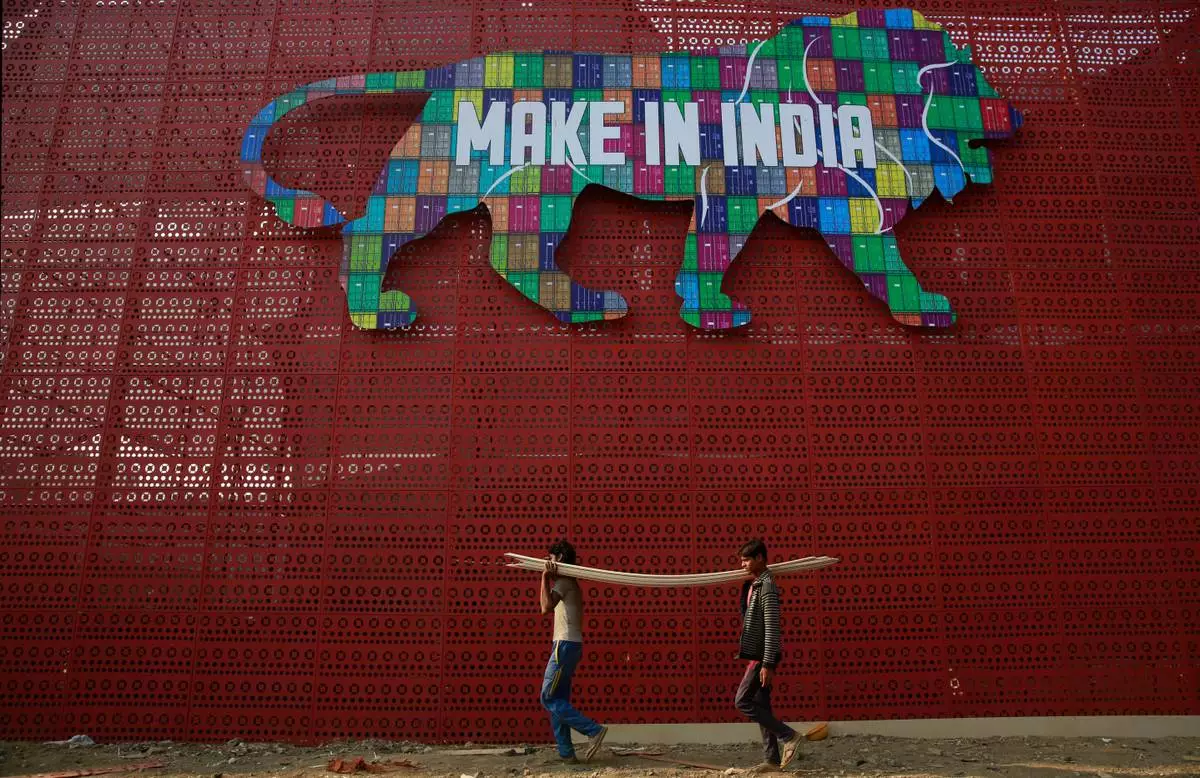
FILE - Laborers carry narrow planks of wood to be used for building a pavilion for the Make In India summit in Mumbai, India, Feb. 9, 2016. (AP Photo/Rafiq Maqbool, File)
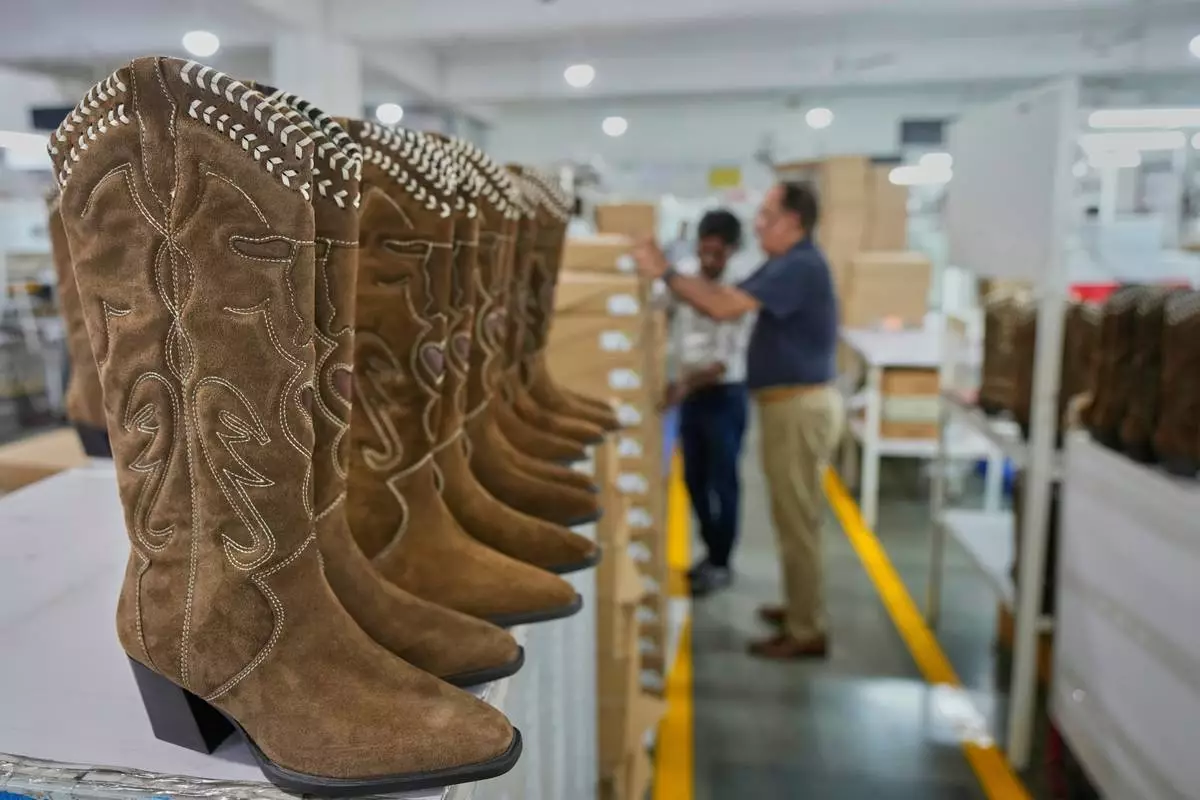
FILE - High ankle boots for women for export are kept for packing at Dawar leather footwear manufacturing unit in Agra, India, Aug. 25, 2025. (AP Photo/Manish Swarup, File)
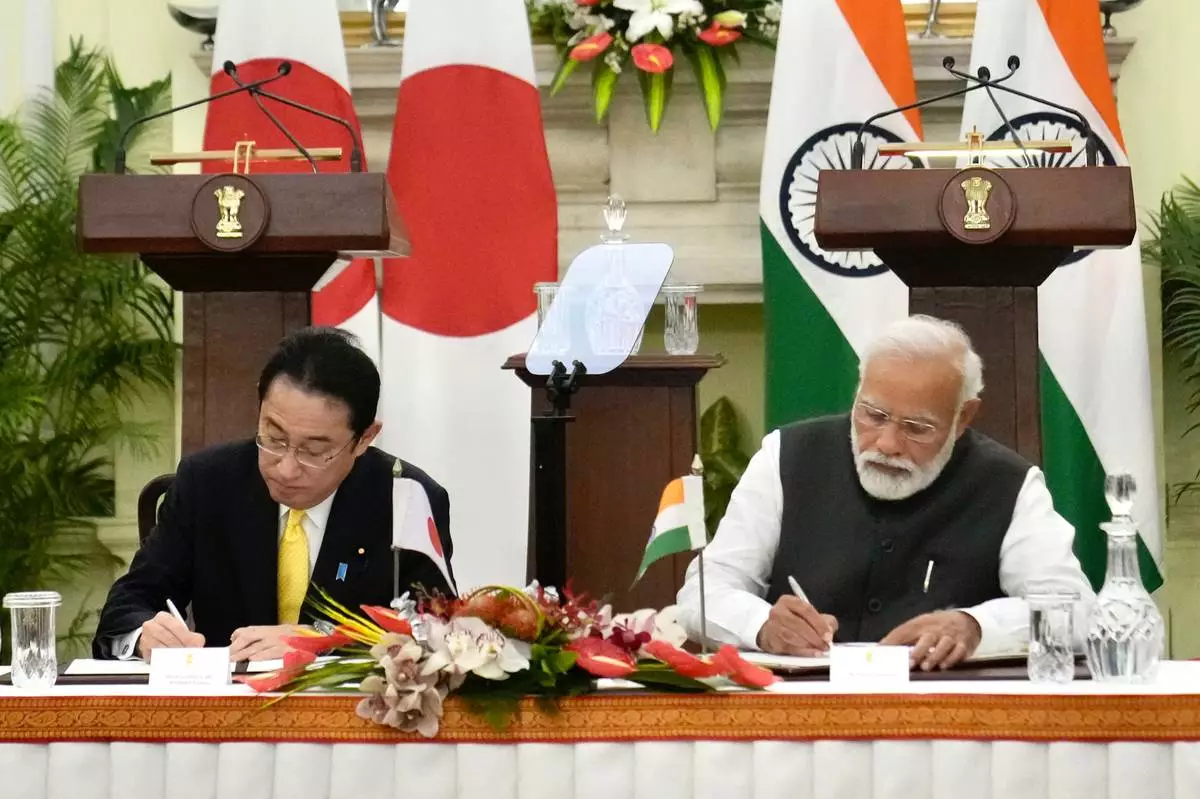
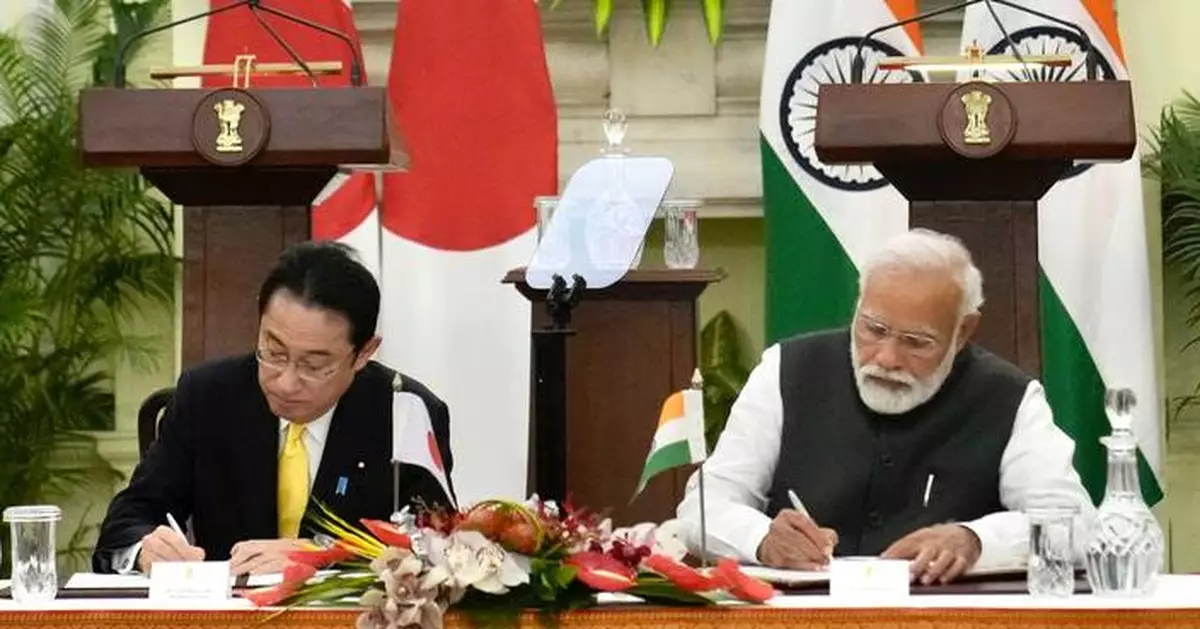
FILE - Indian Prime Minister Narendra Modi, right, and his Japanese counterpart Fumio Kishida sign agreements in New Delhi, March 19, 2022. (AP Photo/Manish Swarup, File)
MBERA, Mauritania (AP) — The men move in rhythm, swaying in line and beating the ground with spindly tree branches as the sun sets over the barren and hostile Mauritanian desert. The crack of the wood against dry grass lands in unison, a technique perfected by more than a decade of fighting bushfires.
There is no fire today but the men — volunteer firefighters backed by the U.N. refugee agency — keep on training.
In this region of West Africa, bushfires are deadly. They can break out in the blink of an eye and last for days. The impoverished, vast territory is shared by Mauritanians and more than 250,000 refugees from neighboring Mali, who rely on the scarce vegetation to feed their livestock.
For the refugee firefighters, battling the blazes is a way of giving back to the community that took them in when they fled violence and instability at home in Mali.
Hantam Ag Ahmedou was 11 years old when his family left Mali in 2012 to settle in the Mbera refugee camp in Mauritania, 48 kilometers (30 miles) from the Malian border. Like most refugees and locals, his family are herders and once in Mbera, they saw how quickly bushfires spread and how devastating they can be.
“We said to ourselves: There is this amazing generosity of the host community. These people share with us everything they have," he told The Associated Press. "We needed to do something to lessen the burden."
His father started organizing volunteer firefighters, at the time around 200 refugees. The Mauritanians had been fighting bushfires for decades, Ag Ahmedou said, but the Malian refugees brought know-how that gave them an advantage.
“You cannot stop bushfires with water,” Ag Ahmedou said. “That’s impossible, fires sometimes break out a hundred kilometers from the nearest water source."
Instead they use tree branches, he said, to smother the fire.
"That’s the only way to do it,” he said.
Since 2018, the firefighters have been under the patronage of the UNHCR. The European Union finances their training and equipment, as well as the clearing of firebreak strips to stop the fires from spreading. The volunteers today count over 360 refugees who work with the region's authorities and firefighters.
When a bushfire breaks out and the alert comes in, the firefighters jump into their pickup trucks and drive out. Once at the site of a fire, a 20-member team spreads out and starts pounding the ground at the edge of the blaze with acacia branches — a rare tree that has a high resistance to heat.
Usually, three other teams stand by in case the first team needs replacing.
Ag Ahmedou started going out with the firefighters when he was 13, carrying water and food supplies for the men. He helped put out his first fire when he was 18, and has since beaten hundreds of blazes.
He knows how dangerous the task is but he doesn't let the fear control him.
“Someone has to do it,” he said. "If the fire is not stopped, it can penetrate the refugee camp and the villages, kill animals, kill humans, and devastate the economy of the whole region.”
About 90% of Mauritania is covered by the Sahara Desert. Climate change has accelerated desertification and increased the pressure on natural resources, especially water, experts say. The United Nations says tensions between locals and refugees over grazing areas is a key threat to peace.
Tayyar Sukru Cansizoglu, the UNHCR chief in Mauritania, said that with the effects of climate change, even Mauritanians in the area cannot find enough grazing land for their own cows and goats — so a “single bushfire” becomes life-threatening for everyone.
When the first refugees arrived in 2012, authorities cleared a large chunk of land for the Mbera camp, which today has more than 150,000 Malian refugees. Another 150,000 live in villages scattered across the vast territory, sometimes outnumbering the locals 10 to one.
Chejna Abdallah, the mayor of the border town of Fassala, said because of “high pressure on natural resources, especially access to water,” tensions are rising between the locals and the Malians.
Abderrahmane Maiga, a 52-year-old member of the “Mbera Fire Brigade,” as the firefighters call themselves, presses soil around a young seedling and carefully pours water at its base.
To make up for the vegetation losses, the firefighters have started setting up tree and plant nurseries across the desert — including acacias. This year, they also planted the first lemon and mango trees.
“It’s only right that we stand up to help people,” Maiga said.
He recalls one of the worst fires he faced in 2014, which dozens of men — both refugees and host community members — spent 48 hours battling. By the time it was over, some of the volunteers had collapsed from exhaustion.
Ag Ahmedou said he was aware of the tensions, especially as violence in Mali intensifies and going back is not an option for most of the refugees.
He said this was the life he was born into — a life in the desert, a life of food scarcity and "degraded land" — and that there is nowhere else for him to go. Fighting for survival is the only option.
“We cannot go to Europe and abandon our home," he said. "So we have to resist. We have to fight.”
For more on Africa and development: https://apnews.com/hub/africa-pulse
The Associated Press receives financial support for global health and development coverage in Africa from the Gates Foundation. The AP is solely responsible for all content. Find AP’s standards for working with philanthropies, a list of supporters and funded coverage areas at AP.org.
Boys play football as the sun sets in the Mbera Refugee Camp, near Bassikounou, Hodh El Chargui Region, Mauritania, Saturday Nov. 8, 2025. (AP Photo/Caitlin Kelly)
Members of the NGO SOS desert plant trees in Mbera Refugee Camp, near Bassikounou, Hodh El Chargui Region, Mauritania, Saturday Nov. 8, 2025. (AP Photo/Caitlin Kelly)
Plants flower in the dry desert plains of the Sahel bloom in Mbera Refugee Camp, near Bassikounou, Hodh El Chargui Region, Mauritania, Saturday Nov. 8, 2025. (AP Photo/Caitlin Kelly)
Mbera fire brigade members from the NGO SOS desert demonstrate the brushing technique used to extinguish fires in Mbera Refugee Camp, near Bassikounou, Hodh El Chargui Region, Mauritania, Saturday Nov. 8, 2025. (AP Photo/Caitlin Kelly)