Government releases Chinese Medicine Development Blueprint (with photos/video)
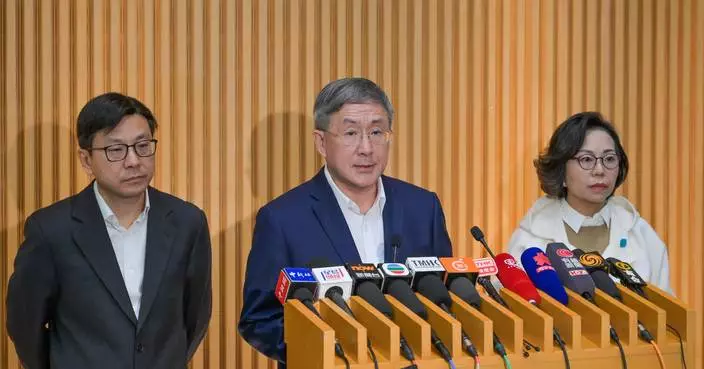
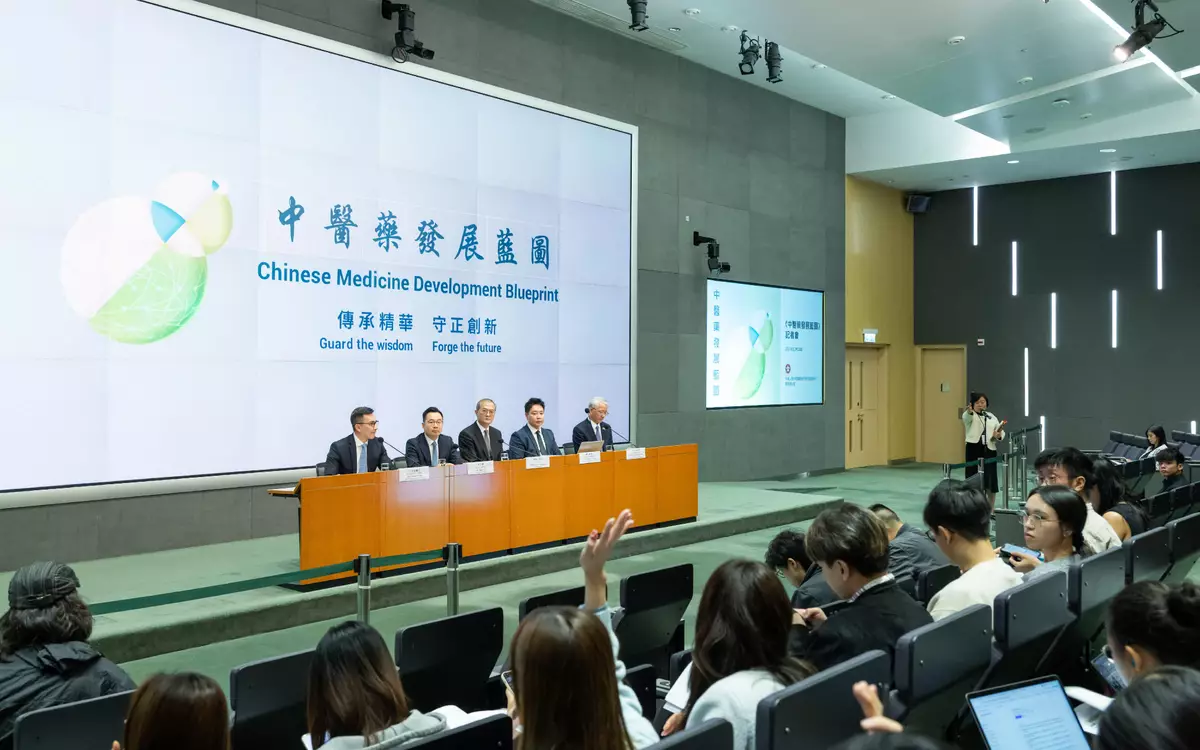
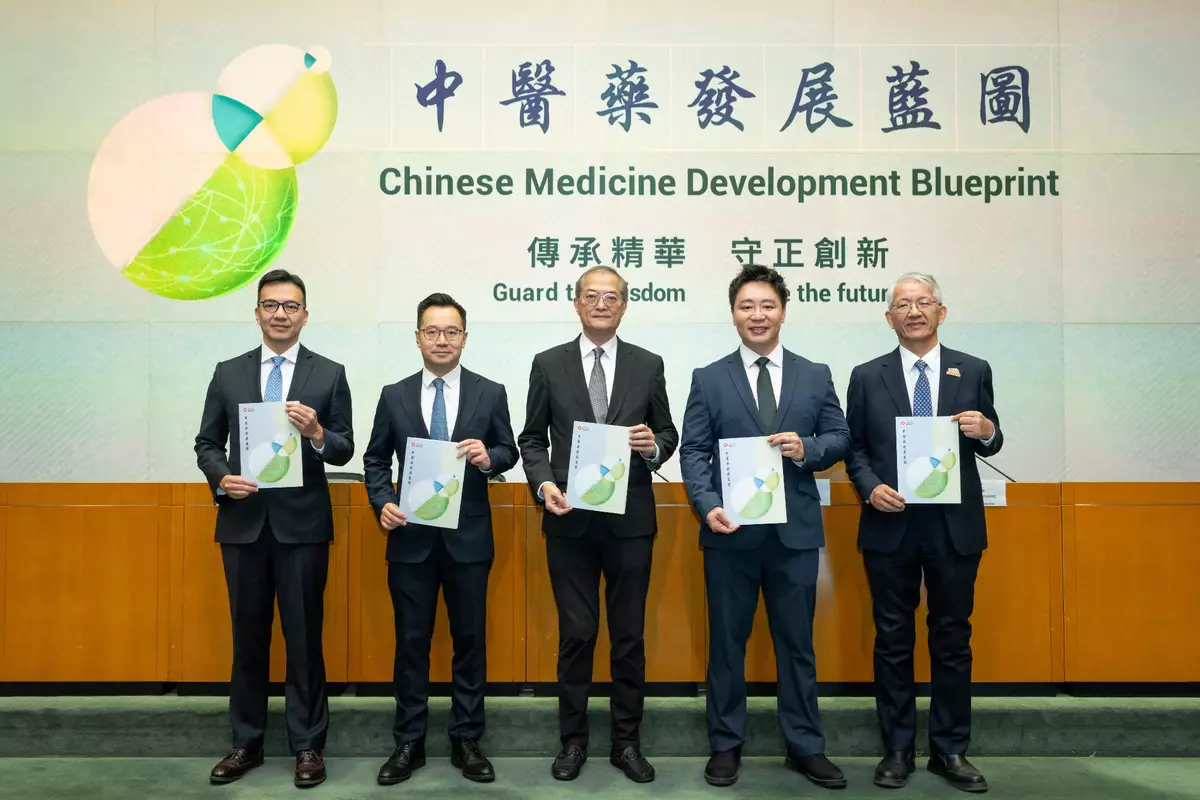
The Government released the first Chinese Medicine Development Blueprint of Hong Kong today (December 18), outlining the vision of Chinese medicine (CM) development in Hong Kong - inheriting the wisdom of CM, leveraging the motherland's development experience and resources, and utilising CM to provide Hong Kong citizens with higher quality and more comprehensive healthcare services for better health outcomes, while establishing Hong Kong as a bridgehead for the global expansion of CM.
The Secretary for Health, Professor Lo Chung-mau, said, "CM is an integral part of Hong Kong's healthcare system that has long been trusted and used by the citizens. The Hong Kong Special Administrative Region (HKSAR) Government has been committed to promoting CM development over the years, and the Blueprint is the first policy document published by the Government specifically dedicated to the development of CM in Hong Kong. The formulation of the Blueprint aligns with national CM development overall strategies, and fully considers the institutional advantages of the 'one country, two systems' principle and the CM system, with a view to promoting Hong Kong's better integration into the construction of the CM highlands in the Guangdong-Hong Kong-Macao Greater Bay Area (GBA) and the overall national development of CM.
"Leveraging on the country's robust capability in CM, Hong Kong also takes its advantages in its internationalised healthcare system, regulatory system, standard setting and clinical research, and more. The HKSAR Government will continue to work closely and actively with the CM sector to promote CM development, aiming to implement the recommendations as set out in the Blueprint in an orderly manner to provide comprehensive and quality CM services to the public. The Government will also leverage Hong Kong's unique advantages of enjoying strong support from the motherland and being closely connected to the world, with a view to assisting the national drive for CM to go global.
"This year marks a significant milestone for CM development in Hong Kong. The 7th Guangdong-Hong Kong-Macao Greater Bay Area Conference on the Inheritance, Innovation, and Development of Traditional Chinese Medicine was held in Hong Kong on December 2, and The Chinese Medicine Hospital of Hong Kong and the permanent premises of the Government Chinese Medicines Testing Institute (GCMTI) also commenced services last Thursday (December 11), which received a positive public response. Building on the existing foundation of CM development, the release of the Blueprint today enables us to look to the future and formulate a comprehensive plan to further promote the comprehensive, high-quality and high-standard development of CM."
The Blueprint sets out short, medium and long-term goals and action plans across key areas, covering five key domains and proposing eight goals and 20 actions, with details as follows:
(1) CM Services
Goal 1: Enhancing Clinical Services Excellence
1. Defining the role of CM services within the healthcare system
2. Improving the quality and clinical effectiveness of CM services
3. Upgrading CM services through technological empowerment
Goal 2: Establishing an Interprofessional Service System
4. Deepening interprofessional collaboration mechanisms for CM services
5. Integrating into the healthcare system fully and fostering cross-institutional collaboration
6. Strengthening the role of CM in primary healthcare
(2) CM Profession
Goal 3: Leading CM Professional Development
7. Elevating the competence standard of the CM profession
8. Building a more comprehensive CM talent cultivation system
9. Empowering the sector to continuously advance CM professional development
(3) Chinese Medicines (CMs) Development
Goal 4: Enhancing CMs Quality and Standard
10. Strengthening quality management of CMs
11. Implementing good manufacturing practice (GMP) for proprietary CMs fully
Goal 5: Contributing to the Establishment of International Standard for CMs
12. Leveraging the GCMTI to establish standard for CMs
13. Deepening collaboration between the GCMTI and institutions in the Mainland and the GBA
Goal 6: Driving CM Innovation in Research and Industry
14. Promoting innovation of CMs and clinical trials
15. Empowering the industry to cultivate talent in CMs
(4) Cultural Inheritance
Goal 7: Promoting Culture of CM
16. Disseminating knowledge on the appropriate selection of CM for disease prevention and treatment
17. Fostering cross-sectoral collaboration to enhance cultural confidence in CM
(5) Go Global
Goal 8: Facilitating the "Go Global" of CM
18. Promoting Hong Kong's CM service model and international co-operation globally
19. Facilitating the international application of CMs standard and testing technologies
20. Establishing an international hub for CM information exchange and innovation
Professor Lo thanked the Chinese Medicine Development Committee, its Chinese Medicine Development Blueprint Subcommittee, CM sector and stakeholders from relevant sectors, for their valuable advice provided during the formulation of the Blueprint.
The Chinese Medicine Unit of the Health Bureau (HHB) has been maintaining close liaison with local, Mainland and international stakeholders through various platforms and means, including engaging in nearly 400 activities, meetings and exchange sessions, to conduct stakeholder consultation for the formulation of the Blueprint.
Full text and pamphlet of the Blueprint are available at the HHB's thematic website (www.healthbureau.gov.hk/CMDevBlueprint).
Government releases Chinese Medicine Development Blueprint (with photos/video) Source: HKSAR Government Press Releases
Government releases Chinese Medicine Development Blueprint (with photos/video) Source: HKSAR Government Press Releases
HKSAR Government strongly objects to slanders and smears by G7 foreign ministers and High Representative of EU regarding Lai Chee-ying case
The Government of the Hong Kong Special Administrative Region (HKSAR) today (December 18) strongly disapproves and objects to the slanders and smears by the foreign ministers of the G7, including Canada, France, Germany, Italy, Japan, the United Kingdom (UK), and the United States (US), as well as the High Representative of the European Union, after the court of the HKSAR found Lai Chee-ying guilty of offences of endangering national security in strict accordance with the law and evidence.
A spokesman for the HKSAR Government said, "Safeguarding national security is a top priority of every country. In accordance with international law and international relations based on the Charter of the United Nations, it is each and every sovereign state's inherent right to enact laws safeguarding national security, and it is also an international practice. Acts and activities endangering national security could bring very serious consequences. Prompt actions must be taken to prevent and suppress such acts and activities effectively. No country will watch with folded arms and tolerate any of such acts and activities endangering national security without taking any action. The relevant countries have also enacted legislation to combat collusion with foreign forces, including the National Security Act 2023 by the UK, Foreign Agents Registration Act by the US, and the Countering Foreign Interference Act by Canada. In recent years, they have even intensified their crackdown, frequently labeling and charging individuals and organisations with legitimate dealings with China as 'undertaking espionage activities' yet charges are often dropped later on, or the defendants are found not guilty, due to insufficient evidence. It is ironic that these countries now try to whitewash Lai Chee-ying's blatant collusion with foreign or external forces, and his begging for sanctions against China as well as the Hong Kong SAR, as 'exercising freedom of speech and the press'. This clearly exposes the double standard of these countries. They showed no respect for the fact that charges had been laid against Lai Chee-ying and other defendants by the Department of Justice entirely based on evidence and public interest. There was no respect for the court of the HKSAR which had exercised judicial power independently and strictly on the basis of facts and evidence. They also refused to acknowledge the evidence set out in the reasons for verdict, and refused to understand the court's considerations and rationale for the verdict. Instead, they wantonly vilified the HKSAR prosecutorial and judicial authorities' discharge of their duties in accordance with the law as 'undermining rights and freedoms', and continued to unscrupulously distort the facts to criticise the HKSAR. What these countries have done in this case is a true reflection of their bullying behaviour all along, which is extremely ugly and despicable."
Court's conviction verdict was entirely free from any political considerations
The spokesperson reiterated, "The court clearly pointed out in the reasons for verdict that Lai Chee-ying was not on trial for his political views or beliefs. The court's reasons for verdict in this case are 855 pages long, which are fully open for public inspection, and include the court's analysis of the relevant legal principles and evidence, as well as the reasons for convicting Lai Chee-ying and the three defendant companies in full detail."
The spokesperson stressed, "Hong Kong is a society underpinned by the rule of law and has always adhered to the principle that laws must be obeyed and lawbreakers be held accountable. Article 5 of the Hong Kong National Security Law (HKNSL) and section 2 of the Safeguarding National Security Ordinance (SNSO) clearly stipulate that the principle of the rule of law shall be adhered to in preventing, suppressing and imposing punishment for offences endangering national security. Any suggestion that certain individuals or organisations should be immune from legal consequences for their illegal acts is no different from advocating a special privilege to break the law, and this totally runs contrary to the spirit of the rule of law.”
The Lai Chee-ying case has nothing to do with freedom of the press at all
The spokesperson said, "Some countries have conflated the criminal acts in this case with freedom of the press, and have even played up different cases to vilify the HKSAR, with the purpose of misleading the public and defaming the HKSAR's human rights and rule of law. In fact, the case Lai Chee-ying has nothing to do with freedom of the press at all. Over the years, the defendants have used journalism as a guise to commit acts that brought harm to our country and Hong Kong. The public trial of this case has revealed Lai Chee-ying's close management and hands-on control of the editorial direction of Apple Daily, and one of the senior managers even said they were free within a 'bird cage'. Meanwhile, Lai Chee-ying had repeatedly and personally colluded with foreign forces, begging for sanctions and hostile actions against the Central Authorities and the HKSAR Government.
"Hong Kong citizens enjoy freedom of the press and freedom of speech as protected under the Basic Law and the Hong Kong Bill of Rights. In fact, the HKNSL and the SNSOclearly stipulate that human rights shall be respected and protected in safeguarding national security. The rights and freedoms, including the freedoms of the press, of speech and of publication, enjoyed by Hong Kong people under the Basic Law and the provisions of the International Covenant on Civil and Political Rights (ICCPR) and the International Covenant on Economic, Social and Cultural Rights as applied to the HKSAR, are protected in accordance with the law. Like all other places in the world, journalists, just like all other citizens, have an obligation to abide by all the laws. According to the principles established by Article 19 of the ICCPR, the European Convention on Human Rights and relevant jurisprudence, when the media and journalists publish opinions, information and articles, they must observe and discharge 'special duties and responsibilities', including protection of national security and public order; journalists must, in accordance with the tenets of 'responsible journalism', act in good faith on accurate factual basis and provide reliable and precise information, so as to be entitled to the protection of freedom of speech and press freedom."
The spokesman reiterated, "The human rights and freedoms of Hong Kong residents are firmly protected by the Constitution and the Basic Law. Any foreign or external forces attempting to discredit Hong Kong through the conviction verdict in Lai Chee-ying's case will only expose their own weakness and faulty arguments and will never succeed. The HKSAR Government strongly demands that the relevant countries immediately cease actions that violate international law and the fundamental principles of international relations, and immediately stop interfering in Hong Kong affairs, which are purely China's internal matters. The HKSAR Government will continue to steadfastly perform its duties and safeguard national security."