VATICAN CITY (AP) — Pope Leo XIV on Thursday made his most important U.S. appointment to date, naming a fellow Chicagoan as the next archbishop of New York to lead one of the biggest U.S. archdioceses as it navigates relations with the Trump administration and its immigration crackdown.
Bishop Ronald Hicks, the current bishop of Joliet, Illinois, replaces the retiring Cardinal Timothy Dolan, a prominent conservative figure in the U.S. Catholic hierarchy. Hicks takes over after Dolan last week finalized a plan to establish a $300 million fund to compensate victims of sexual abuse who had sued the archdiocese.
Hicks addressed the matter during his news conference Thursday.
“As a church, we can never rest in our efforts to prevent abuse, to protect children and to care for survivors,” he said. “While this work is challenging, it's difficult, it's painful, I hope it will continue to help in the areas of accountability, transparency and healing.”
Dolan had submitted his resignation in February, as required when he turned 75. But the Vatican often waits to make important leadership changes in dioceses if there is lingering abuse litigation or other governance matters that need to be resolved by the outgoing bishop.
The handover, though, represents a significant new chapter for the U.S. Catholic Church, which is forging a new era with the Chicago-born Leo as the first American pope. Leo and the U.S. hierarchy have already shown willingness to challenge the Trump administration on immigration and other issues, and Hicks is seen as very much a Leo-style bishop.
“I accept this appointment with humility and an open heart," Hicks said. “I ask for your support and your prayers, and I ask God to support us as always.”
As he referred to Hicks as “an early Christmas gift for the Archdiocese,” Dolan said he didn’t know Hicks before he was chosen as his successor. “The last week, since I found out, I’ve gotten to know him, and I already love him and appreciate him and trust him.”
Hicks, 58, grew up in South Holland, Illinois, a short distance from the suburban Chicago childhood home of Leo, the former Robert Prevost.
Like Prevost, who spent 20 years as a missionary in Peru, Hicks worked for five years in El Salvador heading a church-run orphanage program that operated in nine Latin American and Caribbean countries. Hicks said he was excited about getting to know the New York area and the people who live there, but jokingly noted he needed to make a controversial statement that “I’m a Cubs fan and I love deep dish pizza,” an homage to his Chicago roots.
“Taking a new position as archbishop of New York is an enormous responsibility, but I can honestly say that Bishop Hicks is up to the task,” said the Rev. Eusebius Martis, who has known Hicks since the mid-1980s and worked with him at Mundelein Seminary, the Chicago archdiocesan seminary.
“He is a wonderful man, always thoughtful and attentive to the needs of seminarians,” Martis, professor of sacramental theology at the Pontifical Liturgical Institute of Sant’Anselmo, the Benedictine University in Rome, said in an email.
In November, Hicks endorsed a special message from the U.S. Conference of Catholic Bishops condemning the Trump administration’s immigration raids, which have targeted Chicago in particular.
In a statement then urging Catholics to share the message, Hicks said it “affirms our solidarity with all our brothers and sisters as it expresses our concerns, opposition, and hopes with clarity and conviction. It is grounded in the church’s enduring commitment to the Catholic social teaching of human dignity and a call for meaningful immigration reform.”
Though they both hail from Chicago, Hicks only met the future pope in 2024, when then-Cardinal Prevost visited one of Hicks’ parishes and took part in a question and answer conversation for the public.
Hicks, who sat in the front pew, said he learned that day what sort of future pope Leo would be and said he liked what he saw both in his public remarks and then in their private conversation. “Five minutes turned into 10 minutes and the 10 minutes turned into 15 and the 15 turned into 20,” Hicks told local Chicago WGN-TV news after Leo’s May election.
He said he recognized their shared backgrounds and priorities to build bridges. “We grew up literally in the same radius, in the same neighborhood together. We played in the same parks, went swimming in the same pools, like the same pizza places.”
Hicks served as a parish priest in Chicago and dean of training at Mundelein Seminary before Chicago Cardinal Blase Cupich made him vicar general of the archdiocese in 2015. Three years later, Hicks was made an auxiliary bishop, and in 2020 Pope Francis named him bishop of Joliet, serving around 520,000 Catholics in seven counties.
Cupich, seen as a progressive in the U.S. church, has been a close adviser to both Francis and Leo, and Hicks’ appointment to such a prominent job likely could not have come without Cupich’s endorsement.
The New York archdiocese is among the largest in the nation, serving roughly 2.5 million Catholics in Manhattan, the Bronx and Staten Island in New York City, as well as seven counties to the north.
The gregarious Dolan is one of the most high-profile Catholic leaders in the United States and a prominent voice in the city.
Dolan is widely viewed as conservative, writing a 2018 Wall Street Journal column headlined “The Democrats Abandon Catholics.” Yet in 2023, he also wrote a letter of welcome to a conference at Fordham University celebrating outreach programs aimed at LGBTQ+ Catholics, and he welcomed LGBTQ+ participation in the city’s annual St. Patrick’s Day parade.
Dolan has ties to the current Republican administration. As archbishop of New York, Dolan hosted the annual Al Smith white-tie dinner that raises millions of dollars for Catholic charities. It has traditionally offered candidates from both parties the chance to trade lighthearted barbs ahead of Election Day, though in 2024 only Donald Trump participated since Democratic nominee Kamala Harris declined the invitation.
Trump, who has long-standing connections to his native New York City, later had the cardinal pray at his inauguration and appointed Dolan to his new Religious Liberty Commission.
Dolan was Trump’s pick to succeed Pope Francis, though Dolan did criticize the president for sharing an AI-generated image of Trump, who is not a Catholic, dressed up as a pope before the May conclave that ultimately elected Leo.
Dolan was named archbishop of New York by Pope Benedict XVI in February 2009 after serving as archbishop of Milwaukee. He was made cardinal in 2012 and headed the U.S. bishops conference from 2010-2013.
In one of his biggest first tasks, Hicks will have to oversee the implementation of the abuse settlement fund that Dolan finalized, which is to be paid for by reducing the archdiocesan budget and selling off assets. The aim is to cover settlements for most, if not all of the roughly 1,300 outstanding abuse claims against the archdiocese.
Hicks is no stranger to managing the fallout of the abuse scandal, after the Joliet diocese under his predecessors and the rest of the Illinois church came under scathing criticism by the state’s attorney general in 2023.
A five-year investigation found that 451 Catholic clergy abused 1,997 children in Illinois between 1950 and 2019. Hicks had been appointed to lead the Joliet church in 2020. The attorney general’s report was generally positive in recognizing the diocese’s current child protection policies, but documented several cases where previous Joliet bishops moved known abusers around, disparaged victims and refused to accept responsibility for their role in enabling the abuse.
Associated Press religion coverage receives support through the AP’s collaboration with The Conversation US, with funding from Lilly Endowment Inc. The AP is solely responsible for this content.
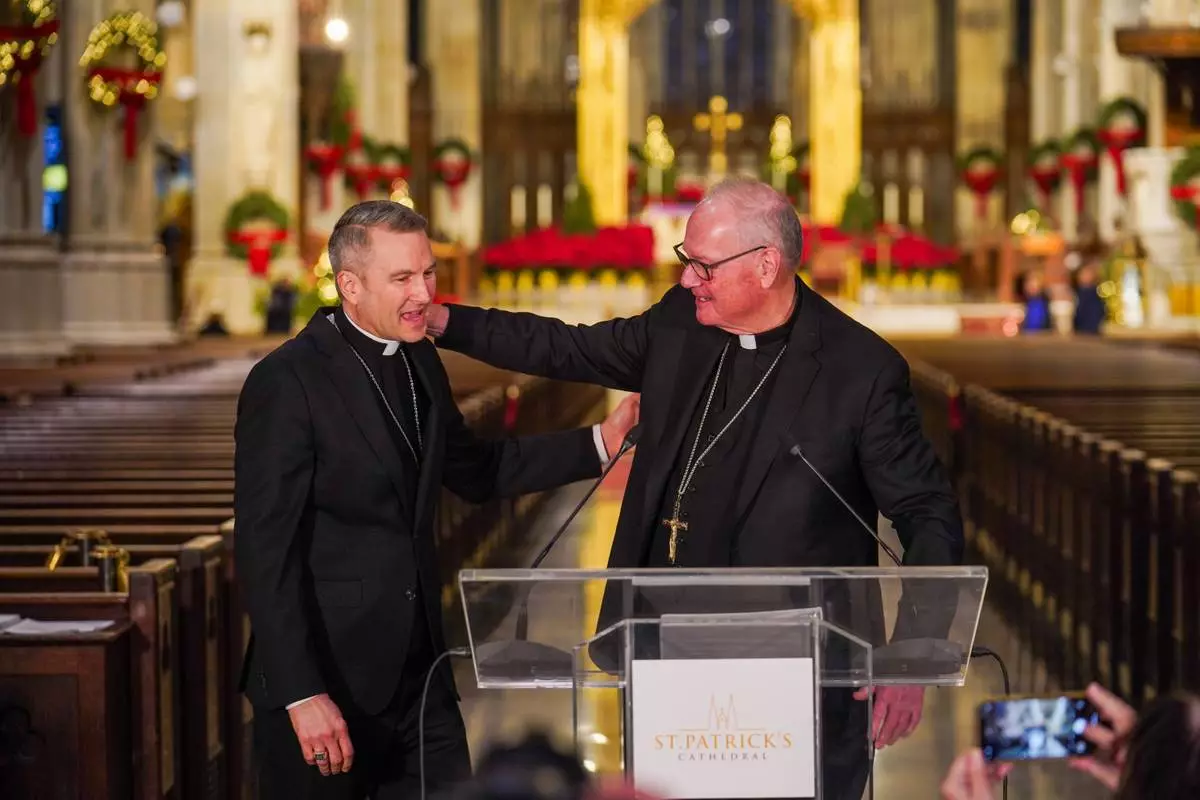
New York Archbishop, Timothy Dolan, right, greets Bishop Ronald Hicks during a news conference, Thursday, Dec.18, 2025 in New York. (AP Photo/Ryan Murphy)
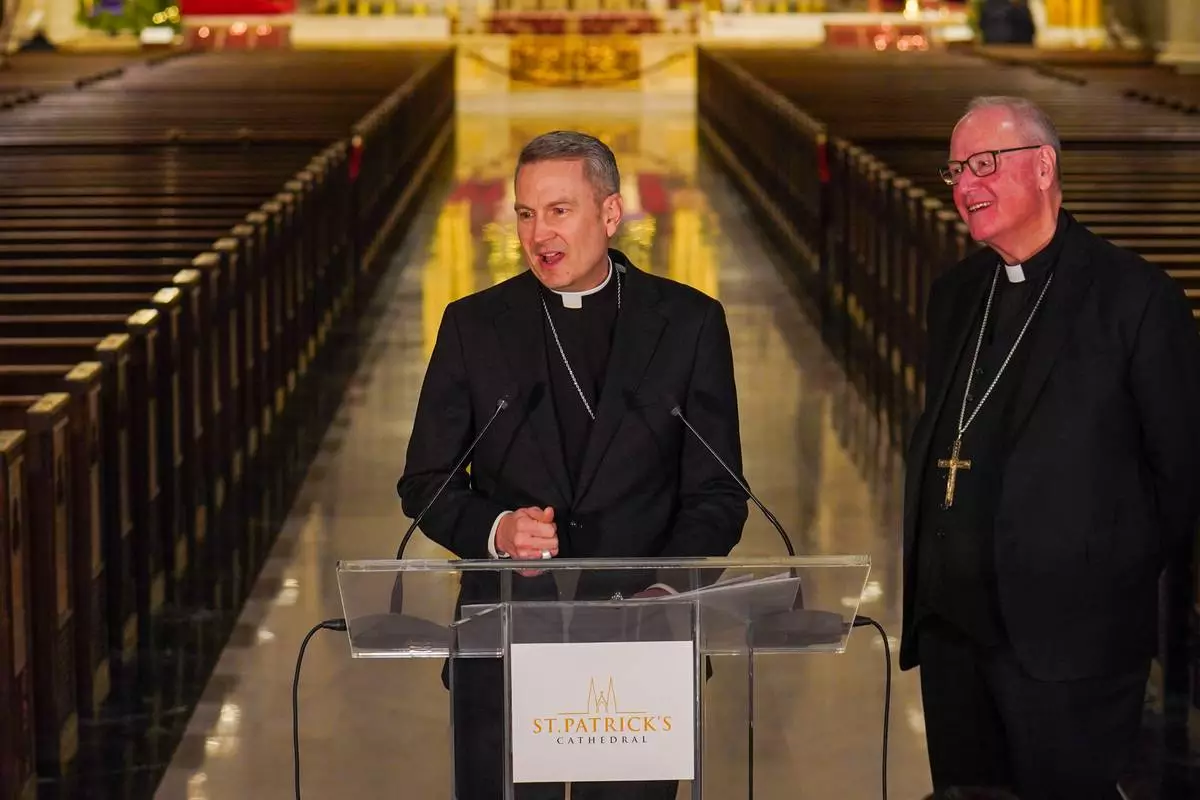
Bishop Ronald Hicks speaks during a news conference, Thursday, Dec.18, 2025 in New York. (AP Photo/Ryan Murphy)
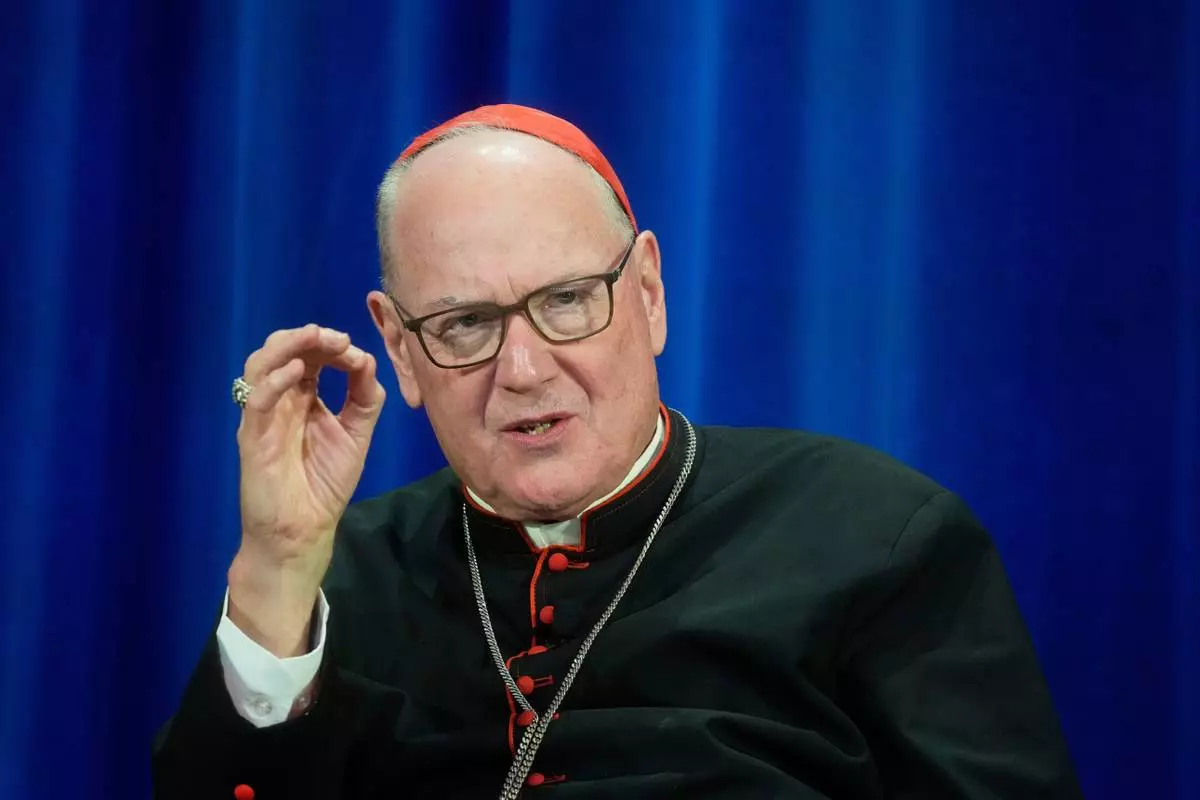
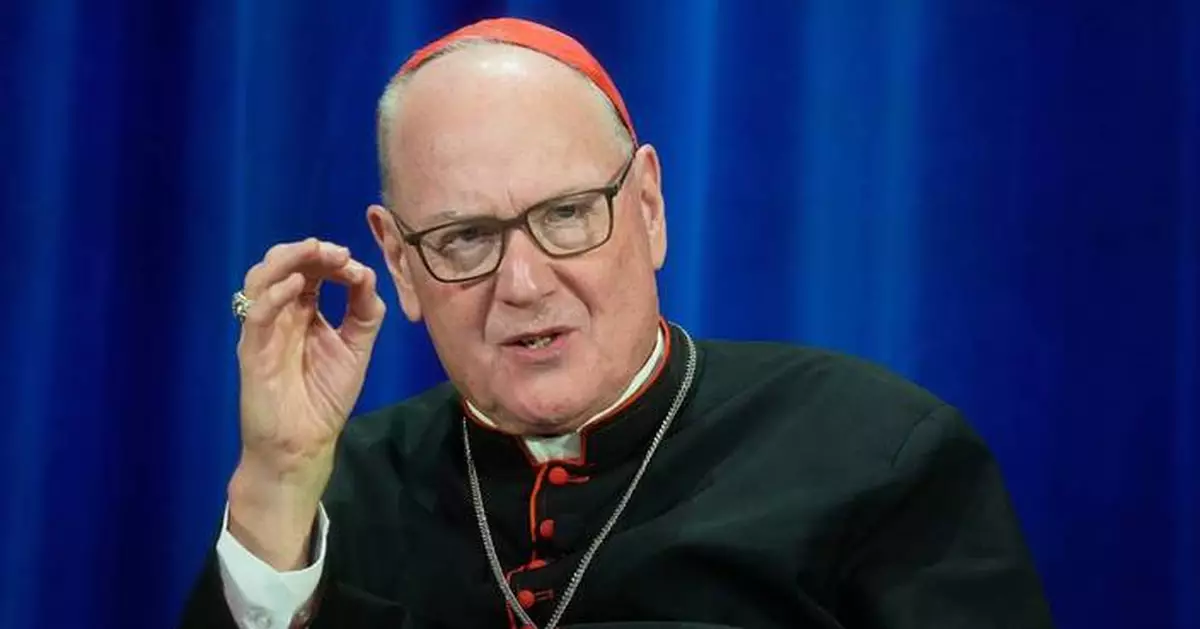
FILE - Cardinal Timothy Dolan of New York attends a news conference at the North American College in Rome, May 9, 2025. (AP Photo/Gregorio Borgia, File)