CAIRO (AP) — More than 1,000 civilians were killed in a three-day attack by the Rapid Support Forces paramilitary group earlier this year on the largest displacement camp in western Sudan, the U.N. Human Rights Office said in a report released Thursday.
RSF stormed Zamzam camp in April as part of its siege of the city of el-Fasher, the provincial capital of North Darfur province.
In the attack, hundreds of people were summarily executed, according to the report. People were killed in house-to-house raids and the main market, as well as in schools and health facilities. The report detailed patterns of sexual violence, “including rape and gang rape, and sexual slavery.”
The report called it “a consistent pattern of serious violations of international humanitarian law and gross abuses of international human rights law.” It comes a few weeks after Amnesty International accused the RSF of committing war crimes in their attack of the camp.
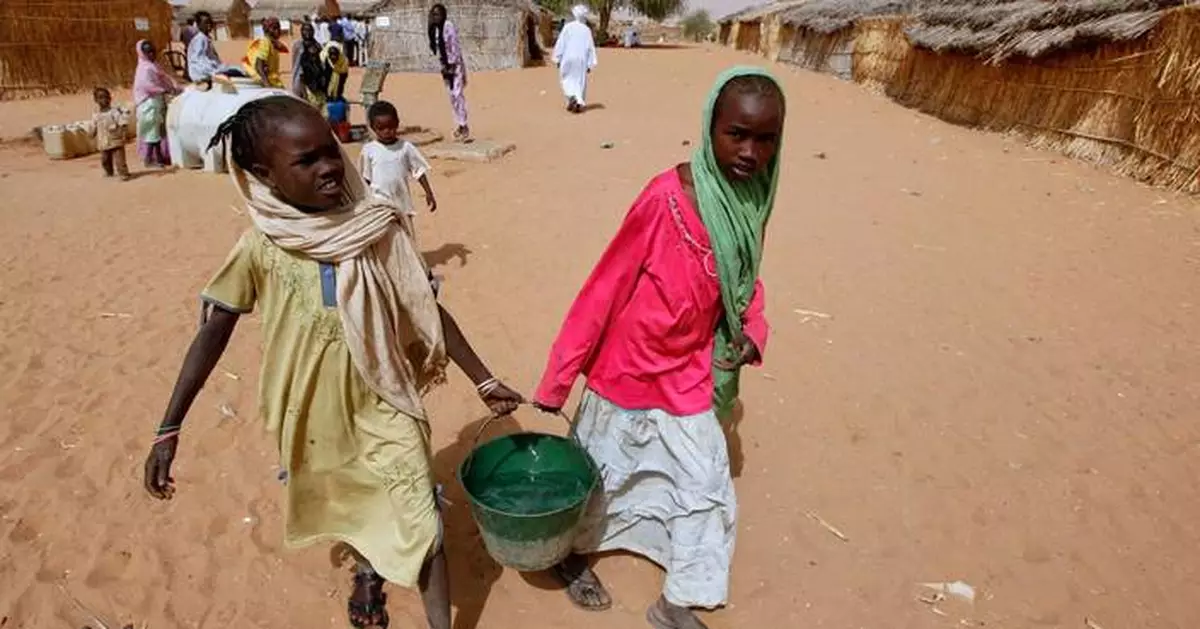
Zamzam was the largest displacement camp in Sudan with more than 500,000 people there prior to the April attacks. RSF blocked entry of food and other essential goods to the Zamzam camp for months prior to the attack, the U.N. report says.
Zamzam camp was established in 2004 to house people driven from their homes by attacks by the Sudanese Janjaweed militia. Located just south of el-Fasher, it swelled over the years to cover an area 8 kilometers (5 miles) long by about 3 kilometers (2 miles) wide.
RSF has been at war with the Sudanese military since April 2023. The conflict has killed 40,000 people — though some rights groups say the death toll is significantly higher — and has created the world’s worst humanitarian crisis with more than 14 million people displaced. Many areas have experienced famine, including at the Zamzam camp.
“The findings contained in this report are yet another stark reminder of the need for prompt action to end the cycles of atrocities and violence, and to ensure accountability and reparations for victims,” U.N. High Commissioner for Human Rights Volker Türk said.
Türk warned that the patterns of violence in Zamzam are now being repeated in el-Fasher as RSF took over the city.
“These horrific patterns of violations — committed with impunity — are consistent with what my office has repeatedly documented, including during the RSF takeover of el-Fasher in late October,” Türk said.
Separately, Sudan’s top general met with Egyptian President Abdel-Fattah el-Sissi in Cairo Thursday amid growing pressure to resolve the war in Sudan.
Burhan’s meeting with el-Sissi came after the Sudanese general held talks with Saudi officials in Riyadh earlier this week. U.S. envoy Massad Boulos was also in Riyadh at the same time and met with Saudi officials. There was no public announcement that Burhan met with the American official.
Boulos said on X Wednesday after meeting with Saudi officials, including Saudi Foreign Minister Prince Faisal bin Farhan, there was an agreement with Saudi Arabia on practical steps “toward a humanitarian truce, durable stability, and expanded humanitarian access and assistance for the Sudanese people.”
Both the United States and Saudi Arabia are mediators, part of a group known as the Quad along with Egypt and the United Arab Emirates.
Burhan had previously rejected a ceasefire proposal in November, calling it unacceptable and “the worst yet” — and accused the mediators of being “biased” in their efforts to end the war.
In a statement after the meeting, the Egyptian presidency affirmed its support for Sudan, but also rejected “the establishment of any parallel entities or their recognition, considering this a violation of Sudan’s unity and territorial integrity,” adding that there are “red lines” that can't be crossed. RSF announced a parallel government in July called the Tasis Alliance.
The statement also said that Egypt affirms “its full right to take all necessary measures and actions guaranteed by international law and the Joint Defense Agreement between the two brotherly countries to ensure that these red lines are not violated or crossed.”
The fighting is now concentrated in the south, mostly in the oil-rich Kordofan states. The Sudan Doctors' Network, a group of medical professionals tracking the war, said Thursday that 16 people have been killed in the last 48 hours by artillery shelling of the besieged town of Dilling, South Kordofan, where there is now risk of famine. The group blames RSF and allied groups for the attack, calling it a flagrant violation of international law and called for international on the group to stop the attacks.
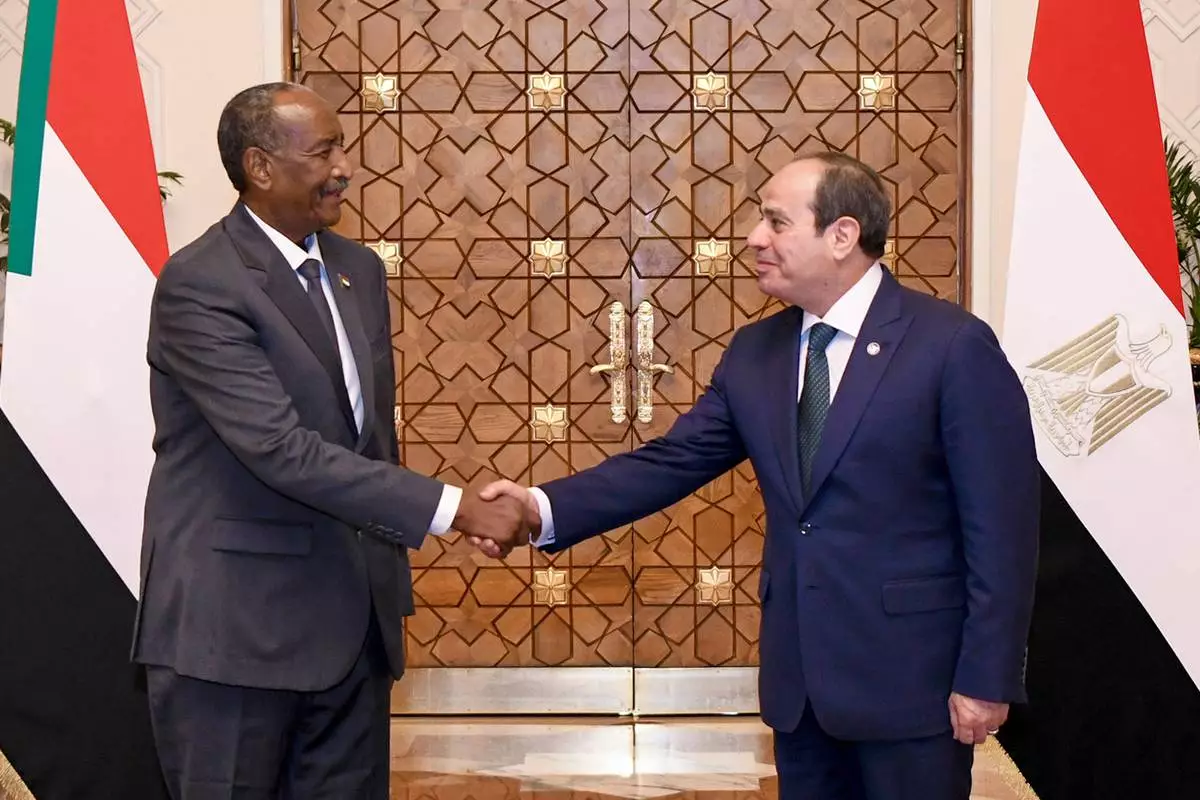
In this photo, provided by Egypt's presidency media office, Egyptian President Abdel-Fattah el-Sissi, greets Sudan's top general Gen. Abdel-Fattah Burhan, at the Presidential Palace in Cairo, Egypt, Thursday, Dec. 18, 2025. (Egyptian Presidency Media Office via AP)
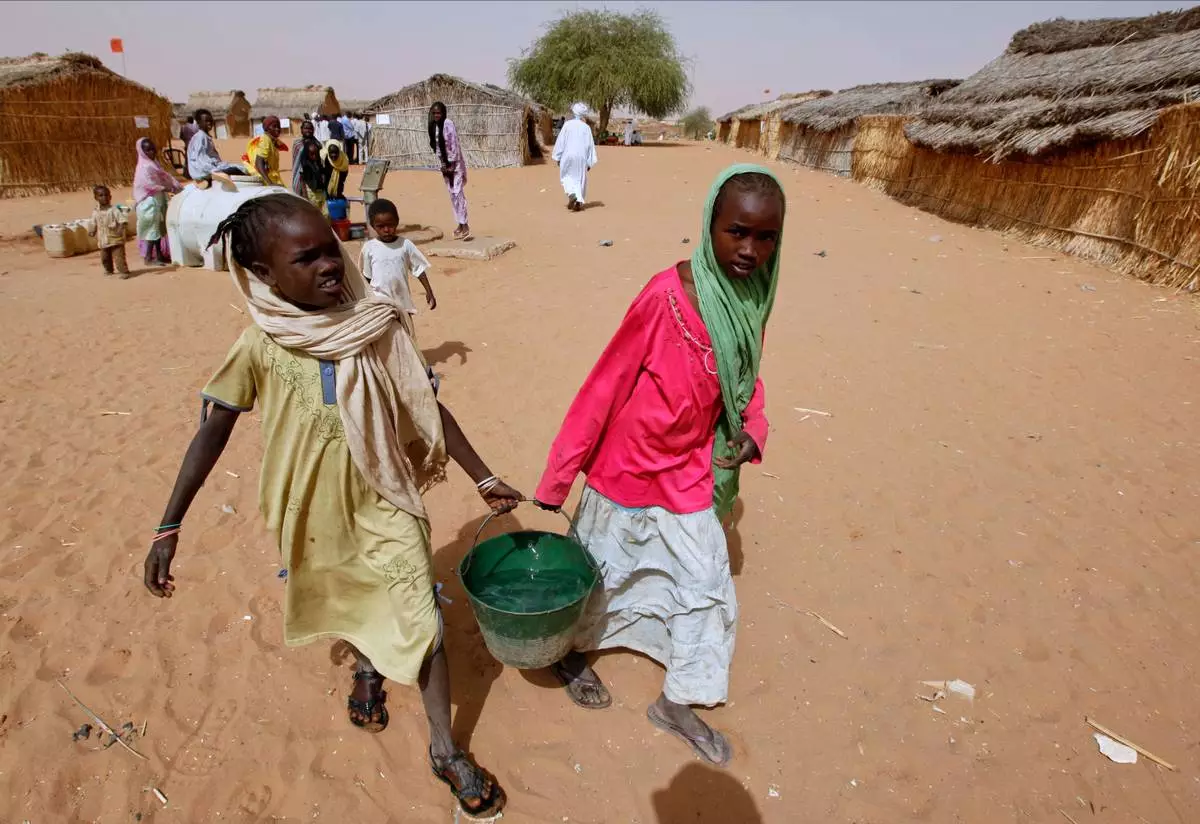
FILE - Sudanese refugee girls carry water supplies near a polling station in the refugee camp of Zamzam, on the outskirts of El Fasher, Darfur, Sudan, on April 13, 2010. (AP Photo/Nasser Nasser, File)
BRUSSELS (AP) — Farmers in tractors blocked roads and set off fireworks in Brussels on Thursday outside a European Union leaders’ summit, prompting police to respond with tear gas and water cannons as protesters rallied against a major free-trade deal with South American nations.
Farmers fear an agreement with the trade bloc known as Mercosur will undercut their livelihoods, and there are broader political concerns it is driving support for the far right.
The farmers brought potatoes and eggs to throw — along with sausages and beer for nourishment — and waged a furious back-and-forth with police.
“We are fighting to defend our jobs across all European countries against Mercosur,” said Armand Chevron, a 23-year old French farmer.
Police in riot gear staffed barriers just outside the European Parliament, which evacuated some staff due to damage caused by protesters.
In Brussels, protesters burned tires and a faux wooden coffin bearing the word “Agriculture.” Their fire unleashed a black cloud that swirled with white tear gas.
“We will not die in silence,” read one sign. “The dictatorship starts here,” read another.
Hundreds of farmers like Pierre Vromann, 60, had arrived on tractors, which they parked to block roads around the key institutions of the EU.
The Mercosur deal would be “bad for farmers, bad for consumers, bad for citizens and bad for Europe,” said Vromann, who raises cattle and cereals in the nearby Belgian city of Waterloo.
Other farmers came from as far away as Spain and Poland.
The clashes between the farmers and police raged just a stone's throw from the Europa building, where leaders of the 27 EU nations discussed the trade pact as well as a proposal to seize Russian assets for use in Ukraine.
On Wednesday, Italy signaled it had reservations, joining the French-led opposition to signing the massive transatlantic free-trade deal between the EU and the five active Mercosur countries — Brazil, Argentina, Uruguay, Paraguay and Bolivia. The deal would progressively remove duties on almost all goods traded between the two blocs over the next 15 years.
French President Emmanuel Macron dug in against the Mercosur deal as he arrived for Thursday’s EU summit, pushing for further concessions and more discussions in January. He said he has been in discussions with Italian, Polish, Belgian, Austrian and Irish colleagues among others about delaying it.
“Farmers already face an enormous amount of challenges,″ he said, as farmer protests roil regions around France. “We cannot sacrifice them on this accord.”
Worried by a surging far right that rallies support by criticizing the deal, Macron's government has demanded safeguards to monitor and stop large economic disruption in the EU, increased regulations in the Mercosur nations like pesticide restrictions, and more inspections of imports at EU ports.
Premier Giorgia Meloni told the Italian Parliament on Wednesday that signing the agreement in the coming days “would be premature.”
“This doesn’t mean that Italy intends to block or oppose (the deal), but that it intends to approve the agreement only when it includes adequate reciprocal guarantees for our agricultural sector,” Meloni said.
European Commission President Ursula von der Leyen is determined to sign the agreement, but she needs the backing of at least two-thirds of EU nations.
Italy’s opposition would give France enough votes to veto von der Leyen’s signature.
In Greece, farmers have set up roadblocks along highways across the country for weeks, protesting delays in agricultural subsidy payments as well as high production costs and low product prices that they say are strangling their sector and making it impossible to make ends meet.
The accord has been under negotiation for 25 years. Once ratified, it would cover a market of 780 million people and a quarter of the globe’s gross domestic product. Supporters say it would offer a clear alternative to Beijing's export-controls and Washington's tariff blitzkrieg, while detractors say it will undermine both environmental regulations and the EU's iconic agricultural sector.
German Chancellor Friedrich Merz said ahead of the Brussels summit that the EU's global status would be dented by a delay or scrapping of the deal.
“If the European Union wants to remain credible in global trade policy, then decisions must be made now,” Merz said.
The deal is also about strategic competition between Western nations and China over Latin America, said Agathe Demarais, a senior fellow at the European Council on Foreign Relations. “A failure to sign the EU-Mercosur free trade agreement risks pushing Latin American economies closer to Beijing’s orbit,” she said.
Von der Leyen and European Council President António Costa are scheduled to sign the deal in Brazil on Saturday.
The political tensions that have marked Mercosur in recent years — especially between Argentina’s far-right President Javier Milei and Brazil’s center-left Luiz Inácio Lula da Silva, the bloc’s two main partners — have not altered the willingness of South American leaders to seal an alliance with Europe that will result in benefits for their agricultural sector.
Lula has been one of the most fervent promoters of the agreement from South America’s largest economy. As host of the upcoming summit, the Brazilian president is betting on closing the deal Saturday and scoring a major diplomatic achievement ahead of next year’s general elections, in which he will seek reelection.
At a cabinet meeting Wednesday, Lula was clearly irked by Italy and France's positions. He said that Saturday would be a make-or-break moment for the deal.
“If we don't do it now, Brazil won't make any more agreements while I'm president,” Lula said, adding that the agreement would “defend multilateralism” as Trump pursues unilateralism.
Milei, a close ideological ally of Trump, also supports the deal.
“We must stop thinking of Mercosur as a shield that protects us from the world and start thinking of it as a spear that allows us to effectively penetrate global markets,” he said some time ago.
Associated Press writers Debora Rey in Buenos Aires, Claudia Ciobanu in Warsaw, Kirsten Grieshaber in Berlin, Elene Becatoros in Athens, and Sylvain Plazy and Angela Charlton in Brussels contributed to this report.
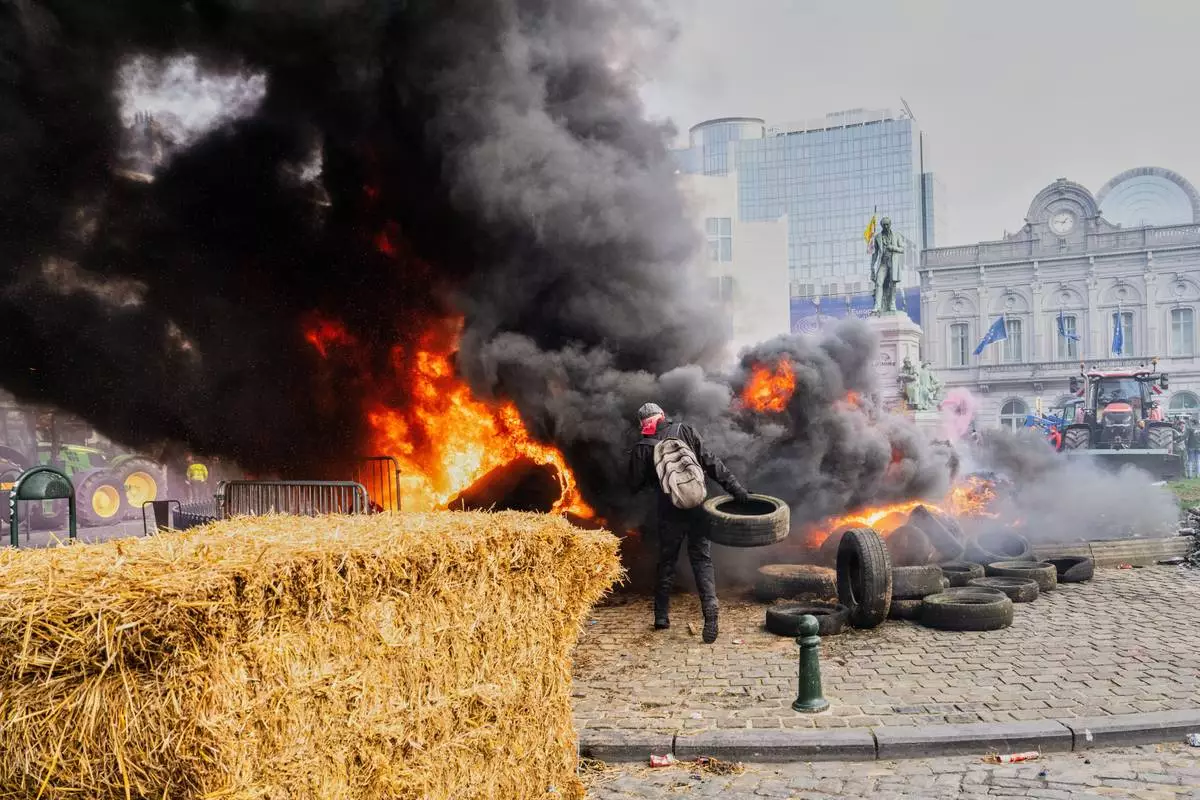
A protestor picks up tire to throw onto a fire during a demonstration of European farmers outside the EU Summit meeting in Brussels, Thursday, Dec. 18, 2025. (AP Photo/Marius Burgelman)
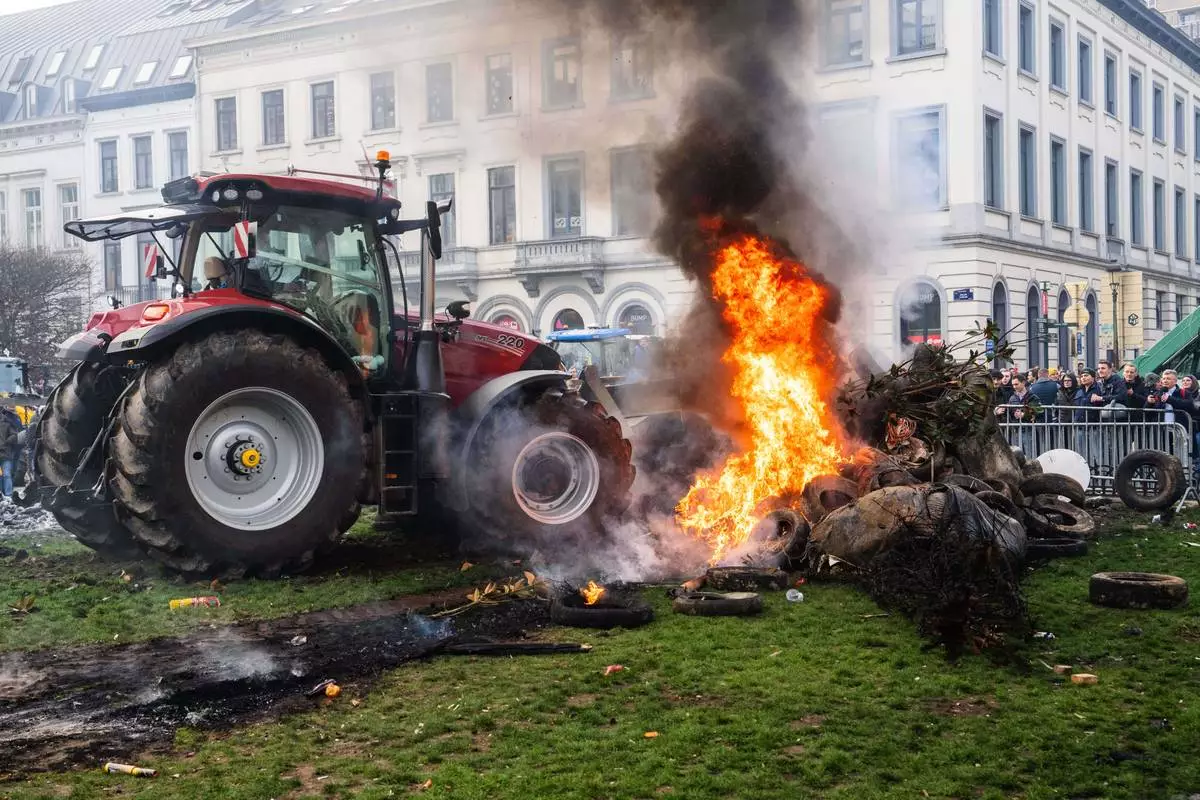
Protestors burn tires during a demonstration of European farmers outside the EU Summit meeting in Brussels, Thursday, Dec. 18, 2025. (AP Photo/Marius Burgelman)
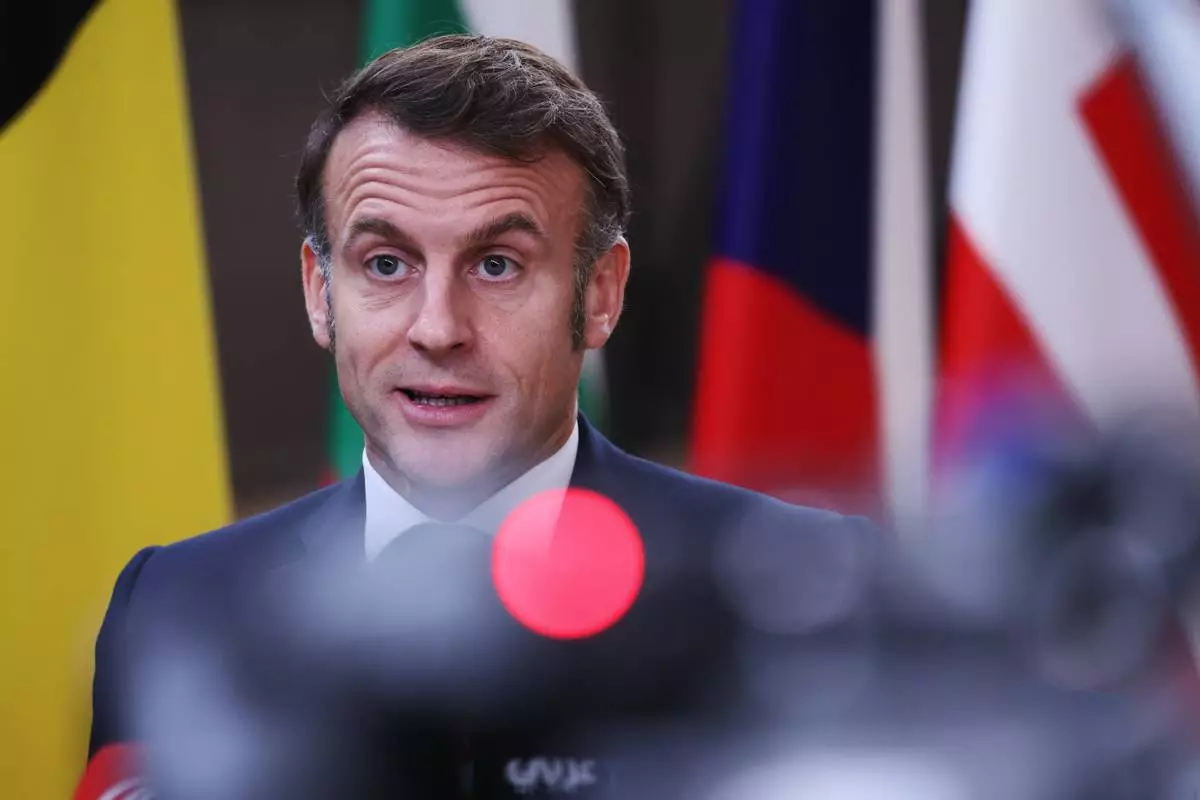
French President Emmanuel Macron speaks with the media as he arrives for the EU Summit in Brussels, Thursday, Dec. 18, 2025. (AP Photo/Omar Havana)
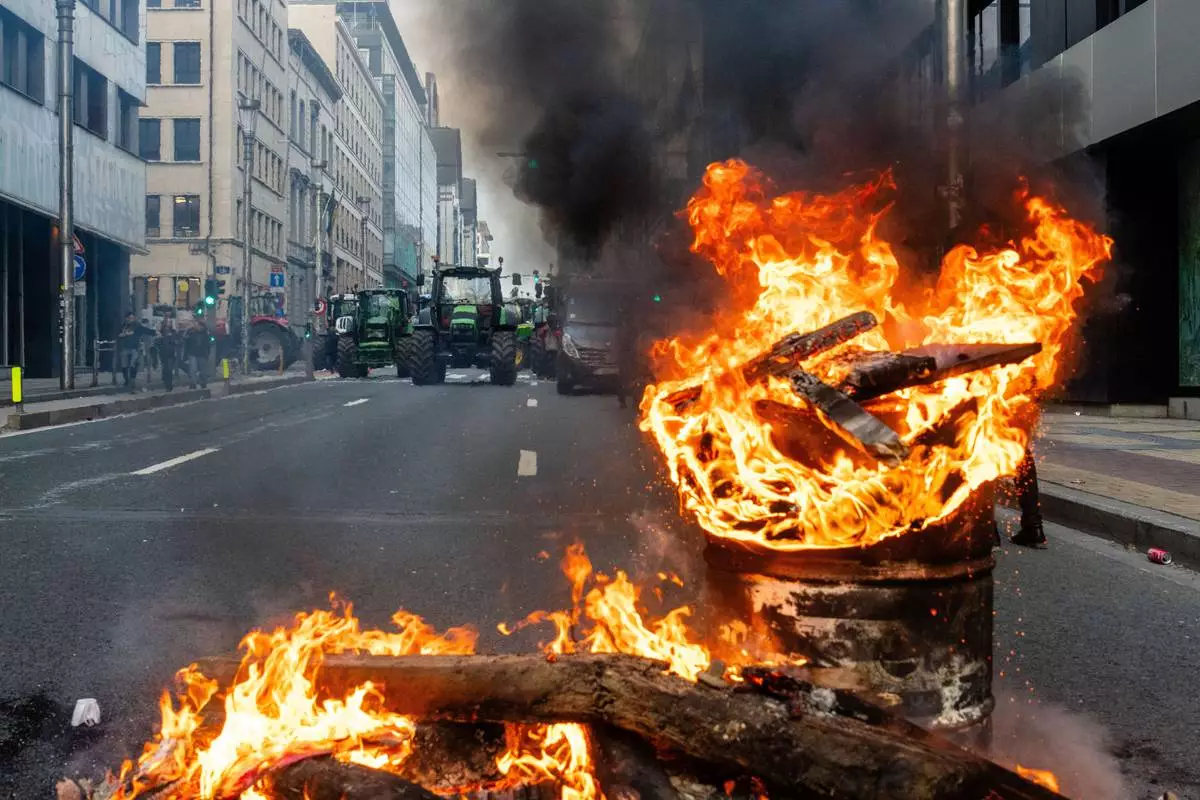
A fire burns in a barrel as European farmers block a road with their tractors during a demonstration outside the EU Summit in Brussels, Thursday, Dec. 18, 2025. (AP Photo/Marius Burgelman)
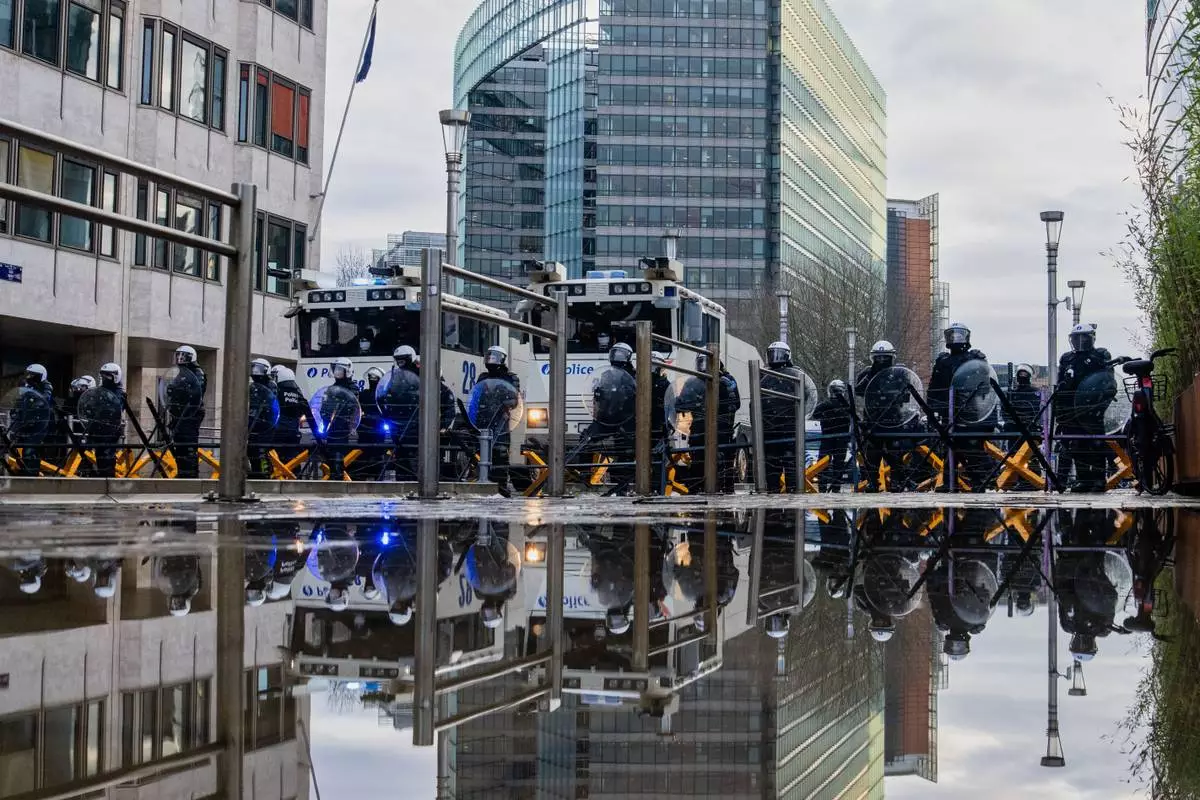
Police stand behind a barrier as European farmers block a road with their tractors during a demonstration outside the EU Summit in Brussels, Thursday, Dec. 18, 2025. (AP Photo/Marius Burgelman)
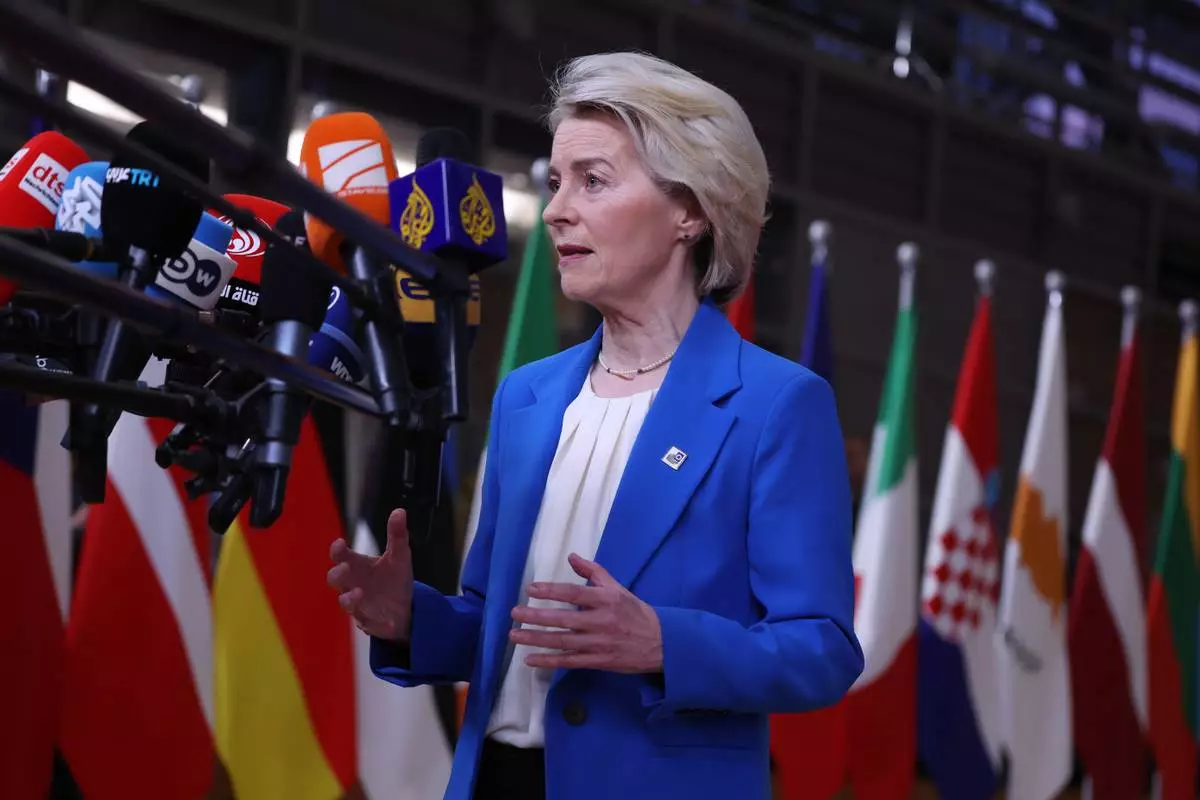
European Commission President Ursula von der Leyen speaks with the media as she arrives for the EU Summit in Brussels, Thursday, Dec. 18, 2025. (AP Photo/Omar Havana)
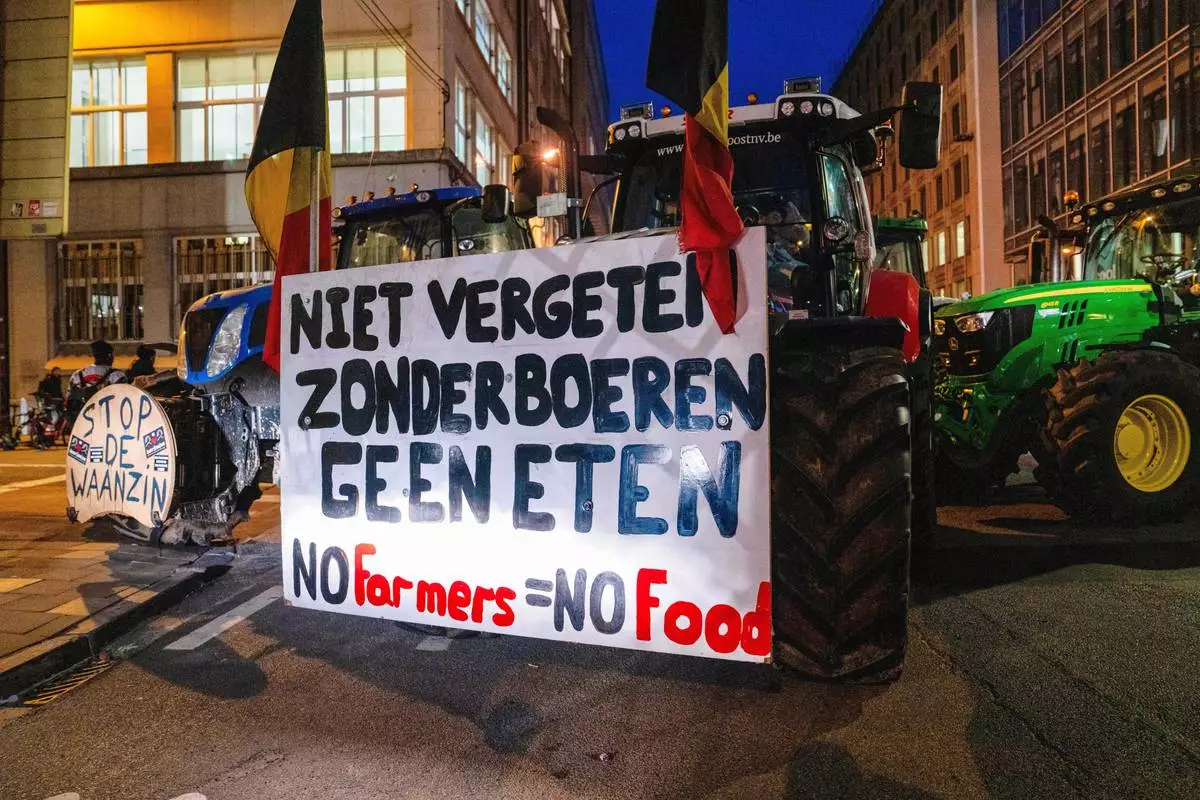
A farmer drives a tractor with a sign that reads in Dutch 'Don't forget, without farmers there's no food' during a demonstration outside a gathering of European leaders at the EU Summit in Brussels, Thursday, Dec. 18, 2025. (AP Photo/Marius Burgelman)
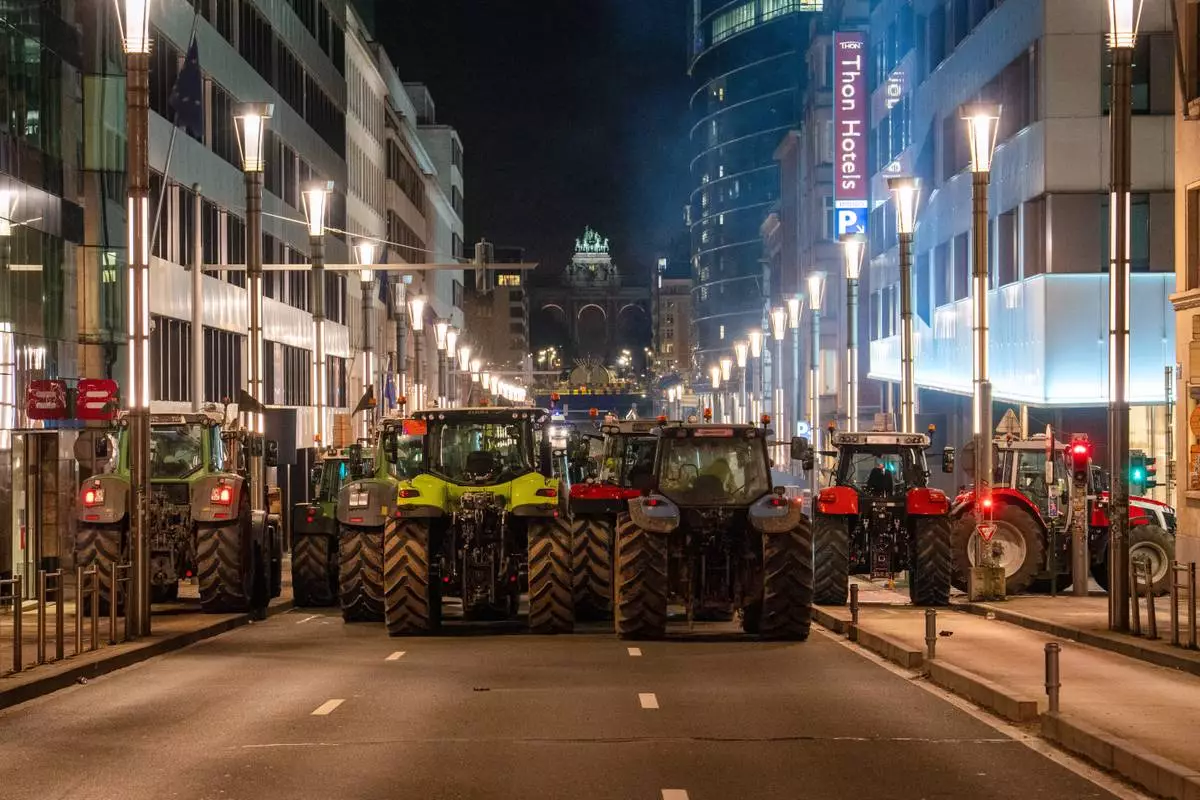
Farmers drive their tractors to block a main boulevard during a demonstration outside a gathering of European leaders at the EU Summit in Brussels, Thursday, Dec. 18, 2025. (AP Photo/Marius Burgelman)
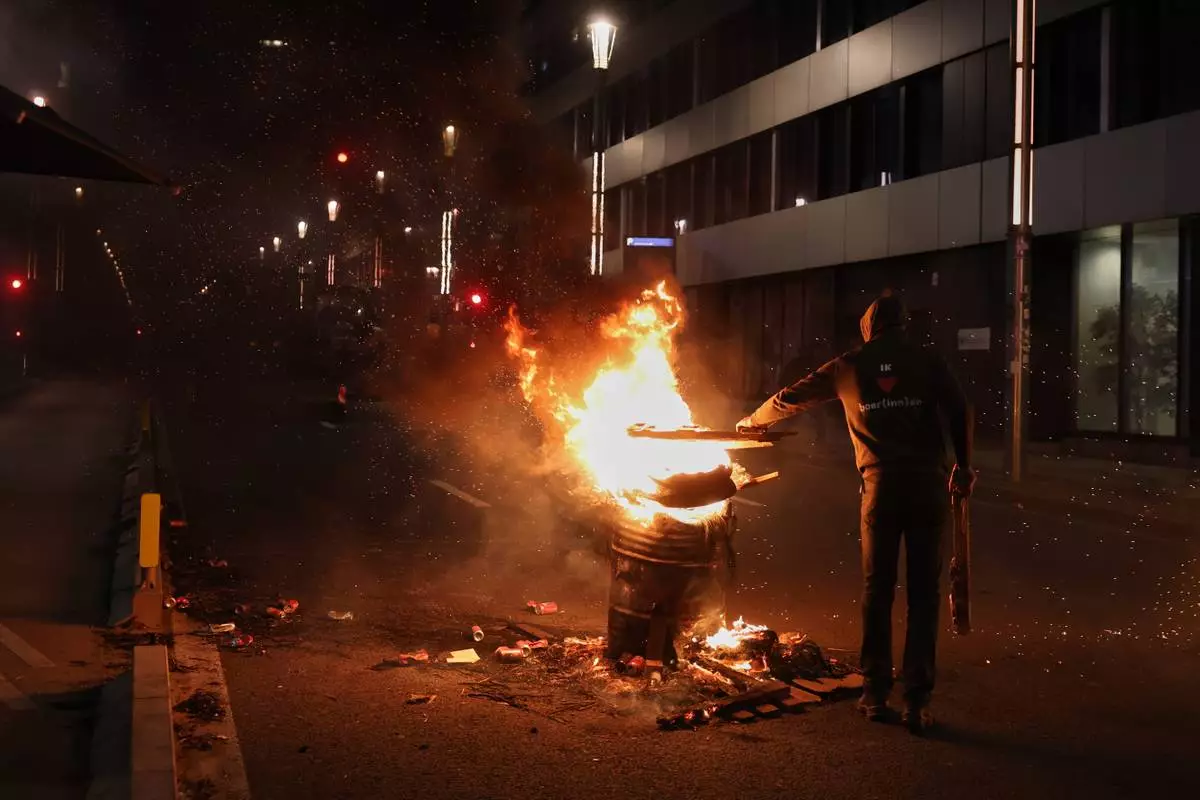
A farmer puts wood in a fire during a demonstration outside the EU Summit in Brussels, Thursday, Dec. 18, 2025. (AP Photo/Omar Havana)
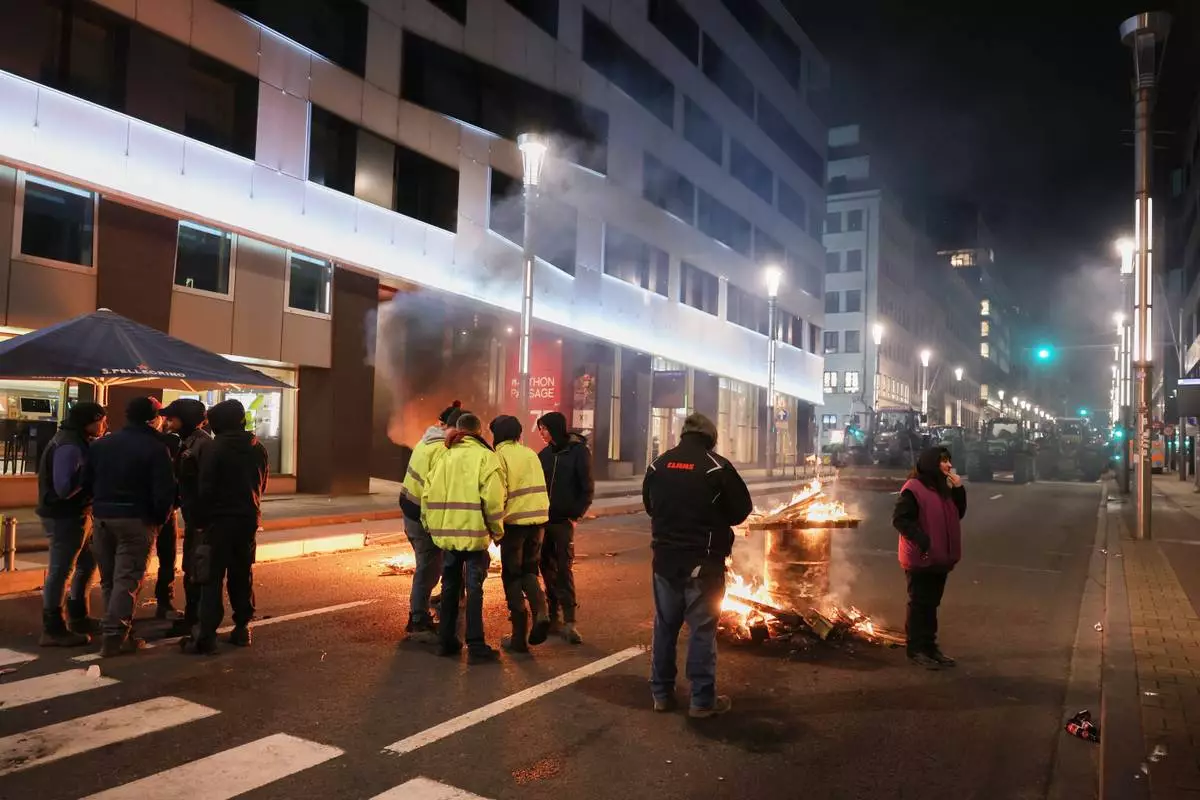
Protestors and farmers stand next to a wood fire during a demonstration outside the EU Summit in Brussels, Thursday, Dec. 18, 2025. (AP Photo/Omar Havana)
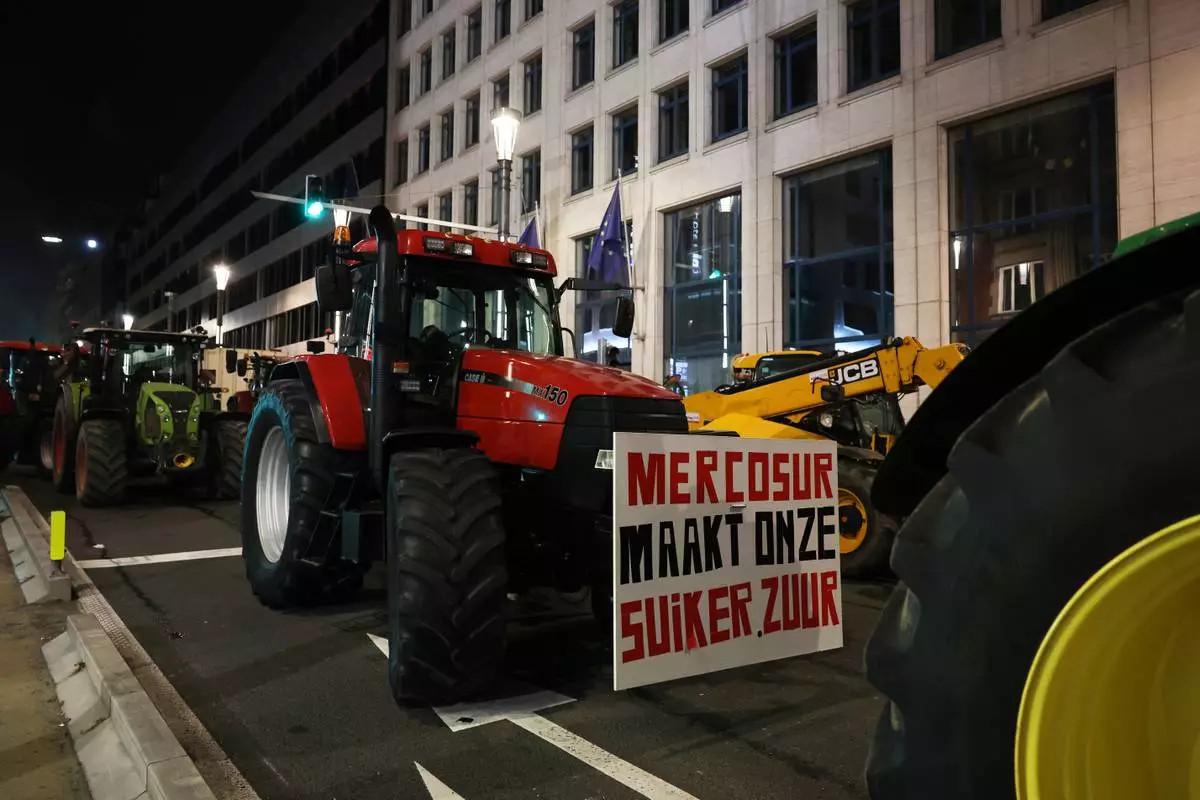
Farmers use their tractors to block a main road during a demonstration outside a gathering of European leaders at the EU Summit in Brussels, Thursday, Dec. 18, 2025. (AP Photo/Omar Havana)