A nearly 100-year-old bridge over the Mississippi River between Iowa and Wisconsin is scheduled to be imploded Friday, an unusual spectacle that will make way for a modern replacement.
The Mississippi River Bridge, also known as the Black Hawk Bridge, was completed in 1931. It connects Lansing, Iowa, to Wisconsin. The landmark stands out for its unique cantilever design — a center arch and two tower-like trusses.
“It carries a lot of sentimental value to, I mean, literally tens of thousands of people,” Lansing Mayor Michael Verdon said.
The bridge, which closed in October, was the only one for about 30 miles (48 kilometers) in each direction and carried about 2,100 vehicles per day. Drivers can now use a ferry service while a new crossing is under construction. The new $140 million replacement is expected to be in service in 2027.
Though it’s beloved, the narrow bridge made for a harrowing experience when two large trucks met, Verdon said. Barges sometimes struck the bridge because of the river geography and configuration of the bridge piers.
Officials are expecting a large crowd to witness the implosion, he said. A live video will be available online.
The center span will be imploded first, followed by the eastern section later in the day. The western section will disassembled in the future because parts of the bridge extend over homes and the railroad.
Some parts of the bridge have already been removed, but an implosion is the most efficient way to remove the largest portions of the superstructure, Iowa Department of Transportation spokesperson Daniel Yeh said.
Residents plan to salvage material for keepsakes and to construct a tribute to the bridge in the city, Verdon said.
Lansing, population 968, has deep roots as a river town with a history of steamboats, fur trading and commercial fishing, the mayor said.
Dura reported from Bismarck, North Dakota.

This undated photo provided by the Iowa Department of Transportation on Thursday, Dec. 18, 2025, shows the Mississippi River Bridge, also known as the Black Hawk Bridge, in Lansing, Iowa. (Iowa Department of Transportation via AP)
BANGKOK (AP) — Thailand on Thursday helped launch a global effort to fight the spread of online scams that include criminal enterprises based largely in Southeast Asia estimated to bilk billions of dollars annually from victims around the world.
Thailand's Ministry of Foreign Affairs and the United Nations Office on Drugs and Crime hosted a conference in Bangkok on Wednesday and Thursday culminating in the announcement of the new initiative called the Global Partnership Against Online Scams.
Thai Prime Minister Anutin Charnvirakul said in his keynote speech Wednesday that online scams “reveal a deeper problem — a collective vulnerability that no country can address alone.”
The partnership agreement signed by conference participants Thailand, Bangladesh, Nepal, Peru and the United Arab Emirates will include political commitment, law enforcement, victim protection and public awareness and cross-border collaboration, a statement said.
The conference received assistance from the private sector including internet giants Meta and TikTok.
Meta, the corporate owner of Facebook, Instagram and WhatsApp, presented a threat report underlining the increased use of artificial intelligence by scam networks and protocols the company is using in its attempts to stop scams on its social media platforms.
Social media application TikTok signed on to the conference's closing statement, becoming one of the first private sector members of the partnership. The company on Thursday also said it had signed agreements with major investors to form a new TikTok U.S. joint venture.
TikTok, which primarily focuses on short-form videos is one of the world's most popular social media platforms but has faced challenges from various governments including the U.S. over its Chinese ownership, the European Union over transparency breaches, Canada regarding child protection protocols and data sharing in Indonesia.
Scam centers, which extort money from victims online through bogus investment schemes and faked loved interests, have proliferated across Southeast Asia. Scam victims lost between $18 billion and $37 billion in 2023, the UNODC estimates.
The importance of private partnerships in anti-scam initiatives was stressed throughout the two-day conference in Thailand's capital, which was attended by more than 300 participants from nearly 60 countries.
Brian Hanley, Asia-Pacific director of the Global Anti-Scam Alliance, which TikTok joined this month, explained it will be harder to combat criminal networks without “all the major stakeholders at the table."
“Scams are exploiting, not only transnational boundaries, but also the seams across various platforms from banks, telcos, to social media platforms,” Hanley said.
The alliance describes itself as a collective effort to combat the scam problem by governments, law enforcement, consumer protection organizations and companies involved in social media, cybersecrity and other aspects of the internet.
“TikTok is the one that we’re talking about today, but hopefully tomorrow everyone’s joining,” Hanley said. “We’re starting to get critical mass and momentum as everyone realizes it’s affecting their bottom lines and consumer trust.”
Recent scam center raids in Myanmar, victim repatriation issues in Thailand and the death of a South Korean student forced into scam work in Cambodia have spurred demand for regional action.
Cambodia is known as a hub for scam compounds and has been criticized by its neighbor Thailand, but the two countries are engaged in an armed conflict and Cambodia was not represented at the conference.
Similar pledges to fight scam networks were made by members of the Association of Southeast Asian Nations in the months leading up to the Bangkok conference.
They include the United Nations Convention against Cybercrime, which more than 70 countries signed in October in Vietnam. U.N. Secretary-General António Guterres called the document “a vow that no country, no matter their level of development, will be left defenseless against cybercrime.”
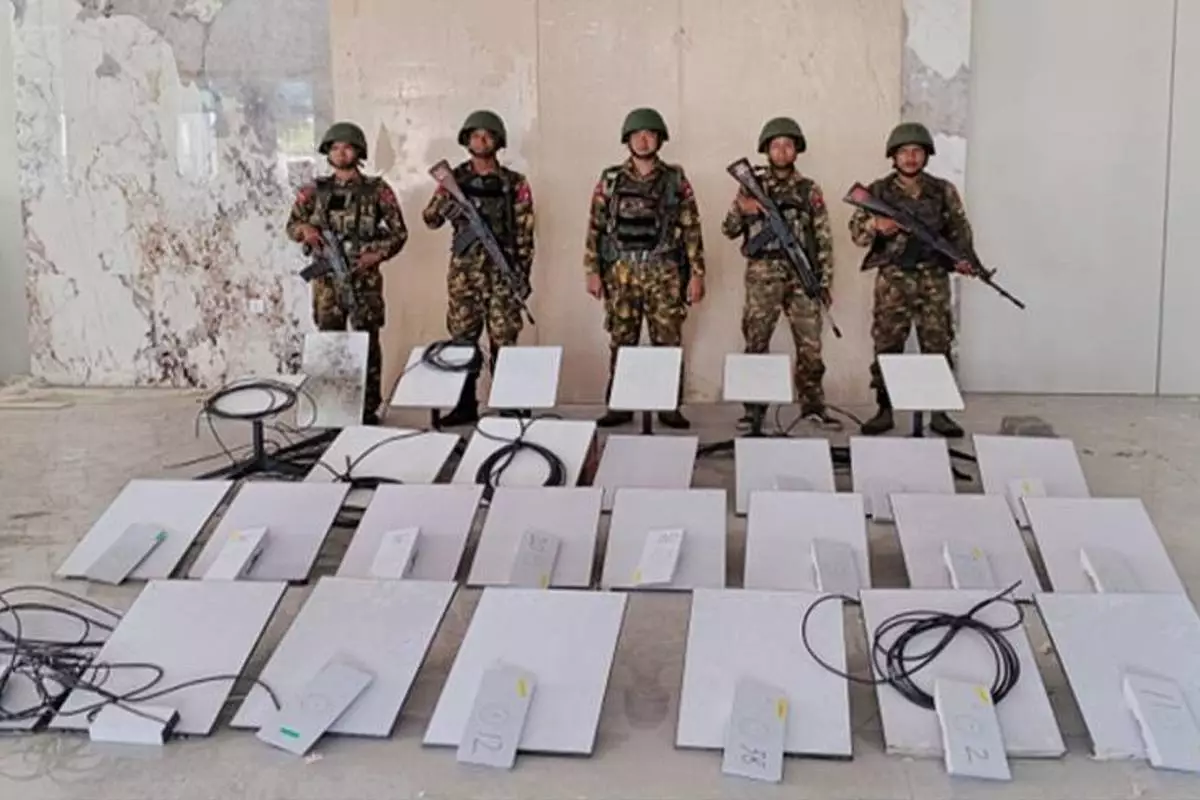
FILE - In this image provided by the Myanmar military on Oct. 19, 2025, soldiers stand next to Starlink satellite internet devices as they seize KK Park online scam center in Myawaddy township, Karen State, Myanmar. (The Myanmar Military True News Information Team via AP, File)
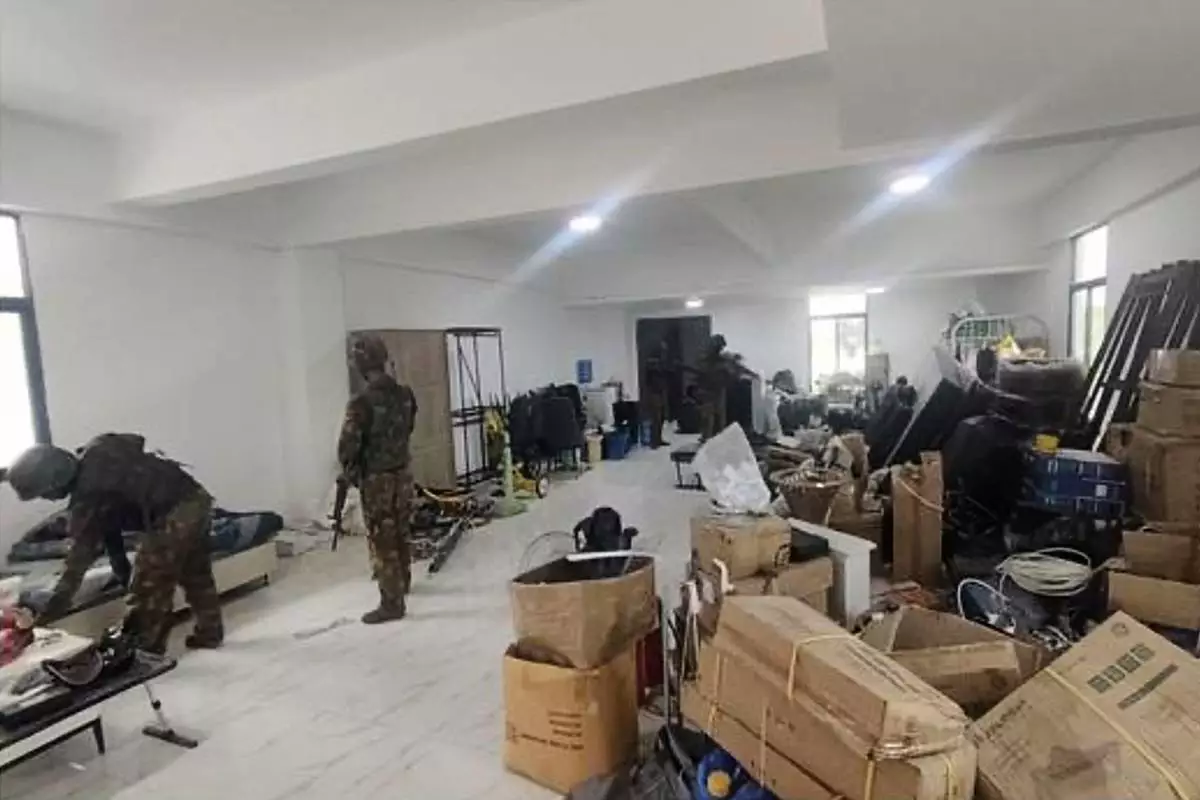
FILE - In this image provided by the Myanmar military on Oct. 19, 2025, soldiers raid the KK Park online scam center in Myawaddy township, Karen State, Myanmar. (The Myanmar Military True News Information Team via AP, File)
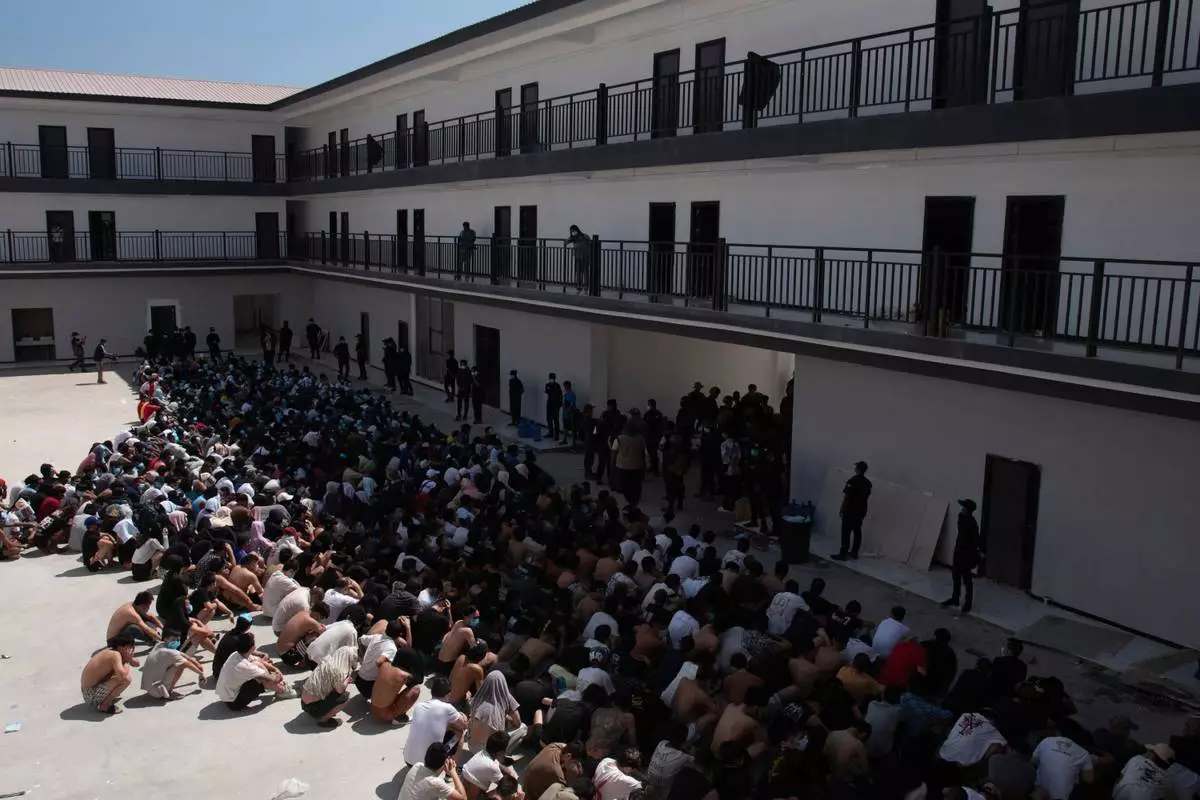
FILE - People from China, Vietnam and Ethiopia, believed to have been trafficked and forced to work in scam centers, sit with their faces masked while in detention after being released from the centers in Myawaddy district in eastern Myanmar, Wednesday, Feb. 26, 2025. (AP Photo/Thanaphon Wuttison, File)
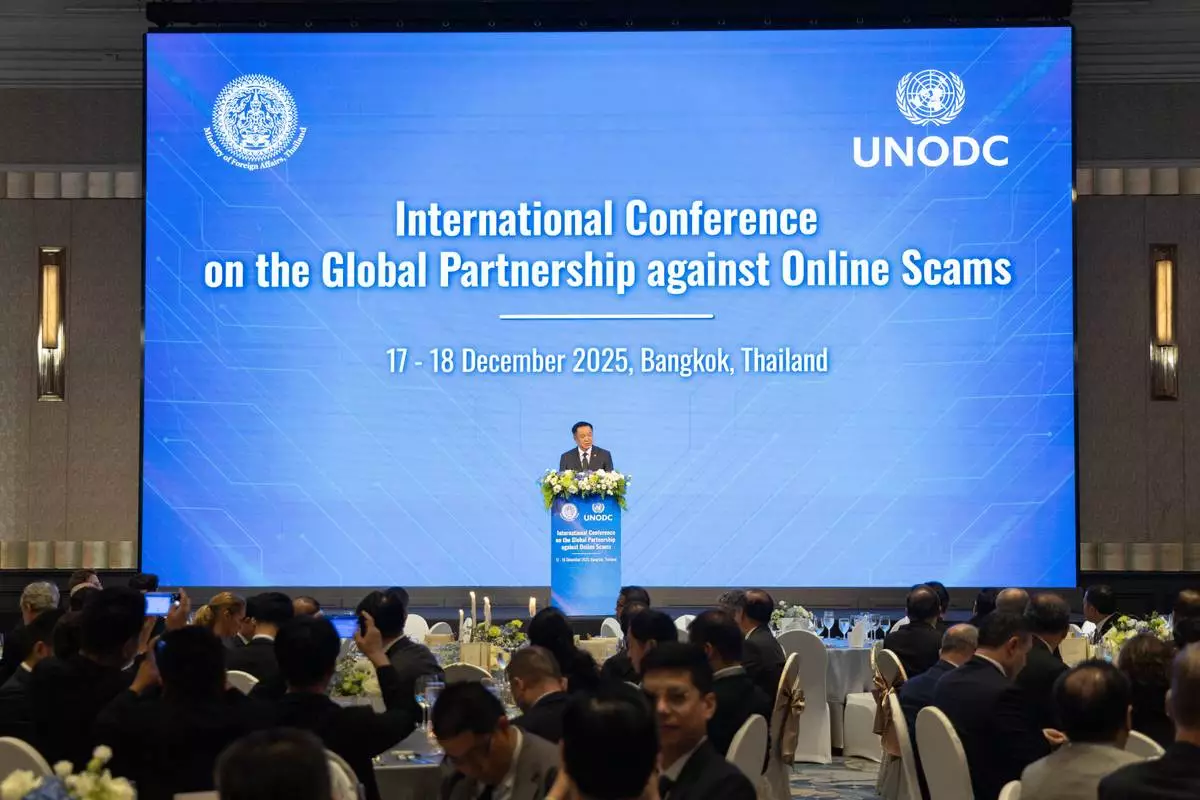
Thai Prime Minister Anutin Charnvirakul delivers his keynote speech during the International Conference on the Global Partnership against Online Scams in Bangkok, Thailand, on Wednesday, Dec. 17, 2025. (AP Photo/Anton L. Delgado)

Thai Prime Minister Anutin Charnvirakul answers journalists' questions during the International Conference on the Global Partnership against Online Scams in Bangkok, Thailand, on Wednesday, Dec. 17, 2025. (AP Photo/Anton L. Delgado)