The Trump administration on Thursday approved a possible foreign military sale to NATO worth an estimated 136.1 million U.S. dollars to extend Stinger missiles' service life.
The NATO Support and Procurement Agency (NSPA) requested to buy additional booster pellets, flight motors, gas generator cartridges, Stinger warheads sections, as well as U.S. government and contractor engineering and technical services, said the U.S. Defense Security Cooperation Agency in a statement.
"This proposed sale will contribute to U.S. and NATO defense goals by increasing readiness and enhancing the air defense capabilities of NATO Allies. Germany, Italy, and the Netherlands will have no difficulty absorbing this equipment into their armed forces," it said.
NSPA, NATO's lead organization for multinational acquisition, support and sustainment across all domains, manages the Stinger Service Life Extension Program on behalf of Germany, Italy, and the Netherlands.
The Stinger missile is a lightweight, self-contained air defense system that can be rapidly deployed by ground troops, according to Raytheon, the U.S. defense firm that produces the missile.
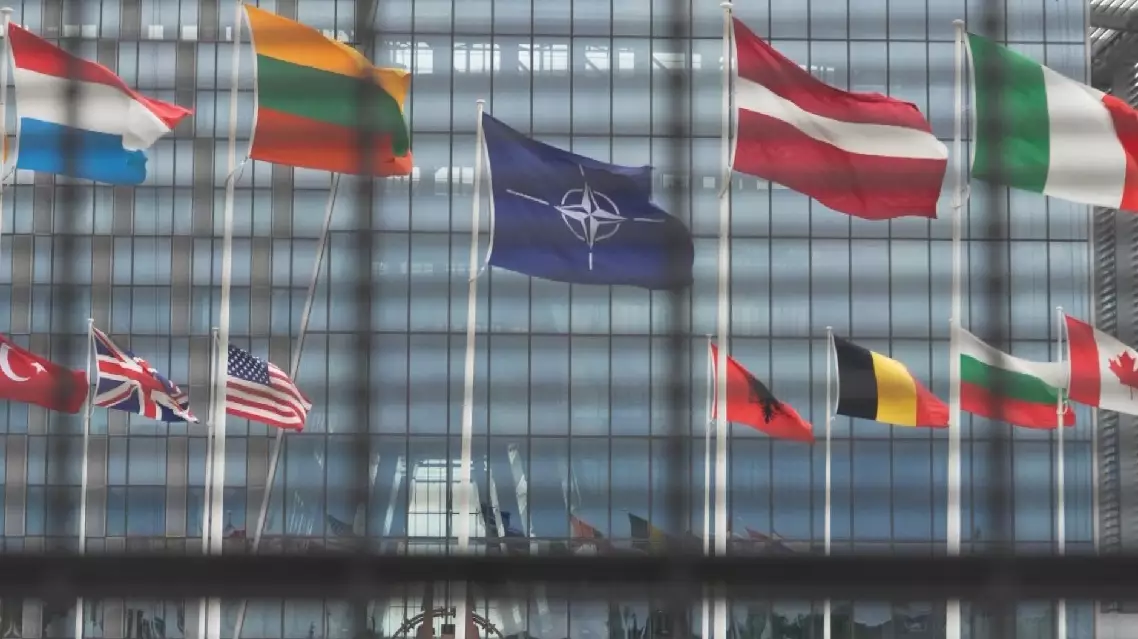
US approves possible 136 mln USD military sale to NATO
A strategic imperative for China to accelerate its artificial intelligence (AI)-driven socioeconomic transformation is the deep alignment between the cultivation of AI talent and the needs of industrial development, said a Chinese economics professor on Wednesday.
Commenting on the outcomes of the annual Central Economic Work Conference held a week earlier in an interview with the China Global Television Network, Song Huasheng, a professor at the School of Economics of China's prestigious Zhejiang University, shared his insights into a key message of the annual event convened by the Communist Party of China Central Committee and the State Council in Beijing, where the top leaders reviewed the previous year's economic performance and set priorities for the year ahead.
Among the priorities outlined for 2026's economic work, the meeting highlighted the need to develop the AI sector, including improving governance, making comprehensive plans to advance education, technology and talent development, and deepening AI' integration across the economy and society.
Significantly, the meeting said it is essential to develop international technological innovation centers in the Beijing-Tianjin-Hebei region as a source of original innovation, in the Yangtze River Delta as a hub for application-oriented innovation, and in the Guangdong-Hong Kong-Macao Greater Bay Area as a cross-border collaboration hub and a cradle for emerging industries.
According to Song, who also serves as executive director of Zhejiang University's Institute of International Economics, policies are needed to first regulate the use of AI.
"To fully unleash AI's potential, we need to establish governance systems that balance innovations and risks. First, using technology to govern technology to build a safety foundation, AI governance must first establish protective measures at the technological levels regarding public concerns about AI-generated content. Secondly, building a new mechanism for multi-stakeholder's governance. This requires institutional innovations to keep pace with technological development," he said.
The professor stressed that a key investment in AI's long-term development is the nurturing of high-caliber human resources, noting that more needs to be done to address the mismatch between university talent cultivation and needs of core industries.
"I believe that universal talent cultivation must closely align with the demands of industries to provide robust talent support for high-quality development. Currently, there's a misalignment between university talent cultivation and the needs of key industries, primarily reflected in outdated courses design, weak practical training of components and insufficient interdisciplinary integrations. So, the rapid development of key industry trends imposes high requirements on talent, necessitating universities to proactively adapt to industrial transformations," he said.
"Universities should dynamically adjust program offering and optimize curriculum systems based on the demands of key industries. Universities need to establish close partnerships with enterprises through joint lab internship base and other means. For the first time, the conference proposed the establishment of international science and innovation centers in Beijing (Beijing-Tianjin-Hebei region), Shanghai (the Yangtze River Delta), and the Guangdong-Hong Kong-Macao Greater Bay Area," he added.
As the global AI development picks up, China needs to strengthen innovation to become a leader in the sector and boost its technological and economic progress, according to Song.
"On the one hand, from the perspective of international competition, a new round of technological revolution and industrial transformation is unfolding. On the other hand, from a domestic perspective, to implement the innovation-driven development strategy, it is necessary to promote the deep integration of technological innovation and industry innovation," said the professor.
Expert stresses alignment between AI talent cultivation, industrial needs in push for new growth drivers