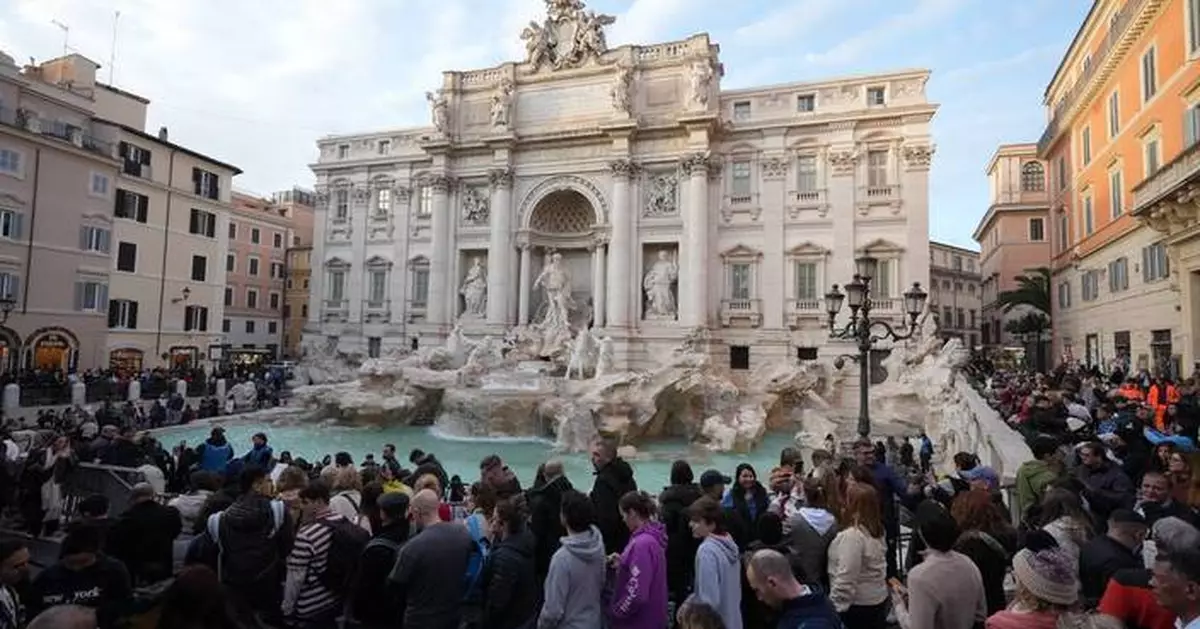
ROME (AP) — Tourists visiting the Trevi Fountain are now going to pay more than just the legendary coin toss over their shoulder to get the Instagrammable selfie in front of one of the world’s most celebrated waterworks.
Starting Feb. 1, the city of Rome is imposing a 2-euro ($2.35) fee for tourists to get close to the fountain made famous by Federico Fellini’s “La Dolce Vita” during prime-time daylight hours. The view for those admiring the late Baroque masterpiece from the piazza above remains free.
Click to Gallery
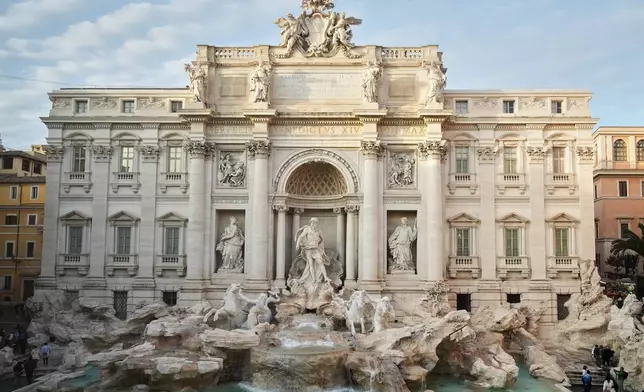
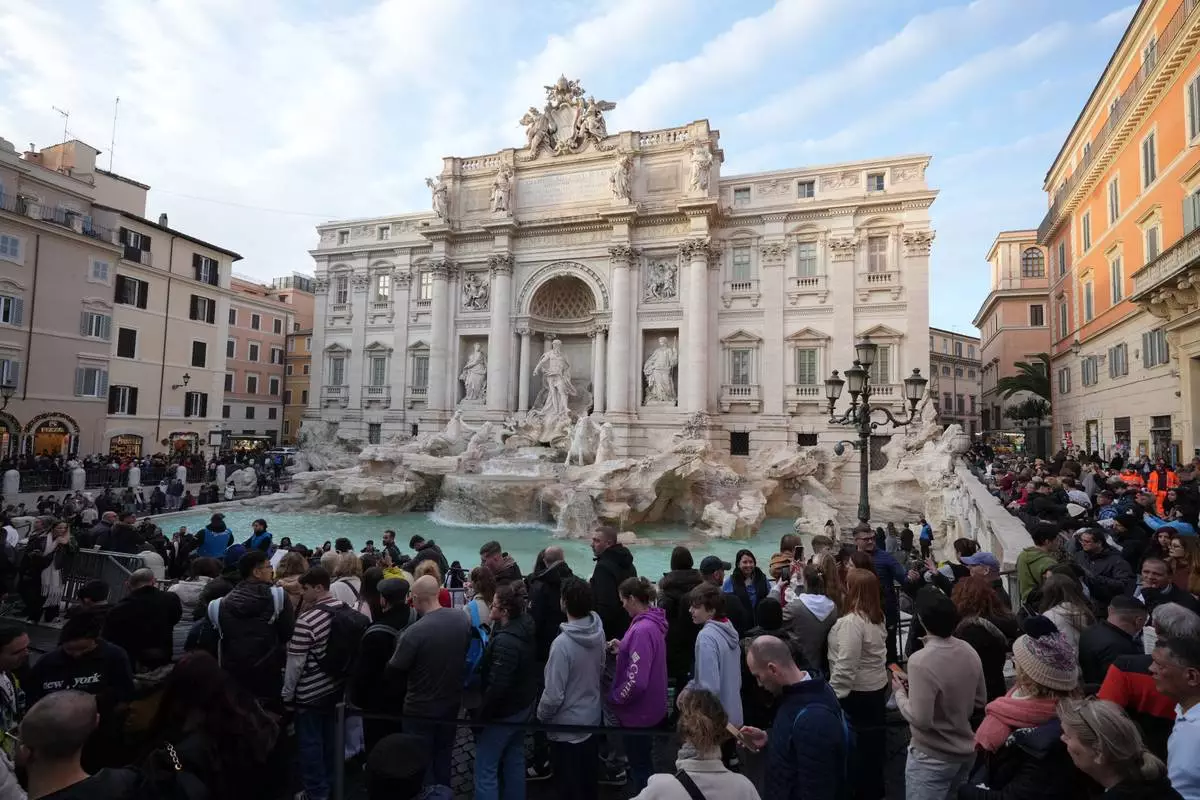
A view of Rome's Trevi Fountain, Friday, Dec. 19, 2025, as the city municipality announced that, starting on Feb. 1, it will impose a 2 euro fee for tourists to get close to the fountain. (AP Photo/Andrew Medichini)
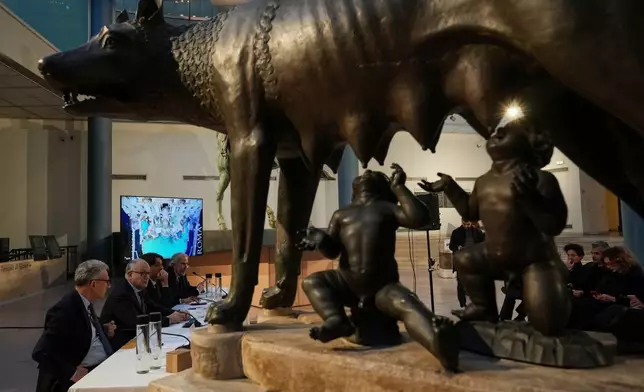
Rome's Mayor Roberto Gualtieri, second from left, announces at a press conference that starting on Feb. 1, it will impose a 2 euro fee for tourists to get close to the Trevi Fountain, in Rome, Friday, Dec. 19, 2025, . (AP Photo/Andrew Medichini)
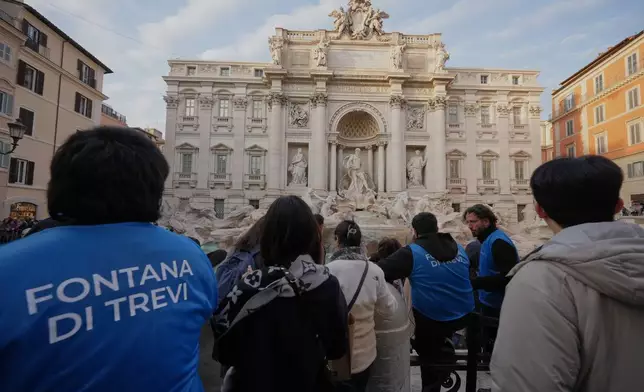
Staff controls the flow of visitors at Rome's Trevi Fountain, Friday, Dec. 19, 2025, as the city municipality announced that, starting on Feb. 1, it will impose a 2 euro fee for tourists to get close to the fountain. (AP Photo/Andrew Medichini)
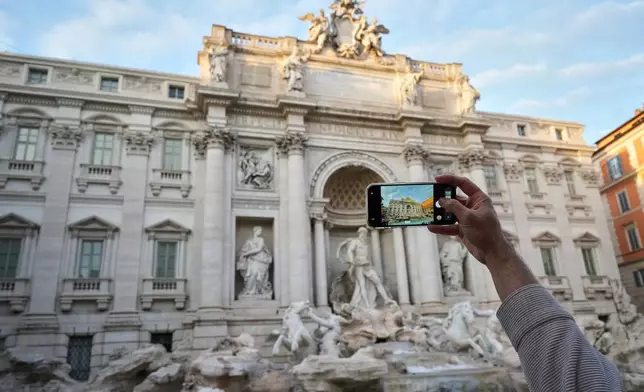
A visitor takes a photo of Rome's Trevi Fountain, Friday, Dec. 19, 2025, as the city municipality announced that, starting on Feb. 1, it will impose a 2 euro fee for tourists to visit the recessed fountain edge. (AP Photo/Andrew Medichini)
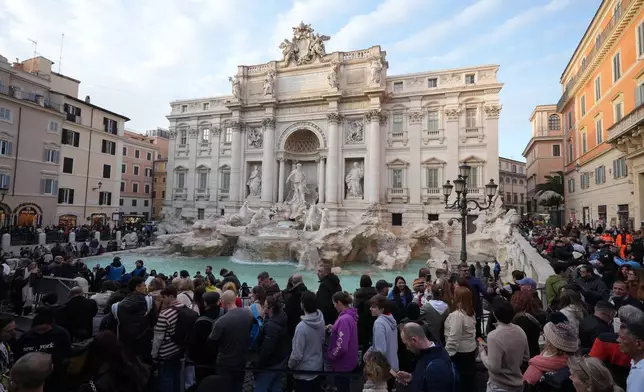
Visitors admire Rome's Trevi Fountain, Friday, Dec. 19, 2025, as the city municipality announced that, starting on Feb. 1, it will impose a 2 euro fee for tourists to visit the recessed fountain edge. (AP Photo/Andrew Medichini)
The tourist fee announced Friday is part of the Eternal City’s efforts to manage tourist flows in a particularly congested part of town, improve the experience and offset the maintenance costs of preserving all of Rome’s cultural heritage. Officials estimate it could net the city 6.5 million euros ($7.6 million) extra a year.
The fee, which has been discussed and debated for more than a year, follows a similar ticketing system at Rome’s Pantheon monument and the more complicated tourist day-tripper tax that the lagoon city of Venice imposed last year in a bid to ease overtourism and make the city more liveable for residents.
In such cases, city residents have been exempt from the fees. The same holds true at Trevi, while the tourist tax and new 5-euro (nearly $6) tourist ticket fee for some city museums is being rolled out in conjunction with a plan to broaden the number of museums that are free for registered Roman residents.
“We believe that culture is a fundamental right of citizenship,” Rome Mayor Roberto Gualtieri told a news conference. “We think it’s correct and positive that the citizens of Rome can enjoy our museums free of charge.”
At the same time, he said, the 2-euro ($2.35) Trevi tourist fee is a minimal amount that shouldn't discourage visitors, but rather allow for a more organized visit. The city decided to impose it after seeing positive results already from a yearlong experiment to stagger and limit the number of visitors who can reach the front basin edge of the fountain by imposing lines and an entrance and exit pathway.
So far this year, around 9 million people have waited in line to get that close-up visit, with some days as many as 70,000 passing through, Gualtieri said. That system now becomes permanent from 9 a.m.-9 p.m., with the fee to be paid by nonresidents. Visitors can either pay in advance online, while waiting in line or by buying tickets at tourist locations around town.
After nightfall, access is open and free.
Pope Urban VIII initially commissioned the fountain in 1640. In 1730, Pope Clement XII revived the project and the current fountain corresponds to the original designs of Roman architect Nicola Salvi.
The towering fountain features at the Titan god flanked by falls cascading down the travertine rocks into a shallow turquoise pool, where Marcello Mastroianni and Anita Ekberg famously took their nighttime dip in “La Dolce Vita.”
While bathing is prohibited nowadays, legend has it that visitors who toss a coin over their shoulders and make a wish will return to Rome.
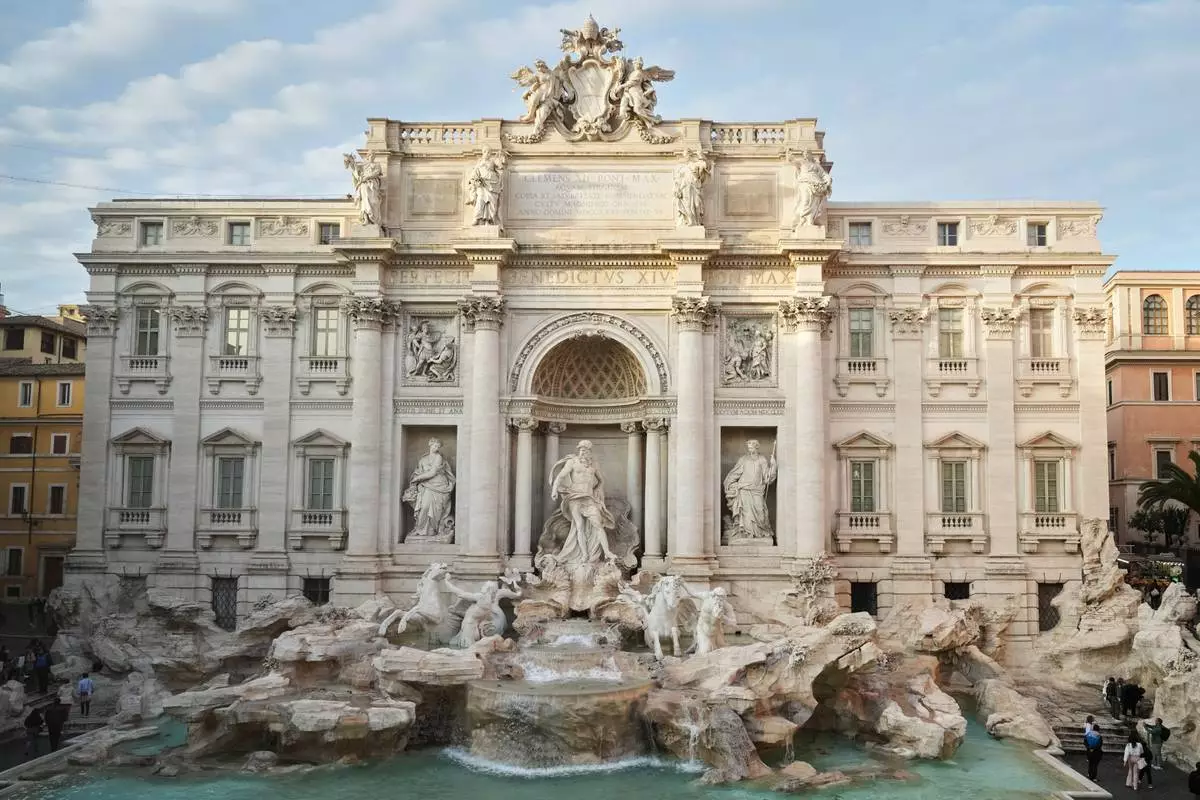
A view of Rome's Trevi Fountain, Friday, Dec. 19, 2025, as the city municipality announced that, starting on Feb. 1, it will impose a 2 euro fee for tourists to get close to the fountain. (AP Photo/Andrew Medichini)
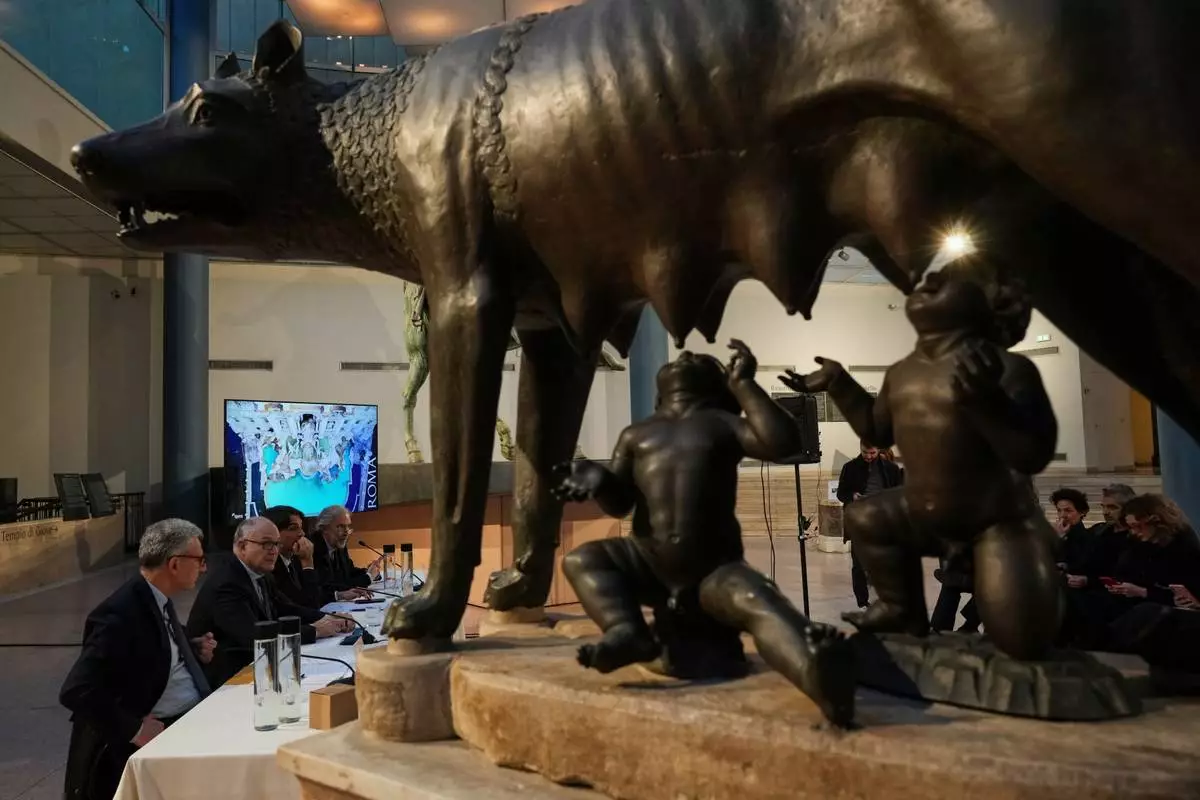
Rome's Mayor Roberto Gualtieri, second from left, announces at a press conference that starting on Feb. 1, it will impose a 2 euro fee for tourists to get close to the Trevi Fountain, in Rome, Friday, Dec. 19, 2025, . (AP Photo/Andrew Medichini)
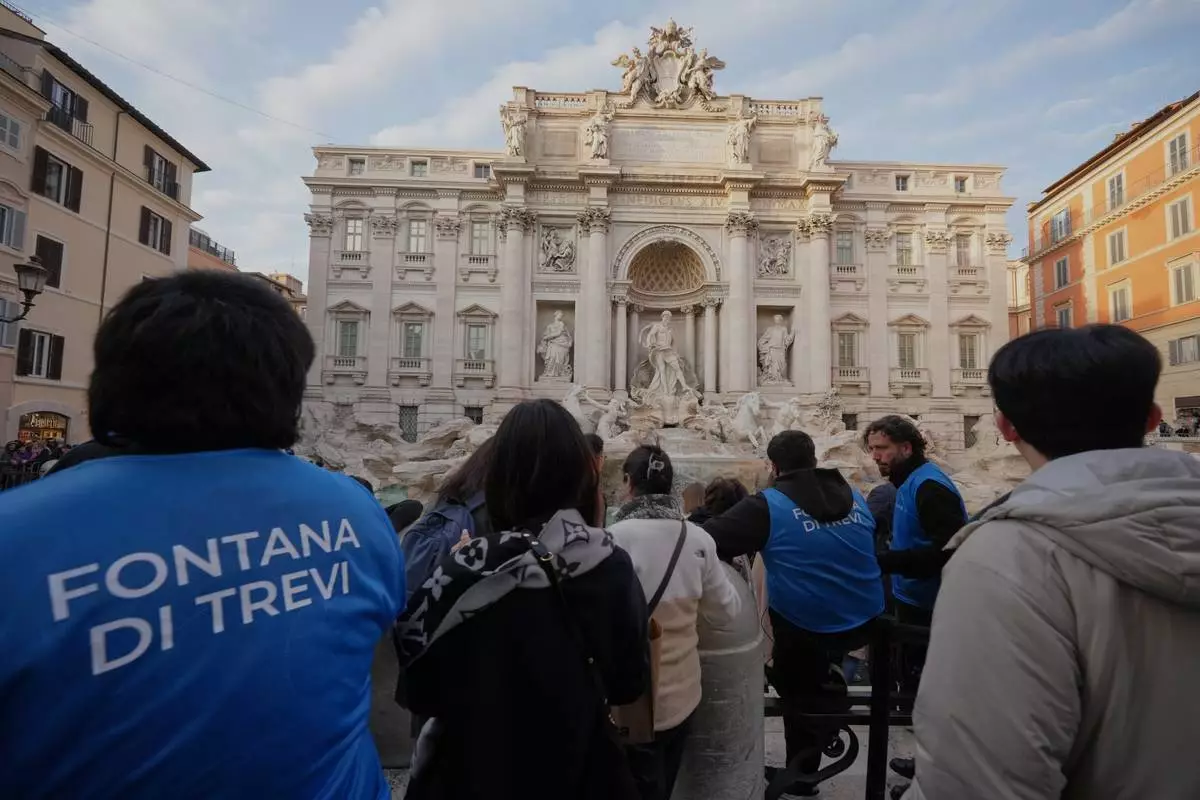
Staff controls the flow of visitors at Rome's Trevi Fountain, Friday, Dec. 19, 2025, as the city municipality announced that, starting on Feb. 1, it will impose a 2 euro fee for tourists to get close to the fountain. (AP Photo/Andrew Medichini)
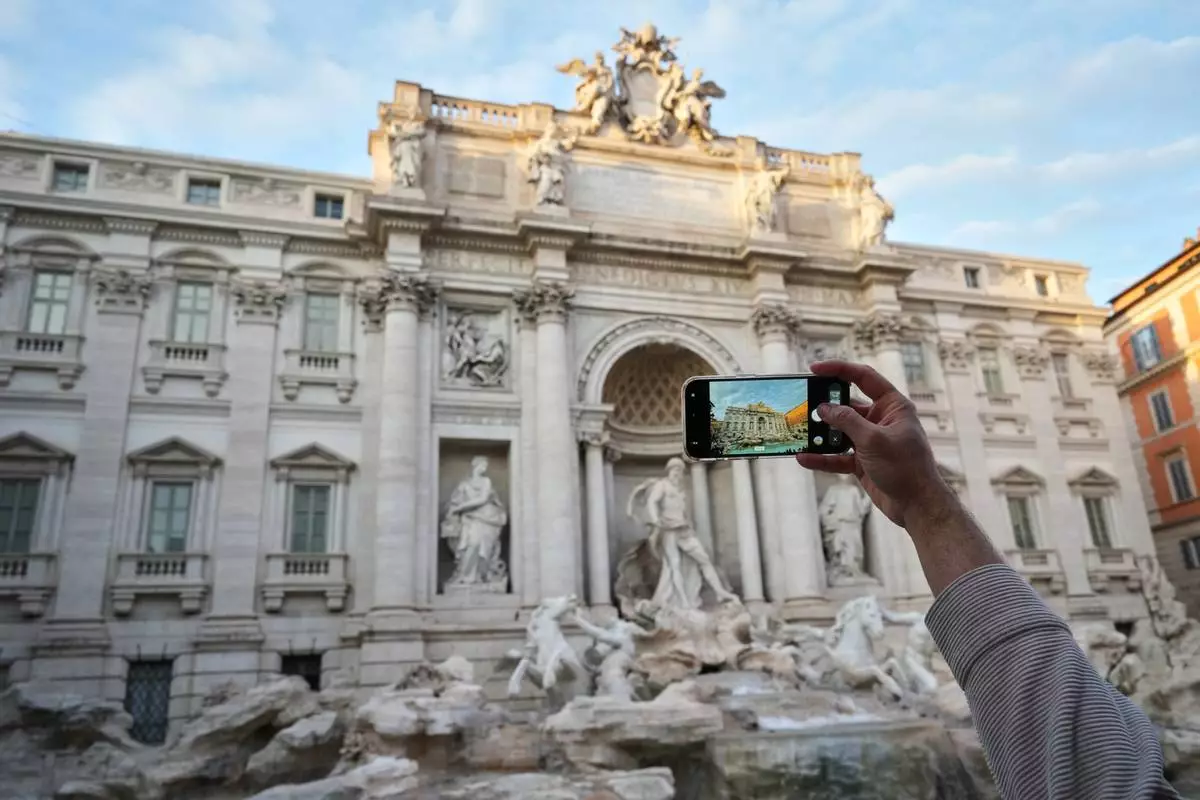
A visitor takes a photo of Rome's Trevi Fountain, Friday, Dec. 19, 2025, as the city municipality announced that, starting on Feb. 1, it will impose a 2 euro fee for tourists to visit the recessed fountain edge. (AP Photo/Andrew Medichini)
Visitors admire Rome's Trevi Fountain, Friday, Dec. 19, 2025, as the city municipality announced that, starting on Feb. 1, it will impose a 2 euro fee for tourists to visit the recessed fountain edge. (AP Photo/Andrew Medichini)