Skip to Content Facebook Feature Image

A timeline of the Jeffrey Epstein investigation and the fight to make the government’s files public

News

A timeline of the Jeffrey Epstein investigation and the fight to make the government’s files public
News

News

A timeline of the Jeffrey Epstein investigation and the fight to make the government’s files public

2025-12-20 07:28 Last Updated At:07:30

Two decades after Jeffrey Epstein was first reported to police, the Justice Department has started to release its investigative files on the late millionaire, who was accused of repeatedly sexually abusing underage girls.

Enacted last month, the Epstein Files Transparency Act requires disclosure of government records on Epstein and his longtime confidant Ghislaine Maxwell by Friday — though it’s possible more records will be released on a rolling basis.

Among questions surrounding the release: how much light the documents shed on Epstein’s crimes, his interactions with influential friends in business, politics and academia and whether anything in the documents will support — or debunk — one accuser’s claims that other powerful men participated in or knew about Epstein’s misconduct.

Here is a timeline of the Epstein investigations and the efforts to open up the government’s files:

March 2005: Police begin investigating Epstein after the family of a 14-year-old girl reports she was molested at his mansion in Palm Beach, Florida. Multiple underage girls, many of them high school students, would later tell police Epstein hired them to give sexual massages.

May 2006: Palm Beach police officials sign paperwork to charge Epstein with multiple counts of unlawful sex with a minor, but the county’s top prosecutor, State Attorney Barry Krischer, takes the unusual step of sending the case to a grand jury.

July 2006: Epstein is arrested after a grand jury indicts him on a count of soliciting prostitution. The relatively minor charge upsets Palm Beach police leaders, who publicly accuse Krischer of giving Epstein special treatment. The FBI begins an investigation.

2007: Federal prosecutors prepare an indictment, but for a year Epstein's lawyers engage in talks with the U.S. attorney in Miami, Alexander Acosta, about a deal that would avoid a federal prosecution. Epstein’s lawyers decry his accusers as unreliable.

June 2008: Epstein pleads guilty to state charges: one count of soliciting prostitution and one count of soliciting prostitution from someone under the age of 18. He is sentenced to 18 months in jail. Under a secret arrangement, the U.S. attorney’s office agrees not to prosecute Epstein for federal crimes. Epstein serves most of his sentence in a work release program that allows him to leave jail during the day.

May 2009: One of Epstein’s accusers, Virginia Roberts Giuffre, files a lawsuit claiming Epstein and Maxwell arranged for her to have sexual encounters with “royalty, politicians, academicians, businessmen” and others. The lawsuit doesn't name the men.

July 2009: Epstein is released from jail. For the next decade, Epstein’s accusers wage a legal fight to get his federal non-prosecution agreement voided.

March 2, 2011: The Daily Mail publishes an interview with Giuffre in which she describes traveling with Epstein to London at age 17 and spending a night dancing with Andrew Mountbatten-Windsor, then known as Prince Andrew. The story and a photo of the prince with his arm around Giuffre creates a crisis for the royal family. FBI agents subsequently interview Giuffre.

Dec. 30, 2014: Giuffre's lawyers file court papers claiming she had sexual encounters with Mountbatten-Windsor and other men, including “foreign presidents, a well-known Prime Minister, and other world leaders.” All those men deny the allegations.

November 2018: The Miami Herald revisits the handling of Epstein’s case in a series of stories focusing partly on the role of Acosta — who by this point is President Donald Trump’s labor secretary. The coverage intensifies public interest in Epstein.

July 6, 2019: Epstein is arrested on sex trafficking charges after federal prosecutors in New York conclude they aren’t bound by the terms of the earlier non-prosecution deal. Days later, Acosta resigns as labor secretary.

Aug. 10, 2019: Epstein kills himself in his jail cell in New York.

July 2, 2020: Federal prosecutors in New York charge Maxwell with sex crimes, saying she helped recruit and abuse Epstein's victims.

Dec. 30, 2021: After a monthlong trial, a jury convicts Maxwell of sex trafficking and other crimes.

June 28, 2022: Maxwell is sentenced to 20 years in prison.

January, 2024: Public interest in the Epstein case surges again after a judge makes more court records public in a related lawsuit. Conspiracy theories flourish, pushed by people who believe Epstein ran an international sex traffic network that served rich and powerful men.

Jan. 20, 2025: Trump, who was friends and neighbors with Epstein for years, becomes president again. During his 2024 campaign, he had suggested that he’d seek to open more government files on Epstein.

February 2025: Attorney General Pam Bondi suggests in a Fox News Channel interview that an Epstein “client list” is sitting on her desk. The Justice Department distributes binders marked “declassified” to far-right influencers, but much of the information had long been public.

April 25, 2025: Giuffre dies by suicide.

July 7, 2025: The Justice Department says Epstein didn’t maintain a “client list” and it won’t make any more files related to his sex trafficking investigation public.

July 15, 2025: Reps. Ro Khanna, D-Calif., and Thomas Massie, R-Ky., introduce the Epstein Files Transparency Act.

July 17, 2025: The Wall Street Journal describes a sexually suggestive letter that the newspaper says bore Trump’s name and was included in a 2003 album for Epstein’s 50th birthday. Trump denies writing the letter and sues the newspaper.

July 24-25, 2025: In an effort to put a political crisis to rest, Deputy Attorney General Todd Blanche interviews Maxwell. She denies wrongdoing and says she never saw Trump involved in any sexually inappropriate activity. Afterward, she is moved from a low-security prison in Florida to a minimum-security prison camp in Texas.

Oct. 21, 2025: Giuffre’s posthumous memoir is published. In it, she revisits her claims that Epstein and Maxwell sexually trafficked her to powerful men, including Mountbatten-Windsor.

Oct. 30, 2025: King Charles III strips Mountbatten-Windsor of his remaining titles, meaning he can no longer be referred to as “prince," and evicts him from his royal residence.

Nov. 12, 2025: A House committee releases a trove of email correspondence between Epstein and others, including Mountbatten-Windsor, Trump ally Steve Bannon, ex-Treasury Secretary Larry Summers and LinkedIn founder Reid Hoffman. In one 2019 email to a journalist, Epstein wrote that Trump “knew about the girls" but didn't explain what he meant by that.

Nov. 14, 2025: At Trump’s urging, Bondi announces that the U.S. attorney in Manhattan will investigate Epstein’s ties to some of the Republican president’s political foes, including former President Bill Clinton, a Democrat; Summers; and Hoffman, a prominent Democratic donor. None of those men has been accused of misconduct by Epstein's victims.

Nov. 18, 2025: Congress passes the Epstein Files Transparency Act. Trump signs it into law the next day.

Dec. 19, 2025: The Justice Department begins releasing records.

Follow the AP's coverage of Jeffrey Epstein at https://apnews.com/hub/jeffrey-epstein.
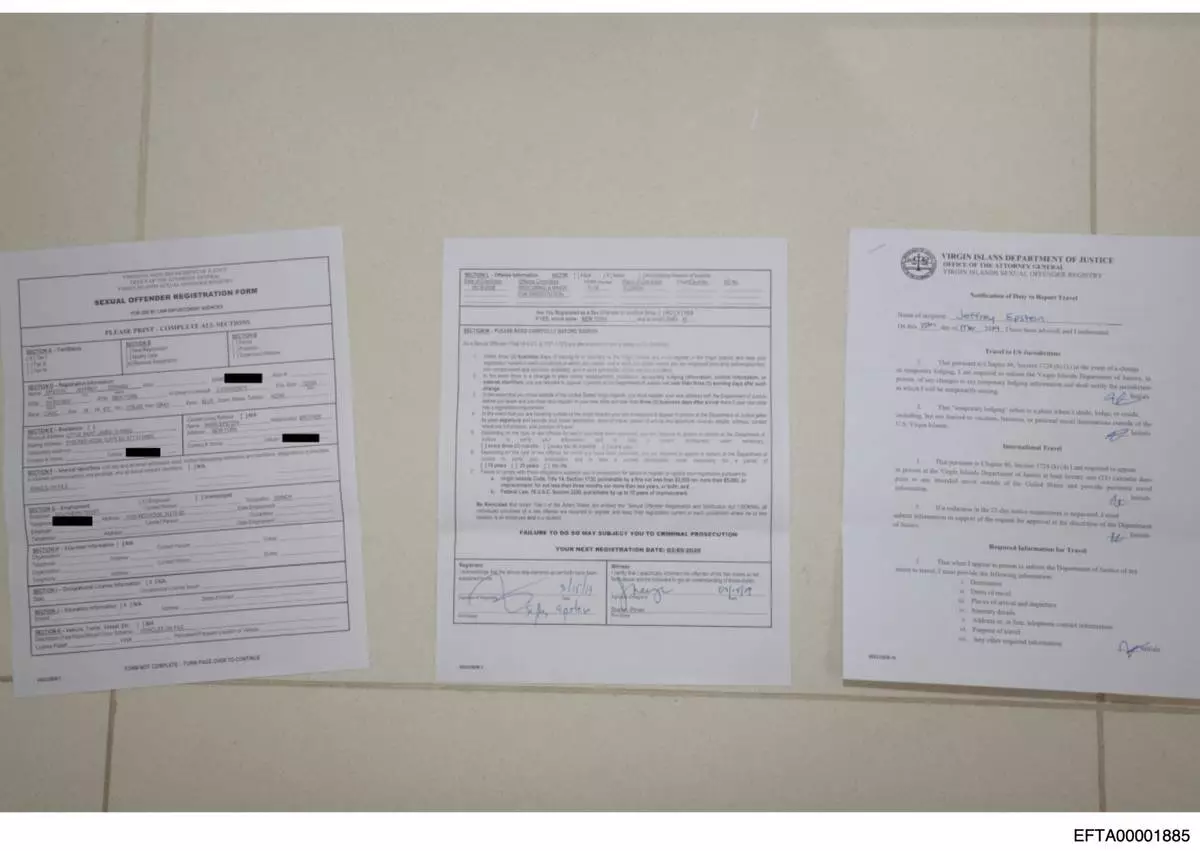
This redacted photo released by the U.S. Department of Justice shows Jeffrey Epstein's sexual offender registration form, documented on Aug. 12, 2019, during a search of Epstein's home on Little St. James island in the U.S. Virgin Islands. (U.S. Department of Justice via AP)
This redacted photo released by the U.S. Department of Justice shows Jeffrey Epstein's sexual offender registration form, documented on Aug. 12, 2019, during a search of Epstein's home on Little St. James island in the U.S. Virgin Islands. (U.S. Department of Justice via AP)

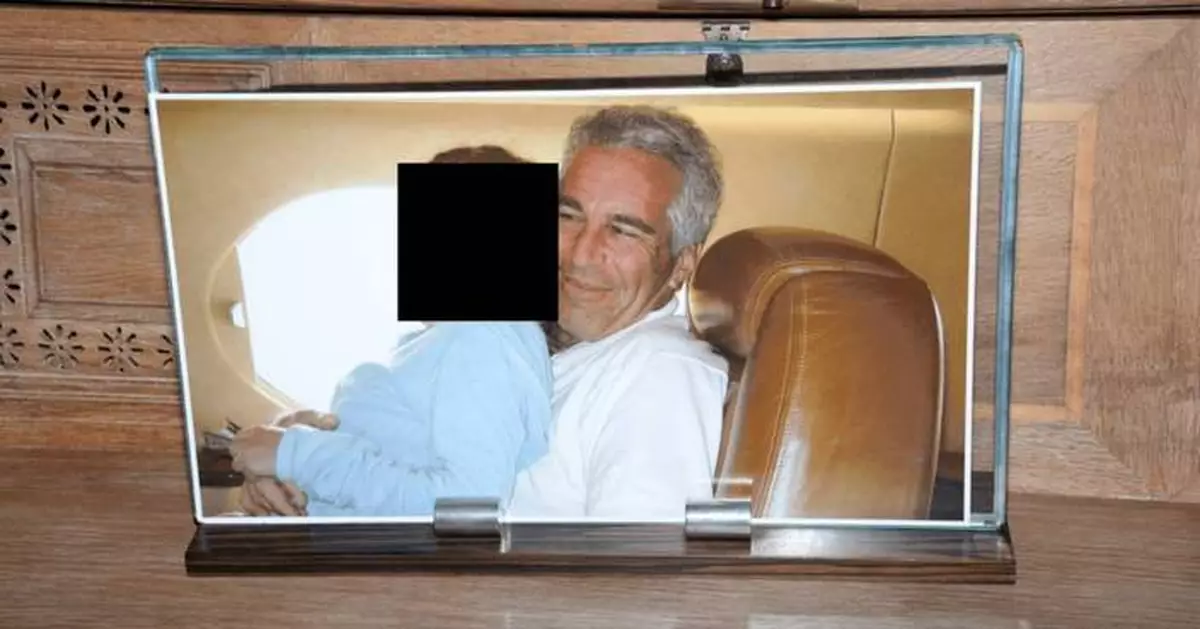
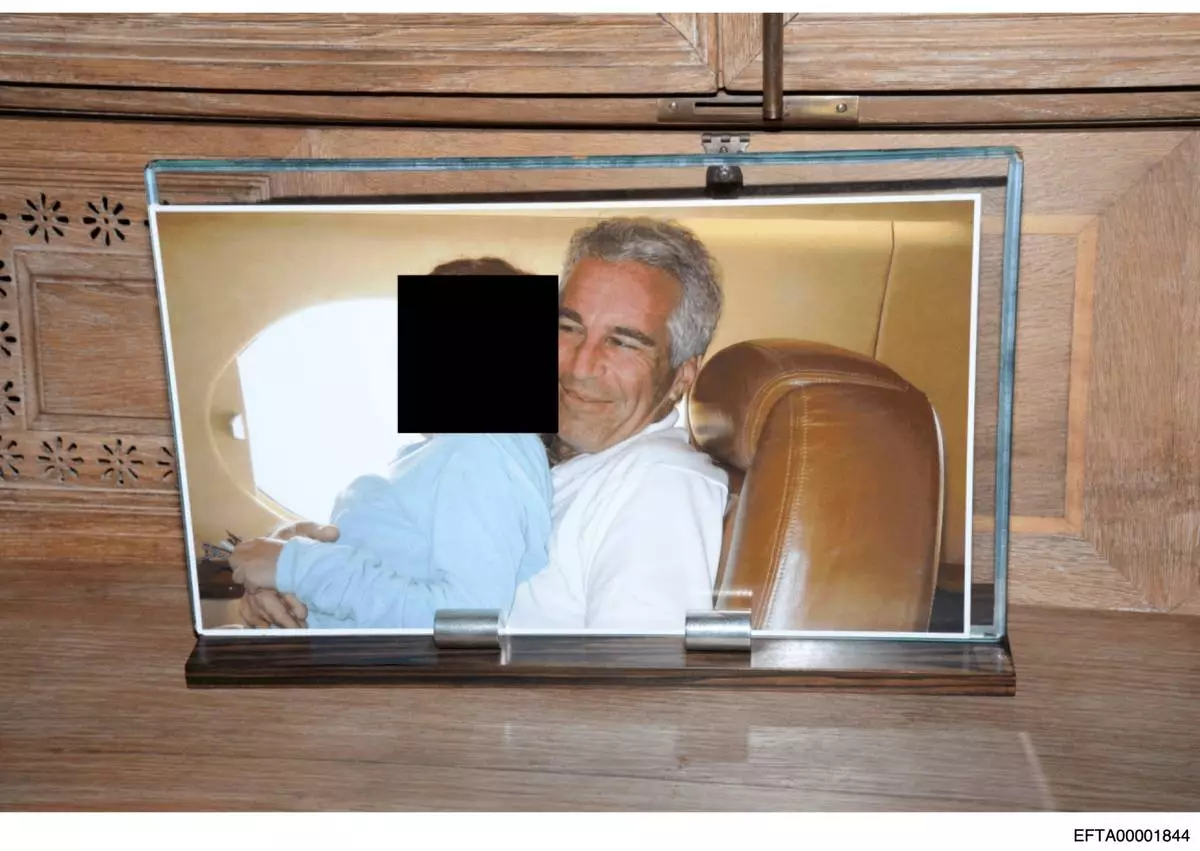
This redacted photo released by the U.S. Department of Justice shows a framed photograph of Jeffrey Epstein with a person on his lap, documented on Aug. 12, 2019, during a search of his home on Little St. James island in the U.S. Virgin Islands. (U.S. Department of Justice via AP)
This redacted photo released by the U.S. Department of Justice shows a framed photograph of Jeffrey Epstein with a person on his lap, documented on Aug. 12, 2019, during a search of his home on Little St. James island in the U.S. Virgin Islands. (U.S. Department of Justice via AP)
CAPE CANAVERAL, Fla. (AP) — NASA’s Artemis II astronauts fired their engines and blazed toward the moon Thursday night, breaking free of the chains that have trapped humanity in shallow laps around Earth in the decades since Apollo.

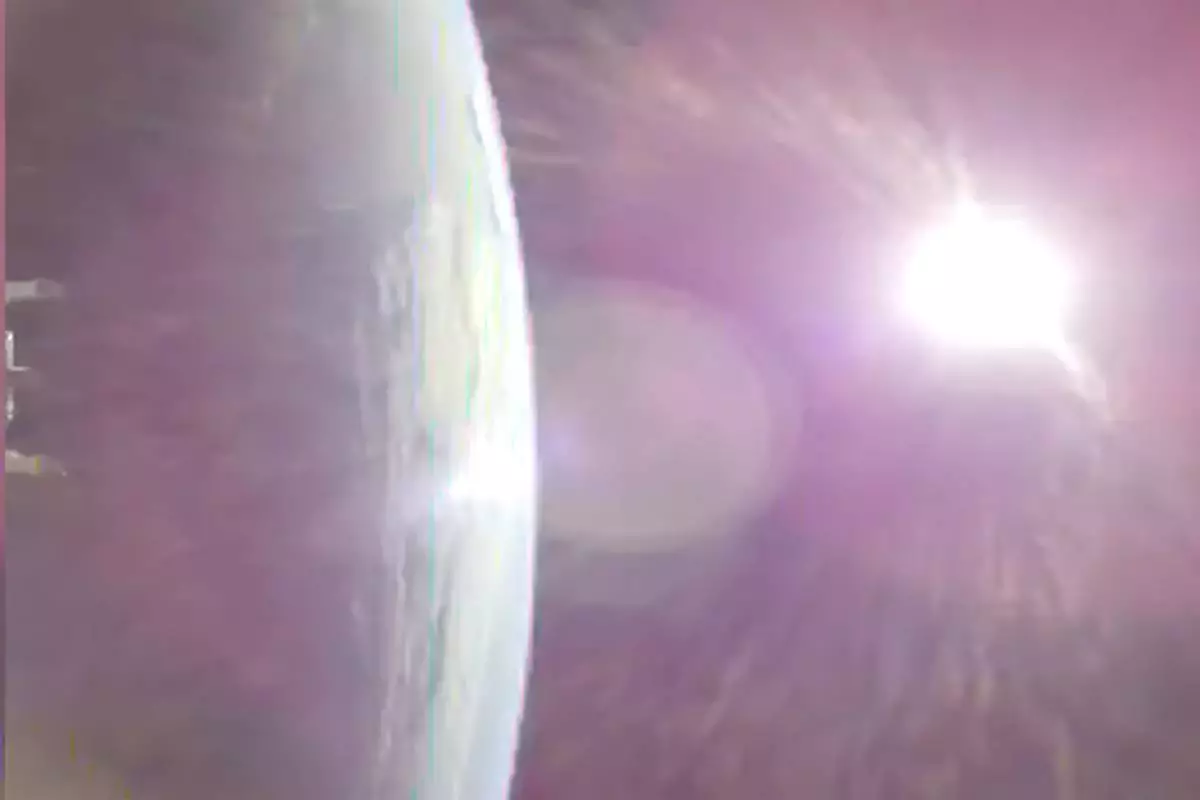
The so-called translunar ignition came 25 hours after liftoff, putting the three Americans and a Canadian on course for a lunar fly-around early next week. Their Orion capsule bolted out of orbit around Earth right on cue and chased after the moon nearly 250,000 miles (400,000 kilometers) away.

“Ladies and gentlemen, I am so, so excited to be able to tell you that for the first time since 1972 during Apollo 17, human beings have left Earth orbit,” NASA’s Lori Glaze announced at a news conference.

The engine firing was flawless, she noted.

Canadian astronaut Jeremy Hansen said he and his crewmates were glued to the capsule's windows as they left Earth in the rearview mirror, taking in the “phenomenal” views. Their faces were pressed so tightly against the windows that they had to wipe them clean.

“Humanity has once again shown what we are capable of, and it’s your hopes for the future that carry us now on this journey around the moon,” Hansen said.

NASA had the Artemis II crew stick close to home for a day to test their capsule’s life-support systems before clearing them for lunar departure.

Now committed to the moon, the Artemis II test flight is the opening act for NASA’s grand plans for a moon base and sustained lunar living.

Commander Reid Wiseman, pilot Victor Glover, Christina Koch and Hansen will dash past the moon then hang a U-turn and zip straight home without stopping on land. In the process, they will go the farthest humans have ever traveled from Earth, breaking the Apollo 13 distance record set in 1970. They also may become the fastest during their reentry at flight’s end on April 10.

Glover, Koch and Hansen already have made history as the first Black person, the first woman and the first non-U.S. citizen to launch to the moon. Apollo’s 24 lunar travelers were all white men.

“Trust us, you look amazing. You look beautiful," Glover said in a TV interview after beholding the globe from pole to pole. "And from up here you also look like one thing: homo sapiens as all of us no matter where you’re from or what you look like, we’re all one people.”

To set the mood for the day’s main event, Mission Control woke up the crew with John Legend’s “Green Light” featuring Andre 3000 and a medley of NASA teams cheering them.

“We are ready to go,” Glover said.

Mission Control gave the final go-ahead minutes before the critical engine firing, telling the astronauts that they were embarking on “humanity’s lunar homecoming arc” to bring them back to Earth. The capsule is relying on the gravity of Earth and the moon — termed a free-return lunar trajectory — to complete the round-trip figure-eight loop. The engine accelerated their capsule to more than 24,000 mph (38,000 kph) to shove them out of Earth's orbit.

“I’ve got to tell you, there is nothing normal about this," Wiseman said. "Sending four humans 250,000 miles away is a herculean effort, and we are now just realizing the gravity of that.”

Flight director Judd Frieling said he and his team were all business while on duty but will likely reflect on the momentousness of it all once they go home.

“I suspect everybody understands that this is a once-in-a-lifetime moment," he told reporters.

The next major milestone will be Monday’s lunar flyby.

Orion will zoom 4,000 miles (6,400 kilometers) beyond the moon before turning back, providing unprecedented and illuminated views of the lunar far side, at least for human eyes. The cosmos will even treat the Artemis II astronauts to a total solar eclipse as the moon temporarily blocks the sun from their perspective.

While awaiting their orbital departure earlier Thursday, the astronauts savored the views of Earth from tens of thousands of miles high. Koch told Mission Control that they can make out the entire coastlines of continents and even the South Pole, her old stomping ground.

NASA is counting on the test flight to kickstart the entire Artemis program and lead to a moon landing by two astronauts in 2028.

The so-called lunar loo may need some design tweaks, however.

Orion's toilet malfunctioned as soon as the Artemis crew reached orbit Wednesday evening. Mission Control guided astronaut Koch through some plumbing tricks and she finally got it going, but not before having to resort to using contingency urine storage bags.

The urine pouches are serving double duty. Mission Control ordered the crew to fill a bunch of the empty bags with water from the capsule’s dispenser on Thursday. A valve issue arose with the dispenser following liftoff, and NASA wanted plenty of drinking water on hand for the crew in case the problem recurred. The astronauts used straws and syringes to fill the pouches with more than 2 gallons (7 liters) worth before pivoting to the moon.

The Associated Press Health and Science Department receives support from the Howard Hughes Medical Institute’s Department of Science Education and the Robert Wood Johnson Foundation. The AP is solely responsible for all content.

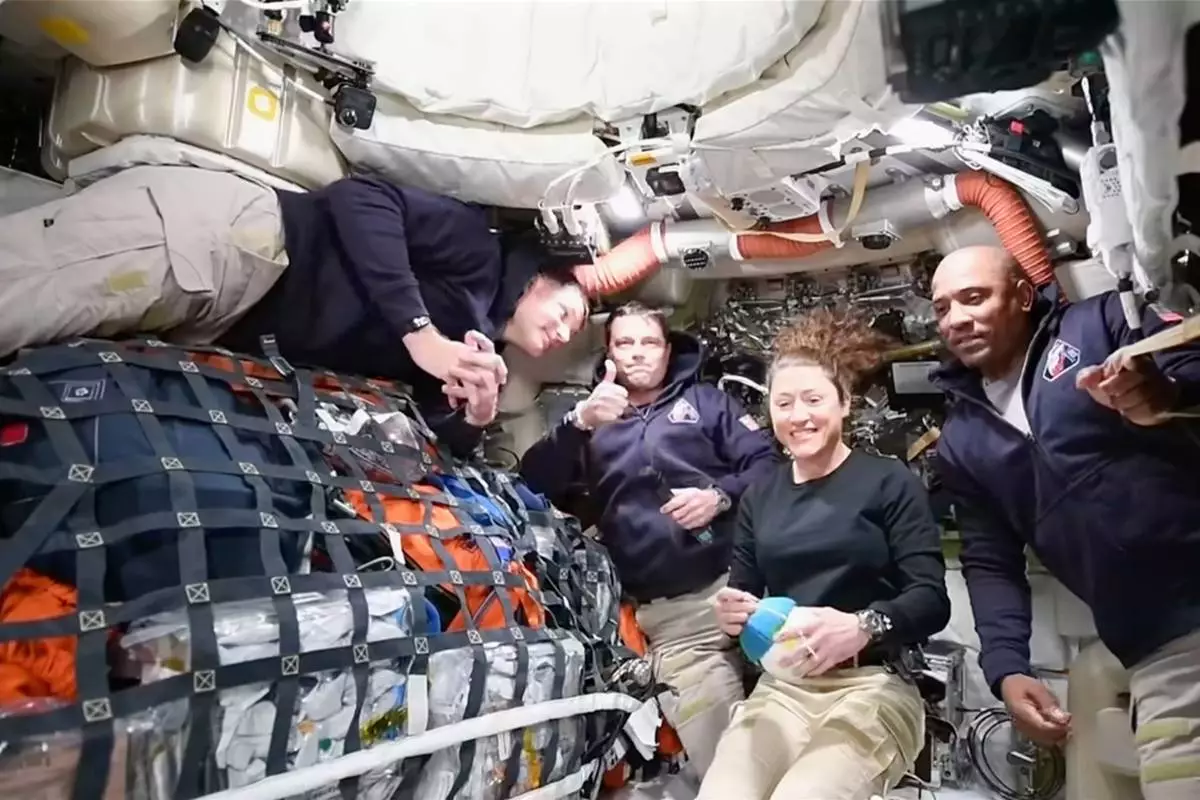
This image taken from video provided by NASA shows the Artemis II crew, from left, Canadien astronaut and mission specialist Jeremy Hansen, Commander Reid Wiseman, mission specialist Christina Koch and pilot Victor Glover as they speak with NASA Mission Control via video conference from the moon's orbit Thursday, April 2, 2026. (NASA via AP)

This image taken from video provided by NASA shows the Artemis II crew, from left, Canadien astronaut and mission specialist Jeremy Hansen, Commander Reid Wiseman, mission specialist Christina Koch and pilot Victor Glover as they speak with NASA Mission Control via video conference from the moon's orbit Thursday, April 2, 2026. (NASA via AP)

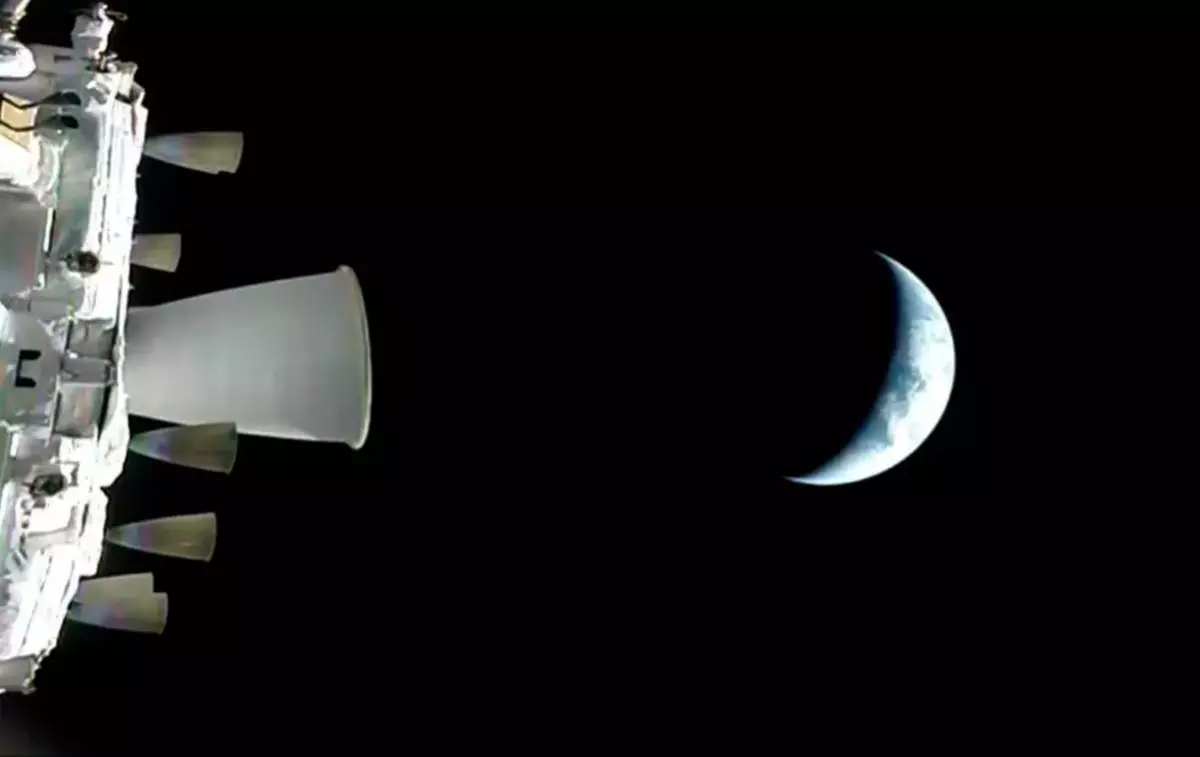
This image released by NASA on Thursday, April 2, 2026, shows NASA’s Orion spacecraft with Earth in the background. (NASA via AP)

This image released by NASA on Thursday, April 2, 2026, shows NASA’s Orion spacecraft with Earth in the background. (NASA via AP)

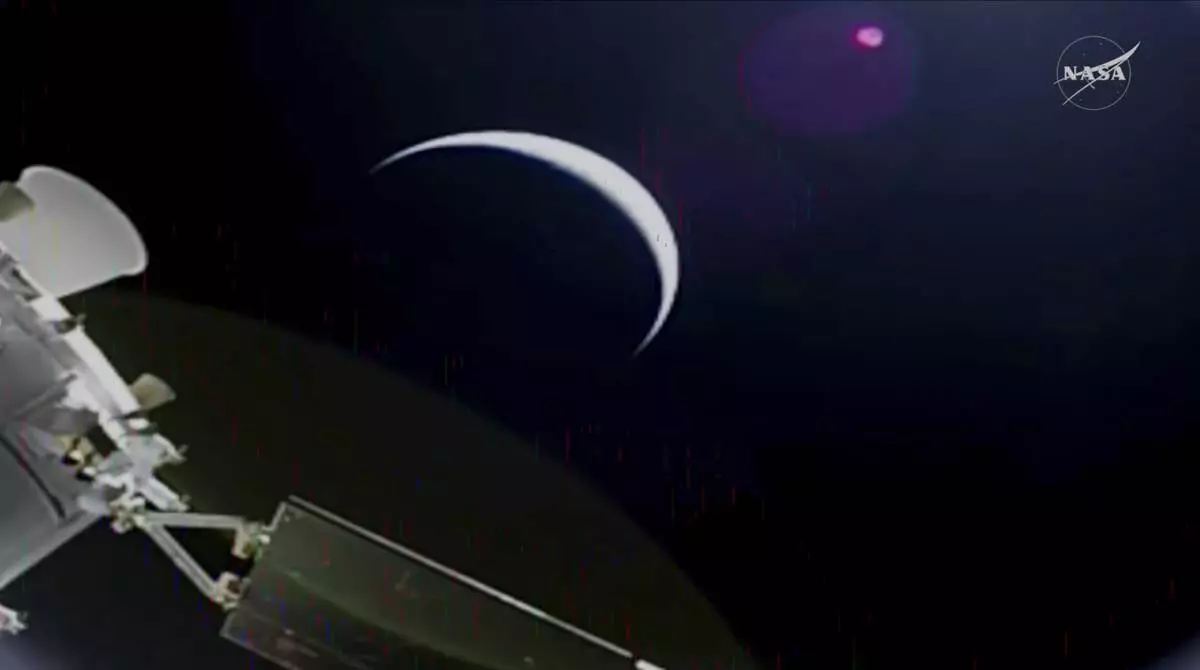
This image taken from video provided by NASA shows the Earth, left, from NASA's Orion spacecraft as it fired its engines heading toward the moon Thursday, April 2, 2026. (NASA via AP)

This image taken from video provided by NASA shows the Earth, left, from NASA's Orion spacecraft as it fired its engines heading toward the moon Thursday, April 2, 2026. (NASA via AP)

In this photo provided by NASA, a view of the Earth from NASA's Orion spacecraft as it orbits above the planet during the Artemis II test flight, on Thursday, April 2, 2026. (NASA via AP)

In this photo provided by NASA, a view of the Earth from NASA's Orion spacecraft as it orbits above the planet during the Artemis II test flight, on Thursday, April 2, 2026. (NASA via AP)

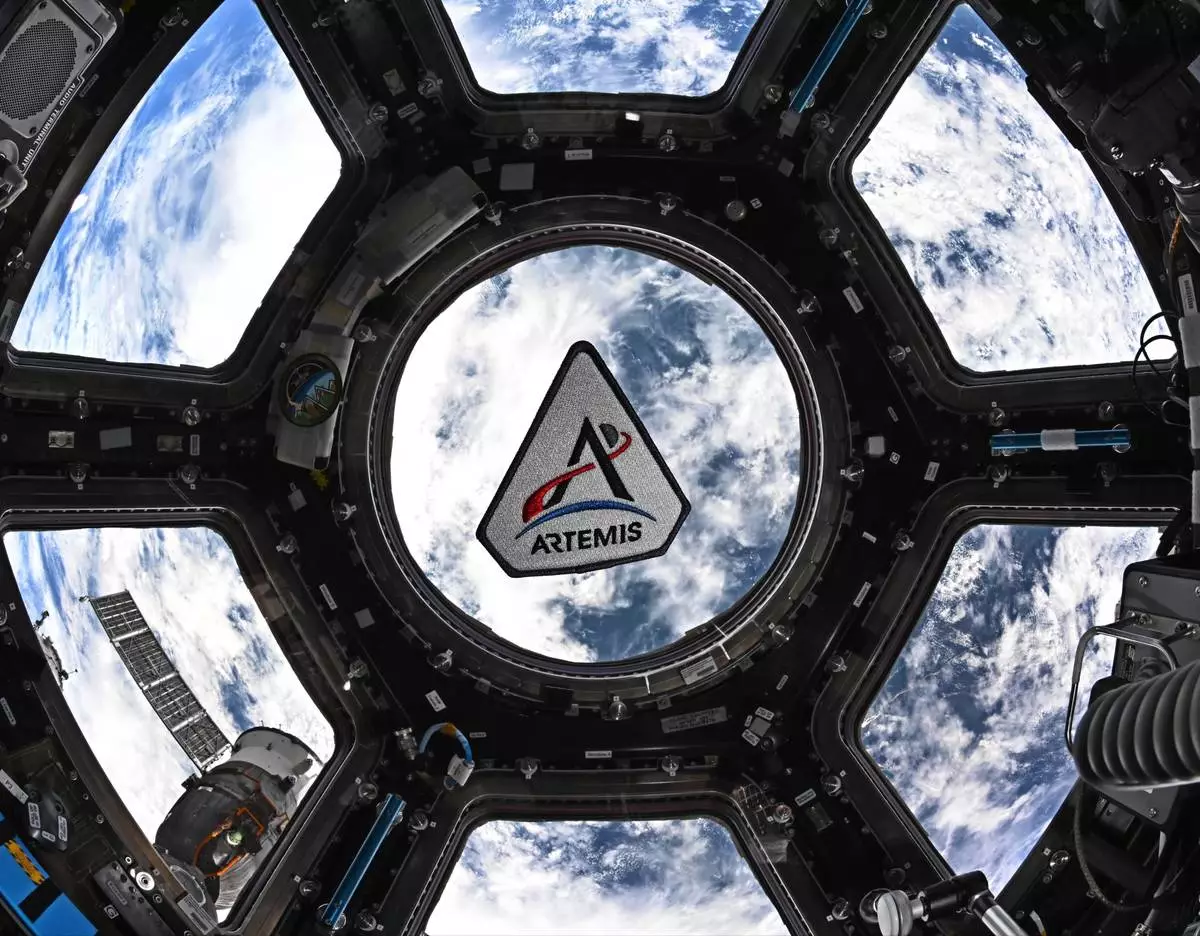
In this photo provided by NASA, an Artemis program patch floating in the International Space Station's cupola, on March 30, 2026. (Jessica Meir/NASA via AP)

In this photo provided by NASA, an Artemis program patch floating in the International Space Station's cupola, on March 30, 2026. (Jessica Meir/NASA via AP)

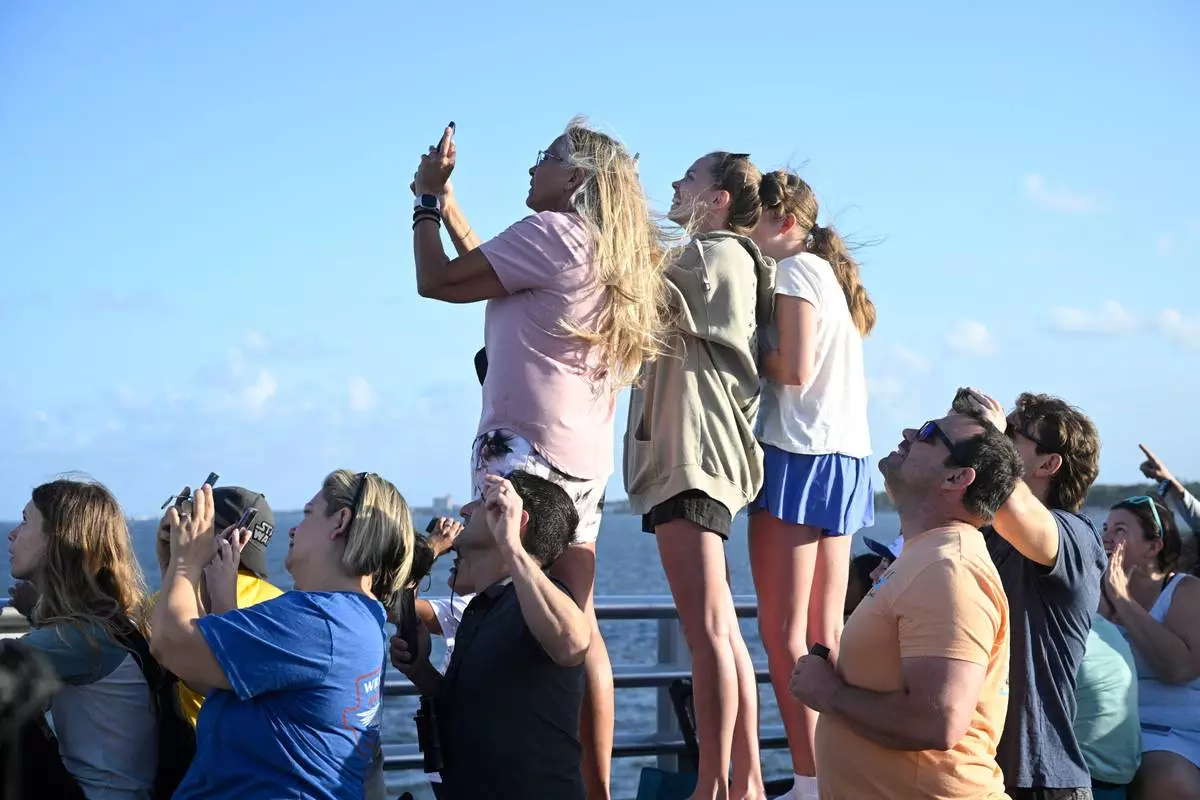
Spectators view NASA's Artemis II moon rocket launch from the A. Max Brewer Bridge, Wednesday, April 1, 2026, in Titusville, Fla. (AP Photo/Phelan M. Ebenhack)

Spectators view NASA's Artemis II moon rocket launch from the A. Max Brewer Bridge, Wednesday, April 1, 2026, in Titusville, Fla. (AP Photo/Phelan M. Ebenhack)

Spectators view NASA's Artemis II moon rocket launch from the A. Max Brewer Bridge, Wednesday, April 1, 2026, in Titusville, Fla. (AP Photo/Phelan M. Ebenhack)

Spectators view NASA's Artemis II moon rocket launch from the A. Max Brewer Bridge, Wednesday, April 1, 2026, in Titusville, Fla. (AP Photo/Phelan M. Ebenhack)

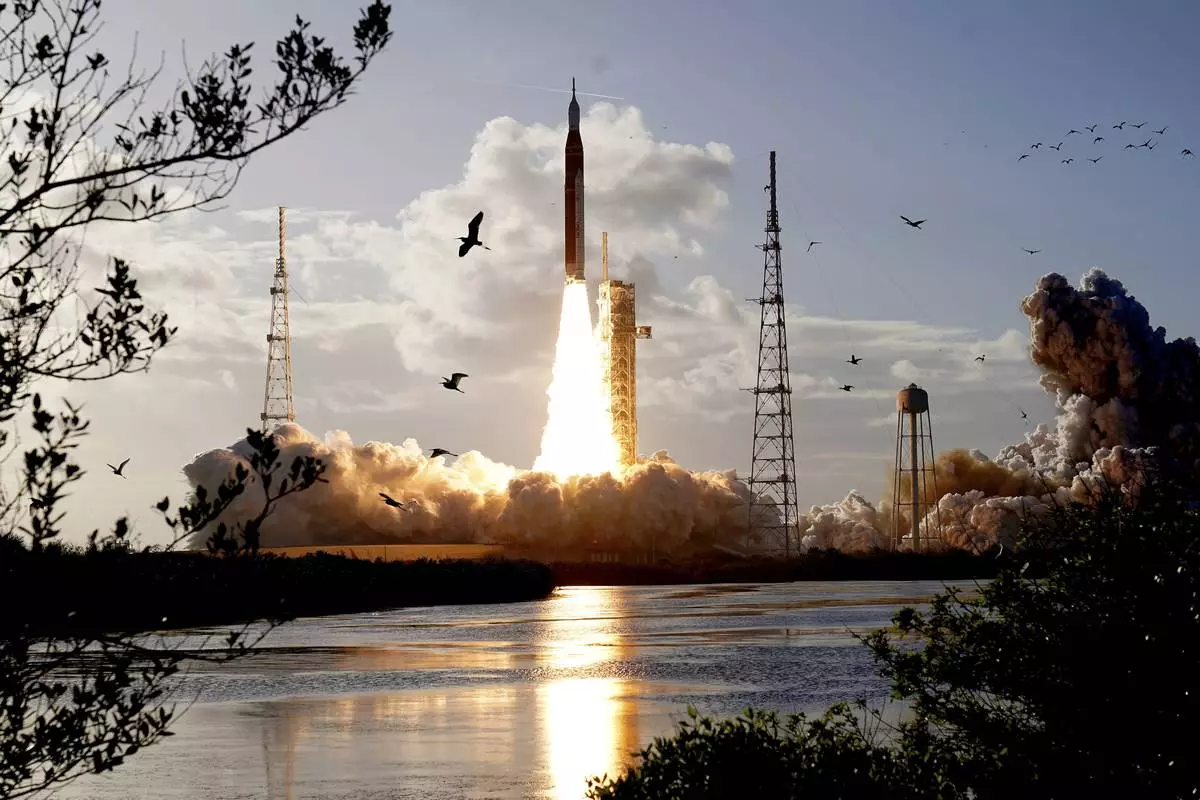
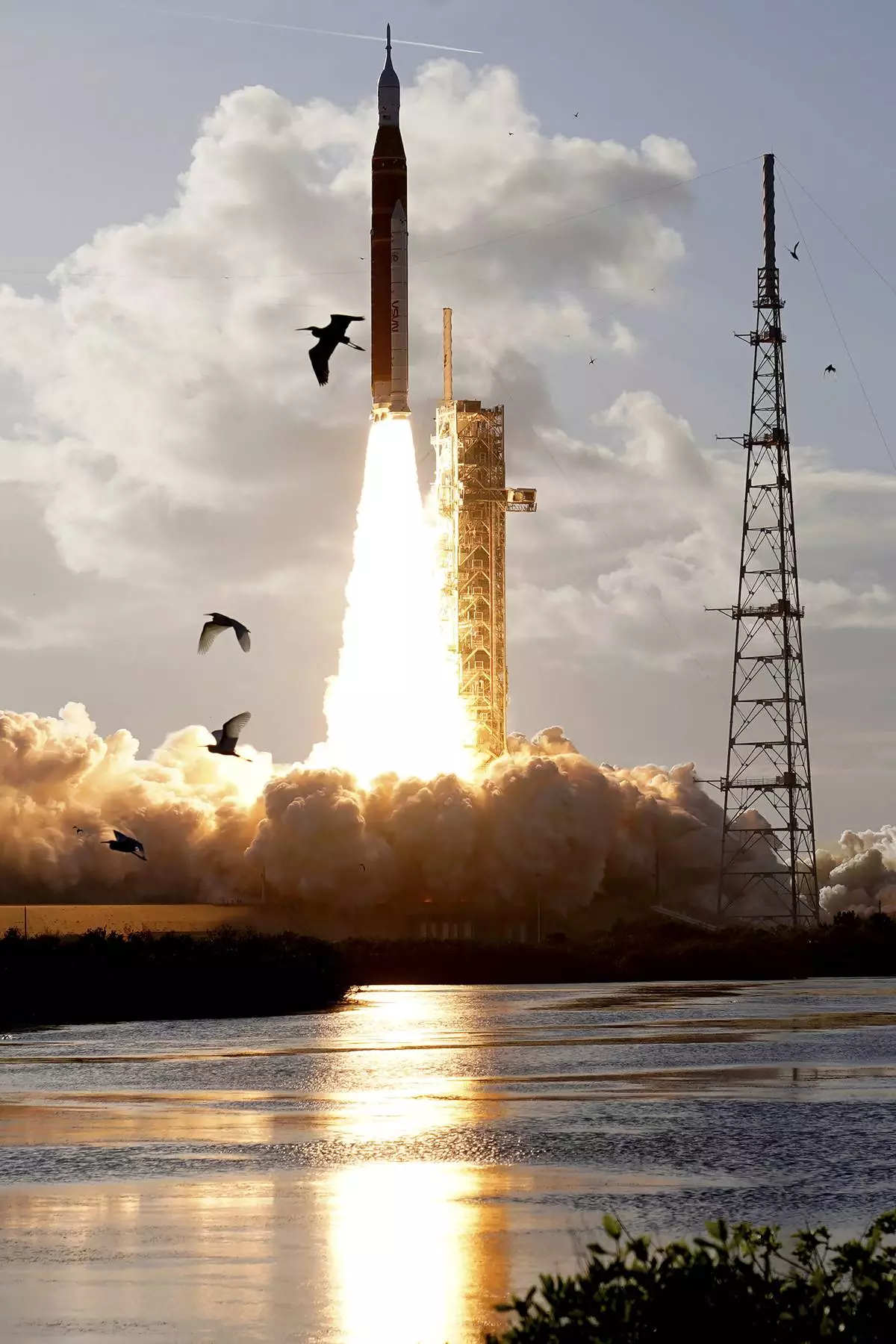
NASA's Artemis II moon rocket lifts off from the Kennedy Space Center's Launch Pad 39-B Wednesday, April 1, 2026, in Cape Canaveral, Fla. (AP Photo/Chris O'Meara)

NASA's Artemis II moon rocket lifts off from the Kennedy Space Center's Launch Pad 39-B Wednesday, April 1, 2026, in Cape Canaveral, Fla. (AP Photo/Chris O'Meara)

NASA's Artemis II moon rocket lifts off from the Kennedy Space Center's Launch Pad 39-B Wednesday, April 1, 2026, in Cape Canaveral, Fla. (AP Photo/Chris O'Meara)

NASA's Artemis II moon rocket lifts off from the Kennedy Space Center's Launch Pad 39-B Wednesday, April 1, 2026, in Cape Canaveral, Fla. (AP Photo/Chris O'Meara)

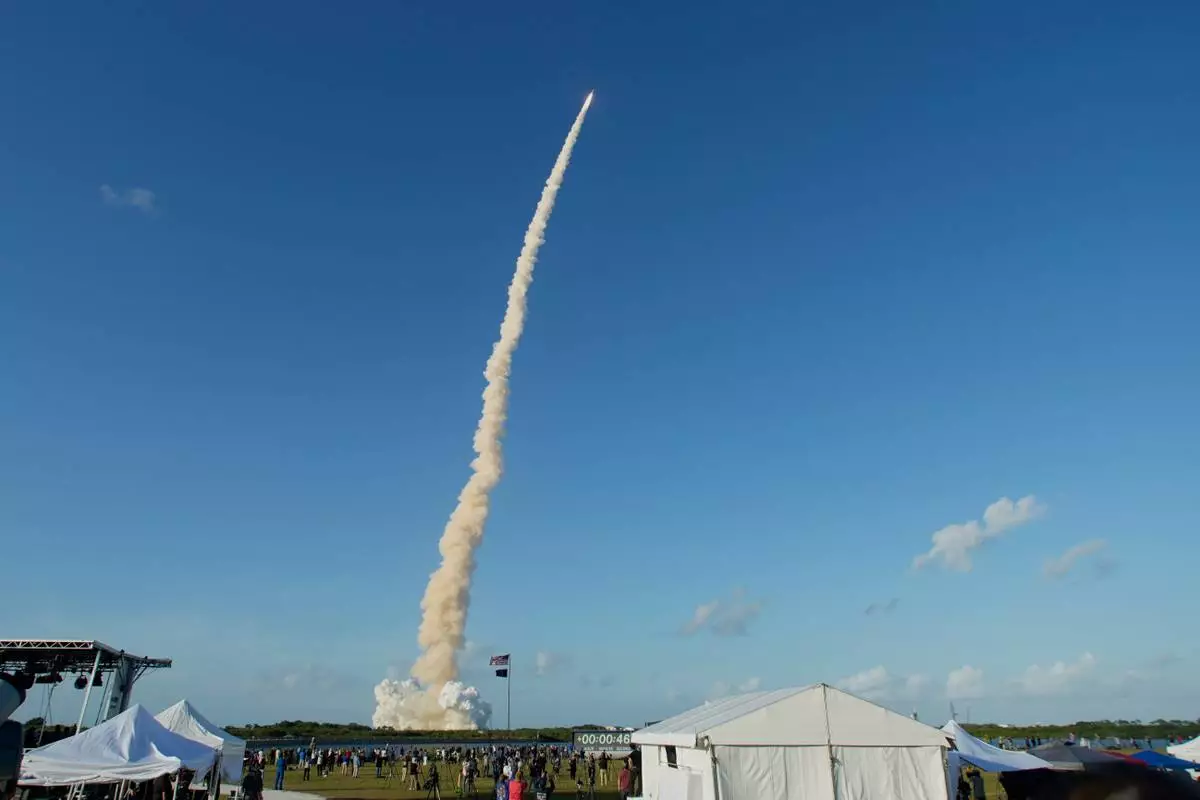
NASA's Artemis II moon rocket lifts off from the Kennedy Space Center's Launch Pad 39-B Wednesday, April 1, 2026, in Cape Canaveral, Fla. (AP Photo/John Raoux)

NASA's Artemis II moon rocket lifts off from the Kennedy Space Center's Launch Pad 39-B Wednesday, April 1, 2026, in Cape Canaveral, Fla. (AP Photo/John Raoux)

Recommended Articles