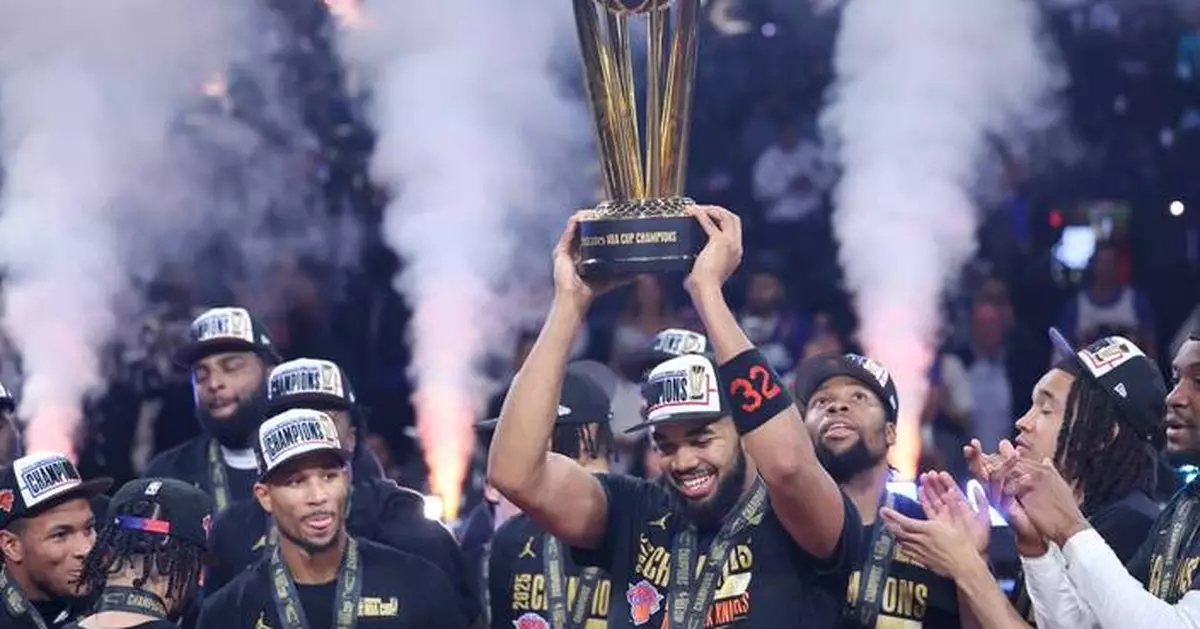
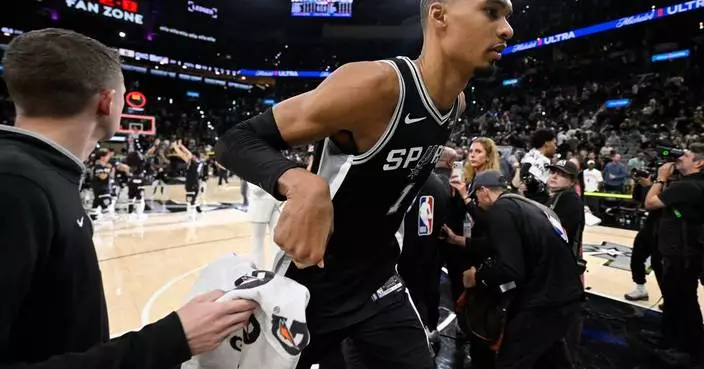
NEW YORK (AP) — The New York Knicks celebrated their NBA Cup championship Friday night, even though they aren't commemorating it with a banner at Madison Square Garden.
As players lined the court before the playing of the national anthem ahead of their game against Philadelphia, highlights from the Knicks' victories during their march to the championship played on the overhead scoreboard. After the final one, from their victory over San Antonio in the final on Tuesday, the public address announcer asked fans to join in congratulating the team for its achievement.
Fans responded with a standing ovation.
The Knicks broke with the Cup's brief tradition by deciding not to hang a banner after winning it. The two previous winners, the Los Angeles Lakers and Milwaukee Bucks, both celebrated their titles with a banner.
Prime Video, which streamed the game, poked fun at the decision by unveiling a banner in its studio for the Knicks' championship during its pregame show.
Winning the Cup, with the semifinals and finals in Las Vegas, created somewhat of an extra road trip for the Knicks. The game Friday was their first at Madison Square Garden since beating Orlando on Dec. 7.
It also created some panic for first-year coach Mike Brown. A few inches of snow fell in the area north of New York City where he lives while the Knicks were away, and he didn't own a shovel and didn't know how to remove it when his sister-in-law, who was staying at the house, alerted him.
“We had snow in our driveway and our walkway and my sister-in-law called us and she was panicked, because I’m an Amazon junkie and so we’re getting the Amazon packages delivered. She was like, ‘Somebody’s going to slip. I need a shovel,’” Brown said. “I was like, ‘Shovel? Oh my god, who do I call?’”
He ended up calling their builder, who sent someone to remove the snow.
AP NBA: https://apnews.com/hub/NBA
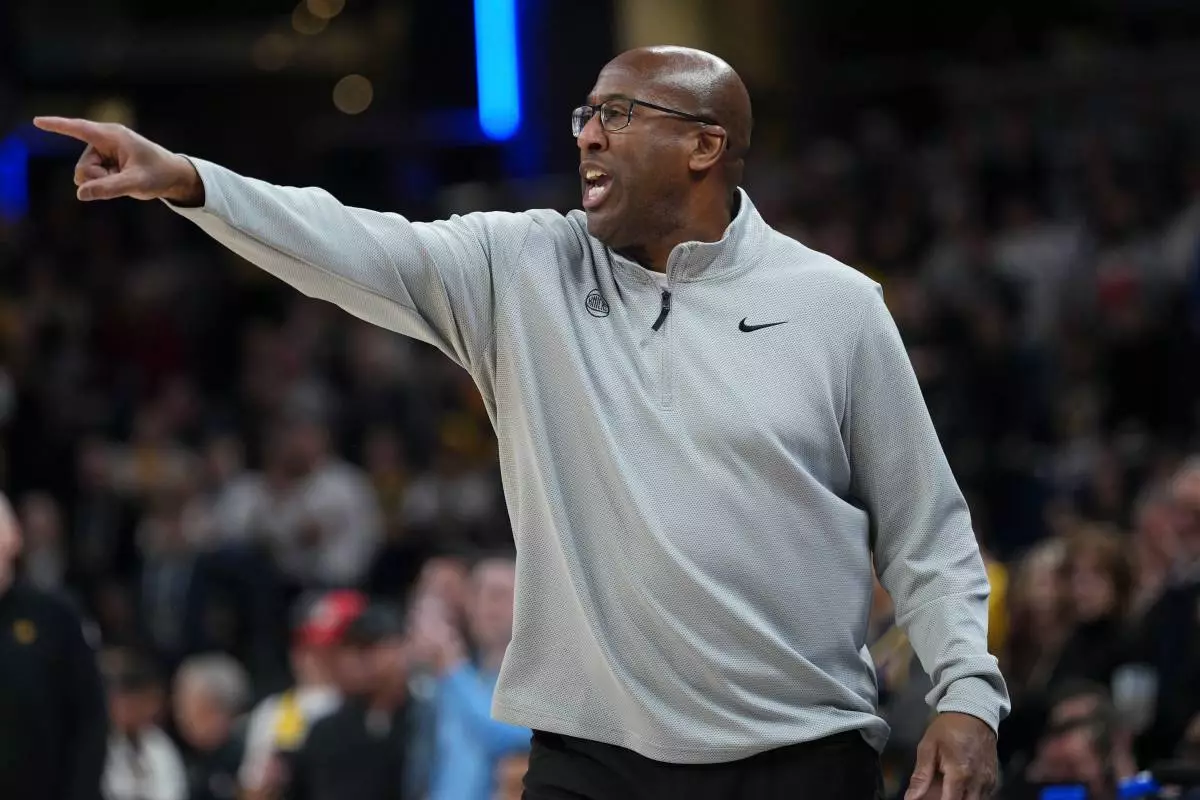
New York Knicks head coach Mike Brown calls to his team from the sideline during the second half of an NBA basketball game against the Indiana Pacers in Indianapolis, Thursday, Dec. 18, 2025. (AP Photo/AJ Mast)

New York Knicks center Karl-Anthony Towns (32) celebrates with teammates after his team's victory against the San Antonio Spurs in the NBA Cup championship basketball game Tuesday, Dec. 16, 2025, in Las Vegas. (AP Photo/Ian Maule)
NEW YORK (AP) — Tomatoes, ubiquitous in everything from fast-food burgers to haute cuisine, are taking on a new role beyond the plate: A nagging reminder of rising costs.
Prices for those red orbs have soared more than any other food product over the past year to cement a spot as one of the consumer headaches du jour.
“The tomato has become a symbol of something much deeper,” says Isaac Bernal Carbajo, a New York City chef who lamented life's “simplest pleasures” falling victim to price increases. “Something as basic as buying fresh vegetables is starting to become a serious financial decision for many families.”
Tomato prices are up about 40% over a year ago, according to the latest Consumer Price Index, dwarfing increases for other groceries, including coffee (up 18.5%), beef roasts (up 17.8%) and frozen fish and seafood (up 12%), among other products that have become symbols of America’s affordability squeeze.
A separate inflation gauge released Thursday showed that overall prices increased 3.8% in April from a year earlier, the highest reading in nearly three years.
Alongside crop yields, experts blame price increases for tomatoes, in part, on two pillars of President Donald Trump’s second-term policies: the Iran war and tariffs. The war spiked gas prices and increased shipping costs. Meantime, the U.S. withdrew from a deal allowing duty-free imports of tomatoes from Mexico, which grows most of America's supply.
Usha Haley, a Wichita State University economist, says it's “a perfect storm of trade policy, extreme weather and Mideast policy.”
American tomato farmers cheered the withdrawal from the tomato deal last July, saying it would help rebuild their shrinking industry. But for consumers, it's been painful. Though the U.S. withdrew from the Mexico tomato deal in July, it took time to see the impact in the produce aisle, with more imports in late winter and early spring.
When the tomatoes arrived, they were slapped with a 17% tariff.
“Tariffs are undeniably a big driver of the price inflation,” says Brett Massimino, a Virginia Commonwealth University business professor. “Because the U.S. relies on Mexico for the majority of its tomato supply, any changes in trade policy can have a large impact.”
U.S. tariffs collected on tomatoes ballooned from just $16,424 in 2024 to nearly $4.6 million, according to federal data, a staggering 27,879% increase.
As the cost trickles down, outraged shoppers have pulled out their phones in the produce aisle, shooting videos lamenting costs they said quadrupled, with some vowing to plant a garden to avoid prices of up to $8 a pound. But the impact has been most pronounced for businesses that rely on tomatoes as a key ingredient in their kitchens.
MarginEdge, which tracks prices for restaurants, says grape tomatoes have increased most — 65% in just a month — but prices have gone up across all types of tomatoes.
Phillip Coles, a professor of supply chain management at Lehigh University, says prices should drop later in the year when domestically grown tomatoes are harvested. Higher prices, he says, will also “induce farmers to increase planting to meet the demand, but this takes longer because of the lead time.”
Meantime, it's translating to a big hit for businesses like Snarf’s Sandwiches, which puts a tomato in nearly every sandwich it makes.
Wayne Humphrey, chief operating officer of Snarf’s, which operates dozens of stores in Colorado, Missouri and Texas, said cases of tomatoes went from costing him $27 to $93 in the space of a year, piled on top of rising expenses for other ingredients including bread and beef, as well as increased labor costs.
“That single ingredient now costs us more than $1.7 million in additional spend annually,” says Humphrey. “The math is getting harder to ignore.”
Associated Press writer Dee-Ann Durbin contributed to this report. Matt Sedensky can be reached at msedensky@ap.org and https://x.com/sedensky
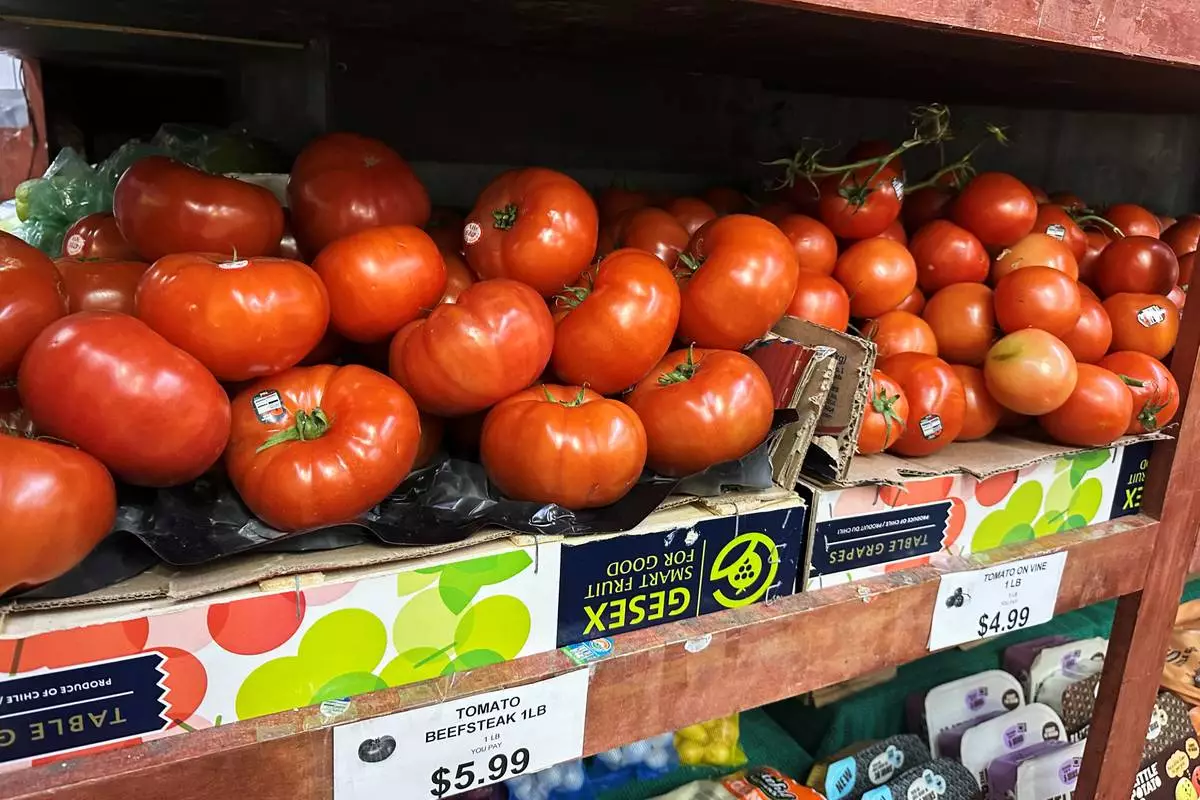
Tomatoes await customers on the shelves of a supermarket in New York on Tuesday, May 26, 2026. (AP Photo/Matt Sedensky)
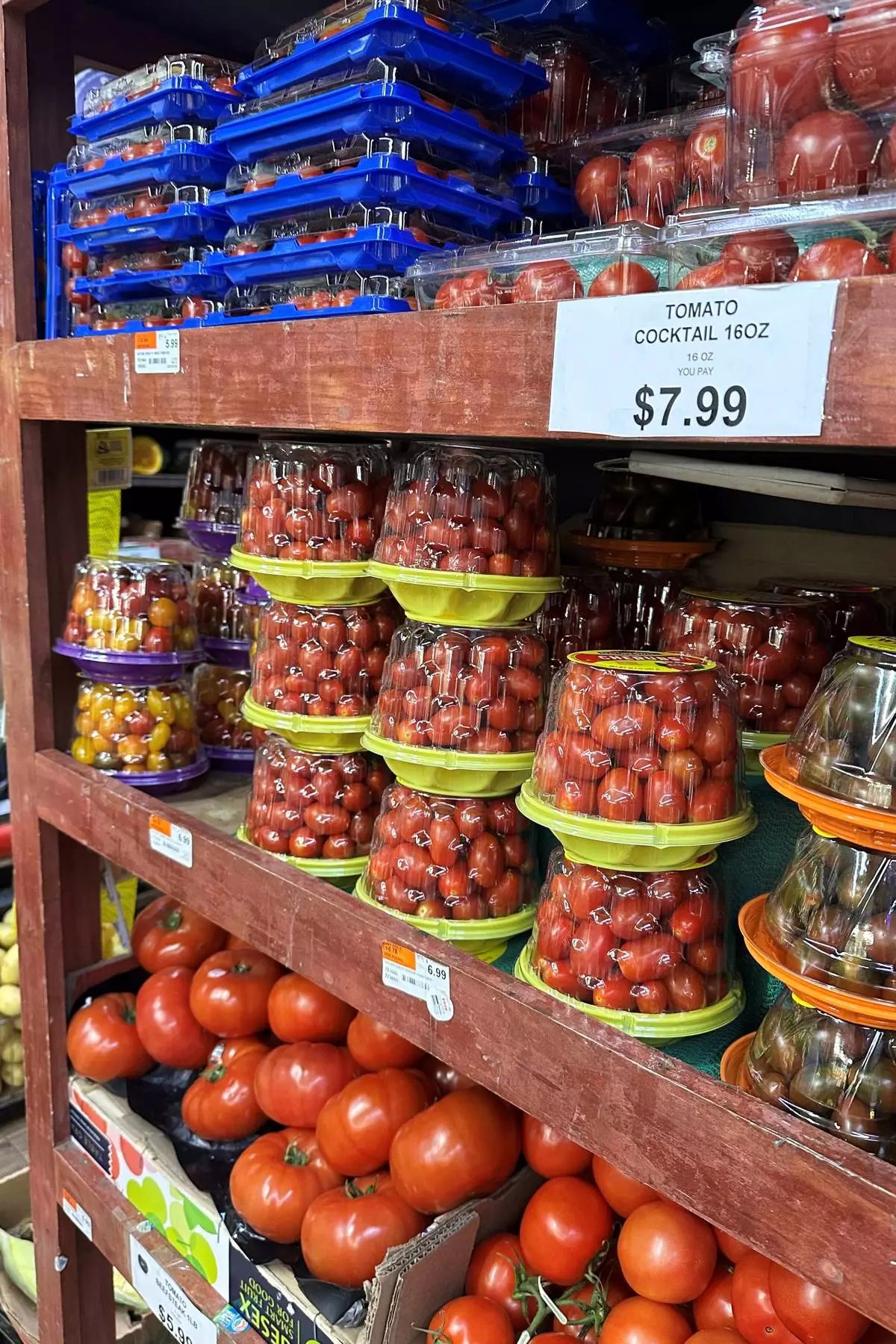
Tomatoes await customers on the shelves of a supermarket in New York on Tuesday, May 26, 2026. (AP Photo/Matt Sedensky)